BANK COMM(03328)

Search documents
14家银行“牵手”许昌!未来将提供5500亿元融资支持
Sou Hu Cai Jing· 2025-05-28 12:59
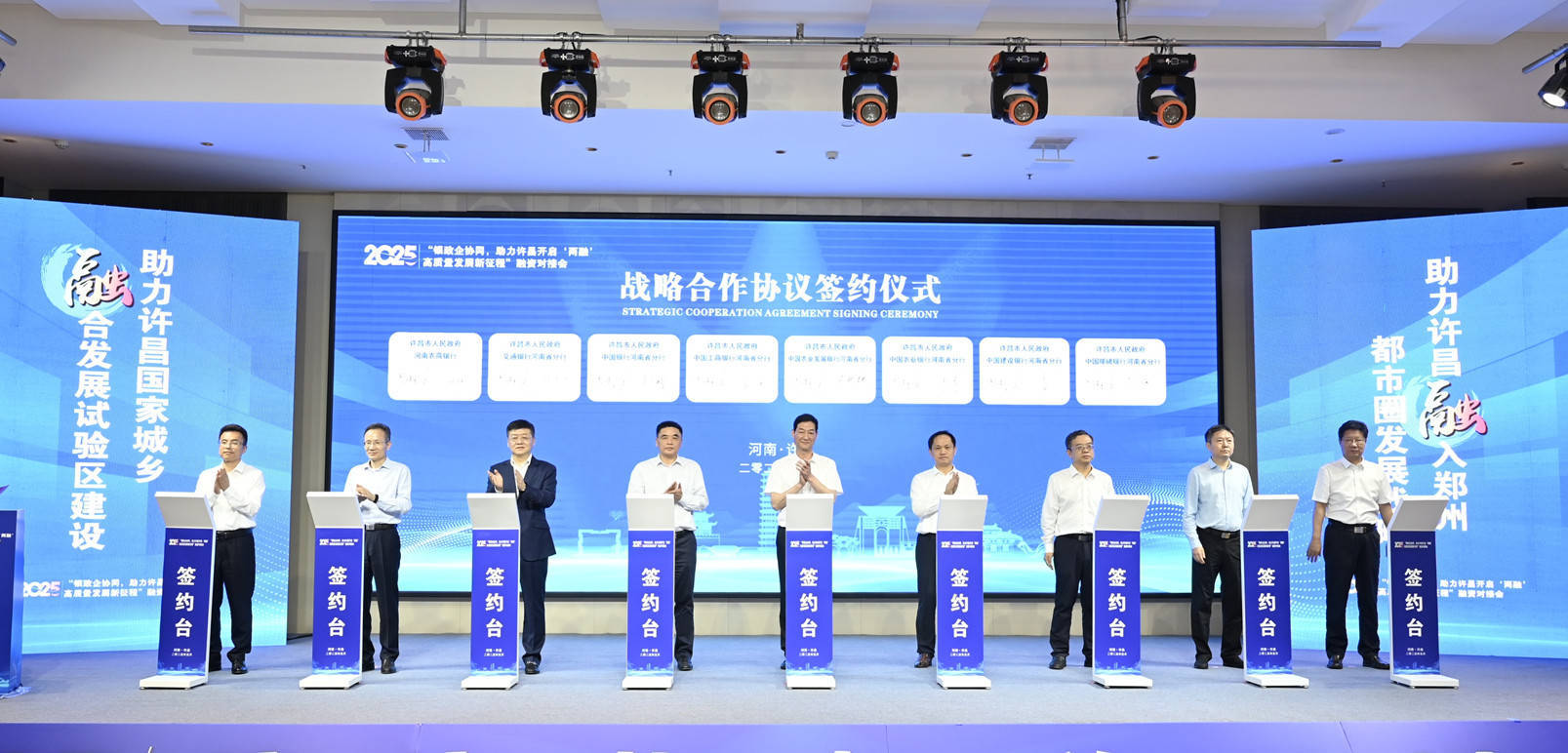
Core Viewpoint - The financing matchmaking event in Xuchang marks a significant advancement in the collaboration between banks, government, and enterprises, aiming to support the high-quality development of the "two financing" model in the region [1][3]. Group 1: Strategic Cooperation - The Xuchang Municipal Government has established deep cooperation intentions with 14 banks, signing strategic cooperation agreements [1]. - The participating banks include major institutions such as Agricultural Development Bank, Industrial and Commercial Bank, Agricultural Bank, Bank of China, and several others [1]. Group 2: Financial Support - Over the next 3 to 5 years, the banks are set to provide approximately 550 billion yuan in financing support to Xuchang, enhancing the financial momentum for the city's "two financing" high-quality development [3]. - The collaboration aims to broaden the channels for bank-enterprise cooperation, with 196 enterprises reaching cooperation intentions with the banks, totaling 56.35 billion yuan [3]. Group 3: Signing Achievements - At the event, 30 enterprises completed on-site agreements with banks, amounting to 20.31 billion yuan [3]. - The successful signing activities reflect the confidence and support of financial institutions in the economic development of Xuchang, providing tangible financing opportunities for local enterprises [3].





上银国证自由现金流指数型证券投资基金基金份额发售公告
Shang Hai Zheng Quan Bao· 2025-05-27 18:37
Fund Overview - The fund is named "Shangyin National Index Free Cash Flow Index Securities Investment Fund" and is classified as an equity fund [14][15] - The fund will be open for subscription from June 4, 2025, to June 24, 2025 [1][19] - The fund aims to closely track the benchmark index while minimizing tracking deviation and error [16] Subscription Details - The minimum subscription amount for the fund is set at RMB 1, including subscription fees [3][28] - Investors can subscribe multiple times during the fundraising period, but once a subscription is accepted, it cannot be revoked [30][40] - The fund does not impose a cap on the total amount raised, but the management may adjust the fundraising scale before the end of the fundraising period [4][19] Management and Custody - The fund is managed by Shangyin Fund Management Co., Ltd., and the custodian is Bank of Communications Co., Ltd. [1][54] - The management company is responsible for the fund's operations and investment decisions, while the custodian ensures the safekeeping of the fund's assets [54] Investor Eligibility - The fund is available to individual investors, institutional investors, qualified foreign investors, and other investors permitted by laws and regulations [1][15] - Each investor is allowed to open only one fund account with the management company, except for specific cases like insurance companies [2][30] Fundraising Conditions - The fund must achieve a minimum of 200 investors and a total subscription amount of at least RMB 200 million to complete the fundraising [19][20] - If the fundraising conditions are not met within the specified period, the fund contract will not take effect, and the raised funds will be returned to investors [20][52] Sales Channels - Subscriptions can be made through the management company's direct sales center and various designated sales institutions [1][17] - The management company may add new sales institutions during the fundraising period, and investors are encouraged to check the official website for updates [13][18]
交通银行深圳分行创新绿色金融服务 助力“双碳”战略落地见效
Zheng Quan Shi Bao· 2025-05-27 18:26
Core Viewpoint - The article emphasizes the commitment of the Bank of Communications Shenzhen Branch to support green development and the "dual carbon" strategy through innovative financing models and successful implementation of green credit projects [1] Group 1: Innovative Financing for Green Projects - The Bank of Communications Shenzhen Branch has successfully launched two green credit projects to promote the development of green industries [1] - A "green channel approval" model was adopted to address the operational funding shortage faced by a green transportation enterprise, resulting in the approval of a special loan of 190 million yuan within five working days [2] - The bank provided interest rate discounts, saving the enterprise over 3 million yuan in financial costs annually, thus alleviating funding pressure and promoting low-carbon economic development [2] Group 2: Support for New Energy Enterprises - The bank introduced an innovative financing model combining "IPO progress tracking + technology valuation enhancement" to support a prospective listed new energy company [3] - A comprehensive technical value assessment of 19 core patents was conducted, leading to a tailored phased credit plan that provided 40 million yuan in low-interest loans [3] - The upgrade of the company's intelligent production line increased production capacity by 20%, enhancing its competitive edge in the market [3] Group 3: Establishing a Long-term Green Finance Mechanism - The Bank of Communications Shenzhen Branch is focused on building a long-term green finance mechanism, achieving a breakthrough with the "carbon reduction loan" product [4] - A "carbon account" accounting system was established to dynamically link corporate emission reduction achievements with financing costs, creating a positive incentive mechanism [4] - The bank aims to inject strong financial momentum into the green low-carbon development of the Guangdong-Hong Kong-Macao Greater Bay Area, positioning itself as a model for state-owned bank green transformation [4]
银行:信用卡新打法
Bei Jing Shang Bao· 2025-05-27 13:39
Core Viewpoint - In 2025, China's economy is at a critical juncture of consumption-driven transformation, with expanding domestic demand and stabilizing growth as core policy goals. The credit card business, as a "main force" in consumer finance, plays a vital role in activating consumption potential [1][3]. Group 1: Market Dynamics - The credit card market has shifted from a "land grab" development model to a more sustainable approach as the market nears saturation. The focus is now on scenario-based and digital strategies to break through the constraints of existing business models [1][7]. - As of the end of 2024, the total number of credit cards and combined lending cards reached 727 million, a decrease of 5.14% year-on-year, indicating a trend of market saturation [7]. Group 2: Marketing Strategies - Credit card issuers are increasingly launching diverse marketing activities during peak consumption seasons, such as traditional holidays and e-commerce shopping festivals, to stimulate consumer enthusiasm [3][4]. - Recent promotional activities include significant cashback offers and discounts for cardholders during events like Mother's Day, showcasing the integration of credit cards into the consumer ecosystem [3][4]. Group 3: Product Innovation - Credit cards are evolving to meet changing consumer demands, expanding into new areas such as health, education, and pet care, while also enhancing integration with various consumption scenarios [4][5]. - Innovations in credit card products are focusing on green finance and digital services, utilizing big data and AI to provide personalized financial services [5][10]. Group 4: Competitive Strategies - To address market saturation, banks are raising quick payment limits and offering installment payment discounts to stimulate consumer spending and extend payment cycles [7][8]. - Recent competitive moves include significant interest rate reductions for installment loans, with promotional rates as low as 2.76% for 12-month plans, aimed at encouraging larger purchases [8]. Group 5: Future Outlook - The credit card industry is expected to continue its growth trajectory by deepening scenario-based and digital transformations, aligning with government initiatives to boost consumption [9][10]. - The integration of advanced technologies such as big data, AI, and blockchain will be crucial for enhancing customer insights, risk management, and product innovation [10][11].




银行:消费贷走出“规模竞赛”
Bei Jing Shang Bao· 2025-05-27 13:39
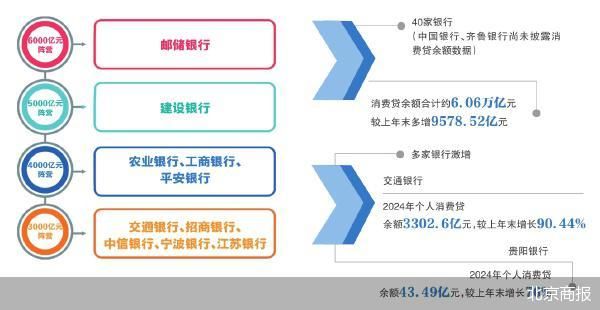
Core Viewpoint - The competition in consumer loans among banks has shifted from a focus on low interest rates to enhancing loan limits and extending loan terms, as banks seek to adapt to changing market conditions and regulatory guidance [1][11][15] Consumer Loan Growth - In 2024, the total consumer loan balance of 40 A-share listed banks increased by over 950 billion yuan, with some banks experiencing growth rates exceeding 90% compared to the previous year [1][3] - The consumer loan balance for these banks reached approximately 6.06 trillion yuan by the end of 2024, marking an increase of 957.85 billion yuan from the previous year [3][4] Interest Rate Trends - Consumer loan interest rates dropped to the "2" range, with some banks offering rates as low as 1.88% for select customers, but this trend has reversed with many banks raising rates to no less than 3% by April 2024 [1][9][10] - The shift back to "3" range interest rates is aimed at preventing excessive competition and potential financial risks associated with low-rate loans [10][11] Bank Strategies - Banks are now focusing on enhancing consumer loan products by increasing limits and extending terms, responding to government initiatives to boost consumption [11][12] - Various banks have begun to raise loan limits and extend repayment periods, with some institutions increasing the maximum loan amount from 300,000 yuan to 500,000 yuan and extending terms from five to seven years [12][16] Market Segmentation - The consumer loan market is showing significant differentiation, with some banks rapidly expanding their loan portfolios through low-rate strategies, while others are contracting due to concerns over rising non-performing loan rates [5][10] - Banks are increasingly targeting specific consumer scenarios, such as home renovations and electric vehicle purchases, to drive loan growth [15][16] Risk Management - The rise in consumer loan balances has led to an increase in non-performing loans, prompting banks to enhance their risk management practices and focus on quality customer segments [9][10][14] - Regulatory bodies are emphasizing the need for banks to monitor the flow of consumer loan funds to mitigate systemic risks [14]
保险爆买了1000亿?
表舅是养基大户· 2025-05-27 13:31
Group 1 - The core issue in the automotive industry is the fierce price competition, particularly affecting the profitability of car manufacturers, with automotive manufacturing profits declining by 5.1% year-on-year despite a revenue increase of 6.9% [1][2] - The government is reportedly convening meetings with car manufacturers and dealers to discuss issues related to "zero-kilometer used cars," indicating regulatory scrutiny in the sector [1] - A specific car dealer in Shandong has faced severe financial difficulties, highlighting the pressures on dealers compared to manufacturers [1] Group 2 - The article suggests that the trend of price reductions in the new energy vehicle sector is unlikely to stop, drawing parallels with the solar industry, which has faced similar challenges [2][3] - Car manufacturers may have two potential paths: to endure the competitive landscape until only a few remain or to establish core competencies and target specific customer segments [4][5] - The current environment is characterized by extreme homogenization, making it difficult for manufacturers to carve out unique positions in the market [6] Group 3 - The Hong Kong stock market continues to outperform the A-share market, with significant inflows from southbound capital, indicating investor confidence in certain sectors [8] - The article outlines four cycles contributing to the positive outlook for Hong Kong stocks, including a low interest rate environment and regulatory easing for insurance capital [9] - Recent performance in the innovation and new consumption sectors has been strong, with notable gains in stocks like Bubble Mart and Mixue Ice City [9][10] Group 4 - There is a significant net inflow of capital into Hong Kong bank stocks, with southbound funds purchasing over 100 billion HKD worth of bank shares since the beginning of the year [12][15] - The concentration of investments is primarily in the major state-owned banks, indicating a strategic focus by institutional investors [15][16] - Monthly purchases of bank stocks have remained stable, suggesting a consistent investment strategy aligned with insurance capital flows [18]

中山各银行上门服务探访:多家可办理,但部分不建议上门开卡
Nan Fang Du Shi Bao· 2025-05-27 12:32
Core Viewpoint - The increasing demand for convenience and personalized financial services has led banks to offer home banking services for clients with mobility issues, particularly the elderly [1][3][4]. Group 1: Home Banking Services - Multiple banks in Zhongshan provide home banking services for elderly clients who are unable to visit bank branches due to mobility issues [1][3]. - Banks require that if an elderly person is not mentally clear, a medical or community certificate is needed to proceed with banking services [3][4]. - Home banking services include account opening and transactions, but specific procedures depend on the client's needs and mental state [4][6]. Group 2: Recommendations Against New Bank Accounts - Some banks recommend using existing social security or medical insurance cards instead of opening new bank accounts for elderly clients, citing convenience and regulatory concerns [7][9]. - Legal experts argue that banks' reluctance to open new accounts for elderly clients lacks legal basis, as regulations support providing services to those with disabilities [9][10]. - It is suggested that elderly clients should avoid opening multiple new bank accounts unless absolutely necessary, to prevent complications [10][11]. Group 3: Legal and Regulatory Context - Regulations from the China Banking Regulatory Commission emphasize the need for banks to develop services for elderly clients and those with disabilities [9]. - The demographic data indicates a significant portion of Zhongshan's population is elderly, highlighting the importance of accessible banking services [9].


交通银行(601328) - 交通银行职工监事辞任公告
2025-05-26 11:00
交通银行股份有限公司(以下简称"交通银行"或"本公司")监事会及全体监事保证 本公告内容不存在任何虚假记载、误导性陈述或者重大遗漏,并对其内容的真实性、准确性 和完整性承担法律责任。 本公司关兴社先生因届退休年龄,于2025年5月26日向本公司监事会提交辞 呈,辞去本公司职工监事、监事会履职尽职监督委员会委员、监事会财务与内控 监督委员会委员职务。关兴社先生的辞任自即日起生效。关兴社先生确认与本公 司监事会无不同意见,也无任何与辞任有关的事项需要通知本公司股东和债权人。 关兴社先生在任期间,忠实勤勉、兢兢业业,在完善监事会监督体系,强化 重点领域监督,提升公司治理水平,维护公司、股东、职工、债权人利益等方面 作出重要贡献。监事会谨此向关兴社先生表示衷心感谢! 特此公告 交通银行股份有限公司监事会 2025 年 5 月 26 日 股票代码:601328 股票简称:交通银行 编号:临2025-041 交通银行股份有限公司 职工监事辞任公告 ...
建行定增事项尚未获得正式批复,业内专家称“只是时间问题”
Hua Xia Shi Bao· 2025-05-26 10:06
Core Points - Recent approvals from the China Securities Regulatory Commission (CSRC) for China Bank, Bank of Communications, and Postal Savings Bank to issue A-shares mark a significant step in capital replenishment for state-owned banks [2][5] - The Ministry of Finance plans to invest 500 billion yuan through cash subscriptions to support the capital of these banks, enhancing their core Tier 1 capital [3][6] - The approval process reflects efficient execution and collaboration among regulatory bodies, indicating the government's commitment to financial stability and economic development [3][4] Capital Increase Details - China Bank has received approval to issue shares, with a registration valid for 12 months, and must report any significant events to the Shanghai Stock Exchange [4][6] - The total fundraising amounts for the banks are as follows: China Bank (165 billion yuan), Bank of Communications (105 billion yuan), Postal Savings Bank (130 billion yuan), and a total of up to 520 billion yuan for all four banks [6][9] - The Ministry of Finance will become a significant shareholder in these banks post-issuance, with ownership stakes increasing to 8.48% in China Bank and 34.80% in Bank of Communications [6][10] Capital Adequacy Ratios - As of the end of 2024, the core Tier 1 capital adequacy ratios for the banks are: China Bank (12.20%), Construction Bank (14.48%), Bank of Communications (10.24%), and Postal Savings Bank (9.56%) [9][10] - Post-capital increase, these ratios are expected to improve, with China Bank's ratio rising to 13.06% and Postal Savings Bank's to 11.07% [10][11] Market Confidence and Pricing - The issuance prices for the new shares are set above the current market prices, indicating a premium issuance that aims to boost market confidence [12][14] - For example, China Bank's issuance price is set at 5.93 yuan per share, with a premium of 7.62% over the current market price [12][13] - The pricing strategy is designed to balance the interests of new and existing shareholders while enhancing the bank's long-term value [14]


交通银行深圳分行心系助残事业 积极协办美丽工坊
Ren Min Wang· 2025-05-26 10:05
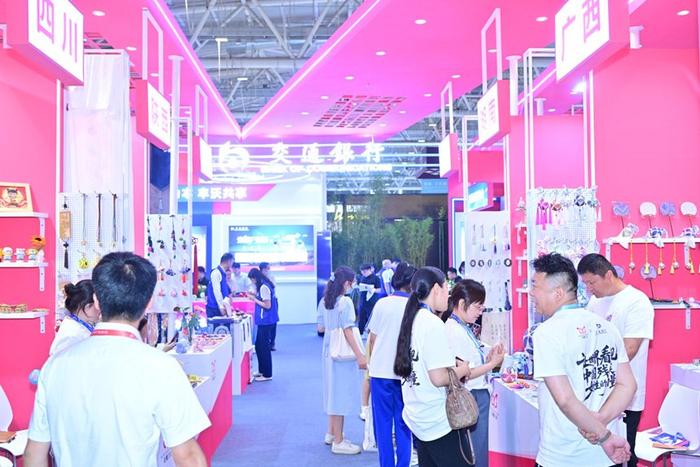
Group 1 - The "Beautiful Workshop" exhibition showcases handicrafts made by disabled women, including embroidery, weaving, enamel, and pottery, during the 21st China (Shenzhen) International Cultural Industries Fair [5] - The exhibition is part of the "Towards Tomorrow - Bank of Communications' Action Plan for Assisting the Disabled" initiative, launched in 2023 in collaboration with the China Disabled Persons' Federation [5] - Bank of Communications Shenzhen Branch provided comprehensive support for the exhibition, including a volunteer team of about 50 members to assist participants and visitors [5][3] Group 2 - The bank utilized an online and offline promotional strategy to enhance the exhibition's visibility and impact, offering financial value-added services such as credit card promotions and discounts for WeChat payments [5] - Over the past 18 years, the Bank of Communications has donated a total of 120 million yuan to assist over 50,000 disabled individuals and workers in the disabled community [5] - The bank plans to deepen cooperation with the Disabled Persons' Federation and other social sectors, focusing on humanitarian principles and enhancing financial services for the disabled [6]