CALB(03931)

Search documents
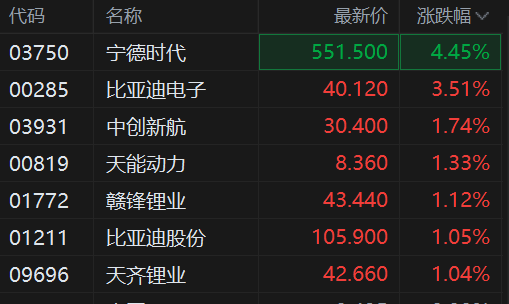
港股锂电池股拉升,宁德时代盘初涨超6%
Mei Ri Jing Ji Xin Wen· 2025-10-21 02:22
Core Viewpoint - The Hong Kong lithium battery stocks experienced a significant rally on October 21, with notable increases in share prices for several key companies in the sector [1] Company Summaries - Contemporary Amperex Technology Co., Ltd. (CATL) saw its stock price rise over 6% at the beginning of trading [1] - BYD Electronics reported a stock increase of 3.5% [1] - Zhongchuang Innovation Holdings experienced a nearly 2% rise in its stock price [1] - Other companies such as Tianneng Power, Ganfeng Lithium, Tianqi Lithium, and BYD Company all recorded stock price increases of over 1% [1]


港股异动丨锂电池股拉升 宁德时代绩后涨超6% 比亚迪电子涨3.5%
Ge Long Hui· 2025-10-21 02:13
Group 1 - The core viewpoint of the article highlights the significant rise in Hong Kong lithium battery stocks, particularly with companies like CATL and BYD Electronics showing notable gains [1] - CATL reported a net profit attributable to shareholders of 18.55 billion RMB for Q3 2025, marking a substantial year-on-year increase of 41.21%, while its revenue reached 104.19 billion RMB, up 12.90% year-on-year [1] - The company indicated that the domestic energy storage market is expected to experience rapid growth following the issuance of the 136 document on energy storage [1] Group 2 - Solid-state batteries are identified as a key technological direction for the next generation of lithium batteries, with broad application prospects in new energy vehicles and low-altitude economy sectors [1] - Recent advancements by Chinese scientists in solid-state battery technology have been reported, indicating progress in this cutting-edge field [1] Group 3 - The stock performance of various lithium battery companies is noted, with CATL rising over 6%, BYD Electronics up 3.5%, and other companies like Zhongxin Innovation, Tianneng Power, Ganfeng Lithium, Tianqi Lithium, and BYD Co. all showing gains of over 1% [1]


守核心技术 护产业安全
中国能源报· 2025-10-20 01:43
Core Viewpoint - The recent export controls on lithium batteries and related manufacturing equipment by the Ministry of Commerce and the General Administration of Customs reflect China's commitment to managing high-end technology and key equipment while ensuring the stability of global supply chains [1][2]. Industry Development Perspective - The export controls target the core segments of China's lithium battery industry, including high energy density batteries and related production equipment, where Chinese companies like CATL, BYD, and Zhongxin Innovation have established technological advantages [2]. - The management of weight energy density, materials, and process equipment through export controls aims to protect core technologies from outflow and encourages companies to enhance independent innovation and collaborative development across the entire supply chain [2]. - This policy shift promotes a transition from scale expansion to technology-driven growth, enhancing international bargaining power and supply chain leadership in the context of accelerating global competition in the new energy sector [2]. International Perspective - China's export controls align with the responsible behavior of a major power, as controlling dual-use and high-tech products is a common global practice aimed at preventing potential risks and maintaining regional and global peace [2]. - The precise management of technology indicators and categories avoids a one-size-fits-all approach while ensuring that compliant trade continues, reflecting China's institutional confidence and responsibility in global supply chain governance [2]. Innovation and Upgrading - The export controls are expected to drive innovation and upgrading within the industry, as companies enhance their core technology levels and market competitiveness through a comprehensive "R&D—pilot testing—mass production—application" system [3]. - The policy will create a safety barrier for the high-end lithium battery industry, providing momentum for technological innovation and industrial upgrading [3]. - The organic combination of policy guidance, technological innovation, and market-driven forces positions China's lithium battery industry for high-quality development, contributing to global energy transition and green development [3].

2025年中国锂离子电芯行业产业链全景、行业产量、行业产值、市场需求及未来发展趋势研判:储能市场开启第二增长曲线,行业格局向头部集中[图]
Chan Ye Xin Xi Wang· 2025-10-18 02:18
Core Insights - The lithium-ion cell industry is experiencing robust growth driven by the "dual carbon" strategy, with annual growth rates exceeding 30% for new energy vehicles from 2021 to 2024, and a 37% year-on-year increase in production and sales in the first eight months of 2025 [1][6] - The total production of lithium batteries in China is projected to rise from 750 GWh in 2022 to 1,170 GWh in 2024, with a staggering 68% year-on-year increase in the first four months of 2025 [1][8] - Despite fluctuations in raw material prices leading to a decrease in industry total output value to 1.2 trillion yuan in 2024, the energy storage sector continues to drive growth, indicating strong future demand [1][11] Industry Overview - Lithium-ion cells are the core energy units of lithium-ion battery systems, consisting of four key materials: cathode, anode, electrolyte, and separator [2] - The industry is categorized into three segments: power batteries, energy storage batteries, and consumer batteries, with power batteries being the primary driver and energy storage systems emerging as the fastest-growing segment [6][8] Market Dynamics - The new energy vehicle market is the main growth driver for lithium-ion batteries, with production and sales maintaining an average annual growth rate of over 30% from 2021 to 2024 [6][8] - The energy storage sector is also experiencing explosive growth, with installed capacity expected to reach over 40% of the global total by the end of 2024, and a 29% increase in the first half of 2025 compared to the end of 2024 [1][6] Production Trends - The production of lithium batteries in China is expected to grow significantly, with a compound annual growth rate of 24.9% from 2022 to 2024, and a 68% year-on-year increase in early 2025 [1][8] - The market structure is evolving from being driven by consumer electronics to a dual-driven model of new energy vehicles and energy storage [8] Future Development Trends - The lithium-ion cell industry is expected to transition towards high-quality development driven by technology, with a focus on material breakthroughs and the industrialization of solid-state batteries [12][13] - The market will see a shift from price competition to a comprehensive competition involving technology, supply chains, and business models, leading to increased market concentration [12][14] - The industry is moving towards a more concentrated and ecological model, with leading companies leveraging their advantages to outcompete smaller firms and establish a closed-loop recycling system [14]



中创新航产能不足,智界车型改用宁德时代电芯
起点锂电· 2025-10-17 10:08
Group 1 - The CINE2025 Solid-State Battery Exhibition and Industry Annual Conference will be held from November 6 to 8, 2025, at the Guangzhou Nansha International Convention and Exhibition Center, featuring over 200 exhibitors and 20,000 professional attendees [1][6][7] - The event will include the 2025 Qidian Solid-State Battery Golden Ding Award Ceremony and the SSBA Solid-State Battery Industry Alliance Council [1][6] - The first batch of exhibitors and sponsors includes companies such as Jin Na Technology, Ru Tian Technology, and Rongjie Energy, among others [1][6] Group 2 - Due to insufficient production capacity from Zhongchuang Xinhang, some models from Zhijie will switch to using CATL's 82 kWh battery, which meets Huawei's "Giant Whale" battery platform standards [2][5] - The transition aims to expedite vehicle deliveries and ensure customers benefit from national tax reduction policies [2][5] - The cost of CATL's battery cells is higher than that of Zhongchuang Xinhang, but vehicle prices will remain unchanged [2][5]

财界观察 | 中创新航落子枣庄,“中国新能源电池名城”有了新期待
Xin Lang Cai Jing· 2025-10-17 08:39
Core Insights - The strategic planning of Zaozhuang City aims to establish itself as "China's New Energy Battery Capital," further strengthened by the settlement of leading battery companies [1][2] Group 1: Company Developments - Zhongchuang Innovation Technology Group has signed a cooperation agreement with the Zaozhuang and Tengzhou governments, marking its first major base project in Shandong Province [1] - The company ranks fourth globally in power battery installation volume for the first eight months of 2025, with a continuous increase in market share [1] - In the first half of 2025, Zhongchuang's revenue grew by 31.7% year-on-year, while net profit surged by 80.4% [1] Group 2: Industry Context - Zaozhuang's choice to develop the lithium battery industry aligns with local industrial foundations and Shandong's new energy policy direction [2] - The city has historically relied on coal-related industries, which constituted over 80% of its economic output, but is now transitioning to new energy sectors due to dwindling coal resources [2] - Zaozhuang has implemented various supportive measures for the lithium battery industry, including the introduction of the "Zaozhuang Lithium Battery Industry Development Promotion Regulations" [3] Group 3: Regional Initiatives - Tengzhou has integrated into Zaozhuang's development strategy, promoting breakthroughs in lithium battery and new energy industries [3] - The city has established a comprehensive industrial framework and issued implementation opinions to accelerate lithium battery development [3] - Local government officials have committed to providing high-level support and coordination to ensure the successful launch and operation of the Zhongchuang project [4][5]

华为智界部分车型改用宁德时代电芯以加快交车
3 6 Ke· 2025-10-17 08:18
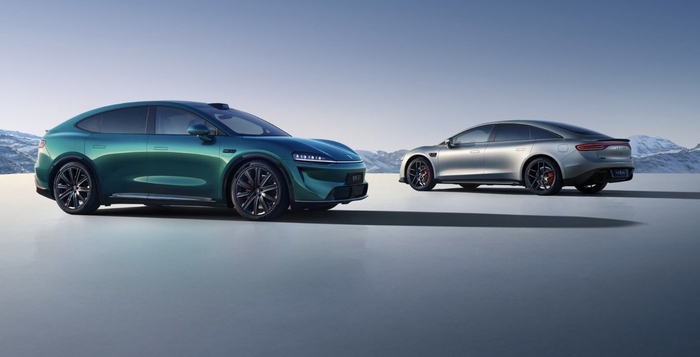
Core Viewpoint - Huawei's decision to switch some models of its Zhijie series to CATL batteries aims to accelerate vehicle deliveries and ensure customers benefit from tax incentives [1] Group 1: Battery Supply and Performance - Due to insufficient production capacity from Zhongxin Innovation, Huawei will allocate a batch of CATL 82 kWh batteries (a mix of ternary lithium-ion and lithium iron manganese) for certain Zhijie models [1] - Both CATL and Zhongxin Innovation batteries meet Huawei's "Giant Whale" battery platform standards, ensuring consistent performance, lifespan, and functionality [1] Group 2: Financial Implications - The switch to CATL batteries, which are more expensive than those from Zhongxin Innovation, will not affect the vehicle pricing [1] - The move is also intended to help customers take advantage of the national tax reduction policy, which offers a reduction of 30,000 yuan this year and 15,000 yuan next year [1]
华为智界部分车型换用宁德时代电芯
鑫椤锂电· 2025-10-17 07:48
Core Viewpoint - The article discusses the adjustment in battery supply for certain models of the Zhijie brand due to insufficient production capacity from the original supplier, Zhongchuang Xinhang. The company will now utilize batteries from CATL to ensure timely vehicle deliveries and compliance with national tax reduction policies. Group 1 - Due to insufficient production capacity from Zhongchuang Xinhang, Zhijie models will switch to using CATL's 82 kWh batteries, which meet Huawei's "Giant Whale" battery platform standards [1] - This change aims to accelerate vehicle deliveries and allow customers to benefit from the national purchase tax reduction policy, which offers a reduction of 30,000 yuan this year and 15,000 yuan next year [2] - The cost of CATL's battery cells is higher than that of Zhongchuang Xinhang, but the vehicle prices will remain unchanged [3]
汽车汽配:9月乘用车销量创新高,地区补贴差异化显现
Huajing Securities· 2025-10-17 06:07
Investment Rating - The report indicates a positive outlook for the automotive and auto parts industry, particularly for new energy vehicles (NEVs) with a retail sales forecast of 1.4 million units for 2025 [5]. Core Insights - In September, retail sales of passenger cars reached a record high of 2.241 million units, marking a year-on-year increase of 6.3% and a month-on-month increase of 11.0% [3]. - The penetration rate of new energy vehicles in retail sales rose to 57.8%, up 5 percentage points year-on-year [3]. - The total sales of power and energy storage batteries in September reached 146.5 GWh, a year-on-year increase of 42.2% [4]. - The average battery capacity for new energy vehicles was 55.0 KWh, reflecting a month-on-month growth of 2.0% [4]. Summary by Sections Passenger Vehicle Sales - In September, retail sales of passenger vehicles were 2.241 million units, with wholesale sales at 2.803 million units, showing year-on-year growth of 6.3% and 12.4% respectively [3]. - Cumulative retail sales for the first nine months of 2025 reached 17.005 million units, a 9.2% increase year-on-year [3]. New Energy Vehicle Performance - Retail sales of new energy vehicles in September were 1.296 million units, with a year-on-year increase of 15.4% [3]. - Cumulative retail sales for new energy vehicles in the first nine months of 2025 reached 8.866 million units, a 24.4% increase year-on-year [3]. Battery Market Insights - The power battery installation volume in September was 76.0 GWh, a year-on-year increase of 39.5% [4]. - The sales volume of power batteries was 110.5 GWh, reflecting a significant year-on-year growth of 75.5% [4]. Market Trends - The promotional intensity for new energy vehicles in September was maintained at a high level of 10.2%, an increase of 2.6 percentage points compared to the same period last year [5]. - The report highlights a shift in the market towards reduced price competition and stable promotions, with 23 models experiencing price cuts in September [5].
华为智界部分车型换用宁德时代电芯
Mei Ri Jing Ji Xin Wen· 2025-10-17 03:48
Core Viewpoint - Due to insufficient production capacity of Zhongxin Innovation's battery cells, Huawei's Zhijie models will start using CATL's battery cells to ensure timely vehicle delivery and compliance with tax incentives [1] Group 1: Battery Supply Chain - Huawei's Zhijie models will switch to CATL's 82 kWh battery cells, which are a mix of ternary lithium-ion and lithium iron manganese [1] - The performance, lifespan, and functionality of both CATL and Zhongxin Innovation batteries meet Huawei's "Whale" battery platform standards [1] - The warranty policies for both battery brands will remain consistent despite the switch [1] Group 2: Financial Implications - The decision to switch to CATL's batteries is aimed at accelerating vehicle delivery and allowing customers to benefit from a national tax reduction policy (3 million this year and 1.5 million next year) [1] - The cost of CATL's battery cells is higher than that of Zhongxin Innovation, but the vehicle prices will remain unchanged [1]