
INTEL(04335)

Search documents
【产业互联网周报】 SAP 前高管邓永富加盟销售易任总裁;特朗普政府将收购英特尔10%股份;DeepSeek-V3.1正式发布;IDC:2024年中国大模型开发平台市场规模达16.9亿元人民币
Sou Hu Cai Jing· 2025-08-25 02:39
Domestic News - Former SAP executive Deng Yongfu has joined SalesEase as president, bringing over 20 years of experience in enterprise management software, big data, and AI [2] - Alibaba Cloud has launched the AI Agent memory storage feature for its Tablestore, reducing overall storage costs by 30% [3] - Huawei's public sector business in China is expected to grow by 25% year-on-year in 2024, with the computing sector growing by 80% [5] - Alibaba's former partner Cai Jingxian has joined startup Beilian Zhuguan as a technical partner, focusing on big data and AI infrastructure [6] - Lenovo plans to establish a regional headquarters in Riyadh, Saudi Arabia, creating 15,000 direct and 45,000 indirect jobs by 2030 [7] Technology Developments - Xiaohongshu's AIGC team has introduced a new algorithm for controllable face generation in images and videos [8] - Alibaba's Tongyi Qianwen has launched the Qwen-Image-Edit model for precise text editing in images [9] - Manus has reported a revenue run rate of $90 million, with subscription plans starting at $19 per month [13] - Baidu's Q2 revenue reached 32.7 billion yuan, with a core net profit growth of 35% [14] - Kingsoft reported a Q2 revenue of 2.307 billion yuan, a year-on-year decline of 7% [15] - GDS Holdings reported a net revenue of 2.9 billion yuan in Q2, a year-on-year increase of 12.4% [16] Market Trends - The AI application landscape is rapidly evolving, forming four tiers of development, with mobile AI applications reaching 680 million active users [41] - The electronic information manufacturing industry saw a year-on-year increase of 11.1% in added value in the first half of the year [42] - The Chinese market for large model development platforms is projected to reach 1.69 billion yuan by 2024 [46] - The global cybersecurity market is expected to exceed $400 billion by 2029, with China's market growing at a compound annual growth rate of 9.7% [53] Financing and Mergers - Advent International is proposing to acquire Swiss chip manufacturer U-blox for approximately $1.3 billion [34] - The Chinese Unicom Group's Henan subsidiary has increased its registered capital to approximately 2.68 billion yuan, a 119% increase [35] - Intel's market value has surged by $24 billion, reaching levels not seen since the internet bubble [32] - Anthropic is nearing a new financing agreement of up to $10 billion, doubling its previous target [40]



特朗普 “混改”英特尔
3 6 Ke· 2025-08-24 23:30
Core Viewpoint - The agreement between Intel and the Trump administration marks a significant intervention by the U.S. government in the tech industry, with the government investing $8.9 billion for a 9.9% equity stake in Intel, reflecting a shift from grants to direct ownership [1][4][22]. Group 1: Investment Details - The U.S. government will purchase 433.3 million shares of Intel at $20.47 per share, representing a 17% discount from Intel's closing price of $24.80 on the announcement day [4]. - The $8.9 billion investment is sourced from reallocated funds from existing government subsidy programs, including $5.7 billion from the CHIPS and Science Act and $3.2 billion from the Secure Enclave project [4][5]. - The agreement allows the government to hold a passive ownership stake, meaning it will not have board representation or special governance rights [7]. Group 2: Implications for Intel - The agreement transforms Intel's expected cash inflow from grants into a capital investment that requires relinquishing ownership [5]. - The removal of profit-sharing and claw-back clauses from previous grants provides Intel with greater flexibility in capital operations [7]. - Intel is facing significant financial challenges, reporting a $18.8 billion loss in fiscal year 2024, marking its first annual loss since 1986 [12][13]. Group 3: Strategic Context - The investment is part of a broader trend of government intervention in the economy, reflecting a shift towards a more active industrial policy in the U.S. [21][22]. - The agreement is seen as a critical step for Intel to secure funding for its ambitious plans to expand its chip manufacturing capabilities, which require over $100 billion in investments [14][17]. - The deal highlights the ongoing competition in the semiconductor industry, particularly against rivals like TSMC and Nvidia, and underscores the importance of maintaining domestic manufacturing capabilities for national security [18][22].
“特朗普救得了英特尔?未必”
Guan Cha Zhe Wang· 2025-08-24 07:09
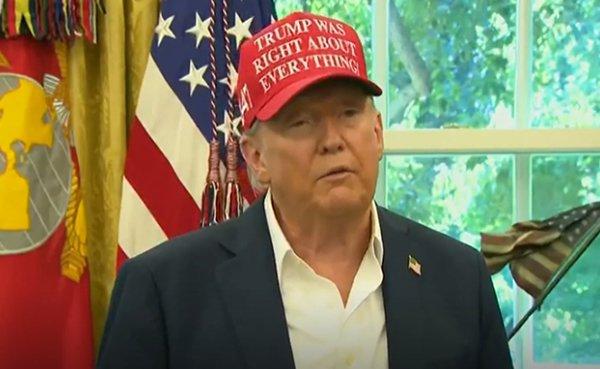
Core Viewpoint - The U.S. government has invested $8.9 billion in Intel to acquire a 9.9% stake, which is touted as a "win-win" for both parties, aiming to strengthen U.S. leadership in the global chip industry, although analysts express skepticism about its sufficiency for Intel's chip manufacturing revival [1][10]. Group 1: Investment Details - The U.S. government purchased 433.3 million shares at $20.47 each, totaling approximately $8.9 billion, funded by previously allocated subsidies under the CHIPS and Science Act and other government projects [9][10]. - This investment brings the total government support for Intel to $11.1 billion, including $2.2 billion already received [10]. Group 2: Challenges Facing Intel - Intel's CEO has warned that without securing major customers, the company may have to exit the chip foundry business, emphasizing the need for confirmed customer commitments for its advanced 14A process [3][4]. - The company is struggling with low yield rates in its 18A process, making it difficult to attract new clients, especially given its ongoing financial losses [3][4]. Group 3: Historical Context - Intel, founded in 1968, was once a dominant player in the semiconductor industry, but has faced significant challenges and management missteps over the years, leading to a decline in its market position [5][6]. - The company has attempted various strategies to regain its footing, including inviting former executives back and proposing ambitious manufacturing plans, but has faced delays and setbacks [7][8]. Group 4: Market Reactions and Implications - The market reacted positively to the announcement, with Intel's stock rising 7% on the day of the investment announcement, indicating some investor confidence in the government's support [10]. - Analysts have mixed views on the implications of government ownership, with concerns about governance issues and the potential impact on Intel's ability to act in shareholders' best interests [10][11].
特朗普抢走英特尔10%股权?台积电急了:或退回美国“芯片补贴”
Sou Hu Cai Jing· 2025-08-24 02:31
Group 1 - Intel has become a "state-owned enterprise" as the U.S. government acquired a 10% stake, making it the largest shareholder, valued at $11 billion [1] - The U.S. government initially intended to provide Intel with $11.1 billion in subsidies but instead negotiated for equity in exchange for the same amount, surprising many companies [3] - Other companies that received U.S. subsidies, such as TSMC and Samsung, are now concerned about potential equity demands from the government following Intel's precedent [5][7] Group 2 - TSMC executives are reportedly discussing whether to return the subsidies granted under the CHIPS and Science Act due to fears of equity demands from the U.S. government [7] - The situation raises questions about the future of U.S. chip subsidies and their implications for companies, as the precedent set by Intel may lead to different interpretations of subsidy agreements [9]

帮主郑重夜观美股:鲍威尔松口降息,特朗普拿下英特尔10%股权,中概股嗨翻!
Sou Hu Cai Jing· 2025-08-23 23:08
Market Overview - The US stock market experienced a significant surge, with the Dow Jones Industrial Average rising by 846 points to reach a historical high of 45,631 points, while the Nasdaq and S&P 500 also saw substantial gains [3] - Major technology companies such as Nvidia, Meta, Google, Amazon, and Tesla reported increases in stock prices, with Tesla jumping by 5% [3] Federal Reserve Insights - Jerome Powell's dovish remarks at the Jackson Hole conference indicated a "strange balance" in the labor market, suggesting a cooling in both supply and demand, with July's non-farm payrolls revised down to only 73,000, missing expectations by over 40,000 [3] - The probability of a rate cut in September has surged to 91%, leading to a drop in US Treasury yields and a weakening dollar, which in turn fueled investments in the stock market [3] Government Intervention in Intel - The US government has acquired a 10% stake in Intel, becoming the largest shareholder, which is seen as a strategic move amid the ongoing technology competition [4] - This acquisition replaces a previously planned $10.9 billion subsidy under the CHIPS and Science Act, indicating a shift towards equity stakes in key technology firms [4] Chinese Stocks Performance - Chinese stocks such as Miniso and NIO saw significant increases, with Miniso rising by 20% and NIO by 14.44%, reflecting optimism regarding the recovery of Chinese consumer spending [4] - The Nasdaq Golden Dragon China Index rose by 2.73%, benefiting from the overall bullish sentiment in the US market [4] Global Market Trends - Other markets also showed positive trends, with crude oil prices slightly increasing, gold prices rising by 1%, and the Philadelphia Gold and Silver Index reaching a historical high [4] - The European Stoxx 600 index is approaching its historical peak, indicating a global trend of capital flowing into risk assets amid expectations of interest rate cuts [4]

美国政府入股英特尔,陆行之提五大观察方向
Jing Ji Ri Bao· 2025-08-23 22:48
Core Viewpoint - The U.S. government has acquired a 10% stake in Intel, indicating a shift from passive investment to potential active involvement in the company's future [1] Group 1: Government's Investment Strategy - The U.S. government purchased 433.3 million shares of Intel at $20.47 per share, totaling approximately $8.87 billion, representing a nearly 9.9% ownership stake [1] - The government is currently a passive investor without board representation, but future involvement may depend on Intel's performance under CEO Pat Gelsinger [1] - The transition from grants to equity investment suggests the government will seek ways to support Intel's recovery and growth in the semiconductor sector [1] Group 2: Potential Actions by the U.S. Government - Possible introduction of targeted semiconductor tariffs, with conditions potentially shifting from "Made in America" to "American-owned companies manufacturing in America" [2] - Strategies may include attracting U.S. customers and TSMC to invest in Intel or significantly increasing capital expenditures to compete with TSMC on advanced manufacturing processes [2] - Consideration of a policy to increase the usage of semiconductors produced by American-owned companies in the U.S. [2] - Potential restrictions on Intel's non-U.S. competitors regarding the procurement of American technology, equipment, and materials [2] - Antitrust actions may be considered if Intel's situation does not improve, although this may take time [2]
投89亿美元,美国政府“国有化”英特尔
2 1 Shi Ji Jing Ji Bao Dao· 2025-08-23 12:56
Core Viewpoint - The U.S. government has agreed to invest $8.9 billion in Intel, acquiring 9.9% of the company's shares, which signifies a deep involvement in the capital structure of a leading semiconductor manufacturer [2] Group 1: Investment Details - The investment will be made at a price of $20.47 per share, totaling 433.3 million shares [2] - The funding sources include $5.7 billion from previously granted but unpaid funds under the CHIPS and Science Act and $3.2 billion from the Department of Defense's Secure Enclave project [4] - The total investment from the U.S. government in Intel has reached $11.1 billion, including $2.2 billion already received from the CHIPS Act [4] Group 2: Strategic Implications - The U.S. government's investment aims to strengthen domestic advanced manufacturing capabilities and reduce supply chain risks while gaining a competitive edge in technology and industry [2] - The investment is characterized as passive, meaning the government will not have governance control or board seats [4] - Intel has been investing heavily in its U.S. manufacturing capabilities, with $108 billion in capital and $79 billion in R&D over the past five years [4] Group 3: Market Context - Intel faces significant challenges in the AI sector, where it has fallen behind competitors like Nvidia, which has a market capitalization exceeding $4 trillion [5] - To alleviate financial pressure, Intel is cutting operational expenses and focusing on wafer foundry services, chip products, and AI strategies [5] - Prior to the government's investment, Intel also secured a $2 billion investment from SoftBank at a price of $23 per share [5]
特朗普政府入股英特尔,华裔CEO此前被其要求辞职
Sou Hu Cai Jing· 2025-08-23 12:04
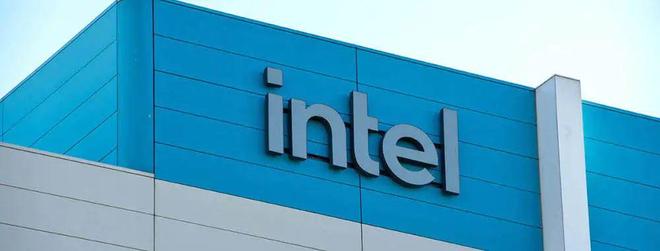
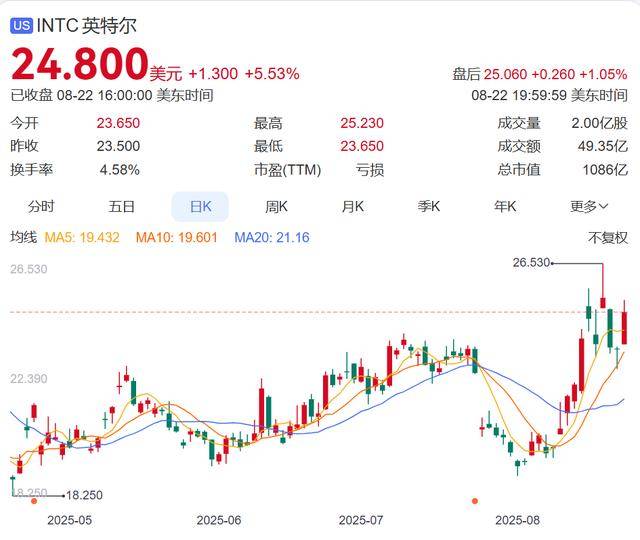
Group 1 - Intel has reached an agreement with the U.S. federal government for an investment of $8.9 billion, acquiring 9.9% of the company's shares at $20.47 per share [1][3] - Following the announcement, Intel's stock price increased by 5.53%, closing at $24.8, with a total market capitalization of $108.6 billion [1] - In July, Intel announced layoffs and the cancellation of certain overseas projects due to poor management, with over 20,000 employees laid off this year [3][4] Group 2 - In Q2, Intel reported a revenue of $12.9 billion, a slight increase from $12.8 billion year-on-year, but incurred a net loss of $2.9 billion, including significant restructuring costs [4] - The company's client products revenue decreased by 3% to $7.9 billion, while data center and AI business revenue grew by 4% to $3.9 billion [4] - Intel's projected revenue for Q3 is between $12.6 billion and $13.6 billion, with adjusted earnings per share expected to be zero, falling short of market expectations [4] Group 3 - CEO Chen Lifeng emphasized the need for organizational restructuring to improve efficiency and focus resources on future growth areas, particularly AI and foundry services [3][4] - Chen Lifeng's leadership has seen multiple rounds of layoffs and project cancellations, including a significant reduction in workforce and the closure of new projects in Germany and Poland [4] - The company has faced scrutiny from former President Trump, who called for Chen Lifeng's resignation due to alleged conflicts of interest [4][5]
怎么看特朗普政府入股?美知名投行分析师:未改变英特尔落后竞争多年现实
Di Yi Cai Jing· 2025-08-23 08:59
Core Viewpoint - Intel has reached an agreement with the U.S. government for an investment of $8.9 billion, acquiring 9.9% of Intel's common stock at $20.47 per share, which has led to a 5.5% increase in Intel's stock price [1][4]. Group 1: Investment Details - The U.S. government will purchase 433.3 million shares of Intel at a price lower than the market closing price of $24.80, but similar to the price from early August [4]. - The agreement includes a five-year warrant allowing the government to acquire an additional 5% of Intel's shares at $20 per share, contingent upon Intel relinquishing majority control of its foundry business [4][5]. - The ownership by the U.S. government will be passive, without board representation or governance rights, but it will support board decisions requiring shareholder approval [5]. Group 2: Strategic Implications - This investment is seen as a safety net for Intel, providing positive momentum, although it does not change the reality of Intel's competitive lag [1]. - The agreement alleviates pressure on Intel regarding funding from the CHIPS Act, which is contingent on meeting certain construction milestones [6]. - The U.S. government aims to gain direct benefits from funding key companies, indicating a potential for more similar transactions in the future [7].
美国政府以89亿美元收购英特尔9.9%股份
Zheng Quan Shi Bao Wang· 2025-08-23 08:29
Core Viewpoint - Intel has secured significant investments from both the U.S. government and SoftBank, marking a pivotal moment in the company's transformation and strategic direction [1][2]. Group 1: Investment Details - The U.S. government will invest $8.9 billion to acquire a 9.9% stake in Intel, making it a major shareholder [1]. - The investment is funded by $5.7 billion in subsidies from the CHIPS and Science Act and an additional $3.2 billion from government projects [1]. - SoftBank will invest $2 billion in Intel at a price of $23 per share, reflecting confidence in Intel's long-term vision for digital transformation and advanced technology [2]. Group 2: Financial Performance - Intel reported second-quarter revenue of $12.86 billion, remaining flat year-over-year, but incurred a net loss of $2.9 billion, widening from a loss of $1.6 billion in the same period last year [2]. - The company aims to achieve $17 billion in operating expenses by 2025, having already reduced its workforce by approximately 15% [3]. Group 3: Strategic Initiatives - Intel is focused on enhancing capital efficiency, targeting total capital expenditures of $18 billion by 2025, and is optimizing its global manufacturing footprint [3]. - The company has decided to halt projects in Germany and Poland as part of its strategy to improve capital returns [3].