STARBUCKS(04337)

Search documents
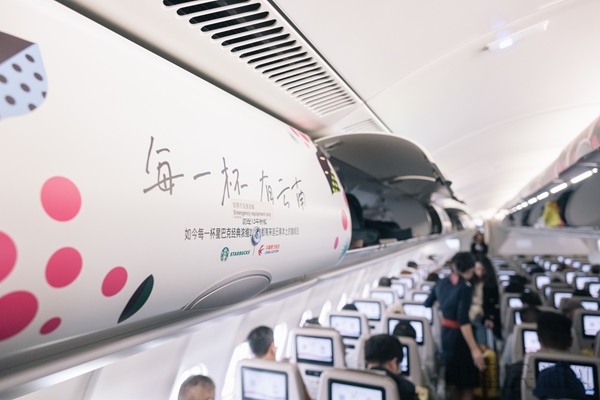
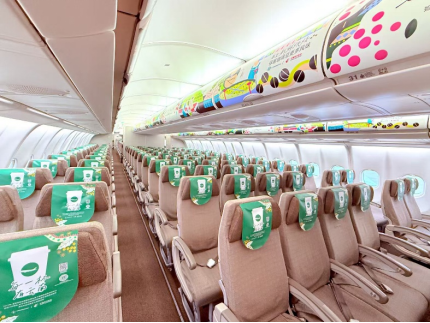
“航空+咖啡”跨界 东航携手星巴克打造“云南咖啡主题航班”
Zhong Guo Min Hang Wang· 2025-10-22 07:40
Core Viewpoint - The launch of the "Yunnan Coffee Themed Flight" by China Eastern Airlines and Starbucks China represents a significant step in integrating aviation with cultural tourism, enhancing member services and brand collaboration [1][4]. Group 1: Themed Flight Details - The flight is designed around the theme "Every Cup, from Yunnan," showcasing Yunnan's coffee culture throughout the journey [2]. - Passengers can enjoy cold brew coffee made from Starbucks' selected Yunnan Menglian sun-dried coffee beans, along with exclusive gifts such as themed neck pillows, badges, and coffee manuals [2][5]. - The themed flight will operate for a month, connecting various routes and sharing the story of Yunnan coffee across China [2]. Group 2: Collaboration and Membership Benefits - The themed flight is part of a broader collaboration between China Eastern Airlines and Starbucks China, which began on July 14, 2025, focusing on member integration and shared benefits [4]. - Nearly 200 million members can enjoy mutual points exchange, with specific perks for different membership tiers, such as free coffee for certain cardholders and complimentary in-flight Wi-Fi for Starbucks members [4]. Group 3: Social Responsibility and Future Plans - The launch of the themed flight also emphasizes corporate social responsibility, as it carries 21 medical experts from Shanghai Jiao Tong University to conduct free medical services in rural areas of Yunnan [6]. - China Eastern Airlines plans to continue its partnership with Starbucks to enhance member benefits, create more themed flights, and promote green travel initiatives, contributing to the high-quality development of the aviation and tourism industries [7].


星巴克云南咖啡主题航班首飞 开启咖啡原产地文旅体验
Zheng Quan Ri Bao· 2025-10-22 07:16
Core Insights - Starbucks China and China Eastern Airlines launched the "Yunnan Coffee Themed Flight," marking a new collaboration in the "coffee + travel" sector [1][2] - The flight features specially designed cabin decor and offers passengers a unique tasting experience with Yunnan coffee [1][2] - Starbucks has been actively involved in promoting Yunnan coffee since establishing a support center in 2012, showcasing the quality improvements over the years [1][3] Group 1: Collaboration and Initiatives - The partnership between Starbucks China and China Eastern Airlines aims to leverage complementary resources to explore the integration of coffee and travel [1][2] - The themed flight will operate for a month, spreading the story of Yunnan coffee to various destinations [2] - Starbucks has invested over 17 million yuan in rural revitalization projects in Yunnan, focusing on integrating agriculture, culture, and tourism [2] Group 2: Product Development and Marketing - In 2025, Starbucks will introduce Yunnan's Yellow Bourbon coffee beans for the ninth consecutive year, highlighting the collaboration with local farmers [3] - A series of promotional activities themed "Every Cup, with Yunnan" will take place in October 2025, coinciding with the global coffee month [3] - Starbucks will host coffee tasting events and classes across over 7,800 stores nationwide to showcase the quality of Yunnan coffee [3]

星巴克云南咖啡主题航班首飞
Xin Lang Cai Jing· 2025-10-22 06:48
Core Insights - Starbucks China and China Eastern Airlines launched the "Yunnan Coffee Themed Flight" on October 22, marking a significant collaboration to promote Yunnan coffee [1][2] - The partnership aims to leverage complementary resources, focusing on co-creation in the Yunnan coffee sector [1] - Starbucks has been actively exploring the integration of coffee with cultural tourism, investing over 17 million yuan in the "Shared Value Beautiful Star Village" project in Yunnan [1] Summary by Sections Collaboration and Initiatives - The "Yunnan Coffee Themed Flight" successfully took off from Shanghai Hongqiao Airport to Kunming Changshui Airport [1] - Starbucks China announced a comprehensive partnership with China Eastern Airlines in July, emphasizing Yunnan coffee co-creation [1][2] Community and Cultural Engagement - In December 2021, Starbucks invested over 17 million yuan in a project aimed at rural revitalization in Baishapo Village, Pu'er City, integrating agriculture, culture, and tourism [1] - In August 2024, Starbucks will launch the "Shared Value Seeking Beans Yunnan" project, contributing 4 million yuan to support 10 coffee-growing villages in the Simao District of Pu'er City [1] Product Offerings - In 2025, Starbucks will introduce Yunnan's specialty coffee beans for the ninth consecutive year, including the Yellow Bourbon variety for the first time [2] - The Chief Growth Officer of Starbucks China expressed the desire to share the rich aroma of Yunnan coffee with a broader audience through the themed flight initiative [2]
星巴克中国,到底卖给谁?
Sou Hu Cai Jing· 2025-10-21 02:01
Core Viewpoint - Starbucks is in the process of selling a majority stake in its China operations, with Carlyle Group and Boyu Capital as the main bidders, valuing the business at approximately $4 billion, excluding ongoing franchise fees [1][3]. Group 1: Transaction Details - The estimated valuation of Starbucks' China business is around $4 billion, and Starbucks will retain up to 49% of the shares, likely maintaining its position as the largest shareholder in the Chinese market [1][3]. - If the deal is finalized, it may signal a shift from a direct operation model to a franchise model for Starbucks in China, which could be more advantageous in the current market [7][8]. Group 2: Market Dynamics - Starbucks has experienced an 8% year-on-year revenue growth in China, reaching $790 million (approximately 5.625 billion RMB) for the latest fiscal quarter, despite facing stiff competition from Luckin Coffee, which reported a 47.1% revenue growth [3][5]. - The competitive landscape is challenging, with Luckin Coffee leveraging a significantly larger store network and aggressive pricing strategies, which have made Starbucks' traditional model of customer experience less appealing [5][8]. Group 3: Strategic Implications - The decision to retain 49% ownership suggests that Starbucks aims to maintain some control over its brand and operations in China while leveraging the expertise of local partners [11]. - The rise of new-style tea drinks and low-cost competitors poses a significant threat to Starbucks, necessitating rapid innovation in product offerings and pricing strategies to remain relevant in the market [8][9][11]. - The potential shift to a franchise model could allow Starbucks to reduce operational risks and costs while expanding its presence in lower-tier cities, but it must also adapt its brand positioning to attract a broader customer base [7][11][13].
星巴克中国股权出售进入倒计时
Hu Xiu· 2025-10-18 09:17
Core Insights - Starbucks is in the final stages of selling a majority stake in its China business, with private equity firms Carlyle and Boyu Capital as leading bidders, potentially valuing the business at around $4 billion excluding franchise fees [1][2] - The sale aims to generate over $5 billion for Starbucks, providing significant cash flow for debt repayment, stock buybacks, or investments in other markets, while also injecting funds into Starbucks China for expansion and digital initiatives [2][10] - The deal is seen as a strategic partnership rather than a simple financial transaction, allowing Starbucks to retain 49% ownership and maintain brand control while benefiting from local expertise [4][5] Strategic Motivations - The primary motivation for the sale is to alleviate financial burdens and secure funding for growth in the competitive Chinese market, particularly against rivals like Luckin Coffee [2][6] - By partnering with local investors, Starbucks aims to enhance its decision-making speed and adapt more effectively to market changes, leveraging local knowledge in government relations and supply chain management [2][3] Competitive Landscape - The competition in the Chinese coffee market is intensifying, with Luckin Coffee leveraging a larger store network and aggressive pricing strategies, challenging Starbucks' traditional business model [6][7] - Starbucks is responding by enhancing its digital ordering capabilities and expanding its store formats to create a more accessible and engaging customer experience [7][8] Financial and Operational Adjustments - Starbucks has initiated a series of operational adjustments, including menu simplification and price strategy changes, to improve customer experience and maintain brand value amidst competitive pricing pressures [8][9] - Recent financial reports indicate that Starbucks has achieved consecutive revenue growth, with a total of 7,828 stores and plans for further expansion into new markets [9] Future Implications - The outcome of the stake sale will significantly impact Starbucks' ability to navigate the Chinese market, balancing local integration with brand preservation [10][11] - The transaction is expected to accelerate Starbucks China's growth trajectory, intensifying competition in the coffee market driven by new capital and strategic partnerships [11]
广州星巴克店员频繁询问顾客点单引不适,公司称不强制消费
Mei Ri Jing Ji Xin Wen· 2025-10-17 10:25
该店内工作人员表示,门店并没有"入店必须消费"的要求,但定时向还没有消费的顾客推荐饮品是他们 的工作内容和职责。 星巴克客服工作人员表示,目前国内的星巴克是由门店各自管理运营,具体情况由门店来定,目前并没 有要求顾客必须进店消费才能在店内入座,公司的宗旨是为所有顾客提供舒适的"第三空间",也就是 说,即便顾客不消费也可以在店内就座。(广州日报,德塔) 【#在星巴克刚坐下5分钟两次被问喝点什么#】近日,有广州网友在社交平台发文称,其在星巴克万菱 汇店遭遇店员"催单",落座不到一分钟即被要求"不点单请离开",该网友表示,店员一直询问让他感到 很局促,认为这是在变相要求顾客消费。 10月16日上午,广州日报记者来到网友所说的星巴克万菱汇门店。记者入座后,一名店员拿着一张饮品 单问记者需要喝什么饮品,记者表示暂时不需要,并换了一个靠角落的位置坐。过了几分钟,又有一位 店员前来询问记者是否需要点饮品。记者问:"不消费是否可以在店内坐?"该工作人员表示,是否消费 由顾客来定,不消费也可以在店中坐。 而在星巴克海珠区广百新一城店,记者入座后,5分钟内先后有两名工作人员上前询问记者"喝点什 么";又过了20分钟,又一位工作人 ...
星巴克据报正评估五名竞标方对中国业务方案 交易估值超100亿美元
Ge Long Hui A P P· 2025-10-17 08:41
Core Viewpoint - Starbucks is evaluating proposals from five bidders regarding its business in China, with the deal estimated to exceed $10 billion, including royalties, potential partner investments, and retained equity in the Chinese operations [1] Group 1 - The estimated value of the transaction is over $10 billion [1] - The deal includes royalties, potential partner's upfront investments, and Starbucks' retained equity in its Chinese business [1] - A spokesperson for Starbucks indicated strong interest from several high-quality partners and mentioned that unnamed bidders have submitted proposals [1]
星巴克评估多方竞购方案,中国业务估值逾百亿美元!中国市场面临来自瑞幸咖啡等本土品牌的激烈挑战
Ge Long Hui· 2025-10-17 07:18
星巴克目前将中国视为其最重要的海外市场之一,但正面临来自本土品牌的激烈挑战。瑞幸咖啡等 本地连锁迅速扩张,依靠低价策略和便捷性吸引大量年轻消费者,迫使星巴克加快数字化布局与产品创 新。 总部位于西雅图的星巴克自1999年进入中国市场,目前在全国拥有超过7700家门店。公司此前多次 强调,中国是其"第二本土市场",长期计划不变,但经营策略正转向更具灵活性与合作导向的模式。 引入战略合作方或将为星巴克提供本地化运营、供应链优化和监管方面的支持,帮助其在竞争加剧 的中国咖啡市场稳住地位。 (责任编辑:宋政 HN002) 【免责声明】本文仅代表作者本人观点,与和讯网无关。和讯网站对文中陈述、观点判断保持中立,不对所包含内容 的准确性、可靠性或完整性提供任何明示或暗示的保证。请读者仅作参考,并请自行承担全部责任。邮箱: news_center@staff.hexun.com 中国是星巴克的主要市场,近年来面临本地连锁咖啡店的激烈竞争。 星巴克正在评估来自五家潜在合作方的竞购报价,以为其在中国的业务引入战略伙伴,应对日益激 烈的市场竞争。公司发言人表示:"我们收到了多家高质量合作方的强烈兴趣,他们都与我们一样看好 星巴克 ...
收购星巴克中国业务,凯雷和博裕处于领先地位
Xin Lang Cai Jing· 2025-10-17 02:33
Group 1 - The core focus of the article is the acquisition of Starbucks' China business, with private equity firms Carlyle Group and Boyu Capital leading the bidding process [3] - Starbucks initiated the sale process in May 2025 to attract strategic partners due to slowing growth and intense competition from local brands like Luckin Coffee and Koolearn [3] - Five private equity firms submitted binding offers, with a decision expected by the end of the month; other bidders include Sequoia Capital, Primavera Capital, and FountainVest Partners [3] Group 2 - The estimated valuation of Starbucks' China business is around $4 billion, excluding franchise fees; including retained shares and future franchise income, the total value could exceed $10 billion [3] - Starbucks may retain up to 49% of the business and is considering the possibility of a joint bid [3] - Despite experiencing three consecutive quarters of revenue decline in 2024, Starbucks' business has rebounded in 2025, achieving year-on-year growth for three consecutive quarters [4] - CEO Brian Niccol emphasized the importance of finding a partner aligned with Starbucks' mission and values to ensure the brand's future positioning in China [4]
中国业务即将出售!星巴克还想保留近一半股份
Xin Lang Cai Jing· 2025-10-17 02:01
Core Viewpoint - Starbucks is in the final stages of selling a majority stake in its China business, with Carlyle and Boyu Capital as the main bidders, valuing the business at approximately $4 billion [3] Group 1: Acquisition Details - Carlyle and Boyu Capital are seen as preferred partners for acquiring the majority stake in Starbucks China, with five private equity firms having submitted binding offers [3] - The total value created by this transaction for Starbucks is expected to exceed $10 billion, including partner investments and future royalties [3] - Starbucks is likely to retain up to 49% of its stake in the China business, indicating its commitment to maintaining operational control and cultural integrity in the market [4][3] Group 2: Market Performance - Starbucks China reported a revenue increase of 8% year-on-year to $790 million (approximately 5.625 billion yuan) for the latest fiscal quarter, marking three consecutive quarters of growth [5] - In contrast, Luckin Coffee's revenue grew by 47.1% year-on-year to 12.36 billion yuan, significantly outpacing Starbucks [5] - The company has become more flexible in its operations in China, as evidenced by its recent partnership with Xiaohongshu and price reductions on key products [5]