
MNSO(09896)

Search documents
名创优品华南首家MINISO LAND在广州北京路开业
Zheng Quan Ri Bao· 2025-08-19 07:41
Core Insights - MINISO LAND, the first store of its kind in South China, opened on August 17, blending traditional Lingnan architecture with over 100 global IPs, creating a new cultural landmark in Guangzhou [2] - The store serves as a benchmark for the "first store economy" and is a significant step in MINISO's strategy of "opening good stores and large stores" [2] - The store attracted over 10,000 visitors on its opening day, showcasing its potential as a model for upgrading old properties in the Beijing Road business district [2] Company Strategy - MINISO is leveraging innovative IP design to reshape retail spaces and accelerate the construction of a leading global trendy toy ecosystem [3] - The MINISO LAND serves as a trend design experimental space, transforming traditional retail into a global IP showcase that integrates display, experience, and consumption [3] - The company has established 12 MINISO LAND and 1 MINISO SPACE stores in key cities across China, with the Shanghai store achieving over 100 million in sales within 9 months [3] Market Impact - The successful integration of Chinese brands with global IPs is expected to create significant market shifts, evidenced by the impressive sales performance of MINISO's stores [3] - The focus on immersive experiences and storytelling for niche IPs aims to broaden their appeal to mainstream consumers, enhancing overall market engagement [3]

名创优品华南首家MINISO LAND开业 IP产品占比近九成
Zheng Quan Shi Bao Wang· 2025-08-19 03:52
Group 1 - MINISO opened its first MINISO LAND store in South China on August 17, 2023, located on Beijing Road Pedestrian Street in Guangzhou, attracting over 10,000 visitors on opening day [1] - The store features a three-story standalone building with a total area of 1,200 square meters, designed around the "amusement park" theme [1] - Since its soft opening on July 5, 2025, the store has launched 16 product lines, with 6 being first releases, and IP sales accounting for 84.43% of total sales [1] Group 2 - MINISO has established 12 MINISO LAND and 1 MINISO SPACE stores in key cities across China, with the global flagship store in Shanghai achieving over 100 million yuan in sales within 9 months [2] - The MINISO SPACE in Nanjing has become the first Chinese IP space to enter a global luxury shopping district [2] - The CEO of MINISO stated that the company will continue to inject new momentum into Guangzhou's development as an international consumption center through the synergy of super IPs and super scenes [2]
美妆巨头KK集团状告名创优品下月开庭
Nan Fang Du Shi Bao· 2025-08-18 23:17
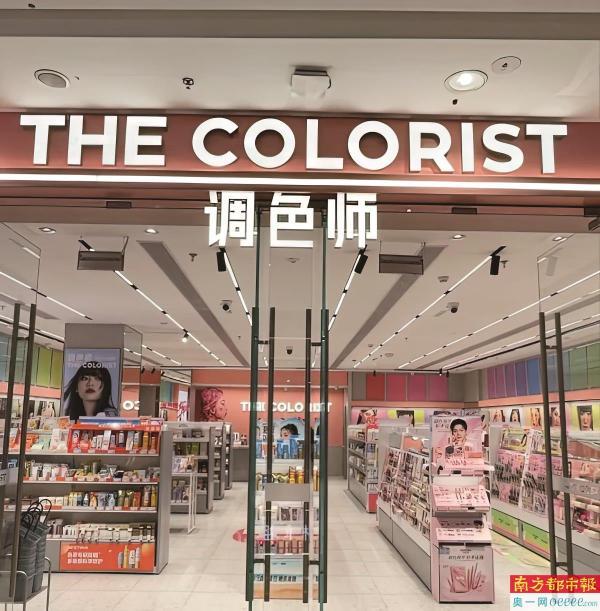
Core Viewpoint - KK Group is involved in a legal dispute with Miniso regarding trademark infringement and unfair competition related to its brand "THE COLORIST," which is set to be heard in court on September 1. This case is significant for intellectual property protection in the beauty retail industry [2][4]. Company Overview - KK Group, established in 2015, is a leading new retail enterprise in China, owning multiple brands including "THE COLORIST," "KKV," and X11. The company has expanded to over 1,000 stores across more than 200 cities globally, including locations in Singapore, Thailand, and Malaysia [2][3]. Legal Background - The dispute began in 2019 when KK Group's brand "THE COLORIST" was registered by "Axin Technology" in China and by "Shenzhen Falaisheng" in several overseas countries, both of which are linked to Miniso. KK Group opened its first stores in Guangzhou and Shenzhen on September 26, 2019, quickly gaining recognition as a leading beauty retail brand [3][4]. Previous Legal Actions - Since 2020, KK Group has taken legal actions to protect its trademarks. The Beijing High People's Court ruled in favor of KK Group, stating that the registration by the infringing party constituted "unfair means of registration," leading to the cancellation of the trademark. Additionally, the Nanjing Intermediate People's Court found that Miniso's "WOW COLOUR" store design was highly similar to "THE COLORIST," ordering a cessation of infringement and a compensation of 2 million yuan [4][5]. Industry Context - The beauty retail sector in China has seen explosive growth, with the market size reaching 13 billion yuan in 2021 and projected to exceed 40 billion yuan by 2025. However, the industry faces challenges of homogenization, with many brands adopting similar business models and store designs, making it difficult for consumers to distinguish between them [5][6]. Market Trends - Recent reports indicate a slowdown in growth within the beauty retail sector, with some brands closing stores due to poor management. For instance, Sasa International announced the closure of its last 18 stores in mainland China in June 2025. In the first half of 2025, at least 34 domestic and international brands announced closures or exits from the Chinese market [6].
9月1日法庭见!KK集团起诉名创优品
Guo Ji Jin Rong Bao· 2025-08-18 13:49
Core Viewpoint - The trademark dispute between KK Group and Miniso is set to be heard in court on September 1, highlighting ongoing legal battles in the new retail sector [2] Group 1: Background of the Dispute - The dispute originated in 2019 when KK Group's beauty retail brand "THE COLORIST" faced trademark registration issues in China and abroad, allegedly linked to Miniso [3] - KK Group initiated legal action in 2020 to protect its trademark rights, resulting in favorable court rulings against the trademark registrations by associated companies of Miniso [3] Group 2: KK Group's Business Development - KK Group was founded in 2015 and has rapidly expanded its brand portfolio, launching several retail brands including "KKV" and "X11" [4][5] - The company has raised over 4 billion yuan through multiple funding rounds, with significant investments from notable firms, including a recent $300 million round led by JD.com [6] Group 3: Financial Performance - KK Group's revenue showed growth from 16.46 billion yuan in 2020 to 47.69 billion yuan in 2023, with a turnaround to profitability in 2023 [6][7] - The average monthly GMV per store reached 734,000 yuan in 2023, reflecting a 43.8% year-on-year increase [7] - Despite the growth in revenue, the number of franchise stores has declined significantly, from 424 in 2020 to just 109 by October 2023 [7]
名创优品成立国际供应链管理新公司
Zheng Quan Shi Bao Wang· 2025-08-18 02:53
Group 1 - Recently, Miniso (Guangzhou) International Supply Chain Management Co., Ltd. was established with a registered capital of 60 million RMB [1] - The legal representative of the new company is Zhou Shu [1] - The business scope includes software sales, enterprise management, international freight forwarding, and domestic freight forwarding [1] Group 2 - The new company is wholly owned by Miniso (Guangzhou) Co., Ltd. [1]
曼谷街头的“镜像游戏”:泡泡玛特和名创优品,谁复制了谁?
3 6 Ke· 2025-08-15 07:13
Core Viewpoint - The controversy surrounding the opening of Pop Mart's flagship store in Thailand highlights the ongoing competition and design similarities with Miniso's MINISO LAND, raising questions about originality and potential copyright infringement in retail design [1][2][3] Group 1: Company Performance - Pop Mart's stock has surged approximately 170% year-to-date, with a market capitalization of around HKD 370 billion and a price-to-earnings ratio exceeding 100, driven by a significant increase in overseas sales, which grew over four times in the first half of the year [3][4] - In contrast, Miniso's stock has seen a slight decline of 0.6%, with a market capitalization close to HKD 50 billion and a price-to-earnings ratio of about 18, impacted by profit declines due to acquisitions and interest expenses [4][3] Group 2: Market Strategy - Pop Mart adopts a "premium expansion" strategy, focusing on creating brand awareness through online channels and flagship stores, while Miniso emphasizes rapid store replication through supply chain advantages and cost control [5][6] - The two companies have distinct approaches to intellectual property (IP), with Pop Mart acting as an "IP creator" and Miniso as an "IP connector," relying on collaborations with established brands to enhance product offerings [6][7] Group 3: Industry Trends - The Chinese toy industry, particularly in the collectible segment, is experiencing significant growth, with its market share in overseas markets increasing from 3% in 2020 to an expected 18% by 2025 [8] - The rise of the collectible toy market is contributing to the transformation of China's manufacturing sector, moving from "OEM advantages" to "cultural premiums," and is projected to reach a market size of CNY 110.1 billion by 2026 [9] Group 4: Consumer Behavior - The competition between Pop Mart and Miniso reflects a broader consumer trend where young consumers seek both emotional value and cost efficiency in their purchases, indicating a dual demand for unique experiences and affordability [10]

名创优品(09896)8月14日斥资5850美元回购1200股
Zhi Tong Cai Jing· 2025-08-15 04:40
Core Viewpoint - Miniso (09896) announced a share buyback plan, indicating confidence in its stock value and future prospects [1] Group 1: Share Buyback Details - The company plans to repurchase 1,200 shares at a total cost of $5,850 [1] - The buyback price per share is set at $4.875 [1] - The buyback is scheduled for August 14, 2025 [1]
名创优品(09896.HK)8月14日耗资5850美元回购1200股
Ge Long Hui· 2025-08-15 04:33
格隆汇8月15日丨名创优品(09896.HK)公告,8月14日耗资5850美元回购1,200股,每股回购价4.875美 元。 ...
名创优品8月14日斥资5850美元回购1200股
Zhi Tong Cai Jing· 2025-08-15 04:28
Group 1 - Miniso (09896) announced a share buyback plan, intending to repurchase 1,200 shares at a total cost of $5,850 [1] - The buyback price per share is set at $4.875 [1]
名创优品(09896) - 翌日披露报表
2025-08-15 04:04
如上市發行人的已發行股份或庫存股份出現變動而須根據《香港聯合交易所有限公司(「香港聯交所」)證券上市規則》(「《主板上市規則》」)第13.25A條 / 《香港聯合交易所有限公司GEM證券 上市規則》(「《GEM上市規則》」)第17.27A條作出披露,必須填妥第一章節 。 | 第一章節 | | | | | | | | | | --- | --- | --- | --- | --- | --- | --- | --- | --- | | 1. 股份分類 | 普通股 | 股份類別 | 不適用 | | | 於香港聯交所上市 | 是 | | | 證券代號 (如上市) | 09896 | 說明 | | | | | | | | A. 已發行股份或庫存股份變動 | | | | | | | | | | | | 已發行股份(不包括庫存股份)變動 | | | | 庫存股份變動 | | | | | 事件 | 已發行股份(不包括庫存股份)數 目 | | 佔有關事件前的現有已發 行股份(不包括庫存股 份)數目百分比 (註3) | | 庫存股份數目 | 每股發行/出售價 (註4) | 已發行股份總數 | | 於下列日期開始時的結存(註1) ...