
BABA(09988)

Search documents
《财富》中国科技50强榜单发布:华为、宇树科技、比亚迪等上榜


Feng Huang Wang· 2026-02-03 12:51
其中华为、DeepSeek、宁德时代、阿里巴巴、腾讯、比亚迪等企业均在名单内。 凤凰网科技讯 8月21日,"财富FORTUNE"公众号公布了"《财富》中国科技50强"榜单,并称这份榜单 旨在寻找出生于中国、正在影响世界的科技公司。 ...
春节AI红包大战:撒钱45亿,谁先俘获大众用户?
Xin Lang Cai Jing· 2026-02-03 12:47
Core Insights - Major tech companies are launching significant marketing campaigns during the Spring Festival, with a total budget exceeding 45 billion yuan, aiming to promote AI applications and engage a broader user base [3][31][41] - The competition is centered around integrating AI into social and transactional contexts, with each company betting on different strategies to capture market share in the AI space [39][41][56] Group 1: Company Initiatives - Tencent's "Yuanbao" has allocated 10 billion yuan for cash red envelopes, utilizing social sharing through WeChat and QQ to enhance user engagement [9][36] - Alibaba's "Qianwen" is launching a 30 billion yuan "Spring Festival Treat Plan," allowing users to redeem red envelopes for various services, including movie tickets and hotel bookings [6][35] - Baidu's "Wenxin" is offering 5 billion yuan in cash red envelopes, integrating AI functionalities within the Baidu app to enhance user interaction [7][36] - ByteDance's "Doubao" is collaborating with CCTV for the Spring Festival Gala, focusing on brand positioning and technology showcase [9][36] Group 2: User Engagement Strategies - The red envelope campaigns are designed to facilitate user education on AI applications, with companies investing in user acquisition through monetary incentives [10][38] - Each company's strategy involves leveraging existing user bases and ecosystems to drive adoption of AI features, with Tencent focusing on social connections, Alibaba on transactional habits, and Baidu on search behavior [39][41] - The effectiveness of these campaigns will be measured by user retention post-festival, as companies aim to convert initial engagement into long-term usage [46][56] Group 3: Market Dynamics - The AI application market is experiencing a competitive surge, with significant user growth reported for leading apps like Doubao and Yuanbao, while others struggle to maintain user engagement [41][43] - The penetration rates for AI applications are estimated at around 14% for Doubao, indicating a critical transition from early adopters to mainstream users [44] - The upcoming months will be crucial for these companies as they seek to sustain user interest and optimize their AI offerings following the initial influx of users during the Spring Festival [46][56]

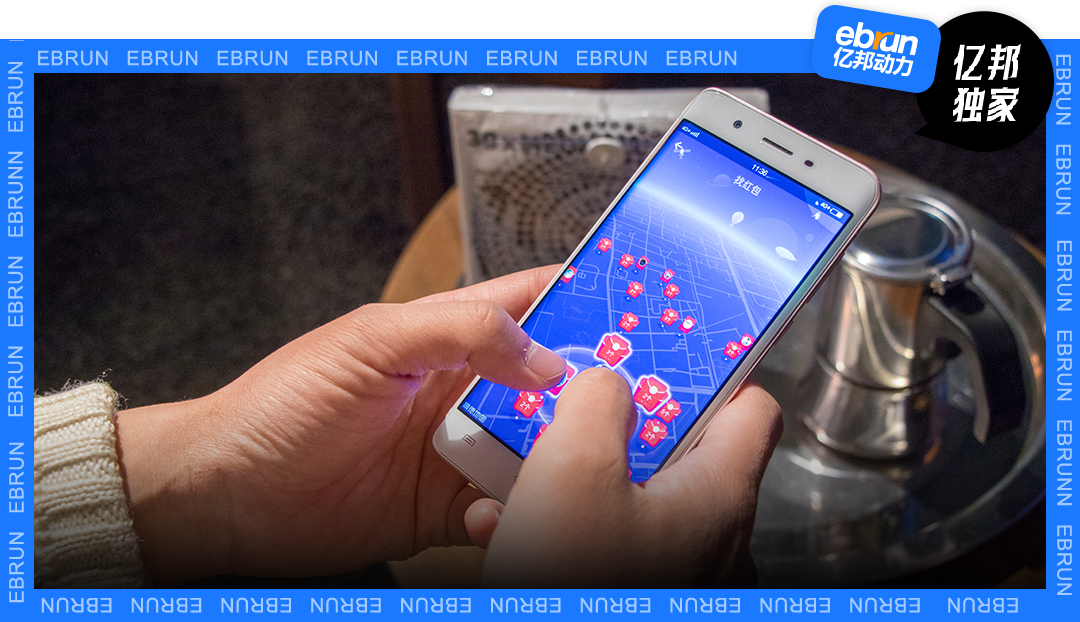
春节AI红包大战,谁会是赢家?

21世纪经济报道· 2026-02-03 11:22
最近大家是不是都被朋友圈里、各个聊天群里的元宝红包刷屏了? 这不马上过年了嘛,互联网大厂们发红包这事儿本身不稀奇,但今年这阵仗,可完全不一样 了。腾讯10亿、百度5亿、阿里30亿请客计划……他们为啥又突然开始"撒钱"了呢?这钱烧得 值吗?今天我们就来聊一聊,这一场关乎未来的 "入口保卫战" 。 一切看似巧合,但历史总有回响。2015年,微信红包横空出世,凭借春晚"摇一摇"的奇袭,让 微信支付一夜之间家喻户晓,被戏称为"一夜干了支付宝八年的事"。那场红包大战,奠定了移 动支付的江山。 百度通过红包玩法捍卫搜索习惯。其红包活动深度捆绑在百度App内,目的就是高频次地让用 户与AI助手互动,借此将自己的搜索心智可以平滑迁移到对话式AI上。 阿里则是主打"能办事"。它没有做红包,而是投入30亿启动"春节请客计划",联合淘宝、飞 猪、盒马等整个阿里生态,请用户吃喝玩乐,是要把AI变成服务调度的中枢。 豆包目前还未高调宣布撒钱,但字节旗下的火山引擎是2026年央视春晚的独家AI云合作伙 伴,豆包将深度嵌入晚会互动。 那么,这种"撒钱战术"真的能奏效吗?从短期数据看,效果是立竿见影的。腾讯元宝一撒钱, 立刻就冲上了苹果应用 ...

北水成交净买入9.52亿 科网及芯片股明显分化 内资抛售盈富基金超37亿港元
Zhi Tong Cai Jing· 2026-02-03 11:15
Core Viewpoint - The Hong Kong stock market experienced significant net buying and selling activities, with notable movements in major stocks such as Tencent, Alibaba, and China Mobile, reflecting investor sentiment and market dynamics [1][5][6]. Group 1: Net Buying and Selling Activities - Northbound trading recorded a net buying of HKD 9.52 billion, with the Shanghai Stock Connect contributing HKD 17.33 billion in net buying, while the Shenzhen Stock Connect saw a net selling of HKD 7.81 billion [1]. - Tencent (00700) led the net buying with HKD 22.02 billion, followed by Southbound Hang Seng Technology (03033) with HKD 6.69 billion, and China Mobile (00941) with HKD 4.07 billion [1][5]. - The most significant net selling was observed in the Yingfu Fund (02800) with HKD 25.58 billion, followed by Semiconductor Manufacturing International Corporation (00981) with HKD 8.06 billion, and Alibaba-W (09988) with HKD 5.87 billion [1][5]. Group 2: Stock Performance and Market Sentiment - The technology sector showed a clear divergence, with Tencent and Meituan-W (03690) experiencing net buying, while Alibaba-W faced substantial net selling due to market rumors regarding potential tax rate adjustments [5][6]. - China Mobile's net buying was supported by Morgan Stanley's analysis, suggesting that the company would be less impacted by potential VAT rate increases due to its higher profit margins [5]. - Xiaomi Group-W (01810) reported a net buying of HKD 3.29 billion, attributed to strong electric vehicle deliveries and ongoing investments in AI and robotics [6]. Group 3: Industry Trends and Future Outlook - The semiconductor industry is experiencing price increases, with domestic chip manufacturers announcing price hikes of up to 80%, indicating a continuing trend into the first half of 2026 [6]. - The overall market sentiment is influenced by external factors, including global risk asset movements, which have led to liquidity pressures and a decline in Asian stock markets [7].



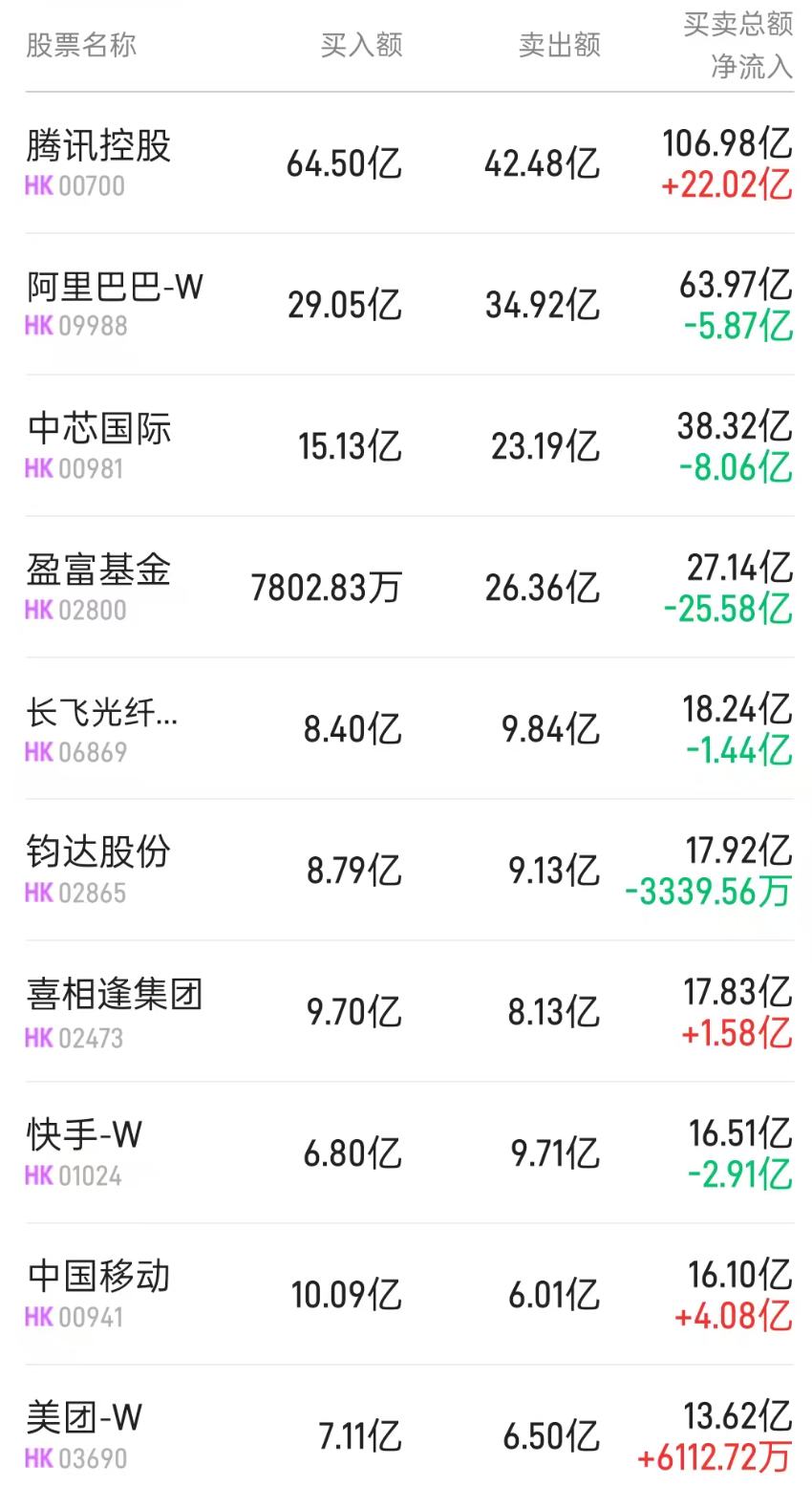
智通港股通活跃成交|2月3日
智通财经网· 2026-02-03 11:05
智通财经APP获悉,2026年2月3日当天,腾讯控股(00700)、阿里巴巴-W(09988)、中芯国际(00981)位居 沪港通(南向)成交额前3位,成交额分别为106.98 亿元、63.97 亿元、38.32 亿元;腾讯控股(00700)、 阿里巴巴-W(09988)、中芯国际(00981) 位居深港通(南向)成交额前3位,成交额分别为86.50 亿元、 43.97 亿元、22.08 亿元。 | 公司名称 | 成交金额 | 净买入额 | | --- | --- | --- | | 腾讯控股(00700) | 106.98 亿元 | +22.02 亿元 | | 阿里巴巴-W(09988) | 63.97 亿元 | -5.87 亿元 | | 中芯国际(00981) | 38.32 亿元 | -8.06 亿元 | | 盈富基金(02800) | 27.14 亿元 | -25.58 亿元 | | 长飞光纤光缆(06869) | 18.24 亿元 | -1.44 亿元 | | 钧达股份(02865) | 17.92 亿元 | -3339.56 万元 | | 喜相逢集团(02473) | 17.83 亿元 | +1. ...
春节AI红包大战,谁会是赢家?|财经早察
2 1 Shi Ji Jing Ji Bao Dao· 2026-02-03 10:51
Core Viewpoint - Major internet companies are engaging in a "money-splashing" strategy during the Chinese New Year, with Tencent, Baidu, and Alibaba announcing significant cash giveaways to secure their positions in the emerging AI landscape [2][3]. Group 1: Company Strategies - Tencent is leveraging social engagement by combining its red envelope initiative with a new "Yuanbao" social feature, encouraging group interactions and AI creativity [4]. - Baidu is focusing on maintaining search habits by integrating its red envelope activities within the Baidu App, aiming to transition users towards conversational AI [4]. - Alibaba is not offering red envelopes but has launched a 3 billion yuan "Spring Festival Treat" initiative, promoting its ecosystem services through various platforms like Taobao and Fliggy [4]. Group 2: Market Impact - The immediate effect of these cash giveaways is evident, with Tencent's Yuanbao quickly rising to the top of the Apple App Store's free chart, achieving nearly one million downloads [5]. - However, there are concerns about the sustainability of user engagement post-campaign, as the effectiveness of these strategies in fostering long-term AI usage habits remains uncertain [5][6]. Group 3: Future Implications - The competition for AI application dominance is seen as entering a critical phase, with the 2026 Spring Festival marking a significant moment in this ongoing battle [6]. - The challenge lies in retaining users beyond the initial attraction of cash incentives, emphasizing the need for robust AI functionalities and integration into daily life [6].
南向资金追踪|净买入超9亿港元 大举加仓腾讯减持中芯国际和阿里
Xin Lang Cai Jing· 2026-02-03 10:32
Core Viewpoint - Southbound funds in Hong Kong experienced a decrease in trading volume, with a total of approximately HKD 126.4 billion, down by HKD 11.9 billion from the previous day, representing 37.72% of the total turnover of the Hang Seng Index, marking a short-term low [2]. Group 1: Southbound Fund Flow - Southbound funds recorded a net inflow of approximately HKD 0.952 billion today, with the Shanghai-Hong Kong Stock Connect seeing a net inflow of about HKD 1.733 billion, while the Shenzhen-Hong Kong Stock Connect had a net outflow of HKD 0.781 billion [2]. - The largest ETF, the Tracker Fund of Hong Kong (盈富基金), faced a net sell-off of HKD 3.762 billion, indicating continued outflows from certain funds [2]. Group 2: Individual Stock Performance - Tencent Holdings (0700.HK) saw a significant net buy of HKD 1.955 billion, despite a price drop of 2.92% [2][4]. - China Mobile (00941.HK) experienced a net buy of HKD 0.408 billion, with a slight price increase of 0.38% [2][4]. - Meituan-W (03690.HK) had a net buy of HKD 0.241 billion, with a price decline of 1.74% [2][4]. - Notable net outflows included Semiconductor Manufacturing International Corporation (00981.HK) at HKD 1.577 billion, Alibaba-W (09988.HK) at HKD 1.199 billion, and Kuaishou-W (01024.HK) at HKD 0.368 billion [2][4]. Group 3: Recent Trading Trends - Over the past five trading days, Tencent Holdings saw an increase of 663,000 shares, indicating continued short-term inflow [3]. - In contrast, China Mobile and Meituan-W experienced reductions in holdings of 4.164 million shares and 655,000 shares respectively, suggesting a trend of outflow [3]. - Kuaishou-W had an increase of 424,000 shares, indicating a short-term inflow despite a price drop of 4.61% [3].




北水动向|北水成交净买入9.52亿 科网及芯片股明显分化 内资抛售盈富基金超37亿港元
Zhi Tong Cai Jing· 2026-02-03 10:04
Summary of Key Points Core Viewpoint - The Hong Kong stock market experienced significant net buying and selling activity, with notable movements in major stocks driven by market sentiment and external news. Group 1: Net Buying and Selling Activity - Northbound trading recorded a net buying of 9.52 billion HKD, with the Shanghai-Hong Kong Stock Connect contributing 17.33 billion HKD in net buying and the Shenzhen-Hong Kong Stock Connect showing a net selling of 7.81 billion HKD [1] - The most bought stocks included Tencent (00700), Southern Hang Seng Technology (03033), and China Mobile (00941), while the most sold stocks were the Tracker Fund of Hong Kong (02800), SMIC (00981), and Alibaba-W (09988) [1] Group 2: Individual Stock Performance - Tencent Holdings saw a net inflow of 22.02 billion HKD, with total trading volume of 106.98 billion HKD, while Alibaba-W had a net outflow of 5.87 billion HKD from a total of 63.97 billion HKD [2] - China Mobile recorded a net buying of 4.08 billion HKD, with a total trading volume of 16.10 billion HKD, indicating strong investor interest [3] - Xiaomi Group-W received a net inflow of 3.29 billion HKD, supported by strong electric vehicle delivery numbers and positive market sentiment [5] Group 3: Market Sentiment and External Factors - Market rumors regarding potential tax rate adjustments for the financial and internet sectors led to a decline in stock prices for companies like Tencent, although tax experts clarified that current VAT rates remain unchanged [4] - The semiconductor sector showed mixed results, with Hua Hong Semiconductor receiving a net inflow of 2.56 billion HKD, while SMIC faced a net outflow of 15.77 billion HKD amid rising prices in the chip industry [5] - The Tracker Fund of Hong Kong experienced a significant net outflow of 37.62 billion HKD, attributed to global risk-off sentiment and liquidity pressures in the market [6]
阿里巴巴-W(09988):——阿里巴巴-W(9988.HK)FY2026Q3财报前瞻:传统电商略疲软,即时零售持续投入,关注云+AI+芯片全栈战略下的增长潜力
Guohai Securities· 2026-02-03 10:02
Investment Rating - The report maintains a "Buy" rating for Alibaba Group (9988.HK) [8] Core Views - The traditional e-commerce sector shows signs of fatigue, while instant retail continues to see significant investment. The focus is on the growth potential under the "Cloud + AI + Chip" full-stack strategy [1][4] - For FY2026Q3, total revenue is expected to reach 291 billion RMB, reflecting a year-over-year growth of 4% and a quarter-over-quarter growth of 17%. Adjusted EBITA is projected to decline by 47% to 29.1 billion RMB, with an EBITA margin of 10% [4][7] - The Chinese e-commerce group is anticipated to generate revenue of 166 billion RMB, a 10% year-over-year increase, while the international digital commerce group is expected to see a 10% revenue growth to 41.6 billion RMB [4][7] Financial Metrics - The report forecasts total revenue for FY2026-2028 to be 1,036,353 million RMB, 1,132,746 million RMB, and 1,235,222 million RMB respectively, with net profit estimates of 108,660 million RMB, 116,635 million RMB, and 149,321 million RMB [6][7] - The diluted EPS is projected to be 5.6 RMB, 6.0 RMB, and 7.7 RMB for FY2026, FY2027, and FY2028 respectively, with corresponding P/E ratios of 25.8x, 24.1x, and 18.8x [6][8] - The report highlights a long-term optimistic outlook for cloud business growth, traditional e-commerce stability, and a reduction in losses for international e-commerce operations [7]
北水动向|北水成交净买入9.52亿 科网及芯片股明显分化 内资抛售盈富基金(02800)超37亿港元
智通财经网· 2026-02-03 09:57
Summary of Key Points Core Viewpoint - The Hong Kong stock market experienced significant net buying and selling activity on February 3, with a total net buy of 9.52 billion HKD from Northbound trading, primarily driven by Tencent and Southern Hang Seng Technology stocks, while notable sell-offs occurred in the Yingfu Fund and Alibaba [1][4]. Group 1: Northbound Trading Activity - Northbound trading saw a net buy of 17.33 billion HKD through the Shanghai Stock Connect and a net sell of 7.81 billion HKD through the Shenzhen Stock Connect [1]. - The most bought stocks included Tencent (00700), Southern Hang Seng Technology (03033), and China Mobile (00941) [1]. - The most sold stocks were Yingfu Fund (02800), SMIC (00981), and Alibaba-W (09988) [1]. Group 2: Stock Performance Details - Tencent Holdings had a net inflow of 22.02 billion HKD, with total trading volume of 106.98 billion HKD [2]. - Alibaba-W experienced a net outflow of 5.87 billion HKD, with total trading volume of 63.97 billion HKD [2]. - SMIC saw a net outflow of 8.06 billion HKD, with total trading volume of 38.32 billion HKD [2]. - Yingfu Fund faced a significant net outflow of 25.58 billion HKD, with total trading volume of 27.14 billion HKD [2]. Group 3: Market Sentiment and Influences - Market rumors suggested potential tax rate adjustments for the financial and internet value-added services sectors, which negatively impacted stock prices, particularly for Tencent and other internet companies [4]. - However, tax experts clarified that the current VAT rate remains unchanged at 6%, dismissing the rumors as unfounded [4]. - China Mobile received a net buy of 4.07 billion HKD, with analysts noting its resilience against potential profit margin pressures due to its higher profitability [5]. - Xiaomi Group-W had a net buy of 3.29 billion HKD, attributed to strong electric vehicle deliveries and ongoing investments in AI and robotics [5]. Group 4: Chip Sector Dynamics - The semiconductor sector showed mixed results, with Hua Hong Semiconductor receiving a net buy of 2.56 billion HKD, while SMIC faced a net sell of 15.77 billion HKD [5]. - The chip industry is experiencing a price increase trend, with some domestic chip manufacturers announcing price hikes of up to 80% [6]. - Yingfu Fund's significant net sell was influenced by global risk-off sentiment and liquidity pressures, although a mid-term positive outlook for Chinese assets remains [6].