TRT(600085)

Search documents
针对“南极磷虾油”事件 北京同仁堂发布声明
Zhong Guo Zheng Quan Bao· 2025-12-25 13:17
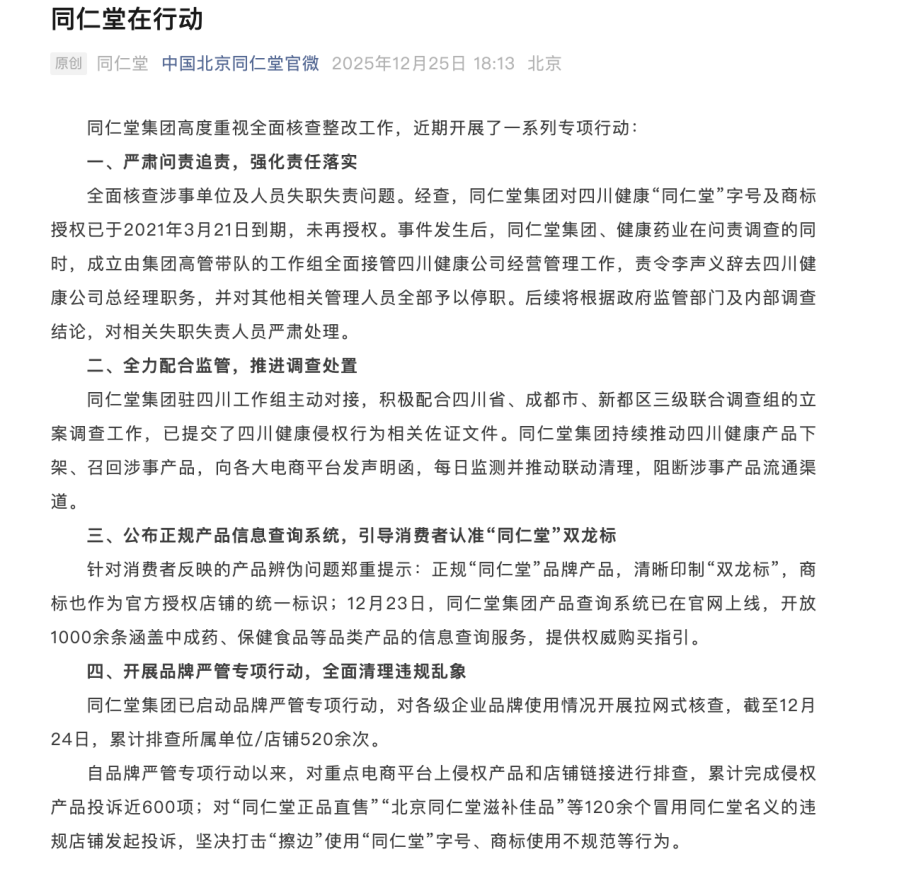
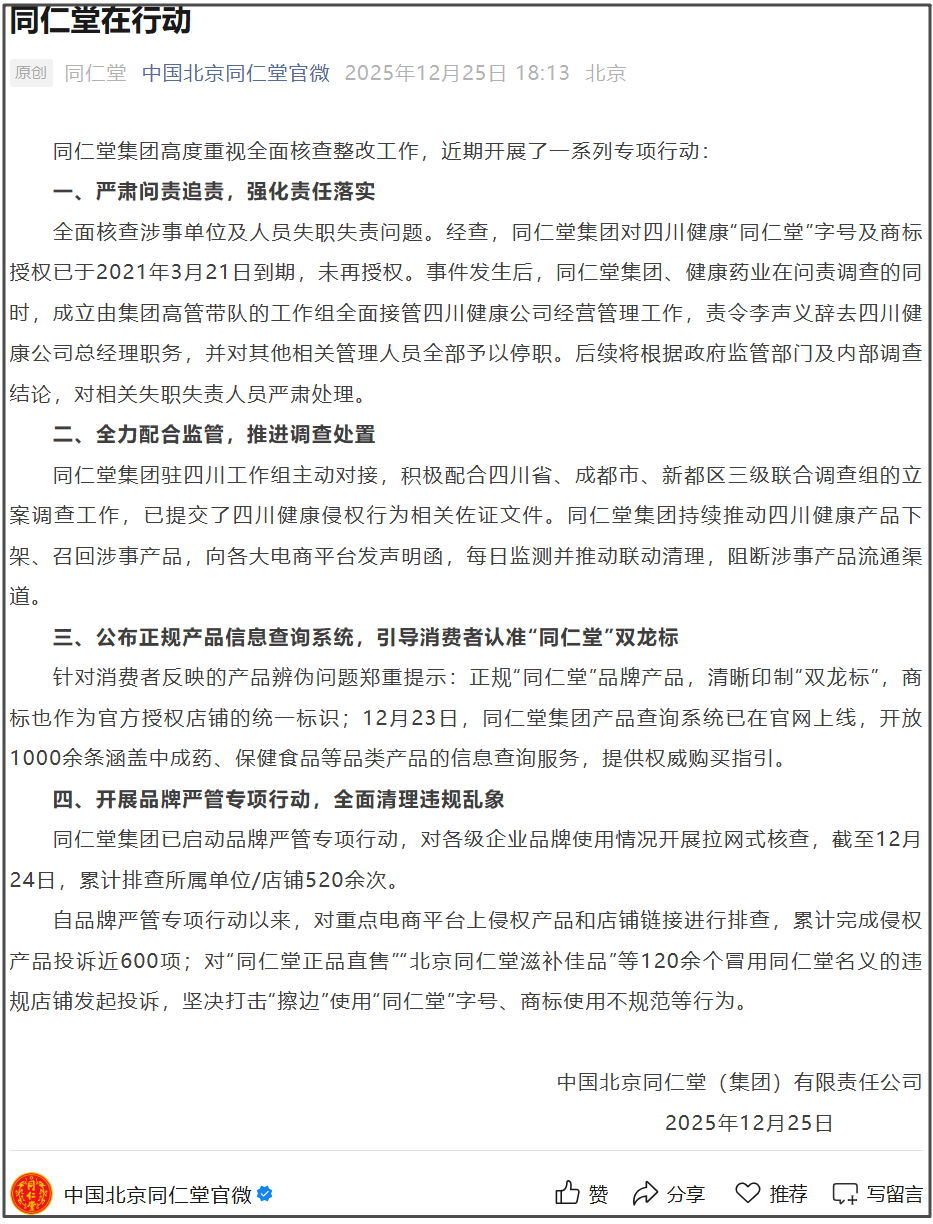
事件发生后,北京同仁堂集团已启动品牌严管专项行动,对各级企业品牌使用情况开展拉网式核查,截 至12月24日,累计排查所属单位/店铺520余次;对重点电商平台上侵权产品和店铺链接进行排查,累 计完成侵权产品投诉近600项;对"同仁堂正品直售""北京同仁堂滋补佳品"等120余个冒用"同仁堂"名义 的违规店铺发起投诉,坚决打击"擦边"使用"同仁堂"字号、商标使用不规范等行为。 针对消费者反映的产品辨伪问题,集团提示:正规"同仁堂"品牌产品清晰印制"双龙标",商标也作为官 方授权店铺的统一标识;12月23日,同仁堂集团产品查询系统已在官网上线,开放1000余条涵盖中成 药、保健食品等品类产品的信息查询服务,提供权威购买指引。 (文章来源:中国证券报) 新华财经北京12月25日电 北京同仁堂集团25日就"南极磷虾油"事件发布声明称,集团工作组已全面接 管北京同仁堂(四川)健康药业有限公司经营管理工作,责令李声义辞去四川健康总经理职务,并对其 他相关管理人员全部予以停职。后续将根据政府监管部门及内部调查结论,对相关失职失责人员严肃处 理。 北京同仁堂集团表示,经查,集团对四川健康"同仁堂"字号及商标授权已于2021年3月 ...


同仁堂责令李声义辞职,召回涉事磷虾油产品
Mei Ri Jing Ji Xin Wen· 2025-12-25 13:03
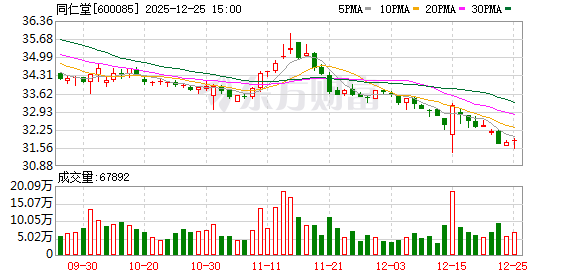
Reap #同仁堂召回涉事产品#【同仁堂集团:责令李声义辞职,召回涉事产品!市场监管总局也回应了】12月 25日,#同仁堂发布声明#表示,集团高度重视全面核查整改工作,近期开展了一系列专项行动。包括全 面核查涉事单位及人员失职失责问题。责令李声义辞去四川健康公司总经理职务,并对其他相关管理人 员全部予以停职。 同仁堂集团驻四川工作组主动对接,积极配合四川省、成都市、新都区三级联合调查组的立案调查工 作,已提交了四川健康侵权行为相关佐证文件。同仁堂集团持续推动四川健康产品下架、召回涉事产 品,向各大电商平台发声明函,每日监测并推动联动清理,阻断涉事产品流通渠道。 据央视财经,此前,上海市消保委约谈涉事"南极磷虾油"产品企业,引发社会关注。上海市消保委对市 场上销售的15款南极磷虾油产品开展了比较试验,结果显示,部分产品存在成分含量与宣传严重不符的 情况。经销商北京同仁堂(四川)健康药业有限公司向安徽哈博药业有限公司定制采购的南极磷虾油价 格为每瓶3.7元,而终端销售价格每瓶60多元。(每经,希隆) I Super GNITE Swisse goodhealth & FUNRICH BOL 同仁堂在行动 原创 同 ...
“南极磷虾油”事件,最新进展!
Ren Min Ri Bao· 2025-12-25 13:01
市场监管总局回应"南极磷虾油"事件 市场监管总局25日回应,"南极磷虾油"事件暴露出企业委托生产加工行为不规范等问题。一些企业借助 企业品牌影响力,仅关注销售利润却不对产品质量进行把关,甚至纵容被委托企业制售不合格产品。 据介绍,市场监管总局近期将发布《食品委托生产监督管理办法》,将商标授权、特许经营、来料加 工、定制生产等方式进行委托生产食品的情形纳入监督管理,明确细化委托双方食品安全责任,健全相 关监管制度要求。 北京同仁堂集团25日就"南极磷虾油"事件发布声明称,集团工作组已全面接管北京同仁堂(四川)健康 药业有限公司经营管理工作,责令李声义辞去四川健康总经理职务,并对其他相关管理人员全部予以停 职。后续将根据政府监管部门及内部调查结论,对相关失职失责人员严肃处理。 北京同仁堂集团表示,经查,集团对四川健康"同仁堂"字号及商标授权已于2021年3月21日到期,未再 授权。目前,集团驻四川工作组积极配合四川省、成都市、新都区三级联合调查组的立案调查工作,已 提交了四川健康侵权行为相关佐证文件。此外,同仁堂集团持续推动四川健康产品下架、召回涉事产 品,向各大电商平台发声明函,每日监测并推动联动清理,阻断涉事 ...
北京同仁堂:全面接管“南极磷虾油”涉事企业
新华网财经· 2025-12-25 12:55
Group 1 - Beijing Tongrentang Group has taken over the management of Beijing Tongrentang (Sichuan) Health Pharmaceutical Co., Ltd. and has dismissed the general manager Li Shengyi due to the "Antarctic Krill Oil" incident [1] - The group confirmed that the authorization for the "Tongrentang" brand and trademark for Sichuan Health expired on March 21, 2021, and has not been renewed [1] - The group is cooperating with a joint investigation by government regulatory bodies and has submitted evidence related to the infringement by Sichuan Health [1] Group 2 - The group has initiated a special action for strict brand management, conducting thorough checks on brand usage across its subsidiaries, with over 520 inspections completed by December 24 [1] - Nearly 600 complaints have been filed against infringing products on major e-commerce platforms, targeting over 120 unauthorized stores using the "Tongrentang" name [1] - A product verification system was launched on the official website, providing information on over 1,000 products, including traditional Chinese medicine and health foods, to guide consumers [2]
同仁堂集团:责令李声义辞去四川健康公司总经理职务,相关管理人员全部停职
Xin Lang Cai Jing· 2025-12-25 12:34
Core Viewpoint - Tongrentang Group is taking significant measures to address issues related to brand management and consumer protection following a scandal involving a product mislabeling incident, particularly concerning Antarctic krill oil products [1][3][8]. Group 1: Accountability and Investigation - The company has initiated a comprehensive investigation into the responsibilities of involved parties, confirming that the trademark authorization for "Tongrentang" to Sichuan Health expired on March 21, 2021, and was not renewed [1][6]. - A task force led by senior management has been established to take over the operations of Sichuan Health, resulting in the dismissal of its general manager and the suspension of other relevant personnel [1][6]. - The company is cooperating with regulatory authorities and has submitted evidence related to the infringement by Sichuan Health, while actively recalling and removing the implicated products from circulation [1][6]. Group 2: Brand Protection Measures - Tongrentang has launched a product information query system to help consumers identify genuine products marked with the "Double Dragon" logo, with over 1,000 items available for verification [2][7]. - A brand management initiative has been implemented, resulting in over 520 inspections of affiliated units and stores, and nearly 600 complaints filed against infringing products on major e-commerce platforms [2][7]. - The company is taking legal action against entities misusing the "Tongrentang" name and is committed to enforcing strict brand management practices [3][9]. Group 3: Consumer Rights and Product Safety - In response to consumer concerns regarding the Antarctic krill oil product, the company has expressed deep regret and is taking immediate actions to ensure compliance and consumer compensation [3][8]. - The company is conducting thorough checks for any illegal or irregular brand usage across its enterprises to enhance consumer protection [9].
市场监管总局回应“南极磷虾油”问题
Zheng Quan Shi Bao· 2025-12-25 12:24
市场监管总局:针对"南极磷虾油"问题将强化食品委托生产监管。 据新华社消息,市场监管总局25日回应,"南极磷虾油"事件暴露出企业委托生产加工行为不规范等问 题。一些企业借助企业品牌影响力,仅关注销售利润却不对产品质量进行把关,甚至纵容被委托企业制 售不合格产品。 据介绍,市场监管总局近期将发布《食品委托生产监督管理办法》,将商标授权、特许经营、来料加 工、定制生产等方式进行委托生产食品的情形纳入监督管理,明确细化委托双方食品安全责任,健全相 关监管制度要求。 市场监管总局将指导地方市场监管部门,加强对类似同仁堂贴牌加工等方式委托生产食品行为的监管。 近期将组织开展专项抽检,对市场上的磷虾油、鱼油等产品加大监督抽检力度,严厉打击相关违法行 为。 今年12月11日,"上海市消保委"微信公众号发文称,知名企业疑似造假,将被上海市消保委约谈。相关 文章称,一款标称"北京同仁堂99%高纯南极磷虾油"的产品,在网页上写着"高含量""智利进口原料""高 度提纯""1粒≈100只磷虾",其磷脂标识值为43%,看似是品质出众的优质产品,但检测结果显示该款产 品磷脂含量为0。这款产品由安徽哈博药业有限公司生产、同仁堂四川健康药业 ...
李声义,被责令辞职!
Zhong Guo Ji Jin Bao· 2025-12-25 12:20
Core Viewpoint - Tong Ren Tang has initiated a series of special actions to address issues related to product quality and management accountability following a recent incident involving its Sichuan Health subsidiary [1][6]. Group 1: Accountability and Responsibility - The company is conducting a comprehensive investigation into the responsibilities of involved units and personnel, leading to the resignation of Li Shengyi as the general manager of Sichuan Health and the suspension of other related management personnel [2][6]. - A working group led by senior executives has been established to take over the management of Sichuan Health, with plans for serious consequences for those found responsible after internal and governmental investigations [2][6]. Group 2: Regulatory Cooperation and Investigation - Tong Ren Tang's team in Sichuan is actively cooperating with a joint investigation by local regulatory authorities, having submitted evidence related to the infringement by Sichuan Health [3][6]. - The company is working to remove and recall affected products while monitoring and blocking the circulation of these products through major e-commerce platforms [3][6]. Group 3: Consumer Guidance and Product Verification - A product information query system was launched on December 23, providing over 1,000 entries for traditional Chinese medicine and health food products, helping consumers identify authentic "Tong Ren Tang" products marked with the "Double Dragon" logo [4][6]. Group 4: Brand Management and Compliance - A brand management initiative has been launched to conduct thorough checks on brand usage across various enterprises, with over 520 inspections completed by December 24 [5][7]. - The initiative has resulted in nearly 600 complaints against infringing products on major e-commerce platforms and actions against over 120 unauthorized stores misusing the Tong Ren Tang name [5][7].
同仁堂:责令李声义辞职,其他相关管理人员全部停职
Guan Cha Zhe Wang· 2025-12-25 12:18
Group 1 - The core message of the news is that Tongrentang Group is taking significant actions to address the issues related to the unauthorized use of its brand and products, particularly in response to the controversy surrounding a product claiming to contain Antarctic krill oil [1][7][9] Group 2 - Tongrentang Group has initiated a comprehensive investigation and accountability measures, including the dismissal of the general manager of Sichuan Health Company and the suspension of other responsible personnel [1] - The company is actively cooperating with regulatory authorities in a joint investigation and has taken steps to recall the problematic products while monitoring their distribution channels [2] - A product information query system has been launched to help consumers identify genuine Tongrentang products, emphasizing the importance of the "Double Dragon Mark" for authenticity [3] - A special action for strict brand management has been initiated, resulting in the inspection of over 520 units and the filing of nearly 600 complaints against infringing products and stores [4] Group 3 - The Shanghai Consumer Protection Committee has identified serious discrepancies in the marketing of a product claiming to contain 43% phospholipids, which was found to contain none, leading to a formal investigation [7][8] - The company has acknowledged unauthorized use of its brand by Sichuan Health Company and has initiated legal proceedings against the involved parties [8] - Regulatory bodies are planning to implement stricter oversight on commissioned production practices to ensure product quality and consumer protection [9]
李声义,被责令辞职!
中国基金报· 2025-12-25 12:13
Core Viewpoint - Tong Ren Tang has initiated a series of special actions to address issues related to product quality and management accountability, emphasizing the importance of compliance and consumer trust [2]. Group 1: Accountability and Management Actions - The company is conducting a comprehensive investigation into the responsibilities of involved units and personnel, leading to the resignation of Li Shengyi as the general manager of Sichuan Health Company and the suspension of other related management personnel [3]. - A working group led by senior executives has been established to take over the management of Sichuan Health Company, ensuring accountability and proper handling of the situation [3]. Group 2: Regulatory Cooperation and Product Recall - Tong Ren Tang is actively cooperating with a joint investigation team from Sichuan Province, Chengdu City, and Xindu District, providing evidence related to the infringement by Sichuan Health [4]. - The company is pushing for the removal and recall of affected products from the market and is monitoring e-commerce platforms to prevent the circulation of these products [4]. Group 3: Consumer Guidance and Product Verification - A product information query system has been launched to help consumers identify genuine "Tong Ren Tang" products, which should display the "Double Dragon Mark" as a sign of authenticity [6]. - The query system includes over 1,000 entries covering traditional Chinese medicine and health food products, providing authoritative purchasing guidance [6]. Group 4: Brand Management and Compliance Actions - A special action for strict brand management has been initiated, resulting in over 520 inspections of affiliated units and stores, and nearly 600 complaints against infringing products on major e-commerce platforms [7]. - The company is taking a firm stance against unauthorized use of its brand name and trademarks, with complaints filed against over 120 stores misusing the "Tong Ren Tang" name [7].
市场监管总局回应“南极磷虾油”事件:加强对类似同仁堂贴牌加工等方式委托生产食品行为的监管
Mei Ri Jing Ji Xin Wen· 2025-12-25 12:09
市场监管总局25日回应,"南极磷虾油"事件暴露出企业委托生产加工行为不规范等问题。一些企业借助企业品牌影响力,仅关注销售利润却不对产品质量 进行把关,甚至纵容被委托企业制售不合格产品。 据介绍,市场监管总局近期将发布《食品委托生产监督管理办法》,将商标授权、特许经营、来料加工、定制生产等方式进行委托生产食品的情形纳入监 督管理,明确细化委托双方食品安全责任,健全相关监管制度要求。 本文转载自新华社 如需转载请向本公众号后台申请并获得授权 推荐阅读↓ 监视员工的电脑软件被公开叫卖!记者实测:微信聊天就像在"裸奔",杀毒软件却"失明" 前"南京首富"败诉,最高或赔12亿港元 阿维塔登陆南极,"直面-50℃极寒"!网友"提醒":那边是夏季,中山站可能比北京更暖和!公司回应:2027年才回来 强生爽身粉致癌案新进展:被判向一患癌女子赔偿110亿元,创15年来纪录!后面还有超6.7万起诉讼 市场监管总局将指导地方市场监管部门,加强对类似同仁堂贴牌加工等方式委托生产食品行为的监管。近期将组织开展专项抽检,对市场上的磷虾油、鱼 油等产品加大监督抽检力度,严厉打击相关违法行为。 编辑|何小桃杜恒峰 校对|许绍航 ...