TRT(600085)

Search documents
哪怕是中国最大的民营中医院,赚的也全是“辛苦钱”
Sou Hu Cai Jing· 2026-01-28 01:47
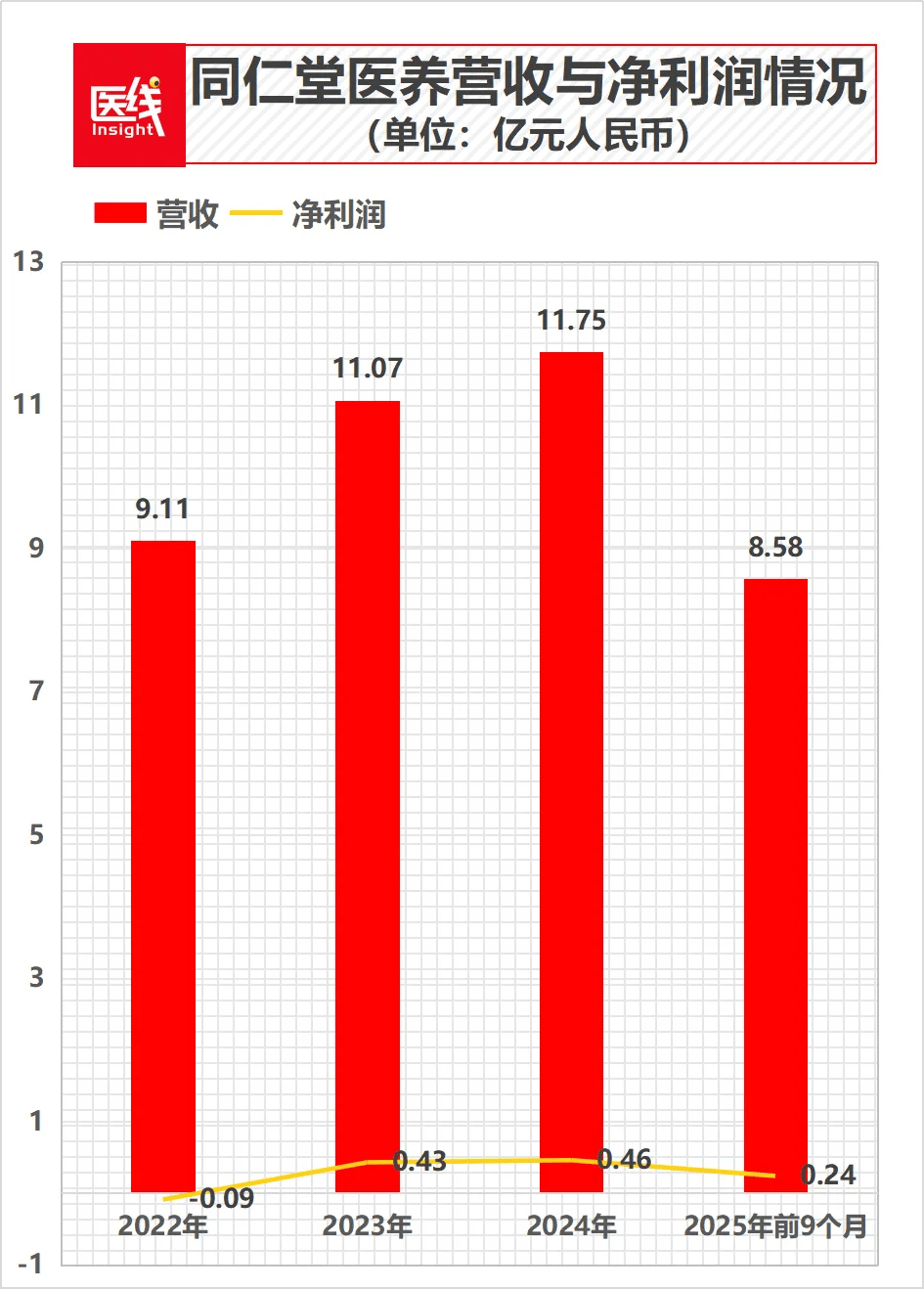
Core Viewpoint - The article highlights the challenges faced by Tongrentang Medical Investment Co., Ltd., despite being the largest private traditional Chinese medicine (TCM) hospital in China, including high labor costs, heavy reliance on brand reputation, and strict healthcare regulations, leading to low profitability [1][2][3]. Group 1: Financial Performance - In 2024, Tongrentang Medical received 3 million patient visits, the highest in the private TCM sector, but only achieved a net profit of 46.2 million yuan, which includes a one-time asset sale gain [1][4]. - Revenue figures show a gradual increase: 911 million yuan in 2022, 1.107 billion yuan in 2023, and 1.175 billion yuan in 2024, with net profits of -9.23 million yuan, 42.63 million yuan, and 46.2 million yuan respectively [4][5]. - The net profit margin for 2024 was only 3.9%, indicating a struggle to convert high patient volume into substantial profits [6][8]. Group 2: Operational Challenges - The company faces a "scale trap," where high patient volume does not translate into efficient monetization due to the labor-intensive nature of TCM services [10]. - Employee costs have surged, making it difficult for the company to maintain profitability as it expands its workforce to accommodate more patients [9][10]. - The reliance on a few top physicians is significant, with the top five doctors contributing 11.4% of total revenue in 2022, highlighting a vulnerability in the business model [20][22]. Group 3: Market Position and Growth Potential - Despite its challenges, the TCM market is projected to grow significantly, with the market size expected to increase from 659.9 billion yuan in 2019 to 1,001.6 billion yuan in 2024, reflecting a compound annual growth rate (CAGR) of 8.7% [35][42]. - The company’s growth strategy has included acquisitions, such as the purchase of Sanxi Hall, which has contributed significantly to revenue and profit margins [12][14]. - The TCM industry is anticipated to continue expanding, with a projected market size of 1,620.5 billion yuan by 2029, indicating a favorable long-term outlook for companies like Tongrentang Medical [42].


片仔癀连跌8日,盘中跌近1%,至2020年6月以来新低!中药ETF(560080)跌近2%,最新单日吸金近4000万元!众生药业业绩扭亏为盈
Sou Hu Cai Jing· 2026-01-27 06:36
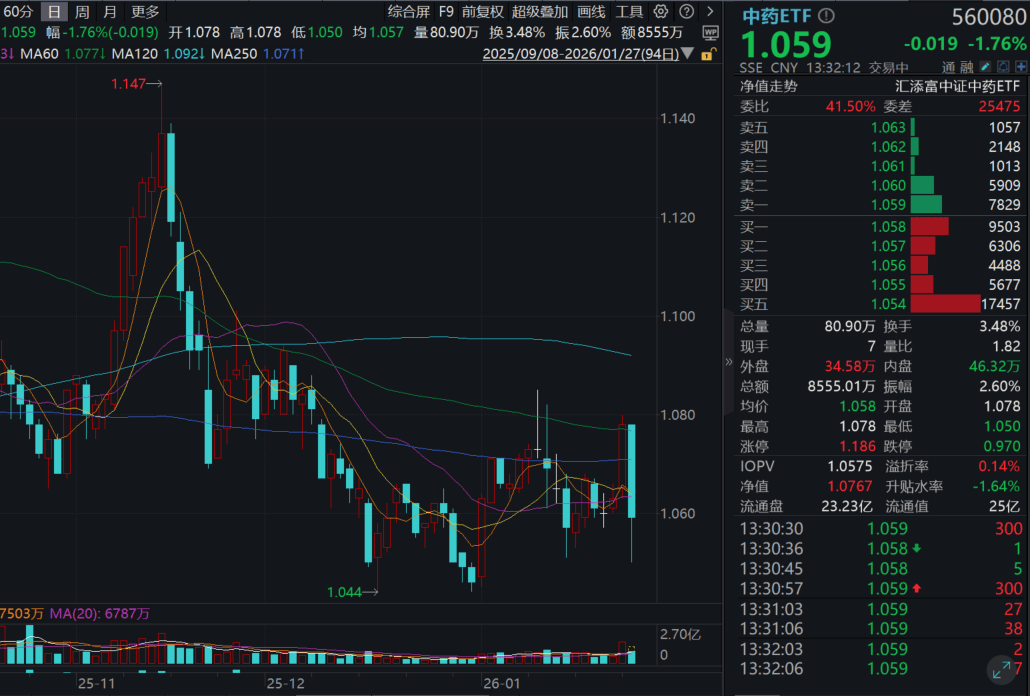
Core Viewpoint - The A-share pharmaceutical sector has gained renewed investor interest due to the resurgence of COVID-19 cases in India, leading to fluctuations in the Chinese medicine ETF (560080) and notable stock performance among key companies in the sector [1][6]. Group 1: Market Performance - The Chinese medicine ETF (560080) experienced a nearly 2% decline on January 27, following a more than 1.4% increase the previous day, with trading volume surpassing 85 million yuan [1]. - Notable declines were observed in key stocks within the ETF, including Zhongsheng Pharmaceutical down over 7% and Yiling Pharmaceutical down over 5%, with several others also experiencing declines [3]. Group 2: Valuation Insights - The latest price-to-earnings ratio (PE TTM) for the index tracked by the Chinese medicine ETF (560080) is 24.57, indicating that the valuation is below 81.27% of the time since the index was published in May 2015, suggesting a favorable valuation opportunity [4]. Group 3: Company News - Zhongsheng Pharmaceutical announced a projected net profit of 260 million to 310 million yuan for 2025, marking a significant turnaround with an increase of 186.91% to 203.62% year-on-year [7]. - Yiling Pharmaceutical also forecasted a net profit of 1.2 billion to 1.3 billion yuan for 2025, indicating a key operational turning point [7]. - Kangyuan Pharmaceutical received approval for clinical trials of a new traditional Chinese medicine aimed at treating children's adenoid hypertrophy, marking a step forward in innovation [7]. Group 4: Industry Trends - The Chinese traditional medicine market is projected to exceed 700 billion yuan in 2024, driven by stable demand amid an aging population, although pricing volatility has been influenced by inventory adjustments and procurement policies [8]. - The industry is experiencing a consolidation trend, with leading companies capturing over half of the market revenue and profits, while ongoing policy focus on innovation and quality development is reshaping the competitive landscape [8].


“气象+健康” 北京同仁堂与墨迹天气打造智能防护新体验
Zhong Guo Zhi Liang Xin Wen Wang· 2026-01-26 06:45
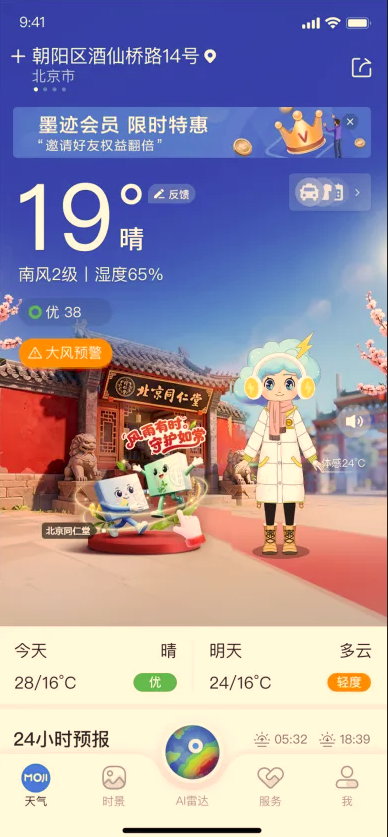
Core Viewpoint - Beijing Tongrentang Technology Development Co., Ltd. has announced a strategic partnership with the weather service platform Moji Weather to launch a winter health protection plan combining traditional Chinese medicine products with weather forecasting capabilities [1][3]. Group 1: Partnership Overview - The collaboration aims to create an integrated system of "weather alerts + health interventions" to upgrade traditional cold medications into a "family health alert system" for proactive and precise health management [1][3]. - The partnership will utilize Moji Weather's extensive user base and high-frequency usage scenarios to establish a strong correlation between weather changes and health risks, transitioning from "cold treatment" to "health prevention" [3]. Group 2: User Engagement and Experience - Users will encounter health protection information from Beijing Tongrentang Technology through various touchpoints on the Moji Weather app, including splash ads, 15-day forecast banners, and social media interactions, facilitating a seamless transition from "knowing the weather" to "protecting health" [5]. - The initiative aims to provide a convenient experience for users to access health products directly from the app, enhancing the purchasing process [5]. Group 3: Brand Impact and Philosophy - The collaboration represents not only resource synergy but also an upgrade in philosophy, combining traditional Chinese medicine's "preventive treatment" concept with big data from meteorology [7]. - The project is expected to reach over 36 million brand exposures, significantly enhancing brand influence and recognition in winter health scenarios [7]. - This partnership marks an important step in integrating traditional Chinese medicine culture into modern health practices, with ongoing exploration of the fusion between traditional medicine and modern technology [8].
同仁堂科技:品种阶梯研究储备进入收获期
Zhong Guo Zhi Liang Xin Wen Wang· 2026-01-26 06:45
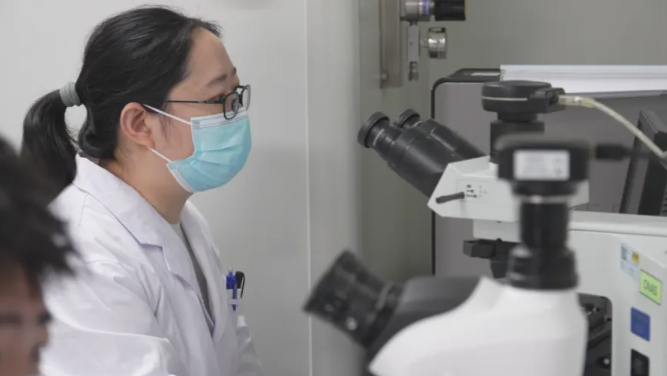
Core Viewpoint - Tongrentang Technology Company is advancing its core competitiveness from traditional practices to a modern scientific evidence system through significant research and development efforts since 2025 [1][7]. Group 1: Research and Development - The company is accelerating the development of new drugs, with the innovative traditional Chinese medicine Qishen Granules successfully entering Phase II clinical trials, aiming to provide safer and more effective treatment options for cardiovascular disease patients [3]. - Multiple clinical studies on well-known traditional Chinese medicine products have yielded fruitful results, including the completion of clinical research on Jinkui Shenqi Pill for "kidney yang deficiency with frequent night urination" and on Ganmao Qingre Granules for the effectiveness and safety in treating common colds [5]. Group 2: Scientific Evidence and Standards - The company has made significant breakthroughs in the pharmacological research of traditional formulas, such as the efficacy mechanism of Liuwei Dihuang Decoction for diabetic retinopathy and the real-world study of Yongshenghe Ejiao for tumor-related anemia, providing scientific insights into traditional medicine's role in modern disease treatment [5]. - The publication of 15 high-quality papers, including 3 in SCI journals, demonstrates the company's academic influence in traditional Chinese medicine and supports the establishment of industry technical standards [5]. Group 3: Industry Standards and Collaboration - Since 2025, the company has cooperated to release three group standards for traditional Chinese medicine, which have been officially implemented, and has been approved as the leading unit for a national pharmacopoeia standard improvement project [5][6]. - The company aims to establish the brand's reputation on solid modern scientific evidence, enhancing the market competitiveness of existing products and reserving growth momentum for the future [7].
新股消息 | 同仁堂医养四度递表港交所 在非公立中医院医疗服务行业中排名第二
智通财经网· 2026-01-26 06:42
Company Overview - Tongrentang Healthcare Investment Co., Ltd. (referred to as Tongrentang Healthcare) has submitted its listing application to the Hong Kong Stock Exchange, with CICC as its sponsor, marking the company's fourth attempt to list [1] - The company is a subsidiary of Tongrentang, focusing strategically on Chinese traditional medicine healthcare services, providing comprehensive services to individual clients and standardized management services to institutional clients [3] - As of the latest practicable date, Tongrentang Healthcare has established a tiered network of Chinese medicine healthcare services, including 12 owned offline medical institutions and one internet hospital [3][4] Market Position - In 2024, Tongrentang Healthcare holds a 0.2% market share in the non-public Chinese medicine hospital sector, ranking second in the industry, which accounts for 46.5% of the total market size of the Chinese medicine healthcare industry [1] - The company is the largest group in the non-public Chinese medicine hospital sector, with a market share of 1.7% based on total outpatient and inpatient visits in 2024 [3] Financial Performance - The company reported revenues of approximately RMB 911 million, RMB 1.153 billion, RMB 1.175 billion, and RMB 858 million for the fiscal years 2022, 2023, 2024, and the nine months ending September 30, 2025, respectively [5] - Gross profits for the same periods were approximately RMB 143 million, RMB 218 million, RMB 223 million, and RMB 156 million, with corresponding gross profit margins of 15.7%, 18.9%, 18.9%, and 18.2% [6] - The company recorded net profits of approximately -RMB 9.233 million, RMB 42.634 million, RMB 46.197 million, and RMB 23.997 million for the fiscal years 2022, 2023, 2024, and the nine months ending September 30, 2025, respectively [8] Industry Overview - The healthcare service industry in China is experiencing robust growth, with the market size expected to increase from RMB 4.644 trillion in 2019 to RMB 7.016 trillion by 2024, reflecting a compound annual growth rate (CAGR) of 8.6% [10][19] - The Chinese traditional medicine service sector is a significant part of the healthcare industry, with a market size projected to grow from RMB 659.9 billion in 2019 to RMB 1 trillion by 2024, representing a CAGR of 8.7% [19] - The number of Chinese medicine hospitals has increased from 5,232 in 2019 to 6,497 in 2024, with a CAGR of 4.4%, indicating a growing demand for traditional medicine services [14] Management Services - The management services sector for healthcare institutions in China is developing, with the market size expected to grow from RMB 8.9 billion in 2019 to RMB 29.6 billion by 2024, with a projected CAGR of 18.1% from 2025 to 2029 [22]
同仁堂医养递表港交所
Zhi Tong Cai Jing· 2026-01-26 06:16
Core Insights - Beijing Tongrentang Medical Investment Co., Ltd. (Tongrentang Medical) has submitted its listing application to the Hong Kong Stock Exchange, with China International Capital Corporation (CICC) as its sponsor [1] Company Overview - Tongrentang Medical is a subsidiary of Tongrentang, strategically focused on providing Traditional Chinese Medicine (TCM) healthcare services in China [1] - The company offers comprehensive TCM healthcare services to individual clients and standardized management services to institutional clients, along with various health products and other offerings [1] - It has established a tiered TCM healthcare service network, which includes 12 self-owned offline medical institutions and one internet hospital, as well as 12 offline managed medical institutions [1] Market Position - According to the total outpatient and inpatient visits in 2024, Tongrentang Medical is the largest TCM hospital group in China's non-public TCM medical service industry, holding a market share of 1.7% [1]
北京同仁堂医养投资股份有限公司向港交所提交IPO申请
Mei Ri Jing Ji Xin Wen· 2026-01-26 05:49
每经AI快讯,1月26日,北京同仁堂(600085)医养投资股份有限公司向港交所提交IPO申请,保荐人 为中金公司(601995)。 ...

新股消息 | 同仁堂医养递表港交所
智通财经网· 2026-01-26 05:47
Group 1 - The core viewpoint of the article is that Beijing Tongrentang Medical Investment Co., Ltd. (Tongrentang Medical) has submitted a listing application to the Hong Kong Stock Exchange, with CICC as its sponsor [1] - Tongrentang Medical is a strategic subsidiary under Tongrentang, focusing on traditional Chinese medical services, providing comprehensive medical services to individual clients and standardized management services to institutional clients [1] - The company has established a tiered traditional Chinese medical service network, which includes 12 self-owned offline medical institutions and one internet hospital, as well as 12 offline managed medical institutions [1] - According to the 2024 projections for total outpatient and inpatient visits, Tongrentang Medical is the largest private traditional Chinese medicine hospital group in China, holding a market share of 1.7% in the non-public traditional Chinese medicine medical service industry [1]
2026年中国心脑血管药物行业市场政策汇总、产业链图谱、市场规模、竞争格局及发展趋势分析:需求群体庞大[图]
Chan Ye Xin Xi Wang· 2026-01-26 01:40
Core Insights - The aging population in China is leading to an increase in cardiovascular diseases, with rising prevalence of chronic conditions such as hypertension and hyperlipidemia, driving demand for cardiovascular drugs [1][8] - There is a significant increase in health awareness among residents, leading to earlier screening and treatment of cardiovascular diseases, which expands the applicable population for cardiovascular medications [1][8] - The implementation of centralized drug procurement policies is causing a downward trend in drug prices, putting pressure on the overall market size, which is projected to decline to 954.1 billion yuan for traditional Chinese medicine and 1,415.8 billion yuan for chemical drugs by 2025 [1][8] Market Overview - Cardiovascular diseases encompass both cardiovascular and cerebrovascular diseases, primarily caused by conditions like hyperlipidemia, blood viscosity, atherosclerosis, and hypertension [2] - Cardiovascular drugs are classified into two main categories: cardiovascular system drugs and cerebrovascular system drugs, targeting various heart and brain-related conditions [2] Policy Environment - The pharmaceutical manufacturing industry, including cardiovascular drugs, is a key focus of national policy support, with various regulations aimed at correcting malpractices and promoting industry development [3][4] Industry Chain - The upstream of the cardiovascular drug industry includes chemical raw materials, traditional Chinese medicinal materials, and pharmaceutical packaging materials, while the midstream involves research, production, and registration processes [4][5] Demand Dynamics - Cardiovascular diseases are the leading cause of death in China, with hypertension cases expected to reach 370 million and coronary heart disease cases at 30 million by 2025, indicating a growing demand for cardiovascular medications [6][8] Competitive Landscape - The market has developed a dual competitive structure, with foreign companies dominating the chemical drug sector and local companies leading in traditional Chinese medicine, creating a competitive environment [10] - Notable domestic players include Shijiazhuang Pharmaceutical Group and Shandong Buchang Pharmaceutical, which have established strong market positions through unique products and effective distribution networks [10][11] Development Trends - The industry is shifting from reliance on generic drugs to innovation, focusing on high-value drug development, including targeted and biological drugs [12] - There is a growing integration of chronic disease management with digital tools, enhancing patient adherence and treatment precision [13] - Policy reforms are reshaping market dynamics, emphasizing high clinical value drugs and expanding the market for basic medications in primary healthcare [14] - The industry is moving towards a collaborative ecosystem, with increased internationalization efforts and participation in global clinical trials [15]