
YTO(600233)

Search documents
快递涨价“连续剧”更新 上海收件价格上调 商家默默取消运费险
2 1 Shi Ji Jing Ji Bao Dao· 2025-09-23 23:13
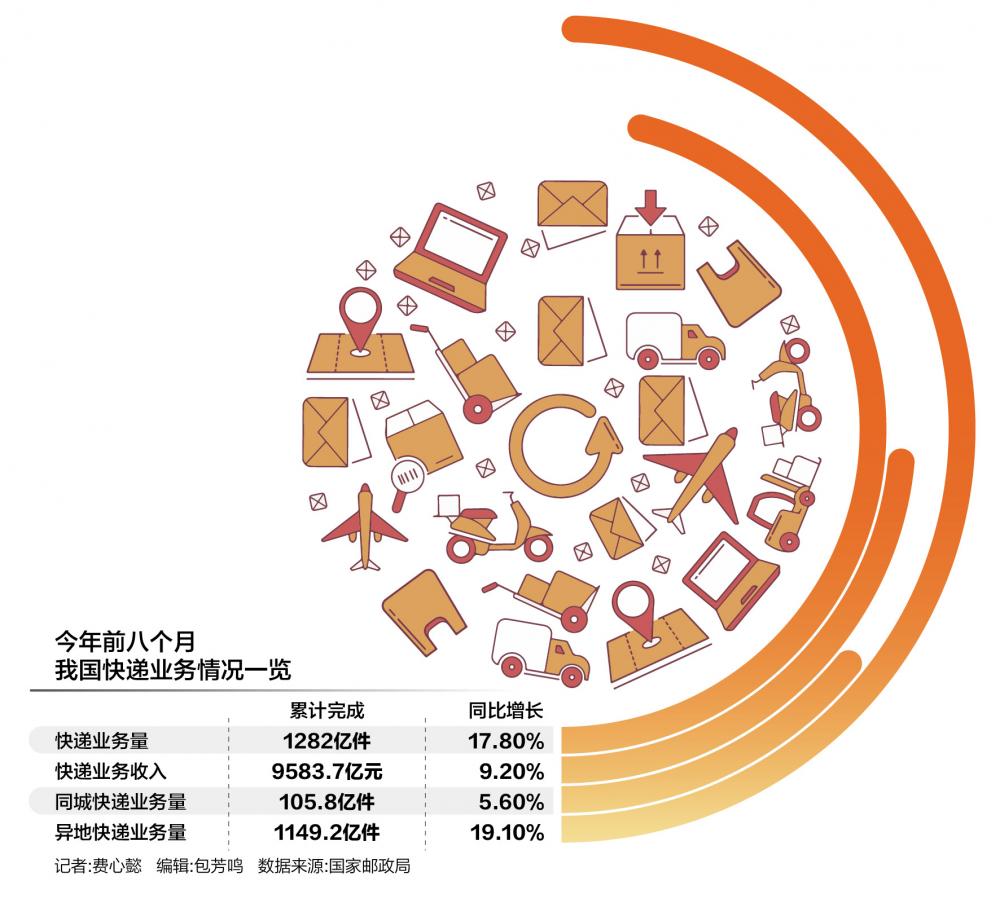
Core Viewpoint - The recent price increase in the express delivery sector, driven by policy and cost pressures, is spreading from core e-commerce areas to broader regions, aiming to curb long-standing low-price competition and improve service quality satisfaction among consumers [1][3][5]. Price Increase Details - On September 22, major express companies including Jitu, Zhongtong, and Yuantong raised the collection prices in Shanghai by 0.2 to 0.4 yuan per order [1]. - Previous price hikes occurred in Yiwu, Zhejiang, and Guangdong, with minimum prices set at 1.2 yuan and 1.4 yuan respectively, indicating a trend towards establishing a price floor to combat low-price competition [3][4]. Financial Impact - The price adjustments are expected to enhance station profitability and courier income, with one franchisee estimating an additional 1.5 million yuan in monthly revenue from a 0.1 yuan increase per order [4]. - The express delivery industry has seen record volumes, with 1,282 billion packages delivered in the first eight months of the year, a 17.8% year-on-year increase, and total revenue reaching 9,583.7 billion yuan, up 9.2% [4]. Competitive Landscape - The express delivery sector is transitioning from a volume-driven strategy to a quality-focused approach due to shrinking profit margins amid fierce competition [5][6]. - Major companies like Zhongtong have adjusted their growth forecasts downward, indicating a shift in focus towards balancing service quality and profitability [6]. Regional Price Variations - Price increases have been more pronounced in e-commerce hubs like Guangdong and Zhejiang, while non-core regions maintain previous pricing strategies, leading to potential market imbalances [6][7]. - Some franchisees in less competitive areas are still offering lower prices to attract customers, which may undermine the overall price increase efforts [6]. Broader Implications - The rise in express delivery costs has led to the cancellation of shipping insurance by some merchants, particularly in the high-return apparel sector, which could impact sales conversion rates [7]. - Experts suggest that while price increases may improve profit margins, the long-term effectiveness in curbing low-price competition will depend on consumer acceptance of higher prices [7].




上海快递涨价,多个站点已收到通知,不影响个人寄件价格
21世纪经济报道· 2025-09-23 12:16
Core Viewpoint - The recent price increase in the express delivery industry, driven by policy and cost pressures, is spreading from core e-commerce areas to broader regions, aiming to curb long-standing low-price competition and improve service quality to retain consumer satisfaction [1][4][10]. Group 1: Price Increase Trends - Major express companies, including Jitu, Zhongtong, and Yuantong, have raised prices in Shanghai by 0.2 to 0.4 yuan per order, reflecting a broader trend initiated in regions like Zhejiang and Guangdong [1]. - The price adjustments primarily target low-priced e-commerce orders below cost, while personal parcel rates remain unaffected [1][4]. - The price increase is expected to enhance station profitability and courier income, with estimates suggesting a potential monthly revenue increase of approximately 1.5 million yuan for some stations [4]. Group 2: Industry Performance Metrics - In the first eight months of the year, the express delivery industry achieved a record volume of 1,282 billion packages, a year-on-year increase of 17.8%, while total revenue reached 958.37 billion yuan, reflecting a decline of 9.2% [2]. - The average price per delivery has decreased significantly, with major companies like Yunda and Yuantong reporting declines in per-package revenue due to intense competition [5]. Group 3: Cost Pressures and Market Dynamics - The express delivery sector faces rising costs, including increased wages for couriers and higher transportation and packaging expenses, leading to financial strain on many franchise operators [5][6]. - The shift from a volume-driven strategy to a quality-focused approach is evident, as companies like Zhongtong adjust their growth forecasts downward to prioritize service quality and profitability [6]. Group 4: Regional Price Variation and Market Response - Price adjustments have been uneven across regions, with core areas like Guangdong and Zhejiang implementing changes while non-core regions maintain existing pricing strategies [9]. - The autonomy of franchise operators in setting prices can lead to variations that undermine the intended effects of price increases, highlighting the need for a balance between headquarters policies and franchisee interests [9]. Group 5: Implications of Price Increases - The rise in delivery fees has led to the cancellation of shipping insurance by some merchants, particularly in high-return sectors like apparel, which may impact sales conversion rates [10]. - The potential reduction in reverse logistics volume due to the cancellation of shipping insurance could affect overall revenue for express stations, as reverse shipments are a significant source of additional income [10].
快递涨价“连续剧”更新!上海收件价格上调,商家默默取消运费险
2 1 Shi Ji Jing Ji Bao Dao· 2025-09-23 11:16
Core Viewpoint - The recent price increases in the express delivery industry, driven by policy and cost pressures, are spreading from core e-commerce areas to a broader range, aiming to curb long-standing low-price competition while the sustainability of these price hikes depends on service quality satisfaction among consumers [1][2][3]. Group 1: Price Increases and Market Dynamics - Major express companies in Shanghai have raised collection prices by 0.2 to 0.4 yuan per order, with similar actions observed in Zhejiang and Guangdong [1]. - The price adjustments primarily target low-priced orders below cost, while personal parcel prices remain unaffected [1][2]. - The price floor management in various regions has effectively curbed vicious low-price competition, leading to a stabilization in single-order revenue [2]. Group 2: Financial Impact on Companies - The price increase is expected to enhance station profitability and courier income, with estimates suggesting an additional 1.5 million yuan in monthly revenue for some stations if single-order income rises by 0.1 yuan [3]. - The express delivery industry has seen a record volume of 1,282 billion packages in the first eight months of the year, with a revenue of 9,583.7 billion yuan, marking a 17.8% and 9.2% year-on-year growth respectively [3]. Group 3: Cost Pressures and Competitive Landscape - The industry faces rising costs, including increased wages for couriers and higher transportation and packaging expenses, leading to some franchisees operating at a loss [4]. - The average price for express services has decreased by nearly 8% year-on-year, with major companies experiencing declines in single-order revenue [4]. Group 4: Regional Variations and Strategic Shifts - Price increases have been more pronounced in e-commerce core regions like Guangdong and Zhejiang, while non-core areas maintain previous pricing strategies [5]. - The ability of franchisees to set prices independently has led to some circumventing the price hikes, indicating a need for balance between headquarters policies and franchisee interests [6]. Group 5: Broader Implications of Price Changes - The rise in express fees has led to the cancellation of freight insurance, particularly affecting high-return sectors like clothing, which may impact sales conversion rates [6]. - The cancellation of freight insurance could also reduce the volume of reverse logistics, which has been a significant revenue source for express stations [6]. Group 6: Future Outlook and Challenges - Experts suggest that while price increases may improve profit margins, the effectiveness in curbing low-price competition remains uncertain, as consumer price sensitivity could affect order volumes [7].
东兴证券:快递反内卷遏制以价换量 通达系单票收入明显回升
智通财经网· 2025-09-23 07:44
Core Viewpoint - The express delivery industry in China is experiencing a slowdown in business volume growth, with a year-on-year increase of 12.3% in August, indicating a shift away from price-driven growth strategies due to anti-involution policies [1][3][4] Group 1: Business Volume and Growth Trends - In August, the total business volume of express delivery companies reached 16.15 billion pieces, with a year-on-year growth of 12.3% [1] - The growth rate of business volume has been gradually declining since March, influenced by a high base from the previous year and diminishing returns from price-driven strategies [1][3] - The growth in same-city delivery volume decreased by 0.8%, while inter-city delivery volume increased by 14.0% [1] Group 2: Company Performance and Pricing - SF Express continues to lead the industry with a growth rate exceeding 30% since April, while the growth rates of other major companies in the Tongda system have declined and are below the industry average [2] - In August, the average revenue per piece for Shentong, YTO, and Yunda increased by 4.6%, 3.4%, and 0.5% respectively [2] - Shentong showed the best performance in August, with a slight decline in volume growth but an increase in revenue per piece by 0.09 yuan [2] Group 3: Impact of Anti-Involution Policies - Recent anti-involution policies have effectively curbed price-driven behaviors in the industry, leading to a more sustainable growth model focused on service quality rather than price competition [3][4] - The upward trend in average revenue per piece is expected to continue, although the rebound may not be as strong as in 2021 due to a less intense price war this year [4] Group 4: Investment Recommendations - The current anti-involution measures are expected to exceed market expectations, positively impacting company profitability and stock prices [5] - Companies to focus on include industry leaders with superior service quality such as Zhongtong Express and YTO Express, as well as Shentong Express, which has shown significant improvement in operational data [5]

全国多地快递费涨价 “反内卷”初见成效
Jing Ji Guan Cha Wang· 2025-09-23 03:47
Core Viewpoint - Major express delivery companies in China have collectively raised prices in various regions, indicating a shift away from low-price competition and a move towards stabilizing the industry after years of price wars [1][2][5] Price Adjustments - Five major express companies, including Jitu, Zhongtong, Yuantong, Shentong, and Yunda, announced price increases in Shanghai, with a rise of 0.2 to 0.4 yuan per package [1] - Since August, multiple regions such as Guangdong, Zhejiang, and Jiangsu have also implemented price hikes, with Guangdong raising the minimum price by 0.4 yuan and Zhejiang adjusting prices by 0.2 to 0.5 yuan [2][3] Industry Context - The express delivery industry has been struggling with low-price competition, leading to a consensus among major players to stop price wars since 2021 [1][5] - A report from招商证券 indicates that from January to May 2025, the national express business volume is expected to grow by 20.1% to 788 billion packages, but the average price per package is projected to drop by 8.2% to 7.5 yuan, highlighting the "volume increase, price drop" trend [1] Regulatory Influence - The State Post Bureau has been actively opposing "involution" in the industry, emphasizing the need for fair competition and the elimination of low-price chaos [5][6] - Following a meeting on July 29, express companies were encouraged to adopt unified pricing strategies to mitigate low-price competition [2][3] Early Signs of Recovery - The "anti-involution" measures have shown initial success, with several A-share express companies reporting an increase in average revenue per package in August [5][6] - For instance, Shentong's average revenue per package rose to 2.06 yuan, a year-on-year increase of 3% and a month-on-month increase of 4.6% [5] Future Outlook - Experts predict that there is potential for further price increases in the Zhejiang region before the "Double Eleven" shopping festival, with expected hikes of 0.15 to 0.2 yuan per package [4] - The overall trend suggests that the price recovery in the express delivery sector may continue, supported by seasonal demand and operational optimizations [6]
快递业“反内卷”在行动 竞争焦点从拼价格转向比服务
Zhong Guo Zheng Quan Bao· 2025-09-22 20:23
Core Viewpoint - The domestic express delivery industry is shifting from price competition to service value enhancement, with multiple companies announcing price increases across various regions since mid-September [1][2][3]. Price Adjustments - Major express companies such as Zhongtong, Yuantong, Yunda, and Jitu have announced price increases starting September 22 in Shanghai, following similar adjustments in Liaoning and other regions [2]. - The overall price increase ranges from 0.1 to 0.4 yuan per order, with some areas setting minimum prices for deliveries [2]. - This price adjustment follows earlier increases in Guangdong and Zhejiang, where the minimum price was raised by 0.4 yuan, and further increases are expected before the "Double Eleven" shopping festival [2][5]. Industry Trends - Over 10 regions have initiated "anti-involution" actions, indicating a trend of price increases spreading from core e-commerce areas to other regions [3]. - The industry is moving towards a unified pricing strategy to reduce low-price competition, supported by regulatory bodies [3][7]. Business Performance - Data from the National Postal Administration shows that in the first half of 2025, the express delivery business volume reached 956.4 billion pieces, a year-on-year increase of 19.3%, while revenue reached 718.78 billion yuan, up 10.1% [4]. - Despite the price increases, the average price per delivery has decreased by 7.7% compared to the previous year, indicating ongoing price pressure in the market [4]. Future Outlook - Analysts predict that the price recovery trend will continue, especially with the upcoming peak season for express delivery [5][6]. - Companies are focusing on enhancing service value and employee welfare to transition from a price-driven model to a value-driven approach, aiming for sustainable high-quality development in the industry [7][8].
快递业“反内卷”在行动竞争焦点从拼价格转向比服务
Zhong Guo Zheng Quan Bao· 2025-09-22 20:15
Core Viewpoint - The domestic express delivery industry is shifting from price competition to service value, with multiple companies announcing price increases in various regions since mid-September [1][2][3]. Price Adjustments - Major express companies such as Zhongtong, Yuantong, Yunda, and Jitu have announced price increases starting September 22 in Shanghai, following similar announcements in Liaoning and other regions [2][3]. - The overall price increase ranges from 0.1 to 0.4 yuan per order, with some areas setting minimum prices for deliveries [2]. - This price adjustment follows earlier increases in Guangdong and Zhejiang, where the minimum price was raised by 0.4 yuan, and further increases are expected before the "Double Eleven" shopping festival [2][3]. Industry Trends - Over 10 regions have initiated "anti-involution" actions, indicating a trend from core e-commerce areas to central and northeastern regions [3]. - The National Postal Administration reported that in the first half of 2025, the total express delivery volume reached 956.4 billion pieces, a year-on-year increase of 19.3%, while revenue reached 718.78 billion yuan, up 10.1% [3]. Market Stability - Despite the price increases, the overall volume of deliveries remains stable, with companies reporting improved revenues [4]. - The express delivery market is expected to see a gradual implementation of price increases based on local conditions, with minimal impact on clients [4]. Service Value Enhancement - Companies are focusing on enhancing service quality and employee welfare to shift the competitive focus from price to value [5][6]. - The industry is encouraged to move away from a reliance on low prices and adopt a more balanced approach to competition, supported by regulatory frameworks [5][6].
“反内卷”后,快递公司最新单票收入表现如何?
Guo Ji Jin Rong Bao· 2025-09-22 12:50
Core Viewpoint - The express delivery industry is experiencing a "de-involution" trend, with companies showing signs of revenue recovery and price increases after a prolonged period of price competition [1][3][4]. Group 1: Company Performance - SF Express reported revenue of 24.787 billion yuan in August, a year-on-year increase of 7.86%, with a significant growth in logistics business revenue [1] - Shentong Express achieved a revenue of 4.434 billion yuan in August, up 14.47% year-on-year, with a business volume of 2.147 billion pieces [1] - YTO Express generated 5.39 billion yuan in revenue, reflecting a 9.82% year-on-year increase, with a business volume of 2.511 billion pieces [1] - Yunda Express reported revenue of 4.119 billion yuan, a 5.16% year-on-year increase, with a business volume of 2.145 billion pieces [1] Group 2: Industry Trends - The overall express delivery business revenue in August reached 118.96 billion yuan, a year-on-year increase of 4.2%, with a business volume of 16.15 billion pieces, up 12.3% [2] - The industry is witnessing a shift from low-price competition to price increases, with several provinces implementing price hikes [3][4] - The average express delivery price has begun to stabilize after a prolonged decline, indicating a potential recovery in profitability for leading companies [4][5] Group 3: Regulatory Environment - The State Post Bureau has emphasized the need for stricter regulation to combat "involution" in the industry, aiming for high-quality development [3] - Multiple provinces have responded to the call for price increases, indicating a coordinated effort to improve the industry's pricing structure [3][4]
快递8月数据点评:反内卷遏制以价换量,通达系单票收入明显回升
Dongxing Securities· 2025-09-22 09:40
Investment Rating - The industry investment rating is "Positive" [4] Core Insights - The report highlights that the national express service companies completed a total of 16.15 billion packages in August, representing a year-on-year growth of 12.3%. However, the growth rate of package volume continues to decline due to the industry's anti-involution measures that suppress the practice of exchanging price for volume [2][11] - The report indicates a significant recovery in single-package revenue for Tongda system companies, with Shentong and YTO showing notable increases in revenue per package [2][26] - The anti-involution policies have effectively curbed the price competition, leading to a shift in focus towards service quality rather than just cost advantages [10][43] Summary by Sections 1. Industry Overview - In August, the total business volume of express service companies reached 16.15 billion packages, with a year-on-year increase of 12.3%. The volume of same-city packages decreased by 0.8%, while intercity packages grew by 14.0% [2][11] - The growth rate of package volume has been gradually declining since March, influenced by a high base from the previous year and diminishing marginal returns from the price-for-volume model [2][11] 2. Package Volume Analysis - The growth rate of package volume has slowed down, with significant differentiation among listed express companies. SF Express has maintained a growth rate above 30% since April, while the Tongda system companies have seen a decline in growth rates [2][11][16] - In terms of pricing, Shentong, YTO, and Yunda saw their single-package revenue increase by 4.6%, 3.4%, and 0.5% respectively in August [2][26] 3. Revenue per Package - The report notes that the average single-package revenue in August slightly increased compared to July, while the year-on-year decline was 7.2%. The revenue per package for Shentong and YTO showed significant recovery, indicating a strategic shift away from low-priced packages [26][30] - Shentong's single-package revenue increased by 0.09 yuan, while YTO's increased by 0.07 yuan, suggesting a deliberate adjustment in sales strategy [2][29] 4. Structural Changes - The report indicates that the industry concentration ratio (CR8) remained stable at 86.9, with a year-on-year increase of 1.7. The market share of the four listed companies reached 50.6%, slightly up from the previous year [36][38] 5. Investment Recommendations - The report suggests focusing on leading companies with superior service quality, such as Zhongtong and YTO, as well as Shentong, which has shown significant improvement in operational data [8][43]
快递反内卷成效显著,8月圆通和申通单票收入环比分别涨7分和9分 | 投研报告
Zhong Guo Neng Yuan Wang· 2025-09-22 03:06
Core Insights - The express delivery industry in China showed positive growth in August 2025, with revenue reaching 1189.6 billion yuan and business volume at 161.5 billion pieces, marking year-on-year increases of 4.2% and 12.3% respectively [1][2] - Cumulatively, from January to August 2025, the industry generated a total revenue of 9583.7 billion yuan, reflecting a year-on-year growth of 9.2%, while the total business volume reached 1282.0 billion pieces, up 17.8% year-on-year [1][2] Industry Data - In August 2025, major express companies reported the following revenue: SF Express at 186.57 billion yuan (+14.1%), Shentong at 44.34 billion yuan (+14.5%), Yunda at 41.19 billion yuan (+5.2%), and YTO Express at 53.90 billion yuan (+9.8%) [3] - Business volumes for the same companies were: SF Express at 14.06 billion pieces (+34.8%), Shentong at 21.47 billion pieces (+10.9%), Yunda at 21.45 billion pieces (+8.7%), and YTO Express at 25.11 billion pieces (+11.1%) [3] - The market shares for these companies were reported as follows: SF Express at 8.7%, Shentong at 13.3%, Yunda at 13.3%, and YTO Express at 15.5% [3] Company Performance - For the first eight months of 2025, the revenue figures were: SF Express at 1464.69 billion yuan (+11.3%), Shentong at 334.14 billion yuan (+14.8%), Yunda at 329.70 billion yuan (+6.9%), and YTO Express at 433.33 billion yuan (+13.3%) [4] - Business volumes for these companies were: SF Express at 105.96 billion pieces (+27.9%), Shentong at 166.75 billion pieces (+18.2%), Yunda at 170.33 billion pieces (+14.3%), and YTO Express at 199.57 billion pieces (+20.2%) [4] - The market shares for these companies were: SF Express at 8.3%, Shentong at 13.0%, Yunda at 13.3%, and YTO Express at 15.6% [4] Market Trends - The express delivery industry is benefiting from changes in demand, such as the increase in small and light packages, the rise of reverse logistics, and the advantages of lower-tier markets [5] - The industry is experiencing a shift from price wars to orderly competition, with recent price increases expected to improve profit margins for express companies [5] - The overall performance of the express delivery sector is anticipated to improve as price hikes become more widespread across the country [5] Investment Recommendations - The express delivery sector is currently viewed as undervalued, with continued growth in the e-commerce market and new demands emerging from lower-tier markets [6] - Companies such as YTO Express and Shentong are highlighted for their strong performance in both volume and price growth [6] - The sector is expected to benefit from a shift away from price wars, presenting long-term investment opportunities [6]