YTO(600233)

Search documents
圆通速递(600233) - 独立董事提名人声明与承诺(魏保江)
2025-09-26 11:16
独立董事提名人声明与承诺 提名人圆通速递股份有限公司董事局,现提名魏保江为圆通 速递股份有限公司第十二届董事局独立董事候选人,并已充分了 解被提名人职业、学历、职称、详细的工作经历、全部兼职、有 无重大失信等不良记录等情况。被提名人已同意出任圆通速递股 份有限公司第十二届董事局独立董事候选人(参见该独立董事候 选人声明)。提名人认为,被提名人具备独立董事任职资格,与 圆通速递股份有限公司之间不存在任何影响其独立性的关系,具 体声明并承诺如下: 一、被提名人具备上市公司运作的基本知识,熟悉相关法律、 行政法规、规章及其他规范性文件,具有 5 年以上法律、经济、 会计、财务、管理或者其他履行独立董事职责所必需的工作经验。 被提名人暂未取得独立董事培训证明,其承诺将尽快参加上 海证券交易所举办的相关培训并取得培训证明。 二、被提名人任职资格符合下列法律、行政法规和部门规章 的要求: (一)《中华人民共和国公司法》关于董事任职资格的规定; (六)中共中央纪委、教育部、监察部《关于加强高等学校 反腐倡廉建设的意见》的相关规定(如适用); (七)中国人民银行《股份制商业银行独立董事和外部监事 制度指引》等的相关规定(如适 ...

圆通速递(600233) - 圆通速递股份有限公司关于召开2025年第二次临时股东大会的通知
2025-09-26 11:15
证券代码:600233 证券简称:圆通速递 公告编号:临 2025-062 圆通速递股份有限公司 关于召开2025年第二次临时股东大会的通知 本公司董事局及全体董事保证本公告内容不存在任何虚假记载、误导性陈述 或者重大遗漏,并对其内容的真实性、准确性和完整性承担法律责任。 重要内容提示: 一、召开会议的基本情况 (一)股东大会类型和届次 2025年第二次临时股东大会 (二)股东大会召集人:董事局 (三)投票方式:本次股东大会所采用的表决方式是现场投票和网络投票相结合的 方式 (四)现场会议召开的日期、时间和地点 召开的日期时间:2025 年 10 月 17 日 15 点 00 分 召开地点:上海市青浦区华新镇华徐公路 3029 弄 18 号 (五)网络投票的系统、起止日期和投票时间。 网络投票系统:上海证券交易所股东大会网络投票系统 涉及融资融券、转融通业务、约定购回业务相关账户以及沪股通投资者的投 票,应按照《上海证券交易所上市公司自律监管指引第 1 号—规范运作》等有关 规定执行。 (七)涉及公开征集股东投票权 否 二、会议审议事项 本次股东大会审议议案及投票股东类型 | 序号 | 议案名称 | 投票股东 ...
圆通速递(600233) - 圆通速递股份有限公司第十一届董事局第十九次会议决议公告
2025-09-26 11:15
证券代码:600233 证券简称:圆通速递 公告编号:临 2025-060 圆通速递股份有限公司 第十一届董事局第十九次会议决议公告 本公司董事局及全体董事保证本公告内容不存在任何虚假记载、误导性陈述 或者重大遗漏,并对其内容的真实性、准确性和完整性承担法律责任。 圆通速递股份有限公司(以下简称"公司")第十一届董事局第十九次会议 以电子邮件等方式通知了全体董事,并于 2025 年 9 月 26 日以通讯方式召开。应 出席会议的董事 9 名,实际出席会议的董事 9 名,符合《中华人民共和国公司法》 (以下简称《公司法》)等有关法律法规及《圆通速递股份有限公司章程》(以下 简称《公司章程》)的规定。会议由董事局主席喻会蛟先生主持。 会议以记名和书面的表决方式形成如下决议: 一、审议通过《关于董事局换届选举非独立董事的议案》 鉴于公司第十一届董事局任期即将届满,根据《公司法》《公司章程》等有 关规定,经董事局推荐,董事局提名委员会对第十二届非独立董事候选人进行资 格审查并审核通过,董事局提名喻会蛟先生、张小娟女士、潘水苗先生、沈沉女 士、喻世伦先生、葛程捷先生为公司第十二届董事局非独立董事候选人(简历详 见附件 ...
交通运输行业周报:原油运价大幅上涨,8月通达系快递公司收入和业务量同比实现增长-20250925
Bank of China Securities· 2025-09-25 05:28
Investment Rating - The report rates the transportation industry as "Outperforming the Market" [2] Core Views - Crude oil freight rates have significantly increased, while container shipping rates on long-distance routes have decreased. The China Import Crude Oil Composite Index (CTFI) rose to 1975.94 points, up 34.5% from September 11. VLCC market activity remains high, with freight rates expected to maintain elevated levels if demand remains stable [3][13] - The aviation sector saw the successful completion of the world's first intercity unmanned cargo flight using a 2-ton eVTOL by Peak Aviation, and civil aviation's total turnover in August reached a historical high of over 150 billion ton-kilometers [3][15][17] - Several express delivery companies reported growth in revenue and business volume for August, with the postal industry achieving a revenue of 1429.9 billion yuan, a year-on-year increase of 4.4% [3][23][24] Summary by Sections Industry Hot Events - Crude oil freight rates surged, while container shipping rates on long-distance routes fell. The CTFI reached 1975.94 points, a 34.5% increase from September 11. VLCC market activity remains robust, with freight rates expected to stay high if demand holds steady [3][13] - Peak Aviation's eVTOL completed the first intercity unmanned cargo flight, marking a significant milestone in aviation logistics. Civil aviation's total turnover in August surpassed 150 billion ton-kilometers, reflecting strong growth [3][15][17] - Express delivery companies like YTO and Yunda reported revenue and volume growth in August, with the postal industry achieving a revenue of 1429.9 billion yuan, up 4.4% year-on-year [3][23][24] Industry High-Frequency Data Tracking - In September 2025, air cargo prices remained stable, while domestic cargo flight volumes decreased by 1.13% year-on-year, and international flights increased by 16.88% [26][33] - The shipping sector saw a decline in domestic container shipping rates, with the SCFI index at 1198.21 points, down 14.3% week-on-week and 49.36% year-on-year. Conversely, dry bulk freight rates increased, with the BDI index at 2126 points, up 7.43% week-on-week [40][44] - The express delivery sector experienced a 12.29% year-on-year increase in business volume for August, with total revenue reaching 1189.6 billion yuan, a 4.24% increase [51][55] Investment Recommendations - The report suggests focusing on the equipment and manufacturing export chain, recommending companies such as COSCO Shipping, China Merchants Energy Shipping, and Huamao Logistics. It also highlights opportunities in low-altitude economy investments and road-rail sectors [5]


快递涨价60天,网点老板不亏钱了?
3 6 Ke· 2025-09-24 09:10
在此之前,快递产粮区(业务量大、以发件为主的区域)浙江义乌、广东已打响涨价枪声,并由此蔓延 至多个省市。 快递业轰轰烈烈的反内卷变革,正逐步打破此前的低价竞争僵局。这一变化也开始反应在企业业绩端。 近日,四家上市快递企业披露的8月经营业绩显示,单票收入普遍实现环比上涨。 无论是一线的末端网点还是上游的电商客户,这条产业链上的每一环参与者都渐渐感知到,此次快递行 业的调价并非短期波动。 快递涨价的风愈吹愈猛。 9月22日,市场消息称上海地区快递收件价格迎来上调,多家加盟制快递公司发布告客户书,为执行国 家关于各行业"反内卷式"竞争,杜绝低价扰乱市场秩序的不当行为,于9月22日起上调上海地区快递价 格。 时代财经联系多家通达系公司人士,确认了上述消息。 01 快递企业单票收入普涨 9月18日,国家邮政局公布8月份快递行业运行情况,其中快递业务收入完成1189.6亿元,同比增长 4.2%;快递业务量完成161.5亿件,同比增长12.3%。 按此计算,8月行业平均单票收入为7.37元,同比下降7.16%,环比提高0.01元,扭转此前逐月环比持续 下跌趋势。 头部快递企业的单票收入同样释放出上涨信号。具体来看,8月顺丰 ...

消息称中通、极兔等快递公司将在上海区域涨价
Xi Niu Cai Jing· 2025-09-24 06:28
Group 1 - Major express delivery companies in Shanghai, including Jitu Express, Zhongtong Express, YTO Express, and Shentong Express, announced a price increase for all customers starting from September 22, 2025 [2] - The price adjustment aims to implement national policies against "involution" competition, eliminate disruptive low pricing practices, and ensure stable service for customers [2] - Jitu Express and Zhongtong Express confirmed the authenticity of the notification, while YTO Express and Shentong Express have not yet responded [2] Group 2 - Recently, regions such as Hubei, Shandong, and Tianjin have also announced increases in express delivery fees [5] - Several express companies in Heilongjiang, including YTO Express, stated that they will adjust their pricing based on company costs starting from September 20, 2025, to promote rational and healthy competition [5]



“反内卷”进行时 多地快递网点跟进涨价
Sou Hu Cai Jing· 2025-09-24 04:27
Core Viewpoint - The express delivery industry in China is experiencing a price increase trend, driven by government policies and seasonal demand, with major companies in Shanghai announcing price hikes in late September 2025 [1][2]. Price Adjustment - Major express companies in Shanghai, including Jitu Express, Zhongtong Express, and Yunda Express, have announced price increases ranging from 0.2 to 0.4 yuan per package, primarily affecting business clients [2]. - The price increase in Shanghai follows similar actions in regions like Yiwu, Guangdong, and Heilongjiang, indicating a nationwide trend [2]. - The average price per express service in the first half of 2025 was 7.52 yuan, a decrease of 7.7% from 8.15 yuan in the same period of 2024, despite a 19.3% increase in business volume [2]. Industry Context - The express delivery sector has been facing a "volume without revenue" dilemma, prompting regulatory bodies to emphasize the need for a fair pricing system [2][3]. - The National Postal Administration has been actively addressing issues of "involutionary" competition and has called for a shift towards a more sustainable pricing model [3]. Seasonal Factors - The upcoming peak seasons, such as "Double 11," are expected to provide opportunities for further price adjustments, as it is common practice to raise prices before major promotional events [4]. Internal Optimization - Despite the anticipated price increases, the industry remains competitive, and companies are focusing on internal improvements, such as management optimization and technological innovation, to enhance their core competencies [6]. - Companies like Shentong Express are prioritizing high-quality development over price competition, aiming for long-term value creation for customers and partners [6]. Technological Advancements - Companies are investing in technology to improve operational efficiency, with Shentong Express implementing AI and automation solutions to enhance service quality and reduce costs [7]. - SF Express is utilizing intelligent and unmanned technologies to optimize logistics operations, significantly improving efficiency in various processes [7].
快递涨价“连续剧”更新 上海收件价格上调,商家默默取消运费险
2 1 Shi Ji Jing Ji Bao Dao· 2025-09-23 23:16
Core Viewpoint - The recent price increase in the express delivery sector, initiated by major companies like Jitu, Zhongtong, and Yuantong, reflects a broader trend driven by policy and cost pressures, aiming to curb long-standing low-price competition in the industry [1][3]. Price Increase Details - Five leading express companies have raised the collection prices in Shanghai by 0.2 to 0.4 yuan per order [1]. - Similar price adjustments have occurred in key e-commerce regions such as Zhejiang and Guangdong, indicating a widespread trend [1][3]. - The price hikes primarily target low-priced orders below cost, while personal parcel rates remain unaffected [1]. Cost Pressures and Industry Response - The express delivery industry has been facing rising costs, including increased wages for delivery personnel and higher transportation and packaging expenses [5]. - The average price for express services has decreased by nearly 8% year-on-year, with major companies experiencing a decline in per-order revenue [5]. - Companies are shifting from a volume-driven strategy to a quality-focused approach to maintain profitability [5][6]. Financial Impact on Companies - The price increase is expected to enhance station revenues and improve the income of delivery personnel [4]. - For instance, a single station estimates that a 0.1 yuan increase in per-order revenue could lead to an additional 1.5 million yuan in monthly income [4]. Market Dynamics and Regional Variations - The price increase has not been uniformly adopted across all regions, with core areas like Guangdong and Zhejiang implementing changes while non-core areas maintain previous pricing strategies [6]. - The disparity in e-commerce density affects the pace of price adjustments, with some regions still engaging in price competition to attract customers [6]. Effects on Related Industries - The rise in express delivery costs has led to the cancellation of shipping insurance by some merchants, particularly in the high-return apparel sector, which may impact sales conversion rates [7]. - The cancellation of shipping insurance could also affect reverse logistics, which has been a significant revenue source for express stations [7]. Future Outlook - While the price increases may improve profit margins, the long-term effectiveness in curbing low-price competition remains uncertain, as consumer acceptance of higher prices is crucial [7].
快递涨价“连续剧”更新 上海收件价格上调 商家默默取消运费险
2 1 Shi Ji Jing Ji Bao Dao· 2025-09-23 23:13
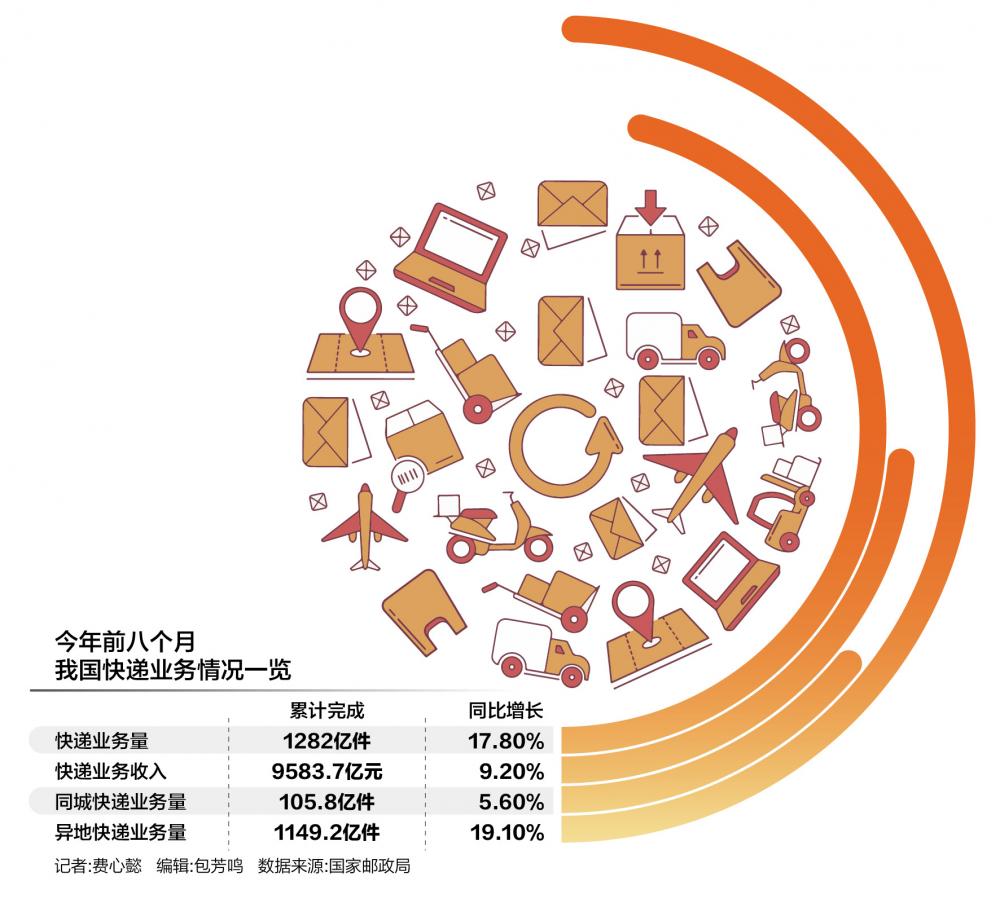
Core Viewpoint - The recent price increase in the express delivery sector, driven by policy and cost pressures, is spreading from core e-commerce areas to broader regions, aiming to curb long-standing low-price competition and improve service quality satisfaction among consumers [1][3][5]. Price Increase Details - On September 22, major express companies including Jitu, Zhongtong, and Yuantong raised the collection prices in Shanghai by 0.2 to 0.4 yuan per order [1]. - Previous price hikes occurred in Yiwu, Zhejiang, and Guangdong, with minimum prices set at 1.2 yuan and 1.4 yuan respectively, indicating a trend towards establishing a price floor to combat low-price competition [3][4]. Financial Impact - The price adjustments are expected to enhance station profitability and courier income, with one franchisee estimating an additional 1.5 million yuan in monthly revenue from a 0.1 yuan increase per order [4]. - The express delivery industry has seen record volumes, with 1,282 billion packages delivered in the first eight months of the year, a 17.8% year-on-year increase, and total revenue reaching 9,583.7 billion yuan, up 9.2% [4]. Competitive Landscape - The express delivery sector is transitioning from a volume-driven strategy to a quality-focused approach due to shrinking profit margins amid fierce competition [5][6]. - Major companies like Zhongtong have adjusted their growth forecasts downward, indicating a shift in focus towards balancing service quality and profitability [6]. Regional Price Variations - Price increases have been more pronounced in e-commerce hubs like Guangdong and Zhejiang, while non-core regions maintain previous pricing strategies, leading to potential market imbalances [6][7]. - Some franchisees in less competitive areas are still offering lower prices to attract customers, which may undermine the overall price increase efforts [6]. Broader Implications - The rise in express delivery costs has led to the cancellation of shipping insurance by some merchants, particularly in the high-return apparel sector, which could impact sales conversion rates [7]. - Experts suggest that while price increases may improve profit margins, the long-term effectiveness in curbing low-price competition will depend on consumer acceptance of higher prices [7].
上海快递涨价,多个站点已收到通知,不影响个人寄件价格
21世纪经济报道· 2025-09-23 12:16
Core Viewpoint - The recent price increase in the express delivery industry, driven by policy and cost pressures, is spreading from core e-commerce areas to broader regions, aiming to curb long-standing low-price competition and improve service quality to retain consumer satisfaction [1][4][10]. Group 1: Price Increase Trends - Major express companies, including Jitu, Zhongtong, and Yuantong, have raised prices in Shanghai by 0.2 to 0.4 yuan per order, reflecting a broader trend initiated in regions like Zhejiang and Guangdong [1]. - The price adjustments primarily target low-priced e-commerce orders below cost, while personal parcel rates remain unaffected [1][4]. - The price increase is expected to enhance station profitability and courier income, with estimates suggesting a potential monthly revenue increase of approximately 1.5 million yuan for some stations [4]. Group 2: Industry Performance Metrics - In the first eight months of the year, the express delivery industry achieved a record volume of 1,282 billion packages, a year-on-year increase of 17.8%, while total revenue reached 958.37 billion yuan, reflecting a decline of 9.2% [2]. - The average price per delivery has decreased significantly, with major companies like Yunda and Yuantong reporting declines in per-package revenue due to intense competition [5]. Group 3: Cost Pressures and Market Dynamics - The express delivery sector faces rising costs, including increased wages for couriers and higher transportation and packaging expenses, leading to financial strain on many franchise operators [5][6]. - The shift from a volume-driven strategy to a quality-focused approach is evident, as companies like Zhongtong adjust their growth forecasts downward to prioritize service quality and profitability [6]. Group 4: Regional Price Variation and Market Response - Price adjustments have been uneven across regions, with core areas like Guangdong and Zhejiang implementing changes while non-core regions maintain existing pricing strategies [9]. - The autonomy of franchise operators in setting prices can lead to variations that undermine the intended effects of price increases, highlighting the need for a balance between headquarters policies and franchisee interests [9]. Group 5: Implications of Price Increases - The rise in delivery fees has led to the cancellation of shipping insurance by some merchants, particularly in high-return sectors like apparel, which may impact sales conversion rates [10]. - The potential reduction in reverse logistics volume due to the cancellation of shipping insurance could affect overall revenue for express stations, as reverse shipments are a significant source of additional income [10].