ZZPZH(600436)

Search documents
秋冬富养自己的最好方式,8件好物,错过再等一年!
洞见· 2025-11-14 02:13
Core Viewpoint - The article highlights the rapid rise of domestic brands in China, showcasing their improved quality, aesthetic appeal, and cost-effectiveness, which has led to a significant shift in consumer preferences towards domestic products [3][5]. Group 1: Rise of Domestic Brands - Domestic brands have transformed from having a reputation for poor quality and cheap packaging to becoming competitive and innovative, with numerous brands emerging in the market [3][4]. - Notable domestic brands such as Shilang, Pianzihuang, and Mayinglong are gaining recognition for their professional capabilities and product effectiveness [4][5]. Group 2: Product Recommendations - The article lists several high-quality domestic products that offer great value for money, including: - Shilang Anti-Hair Loss Shampoo, priced at 69.9 yuan for two bottles, known for its effectiveness in reducing hair loss [13][37]. - Mayinglong Eye Cream and Eye Mask, available at a promotional price of 69 yuan, praised for its anti-aging properties [42][61]. - Pianzihuang Pearl Cream, a traditional Chinese medicine product, priced at 49.9 yuan for three bottles, recognized for its skin brightening effects [63][77]. - Rongsheng Astaxanthin Mask, priced at 49 yuan for 30 pieces, noted for its hydrating and skin-tightening benefits [78][99]. - Tingmei Underwear and Shaping Pants, with prices starting at 49.9 yuan, designed for comfort and body shaping [103][154]. - Qinfan Ultra-Thin Thermal Skin Care Clothing, available at 69 yuan for two sets, combines warmth and style [158][195]. - KANS Whitening Body Lotion, priced at 69.9 yuan, known for its moisturizing and brightening effects [224][239]. - Jianjie Outdoor Sports Shoes, priced at 159 yuan, recognized for their durability and comfort [245][279].



片仔癀药业肠激安胶囊Ⅲ期临床试验全国研究者会顺利召开
Quan Jing Wang· 2025-11-13 03:09
Core Insights - The clinical trial for the new traditional Chinese medicine, Changjiaan Capsules, targeting Irritable Bowel Syndrome with Diarrhea (IBS-D), has officially commenced with a national researcher meeting held in Guangzhou [1][2] - The trial is approved by the National Medical Products Administration and is led by Beijing University of Chinese Medicine, involving 30 top-tier hospitals across the country [1][2] - The study is designed as a multi-center, randomized, double-blind, placebo-controlled trial to evaluate the clinical efficacy and safety of Changjiaan Capsules in alleviating core symptoms of IBS-D [1][2] Company Developments - The meeting was chaired by Professor Zhang Shengsheng, the principal investigator, who emphasized the importance of expert contributions to ensure the scientific and practical feasibility of the trial [2] - The project team presented preliminary research findings and key points of the Phase III trial design, including risk control strategies [2] - The meeting fostered extensive discussions on critical aspects such as inclusion/exclusion criteria, assessment indicators, and electronic reporting standards, leading to constructive feedback from experts [2] Future Outlook - The successful initiation of the Phase III clinical trial marks another innovative product from the company entering the confirmatory research phase [2] - The company plans to increase R&D investment, guided by the philosophy of "staying true to innovation and progressing steadily," to enhance the development of Changjiaan Capsules [2]

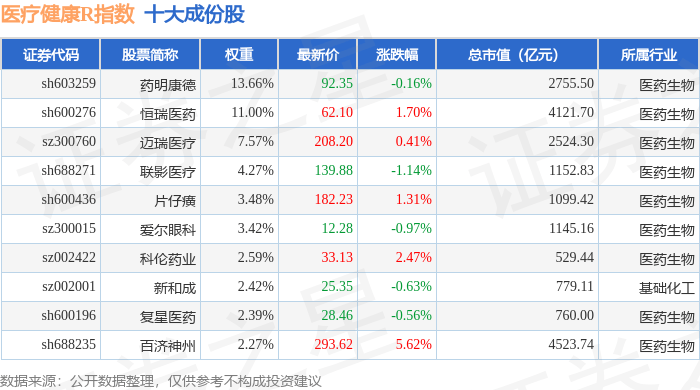
11月12日医疗健康R(480016)指数涨0.5%,成份股百济神州(688235)领涨
Sou Hu Cai Jing· 2025-11-12 10:20
Core Viewpoint - The Medical Health R Index (480016) closed at 7616.59 points, up 0.5%, with a trading volume of 25.943 billion yuan and a turnover rate of 0.88% on November 12. The index saw 27 stocks rise, led by BeiGene with a 5.62% increase, while 21 stocks fell, with Tigermed leading the decline at 1.68% [1]. Group 1: Index Performance - The Medical Health R Index reported a net inflow of 537 million yuan from main funds, while retail and speculative funds experienced net outflows of 264 million yuan and 273 million yuan, respectively [1]. - The top ten constituent stocks of the index include WuXi AppTec, Hengrui Medicine, and Mindray Medical, with respective weights of 13.66%, 11.00%, and 7.57% [1]. Group 2: Stock Details - BeiGene (688235) had the highest increase at 5.62%, closing at 293.62 yuan with a market capitalization of 452.37 billion yuan [1]. - Hengrui Medicine (600276) saw a 1.70% increase, closing at 62.10 yuan with a market capitalization of 412.17 billion yuan [1]. - WuXi AppTec (603259) experienced a slight decrease of 0.16%, closing at 92.35 yuan with a market capitalization of 275.55 billion yuan [1]. Group 3: Fund Flow Analysis - Hengrui Medicine had a main fund net inflow of 2.74 million yuan, while speculative funds saw a net outflow of 60.98 million yuan [2]. - BeiGene also experienced a main fund net inflow of 1.81 million yuan, with speculative funds facing a net outflow of 172 million yuan [2]. - The overall fund flow indicates a mixed sentiment among investors, with main funds showing some interest while retail and speculative funds are withdrawing [2].




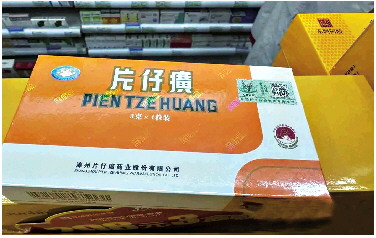
从2000元到600元,片仔癀降价背后
Qi Lu Wan Bao· 2025-11-11 10:31
Core Viewpoint - The company Pianzaihuang, known as the "Moutai of medicine," has reported a decline in both revenue and net profit for the first time in nearly a decade, indicating a significant shift in market dynamics and consumer demand [5][6]. Group 1: Sales and Market Performance - Pianzaihuang's sales have drastically decreased, with reports from various pharmacies in Jinan indicating that the product, which once sold for as high as 1600 yuan per piece, is now struggling to sell even at the official price of 760 yuan [2][3]. - Pharmacies are experiencing low monthly sales, averaging only two to three pieces, with some stores reporting sales of less than five pieces per month [3][6]. - The online market also reflects a downward trend, with prices ranging from 575 yuan to 650 yuan per piece on various e-commerce platforms [4]. Group 2: Financial Performance - For the first three quarters of 2025, Pianzaihuang reported revenue of 7.442 billion yuan, a year-on-year decrease of 11.93%, and a net profit of 2.129 billion yuan, down 20.74% [5][6]. - The third quarter alone saw a revenue drop of 26.28% and a net profit decline of 28.82% compared to the previous year [6]. - The company's inventory has increased to 6.16 billion yuan, reflecting a 24.02% rise since the beginning of the year and a 34.9% increase year-on-year [6]. Group 3: Market Dynamics and Pricing - The price of Pianzaihuang's key ingredients, such as natural musk and cow bile, has surged significantly, leading to a situation where raw material costs are rising while finished product prices are falling [7][8]. - This "price inversion" phenomenon is squeezing profit margins and affecting the willingness of distributors to stock the product, contributing to its declining market presence [8]. - The company is facing a structural adjustment, shifting from a marketing-driven approach to one focused on value return, necessitating a reevaluation of pricing strategies and market positioning [8].
片仔癀(600436):2025年三季报点评:业绩仍承压,关注消费和成本改善
Haitong Securities International· 2025-11-11 09:38
Investment Rating - The investment rating for the company has been adjusted to "Neutral" [4][9]. Core Insights - The report highlights that the company's core product line, the Pian Zai Huang series, is facing pressure on revenue growth and gross margin due to factors such as a challenging consumption environment and high costs of raw materials [1][4]. - The company achieved a revenue of RMB 7.44 billion in the first three quarters of 2025, representing a year-on-year decline of 11.93%, with a net profit attributable to shareholders of RMB 2.13 billion, down 20.74% year-on-year [4][9]. - The report anticipates potential recovery in consumption and a decrease in raw material costs, which could present future opportunities for the company [1]. Financial Summary - The financial summary indicates projected total revenues for 2025-2027 of RMB 9.65 billion, RMB 9.96 billion, and RMB 10.63 billion, with corresponding net profits of RMB 2.39 billion, RMB 2.62 billion, and RMB 2.94 billion [3][4]. - The earnings per share (EPS) are forecasted to be RMB 3.96, RMB 4.35, and RMB 4.87 for the years 2025, 2026, and 2027 respectively [4][9]. - The report notes a significant decline in the revenue from liver disease medications, which totaled RMB 3.88 billion in the first three quarters of 2025, down 9.4% year-on-year [4][9]. Quarterly Performance - In Q3 2025, the company reported a revenue of RMB 2.06 billion, a decrease of 26.28% year-on-year, and a net profit of RMB 687 million, down 28.82% year-on-year [4][9]. - The gross profit margin (GPM) for liver disease medications was 61.1%, reflecting a year-on-year decrease of 9.7 percentage points, but showing signs of stabilization [4][9]. Business Segment Performance - The cardiovascular medication segment saw a revenue drop of 65.2% year-on-year, while the cosmetics segment reported a revenue decline of 23.8% [4][9]. - The pharmaceutical commerce segment generated RMB 2.89 billion in revenue, down 8.5% year-on-year, with a GPM of 8.6% [4][9].
中国药店“王牌推荐官”复赛西安落幕
Huan Qiu Wang· 2025-11-11 08:14
Core Viewpoint - The "Pian Zai Huang Cup: China's Pharmacy 'Ace Recommendation Officer' Activity" aims to address the challenges faced by the pharmaceutical retail industry through specialized training and knowledge enhancement for pharmacy staff [1] Industry Summary - The pharmaceutical retail industry is currently experiencing increased operational pressure due to multiple factors, including deepening medical insurance reforms, evolving consumer demands, and saturation of offline stores [1] - There is intense competition among pharmacies due to product homogeneity, and staff often lack sufficient knowledge about product differences, making it difficult to provide comprehensive and professional solutions to consumers [1] Company Summary - Pian Zai Huang Company, in collaboration with "China Pharmacy" magazine, launched the "Ace Recommendation Officer" initiative to promote the coordinated development of knowledge structure and practical skills among pharmacy staff [1] - The initiative includes professional and systematic training aimed at enhancing the service quality and marketing capabilities of chain pharmacy employees [1]
10月CPI转正,大消费爆发!云南白药、片仔癀涨超2%,中药ETF(560080)收涨1.55%,近20日净流入超2.6亿元!机构:拐点将至,关注左侧优质资产
Sou Hu Cai Jing· 2025-11-10 08:41
Core Viewpoint - The Chinese traditional medicine sector, particularly the Chinese Medicine ETF (560080), is experiencing increased investor interest due to favorable market conditions and relatively low valuations, with a notable inflow of funds and positive performance in recent trading sessions [1][3][10]. Group 1: Market Performance - On November 10, the Shanghai Composite Index rose by 0.53%, with the consumer sector leading gains, particularly the Chinese medicine segment, which saw the Chinese Medicine ETF (560080) increase by 1.55% and a trading volume exceeding 160 million yuan [1]. - The Chinese Medicine ETF (560080) has seen a cumulative net inflow of over 260 million yuan in the past 20 days, bringing its total fund size to over 2.8 billion yuan, leading its peers significantly [1][3]. Group 2: Valuation Insights - As of November 7, the TTM price-to-earnings (PE) ratio of the Chinese Medicine ETF (560080) was 25.31, placing it at the 24.5% percentile over the past decade, indicating that the index is cheaper than 75% of the time historically [3]. - The TTM PE ratio is just 0.57 away from the calculated opportunity value, suggesting a higher cost-performance ratio for potential investors [3]. Group 3: Stock Performance - Most constituent stocks of the Chinese Medicine ETF (560080) showed positive performance, with notable gains from Yunnan Baiyao, Pianzaihuang, and Yiling Pharmaceutical, all rising over 2%, while others like Tongrentang and Dong'e Ejiao also saw increases [5][6]. Group 4: Industry Trends - The Chinese medicine index has shown negative returns year-to-date, with a decline of 0.24% this year and an 8.13% drop in 2024, indicating a challenging market environment [7]. - Despite recent struggles, analysts suggest that the sector may be approaching a turning point, with potential improvements in performance expected due to rising flu incidence and better management of inventory levels among leading OTC Chinese medicine companies [10][11]. Group 5: Institutional Insights - Analysts from Zheshang Securities highlight that the Chinese medicine industry has characteristics similar to the banking sector, with strong cash flow and stable profit growth, suggesting resilience against external shocks [11]. - The industry is expected to see improved revenue growth in the second half of 2025, driven by declining raw material prices and cost-cutting measures by companies [11].


中药ETF(159647)涨近1%,机构看好新品兑现拉动板块成长
Xin Lang Cai Jing· 2025-11-10 03:06
Core Insights - The Chinese medicine market is experiencing rapid growth, driven by favorable policies and increasing market demand, as highlighted by the recent 12th World Traditional Chinese Medicine Conference held in Sydney, Australia [1][2]. Group 1: Market Performance - As of November 10, 2025, the Zhongzheng Traditional Chinese Medicine Index (930641) rose by 1.11%, with notable increases in stocks such as Zhongsheng Pharmaceutical (002317) up 3.69% and Kangyuan Pharmaceutical (600557) up 3.22% [1]. - The Traditional Chinese Medicine ETF (159647) increased by 0.88%, with the latest price reported at 1.03 yuan [1]. Group 2: Industry Growth Drivers - The conference attracted over 800 representatives from 24 countries, emphasizing the global interest in the dissemination and technological innovation of traditional Chinese medicine [1]. - Pacific Securities notes that the industry is supported by comprehensive measures across supply, payment, and demand sides, including registration, review, quality control, and cultural promotion [1]. Group 3: Key Constituents - As of October 31, 2025, the top ten weighted stocks in the Zhongzheng Traditional Chinese Medicine Index accounted for 54.92% of the index, including major players like Yunnan Baiyao (000538) and Tongrentang (600085) [2].




片仔癀涨2.07%,成交额3.28亿元,主力资金净流入1580.65万元
Xin Lang Cai Jing· 2025-11-10 02:54
Core Viewpoint - The stock of Pianzaihuang has shown fluctuations, with a recent increase of 2.07%, but has experienced a year-to-date decline of 15.14% [1] Group 1: Stock Performance - As of November 10, Pianzaihuang's stock price reached 179.30 yuan per share, with a total market capitalization of 108.175 billion yuan [1] - The stock has seen a net inflow of main funds amounting to 15.8065 million yuan, with significant buying and selling activities recorded [1] - Over the past 60 days, the stock has decreased by 10.22%, while it has increased by 0.66% in the last 5 trading days [1] Group 2: Financial Performance - For the period from January to September 2025, Pianzaihuang reported a revenue of 7.442 billion yuan, reflecting a year-on-year decrease of 11.93%, and a net profit of 2.129 billion yuan, down 20.74% year-on-year [2] - Cumulative cash dividends since the A-share listing amount to 8.551 billion yuan, with 4.790 billion yuan distributed in the last three years [3] Group 3: Shareholder Information - As of September 30, 2025, the number of shareholders increased to 130,400, with an average of 4,626 circulating shares per person, a decrease of 8.54% from the previous period [2] - Major shareholders include China Securities Finance Corporation and Hong Kong Central Clearing Limited, with notable changes in their holdings [3]
老登们全崩了
投资界· 2025-11-09 07:47
Group 1: Market Overview - The Shanghai Composite Index is challenging the 4000-point mark, but the market remains highly differentiated, particularly in the traditional high-end consumption sector represented by liquor, which has been stagnant for a long time [4][5] - Despite the overall market conditions, some investors are still betting on liquor stocks, believing that negative news may signal a bottoming out of performance [5][6] Group 2: Liquor Industry Performance - The liquor industry recently reported its worst third-quarter results in history, with 18 listed companies generating a total revenue of 317.65 billion yuan, a year-on-year decline of 5.84%, and a net profit of 122.69 billion yuan, down 6.88% [8][9] - The third quarter saw a significant drop in revenue by 18.42% and a net profit decline of 22.03%, reversing the growth seen in the same period of 2024 [8][9] - Even leading companies like Kweichow Moutai experienced a slowdown, with third-quarter revenue growth dropping to 0.56% and net profit growth to 0.48%, marking their lowest growth rates in recent years [10][11] Group 3: Challenges in the Liquor Market - Kweichow Moutai's pricing strategy has faced challenges, with prices dropping below 1700 yuan, raising concerns among distributors about future business prospects [10][11] - The overall liquor market saw a 20% year-on-year decline in sales during the recent holiday season, indicating persistent issues with high inventory and price discrepancies [11] - The traditional distribution model is under pressure as liquor companies shift towards direct sales and e-commerce, disrupting the established relationships with distributors [11] Group 4: Tea Industry Developments - In contrast to the liquor sector, the high-end tea industry has seen positive developments, with Baima Tea successfully listing on the Hong Kong Stock Exchange after multiple attempts, achieving an 86.7% increase on its first trading day [13][14] - Baima Tea's growth strategy focuses on brand enhancement, standardization, and digitalization, although its performance has shown signs of slowing down with revenue growth dropping to 1.0% [14][15] Group 5: Traditional Medicine Sector - The traditional medicine sector, represented by Pizhou Huang, has also faced significant challenges, reporting a 11.93% decline in revenue and a 20.74% drop in net profit, marking the first time since 2006 that both metrics have decreased [17][19] - The market price of Pizhou Huang has plummeted, with actual prices falling below 600 yuan, a significant drop from its peak [19][20] Group 6: Societal Trends and Consumer Behavior - The changing societal dynamics indicate a shift in consumer preferences, with younger generations moving away from traditional high-end products like liquor and medicine towards more modern and accessible options [21][23] - The established wealth distribution mechanisms are under scrutiny, as the traditional high-end gifts and social currencies lose their appeal among younger consumers [21][23]