GXED(600617)

Search documents
中国新能源汽车展览会将首次移师成都 成都汽配展5月举办
Si Chuan Ri Bao· 2026-01-06 11:57
Core Viewpoint - The Chengdu International Auto Parts and Aftermarket Services Exhibition will be held from May 25 to 27, 2017, attracting over 750 enterprises and 22,000 professional buyers, marking it as the largest auto parts exhibition in Southwest China [1] Group 1: Event Overview - The exhibition will feature a focus on new energy vehicles, smart cars, auto parts, and charging equipment, aiming to establish Chengdu as a procurement center for auto parts in the western region [1] - The event will include six major zones: supply chain procurement area, automotive lifestyle pavilion, quick repair and consumable parts area, commercial vehicle area, new energy area, and a display area for Sichuan enterprises [1] Group 2: Industry Participation - The China (Chengdu) New Energy Vehicle Exhibition will debut at the auto parts exhibition, showcasing a full industrial chain manufacturing system of new energy vehicles, components, and charging equipment [1] - Major international brands such as BMW and several local new energy vehicle companies from Sichuan will participate in the exhibition [1]

共话中国经济新机遇|中国新能源汽车走红乌拉圭
Bei Jing Ri Bao Ke Hu Duan· 2026-01-06 05:28
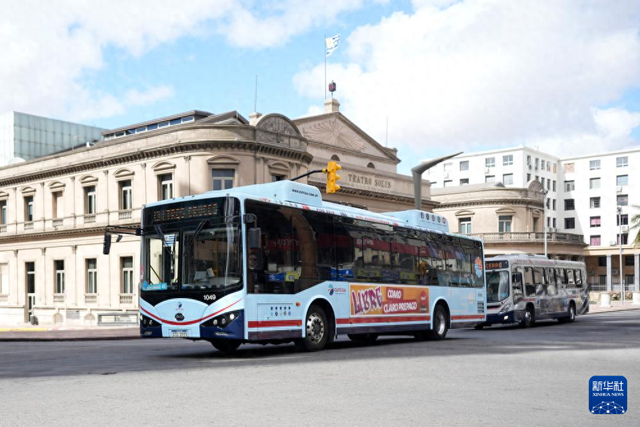
转自:北京日报客户端 1月4日, 在乌拉圭首都蒙得维的亚,一辆中国新能源旅游巴士(前)在路上行驶。新华社发(尼古拉斯·塞拉亚 摄) 新华社蒙得维的亚1月5日电"2025年,乌拉圭平均每售出3辆乘用车,就有一辆是中国新能源汽车。"乌 拉圭汽车贸易协会经理伊格纳西奥·帕斯日前在接受新华社记者采访时说,中国新能源汽车日益受到乌 拉圭消费者欢迎。 正如帕斯所说,2025年以来,记者在乌首都蒙得维的亚等城市看到的中国新能源汽车越来越多。 12月22 新能源汽车畅销与乌拉圭政府相关举措密切相关。2025年,乌政府颁布一系列面向新能源汽车的优惠政 策,包括减免关税、牌照税、污染税等税费。与此同时,乌拉圭国家电力公司在全国建设了一批充电 桩,基本保证国道每50公里就有一个充电站。 12月22 日,在乌拉圭首都蒙得维的亚,一辆中国新能源汽车(中)在路上行驶。新华社发(尼古拉斯·塞拉亚 摄) 乌拉圭政府数据显示,该国超过97%的电力来自可再生能源,且非用电高峰时段电力供应有盈余。"这 为乌拉圭推广新能源汽车提供了极佳条件。"帕斯说。 另一方面,较低的使用成本也促使更多乌拉圭消费者选择新能源汽车。蒙得维的亚的网约车司机米格尔 对记 ...




中国新能源汽车走红乌拉圭
Xin Lang Cai Jing· 2026-01-06 02:39
Core Insights - By 2025, one in every three passenger cars sold in Uruguay will be a Chinese electric vehicle, indicating a significant market penetration of Chinese brands [1] - The Uruguayan automotive market is projected to sell 71,442 vehicles in 2025, reflecting an approximate 8% growth compared to 2024 [1] - The surge in vehicle sales is primarily driven by the substantial increase in electric vehicle sales, with brands such as BYD, Dongfeng, JMC, Jianghuai, and MG experiencing rapid growth [1]
共话中国经济新机遇|通讯:中国新能源汽车走红乌拉圭
Xin Hua She· 2026-01-06 02:31
Core Insights - By 2025, one in three passenger cars sold in Uruguay will be a Chinese electric vehicle (EV), indicating a significant market penetration of Chinese brands in the region [1] - The total vehicle sales in Uruguay are projected to reach 71,442 units in 2025, reflecting an approximate 8% increase from 2024, largely driven by the surge in EV sales from brands like BYD, Dongfeng, and others [1] - The Uruguayan government has implemented various incentives for EVs, including tax exemptions and the establishment of charging infrastructure, which are crucial for the growth of the EV market [1][2] Industry Trends - Over 97% of Uruguay's electricity comes from renewable sources, providing an excellent environment for promoting EVs [2] - The lower operating costs of EVs are attracting more consumers; for instance, a ride-hailing driver reported a monthly fuel cost reduction from 14,000 Uruguayan pesos (approximately $350) for gasoline vehicles to just 4,000 pesos (about $100) for EVs [2] - Currently, EVs account for about 1.5% of the total vehicles on the road in Uruguay, indicating substantial growth potential in the future [2]
小米跻身中国新能源车知名度前四,比亚迪理想同列前五
Xin Lang Ke Ji· 2026-01-05 07:33
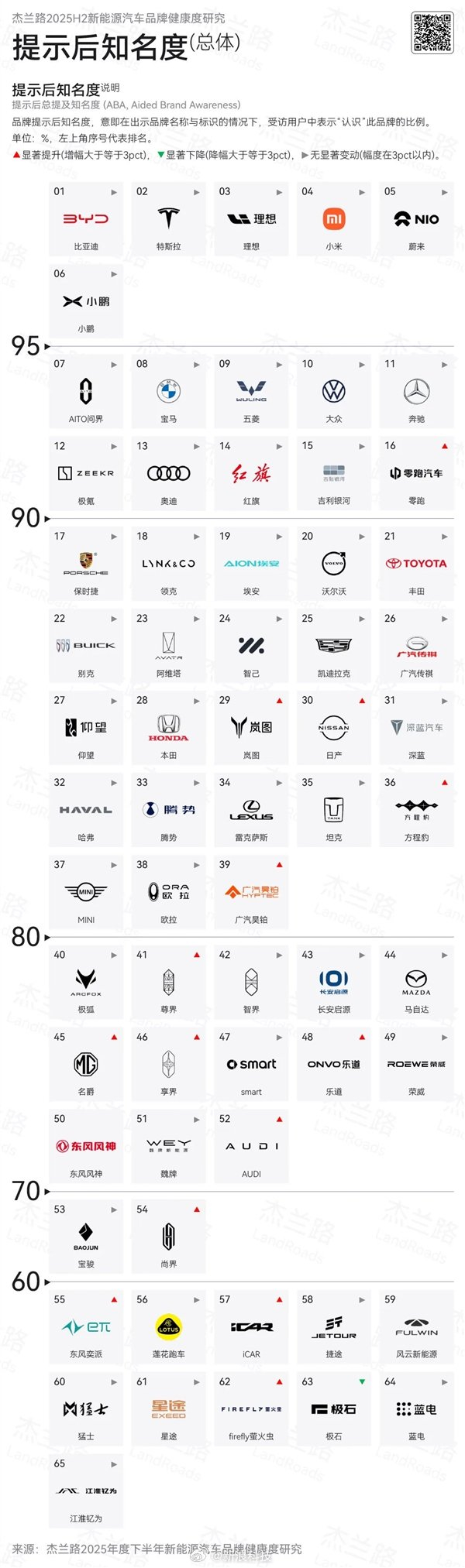
Core Insights - Xiaomi ranks 4th in brand awareness among Chinese electric vehicle manufacturers according to the 2025 H2 New Energy Vehicle Brand Health Research by Jielanlu [1][10] - The report highlights the sensitivity of Xiaomi and Li Auto's user base to external opinions, indicating that top brands face not only market competition but also the amplified effects of public sentiment on consumer trust [1] Brand Awareness by Price Segment - In the segment below 200,000 yuan, the top five brands are BYD, Xpeng, Volkswagen, Geely, and Wuling [1][9] - In the 200,000 to 300,000 yuan segment, the leading brands are Tesla, BYD, Li Auto, Xiaomi, and NIO [1][9] - For the segment above 300,000 yuan, the top brands are Tesla, Li Auto, Xiaomi, NIO, and AITO [1][9] Implications for Top Brands - The report emphasizes the need for leading brands to manage consumer expectations and mitigate emotional fluctuations in brand preference due to high public scrutiny [1]


崔东树:2025年11月中国新能源乘用车世界份额高达73.7%
智通财经网· 2026-01-03 08:27
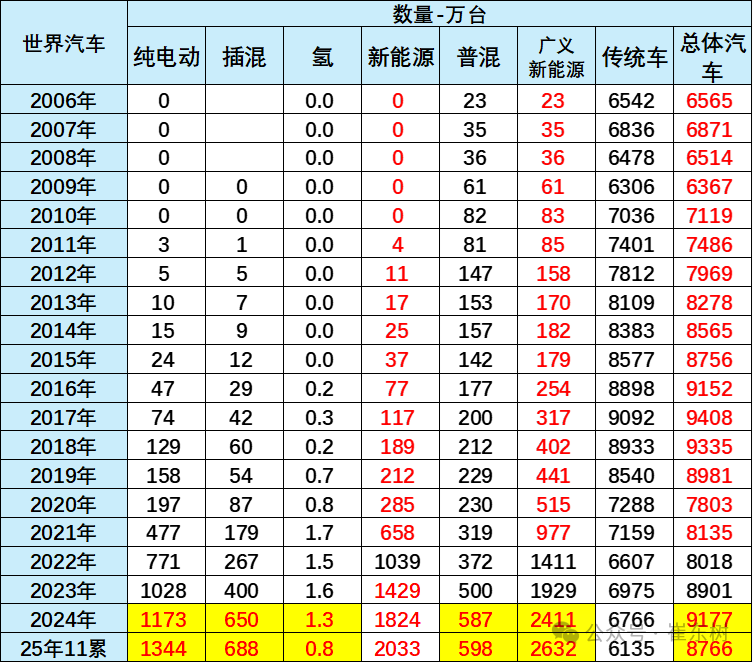
Core Insights - By 2025, China's share of the global new energy passenger vehicle market is projected to reach 68.4%, with November 2025 seeing a peak share of 73.7% [1][31] - In the contribution to global new energy vehicle growth from January to November 2025, China accounts for 68%, Germany for 5%, and India for 4% [1][28] - The global sales of new energy vehicles from January to November 2025 are expected to reach 2,033,000 units, with a year-on-year growth of 30% [10][11] Global New Energy Vehicle Market Performance - In 2025, the global new energy vehicle sales are projected to be 8,766,000 units, with 2,033,000 units being new energy vehicles, indicating a significant increase from previous years [2][10] - The global penetration rate of new energy vehicles is expected to reach 30% in 2025, up from 26.3% in 2024 [4][26] - The sales of new energy passenger vehicles in Europe from January to November 2025 are estimated at 3,320,000 units, a 30% increase year-on-year [24] Regional Market Trends - In the U.S., new energy vehicle sales reached 1.41 million units from January to November 2025, with a growth rate of 6% compared to previous years [22] - The European new energy vehicle market is recovering, with November 2025 sales reaching 338,000 units, a 28% increase year-on-year [24] - The overseas market share of Chinese self-owned new energy vehicles increased from 9.9% in 2024 to 15.4% in 2025 [1][17] Market Dynamics - The U.S. market experienced a decline in November 2025, with sales dropping by 41% year-on-year due to high tariffs and the cancellation of subsidies [22][21] - The growth of new energy vehicles in China is expected to continue, with a strong performance in the first half of 2025, despite a temporary slowdown in early 2025 [8][19] - The global new energy vehicle market is entering a phase of differentiated development, with China strengthening its position while Europe and the U.S. are reducing incentives [27][31]



当渗透率超过50%:中国新能源汽车的“成人礼”与安全“必修课”
Feng Huang Wang· 2025-12-31 14:12
Core Insights - The article highlights China's leading position in the global electric vehicle (EV) market, with significant growth in production and sales figures for November and the first eleven months of the year [1][2] - The focus of the industry is shifting from quantity to quality, emphasizing the importance of safety and technology in EVs, particularly regarding battery safety and advanced driver-assistance systems [2][5] Group 1: Industry Growth and Market Dynamics - In November, China's domestic EV production and sales reached 1.88 million and 1.823 million units, respectively, marking year-on-year growth of 20% and 20.6% [1] - For the first eleven months of the year, production and sales totaled 14.907 million and 14.78 million units, reflecting year-on-year growth of 31.4% and 31.2% [1] - The market share of new energy vehicles in total vehicle sales exceeded 50% for the second consecutive month, reaching 53.2% in November [1] Group 2: Safety and Technological Challenges - The article discusses the safety concerns surrounding hidden door handles in EVs, which are designed to reduce drag and improve range but have sparked controversy [3][4] - Research indicates that hidden door handles can reduce energy consumption at higher speeds, making them a popular choice among manufacturers [3] - The design of hidden door handles has evolved since their introduction, with various technical forms emerging, and their adoption rate in top-selling EV models is projected to reach nearly 60% by April 2025 [4] Group 3: Regulatory and Consumer Responsibility - New regulations require hidden door handles to include mechanical emergency opening mechanisms, reflecting a shift towards ensuring safety while maintaining technological advancement [5] - The article emphasizes the need for consumers to develop a rational understanding of vehicle safety, recognizing that it is a collective responsibility involving design, engineering, and user behavior [5][6] - The importance of driver awareness and responsibility is underscored, with statistics showing that approximately 90% of traffic accidents are attributed to driver behavior [7][8] Group 4: Perceptions of Safety in EVs - Contrary to common beliefs, EVs may possess inherent safety advantages over traditional internal combustion vehicles due to their design and structural features [9][10] - Innovations such as integrated battery structures and advanced manufacturing techniques contribute to the overall safety and stability of EVs [9][10] - The article calls for a reevaluation of safety perceptions, urging drivers to respect speed and understand the unique characteristics of EVs [10][11] Group 5: The Role of Advanced Driver-Assistance Systems - The article discusses the misinterpretation of L2-level driver-assistance systems, which are often mistakenly equated with full automation, leading to safety risks [11][12] - Clear communication from manufacturers regarding the capabilities and limitations of these systems is essential to prevent over-reliance by drivers [12][13] - The need for a comprehensive understanding of shared responsibility between technology and driver behavior is emphasized to enhance safety in the context of advanced driving technologies [14][15]
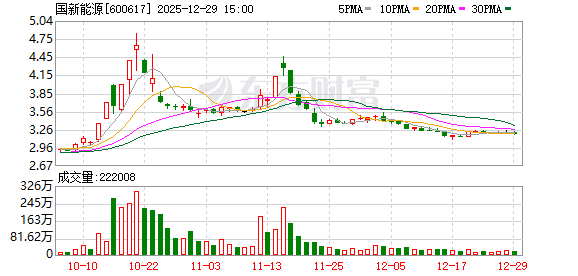
国新能源:公司经营一切正常
Zheng Quan Ri Bao· 2025-12-29 11:51
Group 1 - The company, Guo Xin Energy, stated that its operations are normal and unaffected by external factors [2] - The fluctuations in the secondary market stock price are influenced by various complex factors [2] - Investors are advised to be cautious and aware of investment risks [2]
中国新能源领域奠基人吴锋院士逝世,享年74岁
Feng Huang Wang· 2025-12-29 08:29
Core Viewpoint - The news highlights the passing of Wu Feng, a prominent figure in China's green secondary battery and energy materials sector, who significantly contributed to the development of new energy technologies in China [1] Group 1: Contributions to Industry - Wu Feng was a core promoter of China's new energy technology strategy and served as the chief scientist for three consecutive phases of the national "973 Program" focused on new secondary battery projects [1] - He led multiple major national research tasks and achieved systematic and pioneering results in nickel-hydrogen and lithium-ion battery fields [1] - Wu Feng played a crucial role in the independent innovation and industrialization of power batteries, energy storage batteries, and new energy vehicle technologies in China [1] Group 2: Legacy and Recognition - He established China's first nickel-hydrogen battery pilot base and the first continuous automated production line [1] - Wu Feng's body farewell ceremony is scheduled for January 4, 2026, at the Eastern Hall of Babaoshan Funeral Home [1]
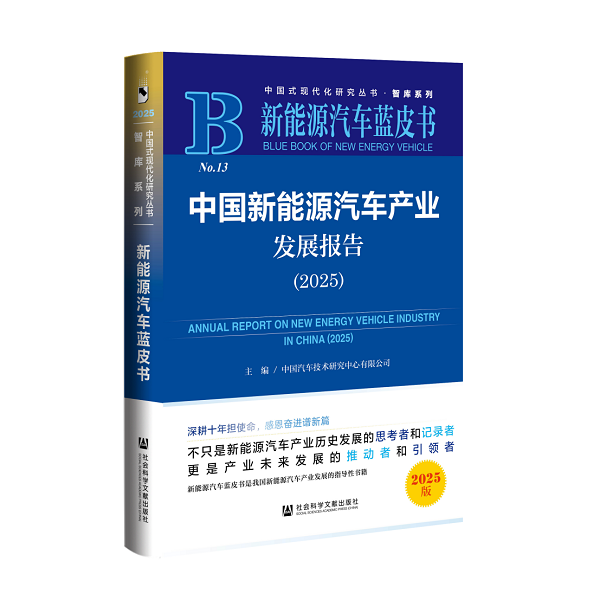
助力产业高质量发展,《中国新能源汽车产业发展报告(2025)》发布
Zhong Guo Jing Ji Wang· 2025-12-24 09:04
Core Insights - The "New Energy Vehicle Blue Book: China New Energy Vehicle Industry Development Report (2025)" has been officially released, focusing on the development of the new energy vehicle industry in China [1][3] - The report includes eight chapters: General Report, Industry Chapter, Policy Chapter, International Chapter, Demonstration Case Chapter, Hot Topics Chapter, Expert Insights Chapter, and Appendix [1][3] Group 1: Report Structure - The General Report objectively records the operation of the new energy vehicle industry since 2024 and provides outlooks for the "14th Five-Year Plan" period [3] - The Industry and Policy Chapters document the current state, issues, and trends of the new energy vehicle industry [3] - The International Chapter analyzes the latest policy dynamics from developed countries and their implications for China's automotive industry amid globalization challenges [3] Group 2: Special Features - The 2025 edition introduces a new Demonstration Case Chapter, showcasing typical cases from localities and enterprises in the new energy vehicle sector, highlighting advancements in electrification, intelligence, and vehicle-energy integration [3] - The Hot Topics Chapter delves into discussions on industry issues such as internal competition and flying cars [3] - The Expert Insights Chapter features perspectives from nine industry experts on current hot topics in the automotive sector [3] Group 3: Future Outlook - The Blue Book aims to continue its role as an industry think tank, tracking industry dynamics and fostering high-quality development through innovative and collaborative approaches [4] - The expectation is for the entire industry to leverage the Blue Book as a catalyst for addressing opportunities and challenges, enhancing the visibility of China's new energy vehicle industry during the "14th Five-Year Plan" period [4]