
CNOOC(600938)

Search documents
推荐炼油炼化、钾肥、磷化工、SAF投资方向 | 投研报告
Sou Hu Cai Jing· 2026-01-05 01:33
Core Viewpoint - The petrochemical industry is currently facing significant "involution" competition, leading to a situation where companies are experiencing increased production without corresponding profit growth. The industry's operating revenue profit margin has declined from 8.03% in 2021 to an expected 4.85% in 2024. However, since 2025, some sub-industries have begun to recover, with a year-on-year increase of 10.56% in net profit attributable to the parent company in the first three quarters, indicating a gradual stabilization and recovery in industry profitability [2][3]. Supply Side - Investment in fixed assets in the chemical raw materials and chemical products manufacturing industry has turned negative since June 2025, with capital expenditures in the basic chemical industry and several sub-industries declining for multiple consecutive quarters. The current expansion cycle in the industry is nearing its end. In September, policies aimed at stabilizing growth in the petrochemical industry were introduced to address low-price and disorderly competition and to promote the orderly exit of backward production capacity. Sub-industries such as silicone, caprolactam, and PTA polyester have responded to these "anti-involution" measures by either issuing or formulating industry guidelines. It is anticipated that there will be stricter approvals for new chemical product capacities, and the elimination of backward production capacity (such as small scale, high energy consumption, and high pollution) will accelerate, effectively alleviating the issue of supply surplus in the petrochemical industry [2][3]. Demand Side - Traditional demand is expected to see a moderate recovery due to global central banks entering a rate-cutting cycle and pausing balance sheet reductions, supported by monetary and fiscal policy stimuli. Emerging demand from sectors such as new energy, SAF (Sustainable Aviation Fuel), and AI continues to drive the need for key chemical materials that support technological upgrades in industries [3]. - The overseas chemical capacity reduction, driven by high energy costs and aging facilities, has led to a wave of plant closures in the European chemical industry since 2025. Currently, China's chemical product sales account for over 40% of the global market, with a well-established domestic petrochemical industry chain. As overseas capacity continues to clear and demand is expected to recover, Chinese chemical companies are likely to see an increase in global market share, accelerating the digestion of surplus capacity [3]. Macro and Chemical Product Prices - As of December 2025, the manufacturing PMI index was reported at 50.1%, an increase of 0.9 percentage points from the previous month, indicating expansion. The China Chemical Product Price Index (CCPI) was reported at 3927 points, a decrease of 9.4% from 4333 points at the beginning of the year, reflecting a decline in the ex-factory prices of major chemical products [3]. Oil Prices - In 2025, international oil prices exhibited a fluctuating downward trend, with Brent crude futures averaging approximately $69.15 per barrel and WTI crude futures averaging about $65.87 per barrel. This fluctuation was influenced by a combination of factors, including OPEC+'s gradual production increases, geopolitical conflicts, and macroeconomic sentiment. OPEC+ announced a pause in production increases at the beginning of 2026 to alleviate surplus pressures after a cumulative increase of 411,000 barrels per day from October to December. The demand from non-OECD countries, along with aviation fuel and petrochemical raw material needs, has become a major support for oil prices. Major institutions have narrowed their demand growth expectations for 2025-2026 to a range of 700,000 to 1.4 million barrels per day [4]. Investment Recommendations - The refining and chemical sector is expected to see a recovery in overall profits due to moderate oil prices and reduced cost fluctuations. The industry is also experiencing a shift towards "reducing oil and increasing chemicals," supported by clear anti-involution policy signals. Recommended companies include China Petroleum and Rongsheng Petrochemical [5][6]. - In the potassium fertilizer sector, potassium salt resources are expected to remain scarce, with a tight balance in global supply and demand over the next 2-3 years. Recommended company: Yara International, which holds significant potassium salt mining rights in Laos [6]. - In the phosphorus chemical sector, the demand for lithium iron phosphate in energy storage is expected to enhance the marginal pull on phosphorus ore demand, leading to a revaluation of phosphorus ore. Recommended companies include Chuanheng Co. and Yuntianhua [6]. - In the sustainable aviation fuel (SAF) sector, the EU has mandated a gradual increase in SAF blending ratios, with global SAF demand expected to double to 2 million tons by 2025. Recommended company: Zhuoyue New Energy, a leading domestic biodiesel enterprise [6][7].





2026年石化化工行业1月投资策略:推荐炼油炼化、钾肥、磷化工、SAF投资方向
Guoxin Securities· 2026-01-04 08:37
Core Insights - The petrochemical industry is currently facing significant "involution" competition, leading to a decline in profit margins from 8.03% in 2021 to 4.85% in 2024, with a slight recovery in net profit by 10.56% year-on-year in the first three quarters of 2025 [15][16][18] - The report recommends investment in refining and chemical, potash fertilizer, phosphorus chemicals, and sustainable aviation fuel (SAF) sectors due to expected improvements in supply-demand dynamics and profitability [15][18] Supply Side - The cumulative fixed asset investment in the chemical raw materials and products manufacturing sector turned negative in June 2025, indicating the end of the current expansion cycle [15] - Policies aimed at stabilizing growth in the petrochemical industry have been introduced to combat low-price competition and promote the orderly exit of outdated capacities [15][16] - The approval for new chemical product capacities is expected to tighten, alleviating the oversupply issue in the petrochemical industry [15][18] Demand Side - Traditional demand is anticipated to recover moderately due to global central banks entering a rate-cutting cycle, supported by monetary and fiscal policy stimuli [2] - Emerging demands from sectors such as renewable energy, SAF, and AI are expected to drive the need for key chemical materials [2] - China's chemical product sales account for over 40% of the global market, and the domestic industry is expected to gain market share as overseas capacities are cleared [2][18] Oil Prices and Market Trends - Brent crude oil averaged around $69.15 per barrel and WTI at $65.87 per barrel in 2025, with prices fluctuating due to various geopolitical and economic factors [3][17] - The overall cost for refining and chemical industries is expected to decrease, leading to a recovery in profitability [18] Investment Recommendations - The report highlights specific companies for investment: - **China Petroleum**: A leading comprehensive energy company with a strong position in the natural gas sector [20] - **Rongsheng Petrochemical**: Expected to see profit recovery with sulfur providing performance increments [20] - **Yaka International**: A rare potash fertilizer producer with ongoing capacity expansion [20] - **Chuanheng Co.**: Strong foundation in phosphate with significant resource increments [20] - **CNOOC**: A well-managed offshore oil and gas giant [20] - **Zhuoyue New Energy**: A leader in the domestic biodiesel sector focusing on SAF [20] Key Industry Research - The refining and chemical sector is expected to see continuous improvement in supply-demand dynamics, with profitability likely to recover due to policy and self-regulation measures [21][22] - The PTA industry is transitioning from "involution" competition to "high-quality development," with expectations for product price recovery [29][40] - The polyester bottle chip market is projected to stabilize with steady demand growth, despite recent price pressures [34][40]


中企参建并持有权益的全球最大深水油田新一期项目顺利投产
Zhong Guo Xin Wen Wang· 2026-01-04 01:50
中新网圣保罗1月3日(记者林春茵)记者3日自巴西石油公司获悉,由中国海油参建并持有权益的全球最 大深水油田——巴西布济乌斯(Búzios)六期项目日前已顺利投产。 此次投产的布济乌斯六期项目位于巴西东南海域桑托斯盆地,作业水深1900至2200米,采用浮式生产储 卸油装置(FPSO)+水下生产系统的深水盐下开发模式。六期项目开发方案包括6口生产井和7口注入井, 设计原油日产能力约2.5万吨(18万桶),天然气日处理能力720万方,日外输能力300万方。2025年10月, 布济乌斯油田日产量已突破100万桶,六期项目投产将助力布济乌斯油田实现超过115万桶/天的产能。 巴西布济乌斯六期项目。巴西石油公司供图 2021年9月中国海油成功并购布济乌斯项目产量分成合同(PSC)框架下5%权益,2022年12月顺利完成部 分权益增持,目前拥有油田一体化开发项目7.34%权益。除布济乌斯油田外,中国海油还拥有巴西巨型 盐下深水油田梅罗(Mero)油田9.65%权益以及其他7个深水油气勘探区块资产的权益。 巴西石油公司布济乌斯油田总经理路易斯·施马尔(Luiz Schmall)表示,布济乌斯六期项目的FPSO P-78是 ...


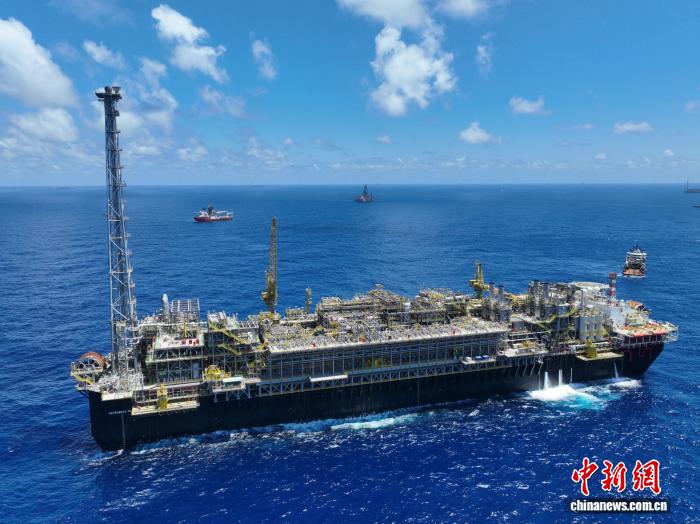
位于海南陵水海域,“深海一号”继续突破
Xin Lang Cai Jing· 2026-01-04 01:29
Core Viewpoint - China National Offshore Oil Corporation (CNOOC) announced that the "Deep Sea No. 1" gas field has completed its 100th oil export since production began, with total oil and gas output expected to exceed 4.5 million tons of oil equivalent by 2025, comparable to that of a medium-sized onshore oil field, showcasing advanced production and operation technology in China's deep-sea gas fields [1][4]. Group 1 - The "Deep Sea No. 1" gas field, located in the Hainan Lingshui sea area, is China's deepest and most challenging offshore gas field, with a maximum operational water depth exceeding 1,500 meters and a geological temperature of up to 138 degrees Celsius [1][4]. - The gas field has proven geological reserves of over 150 billion cubic meters of natural gas and is being developed in two phases [1][4]. - Currently, "Deep Sea No. 1" produces 15 million cubic meters of natural gas and over 1,600 tons of condensate oil daily, with some condensate stored in oil storage tanks on the platform and exported via shuttle tankers [1][4]. Group 2 - Since its commissioning in 2021, CNOOC's operational team has continuously upgraded the production facilities of "Deep Sea No. 1" to maximize its production potential [1][4]. - By 2025, the annual natural gas output of the gas field is expected to reach 5 billion cubic meters, surpassing the project's designed peak capacity [1][4]. - The operational time for oil exports has been reduced from 18 hours to under 8 hours, demonstrating significant improvements in operational efficiency [3][6]. - The "North Sea New Hope" shuttle tanker, specifically designed for "Deep Sea No. 1," has completed over 100 condensate oil export tasks, marking a significant advancement in deep-sea gas field operational management [3][6]. - The overall oil and gas production from the offshore gas fields around Hainan Island is projected to exceed 10 million tons of oil equivalent by 2025, doubling the output compared to the end of the 13th Five-Year Plan, with deep-sea oil and gas accounting for over 90% of the new production in the region [3][6].
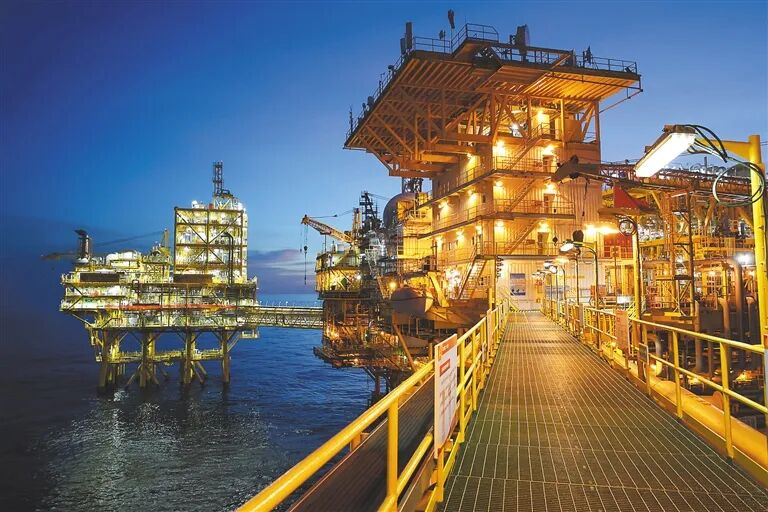
“深海一号”气田产量达到陆地中型油田规模
Ren Min Ri Bao Hai Wai Ban· 2026-01-04 01:10
Core Insights - The "Deep Sea No. 1" gas field, China's largest offshore gas field, has recently completed its 100th oil export since production began, indicating significant operational milestones for the company [1] - By 2025, the total oil and gas production from the "Deep Sea No. 1" field is expected to exceed 4.5 million tons of oil equivalent, comparable to the output of a medium-sized onshore oil field [1] Production and Capacity - "Deep Sea No. 1" is characterized by the deepest operational water depth of over 1,500 meters and the highest formation temperature of 138 degrees Celsius, making it the most challenging offshore gas field to explore and develop in China [1] - The gas field has proven geological reserves of over 150 billion cubic meters of natural gas and is being developed in two phases [1] - Currently, "Deep Sea No. 1" produces 15 million cubic meters of natural gas and over 1,600 tons of condensate oil daily [1] Regional Impact - By 2025, the entire offshore gas field cluster around Hainan Island, including "Deep Sea No. 1," is projected to cumulatively produce over 10 million tons of oil equivalent, effectively doubling the production compared to the end of the 13th Five-Year Plan [1] - Deep sea oil and gas production is expected to be a significant growth driver, accounting for over 90% of the region's new oil and gas output [1]
美军空袭委内瑞拉,对即将开盘的A股的影响(一)
Sou Hu Cai Jing· 2026-01-03 11:12
Core Viewpoint - The military strike ordered by the U.S. against Venezuela has created significant uncertainty in global markets, particularly affecting the Chinese A-share market, which is set to react after a holiday pause [1][2]. Group 1: Immediate Market Reactions - Global markets reacted swiftly to the news, with gold prices surging due to increased safe-haven buying and international oil prices rising sharply due to geopolitical risk premiums [2]. - The FTSE China A50 index futures, typically a leading indicator for A-shares, remained inactive on January 3, indicating that market sentiments and risk assessments would be bottled up until the market reopened on January 5 [2]. Group 2: Market Dynamics and Implications - The decision to bypass Congress for military action introduces new variables into market dynamics, creating a 12-hour delay for market reactions and increasing uncertainty regarding potential further military actions [3]. - The turmoil in Venezuela, a key OPEC member, is expected to have delayed impacts on the energy sector, particularly affecting domestic refining companies and airlines, while also providing time for the renewable energy sector to assess potential opportunities [4]. Group 3: Sector-Specific Impacts - The military intervention is likely to amplify concerns about energy inflation, with oil prices already rising, which will impact the energy supply chain and related sectors once the A-share market reopens [4]. - The military action's implications extend to the defense sector, where the unpredictability of U.S. military actions may lead to increased demand for defense stocks, reflecting a broader trend of heightened geopolitical tensions [5]. Group 4: Investment Strategies and Scenarios - Three potential scenarios for the A-share market opening on January 5 have been outlined: a panic-driven sell-off, a rational adjustment reflecting market resilience, or a strategic opportunity arising from perceived overreactions [8][9][10]. - Investors are advised to prepare by assessing their holdings, setting specific price triggers for action, and closely monitoring developments regarding potential further military actions and Congressional responses [15][17]. Group 5: Broader Market Repercussions - The military strike may lead to a reevaluation of geopolitical risk pricing in global capital markets, particularly affecting countries with existing tensions with the U.S. [6]. - The potential for a second round of attacks raises concerns about ongoing supply disruptions, which could have lasting effects on market stability and investor confidence [4][5].




【环球财经】中企参建巴西布济乌斯油田六期项目投产
Xin Hua She· 2026-01-03 03:28
Core Viewpoint - The Brazil oil company announced that the Buzios Phase VI project, co-developed by China National Offshore Oil Corporation (CNOOC), is set to commence production on December 31, 2025, enhancing the oil field's output significantly [1] Group 1: Project Details - The Buzios Phase VI project is located in the Santos Basin, with operational water depths ranging from 1,900 to 2,200 meters, utilizing a deepwater subsea development model with a "floating production storage and offloading unit + subsea production system" [1] - The project is designed to achieve a daily crude oil production capacity of approximately 25,000 tons and a natural gas processing capacity of 7.2 million cubic meters [1] - With the launch of Phase VI, the daily production capacity of the Buzios oil field will exceed 1.15 million barrels [1] Group 2: Technological and Environmental Aspects - The floating production storage and offloading unit of the Phase VI project not only demonstrates excellent production capacity but also incorporates energy-saving and carbon reduction technologies, such as heat recovery and closed flaring systems, significantly improving energy efficiency and reducing carbon emissions [1] - The project exemplifies successful collaboration and execution between Brazil and China in the development of ultra-deepwater oil fields, aligning resource development with technological innovation and green low-carbon transformation [1]

中国海油:巴西Buzios6项目投产
Zheng Quan Shi Bao Wang· 2026-01-03 03:24
Core Viewpoint - China National Offshore Oil Corporation (CNOOC) announced the successful production launch of the Buzios 6 project in Brazil, marking a significant milestone in the development of the world's largest deepwater saltwater oil field [1] Group 1: Project Details - The Buzios oil field is located in the Santos Basin in southeastern Brazil and is the seventh project to be launched in this field [1] - The Buzios 6 project utilizes a Floating Production Storage and Offloading (FPSO) unit combined with a subsea production system, deploying a total of 13 development wells, including 6 production wells and 7 injection wells [1] - Following the launch of the Buzios 6 project, the total production capacity of the Buzios oil field will reach 1.15 million barrels per day [1] Group 2: Technical Specifications - The FPSO used in the Buzios 6 project has a design capacity for processing 180,000 barrels of crude oil per day and 7.2 million cubic meters of natural gas per day, with a storage capacity of 2 million barrels [1] - To enhance environmental performance, the FPSO incorporates decarbonization technologies such as a closed flare system and heat recovery technology, which contribute to reducing greenhouse gas emissions and facility energy consumption [1] Group 3: Ownership Structure - CNOOC Petroleum Brasil Ltda., a wholly-owned subsidiary of CNOOC, holds a 7.34% stake in the integrated development project of the Buzios oil field [1] - The operator, Petrobras, holds an 88.99% stake, while CNODC Brasil Petróleo e Gás Ltda. holds a 3.67% stake in the project [1]
中企参建巴西布济乌斯油田六期项目投产
Xin Hua She· 2026-01-03 03:08
Core Viewpoint - The Buzios Phase VI project, co-developed by China National Offshore Oil Corporation (CNOOC) and Brazil's Petrobras, is set to commence production on December 31, 2025, significantly enhancing Brazil's oil and gas output [1] Group 1: Project Details - The Buzios Phase VI project is located in the Santos Basin, with operational water depths ranging from 1,900 to 2,200 meters [1] - The project utilizes a "floating production storage and offloading unit + subsea production system" for deepwater saltwater development [1] - The designed daily crude oil production capacity is approximately 25,000 tons, while the natural gas processing capacity is 7.2 million cubic meters per day [1] Group 2: Impact on Production Capacity - With the launch of Phase VI, the total daily production capacity of the Buzios oil field will exceed 1.15 million barrels [1] - The project is expected to significantly contribute to Brazil's overall oil and gas production capabilities [1] Group 3: Technological and Environmental Aspects - The floating production storage and offloading unit incorporates energy-efficient technologies such as heat recovery and closed flaring systems, enhancing energy utilization efficiency and reducing carbon emissions [1] - The project exemplifies successful collaboration between China and Brazil in the development of ultra-deepwater oil fields, aligning resource development with technological innovation and green low-carbon transformation [1]
我国最大气田“深海一号”油气突破450万吨油当量
Yang Guang Wang· 2026-01-03 02:07
Core Insights - China National Offshore Oil Corporation (CNOOC) announced the completion of the 100th oil export from the "Deep Sea No. 1" gas field, marking a significant milestone in China's offshore oil production capabilities [1][2] - The gas field is projected to exceed a total oil and gas production of 4.5 million tons of oil equivalent by 2025, showcasing advanced production and operational technology [1] Group 1: Production and Capacity - "Deep Sea No. 1" is China's largest offshore gas field, characterized by the deepest operational water depth, highest formation temperature and pressure, and the greatest exploration and development challenges [1] - The gas field has a maximum operational water depth of over 1,500 meters and a geological natural gas reserve of over 150 billion cubic meters [1] - Daily production from the gas field includes 15 million cubic meters of natural gas and over 1,600 tons of condensate oil [2] Group 2: Technological Advancements - CNOOC has established a complete technical system for the production and operation of ultra-deepwater gas fields, reducing the time for oil tanker export operations from 18 hours to less than 8 hours [1] - The core production facilities, including the "Deep Sea No. 1" energy station and the "Four Stars in a Row" platform group, are capable of processing and separating natural gas and crude oil on-site [1]