
CNOOC(600938)

Search documents
原油周报:中美经贸摩擦等多因素催动油价下跌力量-20251019
Xinda Securities· 2025-10-19 12:03
Investment Rating - The report maintains a "Positive" investment rating for the oil processing industry, consistent with the previous rating [1]. Core Insights - International oil prices have declined due to various factors, including trade tensions between the US and China, which have created a volatile market environment. As of October 17, 2025, Brent and WTI crude oil prices were $61.29 and $57.15 per barrel, respectively [2][9]. - The report highlights a significant increase in global oil supply, with the IEA forecasting a more severe oversupply situation for the coming year [2]. - The US crude oil production reached 13.636 million barrels per day, showing a slight increase of 0.07 million barrels per day from the previous week [2][50]. - The report notes a decrease in US refinery crude processing to 15.130 million barrels per day, down by 1.167 million barrels per day, with a refinery utilization rate of 85.70%, a decline of 6.7 percentage points [2][62]. Summary by Sections Oil Price Review - Brent crude futures settled at $61.29 per barrel, down $1.44 (-2.30%) from the previous week, while WTI crude futures settled at $57.15 per barrel, down $1.75 (-2.97%) [2][19]. Offshore Drilling Services - As of October 13, 2025, the number of global offshore self-elevating drilling platforms was 373, an increase of 2 from the previous week, while the number of floating drilling platforms remained stable at 132 [2][29]. Crude Oil Supply - The US crude oil production was reported at 13.636 million barrels per day, with the number of active drilling rigs remaining at 418 [2][50]. Crude Oil Demand - US refinery crude processing decreased to 15.130 million barrels per day, with a utilization rate of 85.70% [2][62]. Crude Oil Inventory - As of October 10, 2025, total US crude oil inventories stood at 832 million barrels, an increase of 4.284 million barrels (+0.52%) from the previous week [2][63]. Related Companies - Key companies in the sector include China National Offshore Oil Corporation (CNOOC), China Petroleum & Chemical Corporation (Sinopec), and China National Petroleum Corporation (CNPC) [2][3].






地缘风险降温,油价继续震荡下行
Ping An Securities· 2025-10-19 11:32
Investment Rating - The report maintains a "Strong Buy" rating for the oil and petrochemical sector [1]. Core Viewpoints - Geopolitical risks in the Middle East have eased, leading to a continued downward trend in oil prices. WTI crude futures fell by 1.00% and Brent crude futures by 1.21% during the period from October 10 to October 17, 2025 [6]. - OPEC's latest monthly market report maintains its global oil demand growth forecast for the next two years, predicting an increase of 1.3 million barrels per day in 2025 and 1.4 million barrels per day in 2026 [6]. - The domestic oil companies are reducing their sensitivity to oil price fluctuations through upstream and downstream integration and diversifying their oil and gas sources [7]. Summary by Sections Oil and Petrochemicals - Geopolitical tensions have decreased, resulting in a downward trend in oil prices. The easing of risks is reflected in the signing of a ceasefire agreement in Gaza and calls for further implementation of the ceasefire by the UN [6]. - The U.S. government is facing a budget impasse, which is impacting economic operations and creating uncertainty regarding fiscal policies [6]. - The report suggests that while short-term oil price risks may persist, the long-term outlook remains anchored by fundamental demand growth [7]. Fluorochemicals - The supply of popular fluorinated refrigerants is tight, leading to continued price increases. R32 refrigerant prices remain high, and R134a prices are also on the rise due to supply constraints and increasing domestic demand [6][7]. - The report highlights that the production of second-generation refrigerants is declining, while third-generation refrigerants have limited quota increases, stabilizing market competition [6]. Semiconductor Materials - The semiconductor sector is experiencing an upward cycle, supported by improving fundamentals and domestic substitution trends. The report recommends focusing on companies like Nanda Optoelectronics and Shanghai Xinyang [7].

原油周报:英国加强对俄罗斯影子舰队的制裁,国际油价下跌-20251019
Soochow Securities· 2025-10-19 11:13
Report Summary 1. Report Industry Investment Rating No industry investment rating information is provided in the given content. 2. Core Viewpoints The report focuses on the weekly data of the oil and petrochemical industry, including the price, inventory, supply, demand, and import - export of crude oil and refined oil, as well as the performance of the oil and petrochemical sector and related listed companies. It also provides data on the oil service sector. The international oil price has declined, and the report presents detailed data changes in various aspects of the oil market [2]. 3. Summary by Directory 3.1 Crude Oil Weekly Data Briefing - **Price**: Brent/WTI crude oil futures had weekly average prices of $62.0/$58.3 per barrel, down $3.0 each from the previous week. Russian Urals was at $58.6 per barrel, down $2.2, and ESPO was at $61.0 per barrel with no change [2][9]. - **Inventory**: US total crude oil inventory, commercial crude oil inventory, strategic crude oil inventory, and Cushing crude oil inventory were 8.3/4.2/4.1/0.2 billion barrels, with week - on - week changes of +428/+352/+76/ - 70 million barrels respectively [2]. - **Production**: US crude oil production was 13.64 million barrels per day, up 0.1 million barrels per day. The number of active crude oil rigs was 418, unchanged, and the number of active fracturing fleets was 175, also unchanged [2]. - **Demand**: US refinery crude oil processing volume was 15.13 million barrels per day, down 1.17 million barrels per day, and the refinery crude oil utilization rate was 85.7%, down 6.7 percentage points [2]. - **Import and Export**: US crude oil imports, exports, and net imports were 5.53/4.47/1.06 million barrels per day, with week - on - week changes of - 0.88/+0.88/ - 1.75 million barrels per day respectively [2]. 3.2 This Week's Oil and Petrochemical Sector Market Review - **Sector Performance**: The report shows the performance of the oil and petrochemical sector and its sub - industries, including the decline in the oil and gas exploration, refining and trading, and oil service engineering sub - sectors [15][18]. - **Listed Company Performance**: The report provides the valuation data of related listed companies, including China National Offshore Oil Corporation, PetroChina, Sinopec, etc. [9]. 3.3 Crude Oil Sector Data Tracking - **Price**: Analyzes the price and price difference of various crude oils, such as Brent, WTI, Russian Urals, and ESPO, and their relationship with the US dollar index and LME copper price [9][30][33]. - **Inventory**: Studies the inventory of US crude oil, including total inventory, commercial inventory, strategic inventory, and Cushing inventory, and their relationship with oil prices [42][47][52]. - **Supply**: Focuses on US crude oil production, the number of oil rigs, and fracturing fleets and their relationship with oil prices [59][61][63]. - **Demand**: Analyzes the crude oil processing volume and utilization rate of US refineries, as well as the utilization rate of Chinese refineries [67][69][72]. - **Import and Export**: Tracks the import, export, and net import volume of US crude oil and petroleum products [78][80][81]. 3.4 Refined Oil Sector Data Tracking - **Price**: Analyzes the price and price difference of refined oils such as gasoline, diesel, and aviation kerosene in the US, China, Europe, and Singapore, and their relationship with crude oil prices [87][90][114]. - **Inventory**: Monitors the inventory of refined oils in the US and Singapore, including gasoline, diesel, and aviation kerosene [128][132][137]. - **Supply**: Focuses on the production of refined oils in the US, including gasoline, diesel, and aviation kerosene [145]. - **Demand**: Analyzes the consumption of refined oils in the US, including gasoline, diesel, and aviation kerosene, and the number of airport security checks for passengers [148][150][154]. - **Import and Export**: Tracks the import, export, and net export volume of refined oils in the US, including gasoline, diesel, and aviation kerosene [157][161][163]. 3.5 Oil Service Sector Data Tracking - Analyzes the average daily fees of self - elevating drilling platforms and semi - submersible drilling platforms in the industry [172][176][177]. 3.6 Recommended Listed Companies Recommended companies include CNOOC/China National Offshore Oil Corporation (600938.SH/0883.HK), PetroChina/PetroChina Company Limited (601857.SH/0857.HK), Sinopec/China Petroleum & Chemical Corporation (600028.SH/0386.HK), CNOOC Energy Technology & Services Limited (601808.SH), Offshore Oil Engineering Co., Ltd. (600583.SH), and CNOOC Development Co., Ltd. (600968.SH). Companies to be concerned about include Sinopec Oilfield Service Corporation (600871.SH/1033.HK), China Petroleum Engineering & Construction Corporation (600339.SH), and Sinopec Mechanical & Electrical Equipment Co., Ltd. (000852.SZ) [3].
石油化工行业周报:地缘溢价部分消退,关税问题带动风险偏好下降-20251019
SINOLINK SECURITIES· 2025-10-19 07:07
Investment Rating - The report indicates a negative performance for the oil and petrochemical sector, which underperformed the Shanghai Composite Index by -2.59% [9]. Core Insights - Oil prices have declined due to increased supply from the Middle East and geopolitical tensions, with WTI and Brent prices at $57.46 and $61.08 respectively, reflecting a decrease of -1.44 and -3.97 [3]. - The refining sector is experiencing a cautious market sentiment, with average refining margins for major refineries dropping to 547.82 yuan/ton, down by 71.31 yuan/ton [3]. - Polyester demand is expected to improve marginally with the onset of cooler temperatures and upcoming orders for Double Eleven, although raw material price trends remain uncertain [3]. - The ethylene market is showing weakness, with domestic prices at 6385 yuan/ton, down by 2.67% from the previous week [3]. Market Review - The oil and petrochemical sector has seen a decline in various indices, with the polyester index dropping by -7.72% and the olefin index by -4.48% [9]. - The average operating rate for major domestic refineries is reported at 81.23%, a decrease of 1.03 percentage points from the previous week [3]. - The report highlights a significant increase in commercial crude oil inventories, with a rise of 352.4 million barrels week-on-week [3]. Price Tracking - Brent crude oil is currently priced at $61.06 per barrel, reflecting a -10.43% change from the previous quarter's average [12]. - The average profit level for polyester filament yarn (POY150D) has increased to 176.46 yuan/ton, up by 60.27 yuan/ton from the previous week [3]. - The price of propylene in Shandong is reported at 6215 yuan/ton, down by 3.94% from the previous week [12].
原油地缘溢价减弱,短期OPEC+供给占主导
Minsheng Securities· 2025-10-18 09:07
Investment Rating - The report maintains a "Buy" recommendation for key companies in the oil and gas sector, specifically China National Petroleum Corporation, China Petroleum & Chemical Corporation, China National Offshore Oil Corporation, Zhongman Petroleum, and New Natural Gas [4]. Core Views - The geopolitical premium on crude oil has weakened, with OPEC+ supply dominating in the short term. The report highlights that despite pressures on oil prices due to increased OPEC+ production, there remains a bottom support for prices [1][8]. - The report suggests that the market's main influences on oil prices are the geopolitical situation in the Middle East and the supply intensity from OPEC+, rather than the recent developments in U.S.-China trade tensions or India's oil import policies [1][8]. Summary by Sections Industry Dynamics - As of October 17, the U.S. dollar index decreased to 98.55, while Brent crude oil futures settled at $61.29 per barrel, down 2.30% week-on-week, and WTI futures at $57.54 per barrel, down 2.31% [2][9]. - U.S. crude oil production rose to 13.64 million barrels per day, an increase of 10,000 barrels from the previous week, while refinery throughput decreased to 15.13 million barrels per day, down 117,000 barrels [10][11]. Company Performance - The report forecasts earnings per share (EPS) for key companies: China National Petroleum Corporation (0.90 CNY for 2024), China National Offshore Oil Corporation (2.90 CNY for 2024), and China Petroleum & Chemical Corporation (0.41 CNY for 2024) [4]. - The report indicates that the petrochemical sector is experiencing a "de-involution" policy, recommending attention to industry leaders with stable performance and high dividends, such as China National Petroleum and China Petroleum & Chemical [3][11]. Market Trends - The report notes that the oil and gas sector has seen a decline of 2.8% as of October 17, underperforming the broader market indices [12][16]. - The report highlights that the refining sub-sector had the highest weekly increase of 0.2%, while other petrochemical sub-sectors experienced declines, with the largest drop being 7.9% [16][17].

2025年中国上市公司百强排行榜发布
Zhong Guo Xin Wen Wang· 2025-10-18 04:09
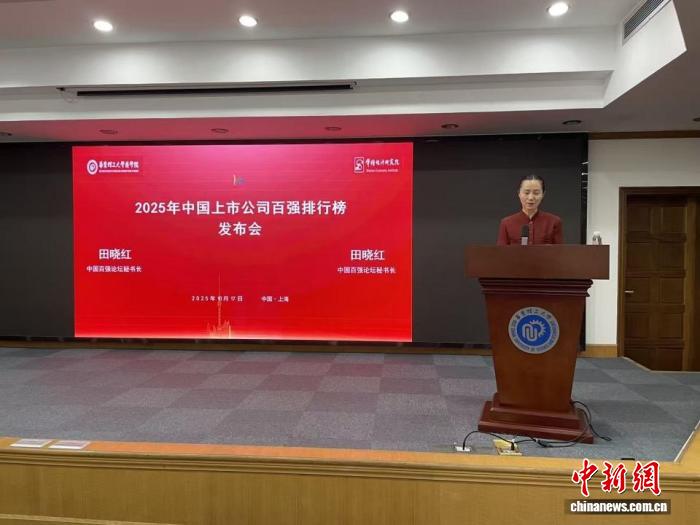
Core Insights - The 2025 China Top 100 Listed Companies Ranking was released, showing a total profit of 66,119.84 billion RMB for the 500 listed companies, an increase of 2,354.24 billion RMB from the previous year [1] - The top ten companies remain unchanged, with Industrial and Commercial Bank of China leading with a profit of 4,218.27 billion RMB, remaining stable compared to last year [2] - Despite a decrease in the profit threshold for the ranking, the total profit still grew by 3.69%, driven by significant profit increases among leading companies [3] Summary by Categories Top Companies - The top ten companies include Industrial and Commercial Bank of China, China Construction Bank, Agricultural Bank of China, Bank of China, China Petroleum, China National Offshore Oil Corporation, China Merchants Bank, China Mobile, Ping An Insurance, and Kweichow Moutai [2] - China National Offshore Oil Corporation saw a profit increase of 9.83%, moving up one rank, while China Merchants Bank dropped one rank [2] Profit Distribution - Among the 500 listed companies, 97 companies reported profits exceeding 10 billion RMB, a decrease of 5 from the previous year; 24 companies exceeded 50 billion RMB, an increase of 5; and 12 companies surpassed 100 billion RMB, an increase of 2 [2] - The profit threshold for the ranking (the profit of the 500th company) was 1.464 billion RMB, down 11.22% from the previous year's 1.649 billion RMB [2] Overall Market Performance - The profit growth of leading companies compensated for the general profit decline among lower-ranked companies, highlighting the importance of top firms in driving overall profitability [3] - The strong performance of leading companies is seen as a key driver of high-quality economic development in China, providing confidence and momentum to the market [4]





2025年中国上市公司百强榜发布 北京利润份额抢眼
Zheng Quan Shi Bao Wang· 2025-10-17 15:27
Group 1 - The "2025 China Top 100 Listed Companies" ranking was released, with major companies like ICBC, CCB, ABC, and others dominating the top positions [1][2] - Among the 500 listed companies, 97 reported profits exceeding 10 billion yuan, a decrease of 5 from the previous year; 24 companies surpassed 50 billion yuan, an increase of 5; and 12 companies exceeded 100 billion yuan, an increase of 2 [1] - Key characteristics of the ranking include slight revenue decline with profit growth, significant support from leading enterprises, and a notable performance in the financial sector [1][3] Group 2 - Beijing leads in the number of listed companies with 78 firms achieving a profit of 33,773.91 billion yuan, accounting for 51.08% of the total profits of the top 500 [2] - The eastern coastal provinces remain dominant, with Guangdong, Zhejiang, Shanghai, Jiangsu, and Shandong following in the number of listed companies [2] - The distribution of the top 500 companies spans 148 cities, indicating a growth breakthrough for quality enterprises in more third and fourth-tier cities, reflecting a degree of regional balance in corporate development [2] Group 3 - Current economic challenges in China include overcapacity, insufficient demand, a downturn in real estate, heavy debt burdens, and international friction affecting economic circulation [3] - Proposed strategies to address these challenges include establishing three world-class innovation centers, promoting collaboration between top companies and universities, and enhancing the policy-based financial system [3]
北京大学能源研究院副院长杨雷、研究员孙慧解读《油气管网设施公平开放监管办法》
Zhong Guo Dian Li Bao· 2025-10-17 14:15
Core Viewpoint - The introduction of the "Regulatory Measures for Fair and Open Supervision of Oil and Gas Pipeline Facilities" marks a significant reform aimed at enhancing the fairness and openness of oil and gas pipeline infrastructure, thereby promoting market-oriented reforms in the oil and gas industry and optimizing resource allocation [1][9]. Industry Development Background and Situation - Since the implementation of the fair and open regulatory system for oil and gas pipeline facilities in 2014, the establishment of the National Oil and Gas Pipeline Group in 2019 has led to a significant increase in the number of active shippers from 5 to over 200, enhancing the efficiency of oil and gas infrastructure usage [2]. - A competitive natural gas market system is rapidly forming, characterized by diversified upstream supply, efficient midstream transportation, and competitive downstream sales [2]. Key Contents of the Regulatory Measures - The scope of fair and open pipeline access has been further clarified, excluding certain internal pipelines and emphasizing the inclusion of pipelines that facilitate gas delivery to users [4]. - The principle of fairness and non-discrimination in pipeline access has been reinforced, removing previous conditions that limited service provision based on existing user agreements [5]. - Service standards for fair and open pipeline access have been optimized, including a reduction in response time for service requests from 15 to 5 working days [6]. - The measures encourage the active participation of pipeline operators in establishing user registration and service application processes, enhancing transparency and information disclosure [6][7]. Future Direction for the Industry - The regulatory measures are expected to play a crucial role in further market-oriented reforms, emphasizing the importance of contracts and the need for standardized service agreements [9]. - There is a focus on ensuring transparency and information disclosure, which are critical for market operation, with further details on frequency and granularity of information sharing to be developed [9]. - The unification of systems and rules is aimed at promoting the formation of a national market, facilitating the establishment of a cohesive national pipeline network [9].

工行蝉联榜首,2025年中国上市公司百强排行榜在沪发布
Guo Ji Jin Rong Bao· 2025-10-17 12:32
Core Insights - The 2025 China Top 100 Listed Companies Ranking was released, highlighting the performance of major companies in various sectors [1] Group 1: Overall Performance - The total profit of the top 500 companies reached 66,119.84 billion yuan, an increase of 2,354.24 billion yuan year-on-year, accounting for 96.93% of the total profits of all listed companies [2] - Total revenue for the top 500 companies decreased by 1.95% to 493,947.70 billion yuan, representing 68.70% of all listed companies' revenue [2] - Total assets grew by 6.81% to 4,055,553.95 billion yuan, maintaining a stable share of 90.35% of all listed companies' total assets [2] Group 2: Sector Performance - The financial sector showed outstanding profitability, with 82 financial companies generating a profit of 31,386.93 billion yuan, a year-on-year increase of 10.90%, representing 47.47% of the total profit of the top 500 [4] - The manufacturing sector saw a profit increase of 13.60%, with 241 companies contributing 14,425.03 billion yuan, reversing previous declines [4] - The construction and energy sectors faced challenges, with profits declining by 5.71% to 14,105.92 billion yuan, and the number of companies in this sector decreasing [4] Group 3: Company Rankings - The top ten companies included Industrial and Commercial Bank of China, China Construction Bank, Agricultural Bank of China, and China Petroleum, with ICBC leading with a profit of 421.83 billion yuan, remaining stable compared to the previous year [1] - The ranking of China National Offshore Oil Corporation improved by one position, with a profit increase of 9.83% [1] - The number of companies with profits exceeding 100 billion yuan decreased to 97, while those exceeding 500 billion yuan increased to 24 [1] Group 4: Regional Insights - Beijing accounted for 51.08% of the total profits of the top 500 companies, with 78 companies generating 33,773.91 billion yuan [7] - Eastern coastal provinces continued to dominate the rankings, with Guangdong, Zhejiang, and Shanghai following Beijing in the number of listed companies [7]
中国海油工人一生向海守初心
Bei Jing Wan Bao· 2025-10-17 11:31
Core Viewpoint - The article highlights the dedication of a Chinese offshore oil worker who prioritizes his work over personal recognition, illustrating the commitment to the national marine oil industry and the impact on family relationships [1] Group 1: Personal Sacrifice - The worker's daughter, Chang Haining, experienced repeated separations from her father during her childhood, missing significant moments such as birthdays due to his work commitments [1] - The father chose to forgo receiving an award at the Great Hall of the People, emphasizing his dedication to his job in the offshore oil sector [1] Group 2: Legacy and Inspiration - Inspired by her father's commitment, Chang Haining also became an offshore oil worker, continuing the family legacy in contributing to the national marine oil industry [1] - The article features a microfilm titled "Father and the Sea," which is part of the National Workers Microfilm Festival, showcasing the stories of workers in the industry [1]