CNOOC(600938)

Search documents
——石油化工行业周报第442期(20260309—20260315):锚定供应链安全,筑牢能源安全底线-20260315
EBSCN· 2026-03-15 05:56
Investment Rating - The report maintains an "Overweight" rating for the petrochemical industry [5] Core Views - The ongoing US-Iran conflict highlights the importance of energy security, with the "14th Five-Year Plan" emphasizing the need for energy resource supply guarantees [1][10] - The "Three Oil Giants" (China National Petroleum, Sinopec, and CNOOC) are positioned as key players in domestic energy supply, with plans for significant capital expenditures and production increases [2][11] - The conflict threatens the supply of petrochemical raw materials, necessitating attention to state-owned refining enterprises like Huajin [3][13] - The rise in agricultural product prices due to the conflict underscores the importance of agricultural chemical products like methionine and vitamins [2][12] - The coal chemical industry is highlighted as a core direction for growth, benefiting from the current high oil prices [3][14] Summary by Sections Energy Security and Supply Chain - The US-Iran conflict continues to disrupt global energy supply chains, particularly affecting oil prices, which have seen significant increases [1][9] - The "14th Five-Year Plan" stresses the need for a robust energy supply system, focusing on domestic production and strategic reserves [10] Domestic Energy Supply - The "Three Oil Giants" are expected to maintain high capital expenditures, with planned upstream capital expenditures of CNY 210 billion for China National Petroleum, CNY 72.9 billion for Sinopec, and CNY 130 billion for CNOOC in 2025 [2][11] - Production plans for 2025 indicate a year-on-year increase of 1.6% for China National Petroleum, 1.5% for Sinopec, and 5.9% for CNOOC [2][11] Petrochemical Raw Material Supply - The conflict has led to decreased transportation efficiency through the Strait of Hormuz, impacting the supply of petrochemical raw materials [3][13] - State-owned refining enterprises are expected to leverage their integrated supply chain advantages to ensure stable resource availability [3][13] Agricultural Chemical Products - The rise in food prices due to the conflict has elevated the importance of agricultural security, with a focus on chemical products like methionine [2][12] Coal Chemical Industry - The coal chemical sector is positioned as a key growth area, with advantages in cost and resource availability highlighted amid rising oil prices [3][14]


释储无法弥补供给缺口,油价具备持续上涨空间
Guolian Minsheng Securities· 2026-03-15 05:51
Investment Rating - The report maintains a "Buy" rating for key companies in the oil and gas sector, including China National Offshore Oil Corporation (CNOOC), Zhongman Petroleum, China National Petroleum Corporation (CNPC), China Petroleum & Chemical Corporation (Sinopec), and New Natural Gas [2][4]. Core Insights - The report highlights that the release of strategic oil reserves cannot compensate for the supply gap caused by disruptions in the Strait of Hormuz, indicating that oil prices have significant room for continued upward movement [8][12]. - The International Energy Agency (IEA) has confirmed the release of 400 million barrels of emergency oil reserves, the largest in history, but this is insufficient to cover the current supply shortfall, which has been exacerbated by geopolitical tensions [12][31]. - The report anticipates that oil prices will remain above $100 per barrel due to ongoing conflicts and supply constraints in the Middle East [12][32]. Summary by Sections Key Company Earnings Forecasts, Valuation, and Ratings - CNOOC (600938.SH): Price at 42.00 CNY, EPS forecast for 2024A at 2.90 CNY, PE ratio at 14, rated "Buy" [2]. - Zhongman Petroleum (603619.SH): Price at 36.49 CNY, EPS forecast for 2024A at 1.76 CNY, PE ratio at 21, rated "Buy" [2]. - CNPC (601857.SH): Price at 12.05 CNY, EPS forecast for 2024A at 0.90 CNY, PE ratio at 13, rated "Buy" [2]. - Sinopec (600028.SH): Price at 6.33 CNY, EPS forecast for 2024A at 0.41 CNY, PE ratio at 15, rated "Buy" [2]. - New Natural Gas (603393.SH): Price at 42.14 CNY, EPS forecast for 2024A at 2.80 CNY, PE ratio at 15, rated "Buy" [2]. Industry Dynamics - The report notes that geopolitical tensions, particularly between the U.S. and Iran, have led to significant reductions in oil production from Middle Eastern countries, with a total reduction of up to 6.7 million barrels per day [11][27]. - The report emphasizes that the ongoing conflict and supply disruptions are likely to keep oil prices elevated, with expectations of prices remaining above $100 per barrel [12][32]. - The report also discusses the impact of rising dollar index and fluctuating LNG prices, with Brent crude oil prices increasing by 11.27% week-on-week [13][32].




石油化工行业研究:霍尔木兹成油价核心影响变量
SINOLINK SECURITIES· 2026-03-15 05:50
Investment Rating - The report indicates a bearish outlook for the oil and petrochemical sector, with the sector underperforming the Shanghai Composite Index by -3.63% this week [10]. Core Insights - The geopolitical situation, particularly the blockade of the Strait of Hormuz, is significantly impacting oil prices, leading to supply tightness and increased market panic [16]. - WTI crude oil closed at $95.73, up $14.72 week-on-week, while Brent crude closed at $101.08, up $12.96 [16]. - The report highlights that the U.S. commercial crude oil inventory increased by 3.824 million barrels, with a notable rise in net imports [16]. - The average refining margin for major domestic refineries increased to 1,935.69 CNY/ton, up 941.88 CNY/ton from the previous period [4]. Summary by Sections 1. Market Review - The oil and petrochemical sector indices showed varied performance, with the oil and gas resource index down by -5.87% and the refining and chemical index down by -6.23% [10]. 2. Oil Market Overview - The report notes that the geopolitical tensions are causing a significant supply loss, with Middle Eastern oil producers forced to cut production by up to 6.7 million barrels per day [16]. - The U.S. active oil rig count increased by 4 to 411 rigs, indicating a slight uptick in production activity [4]. 3. Refining Sector - The average operating rate for major domestic refineries was reported at 81.35%, a decrease of 1.46 percentage points from the previous week [4]. - The report indicates a strong expectation for price adjustments in the refining sector, driven by rising market sentiment [4]. 4. Petrochemical Sector - The report highlights that the PX price has risen above $300/ton, while PTA processing fees have dropped to -1.74 CNY/ton, indicating cost pressures in the polyester segment [4]. - The average profit level for polyester products such as POY150D and FDY150D has seen significant increases, reflecting the impact of rising raw material costs [4]. 5. Olefins Market - The domestic ethylene market price averaged 9,529 CNY/ton, up 39.99% week-on-week, driven by supply constraints and cautious demand from downstream buyers [4]. - Propylene prices in Shandong increased by 8.55% to 8,000 CNY/ton, reflecting ongoing market volatility due to geopolitical factors [4].
“十五五”报告解读:向绿向新向智,迈向化工强国
Yin He Zheng Quan· 2026-03-14 11:23
Investment Rating - The report does not explicitly state an investment rating for the chemical industry, but it provides various investment suggestions based on the analysis of different segments within the industry [6]. Core Insights - The petrochemical industry is a pillar of the national economy, with a significant economic volume, long industrial chain, and wide product variety, impacting supply chain security, green development, and public welfare [8]. - The report identifies four major directions related to the chemical industry based on the "14th Five-Year Plan": security assurance in key areas, comprehensive rectification of "involution" competition, domestic substitution of new materials, and green low-carbon economy [8]. Summary by Sections 1. National Economic Pillar Industry - The petrochemical industry is crucial for economic stability, with projected revenues of 15.7 trillion yuan in 2025, a 3% decrease year-on-year, and total profits of 702.09 billion yuan, down 9.6% [8]. 2. Strengthening Strategic Material Supply - The "14th Five-Year Plan" aims for a grain production capacity of 1.45 trillion jin and energy production capacity of 5.8 billion tons of standard coal, emphasizing the importance of fertilizer supply stability and energy resource security [9]. - Key companies to watch include Hualu Hengsheng, Yuntianhua, and China Petroleum, focusing on fertilizer supply and oil and gas production [9][11]. 3. Comprehensive Rectification of "Involution" Competition - The report suggests that the PTA industry is expected to see an upward correction in demand due to improved supply and demand conditions, with a projected capacity of 90.35 million tons and production of 73.42 million tons by 2025 [43][44]. - The polyester filament industry is becoming more concentrated, which may lead to a more orderly market supply, with a production capacity of 53.16 million tons by 2025 [48][49]. 4. Empowering Emerging Industries and Accelerating Domestic Substitution of New Materials - The report highlights the potential for new materials such as PEEK and electronic-grade PPO to drive growth in emerging industries, with significant investment opportunities in companies like Zhongyan Co., Guo'en Co., and Watte Co. [10]. 5. Accelerating Green Low-Carbon Transition - The "14th Five-Year Plan" emphasizes achieving carbon peak targets, with a focus on clean energy systems and reducing carbon emissions by 17% per unit of GDP by 2025 [10]. - Companies like Satellite Chemical and Wanhua Chemical are noted for their competitive advantages in green low-carbon production [10].


基础化工行业深度报告:“十五五”报告解读-向绿向新向智,迈向化工强国
Zhong Guo Yin He Zheng Quan· 2026-03-14 10:24
Investment Rating - The report does not explicitly state an investment rating for the chemical industry, but it provides various investment suggestions based on the analysis of different segments within the industry [6]. Core Insights - The petrochemical industry is a pillar of the national economy, with a significant economic volume, long industrial chain, and wide product variety, impacting supply chain security, green development, and public welfare [8]. - The report identifies four major directions related to the chemical industry based on the "14th Five-Year Plan": security assurance in key areas, comprehensive rectification of "involution" competition, domestic substitution of new materials, and green low-carbon economy [8][9]. Summary by Sections 1. National Economic Pillar Industry - The petrochemical industry is crucial for economic stability, with projected revenues of 15.7 trillion yuan in 2025, a 3% decrease year-on-year, and total profits of 702.09 billion yuan, down 9.6% [8]. 2. Strengthening Strategic Material Supply - The "14th Five-Year Plan" aims for a grain production capacity of 1.45 trillion jin and energy production capacity of 5.8 billion tons of standard coal, emphasizing the importance of fertilizer supply stability and energy resource security [9]. - Key companies to watch include Hualu Hengsheng, Yuntianhua, and China Petroleum [9]. 3. Comprehensive Rectification of "Involution" Competition - The report suggests that the PTA industry is expected to see an upward correction in demand due to improved supply and demand conditions, with a focus on companies like Hengli Petrochemical and Rongsheng Petrochemical [9][10]. - The report highlights the need for industry self-discipline to combat excessive competition and improve profitability [9]. 4. Empowering Emerging Industries - The report discusses the acceleration of domestic substitution in new materials, with a focus on PEEK, electronic-grade PPO, and OLED materials, suggesting companies like Zhongyan Co., Guoen Co., and Aolaide [10][11]. 5. Accelerating Green Low-Carbon Transition - The report emphasizes the importance of achieving carbon peak targets and highlights the competitive advantages of light hydrocarbon chemicals and bio-chemicals in the green economy [10][11]. 6. Investment Recommendations - The report suggests focusing on companies with integrated advantages and strong R&D capabilities in the fertilizer sector, as well as those involved in oil and gas exploration and production [9][10].
原油行业分析框架
Guoxin Securities· 2026-03-13 11:09
Investment Rating - The report suggests a positive investment outlook for the oil industry, particularly highlighting companies like China National Petroleum Corporation and CNOOC as key players in the sector [6]. Core Insights - The oil market is influenced by three main attributes: commodity characteristics, geopolitical factors, and financial aspects. The price formation mechanism is complex, with supply and demand, geopolitical events, and dollar interest rates playing significant roles. The report indicates that the oil price has been trending downward in 2023 due to a loosening supply-demand balance [4]. - Supply is heavily concentrated in the Middle East, which holds nearly 60% of global reserves. Major suppliers include Saudi Arabia, the United States, and Russia. The report notes that OPEC plays a crucial role in controlling international oil prices through production management [4][5]. - Demand for oil is closely tied to global economic growth, with the U.S., Europe, China, and India being the primary consumers. The report forecasts that by 2024, the demand shares will be 19.7% for the U.S., 15.9% for China, and 13.8% for Europe [5]. - The Strait of Hormuz is highlighted as a critical chokepoint for global oil transport, with potential disruptions leading to significant production cuts in Gulf countries. The report emphasizes that if the Strait remains blocked, the scale of production cuts and the difficulty of resuming production will increase rapidly [5]. Summary by Sections Geopolitical and Financial Impact on Oil Prices - The report discusses how geopolitical tensions and financial factors significantly influence oil prices, with recent conflicts causing rapid price increases. It emphasizes that while short-term fluctuations are common, the long-term price trends are primarily driven by supply-demand fundamentals [21][24]. Oil Supply Situation - The global distribution of oil reserves is uneven, with the Middle East holding a significant portion. The report states that as of 2024, OPEC countries will control 79.2% of global oil reserves, with Saudi Arabia, Iran, and Venezuela being the top three countries [33]. - The U.S. has become the largest oil producer due to the shale oil revolution, but production growth is slowing as companies focus on investment returns rather than volume [36][51]. Oil Demand Situation - The report indicates that oil demand is expected to grow primarily in developing countries, with projections for 2025 showing an increase in global oil demand. The U.S. and China are expected to remain the largest consumers, with significant shifts in consumption patterns due to economic and structural changes [87][93]. - The report also notes that the refining capacity in Europe is declining, while the U.S. maintains a stable demand for refined products, indicating a shift in the global refining landscape [93].
油价中枢抬高,哪些行业受益?
雪球· 2026-03-13 08:09
Group 1 - The article discusses the recent increase in oil prices and its impact on the upstream oil and gas sector, highlighting the revaluation of resource value and increased cash flow for upstream giants like CNOOC and PetroChina [4] - The oil service industry is expected to benefit from increased capital expenditure by oil and gas companies, leading to improved business for firms like China Oilfield Services and Jereh [4] - The coal chemical sector presents a unique structural opportunity in the A-share market, focusing on the cost advantage of coal over high-priced oil, with leading companies like Baofeng Energy and Hualu Hengsheng showing strong performance [4] Group 2 - Supply shocks from overseas production cuts are driving price increases in certain commodities, with companies like Yun Aluminum and Xingfa Group benefiting from China's stable energy supply and competitive export capabilities [5] - The resilience of the A-share market is noted, with strong performance across the identified sectors, and an expectation for increased trading volume in the future [6]


媒体报道︱深海油气成我油气产量重要增长极
国家能源局· 2026-03-13 04:50
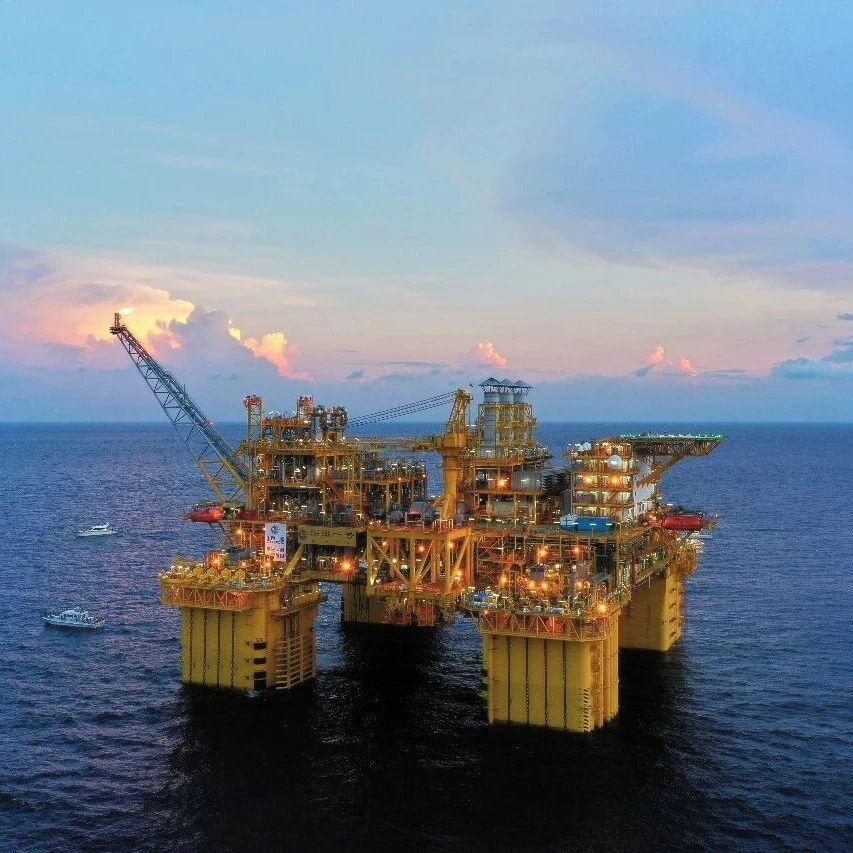
Core Viewpoint - The recent data from China's offshore oil and gas sector indicates significant potential in deep-sea oil and gas production, with projections for substantial increases in output by 2025 [2][3]. Group 1: Production Projections - By 2025, China's largest offshore gas field, "Deep Sea No. 1," is expected to exceed an oil equivalent production of 4.5 million tons, comparable to medium-sized onshore oil fields, with advanced production operation and maintenance technologies [2]. - The cumulative oil and gas production from the offshore gas fields around Hainan Island, including "Deep Sea No. 1," is projected to surpass 10 million tons of oil equivalent by 2025, doubling the production compared to the end of the 13th Five-Year Plan, with deep-sea fields contributing over 90% of the new production in the region [2]. - The Bohai Oilfield, China's largest offshore oil field, is anticipated to achieve a cumulative oil and gas production of over 40 million tons of oil equivalent by 2025, marking a historical high [2]. Group 2: Exploration and Development Efforts - According to the "China Marine Energy Development Report 2025," China's offshore oil production is expected to reach approximately 6.8 million tons, reflecting a year-on-year increase of about 250,000 tons, accounting for 80% of the national oil production increase [2]. - As of the end of Q3 2025, China has made five new discoveries in its maritime areas, successfully evaluated 22 oil and gas structures, and launched 11 new projects, indicating a robust exploration effort [2]. - Significant breakthroughs have been achieved in the Beibu Gulf Basin, including the discovery of China's first deep and ultra-deep clastic rock oil field with a billion-ton capacity, the Huizhou 19-6 oil field [2]. Group 3: Technological Advancements - "Deep Sea No. 1" is noted for being the most challenging offshore gas field developed by China, with a maximum operational water depth exceeding 1,500 meters and a geological temperature reaching 138 degrees Celsius, boasting proven geological reserves of over 150 billion cubic meters of natural gas [3]. - The field's core facilities, including the "Deep Sea No. 1" energy station and the "Four Stars in a Row" platform group, possess the capability for deep-sea oil and gas processing, enabling on-site separation and transportation of natural gas and crude oil [3]. - Daily production from "Deep Sea No. 1" includes 15 million cubic meters of natural gas and over 1,600 tons of condensate oil, with plans to achieve an annual natural gas production of 5 billion cubic meters by 2025, surpassing the designed capacity peak [3].
港股开盘丨恒指跌0.52% 理想汽车、宁德时代跌幅靠前


Sou Hu Cai Jing· 2026-03-13 02:39
Market Performance - The Hang Seng Index decreased by 0.52% [1] - The Hang Seng Tech Index fell by 0.42% [1] Company Movements - Li Auto, CATL, and Horizon Robotics experienced significant declines [1] - China Shenhua Energy rose by over 2% [1] - NetEase increased by nearly 2% [1] - CNOOC and PetroChina both saw gains of over 1% [1]

A股低开,油气、风电、煤炭板块走强
第一财经· 2026-03-13 01:47
Group 1 - The coal sector opened high, with Zhengzhou Coal Power hitting the daily limit, and companies like Huadian Energy, Haohua Energy, Lanhua Sci-Tech, New Dazhou A, and Shaanxi Black Cat following suit [3]. - The A-share market opened with all three major indices declining: the Shanghai Composite Index down 0.28%, the Shenzhen Component Index down 0.51%, and the ChiNext Index down 0.63% [4][5]. - In the market, sectors such as CPO, semiconductor equipment, high-speed copper connections, photovoltaics, superhard materials, cybersecurity, nuclear fusion, gold, and AI computing power saw declines, while oil and gas, wind power, and coal sectors strengthened [5]. Group 2 - The Hong Kong stock market opened lower, with the Hang Seng Index down 0.52% and the Hang Seng Tech Index down 0.42%. Companies like Li Auto, CATL, and Horizon Robotics experienced significant declines, while China Shenhua and NetEase saw gains of over 2% [6][7].