
CMS(600999)

Search documents
招商证券拟10月30日举行董事会会议审批季度业绩
Ge Long Hui· 2025-10-16 09:07
格隆汇10月16日丨招商证券(06099.HK)宣布,董事会会议将于2025年10月30日(星期四)举行,藉以 (其中包括)考虑及批准本公司及其附属公司截至2025年9月30日止九个月的未经审计第三季度业绩及 其发布。 ...

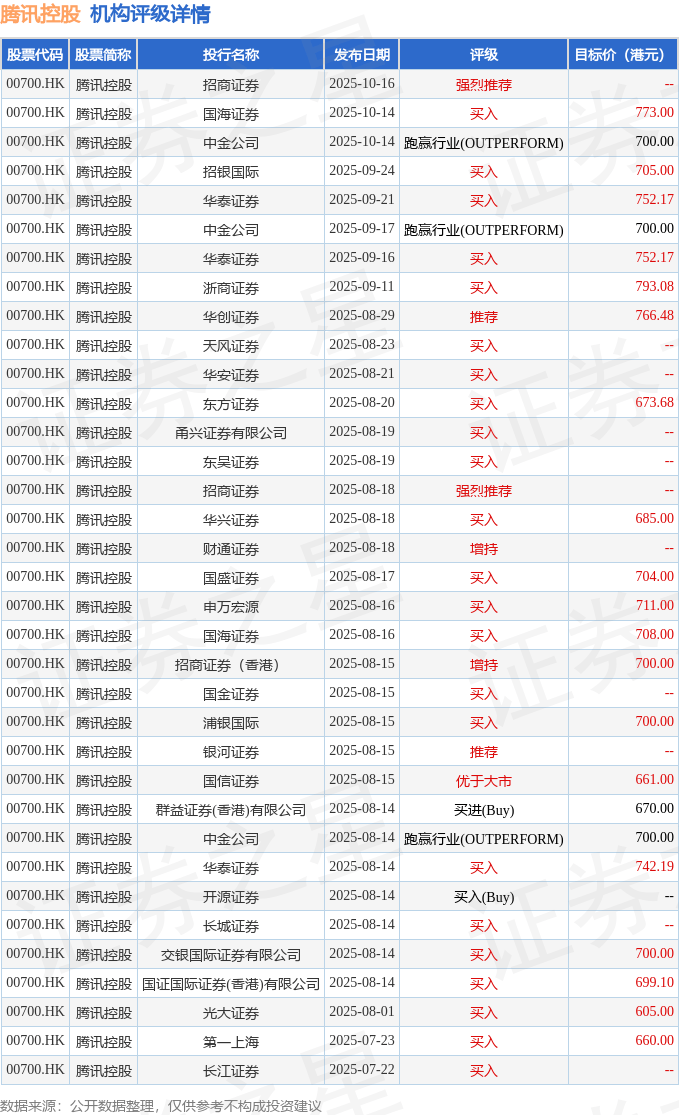
招商证券发布研报称,维持腾讯控股(00700.HK)“强烈推荐”投资评级
Sou Hu Cai Jing· 2025-10-16 09:00
Core Viewpoint - The report from China Merchants Securities maintains a "strongly recommended" investment rating for Tencent Holdings (00700.HK), highlighting the company's robust main business and impressive performance in its core gaming segment, along with significant improvements in advertising and other business lines due to AI empowerment [1]. Group 1: Business Performance - Tencent's core gaming business is performing well, contributing positively to overall revenue [1]. - The advertising and other business lines have seen significant efficiency improvements due to AI integration [1]. - The e-commerce ecosystem is gradually improving with the upgrade of WeChat Mini Stores [1]. - The cloud business is expected to gradually scale up, supporting overall growth [1]. Group 2: Financial Metrics - Tencent's market capitalization is HKD 57,393.5 billion, ranking first in the internet media industry [2]. - Key financial metrics include: - Return on Equity (ROE): 20.86%, significantly higher than the industry average of -9.35% [3]. - Revenue: HKD 7,041.65 million, leading the industry average of HKD 187.83 million [3]. - Net Profit Margin: 29.02%, compared to the industry average of -17.09% [3]. - Gross Margin: 56.38%, above the industry average of 43.76% [3]. - Debt Ratio: 40.26%, lower than the industry average of 53.63% [3]. Group 3: Analyst Ratings - As of October 16, 2025, Tencent Holdings has received multiple buy ratings from various investment banks, with a target price averaging HKD 706.99 [1]. - Notable ratings include: - China Merchants Securities: Strongly Recommended [1]. - Guohai Securities: Buy with a target price of HKD 773.00 [1]. - CICC: Outperform with a target price of HKD 700.00 [1].


龙虎榜丨香农芯创刷新高,深股通净买入1.67亿元,招商证券上海长柳路净买入2.27亿元
Ge Long Hui A P P· 2025-10-16 08:58
Core Insights - Shannon Chip Creation (300475.SZ) experienced a significant stock price increase of 16.7%, reaching a historical high during the trading session [1] - The trading volume was notable, with a turnover rate of 15.82% and a total transaction value of 7.079 billion [1] - The net buying activity from the Shenzhen Stock Connect amounted to 1.67 billion, with institutional investors showing mixed buying and selling behavior [1] Trading Activity Summary - The top five buying entities contributed significantly to the trading volume, with the Shenzhen Stock Connect being the largest buyer at 557.91 million, accounting for 7.88% of the total transaction [2] - The second-largest buyer was the Shanghai Changliu Road branch of China Merchants Securities, with a purchase amount of 231.29 million, representing 3.27% of the total [2] - Institutional investors collectively bought 375 million while selling 440 million, resulting in a net selling of 65.24 million [1]


招商证券:维持腾讯控股“强烈推荐”评级 AI生态布局迭代加速
Zhi Tong Cai Jing· 2025-10-16 08:53
Core Viewpoint - The report from China Merchants Securities maintains a "strong buy" rating for Tencent Holdings (00700), highlighting the company's robust main business and impressive performance in its core gaming sector, along with significant improvements in various business lines due to AI empowerment [1][2]. Group 1: Business Performance - Tencent's core gaming business shows strong performance, contributing positively to overall revenue [1]. - The advertising sector has seen significant benefits from AI applications, enhancing efficiency and effectiveness [1]. - The company's e-commerce ecosystem is gradually improving with the upgrade of WeChat Mini Stores [1]. Group 2: AI Investments - Tencent is increasing its investment in AI, which is yielding tangible benefits across various sectors, including advertising and gaming [2]. - AI functionalities in WeChat have been enriched, providing intelligent search capabilities and automated customer service for merchants [1][2]. - In gaming, AI is enhancing content creation and player engagement in popular games like "Honor of Kings" and "Peacekeeper Elite" [1]. Group 3: Financial Outlook - The rising proportion of high-margin businesses is expected to support the improvement of the company's profit margins [1]. - Despite potential short-term cost increases due to AI investments, the existing high-quality revenue is anticipated to help maintain financial stability [2]. - The acceleration of application scenarios is expected to create additional growth opportunities for the company's performance [2].
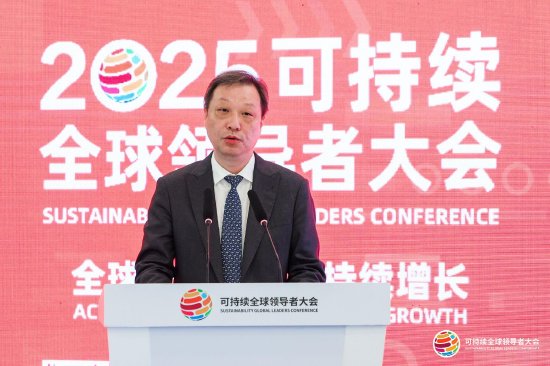
全文丨招商证券总裁朱江涛详解“深耕‘五篇大文章’的创新实践”
Xin Lang Zheng Quan· 2025-10-16 08:41
Core Insights - The 2025 Sustainable Global Leaders Conference will be held from October 16 to 18 in Shanghai, focusing on global action, innovation, and sustainable growth [1] - The conference aims to gather around 500 prominent guests, including international leaders, Nobel laureates, and executives from Fortune 500 companies, to explore new paths for sustainable development [1] Group 1: ESG Development Strategy - The company emphasizes the importance of ESG (Environmental, Social, and Governance) as a framework that aligns with China's push for high-quality financial development, enhancing risk management and internal governance [3][4] - The company has established a comprehensive ESG strategy aimed at supporting China's economic and social sustainable development, positioning itself as a leading investment bank in the financial sector [3] Group 2: Key Missions of ESG Strategy - The ESG strategy includes four main missions: facilitating capital circulation for low-carbon transformation, enhancing social welfare, focusing on sustainable finance, and addressing climate risks [4] - The company is committed to integrating ESG development with its "Five Major Articles" initiative, which includes technology finance, green finance, inclusive finance, pension finance, and digital finance [5][6][7][8][9] Group 3: Achievements in Sustainable Finance - The company has successfully assisted 35 dual-carbon enterprises in raising 46.1 billion in equity financing and has underwritten green bonds totaling 49.9 billion [6] - The company has launched innovative financial products, such as the first domestic weather derivatives and a sustainable development product index, to guide capital towards green resources [6] Group 4: Future Directions - The company plans to deepen its focus on technology finance, enhancing its service capabilities across the entire lifecycle of enterprise development [5] - The company aims to expand its inclusive finance services, ensuring that financial products reach a broader audience and support agricultural production [7] - The company is committed to enhancing its pension finance services, providing comprehensive financial support for the aging population [8] - The company is advancing its digital finance initiatives, leveraging AI and digital transformation to improve operational efficiency and customer service [9]
招商证券(06099) - 董事会会议召开日期
2025-10-16 08:37
6099 香港交易及結算所有限公司及香港聯合交易所有限公司對本公告的內容概不負責,對其 準確性或完整性亦不發表任何聲明,並明確表示,概不對因本公告全部或任何部份內容 而產生或因倚賴該等內容而引致的任何損失承擔任何責任。 承董事會命 招商證券股份有限公司 霍達 董事長 中國,深圳 2025年10月16日 於本公告日期,本公司執行董事為霍達先生及朱江濤先生;本公司非執行董事為羅立女 士、劉振華先生、劉輝女士、李德林先生、李曉霏先生、黃堅先生、張銘文先生及丁璐 莎女士;以及本公司獨立非執行董事為葉熒志先生、張瑞君女士、陳欣女士、曹嘯先生 及豐金華先生。 董事會會議召開日期 招商證券股份有限公司(「本公司」)之董事會(「董事會」)謹此宣佈,董事會會議將於2025 年10月30日(星期四)舉行,藉以(其中包括)考慮及批准本公司及其附屬公司截至2025年9 月30日止九個月之未經審計第三季度業績及其發佈。 ...
招商证券总裁朱江涛:招商证券建立了管理、激励、协同、考核四大保障机制,全力推动ESG战略的实施
Xin Lang Zheng Quan· 2025-10-16 08:27
Group 1 - The 2025 Sustainable Global Leaders Conference will be held from October 16 to 18 in Shanghai, focusing on global action, innovation, and sustainable growth [1] - The conference is co-hosted by the World Green Design Organization and Sina Group, with support from the Shanghai Huangpu District Government [1] - Approximately 500 prominent guests are invited, including around 100 international guests, featuring political figures, Nobel laureates, and leaders from Fortune 500 companies [1] Group 2 - Zhu Jiangtao, President of China Merchants Securities, emphasized the company's ESG development strategy, which includes four missions: sustainable finance, climate risk response, digital transformation, and social value creation [2] - The company has established a comprehensive framework for managing, incentivizing, collaborating, and assessing its ESG strategy implementation [2] - By the end of 2023, China Merchants Securities aims to enhance its ESG strategy to support China's economic and social sustainable development [2]
招商证券:维持腾讯控股(00700)“强烈推荐”评级 AI生态布局迭代加速
智通财经网· 2025-10-16 08:26
Core Viewpoint - The report from China Merchants Securities maintains a "strong buy" rating for Tencent Holdings (00700), highlighting the company's robust main business and impressive performance in its core gaming sector, along with significant improvements in various business lines due to AI integration [1][2]. Group 1: Business Performance - Tencent's core gaming business is performing well, supported by AI enhancements across its operations [1]. - The company's advertising and other business lines have seen substantial benefits from AI, leading to improved efficiency [1]. - The e-commerce ecosystem is gradually being perfected with upgrades to WeChat Mini Stores [1]. Group 2: AI Integration - Tencent is increasing its investment in AI, which is yielding benefits across multiple areas, including WeChat, gaming, and advertising [1]. - AI functionalities in WeChat have been enriched, enabling features like intelligent keyword search and automated customer service responses for merchants [1]. - In gaming, AI is enhancing content creation and player engagement in popular games like "Honor of Kings" and "Peacekeeper Elite" [1]. Group 3: Financial Outlook - The rising proportion of high-margin businesses is expected to support improvements in the company's profit margins [1]. - The company is likely to see a gradual increase in cloud business volume, contributing positively to financial performance [1]. - Despite potential short-term cost increases due to AI investments, the existing high-quality revenue is expected to help maintain financial stability [2].
招商证券总裁朱江涛出席2025可持续全球领导者大会
Xin Lang Zheng Quan· 2025-10-16 07:35
Core Insights - The 2025 Sustainable Global Leaders Conference will be held from October 16 to 18 in Shanghai, focusing on global action, innovation, and sustainable growth [1] - The event is co-hosted by the World Green Design Organization (WGDO) and Sina Group, with support from the Shanghai Huangpu District Government [1] - Approximately 500 prominent guests are expected, including around 100 international attendees, featuring politicians, former officials, representatives from international organizations, Nobel Prize winners, Turing Award winners, and leaders from Fortune 500 companies [1] Group 1 - The conference aims to explore new pathways for sustainable development and inject "Chinese momentum" into global sustainable governance [1] - The event is an upgrade from the previous four "ESG Global Leaders Conferences," indicating a growing emphasis on sustainability [1] - Zhu Jiangtao, President of China Merchants Securities, will deliver a keynote speech at the conference [1]

招商证券携手暨南大学深圳校区 产教融合共育金融科技复合型人才
Quan Jing Wang· 2025-10-16 07:03
Core Insights - The event organized by China Merchants Securities at Jinan University focused on the application of big data technology in the financial industry, providing insights to 105 graduate students in financial technology [1][2] Group 1: Industry Insights - The course featured Wang Chao, head of the big data development team at China Merchants Securities, who explained the origins, evolution, and complete technical system of big data, emphasizing core technologies like Hadoop, HDFS, Spark, and Flink [2] - Wang analyzed how big data technology drives the transformation of the securities industry from traditional operations to digital and intelligent upgrades, highlighting the integration of diverse external data sources for precise customer profiling, intelligent risk control, targeted marketing strategies, and business operation optimization [2] Group 2: Educational Impact - The event provided students with valuable opportunities to engage with industry frontiers, effectively broadening their professional perspectives and deepening their understanding of financial technology applications [3] - By incorporating the latest industry technology dynamics and practical experiences into the classroom, the initiative helps students build a bridge between theory and practice, laying a solid foundation for their future career development [3] Group 3: Future Collaboration - Looking ahead, China Merchants Securities plans to deepen cooperation with Jinan University in areas such as talent cultivation, academic research, and employment guidance, aiming to nurture high-quality financial technology talents with international vision, innovative spirit, and solid skills [4]