AGRICULTURAL BANK OF CHINA(601288)

Search documents
打造养老金融服务体系 护航银发客群幸福晚年
Nan Fang Du Shi Bao· 2025-11-13 23:08
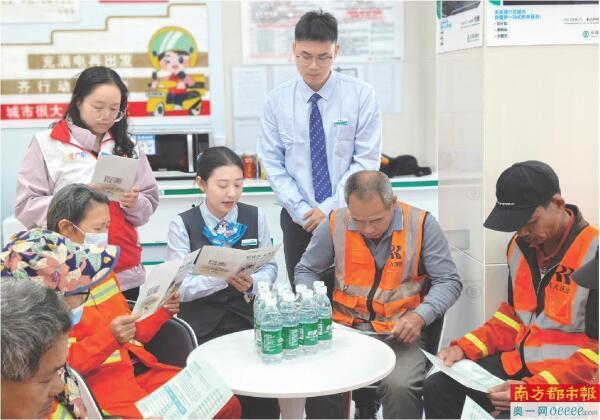
Core Viewpoint - Agricultural Bank of China Jiangmen Branch is actively promoting a series of initiatives aimed at enhancing elderly care services and financial support for the aging population, aligning with national policies on pension and elderly care [2][3][4][5][6][7] Group 1: Elderly Care Initiatives - The bank has launched the "Warm Autumn, Respect for the Elderly" series of activities to address the diverse needs of the elderly population, focusing on creating a sustainable elderly financial service system [2] - Jiangmen Branch is increasing its credit support for the elderly care industry, with a nearly 100% increase in loans for the sector by the end of October compared to the beginning of the year [3] - The bank is actively engaging with local elderly care service providers to tailor financial solutions, such as online credit loans, to help them overcome operational challenges [3] Group 2: Financial Services and Accessibility - The bank is implementing "social security for the people" initiatives, enhancing the accessibility and convenience of social security services through local branches [4] - A recent financial knowledge promotion event helped over 150,000 customers open personal pension accounts, with extensive outreach activities conducted in various communities [5] - Jiangmen Branch has established an "age-friendly service demonstration outlet," optimizing facilities and services to cater to the needs of elderly customers [6] Group 3: Future Directions - The bank aims to continue analyzing trends in the elderly care sector and financial needs, focusing on a comprehensive service system that includes diverse product offerings and multi-dimensional customer engagement [7]


银行卡内存款“莫名”变基金?农行、支付宝回应
He Nan Ri Bao· 2025-11-13 11:11
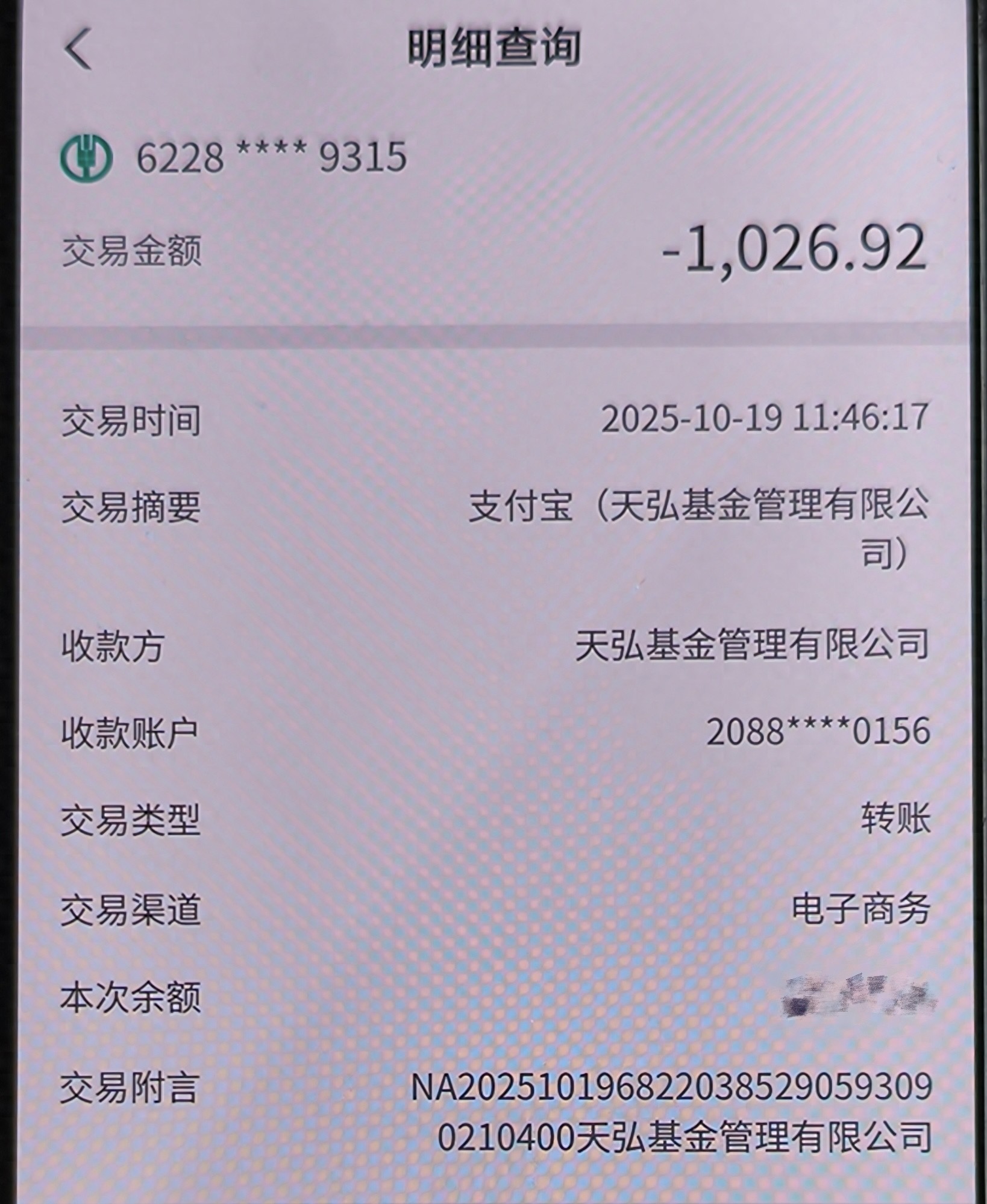
Core Viewpoint - A citizen reported that a sum of 1026.92 yuan was transferred from his Agricultural Bank account to Tianhong Fund Management Co., Ltd. without his knowledge, raising concerns about unauthorized transactions through Alipay [1][5]. Group 1: Transaction Details - The citizen discovered the unauthorized transaction on November 9, 2023, which occurred on October 19, 2023, at 11:46 AM, with the amount of 1026.92 yuan transferred to Tianhong Fund [1][5]. - The Agricultural Bank customer service indicated that the transaction was completed via the Alipay platform, but they could not provide specific details about the transaction [5][9]. Group 2: Alipay's Response - Alipay's customer service stated that the citizen had inadvertently participated in a promotional activity involving a red envelope, which led to the transfer after entering a payment password [5][9]. - The customer service explained that the transaction was completed through a password payment method, and the citizen may not have been aware of the action due to the quick nature of smartphone transactions [9][12]. Group 3: Legal Perspective - A lawyer noted that if the transaction did not reflect the citizen's true intention, he has the right to request a reversal of the transaction and recover the funds, as per the Civil Code of the People's Republic of China [12].
银行2025年三季报综述:息差筑底,手续费改善,国有行全部营利双增
China Post Securities· 2025-11-13 10:57
Industry Investment Rating - The industry investment rating is maintained at "Outperform" [2] Core Viewpoints - The overall operating income, pre-provision profit, and net profit growth rates for listed banks in the first three quarters of 2025 are 0.91%, 0.56%, and 1.48% respectively, indicating a recovery in performance driven by scale and an ongoing improvement in fee income [4][12] - The growth rate of interest-earning assets for listed banks is 9.40% year-on-year, with loans and debt investments increasing by 7.83% and 13.94% respectively [4][5] - The net interest margin for listed banks is stable at 1.35%, with a slight decline in state-owned banks, while other types of banks have stabilized [5] - Non-interest income has increased by 5.02% year-on-year, although it has seen a quarter-on-quarter decline due to adjustments in the bond market [5] - The asset quality is improving, with the non-performing loan ratio at 1.23%, showing a slight decrease from the previous half-year [5] Summary by Sections 1. Performance Recovery Driven by Scale and Fee Improvement - In the first three quarters of 2025, listed banks showed a growth in operating income, pre-provision profit, and net profit, with respective growth rates of 0.91%, 0.56%, and 1.48% [12] - City commercial banks outperformed other types of banks, while state-owned banks also showed positive growth [12] 2. Growth of Interest-Earning Assets and Slower Expansion of Liabilities - The year-on-year growth rate of interest-earning assets for listed banks is 9.40%, with loans and debt investments increasing by 7.83% and 13.94% respectively [4][5] 3. Stabilization of Net Interest Margin - The net interest margin for listed banks is stable at 1.35%, with a slight decline in state-owned banks [5] 4. Non-Interest Income Performance Affected by Bond Market Adjustments - Non-interest income increased by 5.02% year-on-year, but saw a quarter-on-quarter decline due to bond market adjustments [5] 5. Improvement in Asset Quality and Declining Credit Costs - The non-performing loan ratio for listed banks is 1.23%, showing a slight decrease from the previous half-year, with a significant decline in credit costs [5][12] 6. Investment Recommendations - Focus on banks with significant deposit maturities and potential for interest margin improvement, such as Chongqing Bank, China Merchants Bank, and Bank of Communications [6] - Attention to city commercial banks that will benefit from improvements in fixed asset investment, such as Jiangsu Bank, Qilu Bank, and Qingdao Bank [6]




基本面选股组合月报:AEG估值潜力组合今年实现6.46%超额收益-20251113
Minsheng Securities· 2025-11-13 10:53
Quantitative Models and Construction Methods Models and Construction Methods 1. Model Name: Competitive Advantage Portfolio - **Model Construction Idea**: This model incorporates the competitive environment and strategic factors of enterprises into the stock selection logic, providing a value quantification perspective different from traditional factor investing[12] - **Model Construction Process**: The framework identifies four types of industries: "Barrier Shield", "Intense Competition", "Steady Progress", and "Seeking Breakthrough". The strategy focuses on identifying "dominant" companies in the "Barrier Shield" industries and "cooperative win-win" companies in industries without clear leaders. For non-"Barrier Shield" industries, the strategy targets "efficient operation" companies that perform well even in competitive environments[12][13] - **Model Evaluation**: This model has been effective in identifying companies with significant management competitive advantages and maintaining market leadership positions[12] 2. Model Name: Margin of Safety Portfolio - **Model Construction Idea**: The core of competitive advantage lies in creating entry barriers for enterprises, ensuring their unique position and sustainable profitability in the market[17] - **Model Construction Process**: The model calculates the intrinsic value of a company based on its profitability value, selecting the top 50 stocks with the highest margin of safety from a pool of stocks with comprehensive competitive advantages. The portfolio is weighted by dividend yield to maximize the margin of safety[17][19] - **Model Evaluation**: This model effectively identifies companies with significant intrinsic value gaps, providing a reliable reflection of the actual value of enterprises[17] 3. Model Name: Dividend Low Volatility Adjusted Portfolio - **Model Construction Idea**: The model aims to avoid the "high dividend trap" by considering the sustainability of company earnings and long-term value, rather than solely chasing high dividend yields[23] - **Model Construction Process**: The model predicts dividend yields and excludes stocks with extreme price performance or abnormal debt ratios, optimizing the dividend strategy[23] - **Model Evaluation**: This model effectively balances dividend yield and company stability, avoiding the pitfalls of high dividend traps[23] 4. Model Name: AEG Valuation Potential Portfolio - **Model Construction Idea**: The model focuses on the abnormal earnings growth (AEG) to determine the value of investments based on expected total returns, including dividend reinvestment[27] - **Model Construction Process**: The model selects the top 100 stocks using the AEG_EP factor, then narrows down to the top 50 stocks with high dividend reinvestment/P ratios[31] - **Model Evaluation**: This model targets companies with growth potential not yet fully recognized by the market, providing significant investment opportunities[27][31] 5. Model Name: Cash Cow Portfolio - **Model Construction Idea**: The model introduces free cash flow (FCF) and cash flow return on investment (CFOR) as key analysis dimensions to evaluate the profitability and cash generation efficiency of enterprises[35] - **Model Construction Process**: The CFOR system dissects cash flow return rates, revealing how companies convert operating cash flows into net profits, and evaluates the stability of free cash profit ratios and operating asset return rates[35][36] - **Model Evaluation**: This model provides a comprehensive assessment of a company's operational performance and financial stability[35] 6. Model Name: Distress Reversal Portfolio - **Model Construction Idea**: The model captures short-term valuation fluctuations to gain from valuation improvements, complementing the long-term effectiveness of prosperity investment[42] - **Model Construction Process**: The model uses inventory cycles to depict distress reversals, considering accelerated recovery and undervaluation, and constructs a top 50 portfolio based on valuation improvements[42] - **Model Evaluation**: This model effectively captures valuation-driven returns, providing continuous gains even when prosperity investment strategies fail[42] Model Backtest Results Competitive Advantage Portfolio - **Annualized Return**: 20.60%[16] - **Sharpe Ratio**: 0.97[16] - **IR**: 0.12[16] - **Max Drawdown**: -19.32%[16] - **Calmar Ratio**: 1.07[16] Margin of Safety Portfolio - **Annualized Return**: 23.45%[22] - **Sharpe Ratio**: 1.17[22] - **IR**: 0.16[22] - **Max Drawdown**: -16.89%[22] - **Calmar Ratio**: 1.39[22] Dividend Low Volatility Adjusted Portfolio - **Annualized Return**: 17.23%[24] - **Sharpe Ratio**: 1.01[24] - **IR**: 0.16[24] - **Max Drawdown**: -21.61%[24] - **Calmar Ratio**: 0.80[24] AEG Valuation Potential Portfolio - **Annualized Return**: 25.13%[33] - **Sharpe Ratio**: 1.14[33] - **IR**: 0.15[33] - **Max Drawdown**: -24.02%[33] - **Calmar Ratio**: 1.05[33] Cash Cow Portfolio - **Annualized Return**: 14.11%[40] - **Sharpe Ratio**: 0.71[40] - **IR**: 0.10[40] - **Max Drawdown**: -19.80%[40] - **Calmar Ratio**: 0.71[40] Distress Reversal Portfolio - **Annualized Return**: 25.02%[44] - **Sharpe Ratio**: 1.01[44] - **IR**: 0.15[44] - **Max Drawdown**: -33.73%[44] - **Calmar Ratio**: 0.74[44]




“银行直供房,不计成本卖”有的半价出售流拍,有的加价100万元抢拍
Mei Ri Jing Ji Xin Wen· 2025-11-13 10:03
Core Viewpoint - The emergence of a "bank direct supply housing" market is noted, where banks are selling properties at significantly lower prices than the market rate, yet many properties are failing to attract bids, indicating a potential mismatch between supply and demand [2][4][20]. Group 1: Market Dynamics - On November 10, the Lanzhou Rural Commercial Bank auctioned over a hundred residential units at prices as low as half the market rate, but all units received zero bids, leading to a failed auction [2][4]. - Major banks, including Agricultural Bank and various city commercial banks, are actively listing thousands of properties for direct sale, with Agricultural Bank listing 3,436 properties and Guangdong Rural Credit System exceeding 12,000 [3][10]. - The properties being sold are primarily non-performing assets, often resulting from loans that borrowers could not repay, and banks are under pressure to liquidate these assets within two years [4][16]. Group 2: Pricing and Demand - The starting prices for bank-supplied properties can be as low as 2,000 yuan per square meter, significantly below the market average of around 5,000 yuan per square meter, yet this has not translated into sales [4][20]. - Despite the attractive pricing, properties like those from the "育才壹品" project have not seen any successful bids, highlighting a potential lack of buyer interest or confidence in these offerings [20]. - In contrast, properties previously used as bank offices are in high demand, with some selling for prices significantly above their starting bids, indicating a differentiated market response based on property type [2][16]. Group 3: Asset Liquidation Process - The increase in bank direct supply housing is closely tied to the disposal of non-performing loans, with banks utilizing both judicial and non-judicial methods to recover debts [16][17]. - The judicial auction process typically starts at 70% of the appraised value, with subsequent rounds reducing the price further, leading to properties being sold at approximately 56% of their original appraised value after multiple rounds [17]. - The case of Lanzhou Rural Commercial Bank illustrates this process, where properties were acquired through court enforcement after the original borrower defaulted on a significant loan [17].




“银行直供房,不计成本卖!”有的半价出售,众多刚需还不知道!银行用过的房很抢手,有人加价100万元抢拍
Mei Ri Jing Ji Xin Wen· 2025-11-13 09:25
Core Insights - The article highlights the emergence of a "bank direct supply housing" market, where banks are selling properties at significantly discounted prices, often around half of the market value, but facing challenges in attracting buyers [2][6][24]. Group 1: Bank Direct Supply Housing - The "Yucai Yipin" residential units listed by Lanzhou Rural Commercial Bank on JD Asset Platform were auctioned at prices as low as 7,000 to 11,000 yuan, translating to approximately 2,000 yuan per square meter, which is significantly lower than the market price of around 5,000 yuan per square meter [6][24]. - Major banks, including state-owned and city commercial banks, are increasingly engaging in direct sales of properties to quickly liquidate non-performing assets, with thousands of properties listed for sale [6][14]. - As of November 10, 2023, JD Asset Platform had 414 residential and 957 commercial properties listed by banks, indicating a substantial increase compared to the previous year [9]. Group 2: Non-Performing Asset Disposal - The rise in bank direct supply housing is closely linked to the disposal of non-performing assets, primarily properties that serve as collateral for loans that borrowers have defaulted on [20][21]. - Traditional methods of disposing of non-performing loans, such as selling debt to third parties or through judicial auctions, have become increasingly slow and inefficient, prompting banks to explore direct sales [33][36]. - The process of judicial auctions often results in properties being sold at a significant discount, with average starting prices around 70% of the appraised value, leading to further price reductions if properties do not sell [21][36]. Group 3: Market Reception and Challenges - Despite the attractive pricing of bank direct supply housing, the sales performance has been disappointing, with many properties, including those at over 50% discounts, failing to attract bids [27][42]. - Certain types of properties, such as former bank office buildings, have seen higher demand and successful sales, indicating a market preference for specific asset types [28]. - The disconnect between the marketing of these properties and the actual demand from potential buyers, particularly in lower-tier cities, poses a significant challenge for banks in effectively liquidating these assets [41][42].

农业银行王志恒:科技金融服务的重点和难点体现在两个层次
Xin Lang Cai Jing· 2025-11-13 09:22
Core Insights - The Agricultural Bank of China emphasizes the importance of financial services in supporting the construction of a modern industrial system, focusing on adjusting asset structures and optimizing asset quality [1][2] - The bank has identified over 30 strategic, key, and advantageous industries to align with national and local industrial development plans, implementing differentiated credit policies tailored to specific needs [1][2] Group 1 - The bank aims to enhance support for high-tech fields, particularly in critical core technologies, by integrating into a new national system and increasing support for units undertaking major national scientific tasks [2] - For technology-based small and medium-sized enterprises (SMEs), the bank is innovating credit quality models based on different life cycle stages (startup, growth, maturity) to address challenges in asset-light evaluations [2] - Currently, over 50% of loans to technology enterprises are pure credit loans, indicating a shift towards more flexible financing options for these businesses [2]
国有大型银行板块11月13日跌0.19%,邮储银行领跌,主力资金净流出2.97亿元
Zheng Xing Xing Ye Ri Bao· 2025-11-13 08:45
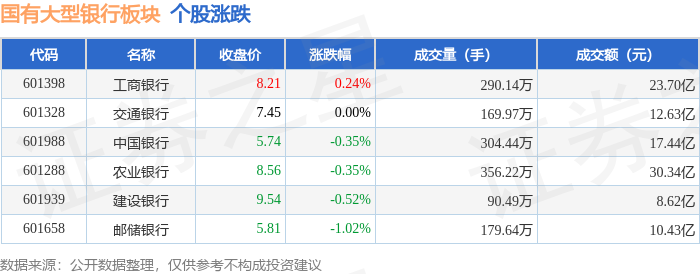
Core Insights - The state-owned large bank sector experienced a decline of 0.19% on November 13, with Postal Savings Bank leading the drop [1] - The Shanghai Composite Index closed at 4029.5, up 0.73%, while the Shenzhen Component Index closed at 13476.52, up 1.78% [1] Bank Performance Summary - Industrial and Commercial Bank of China (ICBC) closed at 8.21, with a slight increase of 0.24% and a trading volume of 2.9014 million shares [1] - Bank of Communications remained unchanged at 7.45, with a trading volume of 1.6997 million shares [1] - China Bank closed at 5.74, down 0.35%, with a trading volume of 3.0444 million shares [1] - Agricultural Bank of China closed at 8.56, down 0.35%, with a trading volume of 3.5622 million shares [1] - China Construction Bank closed at 9.54, down 0.52%, with a trading volume of 904,900 shares [1] - Postal Savings Bank closed at 5.81, down 1.02%, with a trading volume of 1.7964 million shares [1] Fund Flow Analysis - The state-owned large bank sector saw a net outflow of 297 million yuan from main funds, while speculative funds had a net inflow of 355 million yuan [1] - Retail investors experienced a net outflow of 58.1835 million yuan [1] Individual Bank Fund Flow - Bank of Communications had a main fund net inflow of 30.3628 million yuan, while retail investors saw a net outflow of 33.0669 million yuan [2] - ICBC experienced a main fund net outflow of 6.8361 million yuan, with speculative funds seeing a net inflow of 30.1024 million yuan [2] - China Construction Bank had a main fund net outflow of 18.4073 million yuan, with speculative funds seeing a net inflow of 25.9620 million yuan [2] - China Bank faced a significant main fund net outflow of 89.5407 million yuan, while speculative funds had a net inflow of 55.9172 million yuan [2] - Agricultural Bank of China had a main fund net outflow of 104 million yuan, with speculative funds seeing a net inflow of 125 million yuan [2] - Postal Savings Bank experienced a main fund net outflow of 109 million yuan, while speculative funds had a net inflow of 115 million yuan [2]
银行掀起房产直售潮,低价背后双重市场逻辑与购房新变
Sou Hu Cai Jing· 2025-11-13 07:01
Core Insights - The banking sector in China is experiencing an unprecedented wave of direct property sales, with institutions like Lanzhou Bank and Agricultural Bank selling properties at prices up to 25% below market value, reflecting a unique financial market ecology and providing rare opportunities for buyers [1][4] Group 1: Scale of Direct Property Sales - Lanzhou Rural Commercial Bank has listed nearly 200 properties in late October, with a total of 720 properties on the JD platform, including 630 newly added this year [3] - Other banks are also participating significantly, with Jilin Bank listing 2,099 properties, Tianjin Bank 1,227, and Zhongyuan Bank 521 [3] - The scale of asset disposal in the rural credit system is even more remarkable, with Guangdong Rural Credit listing 12,386 properties and Sichuan Rural Credit reaching 24,821 [3] Group 2: Source of Properties - Most properties are acquired by banks through "debt-for-assets" arrangements, such as Lanzhou Rural Commercial Bank obtaining over 250 residential units from a developer unable to repay a loan totaling 460 million yuan [3] - Similar cases are reported nationwide, with banks acquiring properties and land in various regions due to borrowers' defaults [3] Group 3: Price Advantages and Market Conditions - Bank direct sales offer significant price advantages, with properties in Lanzhou selling for 151 million yuan, 30-70 million yuan below market prices [4] - Despite attractive pricing, actual transaction rates are low, with some properties experiencing multiple failed sales [4] - The urgency for banks to recover funds quickly and the prolonged traditional asset disposal cycle are driving this trend, as personal loan default rates rise significantly [4] Group 4: Implications for Buyers and Market Dynamics - Buyers should approach bank direct sales with caution, as while properties have clear titles and avoid common issues associated with auctioned properties, some may have location or amenity drawbacks [5] - The ongoing direct sales trend will be influenced by macroeconomic conditions, real estate market regulations, and banks' strategies for handling non-performing assets [5] - This wave of asset disposal represents a significant risk clearing for banks and poses a challenge to their asset management capabilities, while also potentially exerting downward pressure on local property prices [5]

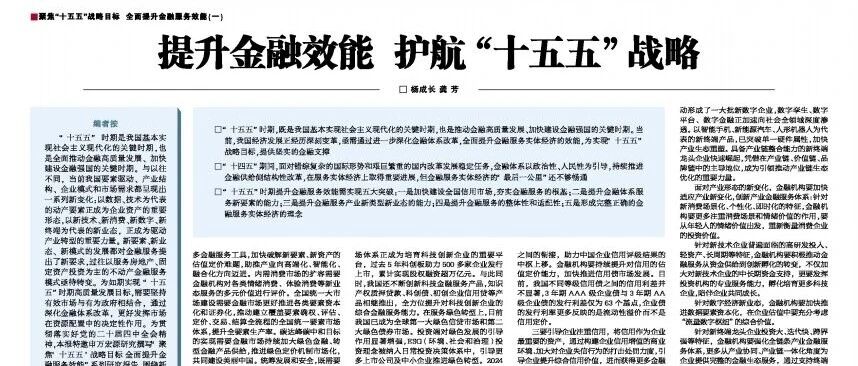
提升金融效能 护航“十五五”战略
申万宏源研究· 2025-11-13 06:52
Core Viewpoint - The article emphasizes the importance of enhancing financial service efficiency to achieve the "15th Five-Year Plan" strategic goals, highlighting the need for deepening financial system reforms and improving support for the real economy [3][5][7]. Group 1: Financial Role in Economic Development - The "15th Five-Year Plan" is a critical period for achieving socialist modernization and promoting high-quality financial development [5][6]. - Financial services must play a key role in supporting technological innovation and the development of new productive forces, requiring better resource allocation in capital markets [7][8]. - The financial system needs to continue reforms to address structural contradictions in funding and project financing, ensuring effective capital conversion [4][8]. Group 2: Achievements During the "14th Five-Year Plan" - Significant progress was made in the financial system, including improvements in the financial institutional framework and market scale, with China becoming the world's largest credit market by September 2025 [9][10]. - The direct financing ratio increased to 31.6%, and the asset management scale of various institutions grew by 35% compared to the end of 2020 [9][10]. - Financial institutions have enhanced their service capabilities, particularly in supporting technological innovation and green transformation [11][12]. Group 3: Five Breakthroughs for the "15th Five-Year Plan" - The article outlines five key breakthroughs needed to enhance financial service efficiency: building a national credit market, improving service capabilities for new factors, enhancing services for new industries and business models, increasing overall service adaptability, and forming a correct understanding of financial services for the real economy [13][14][17]. Group 4: Building a National Credit Market - A national credit market is essential for the financial system and the unified market, requiring improvements in credit data collection and sharing [14][15]. - Financial institutions need to enhance their credit rating and assessment capabilities to better support small and medium-sized enterprises [16][17]. Group 5: Enhancing Services for New Factors - Financial institutions must adapt to the shift towards new asset forms, such as data and technology, and improve their service capabilities accordingly [17][18]. - There is a need for a comprehensive valuation system for new asset types, focusing on technology and data-driven industries [19][20]. Group 6: Adapting to New Industries and Business Models - The financial sector must innovate its service offerings to meet the demands of new consumption patterns and technological advancements [20][21]. - Financial institutions should focus on providing integrated financial services that align with the characteristics of new industries and business models [22][23]. Group 7: Overall Service Integration and Adaptability - Financial products need to be more integrated and adaptable to meet the diverse needs of enterprises, particularly in terms of financing options [22][23]. - Collaboration among financial institutions is essential to create a more cohesive service environment that supports various financing needs [23][24]. Group 8: Correct Understanding of Financial Services - There is a need for a correct understanding of the relationship between finance and the real economy, emphasizing that finance should serve the real economy effectively [24][25]. - Financial institutions must balance profitability with their role in supporting national strategic goals and local economic needs [24].