
AGRICULTURAL BANK OF CHINA(601288)

Search documents
银行股全线上涨,工行、农行创新高
Di Yi Cai Jing Zi Xun· 2025-11-14 03:04
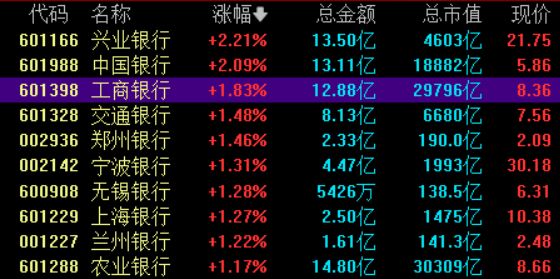
Group 1 - The banking sector experienced a collective increase on November 14, with major banks such as Bank of China and Industrial Bank rising over 2% [1] - All stocks within the banking sector showed positive performance, with notable gains from Agricultural Bank and Construction Bank, both exceeding 1% [1] - Specific stock performance included Industrial Bank at +2.21%, Bank of China at +2.09%, and Agricultural Bank at +1.17%, with both Industrial Bank and Agricultural Bank reaching new highs during trading [2][3] Group 2 - The total market capitalization for Industrial Bank is reported at 46.03 billion, while Bank of China has a market cap of 188.82 billion [2] - The current price for Industrial Bank is 8.36, with a price-to-earnings ratio of 8.1 and a price-to-book ratio of 0.78 [3] - The trading volume for Industrial Bank was 12.8 billion, indicating significant market activity [3]



银行研思录25:银行股息率排名与中期分红进度梳理-20251114
CMS· 2025-11-14 03:02
Investment Rating - The report does not explicitly state an investment rating for the banking sector, but it provides detailed insights into dividend yields and distribution processes, which can inform investment decisions. Core Insights - The report outlines the latest dividend yields and mid-term dividend processes for A and H shares of listed banks, emphasizing the importance of accurately calculating dynamic dividend yields to avoid discrepancies across periods [1][2]. - It details the two processes for mid-term dividends following the 2023 revision of the regulatory guidelines, highlighting the conventional and simplified processes for implementing mid-term dividends [2]. - The report provides a comprehensive overview of key dates related to dividend distribution for both A and H shares, including the importance of purchasing shares before the ex-dividend date to qualify for dividends [3][4]. Summary by Sections Dynamic Dividend Yield Calculation - A simplified yet accurate method for calculating dynamic dividend yield is introduced, defined as "rolling 12-month EPS * cash dividend rate / share price," which helps avoid issues related to overlapping or missing annual and mid-term dividends [1]. - The report calculates the cash dividend rate using a standardized approach across different banks, resulting in a clear comparison of dividend yields as of November 13, 2025 [1]. Mid-Term Dividend Processes - The report explains the two processes for mid-term dividends: the conventional process requiring shareholder approval and a simplified process allowing for quicker implementation [2]. - The simplified process is designed to enhance flexibility for companies in distributing mid-term dividends, thereby improving shareholder returns [2]. Dividend Distribution Key Dates - For A shares, investors must purchase shares before the ex-dividend date to receive dividends on the same day, while H shares typically see a delay of about one month for dividend payments [3][4]. - The report outlines the differences in the dividend distribution timeline between A and H shares, emphasizing the need for investors to be aware of these timelines to maximize their returns [3][4]. Mid-Term Dividend Progress - As of November 13, 2025, 31 A-share banks have confirmed mid-term dividends, while 11 H-share banks have also confirmed their dividend distributions [9][11]. - The report categorizes banks based on their dividend status, detailing those that have implemented dividends, those that are pending, and those that have opted not to distribute dividends [9][10][11]. - It highlights that the end of 2025 and early 2026 is expected to be a peak period for mid-term dividend distributions, suggesting potential investment opportunities for dividend-seeking investors [11].





银行股全线上涨,工行、农行创新高
第一财经· 2025-11-14 03:00
Group 1 - The banking sector experienced a collective increase on November 14, with major banks such as Bank of China and Industrial Bank rising over 2%, while others like Agricultural Bank and Construction Bank saw increases exceeding 1% [1][2] - Specific stock performance included Industrial Bank at +2.21%, Bank of China at +2.09%, and Agricultural Bank at +1.17%, with total market values of 460.3 billion, 1888.2 billion, and 3030.9 billion respectively [2] - Both Industrial Bank and Agricultural Bank reached new highs during trading on the same day [3]

工农中建交五大行均涨超1% 工行、农行创新高
Ge Long Hui· 2025-11-14 02:38
Group 1 - The A-share banking sector experienced a collective increase, with major banks such as Industrial and Commercial Bank of China, Agricultural Bank of China, Bank of China, China Construction Bank, and Bank of Communications all rising over 1% [1] - Among these banks, both Industrial and Commercial Bank of China and Agricultural Bank of China reached new highs during intraday trading [1]

红利资产重现吸引力!市场风格切换?
券商中国· 2025-11-13 23:24
Core Viewpoint - The article discusses the recent performance of dividend stocks, particularly bank stocks, which have regained investor interest after a period of adjustment, highlighting a potential shift in market style towards dividend assets while maintaining a balance with technology stocks [1][2][4]. Group 1: Market Performance - Since October, the dividend low volatility index has increased by 8.69%, while the Sci-Tech 50 index has decreased by 7.75%, indicating a possible market style switch towards dividend stocks [1]. - In the past month, despite net redemptions in broad-based indices like CSI 300 and CSI A500, dividend and growth sectors have seen net inflows, with the dividend low volatility index attracting a net inflow of 3.898 billion yuan [1][2]. - The banking sector, a key component of dividend assets, experienced a significant pullback of 15% in Q3, but has since rebounded, with bank stock prices reaching new highs [2][3]. Group 2: Dividend Attractiveness - The appeal of dividend assets lies in their consistent cash flow and ability to provide stable returns through cash dividends, with many bank stocks now offering dividend yields around 5% after recent adjustments [2][4]. - As of November 13, the banking index has rebounded over 10% in Q4, with cumulative gains of 9%, while the Sci-Tech 50 index has declined [2]. - The insurance sector has also shown significant interest in bank stocks, with increased holdings and stock price appreciation [3]. Group 3: Fundamental Support - The fundamental support for bank stocks includes a stabilization in net interest margins and strong performance from the insurance sector, which has seen stable premium income and improved investment returns [5]. - Public funds have reduced their holdings in bank stocks, creating room for potential increases in Q4, as the market seeks to rebalance styles [5]. Group 4: Future Outlook - The article suggests that while dividend assets are currently favored, the technology sector remains relevant, and investors should be cautious of potential short-term corrections [9]. - The overall market sentiment indicates a preference for low-valuation sectors, including consumer, chemical, and pharmaceutical industries, which may also attract investor interest [9].

农行惠州分行为22项目授信超31亿
Nan Fang Du Shi Bao· 2025-11-13 23:08
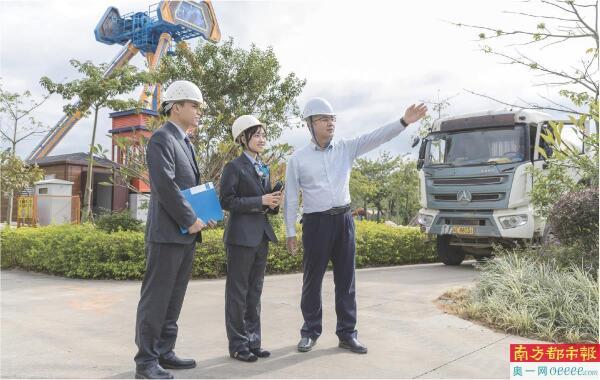
Core Insights - The article highlights the proactive role of Agricultural Bank of China (ABC) in supporting the development of the Huizhou region, particularly in the context of the "Hundred Million Thousand Project" aimed at promoting high-quality development through ecological and industrial integration [2][7] Financial Support Initiatives - ABC has established a special service team and introduced ten financial support measures to address the development needs of the Nankunshan-Roof Mountain area, focusing on ecological protection, cultural tourism integration, and rural revitalization [2][6] - As of October 2025, ABC has provided over 3.1 billion yuan in credit support to 22 key projects, including the Nankunshan-Roof Mountain economic belt and various tourism and wellness projects [2][6] Project Financing Challenges - The article discusses the financing difficulties faced by cultural tourism projects, particularly the YF Resort project, which required significant upfront investment and had a long return cycle [3][4] - ABC tailored a comprehensive financial solution for the YF Resort, providing 180 million yuan in fixed asset loans with an extended repayment period of 12 years to alleviate short-term repayment pressure [3][4] Economic Impact - The YF Resort project is expected to generate an annual consumption scale of 100 million yuan and create hundreds of jobs, contributing to local economic development [4][6] - The successful financing of the Litiantian Dream Ecological Park, which received 150 million yuan in credit, is also highlighted as a key project that will enhance the region's overnight economy and create over 100 jobs [5][6] Rural Financial Services - ABC has implemented a comprehensive rural financial service system to improve access to financial services for rural residents, including the deployment of 1,200 smart terminals and the establishment of specialized service points [7][8] - The bank has also launched the "Credit Town" initiative in Yang Village, providing 260 million yuan in credit to local farmers and increasing the loan acquisition rate by 30 percentage points [8] Future Outlook - ABC aims to continue enhancing its financial services and innovative products to support the high-quality development of the Nankunshan-Roof Mountain area, aligning with the green development strategy of Huizhou [8]
打造养老金融服务体系 护航银发客群幸福晚年
Nan Fang Du Shi Bao· 2025-11-13 23:08
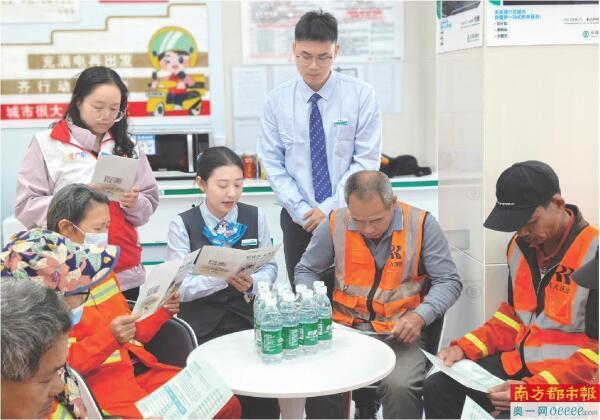
Core Viewpoint - Agricultural Bank of China Jiangmen Branch is actively promoting a series of initiatives aimed at enhancing elderly care services and financial support for the aging population, aligning with national policies on pension and elderly care [2][3][4][5][6][7] Group 1: Elderly Care Initiatives - The bank has launched the "Warm Autumn, Respect for the Elderly" series of activities to address the diverse needs of the elderly population, focusing on creating a sustainable elderly financial service system [2] - Jiangmen Branch is increasing its credit support for the elderly care industry, with a nearly 100% increase in loans for the sector by the end of October compared to the beginning of the year [3] - The bank is actively engaging with local elderly care service providers to tailor financial solutions, such as online credit loans, to help them overcome operational challenges [3] Group 2: Financial Services and Accessibility - The bank is implementing "social security for the people" initiatives, enhancing the accessibility and convenience of social security services through local branches [4] - A recent financial knowledge promotion event helped over 150,000 customers open personal pension accounts, with extensive outreach activities conducted in various communities [5] - Jiangmen Branch has established an "age-friendly service demonstration outlet," optimizing facilities and services to cater to the needs of elderly customers [6] Group 3: Future Directions - The bank aims to continue analyzing trends in the elderly care sector and financial needs, focusing on a comprehensive service system that includes diverse product offerings and multi-dimensional customer engagement [7]
银行卡内存款“莫名”变基金?农行、支付宝回应
He Nan Ri Bao· 2025-11-13 11:11
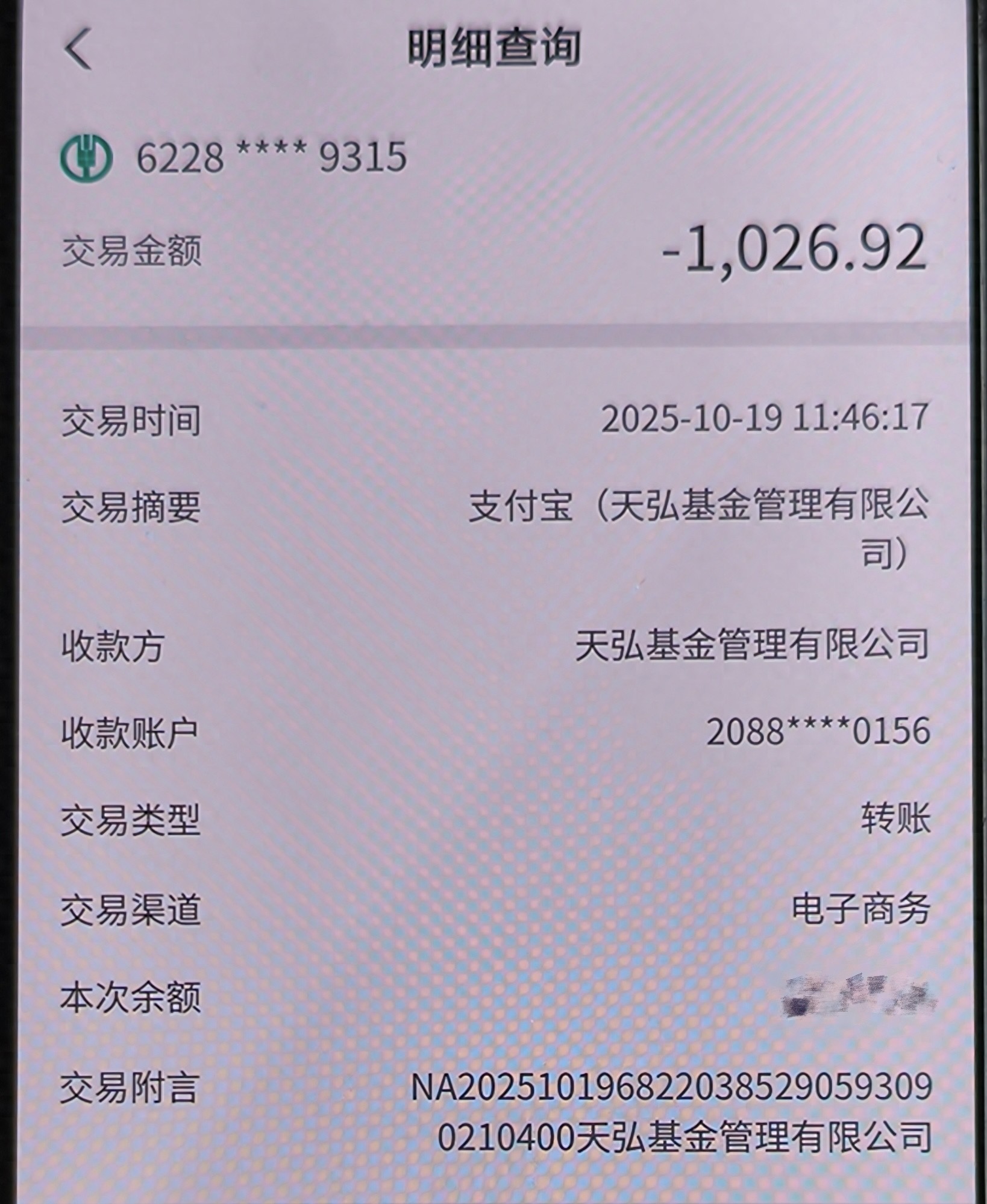
Core Viewpoint - A citizen reported that a sum of 1026.92 yuan was transferred from his Agricultural Bank account to Tianhong Fund Management Co., Ltd. without his knowledge, raising concerns about unauthorized transactions through Alipay [1][5]. Group 1: Transaction Details - The citizen discovered the unauthorized transaction on November 9, 2023, which occurred on October 19, 2023, at 11:46 AM, with the amount of 1026.92 yuan transferred to Tianhong Fund [1][5]. - The Agricultural Bank customer service indicated that the transaction was completed via the Alipay platform, but they could not provide specific details about the transaction [5][9]. Group 2: Alipay's Response - Alipay's customer service stated that the citizen had inadvertently participated in a promotional activity involving a red envelope, which led to the transfer after entering a payment password [5][9]. - The customer service explained that the transaction was completed through a password payment method, and the citizen may not have been aware of the action due to the quick nature of smartphone transactions [9][12]. Group 3: Legal Perspective - A lawyer noted that if the transaction did not reflect the citizen's true intention, he has the right to request a reversal of the transaction and recover the funds, as per the Civil Code of the People's Republic of China [12].
银行2025年三季报综述:息差筑底,手续费改善,国有行全部营利双增
China Post Securities· 2025-11-13 10:57
Industry Investment Rating - The industry investment rating is maintained at "Outperform" [2] Core Viewpoints - The overall operating income, pre-provision profit, and net profit growth rates for listed banks in the first three quarters of 2025 are 0.91%, 0.56%, and 1.48% respectively, indicating a recovery in performance driven by scale and an ongoing improvement in fee income [4][12] - The growth rate of interest-earning assets for listed banks is 9.40% year-on-year, with loans and debt investments increasing by 7.83% and 13.94% respectively [4][5] - The net interest margin for listed banks is stable at 1.35%, with a slight decline in state-owned banks, while other types of banks have stabilized [5] - Non-interest income has increased by 5.02% year-on-year, although it has seen a quarter-on-quarter decline due to adjustments in the bond market [5] - The asset quality is improving, with the non-performing loan ratio at 1.23%, showing a slight decrease from the previous half-year [5] Summary by Sections 1. Performance Recovery Driven by Scale and Fee Improvement - In the first three quarters of 2025, listed banks showed a growth in operating income, pre-provision profit, and net profit, with respective growth rates of 0.91%, 0.56%, and 1.48% [12] - City commercial banks outperformed other types of banks, while state-owned banks also showed positive growth [12] 2. Growth of Interest-Earning Assets and Slower Expansion of Liabilities - The year-on-year growth rate of interest-earning assets for listed banks is 9.40%, with loans and debt investments increasing by 7.83% and 13.94% respectively [4][5] 3. Stabilization of Net Interest Margin - The net interest margin for listed banks is stable at 1.35%, with a slight decline in state-owned banks [5] 4. Non-Interest Income Performance Affected by Bond Market Adjustments - Non-interest income increased by 5.02% year-on-year, but saw a quarter-on-quarter decline due to bond market adjustments [5] 5. Improvement in Asset Quality and Declining Credit Costs - The non-performing loan ratio for listed banks is 1.23%, showing a slight decrease from the previous half-year, with a significant decline in credit costs [5][12] 6. Investment Recommendations - Focus on banks with significant deposit maturities and potential for interest margin improvement, such as Chongqing Bank, China Merchants Bank, and Bank of Communications [6] - Attention to city commercial banks that will benefit from improvements in fixed asset investment, such as Jiangsu Bank, Qilu Bank, and Qingdao Bank [6]


基本面选股组合月报:AEG估值潜力组合今年实现6.46%超额收益-20251113
Minsheng Securities· 2025-11-13 10:53
Quantitative Models and Construction Methods Models and Construction Methods 1. Model Name: Competitive Advantage Portfolio - **Model Construction Idea**: This model incorporates the competitive environment and strategic factors of enterprises into the stock selection logic, providing a value quantification perspective different from traditional factor investing[12] - **Model Construction Process**: The framework identifies four types of industries: "Barrier Shield", "Intense Competition", "Steady Progress", and "Seeking Breakthrough". The strategy focuses on identifying "dominant" companies in the "Barrier Shield" industries and "cooperative win-win" companies in industries without clear leaders. For non-"Barrier Shield" industries, the strategy targets "efficient operation" companies that perform well even in competitive environments[12][13] - **Model Evaluation**: This model has been effective in identifying companies with significant management competitive advantages and maintaining market leadership positions[12] 2. Model Name: Margin of Safety Portfolio - **Model Construction Idea**: The core of competitive advantage lies in creating entry barriers for enterprises, ensuring their unique position and sustainable profitability in the market[17] - **Model Construction Process**: The model calculates the intrinsic value of a company based on its profitability value, selecting the top 50 stocks with the highest margin of safety from a pool of stocks with comprehensive competitive advantages. The portfolio is weighted by dividend yield to maximize the margin of safety[17][19] - **Model Evaluation**: This model effectively identifies companies with significant intrinsic value gaps, providing a reliable reflection of the actual value of enterprises[17] 3. Model Name: Dividend Low Volatility Adjusted Portfolio - **Model Construction Idea**: The model aims to avoid the "high dividend trap" by considering the sustainability of company earnings and long-term value, rather than solely chasing high dividend yields[23] - **Model Construction Process**: The model predicts dividend yields and excludes stocks with extreme price performance or abnormal debt ratios, optimizing the dividend strategy[23] - **Model Evaluation**: This model effectively balances dividend yield and company stability, avoiding the pitfalls of high dividend traps[23] 4. Model Name: AEG Valuation Potential Portfolio - **Model Construction Idea**: The model focuses on the abnormal earnings growth (AEG) to determine the value of investments based on expected total returns, including dividend reinvestment[27] - **Model Construction Process**: The model selects the top 100 stocks using the AEG_EP factor, then narrows down to the top 50 stocks with high dividend reinvestment/P ratios[31] - **Model Evaluation**: This model targets companies with growth potential not yet fully recognized by the market, providing significant investment opportunities[27][31] 5. Model Name: Cash Cow Portfolio - **Model Construction Idea**: The model introduces free cash flow (FCF) and cash flow return on investment (CFOR) as key analysis dimensions to evaluate the profitability and cash generation efficiency of enterprises[35] - **Model Construction Process**: The CFOR system dissects cash flow return rates, revealing how companies convert operating cash flows into net profits, and evaluates the stability of free cash profit ratios and operating asset return rates[35][36] - **Model Evaluation**: This model provides a comprehensive assessment of a company's operational performance and financial stability[35] 6. Model Name: Distress Reversal Portfolio - **Model Construction Idea**: The model captures short-term valuation fluctuations to gain from valuation improvements, complementing the long-term effectiveness of prosperity investment[42] - **Model Construction Process**: The model uses inventory cycles to depict distress reversals, considering accelerated recovery and undervaluation, and constructs a top 50 portfolio based on valuation improvements[42] - **Model Evaluation**: This model effectively captures valuation-driven returns, providing continuous gains even when prosperity investment strategies fail[42] Model Backtest Results Competitive Advantage Portfolio - **Annualized Return**: 20.60%[16] - **Sharpe Ratio**: 0.97[16] - **IR**: 0.12[16] - **Max Drawdown**: -19.32%[16] - **Calmar Ratio**: 1.07[16] Margin of Safety Portfolio - **Annualized Return**: 23.45%[22] - **Sharpe Ratio**: 1.17[22] - **IR**: 0.16[22] - **Max Drawdown**: -16.89%[22] - **Calmar Ratio**: 1.39[22] Dividend Low Volatility Adjusted Portfolio - **Annualized Return**: 17.23%[24] - **Sharpe Ratio**: 1.01[24] - **IR**: 0.16[24] - **Max Drawdown**: -21.61%[24] - **Calmar Ratio**: 0.80[24] AEG Valuation Potential Portfolio - **Annualized Return**: 25.13%[33] - **Sharpe Ratio**: 1.14[33] - **IR**: 0.15[33] - **Max Drawdown**: -24.02%[33] - **Calmar Ratio**: 1.05[33] Cash Cow Portfolio - **Annualized Return**: 14.11%[40] - **Sharpe Ratio**: 0.71[40] - **IR**: 0.10[40] - **Max Drawdown**: -19.80%[40] - **Calmar Ratio**: 0.71[40] Distress Reversal Portfolio - **Annualized Return**: 25.02%[44] - **Sharpe Ratio**: 1.01[44] - **IR**: 0.15[44] - **Max Drawdown**: -33.73%[44] - **Calmar Ratio**: 0.74[44]


