AGRICULTURAL BANK OF CHINA(601288)

Search documents
手机银行竞争格局深化 微众、网商银行淡出TOP50
Jing Ji Guan Cha Wang· 2025-11-13 04:14
Core Insights - The overall monthly active users (MAU) of mobile banking apps in China remained stable between 650 million and 720 million in Q3 2025, indicating a saturation in market growth and a shift towards intensified competition among existing players [2][16] - User engagement metrics, such as daily usage time and app launch frequency, continued to decline, highlighting a decrease in user stickiness [2][16] - The competitive landscape is undergoing significant restructuring, with state-owned banks solidifying their dominance, while private banks struggle to maintain relevance [2][15] State-Owned Banks - The six major state-owned banks captured six of the top seven spots in the mobile banking MAU rankings, with Agricultural Bank of China leading at over 250 million MAU [3][6] - All major state-owned banks reported positive MAU growth, with Industrial and Commercial Bank of China leading at a 6.1% quarter-on-quarter increase [6][10] - The robust performance of state-owned banks is attributed to their strong digital strategies and comprehensive service offerings, enhancing user engagement [6][10] Joint-Stock Banks - Joint-stock commercial banks showed overall stability, with China Merchants Bank leading this category with over 70 million MAU, ranking fifth overall [7][9] - There is a noticeable internal differentiation among joint-stock banks, with some like Everbright Bank and CITIC Bank showing significant growth, while others like Minsheng Bank faced declines [10][15] - The competitive edge of China Merchants Bank stems from its focus on digital transformation and wealth management services [10] City Commercial Banks - City commercial banks emerged as a highlight in Q3 2025, with 17 banks entering the top 50 list, led by Ningbo Bank with a remarkable 43.9% growth in MAU [11][14] - The growth of city commercial banks is linked to their targeted regional strategies and tailored services for specific customer segments [14][16] - However, some city banks experienced declines in MAU, indicating that regional advantages do not guarantee growth [14] Private Banks - Private banks are facing a collective decline, with no representatives in the top 50 MAU rankings for Q3 2025, marking a significant shift in the competitive landscape [15][16] - The challenges faced by private banks are attributed to their inability to compete with traditional banks that have strengthened their digital capabilities and customer trust [15][16] - The decline of private banks signals a transition in the industry from rapid user acquisition to deepening engagement with existing customers [15][16] Agricultural and Rural Banks - Seventeen agricultural and rural banks made it to the top 50 list, with Fujian Rural Credit leading at 781.6 million MAU [16] - Most of these banks reported positive growth, indicating a successful strategy in their respective markets [16] - The performance of agricultural banks reflects the ongoing restructuring and competitive dynamics within the banking sector [16]





我国煤炭运输体系实现结构性变革,国企红利ETF(159515)盘中蓄势
Xin Lang Cai Jing· 2025-11-13 03:11
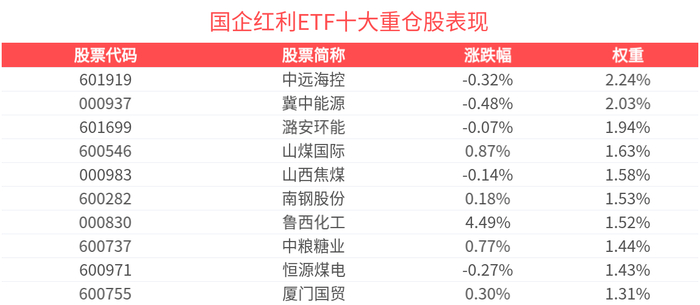
Core Viewpoint - The China Coal Economic Research Association reports significant structural changes in the coal transportation system during the "14th Five-Year Plan" period, enhancing the national allocation capacity of coal resources and promoting a smart and green transformation in coal transportation [1][2]. Group 1: Market Performance - As of November 13, 2025, the CSI State-Owned Enterprises Dividend Index (000824) decreased by 0.27%, with component stocks showing mixed performance [1]. - Leading gainers included Luxi Chemical (000830), while Sichuan Road and Bridge (600039) led the declines [1]. Group 2: Coal Transportation Developments - The National Railway Group reported that coal transportation reached 1.57 billion tons in the first nine months of the year, a year-on-year increase of 11.1%, with thermal coal accounting for 1.1 billion tons, up 17% [2]. - The successful operation of the new Shuo Railway, capable of 20,000-ton heavy-load transport, marks a significant advancement in coal transportation capabilities [1][2]. Group 3: Investment Strategies - CITIC Securities suggests that in the context of a weak macroeconomic recovery, high dividend strategies remain attractive, particularly for large-cap stocks in sectors like coal and photovoltaics [2]. - The CSI State-Owned Enterprises Dividend ETF closely tracks the CSI State-Owned Enterprises Dividend Index, which includes 100 listed companies with high and stable cash dividend yields [2].


国有六大行前三季度业绩改善,银行ETF天弘(515290)年内份额增近40%,机构:红利价值持续凸显
2 1 Shi Ji Jing Ji Bao Dao· 2025-11-13 02:38
Group 1 - The bank ETF Tianhong (515290) has seen a year-to-date share growth rate of 39.92%, with the latest scale at 6.291 billion and circulating shares at 4.145 billion [1] - The Hong Kong Stock Connect Central Enterprise Dividend ETF Tianhong (159281) has experienced net inflows for two consecutive trading days, indicating strong investor interest [1] - The performance of the dividend sector, including banks, has been strong, with major banks like Agricultural Bank of China showing significant stock price increases [2] Group 2 - The six major state-owned banks reported double growth in revenue and net profit for the first three quarters of the year, with net profits for major banks ranging from 699.94 million to 2,699.08 million, reflecting a year-on-year growth of 0.33% to 3.03% [2] - The banking sector's performance is supported by stable growth in scale, improved net interest income, and a recovery in non-interest income, with asset quality remaining stable [3] - The policy environment is conducive to optimizing bank credit structures and protecting interest margins, which enhances the growth potential for non-interest income [3]

银行亲自下场卖房了,谁都扛不住房价
Sou Hu Cai Jing· 2025-11-13 02:22
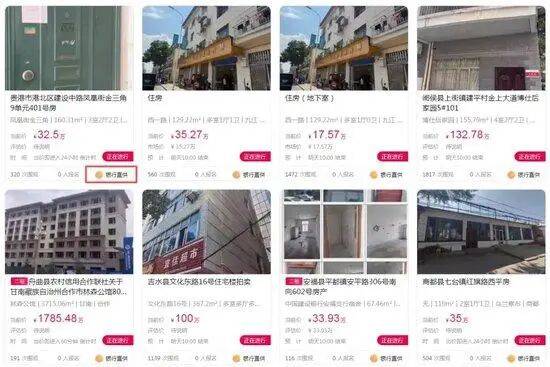
Core Viewpoint - Banks are accelerating their real estate direct sales business, indicating a shift in strategy to manage non-performing assets and respond to declining property values [2][6][14]. Group 1: Bank Actions - Multiple banks, including major ones like Agricultural Bank and Construction Bank, as well as smaller regional banks, are actively selling properties, with some banks listing over 1,000 units for sale [2][4][5]. - The official narrative is to "activate non-performing assets," but the reality suggests banks are offloading properties that are unlikely to appreciate in value [6][11]. - Banks are not only selling repossessed homes but also offloading non-core assets like office buildings and employee dormitories, signaling a broader strategy to minimize liabilities [12][14]. Group 2: Market Conditions - The real estate market is experiencing a decline, with banks facing increasing non-performing loan rates, particularly in the real estate sector, which has surpassed 9% for some banks [11]. - The number of properties in the auction market has decreased slightly, indicating a potential saturation in the foreclosure market [6]. - The overall trend is towards asset devaluation, with banks prioritizing cash recovery over profit maximization in the current economic climate [13][14]. Group 3: Implications for Homeowners - Homeowners are left with limited options as banks flood the market with discounted properties, creating pressure on existing homeowners [14][15]. - The actions of banks may lead to a significant shift in the real estate market dynamics, affecting homeowners' strategies in either holding onto their properties or exiting the market [15][16].

银行股逆势走强成避风港
Di Yi Cai Jing· 2025-11-13 01:53
Core Viewpoint - The banking sector has emerged as a "safe haven" amid market downturns, with significant gains in stock prices, particularly among state-owned banks, driven by rising risk aversion, institutional fund inflows, and expectations of loose monetary policy [2][5][8]. Group 1: Market Performance - On November 12, the banking index rose by 0.46%, outperforming the Shanghai Composite Index, which fell by 0.07%, and the Shenzhen Component Index, which declined by 0.36% [2]. - The banking sector has seen a cumulative increase of 8.73% as of the same date, indicating strong performance in the fourth quarter [2]. - Agricultural Bank of China led the sector with a 3.49% increase, reaching a market capitalization of over 3 trillion yuan [3]. Group 2: Fund Flows and Investment Trends - The banking sector experienced a net inflow of 1.076 billion yuan in principal funds, with Agricultural Bank, Ping An Bank, and Construction Bank being the top beneficiaries [4]. - The E Fund Bank ETF attracted 567 million yuan over nearly 22 trading days, reflecting strong investor interest [4]. Group 3: Factors Driving Performance - Analysts attribute the banking sector's resilience to a combination of heightened risk aversion, sustained long-term fund allocation, and reinforced expectations of monetary policy easing [5][6]. - The average dividend yield for the banking sector is approximately 6.5%, significantly higher than the 1.80% yield on 10-year government bonds, making it an attractive option for low-risk investors [5]. Group 4: Future Outlook - Institutions are optimistic about the banking sector's investment prospects, anticipating that the high dividend theme will continue to dominate the market [8]. - Analysts predict that the banking sector's net interest margin is likely to stabilize and improve, supported by monetary policy easing and regulatory measures aimed at reducing funding costs [7][8]. - The ongoing structural adjustments in banking services towards technology, green finance, and pension finance are expected to enhance long-term growth potential and valuation recovery [8].



银行股逆势走强成避风港
第一财经· 2025-11-13 01:07
Core Viewpoint - The banking sector has emerged as a "safe haven" amid market downturns, with significant gains driven by rising risk aversion, institutional fund inflows, and expectations of loose monetary policy [3][8]. Group 1: Banking Sector Performance - On November 12, the banking index rose by 0.46%, outperforming the Shanghai Composite Index, which fell by 0.07%, and the Shenzhen Component Index, which declined by 0.36% [3]. - Agricultural Bank of China led the sector with a 3.49% increase, reaching a market capitalization of over 3 trillion yuan, while other major state-owned banks also saw gains [5]. - The banking sector has accumulated an 8.73% increase in the fourth quarter up to November 12 [3]. Group 2: Fund Flows and Market Dynamics - The banking sector experienced a net inflow of 1.076 billion yuan, with Agricultural Bank, Ping An Bank, and Construction Bank attracting the most capital [6]. - The E Fund Bank ETF has seen a capital inflow of 567 million yuan over the past 22 trading days, indicating strong investor interest [6]. Group 3: Factors Driving Bank Stock Performance - Analysts attribute the banking sector's resilience to a combination of heightened risk aversion, long-term capital allocation, and expectations of monetary policy easing [8]. - The average dividend yield for the banking sector is approximately 6.5%, significantly higher than the 1.80% yield on 10-year government bonds, making it an attractive option for low-risk investors [8]. Group 4: Future Outlook for the Banking Sector - Institutions are optimistic about the banking sector's investment prospects, with expectations that high dividend strategies will continue to dominate the market [12]. - Analysts predict that the banking sector will remain a "ballast" in the market due to its stable dividends and low valuation characteristics, especially as economic conditions evolve [12]. - The ongoing structural adjustments in banking services towards technology, green finance, and pension finance are expected to enhance long-term growth potential and support valuation recovery [12].

数说“十四五”成绩单,看金融之笔如何绘出三农好“丰”景
2 1 Shi Ji Jing Ji Bao Dao· 2025-11-13 01:05
Core Insights - The article highlights the significant progress in China's agricultural sector during the "14th Five-Year Plan" period, emphasizing the role of financial support in enhancing agricultural productivity and rural development [4][5][32]. Group 1: Agricultural Production and Financial Support - China's grain production is expected to exceed 1.4 trillion jin (approximately 700 million tons) in 2024, marking a new milestone in agricultural output [4]. - The coverage rate of high-quality crop varieties has surpassed 96% during the "14th Five-Year Plan" period, indicating advancements in agricultural technology [5]. - Agricultural Bank of China has optimized its agricultural technology financial services, with a loan balance for grain and important agricultural products reaching 1.25 trillion yuan, growing at a rate of 25.1%, which is higher than the bank's average loan growth of 16.7% [5]. Group 2: Rural Development and Tourism - New business models such as rural tourism and e-commerce have emerged, with the national leisure agriculture revenue projected to approach 900 billion yuan in 2024 [7]. - The loan balance for rural construction reached 2.47 trillion yuan, with a growth rate of 9.7%, exceeding the bank's average loan growth by 1.3 percentage points [7]. Group 3: Technological Advancements in Agriculture - The contribution rate of technological progress in rural areas has reached 63.2%, with the comprehensive mechanization rate for crop farming exceeding 75% [11]. - The use of drones for agricultural tasks has modernized farming practices, enhancing efficiency in crop management [8][9]. Group 4: Income Growth and Financial Inclusion - Rural residents' per capita disposable income is projected to reach 17,522 yuan in 2024, reflecting a nearly 40% increase during the "14th Five-Year Plan" period [24]. - The Agricultural Bank's "惠农e贷" (Huinong e-loan) product has a balance of 1.83 trillion yuan, growing at 22.4%, indicating strong demand for financial products tailored to farmers [14]. Group 5: Financial Services Expansion - The coverage rate of township bank outlets has exceeded 98%, ensuring financial services are accessible in rural areas [17]. - The Agricultural Bank has established a comprehensive service system that includes physical outlets, self-service devices, mobile banking, and remote banking, extending financial services to remote regions [18]. Group 6: Poverty Alleviation and Support for Farmers - The bank has issued loans totaling 31.5 trillion yuan to support poverty alleviation efforts, with a loan balance of 2.52 trillion yuan in 832 poverty-stricken counties, growing at 10.66% [20]. - The financial support has significantly contributed to the development of local industries, such as the apple industry in Yan'an, which has seen substantial growth due to e-commerce [22][23].

数说“十四五”成绩单,看金融之笔如何绘出三农好“丰”景
21世纪经济报道· 2025-11-13 00:51
Core Viewpoint - The article emphasizes the significant progress in rural revitalization and agricultural development during the "14th Five-Year Plan" period, highlighting the role of financial support, particularly from Agricultural Bank of China, in enhancing agricultural productivity and rural living standards [4][5][18]. Group 1: Agricultural Production and Financial Support - During the "14th Five-Year Plan" period, China's grain production is expected to exceed 1.4 trillion jin (approximately 700 million tons) in 2024 [4]. - The coverage rate of quality crop varieties in China surpassed 96% during this period, supported by improved financial services from Agricultural Bank of China [5]. - As of September 2025, the balance of loans for food security and important agricultural products reached 1.25 trillion yuan, with a growth rate of 25.1%, significantly higher than the average loan growth rate of the bank [5][6]. Group 2: Rural Tourism and New Business Models - New business models such as rural tourism and e-commerce have emerged, with the national income from leisure agriculture expected to approach 900 million yuan in 2024 [7]. - The balance of loans for rural construction reached 2.47 trillion yuan as of September 2025, with a growth rate of 9.7%, also exceeding the bank's average loan growth rate [7]. Group 3: Technological Advancements in Agriculture - The contribution rate of technological progress in rural areas reached 63.2% during the "14th Five-Year Plan" period, with the comprehensive mechanization rate of crop farming exceeding 70% [10]. - Agricultural Bank's "Flying Hand Loan" product has facilitated the purchase of drones for agricultural applications, enhancing efficiency in crop management [9]. Group 4: Income Growth and Financial Inclusion - Rural residents' per capita disposable income is projected to reach 17,522 yuan in 2024, reflecting a nearly 40% increase during the "14th Five-Year Plan" period [23]. - The balance of loans for rural industries reached 2.74 trillion yuan as of September 2025, with a growth rate of 22.8%, surpassing the bank's average loan growth rate [23]. Group 5: Financial Services Expansion - Financial services coverage in rural areas has expanded significantly, with over 98% of town banks having service points [14][15]. - Agricultural Bank has established a comprehensive service system that includes physical branches, self-service devices, mobile banking, and rural financial service points, ensuring accessibility for farmers [16]. Group 6: Poverty Alleviation and Support for Farmers - The bank has issued loans totaling 3.15 trillion yuan to poverty-stricken areas, with nearly 400 billion yuan in small loans to impoverished populations [18]. - As of September 2025, the loan balance for 832 poverty-stricken counties reached 2.52 trillion yuan, with a growth rate of 10.66%, indicating effective support for poverty alleviation and rural revitalization [18].

农行A股总市值突破3万亿元; 中国支付清算协会:杜绝默认开通“免密支付” | 金融早参
Mei Ri Jing Ji Xin Wen· 2025-11-13 00:30
Group 1 - The People's Bank of China emphasizes the need for continuous deepening of financial supply-side structural reforms and steady advancement of high-level financial openness to maintain national financial security and contribute to the goals set for the 14th Five-Year Plan [1] Group 2 - The China Payment and Clearing Association calls for the elimination of default activation of "no-password payment" services, urging payment service providers to enhance security management and ensure user consent [2] Group 3 - Agricultural Bank of China's A-shares have surged over 3%, with a total market capitalization exceeding 3 trillion yuan, marking a 68% increase year-to-date and establishing it as the new market leader [3] Group 4 - The implementation of unified reporting and pricing for non-auto insurance has begun, with several insurance companies forming specialized teams to assess and upgrade their non-auto insurance products and systems to comply with regulatory requirements [4]
多家银行上调积存金起点
2 1 Shi Ji Jing Ji Bao Dao· 2025-11-13 00:24
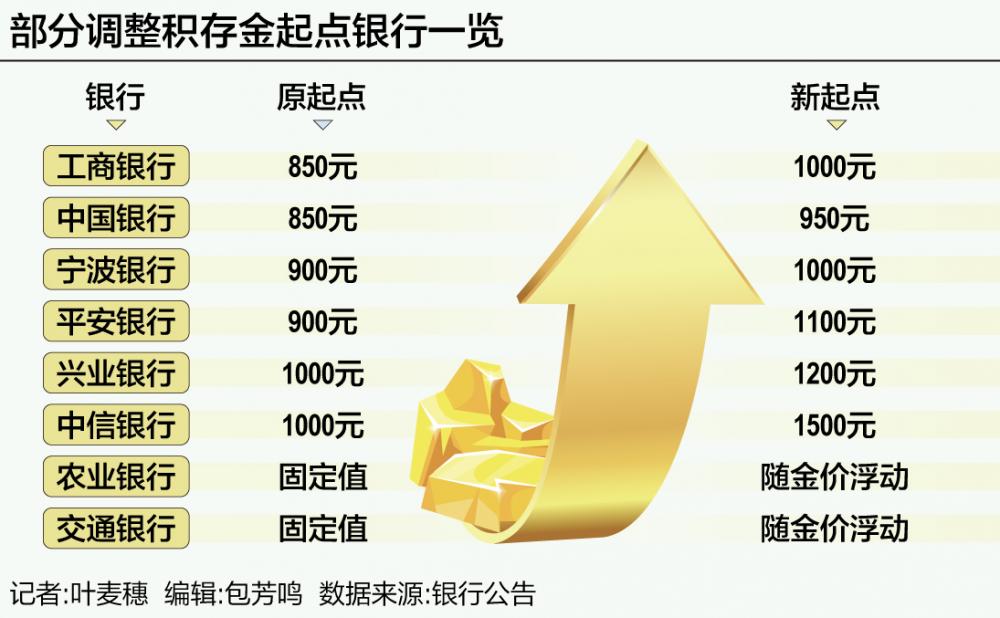
Core Viewpoint - The international gold price has returned to $4100 per ounce, prompting banks to raise the minimum investment threshold for gold accumulation, with some banks adjusting the starting point to a historical high of 1500 yuan [1][3]. Summary by Sections Bank Adjustments - Several banks have raised their gold accumulation thresholds, with notable changes including: - ICBC from 850 yuan to 1000 yuan - Bank of China from 850 yuan to 950 yuan - Ningbo Bank from 900 yuan to 1000 yuan - Ping An Bank from 900 yuan to 1100 yuan - Industrial Bank from 1000 yuan to 1200 yuan - CITIC Bank from 1000 yuan to 1500 yuan - Agricultural Bank and Bank of Communications have switched to a "floating with gold price" mechanism [2][3]. Investment Mechanism Changes - Some banks, like Agricultural Bank and Bank of Communications, have implemented a "floating with gold price" mechanism to avoid frequent adjustments, allowing the minimum investment amount to vary with market prices [4][5]. - This approach aims to provide flexibility for investors and better align with market dynamics [4]. Market Analysis - The gold price has seen significant volatility, with a rise of over 60% this year, peaking above $4300 per ounce before experiencing a sharp decline [6][7]. - Analysts have differing views on future gold prices, with predictions ranging from $3650 to $5000 per ounce by the end of 2026, influenced by various economic factors [7][8]. - The outlook remains optimistic for gold due to factors such as a weakening dollar and inflation risks, which could sustain investment demand [7][8]. Risk Awareness - In response to the volatile gold market, banks and regulatory bodies have increased risk awareness efforts, advising investors to recognize the inherent risks in precious metal investments [5].