
CPIC(601601)

Search documents
中国太保上半年保费收入2820.08亿元 同比增长5.9%
Zhong Guo Jing Ji Wang· 2025-08-08 07:05
Core Insights - China Pacific Insurance (601601.SH) reported a total original insurance business income of RMB 282.008 billion for the period from January 1, 2025, to June 30, 2025, representing a year-on-year growth of 5.9% [1] Summary by Category Insurance Revenue - For the first half of 2025, China Pacific Life Insurance Co., Ltd., a subsidiary of China Pacific Insurance, achieved original insurance business income of RMB 168.009 billion, reflecting a year-on-year increase of 9.7% [1] - China Pacific Property Insurance Co., Ltd., another subsidiary, reported original insurance business income of RMB 113.999 billion, with a modest year-on-year growth of 0.9% [1]

筑牢风险防线 文旅保险护航消费大市场
Jin Rong Shi Bao· 2025-08-08 07:05
Group 1: Economic Focus and Policy Support - The core focus of economic work in 2025 is to boost consumption, with an emphasis on aligning supply with the increasing diversity of consumer demand [1] - The development path for cultural and tourism insurance has become clearer, supported by national and local policies aimed at enhancing consumer demand and risk management in the tourism sector [2][3] Group 2: Insurance Innovations and Market Expansion - Various insurance companies have launched innovative products like "Charming Hebei Anxin Insurance" to cover risks associated with tourism enterprises, enhancing visitor safety and experience [2] - In Anhui, over 20 insurance products tailored for rural tourism have been introduced, with a total coverage amount exceeding 600 billion [3] Group 3: Tailored Insurance Solutions - Insurance institutions are creating customized insurance products for different tourism sectors, such as comprehensive study tour insurance for students and specialized coverage for cruise tourism [6] - The insurance industry is embedding risk management services into the tourism sector, including on-site risk assessments during peak seasons [7] Group 4: Focus on Senior Consumers - The aging population is becoming a significant consumer force in tourism, prompting the development of insurance products that cater specifically to the needs of elderly travelers [8] - Policies have been introduced to enhance insurance coverage for senior tourism, including emergency medical services and higher compensation limits for common elderly health issues [9]


重疾理赔呈现年轻化趋势 保险保障缺口亟待填补
Jin Rong Shi Bao· 2025-08-08 07:05
Core Insights - The trend of increasing incidence of major diseases at younger ages is raising concerns, with a significant gap between existing insurance coverage and treatment costs [1][2] - Major disease claims continue to dominate the payout expenditures of life insurance companies, with cancer being the leading cause of claims [1][2] Group 1: Claims Data - In the first half of 2025, major disease claims accounted for a significant portion of life insurance payouts, with China Pacific Life Insurance reporting 5.23 billion yuan in claims, representing 52.7% of their total payouts [1] - Cancer claims are the primary reason for major disease payouts, with a report from CITIC Prudential indicating that cancer accounts for 84% of major disease claims [1] - Specific cancer types such as thyroid cancer, lung cancer, breast cancer, and colorectal cancer are among the most prevalent, with thyroid cancer being the most common for both genders [1] Group 2: Age Distribution of Claims - The age distribution of major disease claims shows a concerning trend towards younger demographics, with individuals aged 30 to 50 making up 65% of claims [2] - The highest proportion of claims comes from the 41 to 50 age group at 41.5%, while individuals aged 18 to 40 account for 42.05% of claims [2] - Different age groups face varying risks, with adolescents primarily affected by leukemia, middle-aged individuals by thyroid cancer, and older adults by lung cancer [2] Group 3: Insurance Coverage Gaps - There is a significant shortfall in major disease insurance coverage, with the average claim amount for China Life Insurance being approximately 40,000 yuan, which is insufficient compared to the high treatment costs ranging from 200,000 to 500,000 yuan [2] - A large percentage of payouts from Taiping Life Insurance, specifically 67.9%, are below 150,000 yuan, indicating inadequate coverage for serious illnesses [2] - The existing insurance protection levels do not meet the actual demand for treatment, highlighting a critical need for improvement in insurance products [2] Group 4: Recommendations for Insurance Configuration - Given the dual challenges of increasing disease incidence among younger populations and insufficient coverage, it is crucial for the middle-aged demographic to prioritize health and risk management through appropriate insurance product configurations [3] - Parents are advised to enhance safety education for children, particularly regarding accident risks, as data shows that animal injuries and falls are the leading causes of claims for minors [3] - The importance of selecting safe environments for outdoor activities during summer vacations is emphasized to mitigate risks [3]
人身险预定利率研究值最新发布
Jin Rong Shi Bao· 2025-08-08 07:04
Core Viewpoint - The insurance industry is adjusting the preset interest rates for life insurance products due to the establishment of a dynamic adjustment mechanism linked to market interest rates, with the current research value set at 1.99% for ordinary life insurance products [1][2]. Group 1: Adjustment Mechanism - The adjustment of preset interest rates is based on a mechanism established in January 2023, which links preset rates to market rates such as the 5-year LPR and 10-year government bond rates [2]. - The current maximum preset interest rates are 2.5% for ordinary life insurance, 2.0% for participating insurance, and 1.5% for universal insurance [2]. Group 2: Expected Changes - Analysts predict that the maximum preset interest rate for ordinary life insurance will be adjusted down by 50 basis points to 2.0% by the end of August 2023, rather than the minimum required adjustment of 25 basis points [3][4]. - Major insurance companies, including China Life and Ping An Life, have already announced adjustments to their new insurance products in line with the new preset interest rates [4]. Group 3: Market Response - Many insurance companies have proactively prepared for the rate adjustments, with some already launching products with lower preset interest rates [5]. - The market is witnessing a shift towards participating insurance products, which are expected to become a significant part of the insurance companies' offerings due to their ability to share profits with clients [6][7]. Group 4: Industry Trends - The insurance industry is increasingly focusing on developing floating yield products as a response to the downward pressure on preset interest rates [6][7]. - Participating insurance products are projected to regain a dominant market share, potentially exceeding 80% of total premium income in the future [6].
织密防汛“安全网”
Jin Rong Shi Bao· 2025-08-08 07:04
Core Viewpoint - The insurance industry has rapidly activated emergency response mechanisms in response to the severe rainstorm in northern Beijing, focusing on disaster relief and ensuring the safety of people's lives and property [1][2][3]. Group 1: Emergency Response and Support - Insurance companies have established working groups to coordinate disaster relief efforts, ensuring adequate resources and support for affected areas [2][3]. - China Life Property & Casualty Insurance initiated a "pre-warning" flood emergency mechanism, disseminating weather alerts and safety guidelines to high-risk areas [2][3]. - Ping An Insurance deployed nearly 300 claims personnel and provided essential supplies to approximately 1,000 affected villagers [3]. Group 2: Claims Processing and Efficiency - The insurance sector emphasizes rapid claims processing, with companies like Taiping Property & Casualty Insurance implementing a 24-hour claims reporting hotline and simplifying procedures for quick payouts [4][5]. - Many insurance firms have set up temporary claims points in affected areas to facilitate immediate assistance and inquiries from disaster victims [5][6]. - China Pacific Insurance's claims personnel quickly assessed damages and reached compensation agreements on-site, enhancing the efficiency of the claims process [5]. Group 3: Risk Monitoring and Prevention - The insurance industry is actively monitoring risks associated with agricultural infrastructure and urban facilities, utilizing technology to guide clients in emergency preparedness [6][7]. - Companies are coordinating with various regional branches to streamline claims processes and improve service efficiency during the disaster response [7]. - The ongoing rescue efforts are being conducted with a focus on scientific assessment and timely response to ensure the safety of the public [7].
从“制造出口”到“体系出口” 新能源车出口迎保险保障护航
Jin Rong Shi Bao· 2025-08-08 07:04
Core Insights - The article highlights the challenges faced by Chinese electric vehicle (EV) manufacturers in overseas markets, particularly regarding insurance costs and services [1][2][3] - A significant breakthrough has been achieved with the launch of the first batch of EV insurance in Thailand, marking a key development in the internationalization of China's insurance services [2][3][5] Group 1: Insurance Collaboration and Market Entry - China Pacific Insurance (CPIC) has partnered with Mitsui Sumitomo Insurance and several domestic EV manufacturers to implement a comprehensive insurance solution for EVs exported to Thailand [2][3] - The insurance project covers nearly 1,000 EVs and includes vehicle damage insurance, third-party liability insurance, and local traffic compulsory insurance [2][3] - The collaboration aims to provide full risk protection for Chinese EV manufacturers as they expand into the Thai market, with plans for future local production and operations [2][4] Group 2: Growth of EV Exports and Insurance Demand - In the first half of the year, China's automobile exports reached 3.083 million units, a year-on-year increase of 10.4%, with EV exports growing significantly to 1.06 million units, up 75.2% [2][3] - The rising number of exported EVs has highlighted the need for corresponding insurance services, as evidenced by higher insurance premiums for Chinese EVs compared to traditional fuel vehicles in markets like Australia and the UK [2][3] Group 3: Challenges in Overseas Insurance Operations - High insurance premiums for EVs in Thailand are partly due to local insurers lacking pricing experience, which has dampened consumer enthusiasm for purchasing EVs [3][6] - The insurance industry faces multiple challenges in expanding overseas, including adapting to diverse regulatory environments, local driving habits, and establishing localized service networks [6][7] - Building operational capabilities in foreign markets is crucial for insurance companies, necessitating collaboration with local firms and the development of a comprehensive service network [7] Group 4: Strategic Importance of Overseas Insurance - The move to provide insurance for exported EVs is seen as a strategic necessity for domestic insurers, especially as competition in the domestic market intensifies [5][6] - The integration of insurance services with the export of EVs is essential for creating a complete industry chain, as the demand for insurance services grows alongside the increasing intelligence and localization of exported vehicles [4][5]
大行评级|花旗:对中国太保开展30日上行催化剂观察期 目标价37.7港元
Ge Long Hui A P P· 2025-08-08 06:09
Core Viewpoint - Citigroup's research report indicates that China Pacific Insurance (CPIC) is expected to experience strong growth in new business value (NBV) for the first half of the year, with an anticipated year-on-year increase of 31% [1] Group 1 - The comprehensive cost ratio is projected to improve by 1 percentage point year-on-year, primarily due to a reduction in natural disaster losses and a shift in product structure towards higher-margin businesses [1] - Mid-term profit for CPIC is forecasted to rebound with an estimated increase of approximately 5%, contrasting with an 18% decline in the first quarter of this year [1] - Citigroup has assigned a "Buy" rating to CPIC, setting a target price of HKD 37.7, reflecting confidence in the robust development of its life insurance business and potential benefits from policy reforms [1]
吐鲁番监管分局同意太平洋产险托克逊支公司变更营业场所
Jin Tou Wang· 2025-08-08 03:29
Core Points - The National Financial Supervision Administration of Turpan has approved the relocation of China Pacific Property Insurance Co., Ltd.'s Tokkuz Branch [1] - The new business location is specified as Building 214, Commercial Phase I, Jinhui Plaza, South Side of Youhao West Road, Xinbian 6 District, Tokkuz County, Turpan City, Xinjiang Uygur Autonomous Region [1] - The company is required to handle the change and obtain new permits in accordance with relevant regulations [1]

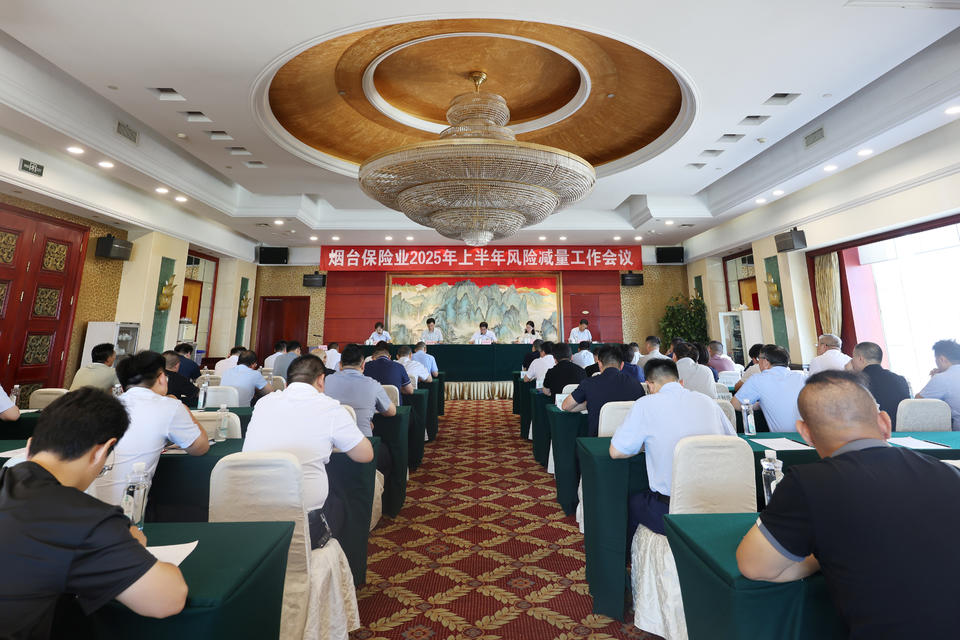
烟台保险业2025年上半年风险减量工作会议召开
Qi Lu Wan Bao Wang· 2025-08-07 23:39
2025年上半年,在烟台金融监管分局的指导下,烟台市保险行业协会以风险减量工作为重心,积极引领行业开展"照亮回家路安全伴你 行"风险减量服务活动,在道路交通安全治理、农业防灾减损、企业安全生产等多个关键领域积极作为,深入排查和治理风险隐患,为全 市经济社会的稳定发展筑牢了坚实的保障防线。 为总结上半年风险减量工作经验,推动风险减量服务朝着专业化、精准化、智能化方向迈进,8月7日,烟台市保险行业协会联合烟台金 融监管分局、烟台市公安局交通管理支队,在烟台市东方海天酒店召开烟台保险业2025年上半年风险减量工作会议。 会上通报了2025年上半年"照亮回家路安全伴你行"风险减量服务活动的开展情况,人保财险、平安财险、中华联合等3家保险公司作为代 表,分享了各自在风险减量工作中的成功经验与创新做法,为行业内其他公司提供了有益的借鉴。 市协会、分局财险监管科、市公安局交通管理支队事故预防和处理大队等相关负责人出席会议并讲话,充分肯定了上半年烟台保险业在 风险减量工作中取得的阶段性成果,对各保险公司的积极作为给予了高度评价,并结合当前形势,对下半年的工作进行了安排与部署。 一是提高思想认识,锚定转型方向,通过系统化推进风 ...



“红包雨”来了!A股五大上市险企去年分红落袋
Guo Ji Jin Rong Bao· 2025-08-07 14:36
Core Viewpoint - The five major listed insurance companies in A-shares are set to distribute cash dividends for the year 2024, with total dividends exceeding 900 billion yuan, reflecting a significant increase in shareholder returns [1][2][3] Dividend Distribution - China Life and New China Life have announced their dividend plans, with New China Life distributing 1.99 yuan per share, totaling 62.08 billion yuan, and China Life distributing 0.117 yuan per share, totaling 51.74 billion yuan [2] - The total cash dividends for the five major listed insurance companies in A-shares for 2024 amount to 638.26 billion yuan, with a cumulative total of 907.89 billion yuan when including previously distributed dividends, marking a year-on-year increase of 20.21% [3] Market Performance - The insurance sector in A-shares has shown strong performance, with the sector index rising over 11% as of August 6, 2023, and New China Life leading with a 36.82% increase [4] - Analysts believe there is still significant upward potential for insurance stock valuations, driven by economic recovery and improvements in both liability and investment sides [4] Premium Income - For the first half of the year, New China Life reported premium income of 121.26 billion yuan, a year-on-year increase of 23%, while China Pacific Insurance reported premium income of 282.01 billion yuan, a 5.9% increase [5]

