
China Life(601628)

Search documents
金融适老服务迈入“精耕”新阶段
Zhong Guo Jing Ying Bao· 2026-01-16 18:34
中经记者 张漫游 北京报道 近年来,金融机构主动响应人口老龄化国家战略,从线下硬件设施升级到线上数字服务优化,从单一产 品供给到多元生态构建,全方位推进适老化改造实践。 高鹏飞指出,当前,金融机构的适老化改造不仅体现为软硬件升级,更延伸至服务内容。针对老年人金 融风险防范意识相对薄弱的特点,不少金融机构通过走进社区、举办讲座等方式,普及防范电信诈骗、 识别非法集资等知识。在销售环节加强风险提示和过程管理,帮助老年群体树立理性投资观念。 如建设银行(601939.SH)在全国设置的超200家"健养安"养老金融特色网点,定期举办养老金融课堂, 汇聚养老规划师团队、养老领域专家、保险理财等专业人士,展开养老规划、财富管理、消保防诈等系 列讲座。同时,建设银行也深入周边企业,提供年金之类的养老专属服务,并整合网点周边资源,构建 融合生活消费、健康医疗的全方位养老综合生态。 从"有"到"优" 当前,随着众多新政的落地实施,金融机构适老化改造正迎来从"有没有"向"好不好"的转型期,如何破 解服务痛点、深化科技赋能、构建协同生态,成为行业高质量发展的重要课题。 2026年1月13日,民政部召开新闻发布会,介绍《关于培育养老 ...



啥是寿险?来自西藏高原的一线回答
Xin Lang Cai Jing· 2026-01-16 13:38
Core Viewpoint - The documentary "What is Life Insurance" by China Life Insurance Company aims to illustrate the importance of insurance in rural areas, particularly in Tibet, and how it can be integrated into the daily lives of the people [1][5][11] Group 1: Insurance Education and Community Engagement - The documentary showcases the daily work of a village cadre, highlighting the challenges of educating villagers about insurance, particularly distinguishing between life and property insurance [2][8] - The cadre, Danzen Duntu, emphasizes the need to explain insurance concepts clearly to villagers, who often prioritize insuring livestock over themselves [2][8] - Efforts include assisting villagers with claims, explaining policy terms, and fostering a better understanding of risk awareness [2][8] Group 2: Long-term Support and Community Development - Since its establishment in 2007, China Life's Tibet branch has sent over a hundred cadres to remote villages, integrating corporate development with local welfare [3][9] - The company has completed nearly 2.4 million yuan in consumer assistance tasks, focusing on infrastructure projects like road construction and water supply improvements [9][10] - Specific projects include purchasing equipment for cooperatives and renovating local facilities, which have significantly improved living conditions for villagers [9][10] Group 3: Commitment to Social Responsibility - China Life believes that the value of insurance extends beyond sales and claims, aiming to embed the concept of protection into everyday life for the public [6][11] - The company actively participates in national insurance awareness campaigns, reinforcing its mission to educate the public about insurance benefits and functions [11] - Future plans include continuing grassroots efforts to support the goal of common prosperity in western regions of China [11]
贝莱德增持中国人寿约2157.08万股 每股作价约31.66港元

Zhi Tong Cai Jing· 2026-01-16 12:01
智通财经APP获悉,香港联交所最新资料显示,1月12日,贝莱德增持中国人寿(02628)2157.0794万股, 每股作价31.6582港元,总金额约为6.83亿港元。增持后最新持股数目约为5.24亿股,最新持股比例为 7.04%。 ...
贝莱德增持中国人寿(02628)约2157.08万股 每股作价约31.66港元
智通财经网· 2026-01-16 11:24
智通财经APP获悉,香港联交所最新资料显示,1月12日,贝莱德增持中国人寿(02628)2157.0794万股, 每股作价31.6582港元,总金额约为6.83亿港元。增持后最新持股数目约为5.24亿股,最新持股比例为 7.04%。 ...
2025年度251个投连险投资账户加权收益率为14.8%,2款权益型投连险账户收益率超过60%! 他们是哪家保险公司的呢?
13个精算师· 2026-01-16 11:05
Core Viewpoint - The article provides an analysis of the weighted returns of various types of investment-linked insurance accounts for the year 2025, highlighting significant performance differences across account types and identifying top-performing accounts within each category [1][3][17]. Group 1: Investment Account Overview - As of December 2025, a total of 252 investment-linked insurance accounts were recorded, categorized into 39 money market accounts, 93 bond-oriented accounts, 47 balanced accounts, and 73 equity accounts [1][19]. - The overall weighted return for investment-linked insurance accounts in 2025 is reported at 14.8% [3][26]. Group 2: Money Market Accounts - The weighted average return for the 39 money market accounts is 1.5%, with a simple average return of 0.83% and a median of 0.78%. The maximum return is 3.59%, while the minimum is -1.19% [3][28]. - Four money market accounts reported negative returns, indicating a generally stable performance across the majority of accounts [6][32]. Group 3: Bond-Oriented Accounts - The weighted average return for the 93 bond-oriented accounts is 4.0%, with a simple average of 3.1% and a median of 2.3%. The maximum return is 18.5%, while the minimum is -28.6% [8][39]. - Eight accounts in this category reported negative returns, with two accounts showing returns below -28%, reflecting a left-skewed distribution [11][37]. Group 4: Balanced Accounts - The weighted average return for the 47 balanced accounts is 15.4%, with a simple average of 16.3% and a median of 16.1%. The maximum return is 43.2%, while the minimum is -0.16% [10][40]. - Only one account in this category reported a negative return, indicating a relatively strong performance overall [12][42]. Group 5: Equity Accounts - The weighted average return for the 73 equity accounts is 29.0%, with a simple average of 23.9% and a median of 22.3%. The maximum return is 65.3%, while the minimum is 0.07% [13][46]. - All equity accounts achieved positive returns, with two accounts exceeding 60%, showcasing the potential of equity investments in the current market [15][49]. Group 6: Performance Rankings - The article lists the top ten performing accounts in each category, providing detailed information on their returns and asset sizes, which can serve as a reference for investors seeking high-performing investment-linked insurance products [34][39][45][51].




发展涉老保险!中国老龄协会与中国人寿寿险公司签署战略合作协议
Bei Jing Shang Bao· 2026-01-16 09:18
根据协议,"十五五"时期,双方将共同致力于老龄事业发展,提升现代保险服务老年人、支持老龄事业 发展水平,重点围绕开展人口老龄化国情教育、组织涉老专项研究、发展涉老保险、促进老年人社会参 与、营造浓厚敬老爱老助老社会氛围等方面开展合作。 民政部党组成员、中国老龄协会会长孙硕鹏表示,中国老龄协会坚持"一心为老",将保障和改善民生、 回应老年人多层次多样化需求作为双方合作的战略基点与行动方向,从老年群体最关心最直接最现实的 急难愁盼中找准发力点,推动一批可落地、可感知、有温度的合作项目落地见效。希望双方携手推进合 作向更深层次、更宽领域拓展,共同为老年人谋福利,为贯彻落实积极应对人口老龄化国家战略、扎实 推进中国式现代化作贡献。 中国人寿寿险公司党委书记、总裁利明光表示,中国人寿寿险公司与中国老龄协会有着良好的合作基 础,双方合作空间广阔、潜力很大。以此次战略合作协议签署为契机,公司将进一步发挥保险主业优势 和保险服务老年人优势,汇聚优质资源,围绕协议明确的重点领域、重点项目持续深化合作,更好履行 社会责任,为广大老年人筑牢风险保障防火墙,助力老龄事业高质量发展。 北京商报讯(记者 李秀梅)1月16日,北京商报记者 ...
保险板块1月16日跌2.1%,中国人寿领跌,主力资金净流出5.47亿元
Zheng Xing Xing Ye Ri Bao· 2026-01-16 08:55
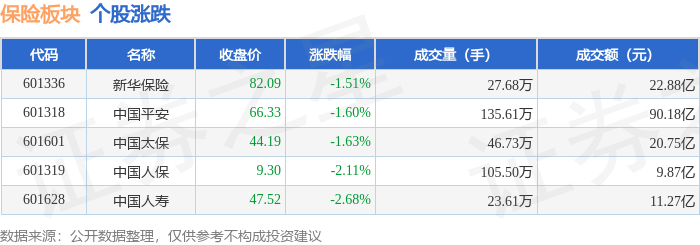
证券之星消息,1月16日保险板块较上一交易日下跌2.1%,中国人寿领跌。当日上证指数报收于 4101.91,下跌0.26%。深证成指报收于14281.08,下跌0.18%。保险板块个股涨跌见下表: | 代码 | 名称 | 收盘价 | 涨跌幅 | 成交量(手) | 成交额(元) | | --- | --- | --- | --- | --- | --- | | 601336 | 新华保险 | 82.09 | -1.51% | 27.68万 | 22.88亿 | | 601318 | 中国平安 | 66.33 | -1.60% | 135.61万 | 90.18亿 | | 601601 | 中国太保 | 44.19 | -1.63% | 46.73万 | 20.75亿 | | 616109 | 中国人保 | 9.30 | -2.11% | 105.50万 | 9.8717 | | 601628 | 中国人寿 | 47.52 | -2.68% | 23.61万 | 11.27 Z | 从资金流向上来看,当日保险板块主力资金净流出5.47亿元,游资资金净流出3.97亿元,散户资金净流入 9.44亿元。保险板块个股资金 ...


中国老龄协会与中国人寿寿险公司签署战略合作协议
Xin Lang Cai Jing· 2026-01-16 08:49
来源:环球网 1月14日,中国老龄协会与中国人寿保险股份有限公司(以下简称"中国人寿寿险公司")签署战略合作 协议。 根据协议,"十五五"时期,双方将共同致力于老龄事业发展,提升现代保险服务老年人、支持老龄事业 发展水平,重点围绕开展人口老龄化国情教育、组织涉老专项研究、发展涉老保险、促进老年人社会参 与、营造浓厚敬老爱老助老社会氛围等方面开展合作。 中国人寿寿险公司党委书记、总裁利明光表示,中国人寿寿险公司与中国老龄协会有着良好的合作基 础,双方合作空间广阔、潜力很大。以此次战略合作协议签署为契机,公司将进一步发挥保险主业优势 和保险服务老年人优势,汇聚优质资源,围绕协议明确的重点领域、重点项目持续深化合作,更好履行 社会责任,为广大老年人筑牢风险保障防火墙,助力老龄事业高质量发展。 中国老龄协会会长孙硕鹏表示,中国老龄协会坚持"一心为老",将保障和改善民生、回应老年人多层次 多样化需求作为双方合作的战略基点与行动方向,从老年群体最关心最直接最现实的急难愁盼中找准发 力点,推动一批可落地、可感知、有温度的合作项目落地见效。希望双方携手推进合作向更深层次、更 宽领域拓展,共同为老年人谋福利,为贯彻落实积极应对 ...
中国老龄协会与中国人寿保险股份有限公司签署战略合作协议
Jin Rong Jie Zi Xun· 2026-01-16 07:04
Group 1 - The core viewpoint of the news is the strategic cooperation agreement signed between the China Aging Association and China Life Insurance Company, aimed at enhancing services for the elderly and addressing their diverse needs [1][2] - The cooperation will focus on several key areas, including education on population aging, conducting specialized research related to the elderly, developing insurance products for seniors, promoting social participation among the elderly, and fostering a supportive societal atmosphere for the elderly [2] Group 2 - The agreement emphasizes the commitment to improve the quality of insurance services for the elderly during the "14th Five-Year Plan" period, highlighting the importance of addressing the immediate concerns of the elderly population [2] - Both parties expressed a strong foundation for collaboration and the potential for significant impact in the field of elderly care, with a focus on practical and effective projects that can be implemented [1]
资负共振驱动保险板块估值修复
Huafu Securities· 2026-01-15 10:10
Group 1 - The insurance sector has entered a valuation recovery phase since 2025, with a cumulative increase of 31.31% in the insurance sector, continuing strong momentum into 2026, driven by improved capital market sentiment and rising equity markets, leading to a collective strength in insurance stocks, with major companies like China Ping An reaching multi-year highs [1][7]. - The new individual insurance premium growth for major insurers such as China Life, Ping An, Taikang, and Xinhua has exceeded expectations, with first-day growth rates reaching 40-60%, driven by the "deposit migration" effect, product structure optimization, and the ongoing reinforcement of anti-involution policies in the insurance industry [1][8][16]. Group 2 - Regulatory measures have opened up space for asset-side expansion, with significant potential for increasing equity allocation by insurance funds. The total investment return rate for listed insurance companies has shifted to a range of 5%-6%, with a systematic increase in investment yield driven by regulatory policy collaboration [2][22]. - The insurance sector is expected to benefit from the recovery of the real estate market, with improved financing conditions for property companies and a narrowing of credit risk premiums, enhancing the valuation framework for the insurance sector [2][27]. Group 3 - The recent strong performance of the insurance sector reflects a resonance repair driven by multiple positive factors on both the asset and liability sides. The "deposit migration" trend has brought continuous incremental premiums, while the adjustment of product interest rates has effectively controlled long-term cost pressures [3][27]. - The regulatory adjustments have significantly expanded the equity allocation space for insurance funds, allowing for a more flexible allocation of equity assets and enhancing overall portfolio returns [21][22].