
China Life(601628)

Search documents
温州监管分局同意中国人寿温州分公司鹿城区第八营销服务部变更营业场所
Jin Tou Wang· 2026-01-19 01:29
Core Viewpoint - The National Financial Supervision Administration's Wenzhou Regulatory Bureau has approved the change of business location for China Life Insurance Co., Ltd.'s Wenzhou branch marketing service department [1] Group 1 - The business location of the Eighth Marketing Service Department of China Life Insurance Co., Ltd. in Wenzhou has been officially changed to Room 701, Huifu Building, 666 Huimin Road, Lucheng District, Wenzhou City, Zhejiang Province [1] - China Life Insurance Co., Ltd. is required to handle the change and obtain the necessary permits in accordance with relevant regulations [1]

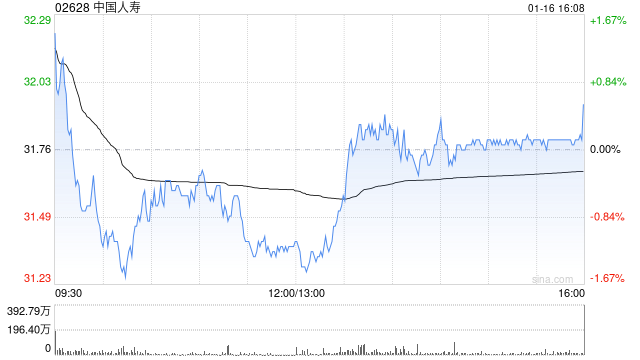
中国人寿(02628.HK)获贝莱德增持2157.08万股
Ge Long Hui· 2026-01-18 23:26
增持后,BlackRock, Inc.最新持好仓数目为523,982,871股,持好仓比例由6.75%上升至7.04%。 | 股份代號: | 02628 | | --- | --- | | 上市法國名稱: | 中國人壽保險股份有限公司 - H股 | | 日期 (日 / 月 / 年): | 19/12/2025 - 19/01/2026 | | 一般的一些 | 大股東/董事/最高行政人員名 作出披露的 買入 / 賣出或涉及的 每股的平均價 | | | 持有權益的股份數目 佔已發行的 有關事件的日期 相 | | --- | --- | --- | --- | --- | | | 版分数目 | | | (請參閱上述 * 註 有投票權股 (日 / 月 / 年) 材 | | | | | | 份自分比 | | CS20260115E00456 | BlackRock, Inc. 1101(L) | 21,570,794(L) | HKD 31.6582 | 523,982,871(L) 7.04(L)12/01/2026 | | | | | | 4,272,000(S) 0.06(S) | 格隆汇1月19日丨根据联交所最 ...


重疾出险最小仅2岁 赔付最高超2100万
Nan Fang Du Shi Bao· 2026-01-18 23:13
Core Insights - The annual claims reports from leading insurance institutions in Shenzhen reveal significant health trends among residents, particularly highlighting the prevalence of critical illnesses and the demographic most affected [2][3][4] Group 1: Health Trends and Critical Illnesses - The primary demographic for critical illness claims in Shenzhen is individuals aged 30-50, with a notable increase in cases of thyroid, lung, and breast cancers, indicating a trend towards younger patients [2][3] - Malignant tumors account for over 80% of critical illness claims, making them the leading health threat to residents, with leukemia being the most common critical illness among children [3][4] - The total number of claims in Shenzhen reached approximately 150,000 last year, with a growth rate of about 10%, and the total payout amounting to approximately 1.17 billion yuan, nearly half of which was attributed to critical illnesses [3] Group 2: Claims and Payouts - The highest claim in Shenzhen's life insurance sector last year was related to cancer, with a payout exceeding 21.25 million yuan for a policyholder who succumbed to breast cancer [5][6] - Tencent's micro-insurance platform reported a total claim amount of 8.4 billion yuan in 2025, with over 25.7 million claims processed, indicating a significant volume of insurance activity [4][6] - The average claim processing time has improved significantly, with some claims being settled in as little as 8 seconds due to advancements in AI and digital processing [7][8] Group 3: Technological Advancements in Claims Processing - The integration of AI in the claims process has led to faster and more efficient claim settlements, with some claims being processed in seconds, enhancing customer experience [7][8] - The introduction of a "one-stop settlement" service allows for simultaneous completion of medical insurance reimbursements and commercial insurance claims, significantly reducing the time required for claim processing [8]


从吃息差到拼能力 金融机构打响“突围战”
Shang Hai Zheng Quan Bao· 2026-01-18 18:15
◎ 记者 黄坤 重新审视传统盈利模式 在低利率背景下,银行、保险机构面临的核心挑战,在于依赖传统业务的盈利路径正在失效,必须主动 求变、探索新路径。 "躺着赚息差的日子一去不复返了。"浙江一家城商行人士告诉上海证券报记者,过去加大信贷资产投放 尚能通过"以量补价"维持营收规模,如今即便资产规模继续增长,利息收入却不升反降,营收承压成普 遍现象。 "新的一年,利差收窄仍是我们面临的最大挑战。"站在2026年初的时间节点上,无论是来自银行、保险 公司,还是资管机构的人士,几乎都表达了相同的感慨——低利率正在重塑资管行业的盈利模式和经营 思路。 低利率带来的是低息差、低收益,利率中枢持续下移的趋势下,银行净息差承压、保险利差损风险加 大,这些相互交织的挑战,正将金融行业推入一个前所未有的压力测试。如何在低利率环境中优化业务 结构、寻找可持续的业绩新增长点,金融从业者正在积极寻求答案。 "做了才有机会" "现在贷款利率这么低,大家都是赔本赚吆喝。"多位银行业人士向上海证券报记者感慨道,银行盈利空 间正被不断挤压,业务打法也随之发生变化,过去是银行"筛选客户",现在变为"做了才有机会",只能 把希望放在未来业务合作上, ...

非银金融周报:融资保证金比例上调,金监总局部署2026年监管工作-20260118
HUAXI Securities· 2026-01-18 14:52
Investment Rating - The industry rating is "Recommended" [5] Core Insights - The adjustment of the financing margin ratio from 80% to 100% aims to cool down excessive leverage and maintain market stability. This change will take effect on January 19, 2026, and applies only to new financing contracts [3][4][15][7] - As of January 14, 2026, the total market financing balance reached a historical high of 2.68 trillion yuan, with the margin balance accounting for 2.59% of the A-share market capitalization, indicating an increase from the average level of 2.40% in 2025 [4][15] - The non-bank financial sector index fell by 2.63%, underperforming the CSI 300 index by 2.06 percentage points, ranking 26th among all primary industries. The securities sector decreased by 2.21%, while the financial technology sector increased by 1.34% [2][13] Summary by Sections Market and Sector Performance - The average daily trading volume of A-shares for the week of January 11-17, 2026, was 34.651 billion yuan, a 21.5% increase week-on-week and a 189.4% increase year-on-year. The average trading volume for the first quarter of 2026 is 31.585 billion yuan, up 107.7% from the same period in 2025 [19] - In the same week, three new stocks were issued, raising 2.025 billion yuan, while two new stocks were listed, raising 1.484 billion yuan. Year-to-date, three A-share IPOs have raised 3.039 billion yuan [19] Financing Margin Ratio Adjustment - The financing margin ratio adjustment is a regulatory measure to prevent systemic risks and protect investors' rights. The increase in the minimum margin requirement is intended to curb market overheating and ensure a smooth market transition [4][7][15] Regulatory Developments - The National Financial Supervision Administration held a regulatory work meeting on January 15, 2026, outlining five key tasks for the year, including risk resolution for small and medium-sized financial institutions and enhancing regulatory quality. The focus for 2026 is on preventing systemic risks and ensuring high-quality industry development [8][16][17]






非银行金融行业周报:高市场活跃度延续,保险基本面仍维持上升趋势-20260118
SINOLINK SECURITIES· 2026-01-18 11:58
Investment Rating - The report maintains a positive recommendation for the insurance sector, suggesting a favorable outlook for both short-term and long-term performance [5]. Core Insights - The report highlights the restructuring of the trillion-yuan health insurance market, with medical insurance continuing to dominate, projected to reach a premium of 944 billion yuan by November 2025, reflecting a year-on-year growth of 2.39% [4]. - The report emphasizes the strong performance of securities firms, with CITIC Securities forecasting a revenue of 74.83 billion yuan for 2025, a year-on-year increase of 28.75%, and a net profit of 30.05 billion yuan, up 38.46% [3][44]. - The report identifies three main investment themes: high-quality securities firms with significant valuation and performance mismatches, companies in the technology sector benefiting from venture capital, and diversified financial firms with impressive growth rates [3]. Summary by Sections Securities Sector - The report notes an increase in the financing margin ratio from 80% to 100%, aimed at promoting market stability and resilience, with a controlled overall impact expected [2]. - Two securities firms reported strong earnings forecasts for 2025, with CITIC Securities showing significant growth in revenue and net profit due to high market activity [2][44]. Insurance Sector - The health insurance market is expected to see medical insurance as the main product, with a projected market share of approximately 46% by 2025, growing at nearly 7% [4]. - The report indicates that the C-end business will dominate the health insurance market, with a near 70% share by 2025, driven by trends such as expanding coverage and targeting younger demographics [4]. - The report anticipates that medical insurance will be the primary growth driver, influenced by factors like population aging and medical inflation [4]. Investment Recommendations - The report suggests focusing on three main lines: high-quality securities firms with valuation mismatches, technology firms benefiting from venture capital, and diversified financial firms with strong growth [3]. - It highlights the positive short-term outlook for the insurance sector, with expectations of high performance in Q1 due to favorable market conditions [5].




衍生品新规释放积极信号,关注板块发布业绩预增机遇
GF SECURITIES· 2026-01-18 10:26
Core Insights - The report highlights that new regulations in derivatives are expected to release positive signals for the non-bank financial sector, with a focus on companies likely to announce performance increases [1][5]. Group 1: Market Performance - As of January 16, 2026, the Shanghai Composite Index closed at 4101.91, down 0.45%, while the Shenzhen Component Index rose by 1.14% to 14281.08 [10]. - The average daily trading volume in the Shanghai and Shenzhen markets reached 3.47 trillion yuan, an increase of 21.50% month-on-month [5]. Group 2: Industry Dynamics and Weekly Commentary Insurance Sector - Listed insurance companies are expected to continue high growth, with improvements in long-term interest rate spreads anticipated [12][16]. - As of January 12, 2026, the total scale of private equity securities investment funds by insurance capital reached 184.5 billion yuan, with 11 funds established [16]. - The report suggests focusing on companies such as China Ping An, China Life, and New China Life for potential investment opportunities [16]. Securities Sector - The China Securities Regulatory Commission (CSRC) emphasized stability and quality improvement in its 2026 work meeting, aiming to prevent market volatility and enhance internal stability [17][18]. - The CSRC's new derivatives regulations aim to standardize the market, encourage risk management, and improve the income structure of brokerage firms [25][26]. - The report indicates that the derivatives market is expected to grow significantly, with the scale of over-the-counter derivatives increasing from 0.32 trillion yuan in 2015 to 2.38 trillion yuan in 2023, reflecting a compound annual growth rate of 29% [26]. Group 3: Key Company Valuations and Financial Analysis - China Ping An (601318.SH) has a current price of 66.33 yuan, with a target value of 85.17 yuan, indicating a buy rating [6]. - New China Life (601336.SH) is rated as a buy with a current price of 82.09 yuan and a target value of 94.21 yuan [6]. - China Life (601628.SH) is also rated as a buy, with a current price of 47.52 yuan and a target value of 55.47 yuan [6].
中国人寿获贝莱德增持约2157.08万股 每股作价约31.66港元
Xin Lang Cai Jing· 2026-01-18 08:52
香港联交所最新资料显示,1月12日,贝莱德增持中国人寿(02628)2157.0794万股,每股作价31.6582 港元,总金额约为6.83亿港元。增持后最新持股数目约为5.24亿股,最新持股比例为7.04%。 责任编辑:卢昱君 热点栏目 自选股 数据中心 行情中心 资金流向 模拟交易 客户端 热点栏目 自选股 数据中心 行情中心 资金流向 模拟交易 客户端 责任编辑:卢昱君 香港联交所最新资料显示,1月12日,贝莱德增持中国人寿(02628)2157.0794万股,每股作价31.6582 港元,总金额约为6.83亿港元。增持后最新持股数目约为5.24亿股,最新持股比例为7.04%。 ...
30-50岁成深圳重疾出险主流人群,白血病是少儿最大威胁
Nan Fang Du Shi Bao· 2026-01-17 14:37
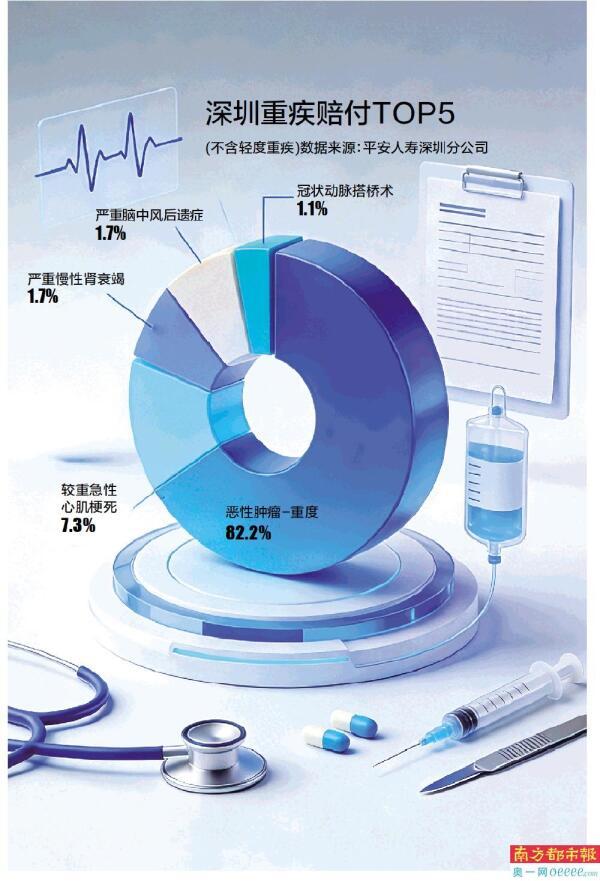
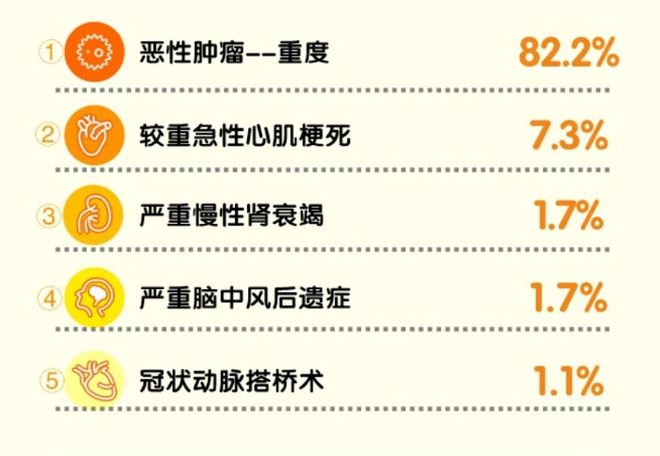
Core Insights - The annual claims reports from leading insurance institutions in Shenzhen reveal significant health trends among residents, particularly highlighting the rising incidence of critical illnesses among the 30-50 age group, with a notable increase in younger patients [1][2] Group 1: Critical Illness Trends - The primary demographic for critical illness claims in Shenzhen is aged 30-50, accounting for 49.47% of claims, with the youngest claimant being just 2 years old [1] - Malignant tumors are the leading cause of critical illness claims, comprising 84.66% of cases, followed by circulatory system diseases at approximately 10% [2][4] - The top five critical illnesses in Shenzhen include various cancers and severe cardiovascular conditions, indicating a significant health threat to the population [4][5] Group 2: Claims Data and Statistics - In 2025, the total number of claims in Shenzhen approached 150,000, with a growth rate of about 10%, and total payouts reaching approximately 1.17 billion yuan, nearly half of which were for critical illnesses [1] - The highest individual claim in 2025 was 21.25 million yuan, related to a severe case of breast cancer, highlighting the financial impact of critical illnesses [8] - Tencent Weibo reported a total claims amount of 8.4 billion yuan with over 25.7 million claims, indicating a growing trend in health-related claims across different demographics [7] Group 3: Emerging Health Risks - There is a rising trend of liver disease and hypertension among the middle-aged population, while leukemia remains a significant health threat for children, with over 30% of pediatric critical illness claims attributed to it [1][5] - The report from Tencent Weibo also noted a 176.4% increase in allergy-related claims among adolescents, emphasizing the need for awareness and preventive measures [7] Group 4: Technological Advancements in Claims Processing - The integration of AI in claims processing has led to significant improvements, with some claims being processed in as little as 8 seconds, showcasing the industry's move towards more efficient and user-friendly services [10] - The introduction of a "one-stop settlement" model allows for simultaneous completion of medical insurance reimbursements and commercial insurance claims, drastically reducing the claims processing time [10]
金融适老服务迈入“精耕”新阶段
Zhong Guo Jing Ying Bao· 2026-01-16 18:34
中经记者 张漫游 北京报道 近年来,金融机构主动响应人口老龄化国家战略,从线下硬件设施升级到线上数字服务优化,从单一产 品供给到多元生态构建,全方位推进适老化改造实践。 高鹏飞指出,当前,金融机构的适老化改造不仅体现为软硬件升级,更延伸至服务内容。针对老年人金 融风险防范意识相对薄弱的特点,不少金融机构通过走进社区、举办讲座等方式,普及防范电信诈骗、 识别非法集资等知识。在销售环节加强风险提示和过程管理,帮助老年群体树立理性投资观念。 如建设银行(601939.SH)在全国设置的超200家"健养安"养老金融特色网点,定期举办养老金融课堂, 汇聚养老规划师团队、养老领域专家、保险理财等专业人士,展开养老规划、财富管理、消保防诈等系 列讲座。同时,建设银行也深入周边企业,提供年金之类的养老专属服务,并整合网点周边资源,构建 融合生活消费、健康医疗的全方位养老综合生态。 从"有"到"优" 当前,随着众多新政的落地实施,金融机构适老化改造正迎来从"有没有"向"好不好"的转型期,如何破 解服务痛点、深化科技赋能、构建协同生态,成为行业高质量发展的重要课题。 2026年1月13日,民政部召开新闻发布会,介绍《关于培育养老 ...


