
PSBC(601658)

Search documents
六大行全面停售5年期大额存单产品
Zheng Quan Shi Bao Wang· 2025-12-02 07:35
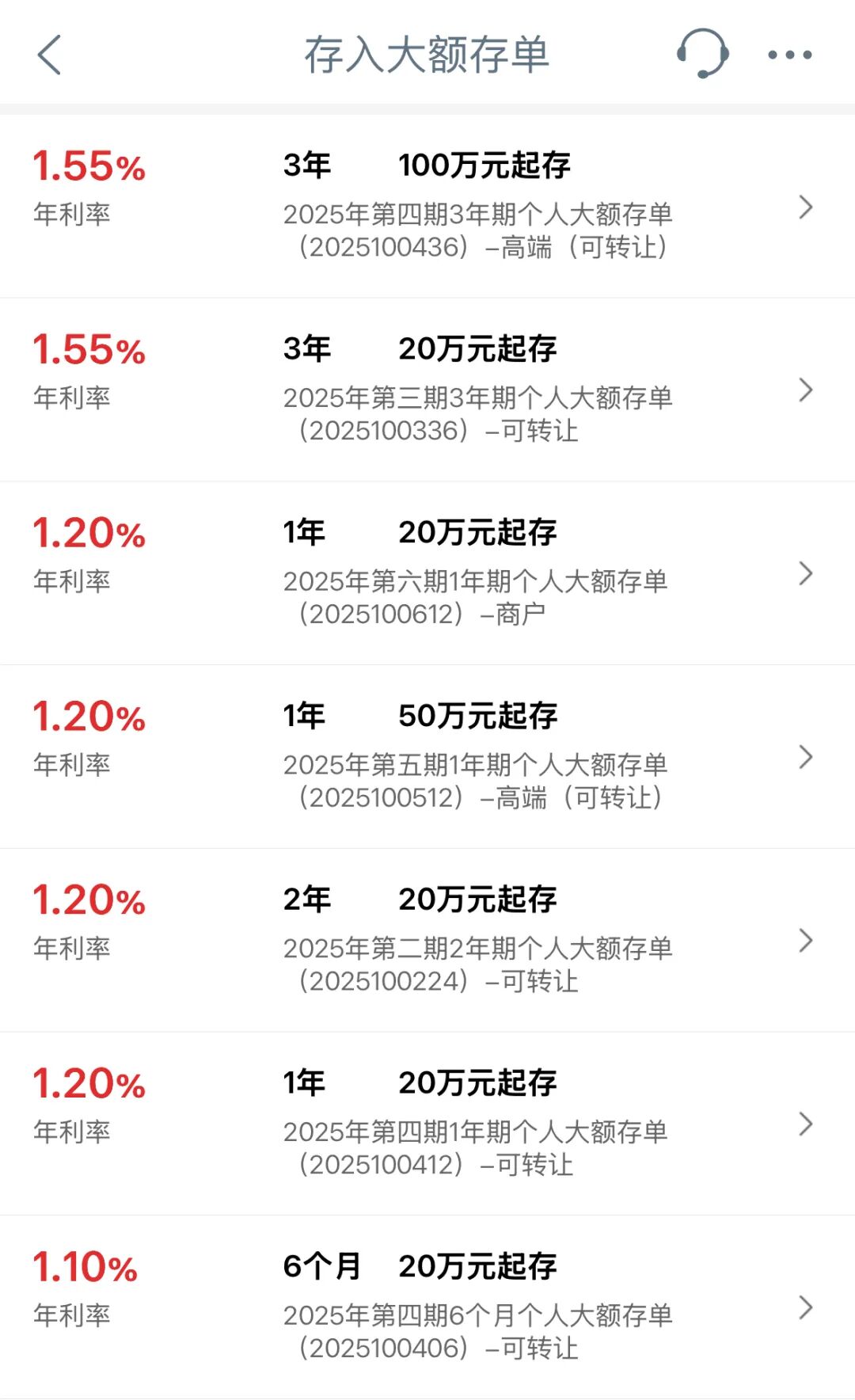
Core Viewpoint - Six major state-owned banks in China have collectively stopped offering 5-year large denomination time deposit products, indicating a trend towards shorter-term deposit offerings in the banking sector [1] Group 1: Bank Actions - The six major state-owned banks include Industrial and Commercial Bank of China, Agricultural Bank of China, Bank of China, China Construction Bank, Bank of Communications, and Postal Savings Bank of China [1] - Several joint-stock banks and city commercial banks are also following suit by reducing their long-term deposit products [1] Group 2: Product Offerings - The current offerings of large denomination time deposits have shifted to shorter terms, with Industrial and Commercial Bank of China now only providing products with terms of 1 month, 3 months, 6 months, 1 year, 2 years, and 3 years [1] - The 3-year large denomination time deposit product has an interest rate of 1.55%, while the 1-year and 2-year products both have rates of 1.20% [1] - Other banks such as Bank of China, China Construction Bank, Bank of Communications, and Postal Savings Bank of China exhibit similar trends, having removed 5-year products from their offerings [1] - Agricultural Bank of China does not list any 5-year large denomination time deposit products in its catalog for the period from 2018 to 2025 [1]



六大行全面停售5年期大额存单
Di Yi Cai Jing· 2025-12-02 07:25
Group 1 - The core observation is that major banks in China are shifting their large-denomination time deposit products towards shorter maturities, with longer-term options being removed from availability [1] - Industrial and Commercial Bank of China (ICBC) currently offers large-denomination time deposits with maturities of 1 month, 3 months, 6 months, 1 year, 2 years, and 3 years, with the 3-year deposit yielding 1.55% and both the 1-year and 2-year deposits yielding 1.20% [1] - Other banks such as Bank of China, China Construction Bank, Bank of Communications, and Postal Savings Bank exhibit similar trends, having removed 5-year deposit products from their offerings [1] Group 2 - Agricultural Bank of China does not list any 5-year large-denomination time deposit products in its catalog for the period from 2018 to 2025 [1]



六大行,集体停售!
Jin Rong Shi Bao· 2025-12-02 07:16
Core Viewpoint - The major state-owned banks in China have completely stopped offering 5-year large denomination certificates of deposit (CDs), leading to a significant reduction in the availability of long-term deposit products in the market [1][2][6]. Group 1: Bank Actions - Six major state-owned banks, including Industrial and Commercial Bank of China, Agricultural Bank of China, Bank of China, China Construction Bank, Bank of Communications, and Postal Savings Bank of China, have ceased the sale of 5-year large denomination CDs [1][2]. - The remaining available terms for large denomination CDs have shifted to shorter durations, with the longest being 3 years, which has a rate of 1.55% [2][6]. - The trend of discontinuing long-term deposit products is not limited to national banks; local commercial banks and private banks are also following suit, as seen with the announcements from banks in Inner Mongolia [10][11]. Group 2: Market Dynamics - The withdrawal of 5-year CDs is attributed to the current downward trend in interest rates, which discourages banks from offering higher rates for long-term deposits [10]. - There is a notable increase in the overall deposit scale due to high savings enthusiasm among residents, while the demand for loans remains weak, leading banks to be less inclined to attract long-term deposits [10]. - Many banks are also reducing deposit rates, with some institutions cutting rates by as much as 65 basis points, reflecting a broader strategy to optimize their liability structure under pressure from interest margins [10][11]. Group 3: Investor Sentiment - The reduction in long-term deposit products has created a dilemma for ordinary depositors, as they struggle to find stable investment options [11]. - A survey indicates a slight decline in the proportion of depositors preferring to save more, suggesting a shift in asset allocation strategies among investors in a low-interest-rate environment [11]. - Financial experts recommend that investors adjust their expectations for returns and consider diversifying their asset allocation to include cash management products, money market funds, and government bonds [11]. Group 4: Industry Implications - The decline of long-term deposit products is prompting banks to accelerate their transformation efforts, focusing on wealth management and custodial services to stabilize non-interest income [11]. - Banks are encouraged to enhance their strategies on both asset and liability sides to maintain net interest margins amidst changing market conditions [11].

有银行存款10万送一只羊?工作人员:活动刚开始,还没送出去
Xin Lang Cai Jing· 2025-12-02 06:59
据上述网友发布的聊天记录截图显示,网点12月1日存款有活动,每年1万,连5年能给您送电器或者购 物卡,2万的话能送您一个整羊,40-45斤,要别的也行,可以换成购物卡,活动力度挺大,要想攒钱挺 合适的。 "送米、面、鸡蛋我觉得还能理解,送整只羊真的是是令人震撼了!""送羊真的可以吸引人来存钱 吗?"11月30日,有网友发帖称,内蒙古包头有银行搞送羊促销活动,他脑补了"一手存钱一手提羊"的 画面。 来源:网友发帖 来源:网友发帖 据上述网友发布的聊天记录截图显示,网点12月1日存款有活动,每年1万,连5年能给您送电器或者购 物卡,2万的话能送您一个整羊,40-45斤,要别的也行,可以换成购物卡,活动力度挺大,要想攒钱挺 合适的。 极目新闻记者注意到,有许多网友表示出对此促销活动的兴趣,并求存款地址。不过也有网友提醒,是 每年2万元连续存5年,10万元才送羊。这应该不是存款,而是保险理财类产品。记者私信上述网友,暂 未获回复。 记者多方渠道了解到,内蒙古包头市固阳县的中国邮政储蓄银行有上述促销活动。据其中一家支行的工 作人员了解情况后回复记者:顾客购买1万元的保险理财产品,可送冰柜;购买2万元的保险,可送价值 1 ...


邮储银行青岛分行:深耕蓝海 赋能海洋产业
Zhong Guo Jin Rong Xin Xi Wang· 2025-12-02 06:51
Core Viewpoint - The article highlights the role of Postal Savings Bank of China Qingdao Branch in supporting the development of the marine economy in Qingdao through innovative financial services and tailored financing solutions [1][2][3] Group 1: Financial Support for Marine Economy - The bank has developed a three-year action plan (2025-2027) to support high-quality development of the marine economy, focusing on 170 key marine projects [1] - A specialized research team has been established to conduct in-depth studies on marine engineering equipment and marine biomedicine, providing comprehensive financial solutions tailored to the entire lifecycle of enterprises [1] Group 2: Customer Service System - The bank has created a "pyramid" service system to address the diverse financial needs of different business entities, promoting a healthy development pattern among large, medium, and small enterprises [2] - For leading enterprises, the bank has shifted from traditional credit logic to a "value co-creation" partnership, expanding services to include cross-border finance and wealth management [2] - The bank adopts a "companion growth" approach for growing enterprises, offering services across strategic consulting, technology matching, and risk management [2] - For small and micro enterprises, the bank has introduced an innovative "technology flow" credit rating system to convert intangible assets into tangible credit [2] Group 3: Product Innovation - The bank emphasizes financial innovation rooted in industry needs, exemplified by a customized financing solution of 20 million yuan for a marine algae company, which helped exceed annual sales targets [3] - A "precision drip irrigation" credit product system has been established, including "rapid loans" for fishermen and "science and technology loans" for small tech enterprises, addressing financing challenges [3] - The bank plans to continue deepening blue finance practices to support Qingdao's development as a leading modern marine city [3]
邮储银行四川省分行年度投资策略报告会顺利举办
Sou Hu Cai Jing· 2025-12-02 02:42
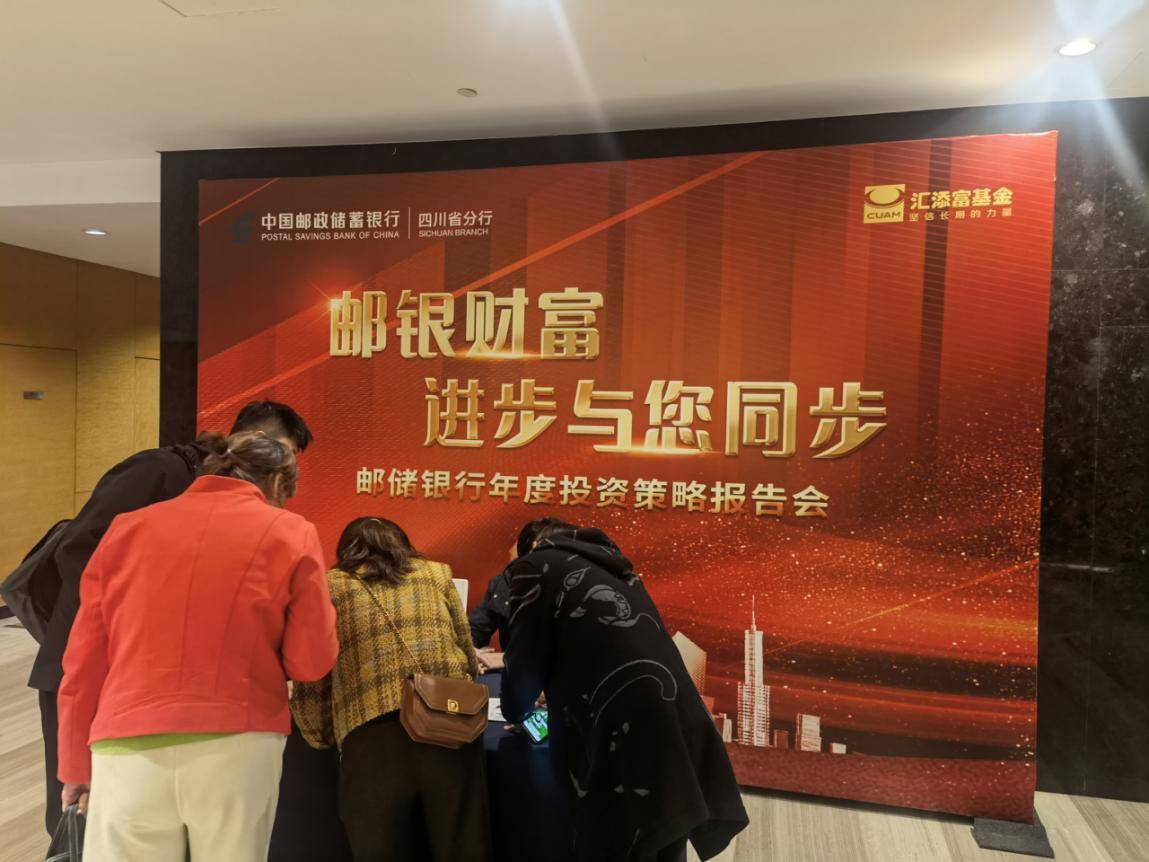
- 363 a-d p E to 2 5 11 HUAWEL 当前,邮储银行在全国已建设运营超过500家财富中心,10家私行中心,培养理财经理、贵宾理财经理、财富顾问共计5万余名,为客户提供专业财富管理服 务;依托强大的研发能力,搭建了全品类、全策略财富管理产品体系,助力客户资产保值增值;加快数字化转型引领和赋能发展,客户关系管理系统 (CRM)与财富管理系统不断迭代升级,运用数字化技术深入洞察财富管理需求,让财富管理服务飞入千家万户。 此次投资策略报告会的举办,是邮储银行四川省分行践行投资者教育职责、提升财富管理服务水平的重要举措。未来,邮储银行将持续整合专业资源,为广 大客户提供更优质、更专业的金融服务,助力投资者实现资产的稳健增值。 11月28日,中国邮政储蓄银行四川省分行携手汇添富基金管理股份有限公司,成功举办"邮银财富·进步与您同步——邮储银行年度投资策略报告会"活动。 邮储银行四川省分行个人金融部总经理戴蓉、成都分行副行长罗乐出席本次报告会。会上,戴蓉总经理作开场致辞,向到场客户表达欢迎与感谢,并强调邮 储银行在投资者教育与财富管理服务方面的责任与初心。汇添富基金首席投资顾问任远昌担任主讲嘉宾,引 ...
风向变了!银行集体下架5年期定存!对普通人的钱包有啥影响?
Sou Hu Cai Jing· 2025-12-02 01:43
Group 1 - Recent months have seen a trend of banks, including small and medium-sized banks as well as major state-owned banks, reducing their 5-year fixed deposit and large certificate of deposit products, with small banks leading the way with cuts of up to 80 basis points [1][2] - The current round of deposit rate cuts is primarily a decentralized adjustment by small banks and does not yet reflect a comprehensive reduction led by major state-owned banks [2] - The People's Bank of China (PBOC) is expected to lower interest rates in January to support the 2026 growth target, with indications that deposit rates may decrease before the Loan Prime Rate (LPR) [5][6] Group 2 - As deposit rates decline, some funds are likely to shift from low-yield deposits to equity markets, indicating a potential change in investment behavior [7] - The government is showing unprecedented support for the stock market, with the approval of the first batch of seven dual-innovation artificial intelligence ETFs set to launch on November 28 [8] - The reduction in deposit rates, with current rates at 0.95% for 1-year and 1.05% for 2-year deposits, is expected to encourage residents to invest in the stock market and index funds [10] Group 3 - The dual inflow of resident and institutional funds into the market signifies a significant shift in investment patterns, moving away from traditional bank deposits and real estate towards equity markets [11]

拆隐形关卡降融资负担 虚增中收行为将减少
Zhong Guo Zheng Quan Bao· 2025-12-01 20:25
Core Viewpoint - The revised guidelines from the State Administration for Market Regulation aim to address the issues of "difficult and expensive financing" for enterprises, particularly small and micro businesses, by prohibiting various unreasonable fees charged by commercial banks [1][3]. Summary by Sections Prohibition of Unreasonable Fees - The guidelines explicitly prohibit the fictitious charging of syndicate loan fees and other unreasonable charges, such as charging commitment fees after interest has been collected [1][2]. - A specific example highlighted is a bank that charged a commitment fee of 36 million yuan for a 400 million yuan loan, which is now deemed unreasonable under the new guidelines [2]. Systematic Regulation of Charging Practices - The guidelines address issues like "no-demand charges" and "bundled charges," stating that banks cannot charge fees for services that have no actual demand, such as issuing unnecessary guarantees or loan commitment letters [3]. - The guidelines also prohibit mandatory service fees, such as forcing clients to open online banking services or promoting unnecessary AI advisory services [3]. Strengthening Bank Accountability - The guidelines enhance the accountability of banks by requiring them to prove compliance with regulations, shifting the responsibility from merely avoiding violations to demonstrating compliance [3]. - The guidelines also mandate banks to verify the classification of small and micro enterprises to ensure the implementation of fee reduction policies [3]. Improvement of Financial Services - The guidelines establish a dual regulatory system of "law enforcement penalties + positive guidance," differentiating between light and heavy penalties based on banks' actions regarding the return of unreasonable fees [4]. - The principle of "separation of interest and fees" is emphasized, prohibiting banks from inflating intermediary business income through disguised fees [4]. - Industry experts believe that while the guidelines may lead to a short-term reduction in bank fees, they will ultimately encourage banks to enhance the quality and efficiency of financial services to attract clients and generate revenue [4].
多家银行上调代销基金产品风险等级 业内专家:或成常态化趋势
Sou Hu Cai Jing· 2025-12-01 11:39
Core Viewpoint - Several banks, including China Construction Bank, Minsheng Bank, Postal Savings Bank, and Citic Bank, have raised the risk levels of certain mutual fund products they distribute, reflecting a proactive approach to investor suitability management and compliance with regulatory requirements [1][2][3] Group 1: Risk Level Adjustments - China Construction Bank announced adjustments to 87 mutual fund products, with 32 products upgraded from R2 (low to medium risk) to R3 (medium risk) and 55 products from R3 to R4 (medium to high risk) [1] - Minsheng Bank also adjusted the risk ratings of 8 funds, moving them from lower risk to medium risk, emphasizing the priority of investor interests [1][2] - Citic Bank has made its fourth adjustment to risk ratings this year, indicating a trend of ongoing evaluations and adjustments in response to market conditions [2][3] Group 2: Regulatory Compliance and Market Conditions - The adjustments are primarily driven by regulatory compliance requirements, necessitating banks to dynamically assess and accurately disclose product risks [3] - The current market volatility, particularly in equity funds due to increased asset fluctuations and high concentration, has led to a more realistic reflection of risk characteristics through these adjustments [3] - The trend of banks adjusting risk ratings is expected to become a standard practice in the industry, aligning with the ongoing regulatory emphasis on investor suitability management [3] Group 3: Investor Guidance - Banks are encouraging investors to reassess their risk tolerance in light of the new risk ratings, providing options for redemption or conversion to more suitable products [2][3] - Investors are advised to verify their mutual fund holdings through various channels and make informed decisions based on their risk capacity [2]

邮储银行柴桑区支行:“延伸服务一公里” 温暖老年群体“金融路”
Sou Hu Cai Jing· 2025-12-01 09:10
Core Insights - The Postal Savings Bank of China in Jiujiang, Jiangxi Province, is actively extending financial services to elderly individuals in welfare homes and surrounding communities, addressing their mobility and service access challenges [1][2] - The bank has established a dedicated service team and a comprehensive service ledger to ensure that elderly clients receive personalized assistance, including on-site visits for account management and financial education [1][2] Group 1 - The bank's service team proactively visits elderly clients, particularly those who are homebound, to assist with financial tasks that may be difficult for them due to physical limitations or technological barriers [1] - The initiative includes a "green channel" for immediate appointments and home visits, effectively bringing banking services directly to the elderly [1] - Staff members provide not only financial services but also general assistance, such as adjusting mobile device settings and offering advice on fraud prevention [2] Group 2 - The bank aims to deepen its commitment to elderly services by combining financial convenience with humanistic care, ensuring that more elderly clients feel supported and secure in their financial dealings [2] - The ongoing efforts reflect a broader trend in the banking industry to enhance accessibility and customer service for aging populations, recognizing their unique needs [2]