CHINA TELECOM(601728)

Search documents
持仓曝光!险资系私募基金,买了这些股!
券商中国· 2025-09-02 06:58
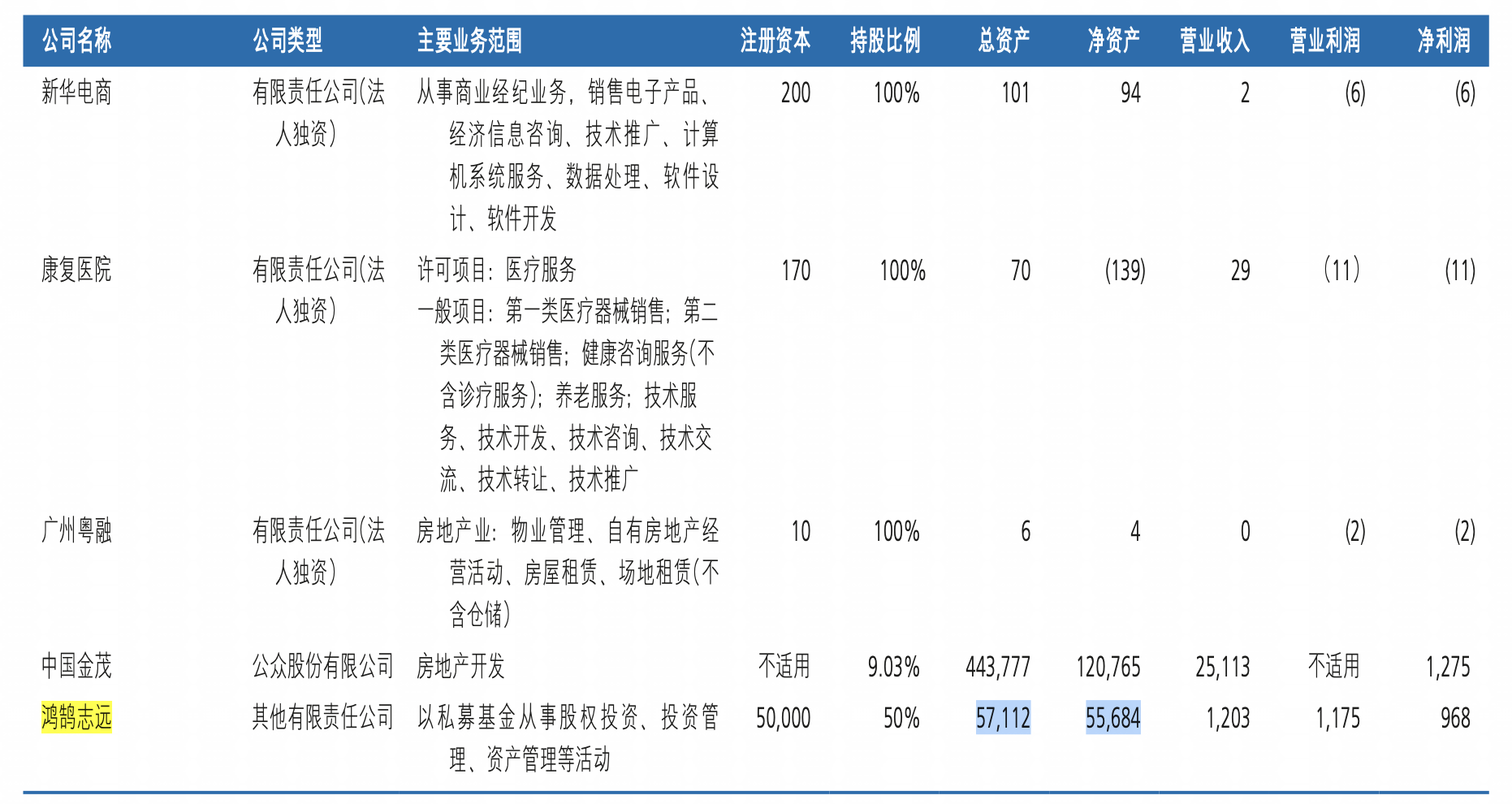
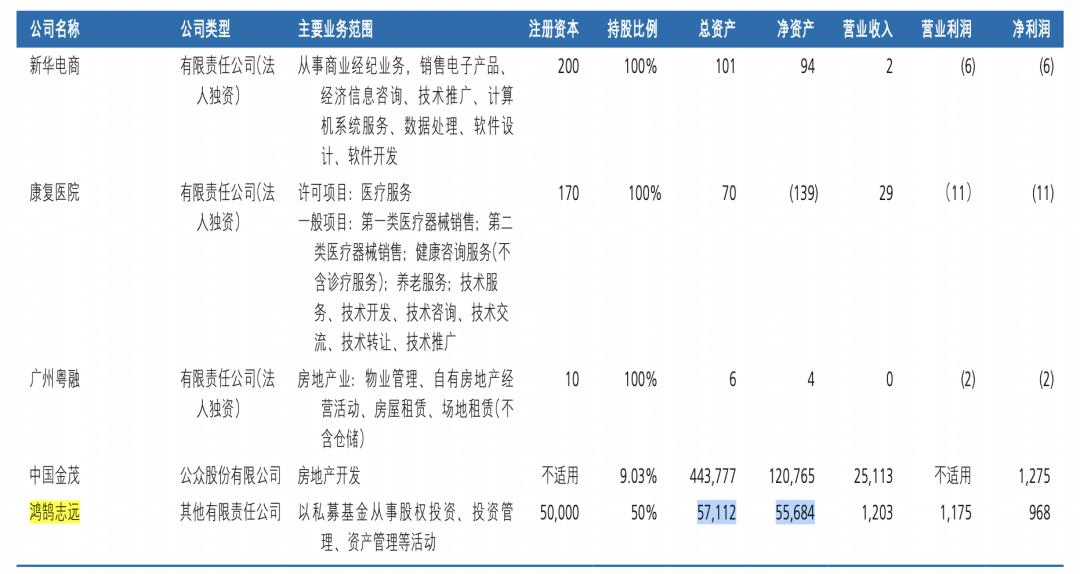
Core Viewpoint - The article highlights the recent emergence of Honghu Fund in the top ten shareholders of several listed companies, indicating a strategic investment approach by insurance capital in the market [1][3]. Group 1: Shareholding Situation - Honghu Fund Phase II has entered the top ten shareholders of China Petroleum and China Shenhua, marking its first appearance in these lists with a market value exceeding 18 billion and 21 billion respectively [1][3]. - Honghu Fund Phase III has been listed as the eighth largest shareholder of Sinopec, holding approximately 3.05 billion shares valued at 17.63 billion [5][6]. - As of June 30, 2025, Honghu Fund has appeared in the top ten shareholders of six listed companies, including Shaanxi Coal, Yili, and China Telecom, with stable holdings compared to the previous quarter [3][6]. Group 2: Fund Structure and Management - Honghu Fund consists of three phases with a total scale of 110 billion, managed by Guofeng Xinghua, a joint venture of China Life Asset and Xinhua Asset [6][8]. - Phase I has a scale of 50 billion, fully invested by China Life and Xinhua Insurance, achieving good returns as of March this year [6][8]. - Phase II, with a scale of 20 billion, has completed its main investment positions by the end of Q2 [6][8]. - Phase III, initiated in early July, has a scale of 40 billion, divided into two products, with significant contributions from various insurance companies [6][8]. Group 3: Investment Strategy and Performance - The investment philosophy of Honghu Fund emphasizes long-term, value, and stable investments, focusing on companies with competitive advantages and good governance [8][11]. - The fund targets large-cap A+H shares that exhibit stable dividends and good liquidity, with a preference for blue-chip companies [8][9]. - The average dividend yield of the six listed companies in which Honghu Fund has invested is relatively high, with four energy and coal stocks exceeding 5% [9][10]. - As of June 30, the total assets of Honghu Fund Phase I reached 57.11 billion, with a net profit of 9.68 billion for the first half of the year, indicating strong performance [11][12].





央企发挥分红示范引领作用,13家公司分红超百亿,纯央企投资标的:国企共赢ETF备受关注
Sou Hu Cai Jing· 2025-09-02 05:45
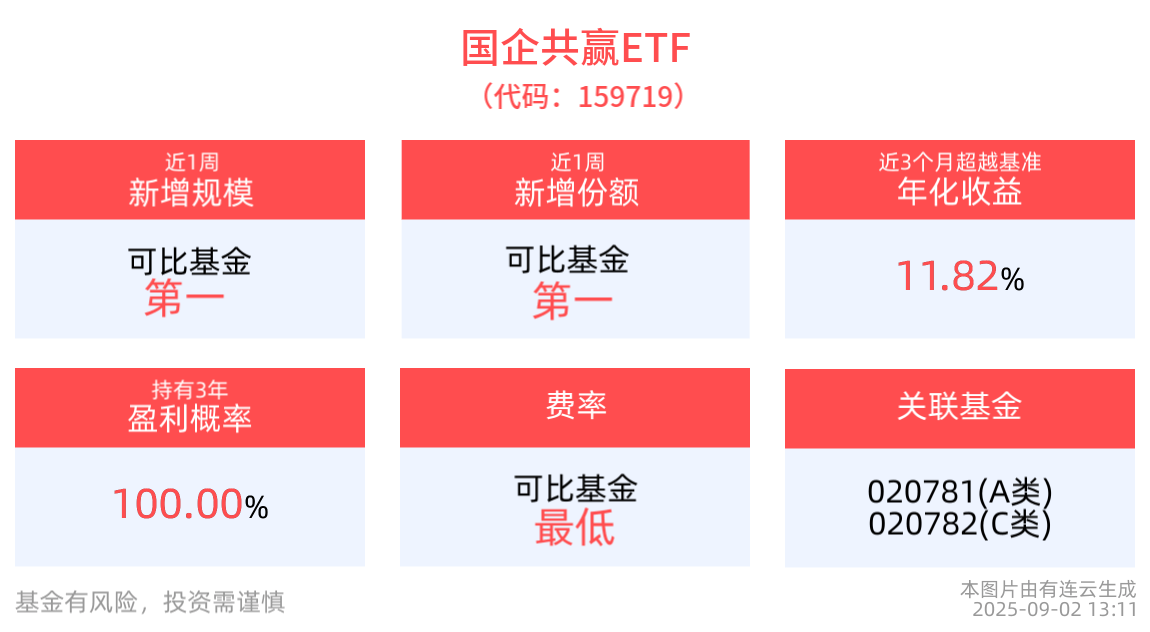
Core Viewpoint - The National Enterprise Win ETF (159719) has shown a positive performance with a recent increase of 0.63%, reflecting a broader trend of rising profits and dividends among Chinese listed companies, particularly state-owned enterprises [3][4]. Performance Summary - As of September 1, 2025, the National Enterprise Win ETF has achieved a net value increase of 51.31% over the past three years, ranking 215 out of 1860 index equity funds, placing it in the top 11.56% [4]. - The ETF has recorded a maximum monthly return of 14.61% since its inception, with the longest consecutive monthly gains reaching 7 months and a total increase of 24.70% [4]. - The average monthly return during rising months is 4.14%, with a total annual profit percentage of 100.00% and a historical three-year holding profit probability of 100.00% [4]. - Over the past three months, the ETF has outperformed its benchmark with an annualized return of 11.82% [4]. Liquidity and Scale - The ETF experienced a turnover rate of 6.84% with a trading volume of 4.9045 million yuan on September 1, 2025, and an average daily trading volume of 16.6744 million yuan over the past year [3]. - In the past week, the ETF's scale increased by 2.187 million yuan, ranking it in the top third among comparable funds [3]. - The number of shares increased by 2 million in the past week, also placing it in the top third among comparable funds [3]. Fee Structure and Tracking Precision - The management fee for the National Enterprise Win ETF is 0.25%, and the custody fee is 0.05%, which are the lowest among comparable funds [5]. - The tracking error for the ETF over the past month is 0.060%, indicating high tracking precision compared to similar funds [5]. Index Composition - The ETF closely tracks the FTSE China National Enterprises Open Win Index, which reflects the performance of Chinese state-owned enterprises listed in mainland China and Hong Kong, focusing on globalization and sustainable development [5]. - The index consists of 100 constituent stocks, including 80 A-share companies and 20 companies listed in Hong Kong [5]. Top Holdings - The top holdings in the National Enterprise Win ETF include: - China Petroleum (601857) with a weight of 15.94% and a price increase of 2.18% - China Petrochemical (600028) with a weight of 11.93% and a price increase of 1.40% - China State Construction (601668) with a weight of 9.59% and a price increase of 0.18% [7].




天翼视联改制为股份公司,或成为电信运营商独立上市公司新案例
Sou Hu Cai Jing· 2025-09-02 04:44
Core Viewpoint - The three major telecommunications service providers in China, namely China Mobile, China Telecom, and China Unicom, have reported their performance for the first half of 2025, revealing a cumulative domestic telecom business revenue of 905.5 billion yuan, which represents a year-on-year growth of 1%. This growth rate is lower than the GDP growth rate of 5.3% during the same period and marks the lowest revenue growth in six years, particularly with China Mobile experiencing a year-on-year revenue decline, indicating significant growth pressure on the industry [1][1][1]. Industry Overview - The overall telecom industry is facing growth pressure, with traditional mobile data traffic revenue continuing to decline and the growth of strategic emerging businesses slowing down, failing to form a sufficient scale to support the industry [1][1][1]. - The industry is experiencing a dilemma of "increment without revenue," highlighting structural issues within the sector [1][1][1]. Competitive Landscape - The traditional business, exemplified by number portability, reflects intensified competition within the industry, commonly referred to as "involution" [1][1][1]. - As overall revenue growth faces significant challenges, the development of emerging businesses and the effectiveness of industry transformation have become focal points for major companies [1][1][1].


千亿险资私募“大基金”动向曝光
3 6 Ke· 2025-09-02 00:42
Core Viewpoint - The article highlights the performance and investment strategies of the Honghu Fund, particularly focusing on its long-term investment approach and the significant role of insurance capital in the A-share market. Group 1: Fund Performance - As of June 30, 2025, the total assets of Honghu Fund I reached 57.112 billion yuan, with net assets of 55.684 billion yuan and a total comprehensive income of 5.684 billion yuan [1][3] - The fund has fully invested its initial capital of 50 billion yuan, achieving a performance that is lower in risk and higher in returns than the benchmark [3] - The fund's operating income for the period was 1.203 billion yuan, with a net profit of 968 million yuan [3] Group 2: Investment Holdings - Honghu Fund I is among the top ten shareholders of Yili Group, Shaanxi Coal, and China Telecom, with a total market value of holdings amounting to 12.04 billion yuan as of the end of Q2 2025 [1][5] - The fund increased its holdings in Yili Group to 153 million shares, raising its ownership percentage from 1.88% to 2.42%, ranking it as the 7th largest shareholder [5] - In Shaanxi Coal, the fund's holdings increased to 116 million shares, with a shareholding percentage rising from 1.04% to 1.2%, making it the 5th largest shareholder [5] Group 3: Investment Strategy - The investment strategy of Honghu Fund II focuses on long-term investments in large listed companies that meet specific criteria, particularly those in the CSI A500 index [1][10] - The fund aims to achieve stable dividend income through low-frequency trading and long-term holding [10] - The emphasis on high-dividend and strong cash flow assets is seen as a core logic for insurance capital allocation, particularly in energy sector leading stocks [11] Group 4: Market Trends - The proportion of long-term capital entering the market is increasing, positioning insurance capital private equity as one of the largest private equity institutions holding A-shares [2][12] - The total scale of the Honghu Fund series has reached 92.5 billion yuan, nearing the target of 100 billion yuan, with ongoing operations of the 222 billion yuan long-term investment reform pilot [13][14] - Analysts predict that as long-term capital increases, the A-share market may enter a more sustainable slow bull phase [12]



财联社9月2日早间新闻精选
Sou Hu Cai Jing· 2025-09-02 00:35
Group 1 - In the first half of the year, A-share listed companies reported a total net profit attributable to shareholders of 2.99 trillion yuan, a year-on-year increase of 2.45%, with nearly 77% of stocks achieving profitability and about 46% showing positive net profit growth [2] - The agricultural, forestry, animal husbandry, fishery, steel, building materials, computer, and non-ferrous metals sectors experienced rapid performance growth, while the real estate sector showed significant losses [2] - BYD's new energy vehicle sales in August reached 373,600 units, slightly up from 373,100 units in the same month last year, with cumulative sales from January to August totaling 2.864 million units, representing a year-on-year growth of 23% [10] Group 2 - New energy vehicle manufacturers such as Leap Motor, Xpeng Motors, and NIO reported record monthly delivery numbers, while Li Auto experienced a decline in monthly deliveries for three consecutive months due to product transitions and adjustments in its sales and service system [5] - Longi Green Energy has invested in a storage company, Suzhou Jingkong Energy Technology Co., Ltd., and is in discussions to acquire another storage company [7] - Chengdu Huamei announced the release of a 4-channel 12-bit 40G high-precision RF direct sampling ADC chip and has received intention orders [9] Group 3 - Heng Rui Pharmaceutical announced that its innovative drug, Zemeituosita Tablets, has received conditional approval for market launch [8] - Yuan Dong Bio announced that its sodium nafamostat oral disintegrating tablets have obtained a drug registration certificate, making it the first domestic generic drug approved for market [11] - Guizhou Moutai announced that its controlling shareholder, Moutai Group, increased its stake by purchasing 67,821 shares, accounting for 0.0054% of the company's total share capital [12] Group 4 - Yonghui Supermarket announced an adjustment to its plan for issuing A-shares to specific targets, with the total fundraising amount adjusted to no more than 3.114 billion yuan [13] - Su Da Weige announced plans to acquire up to 51% of Changzhou Weipu's equity for no more than 510 million yuan [16] - The company Zongtai Auto announced that its subsidiary's assets are under compulsory execution, and it will not be able to resume production this year [15]





中期分红稳定性不断提升 近六成沪市公司连续两年派发“年中红包”
Zheng Quan Ri Bao Wang· 2025-09-01 14:06
Core Viewpoint - The introduction of the new "National Nine Articles" has led to an increase in the frequency and stability of interim dividends among listed companies in the Shanghai market, with a record number of companies announcing dividend plans in 2025 [1][3]. Group 1: Dividend Trends - As of August 30, 2025, 406 companies in the Shanghai market have announced interim dividend plans, setting new records for both the number of companies and the total dividend amount [1]. - Nearly 60% of these companies have consistently paid interim dividends for two consecutive years, with 233 companies accounting for 58% of the total, distributing a combined dividend of 488.4 billion yuan, which is nearly 90% of this year's interim dividends [2][3]. - The average cash dividend payout ratio for the 2025 interim reports is approximately 57.42%, a significant increase from 40.95% in 2024 [6]. Group 2: High Dividend Companies - Among the 233 companies, 55 have announced dividends exceeding 500 million yuan, with 76% maintaining or increasing their dividend amounts compared to the previous period [4]. - Notable companies with substantial interim dividends include China Mobile, which plans to distribute over 54 billion yuan, and China Telecom, which announced a dividend of 16.581 billion yuan, reflecting an 8% year-on-year increase [3][8]. Group 3: New Entrants to Dividend Payments - Of the 406 companies, 173 are making interim dividend payments for the first time since the introduction of the new policy, indicating a broadening of the dividend distribution landscape [5]. - Companies like Haier Smart Home and WuXi AppTec have initiated interim dividends, with Haier distributing over 2.5 billion yuan, representing 20.83% of its net profit [5]. Group 4: Exceptional Dividend Ratios - Fourteen companies have reported dividend payout ratios exceeding 100%, with over half of the listed companies having payout ratios between 30% and 100% [7]. - For instance, Henan Siwei Automation Equipment Co., Ltd. plans to distribute 8.01 billion yuan, which is 263.77% of its net profit for the period [7].




千亿险资私募“大基金”动向曝光
财联社· 2025-09-01 13:24
Core Viewpoint - The article highlights the performance and investment strategies of the Honghu Fund, particularly focusing on its long-term investment approach and the significant role of insurance capital in the A-share market [1][2][3]. Fund Performance - As of June 30, 2025, the total assets of Honghu Fund I reached 57.112 billion yuan, with net assets of 55.684 billion yuan and a total comprehensive income of 5.684 billion yuan [1][3]. - The fund has fully invested its initial capital of 50 billion yuan, achieving a performance that is lower in risk and higher in returns than the benchmark [3]. Investment Holdings - Honghu Fund I is among the top ten shareholders of Yili Co., Shaanxi Coal, and China Telecom, with a combined market value of 12.04 billion yuan as of the end of Q2 2025 [1][5]. - The fund increased its holdings in Yili Co. from 1.88% to 2.42% and in Shaanxi Coal from 1.04% to 1.2% during the first half of the year [5][6]. New Fund Initiatives - Honghu Fund II has entered the top ten shareholders of China Petroleum and China Shenhua, while Honghu Fund III has invested in Sinopec [1][8][10]. - The second and third phases of the Honghu Fund are progressing well, with Fund II nearly completing its main investment and Fund III starting in July 2025 [8][11]. Investment Strategy - The investment strategy emphasizes long-term holdings and low-frequency trading to achieve stable dividend income, focusing on large A+H share companies that meet specific criteria [1][11]. - The funds are targeting high-dividend stocks with strong cash flow, particularly in the energy sector, which is seen as a core logic for insurance capital allocation [12][13]. Market Outlook - The increase in long-term capital entering the market is expected to lead to a more sustainable slow-bull market in A-shares [13]. - The total scale of the Honghu Fund series has reached 92.5 billion yuan, approaching the target of 100 billion yuan, with ongoing operations of newly approved private funds [13][14].



中国电信与阿里携手,开启云和AI合作新纪元
Sou Hu Cai Jing· 2025-09-01 12:49
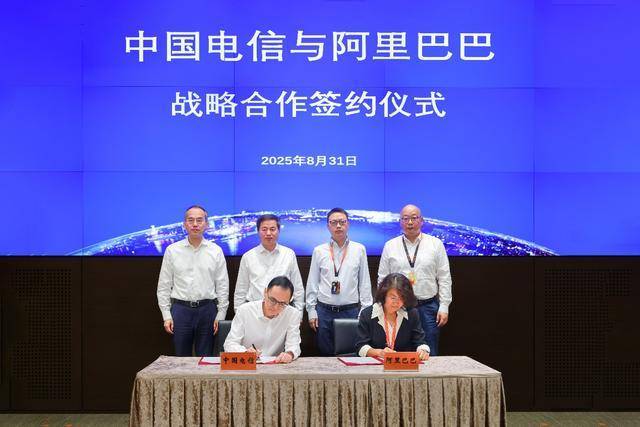
Core Insights - A strategic cooperation agreement has been signed between China Telecom and Alibaba, marking a significant collaboration in the digital era [1][3] - The partnership aims to enhance cooperation in key areas such as cloud and AI infrastructure, e-commerce development, and social value innovation [3] Group 1: Strategic Collaboration - The signing ceremony was attended by high-level executives from both companies, indicating the importance of this partnership [1] - The agreement includes a comprehensive plan to leverage each company's technological and market strengths to create integrated solutions for digitalization and AI applications [3] Group 2: Future Prospects - The collaboration is expected to boost the core competitiveness of both companies and provide strong momentum for the international development of Chinese enterprises [3] - Both companies are committed to driving innovation in digital and intelligent technologies, aiming to create greater social value [3] - This partnership is seen as a strategic move that injects new vitality and momentum into the development of China's digital economy [3]

中期分红稳定性不断提升 逾230家沪市公司连续两年派发“年中红包”
Zheng Quan Shi Bao Wang· 2025-09-01 12:34
Core Viewpoint - The introduction of the new "National Nine Articles" has led to a significant increase in mid-term dividends among listed companies in the Shanghai market, enhancing the stability, sustainability, and predictability of dividend payouts [1][2]. Group 1: Dividend Distribution Trends - As of August 30, 406 listed companies in the Shanghai market have announced mid-term dividend plans, setting new records for both the number of companies and the total dividend amount [1]. - Among these, 233 companies have consistently paid mid-term dividends for two consecutive years, accounting for 58% of the total, with a combined dividend payout of 488.4 billion yuan, representing nearly 90% of this year's mid-term dividends [2]. - The total dividend amount from these 233 companies has increased by 1.6% year-on-year, indicating a stable upward trend in dividend payouts [2]. Group 2: High Dividend Payouts - 55 companies among the 233 have announced mid-term dividends exceeding 500 million yuan, with 76% maintaining or increasing their dividend amounts compared to the previous period [2]. - For instance, Shandong Gold and Zijin Mining reported significant growth in their mid-term dividends, with increases of 125% and 120% respectively [2]. - The trend of multiple dividend distributions within a year is also evident, with 26 companies having paid dividends in their last three reports, showcasing a commitment to shareholder returns [3]. Group 3: Expansion of Mid-term Dividends - The remaining 173 companies have initiated mid-term dividends for the first time following the new policy, contributing to the expansion of mid-term dividend distributions [4]. - Notable examples include Haier Smart Home, which implemented a mid-term dividend of over 2.5 billion yuan, and WuXi AppTec, which announced a mid-term dividend of approximately 1 billion yuan after a significant profit increase [4]. Group 4: Record Dividend Ratios - The average cash dividend ratio for mid-term dividends in 2025 is approximately 57.42%, a substantial increase from 40.95% in 2024 [5]. - 14 companies reported dividend ratios exceeding 100%, with over half of the listed companies having dividend ratios between 30% and 100% [5]. - Major companies like China Mobile, China Telecom, and China Unicom are set to distribute a combined total of over 74 billion yuan in mid-term dividends, with China Mobile alone contributing over 54 billion yuan [5].
千亿险资私募“大基金”动向曝光:鸿鹄三期建仓中国石化,二期新进中国石油、中国神华前十大股东榜
Xin Lang Cai Jing· 2025-09-01 12:20
Core Viewpoint - The article highlights the performance and investment strategy of the Honghu Fund, managed by Xinhua Insurance, which has shown significant growth and strategic positioning in the market through long-term investments in high-dividend stocks [1][2][3]. Group 1: Fund Performance - As of June 30, 2025, the total assets of Honghu Fund reached 57.112 billion yuan, with net assets of 55.684 billion yuan and a total comprehensive income of 5.684 billion yuan [1][3]. - The Honghu Fund has fully invested its initial capital of 50 billion yuan, achieving a performance that is lower in risk and higher in returns compared to benchmarks [3][9]. - The fund's operating income for the period was 1.203 billion yuan, with a net profit of 968 million yuan [3]. Group 2: Investment Holdings - The Honghu Fund is among the top ten shareholders of Yili Group, Shaanxi Coal, and China Telecom, with a combined market value of 12.04 billion yuan as of the end of Q2 2025 [1][5]. - The fund increased its holdings in Yili Group from 1.88% to 2.42%, ranking 7th among its top shareholders, and in Shaanxi Coal from 1.04% to 1.2%, ranking 5th [5][7]. - The Honghu Fund's second phase has entered the top ten shareholders of China National Petroleum and China Shenhua, while the third phase has acquired shares in Sinopec [1][8]. Group 3: Investment Strategy - The Honghu Fund's investment strategy focuses on long-term holdings and low-frequency trading to achieve stable dividend income [2][8]. - The fund targets large listed companies that are constituents of the CSI A500 index, aligning with the insurance industry's need for stable, high-dividend assets [2][7]. - The trend indicates that insurance capital is increasingly utilizing private equity as a significant channel for investment, particularly in high-dividend stocks, which are seen as a safety net in the current market environment [9][10].