分红回购

Search documents
美的集团(00300):2025年净利YOY+14%,分红+回购彰显价值
CSC SECURITIES (HK) LTD· 2026-03-31 07:34
Investment Rating - The report assigns a "Buy" rating for the company, indicating a potential upside of 15% to 35% [5][10]. Core Insights - The company achieved a revenue of RMB 458.5 billion in 2025, representing a year-over-year (YOY) increase of 12.1%. The net profit attributable to shareholders was RMB 43.95 billion, with a YOY growth of 14.0% [7]. - The company is experiencing steady growth across its business segments, with significant revenue increases in overseas markets. The smart home segment generated RMB 299.9 billion, up 11.3% YOY, while the building technology segment saw a 25.7% increase [7]. - The company has announced substantial dividends and share buybacks, with a total dividend payout of RMB 43 per 10 shares, resulting in a dividend yield of approximately 6% for A-shares and 6.2% for H-shares, making it attractive in the market [7]. - The earnings forecast for 2026-2028 predicts net profits of RMB 46.8 billion, RMB 51.1 billion, and RMB 57.0 billion, respectively, with corresponding EPS of RMB 6.2, RMB 6.7, and RMB 7.5 [7]. Financial Summary - The company reported a net profit of RMB 43.95 billion for 2025, with a YOY increase of 14.0% [9]. - The projected net profits for the upcoming years are as follows: RMB 46.78 billion in 2026, RMB 51.08 billion in 2027, and RMB 56.96 billion in 2028, with respective YOY growth rates of 6.5%, 9.2%, and 11.5% [9]. - The company’s revenue is expected to grow from RMB 513.64 billion in 2026 to RMB 662.23 billion by 2028 [11].
贝壳-W(02423):年报业绩点评:大比例优化产能,Q4 主营盈利性边际修复
Changjiang Securities· 2026-03-23 11:07
Investment Rating - The investment rating for the company is "Buy" and is maintained [7]. Core Insights - The company has optimized its capacity significantly, leading to a notable reduction in costs. The Q4 brokerage business has shown a marginal improvement in profit margins, while the leasing business has been profitable for the entire year, and losses in home decoration have narrowed. Future profit improvements are anticipated if policies are implemented or if the market stabilizes [2][8]. - The company reported a revenue of 94.6 billion yuan in 2025, representing a 1.2% increase, while the net profit attributable to shareholders was 2.99 billion yuan, down 26.3%. The adjusted net profit was 5.02 billion yuan, down 30.3%. In Q4 2025, revenue was 22.2 billion yuan, a decrease of 28.7%, with a net profit of 90 million yuan, down 84.6% [4][8]. - The company has a strong cash position and has executed significant share buybacks and dividends, totaling over 1.2 billion USD, resulting in a comprehensive return rate exceeding 6% [2][4]. Summary by Sections Revenue and Profitability - The company achieved a total revenue of 94.6 billion yuan in 2025, with a slight increase of 1.2%. However, the net profit attributable to shareholders decreased by 26.3% to 2.99 billion yuan, and the adjusted net profit fell by 30.3% to 5.02 billion yuan [4][8]. - In Q4 2025, the company reported a revenue of 22.2 billion yuan, down 28.7%, and a net profit of 90 million yuan, down 84.6% [4][8]. Business Performance - The company has focused on optimizing its capacity, resulting in a significant reduction in costs. The brokerage business has shown a marginal improvement in profit margins, while the leasing business has been profitable throughout the year, and losses in home decoration have decreased [2][8]. - The company’s gross transaction value (GTV) decreased by 5.0% to 3.2 trillion yuan, with the existing and new housing businesses declining by 4.2% and 8.2%, respectively [8]. Shareholder Returns - The company has declared approximately 300 million USD in dividends and has repurchased 920 million USD worth of shares, leading to a total return of about 1.2 billion USD, which is over a 9% increase year-on-year [4][8].
【国联民生能源】MONGOL MINING深度报告:从Coking变Mining,综合矿业龙头崛起
Xin Lang Cai Jing· 2026-02-10 12:42
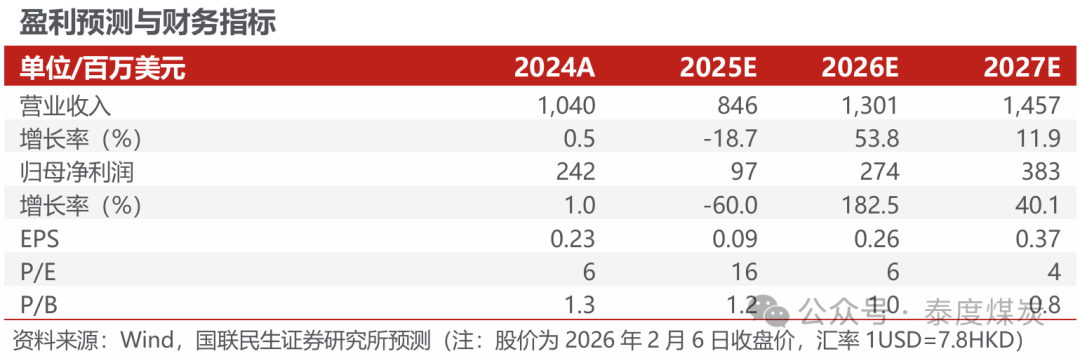
Overview - The company is a leading Mongolian integrated mining enterprise with a strong shareholder background, transitioning from a single coking coal producer to a diversified producer of gold, copper, and other minerals [1][11] - The company has a significant coal resource of 916 million tons, with a production capacity that has been increasing, and it is expected to benefit from rising coal prices in the future [2][5] Coal as the Foundation - The company has two operational coking coal mines, UHG and BN, located in the globally recognized TT coalfield, with coal quality comparable to major Chinese mining regions [2][26] - The company’s raw coal production is expected to reach 14.67 million tons in 2025, a year-on-year decrease of 10.2%, while the washed coking coal sales are projected to increase by 4.3% to 8.22 million tons [2][32] - The company’s coal pricing follows domestic trends but lags behind, with expectations of alignment with spot prices as the proportion of competitive sales increases [2][34] - The cost of coal production is projected to decrease significantly after the completion of the GS-GM cross-border railway in 2027, potentially increasing profits by approximately $60 million [2][42] Gold and Copper as Wings - The company holds a 50% stake in EM, which has rich gold resources, with the BKH gold mine expected to reach a production capacity of 85,000 ounces by 2026, contributing an estimated $97 million to net profit [3][5] - The company also has a 50.5% stake in UCC, which has significant copper resources, indicating strong future development potential [3][5] Financial Analysis - The company has successfully resolved its debt crisis and is now in a low net debt phase, with expectations of initiating dividend distributions in 2026 [4][20] - The projected net profit for 2026 is $274 million, with a potential dividend yield of 5.2% to 8.7% based on different payout ratios [4][5] - The company’s revenue is expected to grow significantly from $846 million in 2025 to $1.301 billion in 2026, with net profit increasing from $97 million to $274 million [5][8] Recent Catalysts - The reduction of domestic coal production capacity in China is expected to lead to a tightening supply and an increase in coal prices, benefiting the company’s sales [9][41] - The recent surge in gold prices is anticipated to positively impact the company’s profitability, with expectations of continued price increases due to global economic factors [9][41] Shareholder Structure - The company has a strong shareholder base, including the largest private group in Mongolia, MCS, and strategic long-term investors, which supports its transition to a diversified mining company [1][16] - The stability of the shareholder structure has been maintained through various phases of the company's development, enhancing its market position [1][16]


MONGOL MINING(00975):深度报告:从Coking变Mining,综合矿业龙头崛起
Guolian Minsheng Securities· 2026-02-10 11:37
Investment Rating - The report gives a "Buy" rating for MONGOL MINING (0975.HK) with a current price of HKD 11.79 [3]. Core Insights - MONGOL MINING has transitioned from a single coking coal producer to a diversified mining company, now involved in gold and copper production, with significant growth potential in these sectors [8][10]. - The company has a strong cost advantage in its coal operations, with a significant increase in coal production and sales expected in the coming years, particularly as it benefits from improved pricing dynamics in the Chinese market [10][52]. - The company is expected to initiate dividend distributions in 2026, with a projected dividend yield of up to 8.7% based on anticipated profit growth [8][10]. Company Overview - MONGOL MINING is the largest privately-owned mining company in Mongolia, focusing on high-quality coking coal, gold, and copper [15]. - The company has undergone significant changes since its IPO in 2010, evolving through various phases including resource integration, debt restructuring, and diversification into precious metals [15][24]. Coal Operations - The company has substantial coal resources, with a total resource volume of 916 million tons and a reserve of 612 million tons, primarily from its UHG and BN coal mines [8][34]. - The coal production is expected to reach 14.67 million tons in 2025, with a focus on increasing the washing rate to enhance product quality and sales [8][42]. Financial Performance - The company has shown a recovery in its financials post-debt restructuring, with a projected net profit of USD 242 million in 2024, increasing to USD 383 million by 2027 [3][10]. - The earnings per share (EPS) are expected to rise from USD 0.23 in 2024 to USD 0.37 in 2027, reflecting strong operational performance and cost management [3][10]. Market Dynamics - The pricing of Mongolian coal is expected to align more closely with the spot market prices in China, benefiting from a reduction in supply and increased demand [10][52]. - The company is well-positioned to capitalize on the anticipated supply shortages in the coking coal market in Inner Mongolia and Hebei, which are projected to continue through 2029 [49][50]. Future Prospects - The BKH gold mine is expected to contribute significantly to profits, with a projected output of 76,500 ounces in 2026, potentially generating USD 97 million in net profit [8][10]. - The company is also exploring further expansion in copper mining, with significant resources identified in its White Hill project [8][10].
牛市下半场-实物再通胀-2026年度投资策略
2026-01-20 01:50
Summary of Key Points from Conference Call Records Industry Overview - The A-share market is transitioning from a traditional model reliant on real estate and credit impulses to a new paradigm focused on prudent spending, efficient turnover, and equity enhancement, termed "weight loss and muscle gain" [1][2] - The structure of Return on Equity (ROE) in A-shares has undergone a revolutionary change, with the drag from real estate nearing its end, while technology, manufacturing, and dividend sectors are seeing stable increases in ROE [1][2] Core Insights and Arguments - Since 2018, the contribution of ROE from financial and real estate sectors has declined, while ROE in technology (TMT) and high-end manufacturing has significantly increased, from 3% to 7% and from 5% to 6%, respectively [1][7] - Free cash flow is highlighted as a crucial indicator of corporate profitability quality, with A-share non-financial companies generating a stable 20-25 yuan of free cash flow per 100 yuan of EBITDA, a phenomenon not seen in the past 20-30 years [1][13] - The A-share market is shifting from a scenario of "only growing bones, not meat" to one where dividend capabilities are significantly enhanced, leading to a market characterized by more gains and fewer losses [1][15] Important but Overlooked Content - The traditional economic model has shown that real estate and credit impulses significantly impact the stock market, especially during economic downturns, where relaxed real estate policies convert future growth prospects into credit, leading to increased mortgage loans [3][4] - The new paradigm emphasizes direct financing over bank cash financing, which supports long-term asset allocation in stocks, similar to how U.S. residents invest a portion of their income into the stock market through pensions or annuities [5] - The transition from old to new economic drivers has resulted in a notable increase in ROE contributions from technology and high-end manufacturing sectors, while the real estate sector's contribution has diminished to nearly zero [6][9] - The financial and real estate sectors have performed poorly in recent years, with the ROE for the financial sector dropping from 13% in 2018 to 8.8% currently, and the real estate sector experiencing continuous losses [8][11] - Future trends in the A-share market will increasingly rely on emerging industries and high-quality profitability, with sectors like communication, media, electronics, and machinery showing significant ROE increases [12][14] Future Investment Outlook - If dividend repurchase behaviors can be sustained, the overall ROE of A-shares is expected to increase by an additional 3 percentage points over the next decade [14] - The A-share market is projected to become a crucial component of residents' asset allocation, enhancing the market's attractiveness to capital and boosting investor confidence [14][17] - The influx of resident capital into the stock market is expected to stabilize market dynamics, moving away from short-term speculative behaviors to a focus on long-term returns [18][19]
步长制药:深耕创新、拓展全球,分红回购常态化,十八载公益不停步
Cai Fu Zai Xian· 2026-01-14 07:33
Core Viewpoint - Recently, Buchang Pharma (603858.SH) has gained market attention for its dual strength in high-quality development and social responsibility, showcasing its commitment through innovative drug development, capital market returns, and public welfare initiatives [1] Group 1: Innovative Drug Pipeline - Buchang Pharma has accelerated its efforts in innovative drug development, establishing a diversified pipeline that includes patented traditional Chinese medicine, biopharmaceuticals, chemical drugs, and vaccines, with significant breakthroughs expected by 2025 [2] - The company is advancing its first Class 1 new drug, Epoetin α, aimed at treating renal anemia and chemotherapy-induced anemia, which could fill a gap in the domestic long-acting EPO market valued at 15 billion [2] - The first biosimilar drug, Adalimumab injection, is under review, targeting multiple autoimmune diseases with substantial market potential [2] - The company is also progressing in clinical trials for several targeted cancer therapies, including BC001 and BC008-1A [2] Group 2: Traditional Chinese Medicine and Chemical Drug Expansion - In traditional Chinese medicine, the company is advancing clinical trials for Qi-tonifying granules and heart failure treatments, reinforcing its core advantages [4] - In the chemical drug sector, Buchang Pharma has launched 17 new generic drugs in 2023, including products that tap into a 20 billion antiviral drug market [4] - By the end of 2025, the company expects 39 products to have passed evaluations, with several winning bids in centralized procurement to expand market share [4] Group 3: Globalization Strategy - Buchang Pharma is actively pursuing a globalization strategy, with its products now available in 38 countries and regions across Asia, Europe, Africa, and the Americas [5] - The company has signed exclusive supply agreements for its new drug Epoetin α in Southeast Asia and is collaborating with Russian firms to promote its products in the Eurasian Economic Union [5] - Several traditional Chinese medicine products have received international recognition and registration, enhancing the company's global footprint [7] Group 4: Shareholder Returns - The company has maintained a stable return mechanism for investors, with cumulative dividends reaching 7.948 billion and share buybacks totaling 1.744 billion since its listing [8] - In 2025, the company repurchased 6.6206 million shares, demonstrating confidence in its future growth [8] Group 5: Corporate Social Responsibility - Buchang Pharma has been committed to social responsibility, sponsoring the "Together, Build China's Heart" public welfare project for 18 years, providing medical assistance across multiple specialties [9] - The company has contributed nearly 33 billion in taxes, supporting regional economic development [11] - The chairman emphasized the company's focus on innovation, global expansion, and social responsibility as key drivers for future growth [11]

虐心的赚钱套路...
Ge Long Hui· 2025-12-10 16:35
Group 1 - The core argument emphasizes the potential of investing in Hong Kong stocks, highlighting their high dividend yields and share buybacks as key factors for long-term profitability [1][2] - The liquidity in the Hong Kong market is relatively low, with daily trading volumes around HKD 200 billion, which is about one-tenth of that in the A-share market [1] - The market has seen significant price fluctuations, with examples of stocks experiencing dramatic increases, such as a tenfold rise in companies like Sunac China and Heber, indicating a high potential for both gains and losses [2] Group 2 - The presence of many high-quality companies in the Hong Kong market is noted, suggesting that even investors without deep financial knowledge can identify strong performers [2] - The combination of high dividends and share buybacks provides a safety net for investors, allowing them to recover their investments over time without using leverage [2] - The overall sentiment reflects a challenging yet potentially rewarding investment environment, where patience and strategic stock selection can lead to significant returns [2]
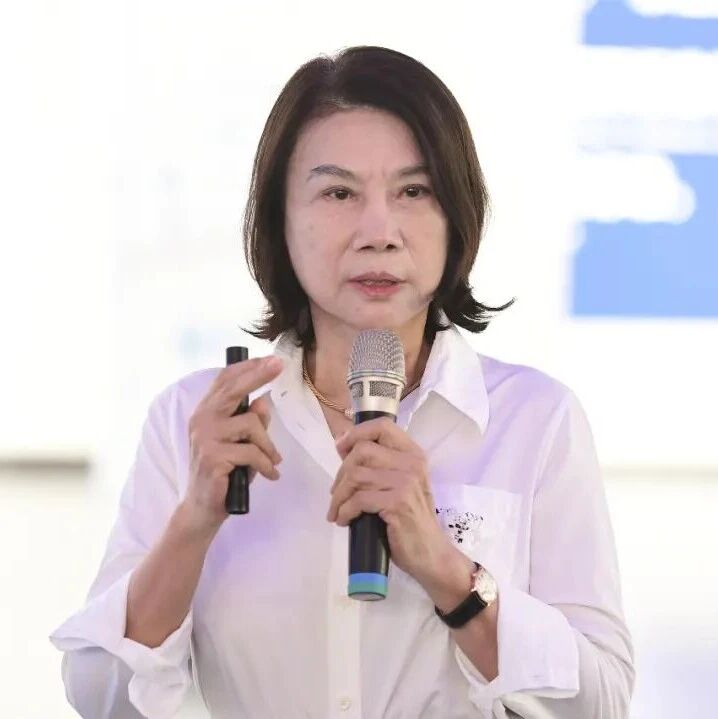
格力股东大会董明珠“听劝”少说话,谈及分红称:股东希望“马儿跑”,也请让“马儿有草吃”
Sou Hu Cai Jing· 2025-11-25 11:33
Core Viewpoint - Gree Electric Appliances held its second extraordinary general meeting of shareholders in 2025, where key topics such as dividend distribution, channel transformation, and internationalization strategy were discussed [1][3] Dividend Distribution - The meeting approved a mid-term profit distribution plan, with a cash dividend of 10 yuan per 10 shares (including tax), totaling 5.585 billion yuan [1] - Since its listing, Gree has raised a total of 5 billion yuan but has distributed over 170 billion yuan in dividends, highlighting the company's commitment to shareholder returns [3] Management and Leadership - Gree's new president, Zhang Wei, and other senior executives took a more prominent role in addressing shareholder questions, with Chairwoman Dong Mingzhu summarizing the discussions at the end [3] - Dong emphasized the importance of creating value for consumers as the foundation for sustainable profitability and subsequent dividends [3] Business Strategy - Gree's diversification strategy includes the launch of "Dong Mingzhu Health Home" stores, with over 1,000 locations established since February, achieving a sales ratio of 1:1 between air conditioning and non-air conditioning products in some stores [3][4] - Non-air conditioning products like refrigerators and washing machines are becoming key profit centers for dealers, while air conditioning is positioned as a cost-supporting business [4] Channel Transformation - Starting January 1, Gree will implement a 10-year free warranty for air conditioning, refrigerators, and washing machines [5] - The company is pursuing a flat channel transformation to eliminate middle layers, allowing direct communication between end dealers and headquarters [5] International Expansion - Gree has shifted from primarily OEM exports to nearly 80% of its exports being under its own brand, focusing on emerging markets in Africa and Latin America for future growth [5] - The company plans to leverage existing traditional sales channels from its home appliance business to support its global market expansion [6] B2B Business Development - Gree has expanded its industrial products and green energy sectors, with a focus on smart equipment in various fields, including new energy vehicle components and robotics [6] - The sales strategy for machinery includes a combination of direct sales and agency models, with ongoing development of agency channels in Southeast Asia, India, and Russia [6]

格力股东会,董明珠已“少说话”,仅在交流环节才第一次拿起话筒!称累计分红超1700亿:股东希望“马儿跑”,也请让“马儿有草吃”!
新浪财经· 2025-11-25 09:43
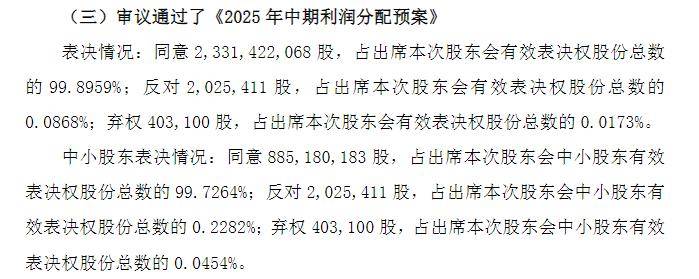
Core Viewpoint - Gree Electric Appliances held its second extraordinary general meeting of shareholders for 2025, addressing various topics including product planning, channel transformation, dividend repurchase, and international expansion [2]. Dividend Distribution - The meeting approved the 2025 interim profit distribution plan, with 2,331,422,068 shares voting in favor, representing 99.8959% of the total valid voting rights [7]. - Gree plans to distribute a cash dividend of 10 yuan (before tax) for every 10 shares, totaling 5.585 billion yuan [9]. - The chairman emphasized the importance of sustainable business practices, stating that Gree has distributed over 170 billion yuan in dividends since its listing, despite raising only 5 billion yuan in funds [9]. Business Strategy and Product Development - Gree's sales director reported that since the launch of the "Dong Mingzhu Health Home" in February, over 1,000 stores have opened, with sales shifting from a 7:3 ratio of air conditioners to non-air products to a more balanced 1:1 [10]. - The company is undergoing a channel transformation aimed at flattening the structure, allowing direct communication between end distributors and headquarters [10]. - The chairman defended the company's diversification strategy, stating that success lies in focusing on core technologies and expanding into related fields, rather than merely adhering to traditional specialization [11]. Management and Leadership - The chairman has adopted a more reserved approach, allowing younger management team members to take the lead, as suggested by a former independent director [11].
中远海控(601919)季报点评:25Q3归母净利同比-55%/环比+63%至95.3亿 持续推进分红回购 集运龙头长期价值向好
Xin Lang Cai Jing· 2025-11-06 08:33
Core Viewpoint - The company reported a decline in revenue and net profit for the first three quarters of 2025, with a significant drop in Q3 performance, while also announcing a share buyback plan to enhance shareholder value [1][5]. Financial Performance - Revenue for the first three quarters of 2025 was 167.6 billion yuan, down 4.1% year-on-year; Q3 revenue was 58.5 billion yuan, down 20.4% year-on-year but up 14.4% quarter-on-quarter [1]. - Net profit attributable to shareholders for the first three quarters was 27.07 billion yuan, down 29% year-on-year; Q3 net profit was 9.53 billion yuan, down 55.1% year-on-year but up 63.2% quarter-on-quarter [1]. - Excluding non-recurring items, net profit for the first three quarters was 26.97 billion yuan, down 29.1% year-on-year; Q3 was 9.50 billion yuan, down 55.3% year-on-year but up 63.1% quarter-on-quarter [1]. Business Segments - In Q3, the estimated revenue from container shipping was approximately 56.23 billion yuan, down 21.2% year-on-year, while supply chain revenue (excluding shipping) was 11.31 billion yuan, up 4.8% year-on-year [3]. - Container shipping line revenue was 51.78 billion yuan, down 23% year-on-year but up 15% quarter-on-quarter; performance varied across routes, with significant declines in trans-Pacific and Asia-Europe routes [3]. - Q3 container volume was 6.903 million TEU, up 4.9% year-on-year and 1.5% quarter-on-quarter [3]. Pricing and Cost Analysis - The average revenue per container in Q3 was 1,052 USD/TEU, down 27% year-on-year but up 14% quarter-on-quarter; foreign trade container revenue was 1,276 USD/TEU, down 26% year-on-year but up 16% quarter-on-quarter [3]. - Estimated cost per container in Q3 was approximately 879 USD/TEU, down 2.3% year-on-year, resulting in a gross profit of 263.9 USD/TEU, down 57.7% year-on-year [3]. Profitability Metrics - Q3 EBIT margin for container shipping was approximately 20.9%, down 18.4 percentage points year-on-year but up 7.1 percentage points quarter-on-quarter; net profit margin was 16.2%, down 15.7 percentage points year-on-year but up 5.6 percentage points quarter-on-quarter [4]. - Terminal business revenue in Q3 was 3.08 billion yuan, up 8.1% year-on-year, with a gross margin of 26.0%, down 2.9 percentage points year-on-year [4]. Market Outlook - For Q4, expectations are for price support in main shipping routes due to reduced capacity and upcoming contract renewals, despite concerns over geopolitical events affecting shipping routes [4]. - The company maintains a positive outlook on the value of leading container shipping networks, supported by a strong balance sheet and stable shareholder returns [5]. Valuation and Investment Recommendations - The company is projected to have net profits of 31.04 billion, 20.23 billion, and 21.78 billion yuan for 2025-2027, with corresponding PE ratios of 7, 11, and 11 times [5]. - Current valuations for H and A shares are seen as having a safety margin, with significant pessimistic expectations already priced in [6].