
COSL(601808)

Search documents
石油股集体走低 地缘事件对油价支撑弱化 机构仍看好三桶油长期投资价值
Zhi Tong Cai Jing· 2025-12-09 03:20
Group 1 - Oil stocks collectively declined, with PetroChina (00857) down 2.88% to HKD 8.43, Sinopec (00386) down 2.21% to HKD 4.42, CNOOC Services (601808) (02883) down 2.18% to HKD 7.19, and CNOOC (00883) down 1.95% to HKD 21.16 [1] - The ongoing peace negotiations between Russia and Ukraine are progressing slowly, with recent high-level meetings failing to reach an agreement, leading to a neutral to bearish impact on oil prices [1] - Everbright Securities reported that the "three major oil companies" are deepening reserves and production while strengthening cost control to respond to external uncertainties, highlighting their resilience during periods of declining oil prices [1] Group 2 - The "three major oil companies" are expected to achieve long-term growth that can withstand oil price cycles, emphasizing their long-term investment value [1]


中海油田服务(02883) - 中国国际金融股份有限公司关於中海油田服务股份有限公司取消监事会并修订...
2025-12-08 09:04
中海油田服務股份有限公司 CHINA OILFIELD SERVICES LIMITED (於中華人民共和國註冊成立之股份有限公司) (股票代號:2883) 於本公告日期,本公司執行董事為趙順強先生(董事長)、盧濤先生 及肖佳先生;本公司非執行董事為范白濤先生及劉秋東先生;本公司 獨立非執行董事為趙麗娟女士、郭琳廣先生及姚昕先生。 债券代码:136450 债券简称:16 油服 02 中国国际金融股份有限公司 关于中海油田服务股份有限公司 取消监事会并修订《公司章程》的临时受托管理事务报告 中国国际金融股份有限公司作为中海油田服务股份有限公司(以下简称"发 行人"或"公司")2016 年公司债券(第一期)(品种二)(债券简称:"16 油服 02")(以下简称"本次债券")的债券受托管理人,持续密切关注对债券持有人 权益有重大影响的事项。根据《公司债券发行与交易管理办法》《公司债券受托 管理人执业行为准则》等相关规定及本次债券《受托管理协议》的约定,现就本 次债券重大事项报告如下: 一、重大事项 海外監管公告 本公告乃根據《香港聯合交易所有限公司證券上市規則》第13.10B條 規定而作出。 2025年12月8日 ...
石油化工行业周报:长丝淡季不淡,基本面较为坚挺-20251207
Shenwan Hongyuan Securities· 2025-12-07 15:24
Investment Rating - The report maintains a "Positive" outlook on the petrochemical industry, particularly highlighting the resilience of polyester filament in the off-season [3]. Core Insights - The demand for polyester filament has remained strong, with downstream textile operating rates reaching a high of 69.45% in early November and maintaining around 90% for polyester filament production [4][5]. - Inventory levels for polyester filament and downstream fabrics are relatively low, indicating a healthy supply-demand balance [7][8]. - Profitability for polyester filament has improved significantly since September, with expectations for further profit increases in Q4 [9][10]. Summary by Sections Polyester Filament Sector - Polyester filament has entered a demand peak since September, with downstream textile operating rates consistently high, peaking at 69.45% [4][5]. - As of December 5, the operating rate for polyester filament was 90.15%, indicating strong production levels [4][5]. - Inventory levels for polyester filament (POY/FDY/DTY) are at 16.3/21.2/24.3 days, remaining low compared to the annual average [7][8]. Upstream Sector - Brent crude oil prices increased to $63.75 per barrel, reflecting a 0.87% rise from the previous week [18]. - The number of active oil rigs in the U.S. increased to 549, indicating a slight uptick in drilling activity [29]. Refining Sector - The comprehensive price spread for major refined products in Singapore decreased to $19.06 per barrel, down by $0.57 from the previous week [54]. - Domestic refining margins are expected to improve as oil prices stabilize [51]. Investment Recommendations - The report recommends focusing on high-quality companies in the polyester filament sector, such as Tongkun Co., and bottle-grade PET producers like Wankai New Materials [12]. - It also suggests monitoring large refining companies like Hengli Petrochemical and Rongsheng Petrochemical due to expected improvements in cost structures [12]. - For upstream exploration and production, companies like CNOOC and offshore oil service firms are highlighted for their potential performance improvements [12].



原油周报:俄乌局势反复扰动,国际油价保持区间震荡-20251207
Xinda Securities· 2025-12-07 12:57
Investment Rating - The report maintains a "Positive" investment rating for the oil processing industry, consistent with the previous rating [1]. Core Insights - International oil prices experienced slight fluctuations due to geopolitical factors, with Brent and WTI prices reaching $63.75 and $60.08 per barrel, respectively, as of December 5, 2025 [2][9]. - The report highlights an increase in U.S. crude oil production to 13.815 million barrels per day, with active drilling rigs rising to 413 [40]. - The refining capacity utilization in the U.S. increased to 94.10%, indicating strong demand for crude oil processing [51]. - The report identifies key companies in the sector, including China National Offshore Oil Corporation (CNOOC), China Petroleum & Chemical Corporation (Sinopec), and China National Petroleum Corporation (PetroChina) [3]. Summary by Sections Oil Price Review - As of December 5, 2025, Brent crude futures settled at $63.75 per barrel, up $1.37 (+2.20%) from the previous week, while WTI crude futures rose to $60.08 per barrel, an increase of $1.53 (+2.61%) [26]. Offshore Drilling Services - The number of global offshore self-elevating drilling platforms increased to 368, with a net addition of 2 platforms, while floating drilling platforms rose to 130 [29]. Crude Oil Supply - U.S. crude oil production reached 13.815 million barrels per day, with a slight increase of 0.1 million barrels per day from the previous week [40]. Crude Oil Demand - U.S. refinery crude oil processing volume increased to 16.876 million barrels per day, with a utilization rate of 94.10% [51]. Crude Oil Inventory - As of November 28, 2025, total U.S. crude oil inventories stood at 839 million barrels, reflecting a weekly increase of 824,000 barrels (+0.10%) [60]. Refined Oil Prices - In the North American market, as of December 5, 2025, average prices for diesel, gasoline, and jet fuel were $97.93, $77.61, and $87.74 per barrel, respectively [82].



一带一路故事绘丨扎根伊拉克戈壁腹地的中国石油人
Xin Hua She· 2025-12-05 11:51
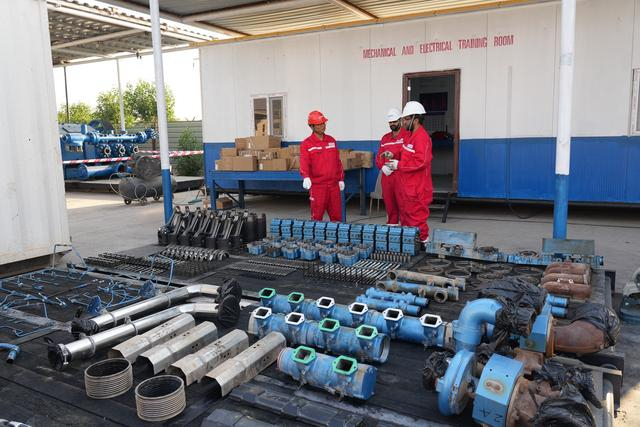
Core Viewpoint - The article highlights the significant achievements of CNOOC Services in the Maysan oil field in Iraq, showcasing their technological advancements and contributions to oil production and employee training over the past decade [1]. Group 1: Technological Advancements - CNOOC Services developed the "Xuanji" system in 2014, breaking the technological monopoly of a few Western companies in the high-end drilling sector [1]. - The "Xuanji" system was introduced to the Iraqi oil field operations in 2020, enhancing drilling capabilities [1]. - The "Xuanxue" system has completed over 5,000 logging operations in Iraq, providing a "Chinese solution" for increasing oil reserves and production [1]. Group 2: Production Growth - Since the signing of the technical service contract with the Iraqi Ministry of Oil in 2010, the daily crude oil production from the Maysan oil field has increased from 88,000 barrels to 300,000 barrels by 2022, maintaining stable production levels [1]. Group 3: Employee Training and Development - CNOOC Services established a comprehensive training station and practical training base to enhance the operational skills of both Chinese and Iraqi personnel [1].

中海油田服务(02883) - 截至二零二五年十一月三十日股份发行人的证券变动月报表
2025-12-03 08:44
公司名稱: 中海油田服務股份有限公司 FF301 股份發行人及根據《上市規則》第十九B章上市的香港預託證券發行人的證券變動月報表 截至月份: 2025年11月30日 狀態: 新提交 致:香港交易及結算所有限公司 呈交日期: 2025年12月3日 I. 法定/註冊股本變動 | 1. 股份分類 | 普通股 | 股份類別 | H | | | 於香港聯交所上市 (註1) | | 是 | | | --- | --- | --- | --- | --- | --- | --- | --- | --- | --- | | 證券代號 (如上市) | 02883 | 說明 | | | | | | | | | | | 法定/註冊股份數目 | | | 面值 | | | 法定/註冊股本 | | | 上月底結存 | | | 1,811,124,000 | RMB | | | 1 RMB | | 1,811,124,000 | | 增加 / 減少 (-) | | | | 0 | | | RMB | | 0 | | 本月底結存 | | | 1,811,124,000 | RMB | | | 1 RMB | | 1,811,124,000 ...
中海油服(601808) - 中海油田服务股份有限公司章程(2025年修订)
2025-12-02 10:47
中海油田服务股份有限公司 (于中华人民共和国注册成立之股份有限公司) 章 程 二 O 一八年五月三十日年度股东大会决议修改 二 OO 二年九月二十六日临时股东大会决议通过 二 OO 二年十月三十日临时股东大会决议修改 二 OO 三年五月二十七日股东大会决议修改 二 OO 四年十一月五日临时股东大会决议修改 二 OO 六年十一月二十二日临时股东大会决议修改 二 OO 七年六月六日年度股东大会决议修改 二 OO 九年六月三日年度股东大会决议修改 二 O 一 O 年十二月二十二日临时股东大会决议修改 二 O 一一年五月二十三日年度股东大会决议修改 二 O 一三年五月二十四日年度股东大会决议修改 二 O 一三年十二月二十日临时股东大会决议修改 二 O 一三年五月二十四日年度股东大会决议授权董事会修改 二 O 一六年五月三十一日年度股东大会决议修改 二 O 一六年七月二十二日临时股东大会决议修改 二 O 一七年六月一日年度股东大会决议修改 二 O 一七年十二月十三日临时股东大会决议修改 二 O 一九年五月三十日年度股东大会决议修改 本章程根据《上市公司章程指引》(以下简称《章程指引》)、 《关于进一步促进境外上市公司规 ...
中海油服(601808) - 中海油服董事会议事规则(2025年修订)
2025-12-02 10:47
中海油田服务股份有限公司 董事会议事规则 第一章 总则 第一条 为规范中海油田服务股份有限公司(以下简称"公 司")董事会内部机构及运作程序,根据《中华人民共和国公司 法》、《上市公司治理准则》、《香港联合交易所有限公司证 券上市规则》(以下简称"《联交所上市规则》")、《上海证 券交易所股票上市规则》(以下简称"《上交所上市规则》", 与《联交所上市规则》合称"《上市规则》")等境内外上市地 监管规定及《中海油田服务股份有限公司章程》(以下简称"公 司章程")的规定,结合公司实际,制定本规则。 第二条 董事会是公司股东会的执行机构及公司经营管理 的决策机构,维护公司和全体股东的利益,在公司章程和股东 会的授权范围内,负责公司发展目标和重大经营活动的决策, 对股东会和全体股东负责,董事会的职权由公司章程确定。 第二章 董事会组织规则 第三条 公司董事会的组成人数及独立董事的比例,由公 司章程确定。 董事会设董事长一名,可根据需要设副董事长一名。董事 长和副董事长由公司董事担任,以全体董事的过半数选举产生 和罢免。董事长职权根据公司章程及董事会授权决定。 第四条 董事由股东会从董事会提名的候选人或代表公司 发行 ...
中海油服(601808) - 中海油服关联交易决策制度(2025年修订)
2025-12-02 10:47
中海油田服务股份有限公司 关联交易决策制度 第一章 总则 第一条 为加强中海油田服务股份有限公司(以下简称 "公司"或"本公司")关联交易管理,明确管理职责和分 工,维护公司、公司股东、中小投资者及债权人的合法利益, 保证公司与关联人之间订立的关联交易合同符合公允、公平、 公正、公开的原则,根据《中华人民共和国公司法》、《中 华人民共和国证券法》、《香港联合交易所有限公司证券上 市规则》、《上海证券交易所股票上市规则》等法律、法规、 监管规定及《中海油田服务股份有限公司章程》(以下简称 "公司章程")的有关规定,特制订本制度。 第二章 关联人、关联交易的确认 第二条 公司关联人包括《上海证券交易所股票上市规则》 规定的关联法人和关联自然人及《香港联合交易所有限公司 证券上市规则》规定的关连人士。 (一) 具有下列情形之一的法人或其他组织,为公司关联 法人: 1) 直接或者间接控制公司的法人或其他组织; 2) 由上述第 1 项所述法人或其他组织直接或者间接控 制的除公司、控股子公司及控制的其他主体以外的法人或其 他组织; 1 3) 由下述第(二)款所列公司的关联自然人直接或者间 接控制的、或者由关联自然人担任董 ...
中海油服(601808) - 中海油服股东会议事规则(2025年修订)
2025-12-02 10:47
中海油田服务股份有限公司 股东会议事规则 第一章 总则 第一条 为规范中海油田服务股份有限公司(以下简称"公 司")股东会运作,保证股东会召集、召开、决议程序的合法性, 提高股东会议事效率,保障股东合法权益,根据《中华人民共 和国公司法》(以下简称"《公司法》")、《上市公司股东会规 则》等法律、法规及《中海油田服务股份有限公司章程》(以 下简称"公司章程")的规定,特制定本规则。 第二条 公司应当严格按照法律、行政法规、公司章程及本 规则的相关规定召开股东会,保证股东能够依法行使权利。 公司董事会应当切实履行职责,认真、按时组织股东会。公 司全体董事应当勤勉尽责,确保股东会正常召开和依法行使职 权。 第三条 股东会应当在《公司法》和公司章程规定的范围内 行使职权。 第四条 公司股东(或股东代理人)、董事、首席执行官(CE O)、总裁、副总裁及其他高级管理人员、见证律师、公司外部 审计师及股东会召集人邀请的人员有权参加股东会。 第二章 股东会的召集 第五条 股东会由董事会召集,分为年度股东会和临时股东 会。 第六条 年度股东会每年召开一次,应当于上一会计年度完 1 结后的六个月内举行。 第七条 有下列情形之一 ...