
CCB(601939)

Search documents
二级资本债周度数据跟踪(20251103-20251107)-20251108
Soochow Securities· 2025-11-08 12:06
Report Summary 1. Report Industry Investment Rating - Not provided in the content 2. Report's Core View - This is a weekly data tracking report on secondary capital bonds from November 3, 2025, to November 7, 2025, covering primary market issuance, secondary market trading, and valuation deviation of individual bonds [1][2][3] 3. Summary by Relevant Catalogs Primary Market Issuance - Two secondary capital bonds were newly issued in the inter - bank and exchange markets, with a total issuance scale of 15 billion yuan. The issuance term is 10 years, the issuers are subsidiaries of central enterprises and local state - owned enterprises, the issuer ratings are AAA, and the issuer regions are Guangdong and Shandong provinces [1][6] Secondary Market Trading - **Trading Volume**: The weekly trading volume of secondary capital bonds was approximately 186 billion yuan, a decrease of 13.8 billion yuan compared to the previous week. The top three bonds in terms of trading volume were 25 Agricultural Bank of China Secondary Capital Bond 03A(BC) (16.084 billion yuan), 25 Agricultural Bank of China Secondary Capital Bond 03B(BC) (10.937 billion yuan), and 25 Industrial and Commercial Bank of China Secondary Capital Bond 01BC (5.996 billion yuan). By issuer region, the top three in trading volume were Beijing (about 140.8 billion yuan), Shanghai (about 11.6 billion yuan), and Fujian (about 8.6 billion yuan) [2] - **Yield to Maturity**: As of November 7, for 5Y secondary capital bonds, the yield - to - maturity changes of ratings AAA-, AA+, and AA compared to the previous week were 4.16BP, 3.24BP, and 3.24BP respectively; for 7Y bonds, they were 1.30BP, - 0.08BP, and - 0.08BP respectively; for 10Y bonds, they were 0.64BP, 0.64BP, and 0.64BP respectively [2][11] Valuation Deviation of Top 30 Individual Bonds - **Discount Bonds**: The top three discount bonds were 21 Jiutai Rural Commercial Secondary (-48.9752%), 22 Jiangshan Rural Commercial Bank Secondary Capital Bond 01 (-0.4149%), and 24 Longwan Rural Commercial Bank Secondary Capital Bond 01 (-0.3907%). The Zhongzheng implied ratings were mainly AA+, AA-, and A+, and the regional distribution was mostly in Tianjin, Guangdong, and Shanghai [3][14] - **Premium Bonds**: The top three premium bonds were 24 Qingdao Bank Secondary Capital Bond 01 (0.5969%), 23 Chouzhou Commercial Bank Secondary Capital Bond 01 (0.5512%), and 25 Jinshang Bank Secondary Capital Bond 01 (0.4984%). The Zhongzheng implied ratings were mainly AAA-, AA+, and AA, and the regional distribution was mostly in Beijing, Shanghai, and Guangdong [3][15]




黄金税收新规落地观察:银行投资金条“价稳量足”
Shang Hai Zheng Quan Bao· 2025-11-08 05:05
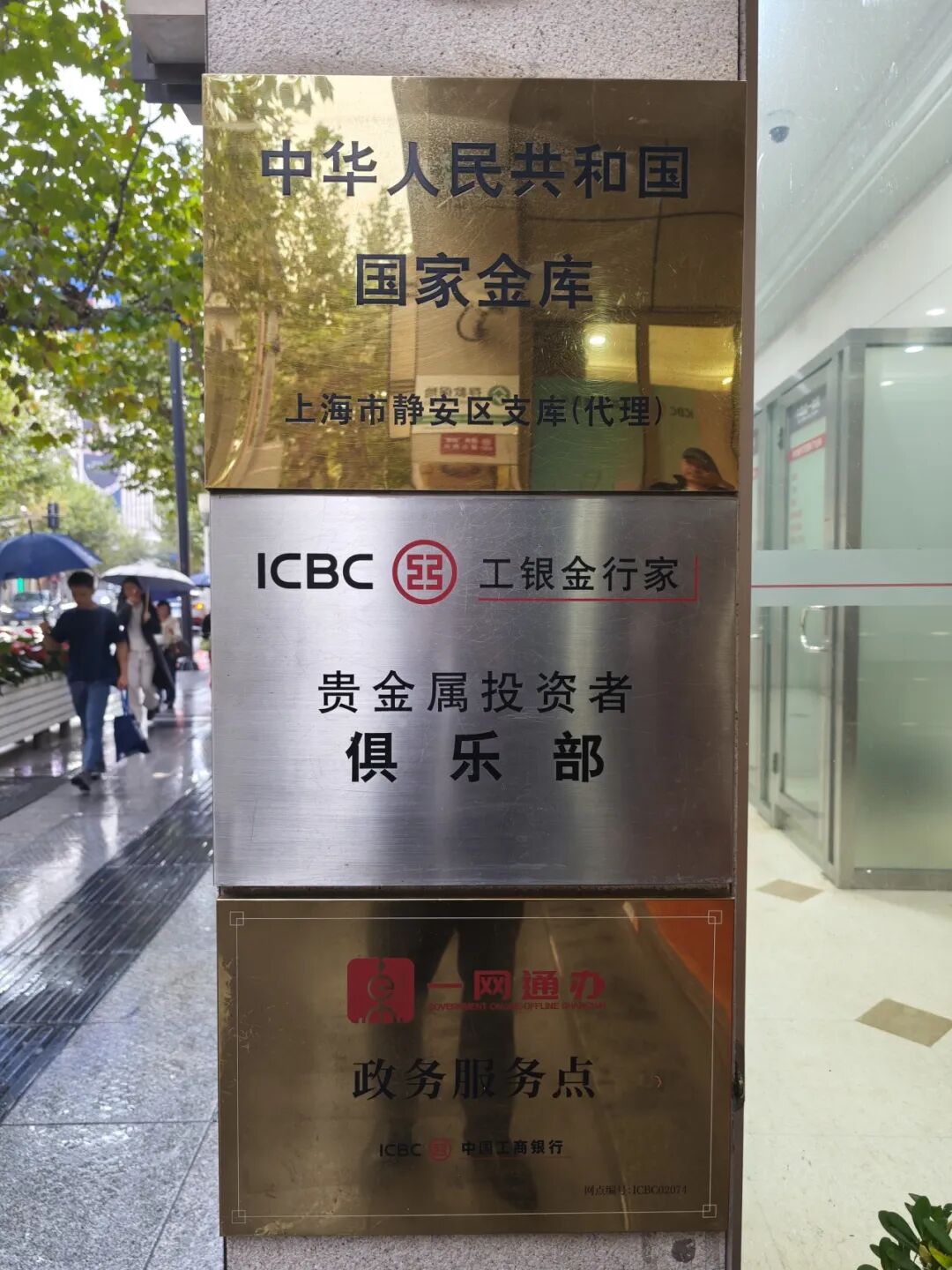
Core Viewpoint - The implementation of new tax regulations on gold has not significantly impacted the market, with stable prices and sufficient supply of investment gold observed in major banks in Shanghai [1][5][7]. Pricing Stability - The new regulations do not affect the sales prices of investment gold bars for end customers, as banks continue to price them according to market rates [5][6]. - The regulations classify gold into investment and non-investment categories, with personal purchases of investment gold bars having minimal impact [5][6]. - Banks like Industrial and Commercial Bank of China (ICBC) and China Construction Bank (CCB) maintain their pricing mechanisms unaffected by the new rules [5][6]. Supply Adequacy - Both CCB and ICBC report that the supply of investment gold bars is stable and sufficient to meet customer demand [7][8]. - Inventory checks confirm that various specifications of gold bars are available, and any temporary shortages can be addressed through inter-branch transfers [7][8]. Customer Engagement - There has been a slight increase in customer inquiries and purchases of gold products since the new regulations were implemented, but the overall market remains stable [8]. - The demand for gold investments has been rising since last year, driven by geopolitical uncertainties and expectations of higher gold prices [8][10]. Business Operations - Both CCB and ICBC briefly suspended certain gold accumulation services to adjust their systems to the new regulations but resumed operations shortly after [9][10]. - The gold accumulation products allow customers to invest in gold flexibly, with easy processes for withdrawing physical gold [9][10].

建设银行举办“遇建进博领航全球”活动助力跨境经贸与投资
Xin Lang Cai Jing· 2025-11-08 04:37
Core Insights - China Construction Bank (CCB) hosted an event in Shanghai to support the 8th China International Import Expo (CIIE), emphasizing its commitment to facilitating cross-border trade and investment [1] - The event highlighted CCB's role in promoting high-level opening-up and building a global service network for enterprises [1] Group 1: Event Overview - The event was titled "Encountering CCB at the Expo: Leading Global Trade and Investment Development" and included a signing ceremony [1] - CCB released a comprehensive financial service plan for enterprises going abroad, addressing the opportunities and challenges faced by Chinese companies [1] Group 2: Service Offerings - CCB's service framework includes "Intelligence + Financing + Business" as a comprehensive service system, featuring "Four Pillars of Support" and "Three Core Empowerments" [1] - The plan aims to enhance support for Chinese enterprises in their internationalization efforts [1] Group 3: Participation and Collaboration - The event saw participation from nearly 20 enterprises, including notable companies such as State Power Investment Corporation, Baowu Steel Group, and General Electric Healthcare [1] - Representatives from the Polish Consulate in Shanghai, Italian Credit Insurance Company, and other industry stakeholders shared insights on the exploration and opportunities for Chinese enterprises going global [1]
你的支付优惠用了吗?各大银行加入双十一“狂欢”,算的什么账?
Sou Hu Cai Jing· 2025-11-08 00:51
Core Viewpoint - The annual Double Eleven shopping season has officially started, with major commercial banks launching various promotional activities to stimulate consumer spending and boost business before the year-end [1][2]. Group 1: Promotional Activities by Banks - Major banks such as China Construction Bank, Bank of China, Agricultural Bank of China, and others have introduced cashback, discounts, installment benefits, and exclusive offers to attract consumers [1]. - Construction Bank offers a maximum discount of 400 yuan for credit card customers using installment payments on platforms like Alipay and Taobao, while Bank of China provides a random discount of up to 118 yuan for transactions made through Alipay [2]. - Other banks, including China Merchants Bank and Ping An Bank, have also launched various cashback and discount campaigns to engage customers during this shopping season [2]. Group 2: Strategic Insights - Experts suggest that the banks' promotional strategies represent a cost-effective method to acquire and retain customers, activating dormant accounts with low-cost random discounts [5]. - The focus on marketing during peak shopping seasons aims to enhance the usage of bank cards over third-party payment channels, thereby driving growth in credit and debit card transactions [5]. - Recommendations for banks post-Double Eleven include offering temporary credit limit increases and integrating with government consumption voucher programs to enhance customer experience and engagement [5].


轻审负债,建行、中行、兴业银行、中信银行联合放量,企业信用贷70万-920万,快至6天快速放款
Xin Lang Cai Jing· 2025-11-07 21:05
Core Insights - The new inclusive finance policy for 2025 aims to alleviate financing difficulties for enterprises by introducing a "light review of liabilities" credit loan program, with a credit pool formed by four major banks [1][4] - The program targets three types of enterprises: small and micro businesses, light asset innovative companies, and stable operating merchants, providing credit limits ranging from 700,000 to 9.2 million [1][3] Group 1: Key Features of the New Loan Program - High debt tolerance allows businesses with higher liabilities to access loans without being rejected based on historical debt details [3] - Credit limits are tailored to meet specific needs, starting from 700,000 for daily operations to 9.2 million for equipment upgrades and supply chain expansion [3] - Interest rates are significantly reduced, starting from 2.98%, which is 30% lower than the market average, potentially saving over 300,000 in interest for large loans [3] Group 2: Application Process and Requirements - Core application requirements include being established for at least one year, having a legal representative holding at least 5% of shares, and maintaining a good credit record [6][9] - Businesses must have a minimum tax payment of 5,000 in the last 12 months and must open a corresponding bank account [6] - The application process involves submitting necessary documents for preliminary review, with funding potentially available within 3 to 6 days after approval [12][8] Group 3: Real-World Examples - A Guangzhou electronics factory, previously rejected by three banks due to high debt, received 4.2 million in just four days through the "operating quick loan" channel, allowing for early production line launch [4] - A Hangzhou e-commerce company secured 2.8 million in six days to boost inventory for the peak season, resulting in a 180% increase in sales [4] Group 4: Additional Information - The program is available nationwide, excluding Hong Kong, Macau, and Taiwan, and is not applicable to certain industries such as finance and government [10][11] - The loan terms are flexible, with amounts ranging from 500,000 to 50 million, and repayment options include interest-first, principal later [8]

中资银行“金”点子护航进博会
Guo Ji Jin Rong Bao· 2025-11-07 15:32
Core Insights - The eighth China International Import Expo (CIIE) has seen participation from 155 countries and regions, with 4,108 enterprises showcasing their offerings, indicating a growing global engagement [1] - Chinese banks are evolving from mere service providers to active contributors in the CIIE, enhancing financial services and support for exhibitors [1] Group 1: Technological Innovations - The integration of AI technology in bank exhibits has significantly enriched visitor experiences, showcasing China's technological advancements [2] - The China Bank has expanded its AI experience area from over 600 square meters to more than 1,700 square meters, featuring over 20 AI companies [2] - Interactive experiences, such as AI racing simulations and personalized AI portraits, have increased audience engagement [3] Group 2: Payment Solutions - Digital payment services have been enhanced, with banks providing seamless payment experiences at the expo [4] - The Industrial and Commercial Bank of China (ICBC) introduced a commemorative digital RMB hard wallet, which has gained popularity, with over 300 cards issued in one day [4] - Foreign visitors can easily access services like card issuance and payment solutions through various bank service stations at the venue [5] Group 3: Trade Facilitation - Chinese banks are playing a crucial role in facilitating trade connections between exhibitors, exemplified by a $4.6 million cooperation agreement reached during the expo [7] - Since 2018, the China Bank has helped recruit over 31,000 companies and facilitated approximately $50 billion in cooperation intentions [7] - The ICBC has expanded its exhibition area to 1,200 square meters, introducing 168 companies from 54 countries, including new partners from Ecuador and Jordan [7] Group 4: Comprehensive Financial Services - Chinese banks are offering systematic financial service solutions tailored to the needs of enterprises, focusing on both inbound and outbound trade [8] - Shanghai Pudong Development Bank has launched an upgraded comprehensive financial service plan, addressing cross-border remittance and financing needs [8] - The Construction Bank has introduced a comprehensive service system for enterprises planning to expand internationally, covering various stages of business development [9]


聚焦进博|中资银行“金”点子护航进博会
Guo Ji Jin Rong Bao· 2025-11-07 15:28
Core Insights - The eighth China International Import Expo (CIIE) has seen participation from 155 countries and regions, with 4,108 enterprises showcasing their offerings, indicating the expanding influence of the event [1] - Chinese banks are evolving from mere service providers to active contributors in the CIIE, enhancing financial services and support for exhibitors [1] Group 1: Technological Innovations - This year, banks have integrated AI interactions into their exhibition spaces, significantly enhancing visitor experiences and showcasing China's technological advancements [2][4] - The Bank of China has upgraded its AI experience area to 1,700 square meters, featuring over 20 AI companies, marking its fourth consecutive year as a co-host of the AI experience zone [2][4] Group 2: Payment Solutions - Banks have improved digital payment services, with many offering digital RMB wallet activation on-site, enhancing the payment experience for both domestic and international attendees [5][6] - The Industrial and Commercial Bank of China (ICBC) introduced a commemorative digital RMB wallet at the expo, which has been well-received, with over 300 cards issued in a single day [5][6] Group 3: Trade Facilitation - Chinese banks are playing a crucial role in facilitating trade connections, with the Bank of China and ICBC actively promoting partnerships between exhibitors, resulting in significant collaboration agreements [9][10] - Since 2018, the Bank of China has helped recruit over 31,000 companies and facilitated approximately 5,300 cooperation intentions worth over $50 billion [9] Group 4: Comprehensive Financial Services - Chinese banks are providing systematic financial service solutions tailored to the needs of enterprises, focusing on cross-border trade and investment facilitation [10][11] - Shanghai Pudong Development Bank has launched its 8.0 comprehensive financial service plan, addressing various financial needs of enterprises during the expo [10][11] Group 5: Overall Impact - The participation of Chinese banks at the CIIE reflects their resilience and vitality in financial services, contributing to China's commitment to opening up and enhancing global cooperation [13]


建设银行(601939)披露2025年中期利润分配方案,11月07日股价下跌0.53%
Sou Hu Cai Jing· 2025-11-07 14:18
Core Viewpoint - China Construction Bank (CCB) plans to distribute a cash dividend of RMB 48.605 billion to its shareholders, reflecting a dividend payout ratio of 30.0% [1] Group 1: Stock Performance - As of November 7, 2025, CCB's stock closed at RMB 9.39, down 0.53% from the previous trading day, with a total market capitalization of RMB 2456.43 billion [1] - The stock opened at RMB 9.45, reached a high of RMB 9.52, and a low of RMB 9.37, with a trading volume of RMB 5.85 billion and a turnover rate of 0.65% [1] Group 2: Dividend Distribution - CCB will distribute a cash dividend of RMB 1.858 per share (before tax) to all ordinary shareholders, with the A-share dividend expected to be paid on December 11, 2025, and the H-share dividend on January 26, 2026 [1] Group 3: Capital Instruments - The company proposes to issue capital instruments and total loss-absorbing capacity non-capital debt instruments not exceeding RMB 700 billion to supplement other Tier 1 capital, Tier 2 capital, and total loss-absorbing capacity [1] - The senior management is authorized to determine the specific issuance plan for these instruments [1]
【财经分析】上市银行2025年三季报透视:量缓增、价趋稳、险夯实
Zhong Guo Jin Rong Xin Xi Wang· 2025-11-07 14:05
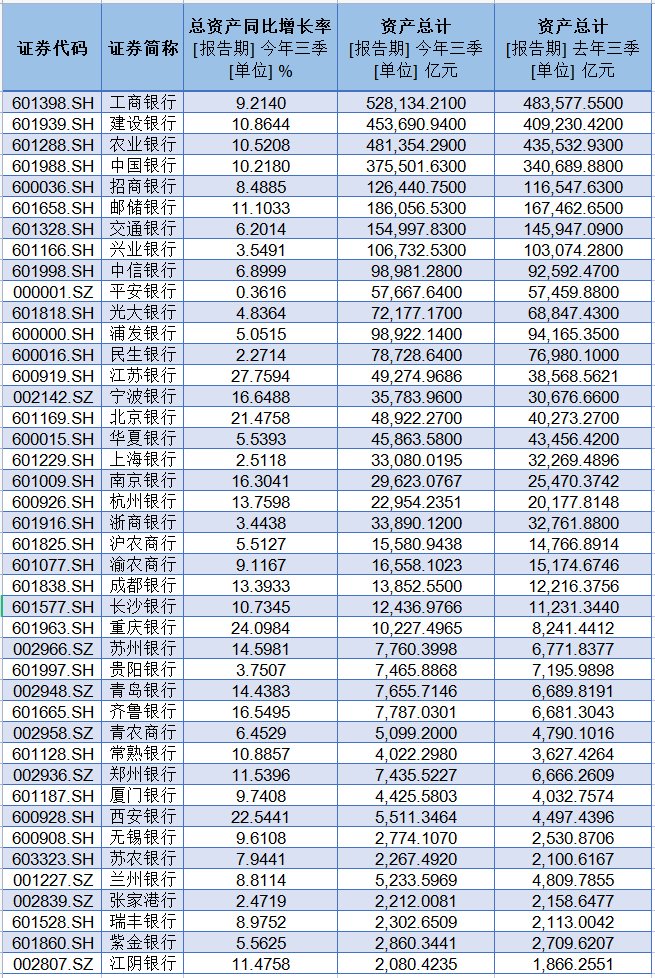
Core Insights - The total assets of 42 A-share listed banks exceeded 326 trillion yuan, with a year-on-year growth of 9.3%, indicating a steady but slightly declining growth rate [1][2] - Net interest margins show signs of stabilization, supported by improved liability costs, which provide a key support for profitability [1][4] - Asset quality remains solid, with non-performing loan ratios stable, although there is a divergence in asset quality between retail and corporate sectors [1][11] Asset Growth - The asset growth rate of listed banks has slowed compared to previous years, with a year-on-year increase of 9.3% as of Q3 2025, a decrease of 0.3 percentage points from the first half of the year [2][4] - The overall expansion of assets remains robust, with specific banks like Jiangsu Bank and Ningbo Bank showing significant growth rates of 27.76% and 16.65% respectively [3] Profitability and Revenue - The total operating income of listed banks exceeded 4.3 trillion yuan in the first three quarters, reflecting a year-on-year increase of 0.9%, with over 60% of banks reporting positive revenue growth [4] - The net profit attributable to shareholders surpassed 1.6 trillion yuan, marking a year-on-year growth of 1.5% [4] - Analysts indicate that stable net interest margins and reduced provisions are the main drivers of profit growth, while other non-interest income has weakened [5] Net Interest Margin - The net interest margin for listed banks increased by 0.3 basis points to 1.37% in Q3 2025, with asset yield decreasing by 7 basis points and liability cost decreasing by 8 basis points [6][8] - The performance of net interest margins varies among different types of banks, with joint-stock banks and city commercial banks showing better-than-expected rebounds [8][10] Asset Quality - The overall asset quality of listed banks remains stable, with non-performing loan ratios holding steady, although retail risks are showing volatility while corporate non-performing loans continue to improve [11][13] - The average provision coverage ratio for the 42 banks is 283.2%, with city commercial banks and rural commercial banks maintaining coverage ratios above 300% [13]
建设银行将于2026年1月26日派发中期股息每10股1.858元
Zhi Tong Cai Jing· 2025-11-07 13:28
Core Viewpoint - China Construction Bank (CCB) announced a mid-term dividend distribution of 1.858 RMB per 10 shares, scheduled for January 26, 2026 [1] Group 1 - The company will distribute a mid-term dividend of 1.858 RMB for every 10 shares held [1]