
Junshi Biosciences(688180)

Search documents
长江医药:药品产业链周度系列(一):速览靶点DKK1-20250525
Changjiang Securities· 2025-05-25 12:39
Investment Rating - The report maintains a "Positive" investment rating for the healthcare sector [9]. Core Insights - DKK1, a new potential target for solid tumors, is a typical secretory antagonist of the Wnt signaling pathway, showing high expression in various cancers, including gastric and colorectal cancer [2][6]. - Multiple pharmaceutical companies globally are proactively positioning themselves around the DKK1 target, with leading candidates such as Junshi Bioscience's JS015, Anjiesheng's AGA2118, and Eli Lilly's Sirexatamab all in Phase II clinical trials [7][28]. - The report highlights the promising early clinical data for Junshi Bioscience's JS015, which shows a 100% overall response rate (ORR) in the first-line treatment of colorectal cancer (CRC) and significant efficacy in gastric cancer (GC) [31]. Summary by Sections DKK1 Target Overview - DKK1 is a secretory glycoprotein that acts as an antagonist in the Wnt signaling pathway, with high expression levels in the serum of cancer patients, particularly those with gastric cancer [22][27]. - The potential of DKK1 as a biomarker for gastric cancer screening is noted, with its high expression correlating with poor prognosis [27]. Clinical Development - Junshi Bioscience's JS015 has shown robust early clinical data, with a 100% ORR in a trial group for first-line CRC treatment and 66.7% ORR for first-line GC treatment [31]. - The report details the global clinical progress of DKK1-targeted therapies, with several candidates in various stages of clinical trials, indicating a competitive landscape [33]. Market Outlook - The report anticipates significant growth in the pharmaceutical sector by 2025, driven by innovation and recovery in domestic demand, particularly for innovative drugs and medical devices [8][35]. - The investment thesis emphasizes the importance of companies with strong cash flow, innovative capabilities, and established research platforms, particularly in the context of international market expansion [35][36].
特朗普拟推动降药价 对出海药企影响几何?
BambooWorks· 2025-05-22 07:26
Core Viewpoint - The article discusses the implications of President Trump's executive order aimed at reducing prescription drug prices in the U.S., which could lead to significant price reductions of 30% to 80% for American patients, while raising concerns for Chinese pharmaceutical companies operating in the U.S. market [1][2][6]. Summary by Sections Executive Order Details - On May 12, Trump signed an executive order requiring U.S. patients to have access to "Most-Favored-Nation Price" (MFN), limiting U.S. drug prices to the lowest levels among OECD countries [2][4]. - The Department of Health and Human Services (HHS) is tasked with implementing this policy, which includes establishing direct sales channels for drug companies and considering importing drugs from countries with lower prices [2][4]. Market Reactions - Following the announcement, large multinational pharmaceutical companies saw their stock prices rebound, with companies like Merck, Eli Lilly, and Pfizer experiencing gains of 5.87%, 2.86%, and 3.64% respectively [4]. - In contrast, Chinese innovative drug companies like BeiGene and Hutchison China MediTech faced stock declines prior to the announcement, reflecting market concerns about their profitability in the U.S. [2][4]. Long-term Implications - Analysts suggest that the executive order may face significant implementation challenges, and the long-term trend of reducing drug prices in the U.S. is unlikely to change [4][6]. - A study indicated that the price of brand-name drugs in the U.S. was 4.22 times higher than in other OECD countries, with these drugs accounting for 87% of U.S. prescription drug spending [6]. - The pricing disparity poses risks for Chinese companies like BeiGene, whose flagship product is priced significantly higher in the U.S. compared to China, potentially impacting their revenue if U.S. prices are forced down [6][7]. Risks for Chinese Pharmaceutical Companies - Chinese pharmaceutical firms that rely on overseas partnerships may face increased policy risks, as seen with Junshi Biosciences and its PD-1 product entering the U.S. market [7]. - The potential for reduced drug prices in the U.S. could lead to lower profit margins for these companies, affecting their valuation and revenue streams from international markets [7].


连涨4天,涨幅超10%。港股创新药ETF(159567)今日盘中强势涨幅超1.5%,逼近上市以来新高。康希诺生物,君实生物,凯莱英领涨
Xin Lang Cai Jing· 2025-05-21 02:11
Group 1 - The Hong Kong Innovation Drug Index (987018) has seen a strong increase of 2.33% as of May 21, 2025, with notable gains in constituent stocks such as CanSino Biologics (06185) up 8.87%, Junshi Biosciences (01877) up 8.16%, and Kelun Pharmaceutical (06821) up 7.02% [1] - The Hong Kong Innovation Drug ETF (159567) has risen by 1.56%, marking its fourth consecutive increase, with the latest price reported at 1.3 HKD. Over the past week, the ETF has accumulated an increase of 8.63% [1] - The trading activity for the Hong Kong Innovation Drug ETF has been robust, with an intraday turnover of 10.03% and a transaction volume of 171 million HKD, indicating active market participation. The average daily trading volume over the past month reached 736 million HKD, with the ETF's latest scale reaching 1.667 billion HKD, a new high in nearly a year [1] Group 2 - The CDMO sector is expected to see rapid growth driven by the increasing demand for chemical macromolecules and XDC CDMO production, particularly in polypeptides and oligonucleotides, presenting investment opportunities in the related industry chain [1] - The CRO sector is anticipated to benefit from improving overseas financing conditions and a gradual shift towards a rate-cutting environment, with expectations of revenue recovery for integrated CRO/CDMO and domestic preclinical CROs, suggesting potential valuation recovery opportunities [2] - The CRO sector has been significantly impacted by domestic and international financing challenges, but with supportive domestic policies, there is an expectation for gradual recovery, highlighting investment opportunities in clinical CROs [2]
港股创新药ETF(159567)涨超1.7%,君实生物涨超9%,机构:创新药景气度可持续
Sou Hu Cai Jing· 2025-05-21 02:07
Group 1 - The Hong Kong stock market experienced a collective rise, with the Hang Seng Index up by 0.74% and the Hang Seng Tech Index up by 0.8% [1] - The Hong Kong Innovative Drug ETF (159567) increased by 1.71%, with a turnover rate of 6.72% and a trading volume exceeding 115 million yuan, indicating active trading [1] - Key stocks in the ETF saw significant gains, with Junshi Biosciences rising over 9%, CanSino Biologics up over 8%, and Kelun Pharmaceutical increasing over 7% [1] Group 2 - Industry analysts believe that the innovative drug sector's growth is sustainable, driven by a combination of innovation and internationalization, supported by policies and increasing global competitiveness [1] - The innovative drug sector is expected to be a key investment theme for the pharmaceutical sector in 2025, with signs of recovery in domestic demand and improvements in the medical device sector [2] - AI in healthcare is anticipated to bring new changes to the pharmaceutical industry, highlighting the importance of this trend [1]
港股医药股延续强势,康希诺生物(06185.HK)涨超10%,君实生物(01877.HK)涨超9%,三叶草生物(02197.HK)、康方生物(09926.HK)等跟涨。
news flash· 2025-05-21 01:54
港股医药股延续强势,康希诺生物(06185.HK)涨超10%,君实生物(01877.HK)涨超9%,三叶草生物 (02197.HK)、康方生物(09926.HK)等跟涨。 ...

创新药概念延续强势 舒泰神20CM涨停
news flash· 2025-05-21 01:44
智通财经5月21日电,舒泰神20CM涨停,此前三生国健3连板,赛升药业、海创药业、海辰药业、诺思 格、君实生物等跟涨。消息面上,港股创新药企三生制药公告称,其与辉瑞公司就前者自主研发的PD- 1/VEGF双特异性抗体SSGJ-707签订了独家许可协议。本次协议中12.5亿美元的首付款再次刷新了国产 创新药出海首付款金额纪录。 创新药概念延续强势 舒泰神20CM涨停 ...



君实生物收盘上涨3.57%,最新市净率5.19,总市值291.57亿元
Jin Rong Jie· 2025-05-20 11:17
Group 1 - The core viewpoint of the articles highlights the recent performance and financial metrics of Junshi Biosciences, including stock price movements and market capitalization [1][2] - As of May 20, Junshi Biosciences closed at 29.58 yuan, up 3.57%, with a market capitalization of 29.157 billion yuan and a price-to-book ratio of 5.19, marking a new low in 11 days [1] - The company reported a revenue of 501 million yuan for Q1 2025, representing a year-on-year increase of 31.46%, while the net profit was a loss of approximately 234.88 million yuan, reflecting a year-on-year decline of 17.01% [2] Group 2 - Junshi Biosciences specializes in the research and development of new drugs, as well as the transfer and service of related technologies, with a focus on the production and sales of new drugs [1] - The company holds 175 authorized patents, including 129 domestic patents and 46 international patents, providing extensive and long-term patent protection for its products [1] - The sales gross margin for the company stands at 81.24%, indicating a strong profitability potential despite the net loss reported [2]
君实生物收盘上涨1.12%,最新市净率5.07,总市值284.67亿元
Jin Rong Jie· 2025-05-14 10:46
5月14日,君实生物今日收盘28.88元,上涨1.12%,最新市净率5.07,总市值284.67亿元。 截至2025年一季报,共有15家机构持仓君实生物,其中基金12家、其他3家,合计持股数18508.72万 股,持股市值55.71亿元。 上海君实生物医药科技股份有限公司的主营业务是新药的研发及相关技术的转让和服务,新药的生产和 销售。公司的主要产品是特瑞普利单抗、氢溴酸氘瑞米德韦片、Tifcemalimab、阿达木单抗、昂戈瑞西 单抗、重组人源化抗IL-17A单克隆抗体、重组人源化抗PD-1、VEGF双特异性抗体、靶向 ANGPTL3mRNA的siRNA药物、重组人源化抗CGRP单克隆抗体、PI3K-α抑制剂、重组人源化抗 Claudin18.2单抗-MMAE偶联剂。公司拥有175项已授权专利,其中129项为境内专利,46项为境外专 利。公司专利覆盖新药蛋白结构、制备工艺、用途、制剂配方等,为公司产品提供充分的和长生命周期 的专利保护。 最新一期业绩显示,2025年一季报,公司实现营业收入5.01亿元,同比31.46%;净利润-234876226.63 元,同比17.01%,销售毛利率81.24%。 序号股 ...
美国处方药降价行政令发布 医药市场与落地成效成焦点
Huan Qiu Wang· 2025-05-13 03:10
Group 1 - The core point of the news is that President Trump signed an executive order aimed at reducing prescription drug prices in the U.S. to align with international standards, targeting a price reduction of 30% to 80% [1][3] - The U.S. pharmaceutical market is the largest globally, with American brand drug prices being over three times higher than those in other countries, despite the U.S. accounting for only 5% of the global population but bearing approximately 75% of global pharmaceutical profits [3][4] - Several Chinese innovative pharmaceutical companies, such as BeiGene and Junshi Biosciences, have successfully launched products in the U.S. market, with significant price disparities between the U.S. and China for their drugs [3] Group 2 - The implementation of Trump's drug pricing initiative faces uncertainty due to the existing U.S. laws that prohibit direct negotiations between the government and pharmaceutical companies, and the limited number of drugs eligible for negotiation each year [4] - The majority of U.S. drug spending is covered by commercial insurance, which stimulates pharmaceutical innovation and contributes to the economic growth of the industry [3][4] - The potential impact of the price reduction policy on the global innovative drug industry could be significant, as it may lead to a drastic contraction of the U.S. market size if Chinese prices are included in the U.S. reference pricing [3]


共探AI+医药新机遇,见证智能工厂新实践——PIIF生物医药高端沙龙圆满落幕
Zhong Guo Chan Ye Jing Ji Xin Xi Wang· 2025-05-12 06:16
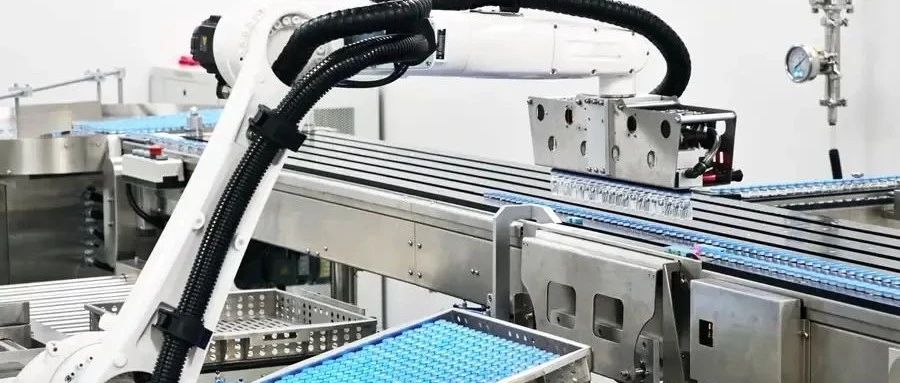
Group 1: Event Overview - The "AI Empowering the Biopharmaceutical Industry Salon" was successfully held on May 8, 2025, in Shanghai, focusing on the innovative applications of AI technology in drug development and manufacturing [1] - The event gathered industry leaders, technical experts, and representatives from well-known companies for in-depth discussions and site visits [1] Group 2: Strategic Missions and Directions - The Shanghai Biopharmaceutical Industry Association outlined three strategic missions: building a collaborative innovation platform, fostering cross-industry ecosystems, and creating a global innovation hub [2] - Three key focus areas for industry development were proposed: technological innovation, application implementation, and regulatory support [2] Group 3: Industry Ecosystem and Investment - The Lingang Life Bay has established itself as a global biopharmaceutical innovation hub, attracting over 200 companies and forming three major industry clusters: biopharmaceuticals, high-end medical devices, and CRO/CDMO [3] - The Lingang Life Bay Fund promotes the deep integration of AI and healthcare through a unique "capital + service + platform" model [3] Group 4: AI Applications and Case Studies - Various experts shared insights on AI's role in pharmaceutical manufacturing, including digital transformation and energy-efficient solutions [5][6] - A roundtable discussion addressed challenges and opportunities in integrating AI throughout the drug development process, from laboratories to production [6] Group 5: Company Spotlight - Junshi Biosciences, established in 2012, is a global biopharmaceutical company with a total production capacity of 46,500 liters, expandable to 120,000 liters [7] - The company aims to provide accessible treatment options globally and has implemented AI-driven systems that improved production efficiency by 20% [7] Group 6: Future Outlook - The salon emphasized the importance of AI in the biopharmaceutical sector and the need for continuous industry collaboration to enhance China's competitive position in global markets [8]