
BeiGene(688235)

Search documents
科创生物医药ETF(588250)上涨近1%,药品追溯码全面应用
Sou Hu Cai Jing· 2025-07-01 02:12
Group 1 - The Shanghai Stock Exchange Sci-Tech Innovation Board Biopharmaceutical Index (000683) increased by 0.93% as of July 1, 2025, with notable gains from stocks such as Rongchang Biopharmaceutical (688331) up 7.21% and Shanghai Yizhong (688091) up 3.61% [1] - Starting July 1, 2025, a new policy mandates that all drug sales must include a verification code for medical insurance reimbursement, with full traceability of drug codes required by January 1, 2026, which is expected to enhance drug circulation regulation and impact the entire pharmaceutical industry chain [1] - The current bull market in innovative drugs is driven by the improvement of China's pharmaceutical innovation capabilities, with a trend towards international collaboration in new drug development expected to enhance profitability and market potential for Chinese pharmaceutical companies [2] Group 2 - As of June 30, 2025, the top ten weighted stocks in the Shanghai Stock Exchange Sci-Tech Innovation Board Biopharmaceutical Index accounted for 50.3% of the index, including companies like United Imaging Healthcare (688271) and BeiGene (688235) [3] - The Sci-Tech Biopharmaceutical ETF closely tracks the performance of the Shanghai Stock Exchange Sci-Tech Innovation Board Biopharmaceutical Index, which includes 50 large-cap companies in various biopharmaceutical sectors [2]


中国创新药能否持续让世界买单?券商分析师最新观点
券商中国· 2025-06-30 15:24
Core Viewpoint - The innovative drug sector in China has experienced significant growth in 2023, exemplifying a narrative of China's rise in the capital market, with the Huatai-PB Hong Kong Innovative Drug ETF increasing by 57.87% year-to-date and numerous stocks doubling in value [1]. Group 1: Market Performance and Trends - Chinese innovative drug companies are entering a "Deepseek" moment, a culmination of two decades of development, as stated by industry analysts [2][10]. - The recent surge in the innovative drug sector is attributed to the performance of leading pharmaceutical companies, driven by increased sales of commercialized innovative drugs and a surge in licensing deals for clinical trial assets [4][10]. - The total amount of licensing deals by Chinese innovative drug companies reached $45.5 billion in the first five months of 2025, surpassing the total for the first half of 2024, indicating a robust growth in international licensing transactions [8]. Group 2: Company Highlights - A notable example is BeiGene, which created China's first billion-dollar blockbuster drug, Zebrutinib, achieving global sales of $1.3 billion in 2023 [6]. - BeiGene is projected to generate $3.8 billion in revenue in 2024, with Zebrutinib contributing $2.6 billion, leading to a reduction in the company's losses [7]. Group 3: Future Outlook - Analysts believe that the innovative drug sector in China is on a long-term upward trajectory, with the industry poised for a growth phase characterized by the approval of new drugs and increased licensing revenue [11][12]. - The next 3-5 years are expected to see accelerated globalization and a shift towards original innovation in the Chinese innovative drug sector, with companies that have strong pipelines and clinical advantages likely to lead the next growth wave [13]. - Despite recent market volatility, the long-term outlook remains positive, with expectations of a return to reasonable valuations as innovative results continue to materialize [16].



基金调仓创新药?估值偏差暴露资金“迁徙”,机构紧急提示:短期交易过热
证券时报· 2025-06-30 08:13
Core Viewpoint - The innovative drug sector has shown a sharp upward trend, attracting funds that previously focused on other pharmaceutical segments to increase their positions in innovative drugs [1][3][10]. Group 1: Fund Movements - Several funds have shifted their focus towards innovative drugs, with notable examples including Huafu Health Entertainment, which initially held positions in various pharmaceutical stocks but has now significantly adjusted its portfolio towards innovative drugs [3][4]. - Funds like Yongying Pharmaceutical Health and Shenyin Wanguo Pharmaceutical Pioneer have also shown similar trends, indicating a broader movement within the fund management community towards innovative drugs [4][5]. Group 2: Market Dynamics - There is a notable influx of new innovative drug-themed funds entering the market, alongside existing funds reallocating their investments [2][8]. - Despite the positive sentiment, some institutions have warned of potential overvaluation and market overheating in certain stocks within the innovative drug sector [2][11]. Group 3: Performance Metrics - Data from Wind indicates that on June 17, a fund's estimated net value dropped by 0.75%, while the Hang Seng Hong Kong Stock Connect Innovative Drug Index fell by 4.77%, highlighting the correlation between fund performance and the innovative drug index [4]. - A significant increase in ETF shares related to innovative drugs has been observed, with 17 out of 20 ETFs showing positive growth during a recent market correction [7]. Group 4: Future Outlook - Industry experts believe that the current market dynamics reflect a rational correction of previously overly pessimistic expectations regarding the innovative drug sector, with strong long-term growth potential anticipated [10][11]. - However, challenges remain, including high research and development costs, long timelines, and a low success rate for drug development, which necessitate careful investment strategies [11].

从百济神州(06160)研发日,看其以全球创新为核心的强劲内生增长力
智通财经网· 2025-06-30 06:48
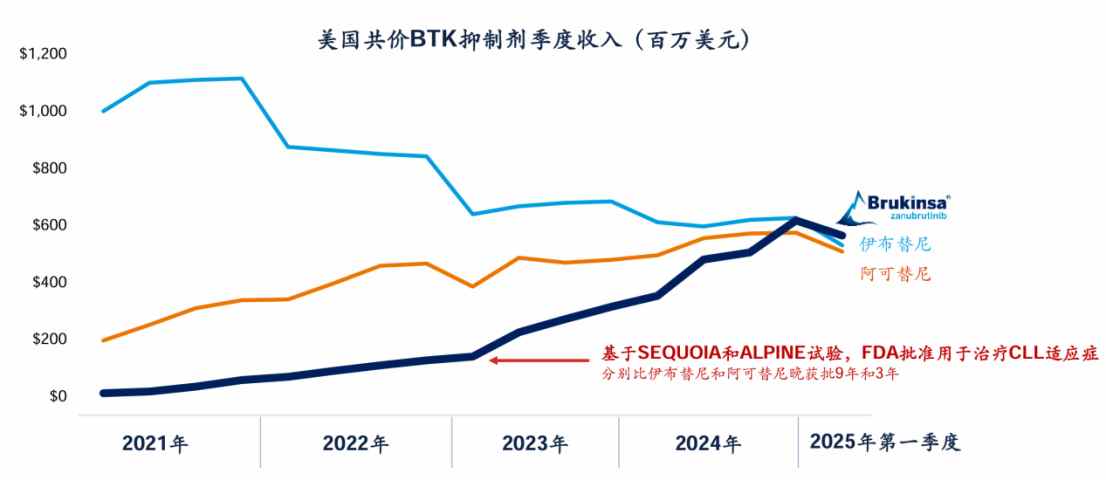
Core Insights - BeiGene is advancing its global leadership in hematology through strong drug development and commercialization capabilities, with over 40 products in clinical development and commercialization stages, expecting 20 milestone advancements in the next 18 months [1][10]. Hematology Leadership - The company has established itself as a leader in hematology, particularly with its BTK inhibitor, Brukinsa (Zebutinib), which has gained significant market share in the U.S. and is approved in 75 global markets, benefiting over 200,000 patients [2][4]. - BeiGene is focusing on the development of next-generation therapies, including the BCL-2 inhibitor Sotorasib and the BTK CDAC BGB-16673, which shows promise in overcoming patient resistance [4][7]. - BGB-16673 has demonstrated an overall response rate (ORR) of 84.8% in R/R CLL indications, and a head-to-head trial against a non-covalent BTK inhibitor has been initiated [4][6]. Innovative Pipeline - Sotorasib is positioned as a next-generation BCL-2 inhibitor with superior efficacy and safety compared to existing treatments, and it is currently undergoing pivotal trials for various indications [7][10]. - The company is also developing a diverse pipeline for solid tumors, focusing on breast, gynecological, lung, and gastrointestinal cancers, with several innovative candidates like the CDK4 inhibitor BGB-43395 and the B7-H4 ADC [11][13][19]. Future Growth Potential - BeiGene plans to submit regulatory applications for Sotorasib globally by the second half of 2025, aiming to solidify its position in the B-cell malignancy treatment landscape [10][19]. - The company is expected to report clinical proof of concept data for over 10 new molecules in the next 6-18 months, including promising candidates in the solid tumor space [25][26]. - Recent analyst reports have given BeiGene a "buy" rating, highlighting its potential for significant growth driven by its innovative pipeline and global market expansion [27].
化学制药创新药动态更新:BGB-43395:在既往三线治疗的乳腺癌及实体瘤患者具初步疗效和良好安全性
Shanxi Securities· 2025-06-30 04:28
Investment Rating - The report maintains an investment rating of "Leading the Market-B" for the chemical pharmaceutical industry [1]. Core Viewpoints - The report highlights the promising clinical efficacy and safety profile of BGB-43395, a CDK4 inhibitor developed by BeiGene, which shows potential as a best-in-class treatment for HR+/HER2- metastatic breast cancer [3][5]. - The global market for CDK4/6 inhibitors is substantial, projected to reach approximately $13 billion by 2024, indicating significant growth potential in this therapeutic area [5]. Summary by Sections Industry Performance - The chemical pharmaceutical industry has shown strong market performance over the past year, with a focus on innovative drug developments [1]. Drug Development Insights - BGB-43395 demonstrates high selectivity and inhibition of CDK4, with a favorable safety profile compared to existing CDK4/6 inhibitors [3][4]. - The drug is set to enter Phase III trials for HR+/HER2- metastatic breast cancer, with the second-line study expected to start in Q4 2025 [3]. Clinical Trial Results - Initial results from clinical trials indicate that BGB-43395, when combined with fulvestrant, shows preliminary anti-tumor activity in patients with solid tumors, particularly breast cancer [5][6]. - The overall response rate (ORR) for evaluable breast cancer patients was reported at 11% [5]. Market Context - The report emphasizes the challenges faced by current CDK4/6 inhibitors, including hematological toxicity and off-target effects, which BGB-43395 aims to address [5].
首款国产GLP-1双靶点减肥药获批上市!“减重效果优于司美格鲁肽”
第一财经· 2025-06-28 00:59
Core Viewpoint - The approval of the first domestic GLP-1 dual-target weight loss drug, Masitide, marks a significant advancement in obesity treatment in China, addressing a growing health crisis with a potential for effective weight management and metabolic improvement [1][2]. Group 1: Product Overview - Masitide is approved for long-term weight control in adults with a BMI of 28 kg/m² or higher (obesity) or a BMI of 24 kg/m² or higher (overweight) with at least one weight-related comorbidity [1]. - It is the first globally approved GCG/GLP-1 dual-target weight loss drug, competing with existing GLP-1 single-target drugs and the GIP/GLP-1 dual-target drug [2]. - Initial studies suggest Masitide can achieve weight loss of 15% to 21%, potentially outperforming Semaglutide, a leading competitor [2]. Group 2: Market Context - The obesity issue in China is severe, with over 50% of adults classified as overweight or obese, leading to increased rates of chronic diseases and significant healthcare costs [4]. - The prevalence of fatty liver disease among overweight individuals exceeds 60%, and over 80% in obese individuals, highlighting a critical area where Masitide may provide benefits [3][4]. Group 3: Pricing and Market Strategy - The pricing strategy for Masitide will reflect its enhanced efficacy compared to single-target GLP-1 drugs and will consider the pricing of similar products already on the market [4]. - The company aims to set a reasonable price based on the payment capabilities of the target population, ensuring product availability [4]. Group 4: Challenges and Future Directions - Traditional weight loss medications have limited efficacy, achieving only 5% to 7% weight loss, while GLP-1 drugs can exceed 10% [5]. - Long-term maintenance of weight loss remains a challenge, and there is a need for better awareness and treatment options in the obesity management landscape [5].

资金动向 | 北水抛售小米超32亿港元,持续买入建设银行、中芯国际
Ge Long Hui· 2025-06-27 12:11
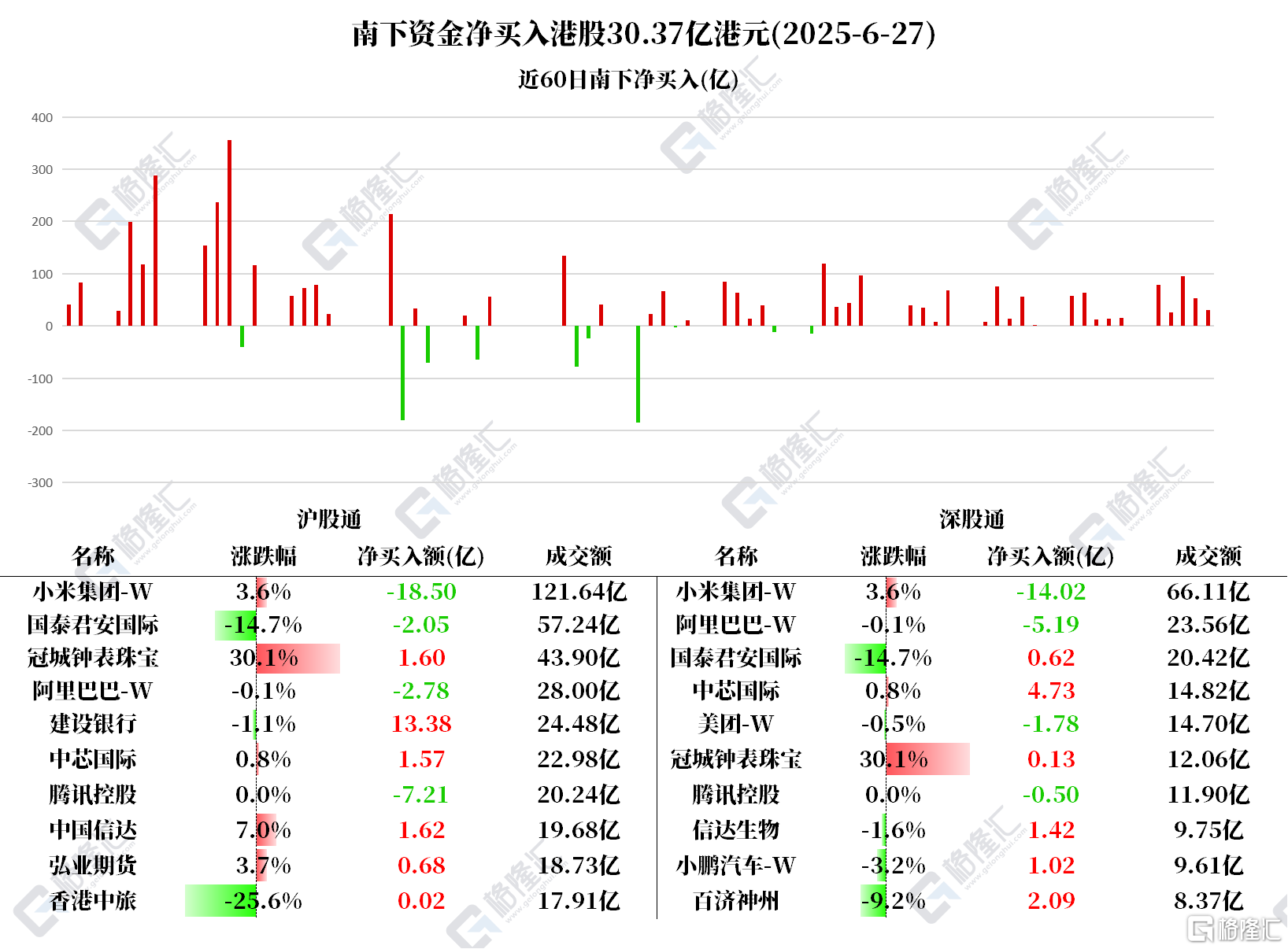
Group 1: Market Activity - Significant net purchases were made in China Construction Bank (1.338 billion), SMIC (0.629 billion), BeiGene (0.209 billion), and others, while notable net sales were recorded for Xiaomi (3.252 billion), Alibaba (0.797 billion), and Tencent (0.770 billion) [1][4] - Southbound funds have continuously sold Tencent for 21 days, totaling 21.56904 billion HKD, while they have bought China Construction Bank for 13 consecutive days, totaling 9.35939 billion HKD [4] Group 2: Company Developments - Citigroup noted multiple catalysts that will accelerate investments from mutual funds and insurance companies into the stock market, benefiting large-cap ETFs and high-yield stocks, particularly Chinese financial institutions [5] - China National Medical Products Administration approved Innovent Biologics' application for the dual receptor agonist injection for long-term weight control in adults with obesity or overweight [5] - XPeng Motors is set to launch its new mid-size electric SUV, the XPeng G7, next week, with a pre-sale price starting at 235,800 CNY and over 10,000 orders within 46 minutes of pre-sale [5] - Xiaomi officially launched its high-performance SUV, the Xiaomi YU7, with three versions priced between 253,500 CNY and 329,900 CNY, achieving over 200,000 orders within three minutes of launch [5] - Alibaba reported a revenue of 996.347 billion CNY for the fiscal year 2025, with a net profit increase of 77% to 125.976 billion CNY, focusing on e-commerce and "AI + Cloud" as core growth areas [5]



速递|刚刚,信达生物减重新药「玛仕度肽」获批首个长期体重控制适应症
GLP1减重宝典· 2025-06-27 08:36
Core Viewpoint - The approval of XinErMei® (a dual receptor agonist for glucagon and GLP-1) by the National Medical Products Administration (NMPA) marks a significant advancement in obesity treatment, aiming to address the urgent issue of overweight and obesity in China [2][5][6]. Group 1: Product Overview - XinErMei® is the world's first GCG/GLP-1 dual receptor agonist for weight management, which not only suppresses appetite but also promotes fat burning and reduces visceral fat [5][11]. - Clinical studies indicate that patients using XinErMei® can achieve a weight loss of up to 21%, with liver fat content reduced by over 80%, waist circumference decreased by 11 cm, and neck circumference by 3 cm [5][12]. Group 2: Market Context - China faces a severe obesity crisis, with approximately 500 million adults classified as overweight or obese, the highest globally [8][9]. - The World Obesity Federation estimated that the economic loss due to overweight and obesity in China could reach $283.3 billion in 2020 [8]. Group 3: Clinical Evidence - The approval of XinErMei® is based on the results of the GLORY-1 Phase III clinical trial, which demonstrated significant weight loss compared to placebo, with mean percentage changes from baseline at week 48 being -12.0% and -14.8% for the 4 mg and 6 mg doses, respectively [11][12]. - The trial also showed that 73.5% and 82.8% of participants in the 4 mg and 6 mg groups, respectively, achieved a weight loss of at least 5% from baseline [11]. Group 4: Regulatory and Clinical Guidelines - The National Health Commission has included "weight management" in the "Healthy China 2030" initiative, emphasizing the need for effective weight management strategies [6][9]. - Recent clinical guidelines recommend the early initiation of pharmacological treatment for patients who do not achieve weight loss goals through lifestyle interventions alone [9][10]. Group 5: Future Implications - XinErMei® is expected to reshape the clinical treatment landscape for obesity in China, providing a new therapeutic option that addresses both weight loss and metabolic health [6][14]. - The innovative delivery system of XinErMei® enhances convenience and safety, making it a promising choice for patients [14].
港股收盘,恒指收跌0.17%,恒生科技指数收跌0.07%。小米集团收涨3.60%,工商银行收跌2.02%,百济神州跌超9%。
news flash· 2025-06-27 08:12
Market Performance - The Hang Seng Index closed down by 0.17% [1] - The Hang Seng Tech Index decreased by 0.07% [1] Company Performance - Xiaomi Group saw an increase of 3.60% in its stock price [1] - Industrial and Commercial Bank of China (ICBC) experienced a decline of 2.02% [1] - BeiGene (百济神州) shares fell by over 9% [1]

创新药BD专题论坛 - 买全球最好的中国创新药
2025-06-26 15:51
Summary of Key Points from Conference Call Records Industry Overview - The Chinese pharmaceutical industry is projected to exceed $60 billion in total transactions in 2024, with a significant increase in profitability expected for innovative drug companies between 2025 and 2026 due to increased scale and operational leverage [1][4][5]. - The gap between the Chinese pharmaceutical industry and that of Europe and the US is gradually narrowing, with some areas achieving synchronization or even surpassing Western counterparts in drug development timelines [1][7]. Core Insights and Arguments - The capital market has a significant impact on the development of China's biopharmaceutical sector, with the Hong Kong Stock Exchange and the STAR Market providing essential funding support for research and production capacity expansion [1][3][8]. - Collaborations with Big Pharma typically yield higher commercialization returns, with the amount of transactions closely linked to the project stage, where later stages present lower R&D risks and higher chances of successful drug development [1][10]. - The trend of Chinese innovative drugs entering international markets is strengthening, primarily through licensing agreements, with expectations for more companies to establish commercialization teams in Europe and the US [1][11]. Financial Performance and Market Dynamics - The domestic innovative drug market is accelerating, with A-share companies (excluding BeiGene) experiencing revenue growth rates of approximately 30%-40%. The operational leverage effect is evident, with a projected 78% reduction in losses in 2025 and expectations for sector-wide profitability in 2026 [1][12]. - The success rate of product licensing is generally higher than that of non-collaborative products, although inherent R&D risks remain [1][6]. Emerging Trends and Future Outlook - The Chinese market environment is improving, with stable policies and pricing for medical insurance, laying a solid foundation for both domestic and international market development [1][5]. - The innovative drug export trend began around 2010, reaching a critical point between 2020 and 2021, with a notable increase in the number of Chinese innovative drugs entering international markets [1][4]. Additional Important Insights - The rapid development of Contract Research Organizations (CROs) like WuXi AppTec has provided substantial support to the industry, alongside continuous investment in basic scientific research [1][3]. - The unique characteristics of innovative drugs, such as the PD-1/TIGIT bispecific antibody CG005, highlight the potential for enhanced immune response and tumor suppression through multi-target exploration [2][16][17]. - The clinical development of drugs like CG006 and the exploration of combination therapies in oncology demonstrate the innovative approaches being taken to address complex cancer treatment challenges [14][22][25]. This summary encapsulates the key points from the conference call records, focusing on the Chinese pharmaceutical industry's growth, financial performance, emerging trends, and the innovative strategies being employed by companies within the sector.
