ZGXT(000831)

Search documents
中国稀土涨2.06%,成交额10.30亿元,后市是否有机会?
Xin Lang Cai Jing· 2025-12-17 07:53
Core Viewpoint - The Chinese rare earth market experienced a 2.06% increase in prices, with a transaction volume of 1.03 billion yuan and a total market capitalization of 46.704 billion yuan [1] Company Overview - The company primarily engages in the production and operation of rare earth oxides and provides rare earth technology research and consulting services [2][8] - The company is controlled by the State-owned Assets Supervision and Administration Commission of the State Council, categorizing it as a state-owned enterprise [3][4] Financial Performance - For the period from January to September 2025, the company achieved a revenue of 2.494 billion yuan, representing a year-on-year growth of 27.73%, and a net profit attributable to shareholders of 192 million yuan, which is a 194.67% increase compared to the previous year [8] - The company has distributed a total of 346 million yuan in dividends since its A-share listing, with 124 million yuan distributed over the last three years [9] Shareholder Structure - As of September 30, 2025, the top ten circulating shareholders include Hong Kong Central Clearing Limited, which holds 29.0694 million shares, an increase of 9.4669 million shares from the previous period [10] - New shareholders include the 嘉实中证稀土产业ETF and 南方中证申万有色金属ETF, indicating a diversification in the shareholder base [10] Market Dynamics - The company operates within the rare earth sector, which is influenced by trends in state-owned enterprise reforms and the demand for rare earth permanent magnets [2][8] - The average trading cost of the company's shares is 50.20 yuan, with recent trends indicating a rapid exit of shares, suggesting a potential strategy for portfolio adjustment [7]

中国稀土12月16日获融资买入8555.68万元,融资余额20.13亿元
Xin Lang Cai Jing· 2025-12-17 05:39
Core Viewpoint - The Chinese rare earth market experienced a decline, with a 3.86% drop in share price on December 16, leading to a trading volume of 1.275 billion yuan. The financing data indicates a net outflow in financing activities for the company, suggesting a cautious sentiment among investors [1]. Financing and Trading Data - On December 16, the financing buy amount for Chinese rare earth was 85.56 million yuan, while the financing repayment was 112 million yuan, resulting in a net financing outflow of 26.80 million yuan. The total financing and securities balance reached 2.029 billion yuan [1]. - The financing balance of 2.013 billion yuan accounts for 4.40% of the circulating market value, which is above the 60th percentile level over the past year, indicating a relatively high financing level [1]. - In terms of securities lending, 67,000 shares were repaid, while 29,100 shares were sold on December 16, amounting to a selling value of 1.2548 million yuan. The remaining securities lending volume was 357,000 shares, with a balance of 15.39 million yuan, which is below the 50th percentile level over the past year, indicating a lower level of securities lending [1]. Company Performance - As of November 10, the number of shareholders for Chinese rare earth reached 254,200, an increase of 2.14%, while the average circulating shares per person decreased by 2.09% to 4,174 shares [2]. - For the period from January to September 2025, the company reported a revenue of 2.494 billion yuan, reflecting a year-on-year growth of 27.73%. The net profit attributable to shareholders was 192 million yuan, showing a significant year-on-year increase of 194.67% [2]. Dividend and Shareholder Information - Since its A-share listing, Chinese rare earth has distributed a total of 346 million yuan in dividends, with 124 million yuan distributed over the past three years [3]. - As of September 30, 2025, the top ten circulating shareholders included Hong Kong Central Clearing Limited, which held 29.0694 million shares, an increase of 9.4669 million shares from the previous period. Additionally, the Southern CSI 500 ETF and the Jiashi CSI Rare Earth Industry ETF were noted as new shareholders [3].
白宫突发大动作!9国联手签协议,竟想废掉中国稀土王牌
Sou Hu Cai Jing· 2025-12-16 11:44
Core Viewpoint - The signing of the rare earth supply chain agreement by the U.S. and its allies is primarily a strategic move to challenge China's dominance in the rare earth sector, rather than a simple resource cooperation initiative [1][3][8]. Group 1: Political Intentions - The agreement is seen as a U.S.-led action aimed at weakening China's advantages in resources, technology, and supply chains [3][8]. - The U.S. is anxious about China's overwhelming control over the global rare earth industry, with 91% of rare earth refining and separation capacity concentrated in China [3][10]. - The U.S. aims to establish a supply chain that bypasses China, laying the groundwork for future competition in AI [8][10]. Group 2: Implications for AI and Technology - The U.S. government links the rare earth supply chain to the AI industry, indicating that control over rare earth resources is crucial for competing in AI [10][13]. - The U.S. recognizes that without a stable supply of rare earths, advancements in AI technology cannot be realized [13][15]. - The agreement is expected to benefit U.S. mining, military, and tech sectors, ensuring a stable supply chain for high-tech industries over the next decade [17][20]. Group 3: Global Supply Chain Dynamics - The agreement signifies a shift in global technology dynamics, where control over core resources will be as important as technological advancement [20][21]. - The U.S. is attempting to create a closed-loop supply chain with like-minded allies, injecting political factors into the industry chain [22][26]. - China's response emphasizes the importance of market principles and cooperation, highlighting its critical role in stabilizing the global rare earth supply chain [23][25]. Group 4: Future Competition - The competition between the U.S. and China in key minerals and AI is expected to continue, with China's rare earth advantages stemming from years of industrial accumulation [26][28]. - The outcome of this geopolitical struggle will depend on the strength and completeness of each country's supply chain rather than the size of their political alliances [28].


稀土概念股早盘走弱,稀土相关ETF跌超3%
Mei Ri Jing Ji Xin Wen· 2025-12-16 03:40
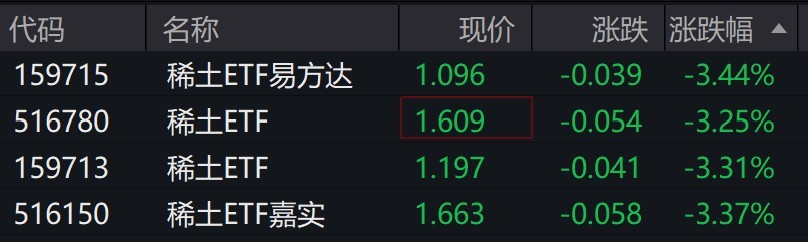
Core Viewpoint - Rare earth concept stocks weakened in early trading, with significant declines observed in companies such as Jin Feng Technology, China Rare Earth, and Northern Rare Earth, alongside a drop in related ETFs [1][2]. Group 1: Stock Performance - Jin Feng Technology fell over 6%, China Rare Earth dropped over 4%, and both Northern Rare Earth and Wolong Electric Drive decreased by more than 3% [1]. - Rare earth-related ETFs experienced a decline of over 3% [1]. Group 2: Market Analysis - Analysts indicate that rare earths, as core resources for high-end manufacturing and strategic emerging industries, are showing a resonant pattern on both supply and demand sides [2]. - The strategic position of the rare earth industry chain is expected to further solidify, providing long-term driving force for high-end manufacturing development due to increased supply concentration and upgraded demand structure [2].



中国稀土通用许可,福特获救却被立规矩?美千亿算盘碎一地!
Sou Hu Cai Jing· 2025-12-15 12:46
Core Viewpoint - Ford Motor Company confirmed that its Chinese rare earth magnet supplier is on the first batch of "General Export Licenses," which is a significant development in the strategic competition surrounding rare earth materials, crucial for various industries including automotive and aerospace [1]. Group 1: Changes in Export Regulations - The shift from "one order one batch" to "general licenses" represents a fundamental change in how rare earth exports are managed, improving efficiency for Chinese companies while maintaining strict control [2]. - The new "General Export License" is not truly general but rather highly specialized, with different companies receiving varying levels of access, indicating a strategic approach to managing supply chains [4]. Group 2: Implications for U.S. Companies - U.S. companies like Ford can access rare earth materials for civilian use without significant hurdles, while military applications face strict restrictions, highlighting the dual-use nature of these materials [6]. - The U.S. Department of Defense is offering a guaranteed purchase price of at least $110 per kilogram for rare earths to support domestic industries, which is significantly higher than the market price of approximately $52 per kilogram [9]. Group 3: Market Dynamics and Competitive Landscape - By allowing compliant civilian enterprises to access affordable Chinese rare earths, the market dynamics are shifting, potentially disadvantaging U.S. and Australian suppliers who cannot compete with the lower prices [11]. - The export volume of rare earth magnets from China has decreased by 5.2% year-on-year, reflecting a strategic control over supply and demand [15]. Group 4: Legal and Compliance Framework - The "General Export License" is subject to annual review and comes with strict regulations, emphasizing the importance of compliance and traceability in the supply chain [12]. - The new regulations transform the relationship from a simple transaction to one based on trust and compliance, where a company's credit record directly impacts its supply security [14]. Group 5: Strategic Implications - The issuance of the "General Export License" is both a business and political maneuver, indicating that while companies like Ford may find temporary relief, the underlying uncertainties remain significant [18]. - The ongoing competition for rare earth elements is reshaping the global industrial landscape, with China asserting its influence over the rules governing access to these critical materials [18].
稀土战争升级!美国牵头“八国联盟”切断中国稀土命脉?真相来了
Sou Hu Cai Jing· 2025-12-15 03:30
Core Insights - The establishment of the "Rare Earth NATO" alliance aims to reduce reliance on China for rare earth materials, with representatives from eight countries, including Japan, South Korea, and Australia, signing the agreement [1] - China's strategic move to issue general export licenses to companies like Jinko Solar and Ningbo Yunsheng is seen as a tactical response to the geopolitical landscape, highlighting the potential risks for the U.S. defense industry if it loses access to Chinese magnetic materials [3] - The U.S. Department of Defense is facing significant costs in its efforts to develop a domestic rare earth supply chain, with a guaranteed purchase price of $110 per ton, which is 2.3 times the international market price [3] - Investment banks like JPMorgan and Goldman Sachs are betting on government subsidies to support domestic mining operations, indicating a lack of market competitiveness for U.S. mining companies reliant on government backing [3] - Lynas's operations in Malaysia are significantly more expensive than Chinese counterparts, with capital expenditures 3 to 5 times higher and an additional 50% premium due to environmental compliance costs, suggesting that the push for a de-China supply chain may lead to inflationary pressures [4] - The U.S. is incurring five times the cost to rebuild a mature industry that China has already mastered, raising concerns about the long-term viability of U.S. efforts to establish a competitive rare earth supply chain [6] - The potential establishment of an exclusive certification system by the U.S. and Europe could undermine China's cost advantages in the rare earth sector, posing risks to its market share and leading to overcapacity issues [6] - The geopolitical strategy of the U.S. aims to drive global inflation to 600% to sever supply chains, raising questions about the effectiveness of permits held by companies as either a weapon against competitors or a safeguard for their own interests [7]

中国稀土90%产能压阵,9国联盟凑数,10年建不成替代链
Sou Hu Cai Jing· 2025-12-15 03:12
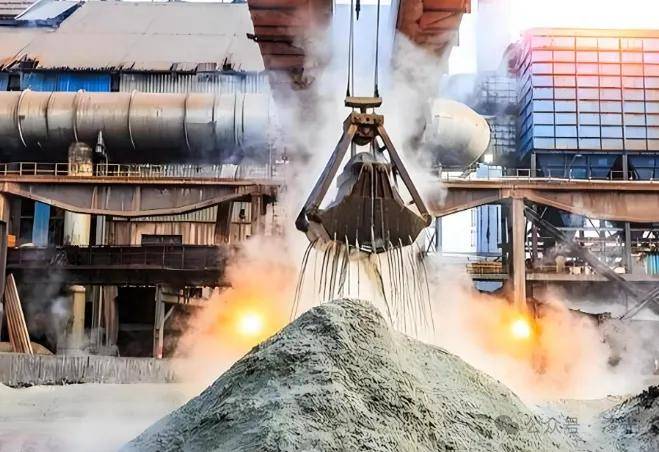
美国此次的意图明显,联合八国在白宫签署的协议,声势浩大地宣告要构建一个"去中国化"的供应链。然而,这所谓的"豪华战队",细究之下更像是一场各 怀鬼胎的"麻将局",而非同心协力的战斗集体。 澳大利亚虽拥有丰富的矿产资源,但在稀土提炼技术上却近乎空白,其开采出的矿石仍需依赖全球其他地方进行加工。荷兰掌握着先进的光刻机技术,但在 稀土领域却是一窍不通,其尖端技术在此次资源争夺战中显得力不从心。以色列和新加坡更是处于尴尬境地,一个缺乏矿产资源,一个仅擅长金融中转,在 这场资源战中几乎只能扮演"凑数"的角色。 归根结底,这个联盟中真正具备实力和意愿参与竞争的寥寥无几,有的国家盘算着从中获利,有的则只想搭个"便车",其心思根本不在一条线上。美国试图 通过巨额投资在国内重建供应链的想法,更是异想天开。稀土提炼并非易事,它不仅需要顶尖的技术,还需要解决棘手的环保问题。从零开始建立一条完整 的生产线,少则十年八年根本无法实现投产。 一场聚焦中国的"9国联盟"白宫会议,甫一结束便在全球掀起轩然大波。与会各国表面上立场强硬,但私下的行动却暴露了真实意图——不少企业已迫不及 待地排起长队,急于获取中国的许可。美国所构建的这支"豪华战 ...

有色能源金属行业周报:短期锂价或维持震荡,战略金属价值重估背景下看好锑钴钨锡等金属-20251214
HUAXI Securities· 2025-12-14 05:36
Investment Rating - The industry rating is "Recommended" [3] Core Views - Short-term lithium prices are expected to remain volatile, with a positive outlook on antimony, cobalt, tungsten, and tin due to a reassessment of strategic metal values [1][2][7] - Supply concerns in the nickel market are supported by the lack of new approvals from Indonesia's RKAB, which may lead to price stabilization [1][28] - The cobalt market is expected to see continued price increases due to structural supply tightness, with Congo's export regulations impacting availability [2][5][16] - Antimony prices are anticipated to converge towards higher overseas prices due to export controls and tight domestic supply [6][17] - The lithium market is experiencing a strong demand backdrop, with expectations of continued inventory depletion supporting prices [7][17] - The rare earth market is tightening due to Vietnam's export ban, which is expected to support prices [9][18] - Tin prices are supported by ongoing supply concerns from overseas sources, particularly from Myanmar and Congo [11][20] - Tungsten prices are expected to remain supported due to supply constraints and regulatory controls [12][21] - The uranium market is facing supply tightness, which is likely to support prices amid geopolitical uncertainties [14][22] Summary by Sections Nickel and Cobalt Industry Update - Nickel prices are under pressure due to stable demand but cautious purchasing from smelters, with LME nickel closing at $14,420 per ton, down 2.04% [1][28] - Cobalt prices are expected to rise further, with Congo's export regulations causing supply constraints [2][5][16] Antimony Industry Update - Domestic antimony prices are lower compared to international prices, but supply tightness is expected to support future price increases [6][17] Lithium Industry Update - Lithium carbonate prices have increased, with a strong demand outlook from the electric vehicle sector [7][17] Rare Earth Industry Update - Vietnam's recent export ban on rare earths is expected to tighten global supply and support prices [9][18] Tin Industry Update - Tin prices are supported by supply concerns from Myanmar and Congo, with LME tin prices rising to $41,905 per ton [11][20] Tungsten Industry Update - Tungsten prices are expected to remain high due to supply constraints and regulatory measures [12][21] Uranium Industry Update - The uranium market is facing supply tightness, with prices supported by geopolitical factors and production delays [14][22]


担忧被华卡脖子,美国企业被曝抢囤中国稀土,预计屯了2年储量
Sou Hu Cai Jing· 2025-12-13 16:48
Core Viewpoint - The article highlights the strategic acquisition of rare earth elements by U.S. defense companies from China, establishing significant stockpiles to support critical defense projects, while European companies face supply chain challenges and regulatory hurdles [1][3][20]. Group 1: U.S. Defense Companies' Actions - Multiple U.S. defense firms have been revealed to be purchasing large quantities of rare earth elements from China, creating strategic reserves that can support key defense projects for approximately two years [1][3]. - MP Materials, the largest beneficiary, operates the only rare earth mine in the U.S. and has secured a ten-year fixed-price contract with the government to mitigate market risks [3][9]. - The U.S. Department of Defense classified rare earths as "strategic defense-level resources" in 2021, leading to significant procurement over the following three years [3][9]. Group 2: European Concerns and Challenges - European countries are increasingly worried about their reliance on rare earths, as U.S. companies have been able to secure supplies more efficiently than their European counterparts [3][11]. - European firms often lack the foresight in procurement, leading to supply chain disruptions, while U.S. companies have established contracts and partnerships ahead of market tensions [11][15]. - The tightening of export controls by China has left many international companies unprepared, exacerbating the supply issues faced by European firms [5][11]. Group 3: Market Dynamics and Geopolitical Implications - The global pricing of rare earth oxides has surged, with prices for neodymium and terbium increasing by over 40% in three months, reflecting heightened market tensions [13][20]. - The geopolitical landscape surrounding rare earths has shifted, with countries like Vietnam also imposing export restrictions, complicating the supply chain further for European companies [13][20]. - The competition for rare earths has evolved into a comprehensive geopolitical strategy, where control over resources translates into industrial advantages in the global market [20].
4400万吨对190万吨:中国稀土优势有多大?美国重建供应链有多难?
Sou Hu Cai Jing· 2025-12-10 17:43
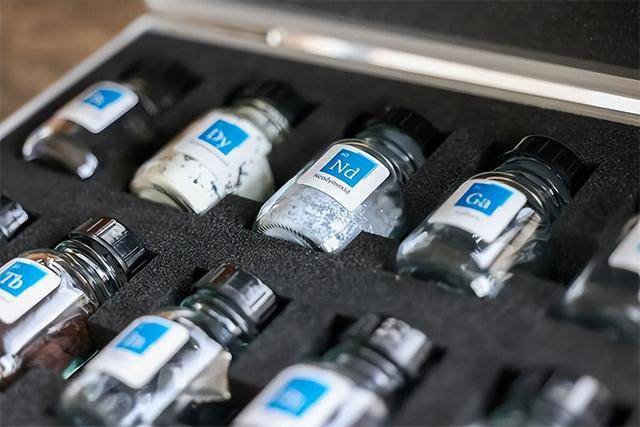
Core Insights - The announcement of a "substantial framework agreement" between the US and China regarding rare earths has relieved the global tech industry, highlighting China's significant control over rare earth resources with 44 million tons, nearly half of the global total [1][3]. Group 1: Reserve Disparity - Global rare earth reserves are unevenly distributed, with China holding 44 million tons, accounting for 48% of the total 92 million tons worldwide, while the US has only 1.9 million tons, representing about 2% [3]. - China's reserves are 23 times greater than those of the US, indicating a significant disparity in resource availability and structural integrity [3]. Group 2: Production Control - China dominates rare earth production, with an expected annual output of 270,000 tons in 2024, making up 69.23% of global production, compared to the US's 40,000 tons [5]. - China employs a quota system to finely control market supply, maintaining a strict limit on heavy rare earth quotas for six consecutive years [5]. Group 3: Technological Monopoly - China controls over 90% of the global capacity in the critical and high-value separation and refining stage of rare earth processing [7]. - The country is the only one capable of industrially producing 6N-grade (99.9999%) ultra-pure rare earths, meeting the demands of high-end applications [7]. - China's separation costs range from $4 to $7 per kilogram, significantly lower than the $10 to $15 per kilogram costs faced by foreign companies [7]. Group 4: Policy Upgrades - A new export control policy from China's Ministry of Commerce marks a strategic shift from "resource control" to "dual control of technology and supply chain," affecting not only direct exports but also foreign products containing Chinese components [9]. - Following the announcement of this policy, prices for key heavy rare earths like dysprosium and terbium surged by 15-20% within a week [9]. Group 5: Industry Chain Control - China has established a complete industry chain from resource extraction to high-end applications, controlling over 90% of the mining quotas through leading companies [11]. - The US lacks the necessary rare earth refining capabilities, necessitating the transport of mined materials to China for processing [11]. Group 6: Supply Chain Reconstruction Challenges - Major consumers like the US, EU, and Japan are attempting to rebuild their supply chains but face significant barriers, including high technical hurdles and economic feasibility issues [13]. - The timeline for developing a complete supply chain from mining to production typically spans 5-10 years, complicating efforts to reduce reliance on Chinese rare earths [13]. - The most likely scenario is a "diverse but dependent" global market, with China maintaining over 70% market share while overseas alternatives are limited to lower-end segments [15].