
有色金属行情

Search documents
有色金属日报-20260325
Wu Kuang Qi Huo· 2026-03-25 01:06
Group 1: Investment Ratings - No investment ratings for the industry are provided in the report. Group 2: Core Views - The Middle - East situation is still uncertain. The copper price declined and then rebounded. In the future, the copper inventory is expected to be further digested, providing stronger support for the copper price from the fundamental perspective. The short - term copper price may continue to test the bottom [1][2]. - The Middle - East situation has eased to some extent, but the risk sentiment in the aluminum market has not reversed. Overseas aluminum supply is expected to remain tight, and the improvement of domestic downstream demand is expected to drive the inventory to gradually decline. The fundamentals provide enhanced marginal support for the aluminum price [4][5]. - The lead price is at the lower edge of the long - term oscillation range, and the downstream battery enterprises may conduct strategic buying for hedging. However, due to factors such as high oil prices and the inflow of overseas lead ingots, the lead price has increased long - short contradictions and rising volatility, and there is a possibility of further decline [7][8]. - The zinc price has entered a downward trend. The zinc industry continues to be weak. Attention should be paid to the sustainability of downstream replenishment, the Fed's monetary policy guidance, and geopolitical conflicts [9][10]. - The tin supply is still constrained by the tight raw materials. The demand has marginally improved, but considering geopolitical disturbances and the decline in the US interest rate cut expectation, the tin price is expected to run weakly [11][12]. - In the short term, the nickel price is expected to weaken, but in the medium term, the global nickel supply - demand situation is improving, and the nickel price has strong bottom support and limited downward space. It is recommended to adopt a high - selling and low - buying range - trading strategy [13][14]. - The supply and demand of lithium carbonate are both strong. With recent disturbances in the mining end and a tight - balance pattern, the willingness of funds to short has decreased. Attention should be paid to changes in positions, industrial - driving events, and spot premiums [16][17]. - For alumina, the ore price is expected to be easy to rise and difficult to fall in the short term, but the medium - to - long - term oversupply pattern remains difficult to change. It is advisable to take a wait - and - see approach [19][20]. - The stainless - steel market currently shows weak macro and demand, while the mining end and shipping costs provide strong support. The price is expected to oscillate at a high level in the short term, and attention should be paid to the progress of the RKAB application approval by the Indonesian government [22][23]. - The cost of cast aluminum alloy has recovered, and with the improvement of downstream demand and supply - side disturbances, the short - term price still has support [25][26]. Group 3: Summary by Metals Copper - **Market Quotes**: The LME 3M copper contract closed down 1.05% to $12,092/ton, and the SHFE copper main contract closed at 94,670 yuan/ton. The LME inventory increased by 11,800 to 359,275 tons, and the domestic SHFE daily warehouse receipts decreased by 11,405 to 262,710 tons. The spot discount in East China slightly widened to 75 yuan/ton, and the spot premium in Guangdong decreased to 20 yuan/ton. The domestic copper spot import profit was about 500 yuan/ton, and the refined - scrap copper price difference was 40 yuan/ton [1]. - **Strategy Views**: The short - term copper price may continue to test the bottom. The operating range of the SHFE copper main contract is expected to be 93,000 - 97,000 yuan/ton, and that of the LME 3M copper is 11,900 - 12,400 dollars/ton [2]. Aluminum - **Market Quotes**: The LME 3M aluminum contract closed up 0.62% to $3,245/ton, and the SHFE aluminum main contract closed at 23,810 yuan/ton. The SHFE weighted contract positions decreased by 11,000 to 560,000 lots, and the futures warehouse receipts increased by 1,451 to 404,811 tons. The three - place inventory of aluminum ingots increased, and the aluminum rod inventory continued to decline. The LME inventory remained unchanged at 428,000 tons. The spot discount of aluminum ingots in East China narrowed to 140 yuan/ton [4]. - **Strategy Views**: The fundamentals provide enhanced marginal support for the aluminum price. The operating range of the SHFE aluminum main contract is expected to be 23,600 - 24,200 yuan/ton, and that of the LME 3M aluminum is 3,200 - 3,280 dollars/ton [5]. Lead - **Market Quotes**: The SHFE lead index closed up 0.14% to 16,421 yuan/ton. As of 15:00 on Tuesday, the LME 3S lead rose 6.5 to $1,891/ton. The SMM 1 lead ingot average price was 16,275 yuan/ton, and the refined - scrap lead price difference was at par. The SHFE lead ingot futures inventory was 54,568 tons, and the LME lead ingot inventory was 283,350 tons [7]. - **Strategy Views**: The lead price has increased long - short contradictions and rising volatility, and there is a possibility of further decline [8]. Zinc - **Market Quotes**: The SHFE zinc index closed up 0.77% to 22,977 yuan/ton. As of 15:00 on Tuesday, the LME 3S zinc rose 31 to $3,075/ton. The SMM 0 zinc ingot average price was 22,860 yuan/ton. The SHFE zinc ingot futures inventory was 99,824 tons, and the LME zinc ingot inventory was 117,100 tons. The national main - market zinc ingot social inventory on March 23 was 219,500 tons, a decrease of 9,500 tons from March 19 [9]. - **Strategy Views**: The zinc price has entered a downward trend. Attention should be paid to the sustainability of downstream replenishment, the Fed's monetary policy guidance, and geopolitical conflicts [10]. Tin - **Market Quotes**: On March 24, the SHFE tin main contract closed at 347,970 yuan/ton, up 5.99%. The SHFE inventory was 8,978 tons, a decrease of 508 tons, and the LME inventory was 8,805 tons, a decrease of 115 tons. As of March 20, the national main - market tin ingot social inventory was 11,035 tons, a decrease of 2,770 tons [11]. - **Strategy Views**: The tin price is expected to run weakly. The operating range of the domestic main contract is 300,000 - 380,000 yuan/ton, and that of the overseas LME tin is 39,000 - 47,000 dollars/ton [12]. Nickel - **Market Quotes**: On March 24, the SHFE nickel main contract closed at 133,480 yuan/ton, up 0.38%. The spot premiums of various brands were stable. The cost of nickel ore was unchanged, and the price of nickel iron slightly declined [13]. - **Strategy Views**: In the short term, the nickel price is expected to weaken, but in the medium term, it has strong bottom support. It is recommended to adopt a high - selling and low - buying range - trading strategy. The operating range of the SHFE nickel this week is 130,000 - 160,000 yuan/ton, and that of the LME 3M nickel is 16,000 - 20,000 dollars/ton [14]. Lithium Carbonate - **Market Quotes**: The MMLC lithium carbonate spot index closed at 149,451 yuan, up 3.52%. The LC2605 contract closed at 152,940 yuan, up 2.62%. The average premium of battery - grade lithium carbonate in the trading market was - 1,250 yuan [16]. - **Strategy Views**: The supply and demand of lithium carbonate are both strong. The operating range of the GZCE lithium carbonate 2605 contract is 146,000 - 164,000 yuan/ton [17]. Alumina - **Market Quotes**: On March 24, the alumina index fell 2.39% to 3,031 yuan/ton. The Shandong spot price rose 15 yuan/ton to 2,735 yuan/ton. The MYSTEEL Australian FOB price remained at $310/ton, and the import profit was 38 yuan/ton. The futures warehouse receipts were 406,300 tons, an increase of 900 tons [19]. - **Strategy Views**: The ore price is expected to rise in the short term, but the medium - to - long - term oversupply pattern remains. It is advisable to take a wait - and - see approach. The operating range of the domestic main contract AO2605 is 2,900 - 3,100 yuan/ton [20]. Stainless Steel - **Market Quotes**: The stainless - steel main contract closed at 14,290 yuan/ton on Tuesday, up 1.82%. The spot prices in Foshan and Wuxi markets increased, and the raw material prices were mostly stable. The futures inventory decreased, and the social inventory declined [22]. - **Strategy Views**: The stainless - steel price is expected to oscillate at a high level in the short term. The operating range of the main contract is 13,900 - 14,500 yuan/ton [23]. Cast Aluminum Alloy - **Market Quotes**: The price of cast aluminum alloy rebounded. The main AD2604 contract closed up 0.27% to 22,585 yuan/ton. The weighted contract positions decreased, and the trading volume shrank. The domestic mainstream ADC12 average price decreased, and the imported ADC12 price remained stable [25]. - **Strategy Views**: The short - term price still has support [26].
【华宝期货】有色金属周报-20260323
Hua Bao Qi Huo· 2026-03-23 13:00
Report Industry Investment Rating - No relevant content provided Core Viewpoints - Aluminum: High inventory and weak reality suppress upward momentum. It is expected to face pressure in the short - term and operate at a high level. Pay attention to the evolution of macro - events and inventory turnovers [12] - Zinc: Medium - to long - term supply increase exerts pressure, but it takes time to materialize. The price will range - bound in the short - term. Pay attention to macro - risk events and inventory - consumption trends [14] - Tin: The price trend is weak and volatile [15] - Lithium carbonate: Affected by macro - disturbances and supply - demand games, the price is under pressure and will fluctuate weakly within a range [18] Summary by Directory 01. Colorful Weekly Market Review - Copper: The closing price of the futures main contract on March 20, 2026, was 94,740, a weekly decrease of 5,570 or 5.55% compared to March 13. The average price in Shanghai Wumaomarket was 95,695, a weekly decrease of 4,915 or 4.89% [9] - Aluminum: The closing price of the futures main contract on March 20, 2026, was 24,020, a weekly decrease of 940 or 3.77% compared to March 13. The average price of A00 aluminum in the non - ferrous market was 24,030, a weekly decrease of 1,070 or 4.26% [9] - Zinc: The closing price of the futures main contract on March 20, 2026, was 22,935, a weekly decrease of 1,205 or 4.99% compared to March 13. The price of zinc ingots was 22,390, a weekly decrease of 1,690 or 7.02% [9] - Tin: The closing price of the futures main contract on March 20, 2026, was 342,480, a weekly decrease of 31,630 or 8.45% compared to March 13. The average price in Shanghai Wumaomarket was 354,000, a weekly decrease of 33,000 or 8.53% [9] - Nickel: The closing price of the futures main contract on March 20, 2026, was 133,160, a weekly decrease of 3,770 or 2.75% compared to March 13. The average price of nickel (No. 1) was 137,630, a weekly decrease of 3,990 or 2.82% [9] 02. This Week's Colorful Market Forecast - Aluminum: Last week, the aluminum price corrected from a high. Macro - risk premiums were reduced due to eased sentiment and profit - taking by long positions. New electrolytic aluminum projects in China, Indonesia, and Angola are still ramping up production, but geopolitical conflicts have made the supply in the Middle East unstable. The downstream processing enterprises' operating rate increased slightly, and the consumption peak season is showing signs. The inventory accumulation has slowed down, but the high - inventory situation continues to suppress the upward momentum [12] - Zinc: Last week, the zinc price was weak. The strengthening of the US dollar index suppressed the non - ferrous metals. The domestic zinc concentrate processing fee was basically stable, while the import processing fee continued to decline. The operating rate of the galvanizing industry increased, and enterprises actively stocked up on raw materials. In the medium - to long - term, supply increase exerts pressure on the price, but it takes time to materialize [14] - Tin: In February, the import volume of tin ore increased year - on - year. After the Spring Festival, the smelting end's operating rate increased, but the downstream demand recovery was less than expected. The supply shortage has eased, leading to a decline in the tin price [15] - Lithium carbonate: Last week, the futures main contract of lithium carbonate continued to be weak. The supply side is accelerating production, the demand side's growth has slowed down, the inventory depletion is almost over, and the cost support has weakened. Affected by macro - factors, the price is under pressure and will fluctuate weakly [18] 03. Variety Data Aluminum - Bauxite: The price of domestic high - grade bauxite in Henan remained unchanged at 585 yuan/ton week - on - week; the price of low - grade bauxite remained unchanged at 515 yuan/ton week - on - week; the average price of imported bauxite was 66.28 US dollars/ton, a week - on - week increase of 2.28. The port arrival volume was 441.59 tons, a week - on - week decrease of 121.97, and the departure volume was 556.96 tons, a week - on - week increase of 8.05 [23][27] - Alumina: The domestic price in Henan was 2,770 yuan/ton, a week - on - week increase of 65; the full cost was 2,707 yuan/ton, a week - on - week increase of 38.4; the profit in Shanxi was 16.94 yuan/ton, a week - on - week increase of 70 [30] - Electrolytic aluminum: The total cost was 16,409.05 yuan/ton, a week - on - week increase of 130.18; the regional price difference between Foshan and SMM A00 aluminum was - 10 yuan/ton, a week - on - week increase of 50. The operating rates of aluminum cable, aluminum foil, aluminum plate and strip, aluminum profile, primary aluminum alloy, and recycled aluminum alloy showed different changes. The bonded - area inventory in Shanghai was 43,600 tons, a week - on - week increase of 700; the total bonded - area inventory was 49,800 tons, a week - on - week increase of 1,900; the social inventory was 1.337 million tons, a week - on - week increase of 11,000; the weekly outbound volume of aluminum ingots in major consumption areas was 128,100 tons, a week - on - week increase of 30,100. The SHFE inventory was 452,044 tons, a week - on - week increase of 35,619; the LME inventory was 429,675 tons, a week - on - week decrease of 15,625 [32][35][43] - Spot and basis: The basis of the current month was 110 yuan/ton, a week - on - week decrease of 10; the basis of the main contract was 50 yuan/ton, a week - on - week decrease of 110; the basis of the third - consecutive contract was - 15 yuan/ton, a week - on - week increase of 5 [49] - Monthly spread of Shanghai aluminum: The spread between the current month and the main contract was - 60 yuan/ton, a week - on - week decrease of 100; the spread between the current month and the third - consecutive contract was - 125 yuan/ton, a week - on - week increase of 15 [53] Zinc - Zinc concentrate: The price of domestic zinc concentrate was 19,722 yuan/metal ton, a week - on - week decrease of 936; the domestic processing fee was 1,550 yuan/metal ton, unchanged week - on - week; the import processing fee was 5.23 US dollars/dry ton, a week - on - week decrease of 6.02. The enterprise production profit was 6,722 yuan/metal ton, a week - on - week decrease of 936; the import profit and loss was - 319.52 yuan/ton, a week - on - week increase of 441.81; the inventory of imported zinc concentrate in Lianyungang was 150,000 physical tons, unchanged week - on - week [60][63] - Refined zinc: The social inventory of zinc ingots in SMM's seven regions was 255,200 tons, a week - on - week decrease of 20,600; the bonded - area inventory was 3,300 tons, unchanged week - on - week; the SHFE refined zinc inventory was 152,266 tons, a week - on - week increase of 4,918; the LME zinc inventory was 117,675 tons, a week - on - week increase of 19,775 [67] - Galvanizing: The output was 346,090 tons, a week - on - week increase of 31,895; the operating rate was 59.7%, a week - on - week increase of 6.7; the raw material inventory was 15,370 tons, a week - on - week increase of 1,020; the finished - product inventory was 375,100 tons, a week - on - week decrease of 2,500 [71] - Basis and monthly spread: The basis of the current month was - 20 yuan/ton, a week - on - week decrease of 30; the basis of the main contract was - 25 yuan/ton, a week - on - week increase of 35; the basis of the third - consecutive contract was - 60 yuan/ton, a week - on - week increase of 95. The spread between the current month and the main contract was - 5 yuan/ton, a week - on - week increase of 65; the spread between the current month and the third - consecutive contract was - 40 yuan/ton, a week - on - week increase of 125 [75][76] Tin - Refined tin: The combined output of Yunnan and Jiangxi provinces was 0.332 million tons, a week - on - week decrease of 0.002; the combined operating rate was 68.51%, a week - on - week decrease of 0.42 [84] - Tin ingot inventory: The total SHFE tin ingot inventory was 10,042 tons, a week - on - week decrease of 2,472; the social inventory in China's regions was 10,977 tons, a week - on - week decrease of 2,380 [87] - Tin concentrate processing fee: The processing fee in Yunnan (40%) was 16,000 yuan/ton, unchanged week - on - week; the processing fees in Guangxi, Hunan, and Jiangxi (60%) were 12,000 yuan/ton, unchanged week - on - week [90] - Tin ore import profit and loss: The import profit and loss level was 39,899.73 yuan/ton, a week - on - week increase of 7,952.71 [91] - Spot average price: The average price of 40% tin concentrate in Yunnan was 337,400 yuan/ton, a week - on - week decrease of 33,200; the average prices of 60% tin concentrate in Guangxi, Hunan, and Jiangxi were 341,400 yuan/ton, a week - on - week decrease of 33,200 [98] Carbonate Lithium - Price and trading volume: The closing price of the main contract was 143,860 yuan/ton, a week - on - week decrease of 5.41%; the trading volume was 258,276 lots, a week - on - week decrease of 10.50%; the open interest was 276,578 lots, a week - on - week decrease of 12.74%; the basis was 5,140 yuan/ton, a week - on - week decrease of 25.72%. The weekly average price of SMM battery - grade lithium carbonate was 153,320 yuan/ton, a week - on - week decrease of 2.94%; the weekly average price of battery - grade lithium carbonate was 154,300 yuan/ton, a week - on - week decrease of 2.25%; the weekly average price of industrial - grade lithium carbonate was 151,100 yuan/ton, a week - on - week decrease of 2.17% [101] - Supply side: The total weekly operating rate of lithium carbonate was 55.14%, a week - on - week increase of 3.24%; the output was 24,186 tons, a week - on - week increase of 3.24%. The operating rates and outputs of lithium carbonate produced from spodumene, salt lakes, lepidolite, and recycled materials showed different changes [106][107][111] - Demand side: The weekly output of ternary materials was 17,500 tons, a week - on - week increase of 3.11%; the inventory was 18,400 tons, a week - on - week increase of 2.25%. The weekly output of lithium iron phosphate was 102,000 tons, a week - on - week increase of 0.25%; the iron - lithium factory's weekly inventory was 106,700 tons, a week - on - week increase of 0.89%. The weekly output of power cells was 29.33 GWh, a week - on - week increase of 6.65%; the weekly sales volume of domestic new - energy passenger cars in February was 765,000, a month - on - month decrease of 19.05%. The monthly operating rate of the SMM energy - storage battery industry in February was 79.87%, a month - on - month decrease of 10.84%; the output was 56.07 GWh, a month - on - month decrease of 11.03% [114][117] - Inventory: The social inventory of lithium carbonate was 40,700 tons, a week - on - week decrease of 4.28%; the sample weekly inventory was 98,900 tons, a week - on - week decrease of 0.09%. The inventory days were 27.7 days, a week - on - week decrease of 0.36% [121] - Cost and profit: The average price of spodumene concentrate (6%, CIF China) was 2,131.8 US dollars/ton, a week - on - week decrease of 3.13%; the average price of spodumene (Chinese spot 5% - 5.5%) was 14,510 yuan/ton, a week - on - week decrease of 4.19%. The average prices of lepidolite and amblygonite with different grades also showed week - on - week decreases [124]
有色金属周报:电解铝表现依旧强势,回调依然看好稀土26年表现
SINOLINK SECURITIES· 2026-03-15 10:24
Group 1 - Investment rating for copper remains strong with a slight price decrease of 1.04% to $12,735.5 per ton on LME and 0.73% to ¥100,300 per ton on SHFE [1][13] - The report indicates a steady recovery in copper cable enterprises' operating rates, driven by a slight price adjustment and increased orders from the power sector and renewable energy [1][13] - The aluminum market shows a positive trend with LME aluminum price increasing by 0.23% to $3,439.0 per ton and SHFE aluminum price up by 0.99% to ¥25,000 per ton, indicating a recovery in downstream processing rates [2][14] Group 2 - Gold prices have decreased by 2.44% to $5,023.1 per ounce, influenced by geopolitical risks and market fluctuations, with SPDR gold holdings increasing by 0.85 tons [3][15] - The rare earth sector is experiencing upward momentum, with prices for praseodymium and neodymium oxide decreasing by 5.58%, while the overall price center is rising due to ongoing supply-side reforms [4][33] - Tungsten prices have surged by 15.80%, supported by increased demand from both civilian and military sectors, indicating a strong supply-demand resonance [4][36] Group 3 - Lithium carbonate average price decreased by 1.2% to ¥157,800 per ton, while hydroxide lithium average price fell by 0.6% to ¥161,000 per ton, with production showing a slight increase [5][56] - Cobalt prices remained stable with a slight decrease of 0.1% to ¥432,000 per ton, while demand from downstream sectors remains cautious [5][57] - Nickel prices on LME decreased by 0.7% to $17,320 per ton, with domestic nickel prices showing a slight increase, indicating market volatility [5][56]
湖南黄金触及涨停,南方基金旗下有色金属ETF(512400)大涨超5%,有色极端情绪释放,后续行情备受关注
Xin Lang Cai Jing· 2026-02-03 06:24
Core Viewpoint - The recent surge in the non-ferrous metals sector, particularly driven by precious metals, has led to a strong market performance, but a short-term correction is anticipated due to market sentiment reaching a peak [1][2]. Group 1: Market Performance - The Southern Fund's non-ferrous metals ETF (512400) rose by 5.13%, with a turnover of 29.53 billion yuan and a trading volume of 7.65% [1]. - Key stocks in the index, such as Hunan Gold, rose by 9.97%, while other stocks like Zhong Rare Metals and Shenghe Resources increased by 7.73% and 6.65%, respectively [1]. Group 2: Market Drivers - The strong performance since late December is primarily attributed to the acceleration in the precious metals sector, particularly the volatility of silver at historical highs, which has significantly influenced the risk appetite across the sector [1]. - The first phase of the commodity bull market may be nearing its end, but the fundamental basis for the next phase remains solid, particularly for copper and aluminum, which have favorable supply-demand dynamics [1]. Group 3: Future Outlook - Short-term opportunities may require waiting for clearer signals post-holiday, with a focus on whether gold prices stabilize at key support levels and the overall valuation recovery of the sector [2]. - Investors with strong trading capabilities may consider seizing institutional opportunities, while those with lower risk tolerance should gradually position themselves for potential post-holiday market movements [2]. Group 4: Index Composition - The CSI Shenwan Non-Ferrous Metals Index includes 50 listed companies to reflect the overall performance of the non-ferrous metals sector in the Shanghai and Shenzhen markets [2]. - The top ten weighted stocks in the index include Zijin Mining, Luoyang Molybdenum, Northern Rare Earth, and China Aluminum, among others [2].

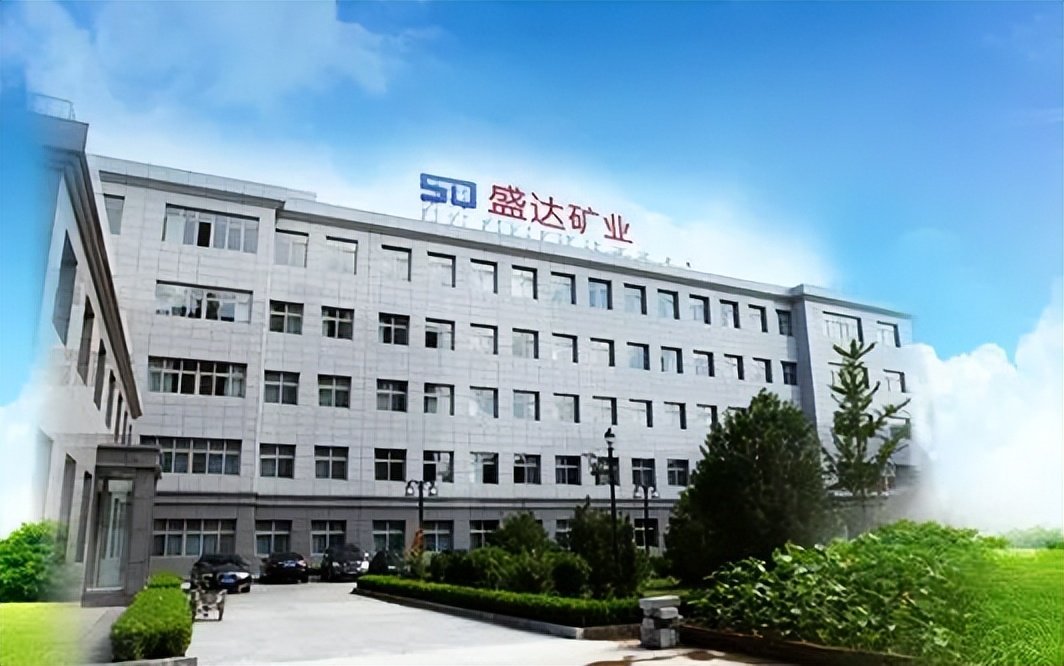
80亿天水矿业家族,连抢两座金银矿
Xin Lang Cai Jing· 2026-01-31 11:07
Core Viewpoint - The silver market is experiencing volatility, impacting the stock prices of mining giants like Shengda Resources, which has seen significant fluctuations in its market value due to recent silver price drops [2][18]. Group 1: Company Expansion and Acquisitions - Shengda Resources, led by Zhao Mantang, has aggressively pursued acquisitions, recently acquiring a 55% stake in Guangxi Jinshi for 270 million yuan and a 60% stake in Yichun Jinshi Mining for 500 million yuan [5][9]. - The acquisitions are part of a strategy to enhance resource reserves and production capacity, with a focus on cost-effective projects that align with industry cycles [4][10]. - The Yichun project is expected to significantly increase Shengda's copper, silver, lead, and zinc reserves, with a planned construction start in 2027 [9][10]. Group 2: Financial Performance - Shengda Resources reported a 36.98% increase in revenue for the current reporting period, with net profit rising by 116.39% [16]. - The company has achieved a net profit of 320 million yuan in just nine months, nearing its total profit for the previous year [16]. - The stock price has surged fourfold since the beginning of 2025, reaching 61 yuan per share by January 30 [17]. Group 3: Market Conditions and Future Outlook - The silver market has seen prices rise dramatically, with a peak of 121.6 USD/oz in late January, contributing positively to Shengda's performance [13][12]. - However, the market is currently experiencing a downturn, posing challenges for the company in 2026 [18][28]. - The management emphasizes a balanced approach to production and expansion, aiming to solidify its position as a leading domestic mining company while navigating market fluctuations [26][28].

有色金属日报 2026-1-29-20260129
Wu Kuang Qi Huo· 2026-01-29 02:11
Group 1: Report Industry Investment Rating - No relevant content found Group 2: Core Views of the Report - The overall sentiment in the precious metals and non - ferrous metals sectors is supported by factors such as geopolitical situations, policy environments, and supply - demand dynamics. Different metals have different price trends and influencing factors. For example, copper prices are expected to rise slightly in the short term, aluminum prices are expected to remain strong, and the prices of other metals also have their own characteristics and influencing factors [5][8] Group 3: Summary by Metal Copper - **Market Information**: The Fed's interest - rate decision and geopolitical situation led to a rise in gold and copper prices. LME copper 3M closed up 0.74% to $13,120/ton, and SHFE copper main contract closed at 102,430 yuan/ton. LME copper inventory increased by 1,575 tons to 173,925 tons, and SHFE daily warehouse receipts increased by 0.3 to 148,000 tons. The spot discount in Shanghai and Guangdong was large, and the import loss of SHFE copper spot narrowed to about 400 yuan/ton. The refined - scrap copper price difference widened [4] - **Strategy View**: Precious metals continue to rise, and strategic resource demand is strengthened. The copper ore supply is tight, and the refined copper demand is seasonally weak. Global visible inventory continues to increase. Short - term copper prices are expected to rise slightly. The reference range for SHFE copper main contract is 101,500 - 105,000 yuan/ton, and for LME copper 3M is $13,000 - $13,500/ton [5] Aluminum - **Market Information**: Due to the escalation of the US - Iran issue and the strengthening of the equity market, aluminum prices rose significantly. LME aluminum closed up 1.59% to $3,263/ton, and SHFE aluminum main contract closed at 25,330 yuan/ton. The SHFE - LME price difference narrowed. SHFE aluminum weighted contract positions increased by 93,000 to 810,000 lots, and futures warehouse receipts increased by 0.1 to 143,000 tons. Domestic aluminum ingot inventory decreased slightly, and aluminum rod inventory increased slightly. The processing fee of aluminum rods continued to rise, but the transaction was dull. LME aluminum inventory decreased by 0.2 to 500,000 tons [7] - **Strategy View**: The large increase in aluminum positions has increased price volatility. Domestic aluminum ingot and aluminum rod inventories continue to accumulate, but high prices suppress downstream demand. LME aluminum inventory remains relatively low, and the US aluminum spot premium remains high, providing strong support for aluminum prices. In the context of loose domestic and foreign policies, aluminum prices are expected to remain strong. The reference range for SHFE aluminum main contract is 25,000 - 25,800 yuan/ton, and for LME aluminum 3M is $3,220 - $3,320/ton [8] Lead - **Market Information**: On Wednesday, the SHFE lead index closed flat at 17,016 yuan/ton, with a total unilateral trading position of 101,000 lots. As of 15:00 on Wednesday, LME lead 3S fell $7 to $2,025.5/ton, with a total position of 171,300 lots. The average price of SMM1 lead ingots was 16,775 yuan/ton, and the refined - scrap lead price difference was 100 yuan/ton. SHFE lead ingot futures inventory was 29,400 tons, and LME lead ingot inventory was 211,200 tons [10] - **Strategy View**: Although the visible lead ore inventory has further increased, high by - product profits suppress the further decline of lead concentrate TC. Primary lead production has decreased slightly but remains at a high level, and secondary lead smelting start - up rate has increased marginally. The finished product inventory of smelting plants and social lead ingot inventory have both increased, showing a weak industrial situation. However, due to the impact of winter cooling on scrap battery transportation, the raw materials for secondary lead smelting have tightened, and the profit of secondary lead smelting calculated on a spot - order basis is under pressure. It is expected that the surplus of lead ingots will decrease marginally [11] Zinc - **Market Information**: On Wednesday, the SHFE zinc index closed up 2.62% to 25,615 yuan/ton, with a total unilateral trading position of 240,200 lots. As of 15:00 on Wednesday, LME zinc 3S rose $82 to $3,413/ton, with a total position of 234,300 lots. The average price of SMM0 zinc ingots was 25,240 yuan/ton. SHFE zinc ingot futures inventory was 28,300 tons, and LME zinc ingot inventory was 110,600 tons. According to Steel Union data, the social inventory of zinc ingots in major domestic markets on January 26 was 109,900 tons, an increase of 130 tons from January 22 [12] - **Strategy View**: The visible zinc ore inventory has increased marginally, and zinc concentrate TC has stopped falling and stabilized. Zinc smelting profits have improved slightly, and the destocking of domestic zinc ingot social inventory has slowed down. After the repair of the SHFE - LME ratio, the outflow of zinc has improved, and the domestic zinc industry remains weak. The US PMI data announced on the night of January 23 was slightly lower than expected, and the double - loose policy has not been reflected in economic data, so short - term bullish sentiment has retreated. However, the sharp rise in overseas natural gas prices has raised concerns about the costs of European smelters, leading to an increase in LME zinc prices. In addition, the current zinc - copper ratio and zinc - aluminum ratio are at absolute lows, and zinc prices are still in the process of following the sector to make up for the macro - attribute increase [13] Tin - **Market Information**: On January 28, tin prices fluctuated within a narrow range. The SHFE tin main contract closed at 443,800 yuan/ton, a decrease of 1.63% from the previous day. In terms of supply, the start - up rate of smelters in Yunnan remained high last week, while the refined tin output in Jiangxi was still low due to the shortage of scrap tin raw materials. The upward momentum was insufficient after the two regions recovered from maintenance, and there were both constraints on the scrap side and downstream high - price wait - and - see attitudes, so short - term supply was difficult to increase significantly. In terms of demand, although high tin prices significantly suppressed downstream purchasing willingness, downstream inventories were generally low, and the acceptance of tin prices was gradually increasing. After the decline in tin prices last week, the rigid - demand restocking demand was released intensively. As of January 23, 2026, the social inventory of tin ingots in major domestic markets was 11,001 tons, an increase of 365 tons from the previous Friday [14] - **Strategy View**: In the short term, the tin price trend is determined by the capital game in the futures market. Against the background of the strong trend of precious metals and non - ferrous metals sectors, tin prices are expected to be strong in the short term. It is recommended to wait and see. The reference range for the domestic main contract is 430,000 - 470,000 yuan/ton, and for overseas LME tin is $52,000 - $58,000/ton [15] Nickel - **Market Information**: On January 28, nickel prices fluctuated. The SHFE nickel main contract closed at 144,730 yuan/ton, a decrease of 1.12% from the previous day. In the spot market, the premium of each brand remained stable. The average premium of Russian nickel to the near - month contract was 200 yuan/ton, and the average premium of Jinchuan nickel was 6,750 yuan/ton. In terms of cost, nickel ore prices remained stable. The ex - factory price of 1.6% grade Indonesian domestic red clay nickel ore was $54.54/wet ton, and that of 1.2% grade was $23/wet ton. The price of nickel iron fluctuated upward, and the average price of 10 - 12% high - nickel pig iron was 1,053 yuan/nickel point [16] - **Strategy View**: Although there is an expectation of an increase in refined nickel production in January, it has not been continuously reflected in the visible inventory. It is expected that under the expectation of a reduction in the RKAB quota in Indonesia, SHFE nickel will continue to fluctuate widely in the short term. It is recommended to wait and see. The short - term reference range for SHFE nickel prices is 130,000 - 160,000 yuan/ton, and for LME nickel 3M contract is $16,000 - $19,000/ton [17] Lithium Carbonate - **Market Information**: The Wuganglian lithium carbonate spot index (MMLC) closed at 168,830 yuan in the evening session, a decrease of 0.49% from the previous working day. Among them, the price of MMLC battery - grade lithium carbonate was 163,500 - 175,000 yuan, with an average price decrease of 850 yuan (- 0.50%) from the previous day, and the price of industrial - grade lithium carbonate was 160,500 - 172,000 yuan, with an average price decrease of 0.45% from the previous day. The closing price of the LC2605 contract was 166,280 yuan, a decrease of 7.42% from the previous closing price. The average premium of battery - grade lithium carbonate in the trading market was - 1,600 yuan [19] - **Strategy View**: On Wednesday, most commodities rose, but lithium carbonate was weak, rising first and then falling back to erase the previous day's gains. After the previous rapid rise in lithium prices, the number of profit - taking orders increased. The fundamental improvement expectation of lithium carbonate remains unchanged, and the off - season destocking provides strong support. Downstream raw material inventory is limited, and it is expected that the bargaining power is not high. Recently, the commodity market has fluctuated greatly, and the exchange adheres to the main tone of strict supervision. It is recommended to wait and see carefully or try with a light position. The reference range for the Guangzhou Futures Exchange lithium carbonate 2605 contract today is 156,000 - 176,000 yuan/ton [20] Alumina - **Market Information**: As of 3 pm on January 28, 2026, the alumina index rose 2.8% to 2,808 yuan/ton, with a total unilateral trading position of 647,300 lots, a decrease of 14,900 lots from the previous trading day. In terms of basis, the spot price in Shandong remained at 2,555 yuan/ton, at a discount of 256 yuan/ton to the main contract. Overseas, the MYSTEEL Australian FOB price remained at $304/ton, and the import profit and loss was - 81 yuan/ton. In terms of futures inventory, the futures warehouse receipts on Wednesday were 159,100 tons, an increase of 3,600 tons from the previous trading day. In the ore end, the CIF price in Guinea decreased by $0.5/ton to $61.5/ton, and the CIF price in Australia remained at $60/ton [22] - **Strategy View**: After the rainy season, the shipment from Guinea is gradually recovering, and the AXIS mine is resuming production. It is expected that the ore price will fluctuate downward. Attention should be paid to the support at the import cost position of Guinea ore. The over - capacity situation in the alumina smelting end is difficult to change in the short term, and the inventory accumulation trend continues. The National Development and Reform Commission has proposed to prevent blind investment and disorderly construction in alumina and copper smelting, and the market's expectation of the implementation of supply - contraction policies in the future has increased. However, the continuous rebound still faces three difficulties: over - capacity in the smelting end, downward cost support, and the pressure of expired warehouse receipt delivery. It is recommended to wait and see in the short term. The reference range for the domestic main contract AO2605 is 2,650 - 2,900 yuan/ton. Attention should be paid to supply - side policies, Guinea ore policies, and the Fed's monetary policy [23] Stainless Steel - **Market Information**: At 15:00 on Wednesday, the stainless - steel main contract closed at 14,465 yuan/ton, a decrease of 0.52% (- 75) on the day, with a unilateral position of 295,000 lots, a decrease of 8,706 lots from the previous trading day. In the spot market, the price of Delong 304 cold - rolled coil in Foshan market was 14,250 yuan/ton, a decrease of 50 yuan from the previous day, and the price of Hongwang 304 cold - rolled coil in Wuxi market remained unchanged at 14,500 yuan/ton. The Foshan basis was - 415 (+ 25), and the Wuxi basis was - 165 (+ 75). The price of Hongwang 201 in Foshan was 9,350 yuan/ton, a decrease of 50 yuan from the previous day, and the price of Hongwang annealed 430 remained unchanged at 7,750 yuan/ton. In terms of raw materials, the ex - factory price of high - nickel iron in Shandong was 1,055 yuan/nickel, and the recycling price of 304 scrap steel industrial materials in Baoding was 9,450 yuan/ton, both remaining unchanged from the previous day. The price of high - carbon ferrochrome in the northern main production area was 8,500 yuan/50 - base ton, remaining unchanged from the previous day. The futures inventory was 38,938 tons, a decrease of 7,180 tons from the previous day. According to the data on January 23, the social inventory decreased to 878,900 tons, a decrease of 0.51% month - on - month, among which the inventory of 300 - series was 599,500 tons, a decrease of 0.48% month - on - month [25] - **Strategy View**: Last week, the stainless - steel market was active in trading, and prices fluctuated greatly. Affected by the expansion of the nickel - stainless - steel price difference, some nickel - iron production capacity has shifted to the production of high - grade nickel matte with better profits, resulting in a tight supply of nickel - iron and limited high - quality and tradable resources in the market. In addition, the futures warehouse receipts are at a low level, and the stainless - steel market shows a structural supply shortage in the short term, and the near - month contracts continue to strengthen. In terms of inventory, although the downstream demand weakened before the Spring Festival, the enthusiasm of traders for stockpiling increased, and the social inventory continued to decline. On Friday, market news showed that the port logistics of the Indonesian Tsingshan Industrial Park may be suspected of monopoly. If the Indonesian government intervenes in the investigation later, the shipment of Tsingshan - related products may be affected, further increasing the uncertainty on the supply side of stainless steel. Overall, the expectation of tight supply on the raw material side has not been reversed, the stainless - steel spot market shows a tight pattern, and the price center is expected to continue to move up in the future, but the fluctuation may be large, and the risk of a callback should be vigilant. The reference range for the main contract is 14,200 - 15,100 yuan/ton [26] Cast Aluminum Alloy - **Market Information**: Yesterday, the price of cast aluminum alloy rose significantly. The main AD2603 contract closed up 3.17% to 23,785 yuan/ton (as of 3 pm), the weighted contract position increased to 22,100 lots, the trading volume was 34,100 lots, and the trading volume reached a new high since listing. The warehouse receipts increased by 0.01 to 67,700 tons. The price difference between the AL2603 contract and the AD2603 contract was 1,855 yuan/ton, which widened significantly month - on - month. The average price of mainstream domestic ADC12 increased month - on - month, and the price of imported ADC12 increased by 200 yuan/ton. Downstream procurement was mainly for rigid demand. In terms of inventory, the domestic three - place inventory decreased by 0.02 to 41,500 tons [28] - **Strategy View**: The cost of cast aluminum alloy is strong, and the supply - side disturbance continues, providing strong support for prices. However, the demand is relatively average. It is expected that the price will be strong in the short term [29]
华宝期货有色金属周报-20260126
Hua Bao Qi Huo· 2026-01-26 11:16
1. Report Industry Investment Rating - No relevant content provided. 2. Core Viewpoints - Aluminum: Macro funds' bullish sentiment on prices remains, but environmental controls and bad weather have slowed the inventory accumulation mid - week. Aluminum prices are expected to remain strong at high levels in the short term. Attention should be paid to the development of macro events and downstream feedback [12]. - Zinc: Affected by the volatility of non - ferrous metals, zinc prices are relatively strong. In the medium - and long - term, the supply increase exerts pressure on the upside, but it will take time to materialize. Zinc prices will run at a high level in the short term, and attention should be paid to macro - risk events and inventory trends at home and abroad [14]. - Tin: Tin prices are at a high level, and it is advisable to avoid participation in the short term [15]. - Lithium Carbonate: It will fluctuate in a high - level range, with a game between "strong expectations" and "weak reality". Policy expectations and supply disruptions support the price bottom [16]. 3. Summary by Directory 3.1 01 Colorful Weekly Market Review - **Futures and Spot Prices**: The report shows the closing prices, weekly changes, and weekly price changes of the main futures contracts and spot prices of copper, aluminum, zinc, tin, and nickel from January 16th to January 23rd, 2026. For example, the main copper futures contract (CU2603) rose 0.57%, while the average copper spot price in Shanghai Wumaohu decreased 0.80% [9]. 3.2 02 This Week's Non - Ferrous Market Forecast - **Aluminum**: Macro factors such as geopolitical frictions and tariff uncertainties put pressure on the US dollar. On the fundamental side, some northern mining areas have staged production cuts due to weather, and the domestic ore price is expected to remain stable. The overall aluminum processing industry shows a pattern of stable operation with local fluctuations. Aluminum prices are expected to remain strong at high levels in the short term [12]. - **Zinc**: SMM Zn50 domestic weekly TC average price remained flat, and the SMM imported zinc concentrate index decreased. The supply of domestic zinc concentrates continues to weaken, and the overall supply - demand pattern in February is expected to remain unchanged. The galvanizing industry shows a "first - up - then - down" trend. Zinc prices will run at a high level in the short term [14]. - **Tin**: In December 2025, China's tin concentrate imports increased. The smelting plants in Yunnan and Jiangxi are operating at a high level, but there is limited room for further improvement. The demand is stable, and the market is optimistic about the semiconductor and new - energy vehicle industries after the festival. Tin prices are at a high level, and short - term participation should be avoided [15]. - **Lithium Carbonate**: Last week, the lithium carbonate market rose strongly. The supply side is contracting comprehensively, the demand side has kinetic energy conversion and prominent structural contradictions, the inventory structure has deteriorated significantly, and the profit structure has prominent contradictions. It will fluctuate in a high - level range, with a game between "strong expectations" and "weak reality" [16]. 3.3 03 Variety Data 3.3.1 Aluminum - **Bauxite**: The prices of domestic high - and low - grade bauxite in Henan remained unchanged week - on - week; the average price index of imported bauxite decreased. The port arrival volume increased, while the departure volume decreased [21][24]. - **Alumina**: The domestic price in Henan decreased, the full cost decreased, and the profit in Shanxi increased [27]. - **Electrolytic Aluminum**: The total cost decreased, and the regional price difference increased. The downstream processing industry's overall operating rate showed a mixed trend, with some rising and some remaining stable. The inventory in the bonded area decreased, the social inventory increased, and the inventory in the futures exchange also changed [29][36][41]. - **Spot and Basis**: The basis of SMM A00 aluminum decreased week - on - week, and the monthly spread also changed [47][48]. 3.3.2 Zinc - **Zinc Concentrate**: The price of domestic zinc concentrate decreased, the domestic processing fee remained unchanged, and the imported processing fee decreased. The enterprise production profit decreased, the import loss increased, and the imported zinc concentrate inventory in Lianyungang increased [57][60]. - **Refined Zinc**: The social inventory of zinc ingots decreased, the bonded area inventory remained unchanged, the inventory in the futures exchange changed [63]. - **Galvanizing**: The output and operating rate increased, and the raw material and finished - product inventories increased [67]. - **Basis and Monthly Spread**: The basis of SMM 0 zinc ingot decreased, and the monthly spread changed [71][75]. 3.3.3 Tin - **Refined Tin**: The combined output and operating rate of Yunnan and Jiangxi provinces increased [82]. - **Tin Ingot Inventory**: The SHFE tin ingot inventory and the Chinese regional social inventory increased [85]. - **Tin Concentrate Processing Fee**: The processing fees in different regions remained unchanged week - on - week and increased year - on - year [88]. - **Tin Ore Import Profit and Loss**: The import profit and loss level increased [89]. - **Spot Price**: The average prices in different regions increased [95]. 3.3.4 Lithium Carbonate - **Price and Trading Volume**: The closing price of the main contract increased, the trading volume decreased, the open interest increased, and the basis decreased significantly [98]. - **Supply Side**: The overall operating rate and output decreased, with significant declines in the lithium - spodumene and recycling - material routes [100][105]. - **Demand Side**: The cathode material industry generally increased production and accumulated inventory, and the demand transmission was blocked. The total demand on the terminal side was under pressure, but energy storage showed strong performance [113][118]. - **Inventory**: The total inventory decreased slightly, the smelters and downstream accumulated inventory, and the social inventory increased [119]. - **Cost and Profit**: The raw - material market showed a differentiated trend, with overseas lithium - spodumene prices rising slightly and domestic lithium - ore prices generally falling back. The production and import profits were differentiated, and the delivery profit improved but was still under pressure [126][129].
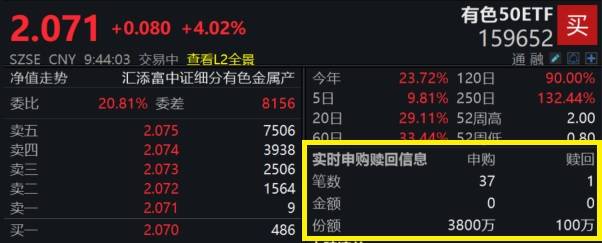
见证历史!金银铜集体飙涨,有色史诗级行情爆发!紫金矿业涨超4%,有色50ETF(159652)涨超4%,开盘10分钟吸金超7000万!
Sou Hu Cai Jing· 2026-01-26 02:07
Core Viewpoint - The non-ferrous metal sector has experienced a significant surge, with the Non-Ferrous 50 ETF (159652) rising over 4% and attracting substantial capital inflow, indicating strong investor interest in this sector [1][3]. Market Performance - On January 26, the Non-Ferrous 50 ETF (159652) saw a capital inflow exceeding 70 million CNY within the first 10 minutes of trading, following a total inflow of over 160 million CNY in the previous two days [1]. - Precious metals also saw a collective surge, with spot gold prices surpassing 5000 USD/ounce for the first time, and silver and platinum prices increasing by over 3% and reaching 2800 USD/ounce, respectively [1][3]. Supply Chain Dynamics - A strike at Capstone Copper's Mantoverde copper mine in Chile, involving 645 workers, has contributed to supply concerns, as negotiations have stalled [1]. - The global mining capital expenditure has been historically low, with a 3.3% decline in exploration investments for solid minerals in 2024, indicating potential supply constraints in the future [9]. Economic and Macro Factors - Analysts suggest that central banks' strategic asset allocation is a core support for the current rise in gold prices, with expectations of monthly purchases of 60 tons of gold by central banks [3]. - The weak dollar environment, driven by the Federal Reserve's monetary policy, is expected to boost the prices of dollar-denominated commodities, including non-ferrous metals [7]. Investment Opportunities - The Non-Ferrous 50 ETF (159652) is highlighted for its high copper (34%) and gold (12%) content, making it a leading option for investors looking to capitalize on the non-ferrous metal supercycle [13]. - The ETF's index has shown a cumulative return of 99.61% since 2020, driven by earnings rather than valuation increases, indicating a strong performance outlook [16].

黄金股票ETF(517400)大涨超3.5%,近5日资金净流入近2亿元,资金积极布局,持续看好黄金中长期走势
Mei Ri Jing Ji Xin Wen· 2026-01-23 05:46
Group 1 - The core viewpoint is that the gold stock ETF (517400) has surged over 3.5%, with a net inflow of nearly 200 million yuan in the past five days, indicating strong investor confidence in the medium to long-term outlook for gold [1] - Huafu Securities highlights that the "anti-involution" and domestic demand expansion, along with a reinforced narrative of re-inflation, suggest that the second phase of the bull market has begun, and the non-ferrous metal sector is expected to continue performing well [1] - The analysis indicates that a weak dollar environment provides a foundation for the strength of commodities, while U.S. debt monetization and the bet on AI growth are core logical drivers [1] Group 2 - The report notes that global mining capital expenditure is historically insufficient, which poses a real constraint on the sector [1] - The geopolitical competition among major powers is seen as an "invisible" driving force behind key mineral property rights [1] - Looking ahead to 2025, the non-ferrous metal sector is expected to see significant gains in both equity markets and commodity prices, reflecting the strong cyclicality of the sector as economic fundamentals improve [1] Group 3 - In the medium to long term, the price of gold is expected to rise, and investors are advised to consider participating in subsequent pullbacks and gradually building positions [1] - Direct investment in physical gold and tax-exempt gold fund ETFs (518800) are recommended, along with the gold stock ETF (517400) that covers the entire gold industry chain [1]
矿业ETF(561330)涨超3%,近20日净流入超8.5亿元,有色金属行情仍有望继续演绎
Sou Hu Cai Jing· 2026-01-21 06:25
Group 1 - The core viewpoint of the article highlights that the mining ETF (561330) has risen over 3%, with a net inflow of more than 850 million yuan in the past 20 days, indicating a continued bullish trend in the non-ferrous metals market [1] - Huafu Securities points out that the second phase of the bull market has entered a profit-driven upward cycle, supported by an upward revision of economic fundamentals and the strong cyclicality of non-ferrous metals [1] - The narrative of re-inflation is reinforced under the "anti-involution" and domestic demand expansion, suggesting that the non-ferrous metals market is likely to continue its performance in the second phase of the bull market [1] Group 2 - The mining ETF (561330) tracks the non-ferrous metals index (931892), which mainly includes companies engaged in the mining, smelting, and processing of non-ferrous metals, characterized by strong cyclicality and significant influence from global economic conditions and metal price fluctuations [1] - The index focuses on allocating basic and rare metals industries to reflect the overall performance of China's non-ferrous metals sector [1] - A weak US dollar provides a foundational environment, while historical underinvestment in mining capital expenditures poses a real constraint, with key mineral property rights acting as an "invisible" driving force [1]