ZGXT(000831)

Search documents
美财长称中国稀土出口管制是“对抗世界”,中方回应
Guan Cha Zhe Wang· 2025-10-16 08:20
Group 1 - The core viewpoint of the article highlights the ongoing tensions between China and the United States regarding China's export control policies on rare earth elements, with U.S. Treasury Secretary calling for allies to reduce dependence on China [1] - China's Ministry of Foreign Affairs reiterated that its export control measures are in line with international practices and aim to maintain global peace and regional stability [1] - The G7 finance ministers are considering joint measures in response to China's rare earth export controls, indicating a potential shift in international supply chain dynamics [1] Group 2 - Recent data from China's General Administration of Customs shows that rare earth exports fell to 4,000.3 tons in September 2025, a decrease of 30.9% from August, marking the third consecutive month of decline and the lowest level since February of the same year [1]

美财长批评中国稀土出口管制措施 中方回应
Zhong Guo Xin Wen Wang· 2025-10-16 08:09
Core Viewpoint - The Chinese government defends its rare earth export control measures as compliant with international practices, aimed at maintaining global peace and regional stability, and fulfilling non-proliferation obligations [1] Group 1: China's Position on Rare Earth Export Controls - The Chinese Ministry of Foreign Affairs has reiterated its stance on rare earth export control policies, stating that these measures are in line with international norms [1] - The purpose of the export control measures is to better safeguard world peace and regional stability [1] - China emphasizes its commitment to fulfilling international obligations related to non-proliferation [1] Group 2: Response to U.S. Criticism - The remarks from U.S. Treasury Secretary Yellen criticizing China's export controls as "China's confrontation with the world" have prompted questions from the media [1] - China views the criticism as part of a broader narrative of "decoupling" from China, which it contests [1]
美财长称中国稀土出口管制是“对抗世界” 外交部回应
Ge Long Hui A P P· 2025-10-16 07:54
格隆汇10月16日丨据北京日报,外交部发言人林剑主持例行记者会。法新社记者提问,昨日,美国财政 部长贝森特声称中国对稀土的出口管制是"中国对抗世界"。他呼吁美国盟友采取行动,共同努力尽快降 低对中国的依赖,并实现供应链的多元化,摆脱对中国的依赖。请问外交部对此有何评论?林剑表示, 中方的主管部门和我们已经多次阐述了关于稀土出口管制政策的有关立场。中方出台的出口管制措施符 合国际的通行做法,目的是更好地维护世界和平与地区稳定。 ...
日本财政大臣称对中国稀土出口限制“深感担忧”,外交部回应
Xin Lang Cai Jing· 2025-10-16 07:54
10月16日,外交部发言人林剑主持例行记者会。法新社记者提问,日本财政大臣今日表示,日本对上周 中国对稀土实施的出口限制措施"深感担忧",并称七国集团应当携手共同应对这一问题。外交部对该言 论有何回应呢?林剑表示,我们已经就稀土出口管制政策多次阐明了立场,中方依法对相关物项实施出 口管制,目的是更好地维护世界和平与地区稳定,履行防扩散等国际义务,这也符合国际惯例。"我们 愿同各国加强出口管制的对话交流,维护全球产供链的安全稳定。"林剑说。(北京日报) ...
外交部回应美方所谓“去中国化”
Xin Jing Bao· 2025-10-16 07:46
Core Viewpoint - The Chinese government defends its rare earth export control measures in response to criticism from the U.S. Treasury Secretary, emphasizing that these measures align with international practices and aim to maintain global peace and regional stability [1] Group 1: China's Position on Rare Earth Export Controls - The Chinese Ministry of Foreign Affairs has reiterated its stance on rare earth export control policies, stating that they have been explained multiple times by relevant authorities [1] - The purpose of China's export control measures is to better uphold international obligations related to non-proliferation and to contribute to global peace and regional stability [1]
国泰海通:管制政策系统化 稀土定价权再强化
智通财经网· 2025-10-16 07:20
Core Viewpoint - The recent announcement by the Ministry of Commerce on October 9 regarding comprehensive export controls on rare earth-related technologies and overseas items significantly expands the scope of control, enhancing China's pricing power in the rare earth sector and potentially catalyzing market performance [1] Group 1: Policy Impact - The new export control policy is systematic and comprehensive, strengthening China's pricing power in the rare earth market by extending controls to overseas transshipment and technology transfer [1] - The policy creates challenges for overseas companies in obtaining smelting and separation technologies, thereby consolidating China's competitive advantage across the entire industry chain [1] Group 2: Price Trends - Recent prices for praseodymium and neodymium oxide have remained stable within the range of 550,000 to 570,000, with some feedback indicating a reduction in orders from magnetic material manufacturers after November [2] - Despite the recent price fluctuations, the tightening of heavy rare earth smelting and separation capacity and ongoing policy catalysts are expected to provide strong support for prices [2] Group 3: Future Outlook - The price center for rare earths is expected to continue rising, with supply controls extending globally, reinforcing supply rigidity and potentially slowing the release of overseas supply [3] - Demand from sectors such as electric vehicles, wind power, and air conditioning remains robust, and the reinforcement of export controls may lead to increased restocking intentions from overseas terminals, further elevating the price center [3] Group 4: Recommended Stocks - Recommended stocks include Jinli Permanent Magnet (300748.SZ, 06680), China Rare Earth (000831.SZ), Guangsheng Nonferrous (600259.SH), and Northern Rare Earth (600111.SH), with additional mentions of Ningbo Yunsheng (600366.SH) and Zhenghai Magnetic Materials (300224.SH) [4]


ASML:已对中国稀土限制做好准备!
Sou Hu Cai Jing· 2025-10-16 03:04
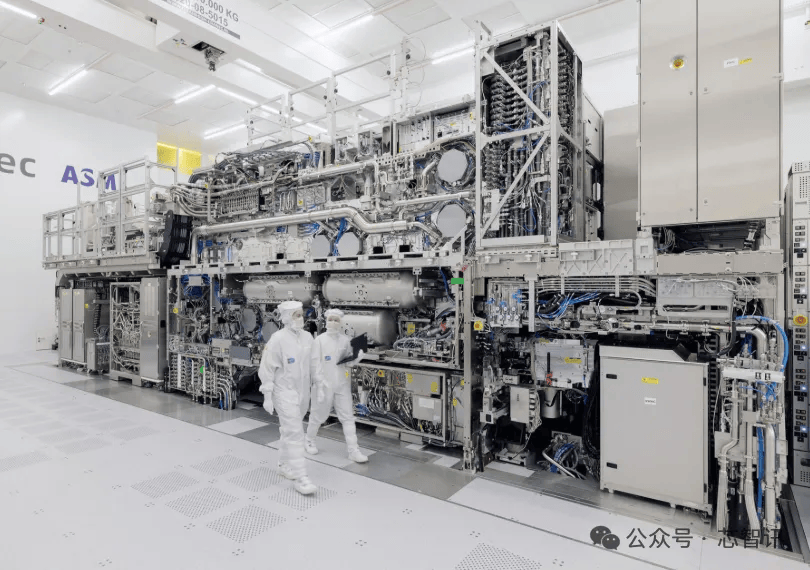
Group 1 - The Chinese Ministry of Commerce announced export controls on certain overseas rare earth-related items containing Chinese components, affecting items with a value ratio of 0.1% or more, including those produced using Chinese technology and equipment [2] - China accounts for nearly 90% of the global supply of rare earth elements, which are essential for semiconductor chips and manufacturing equipment, indicating that the new policy could impact most chip manufacturers and semiconductor equipment suppliers [2] Group 2 - ASML's CFO, Roger Dassen, stated that the company is well-prepared for China's export controls on rare earth elements and has sufficient raw material inventory to meet short-term customer needs [3] - ASML uses some rare earth materials in its magnets and batteries, but there are concerns that the company may face shipping delays of several weeks due to the new restrictions [3] - Dassen's recent comments downplayed concerns about potential supply chain disruptions, emphasizing the company's long delivery times and material reserves for the upcoming months [3]


最高单日“吸金”近12亿元,全市场最大稀土ETF嘉实(516150)规模破百亿!再创新高
Sou Hu Cai Jing· 2025-10-16 02:14
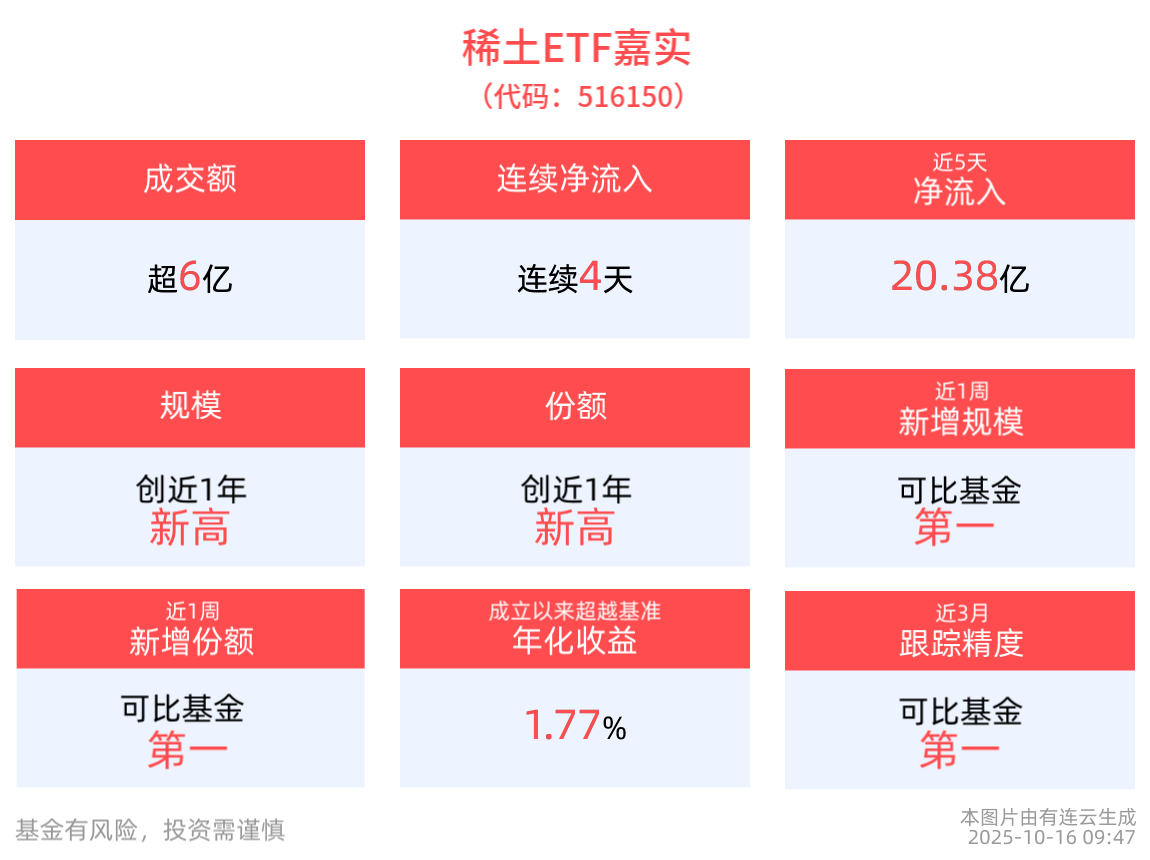
Core Insights - The China Rare Earth Industry Index has decreased by 1.36% as of October 16, 2025, with mixed performance among constituent stocks [1] - The rare earth ETF managed by Harvest has seen a significant increase in net inflows and has reached a record high in both scale and shares [4] - China's Ministry of Commerce has implemented export controls on rare earth-related technologies, marking a shift in policy towards dual control of resources and technology [5] Group 1: Market Performance - The rare earth ETF managed by Harvest has experienced a 7.68% increase over the past week as of October 15, 2025 [1] - The ETF recorded a turnover rate of 6.28% and a transaction volume of 6.33 billion yuan, with its latest scale reaching 102.63 billion yuan, the highest since its inception [4] - The ETF's net value has increased by 101.91% over the past year, ranking 4th out of 3068 index equity funds [4] Group 2: Stock Performance - Among the top ten weighted stocks in the China Rare Earth Industry Index, the largest weight is held by Northern Rare Earth at 13.22%, followed by companies like China Rare Earth and China Aluminum [4][7] - The performance of individual stocks has varied, with Northern Rare Earth down by 1.10% and Shenghe Resources down by 5.90% [7] Group 3: Policy Changes - The new export controls cover the entire rare earth industry chain, including mining, smelting, and recycling, and extend to technology services provided abroad [5] - This policy change is seen as a necessary measure for national security and a significant milestone in the global rare earth industry competitive landscape [5]





稀土暗战之下,包头、赣州“闷声发大财”?
Sou Hu Cai Jing· 2025-10-15 08:56
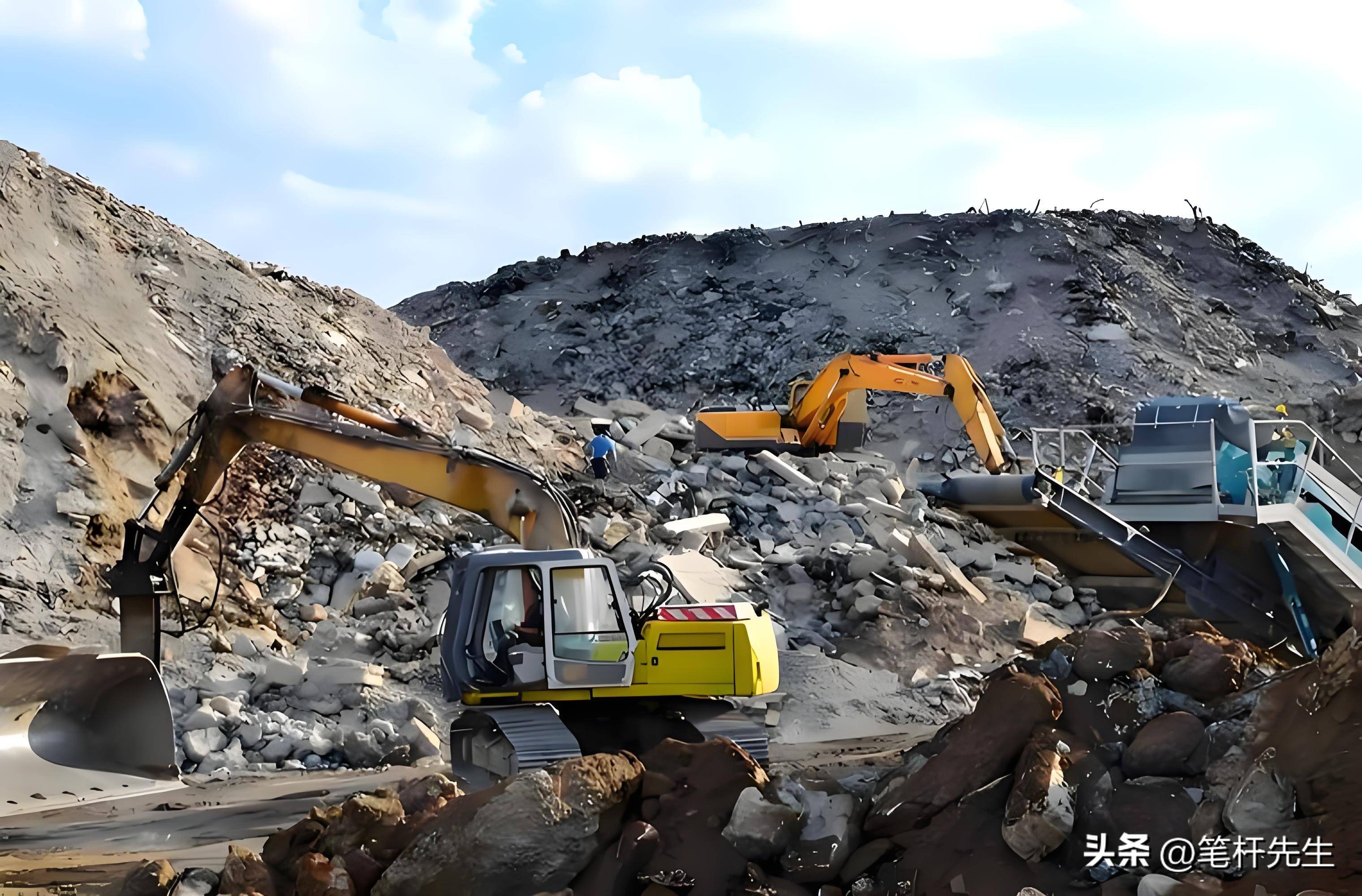
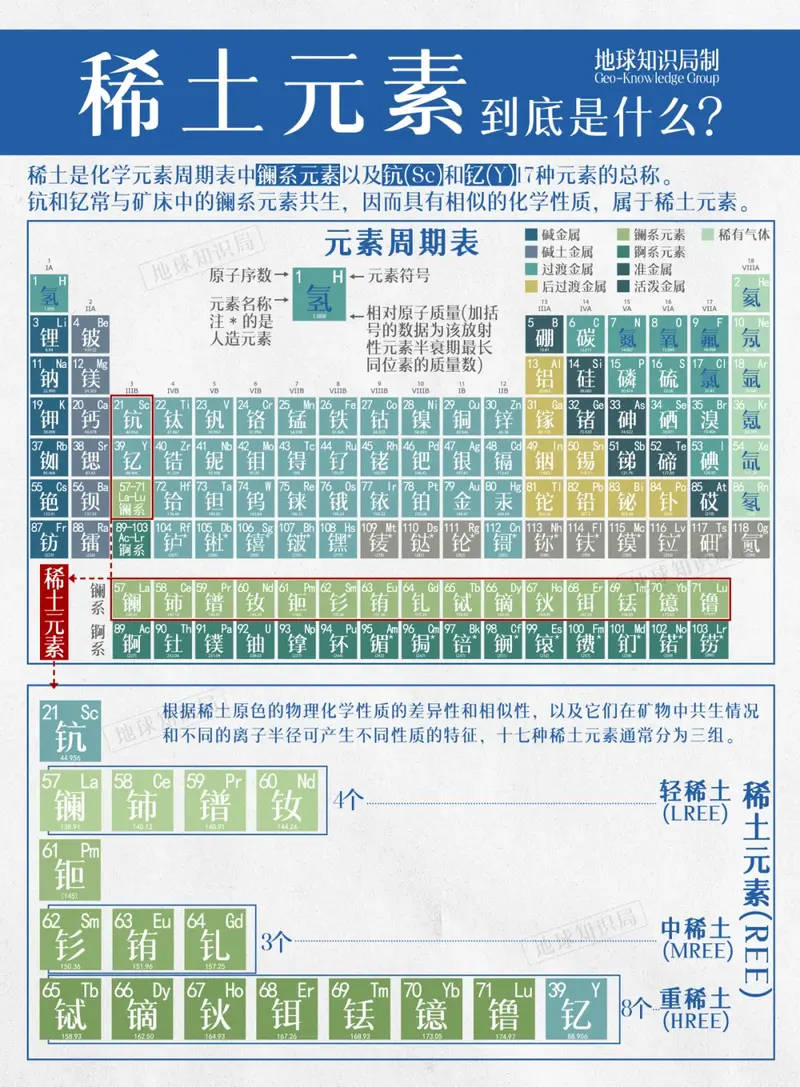
Core Viewpoint - The recent announcement by China's Ministry of Commerce and Customs to impose export controls on rare earth materials and technologies signifies an escalation in the US-China trade conflict, with potential implications for the rare earth industry and related cities in China [1][12]. Group 1: Rare Earth Industry Overview - China holds a dominant position in the global rare earth market, with 49% of the world's rare earth reserves and 69% of annual production, controlling over 90% of global separation capacity [4][12]. - Rare earth elements, comprising 17 metals, are essential for various high-tech applications, including military, aerospace, and consumer electronics, often referred to as "industrial gold" due to their critical role in modern technology [3][4]. Group 2: Economic Impact on Key Cities - Baotou, known for its significant rare earth reserves, has seen its GDP grow from 329.3 billion in 2021 to 457.5 billion in 2024, ranking 71st nationally, with a GDP growth rate of 10.2% in 2023 [9][11]. - Ganzhou, a major producer of medium and heavy rare earths, has attracted the establishment of the China Rare Earth Group, marking it as the first central enterprise headquarters in Jiangxi province, contributing to its economic growth [11][12]. Group 3: Market Reactions and Future Prospects - Following the export control announcement, rare earth stocks surged, with companies like Northern Rare Earth and China Rare Earth reaching their upper trading limits, indicating strong market confidence [11][12]. - The export control measures are seen as both an opportunity and a challenge for the industry, potentially enhancing China's pricing power while necessitating advancements in domestic rare earth application technologies [12].
中国稀土管制出狠招!特朗普嘴硬两小时就服软,急着求见面谈
Sou Hu Cai Jing· 2025-10-15 08:26
Group 1 - The recent shift in the US-China dynamic was unexpected, with Trump moving from a hardline stance to seeking dialogue within two hours, driven by China's control over rare earth elements [1][6] - Rare earth elements are crucial for modern industries, acting as a "vitamin" for technology, with applications in smartphones, electric vehicles, and military equipment [1][4] - China holds a dominant position in the global rare earth supply chain, making it difficult for other countries to compete in extraction, refining, and purification technologies [1][4] Group 2 - The US military relies heavily on Chinese rare earth exports, with two-thirds of its weapon systems dependent on these materials, highlighting the strategic importance of rare earths in defense [4][12] - On October 9, China's Ministry of Commerce announced strict export controls on rare earths, requiring licenses for any foreign products containing Chinese rare earths and restricting technology transfers [4][16] - The US industrial sector reacted quickly to the new regulations, realizing that establishing a complete rare earth supply chain would take five to six years, which could severely impact military and semiconductor industries [8][12] Group 3 - Major US defense contractors, such as Lockheed Martin and Raytheon, expressed concerns over potential supply shortages of rare earth materials, which could lead to production delays and financial penalties [12][14] - The semiconductor industry, including companies like Intel and Qualcomm, also faces risks due to reliance on rare earths for high-end chip production, with potential delivery delays of over six months [12][14] - The rapid shift in Trump's stance reflects the realization that China's rare earth control poses a significant threat to US industrial capabilities, necessitating a more cooperative approach [19][20] Group 4 - China's rare earth export controls are part of a broader strategy to enhance national security and ensure the sustainable development of its rare earth industry, moving away from previous practices of low-cost exports [14][20] - The recent developments indicate that the US's previous tactics of pressure and threats may not be effective against China's strategic use of its resources, suggesting a need for more balanced negotiations [20]