
ZGXT(000831)

Search documents
再传重磅!这类ETF火了!
Ge Long Hui· 2025-10-15 07:36
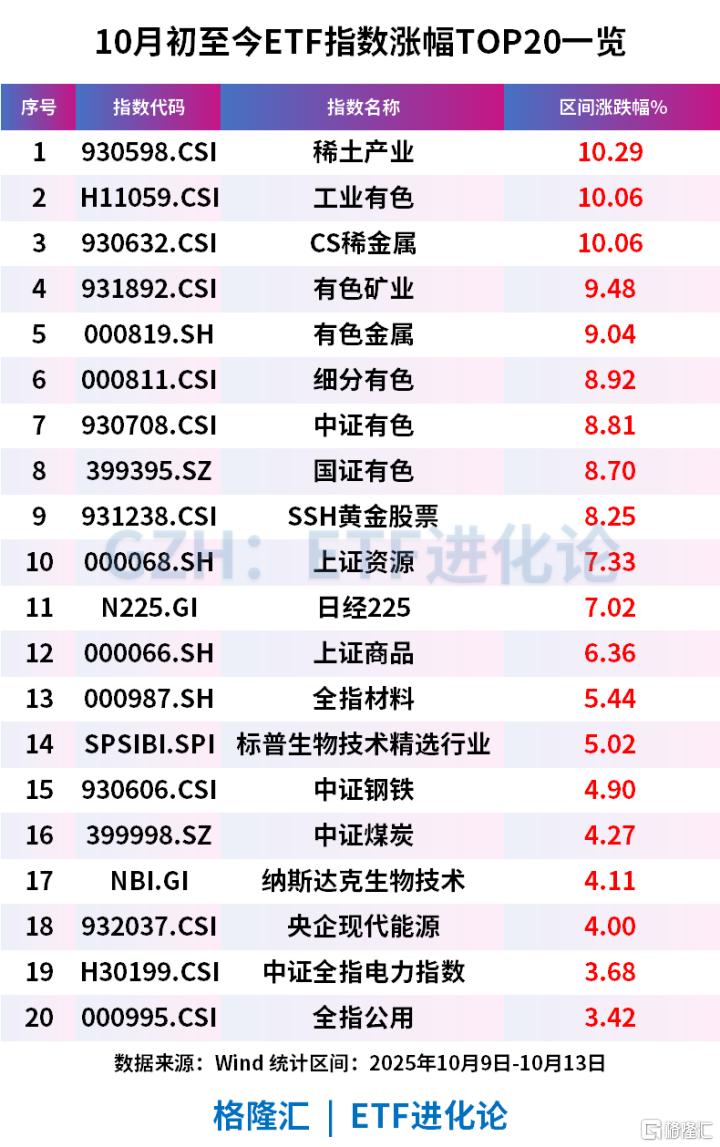
Core Viewpoint - The global rare earth and rare metal market has experienced a significant surge in 2023, with A-shares witnessing a remarkable revaluation of resource values, particularly in the rare earth and non-ferrous metal sectors, which have seen index increases exceeding 10% [1][2]. Group 1: Market Performance - The rare earth industry index rose by 10.29%, while the industrial non-ferrous index increased by 10.06%, and the rare metal index also saw a 10.06% rise [2]. - Other related indices, such as non-ferrous mining and non-ferrous metals, recorded increases of 9.48% and 9.04%, respectively [2]. Group 2: ETF Market Dynamics - The rare earth ETF managed by Jiashi (516150) attracted a net inflow of 613 million yuan after a nearly 7% single-day increase, indicating strong investor interest [4]. - The rare metal ETF (562800) has seen continuous inflows exceeding 1.066 billion yuan over four days, with its latest scale surpassing 3.6 billion yuan [4]. Group 3: Strategic Resource Dynamics - Recent geopolitical tensions have heightened concerns in the U.S. and Europe regarding the security of rare earth supplies, particularly for AI semiconductors and military applications [6]. - The U.S. government is considering partnerships or equity stakes in several domestic companies to accelerate the development of the rare earth supply chain [6]. Group 4: Policy Changes and Market Reactions - China's recent export control regulations on rare earths mark a significant policy shift, implementing detailed controls across the entire industry chain and introducing a "long-arm jurisdiction" principle [8]. - Following the new regulations, major Chinese rare earth companies have raised their prices, with Baotou Steel and Northern Rare Earth announcing a 37.13% increase in the price of rare earth concentrates [10]. Group 5: Broader Commodity Trends - The prices of other rare metals such as copper, tin, tungsten, and cobalt have also surged, contributing to a broader commodity supercycle alongside gold and silver [10]. - Gold prices reached a historical high of $4,000, with a cumulative increase of 59%, while silver prices exceeded $53, marking an 80% rise since the beginning of the year [11][12]. Group 6: Investment Implications - The strategic significance of rare earths and rare metals has evolved, with these resources now viewed as "strategic assets" rather than mere industrial materials, influencing global supply chains [4][24]. - The shift in resource strategy reflects a broader trend where critical resources are becoming essential for national competitiveness and security [24][25].


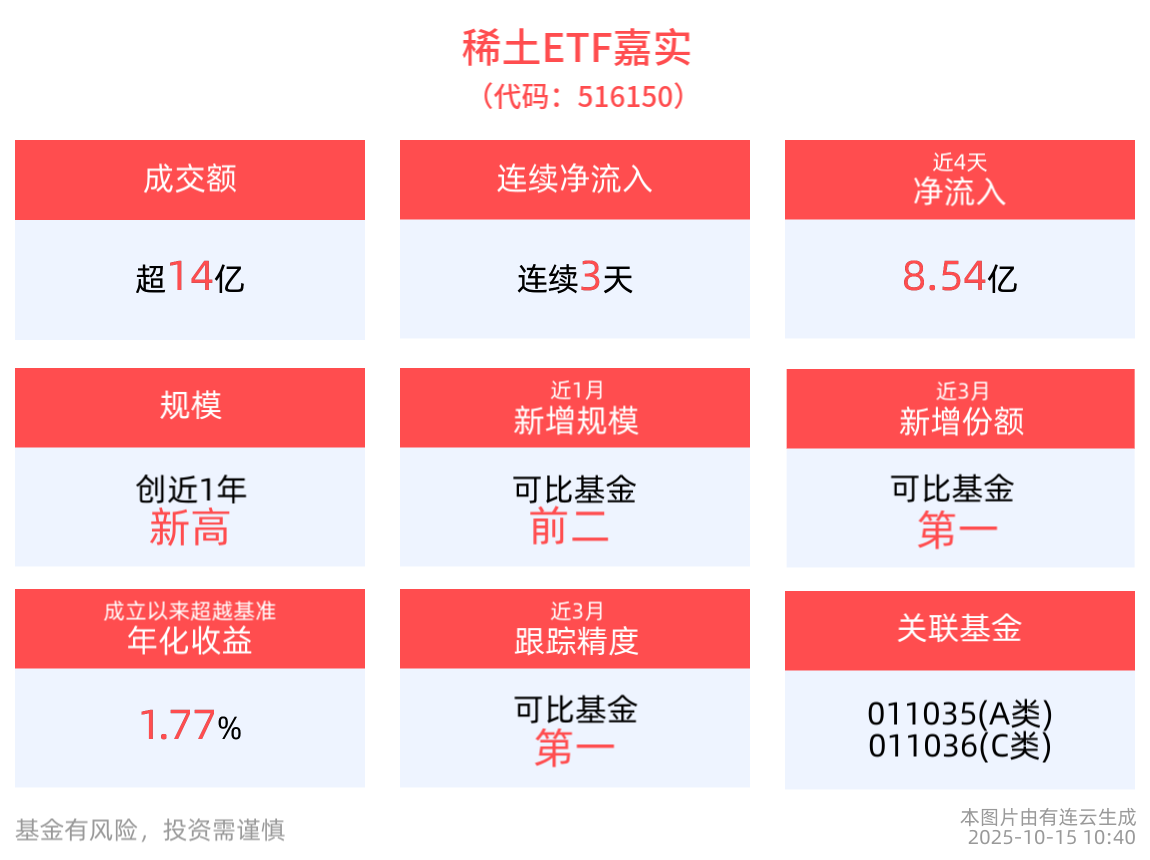
连续3天累计“吸金”超10亿元,全市场最大稀土ETF嘉实(516150)规模突破90亿元!
Xin Lang Cai Jing· 2025-10-15 02:57
Core Viewpoint - The rare earth industry is experiencing fluctuations in stock performance, with notable movements in the China Rare Earth Industry Index and the performance of key ETFs, indicating a dynamic market environment influenced by supply and demand factors [1][4][5]. Group 1: Market Performance - As of October 15, 2025, the China Rare Earth Industry Index decreased by 1.67%, with mixed performance among constituent stocks [1]. - Shenghe Resources led the gains with a rise of 7.12%, while Northern Rare Earth saw a decline of 5.65% [1][7]. - The rare earth ETF, Jiashi, experienced a recent adjustment but had a cumulative increase of 7.97% over the past week as of October 14, 2025 [1]. Group 2: ETF Activity - The Jiashi Rare Earth ETF recorded a turnover rate of 15.94% and a trading volume of 1.458 billion yuan, indicating active market participation [4]. - The ETF's latest scale reached 9.091 billion yuan, marking a new high since its inception and ranking first among comparable funds [4]. - Over the past three months, the Jiashi ETF saw a significant increase of 26.03 million shares, also leading in new share issuance among comparable funds [4]. Group 3: Import and Export Trends - From January to August 2025, China's rare earth imports totaled 72,000 tons, reflecting a year-on-year decline of 21.4%, while exports increased by 14.5% to 44,400 tons [5]. - The report from Debang Securities highlights the strategic importance of rare earths in high-end manufacturing and emerging industries, emphasizing the dual resonance of supply and demand [5]. Group 4: Key Stocks and Weightings - The top ten weighted stocks in the China Rare Earth Industry Index accounted for 61.96% of the index, with Northern Rare Earth and Wolong Electric Drive being significant players [4][7]. - The performance of these stocks varied, with some experiencing declines while others, like Shenghe Resources, showed positive growth [7].



稀土永磁板块多股走低,北方稀土、包钢股份双双跌超5%
Xin Lang Cai Jing· 2025-10-15 02:39
稀土永磁板块多股走低,北方稀土、包钢股份双双跌超5%,中国稀土跌超4%,久吾高科、银河磁体跟 跌。 ...
中国稀土“王炸”级反制后,特朗普对华征100%关税,看来真的很疼
Sou Hu Cai Jing· 2025-10-14 14:13
Core Viewpoint - The US-China trade dispute has escalated sharply, with China implementing rare earth export controls as a countermeasure, prompting President Trump to announce a 100% tariff on Chinese products starting November 1 and export controls on "all critical software" [1][6]. Group 1: China's Countermeasures - China has announced stricter export controls on five types of medium and heavy rare earth products, related technologies, equipment, and raw materials, significantly increasing the scope and intensity of these controls [3]. - The Chinese Ministry of Transport has introduced a special port fee for US ships docking at Chinese ports, charging 400 yuan per net ton, which will increase annually, as a response to perceived discriminatory practices by the US [3][5]. Group 2: US Response and Market Impact - In response to China's measures, Trump has stated that there is no need for high-level talks and has raised tariffs on Chinese goods to 100%, indicating a reliance on market leverage as a final strategy [6][10]. - The announcement of these tariffs led to a significant market reaction, with the Dow Jones Industrial Average dropping by 1.90% and the Nasdaq Composite falling by 3.56%, particularly impacting the technology sector [8]. Group 3: Strategic Implications - China's use of rare earths as a strategic countermeasure not only retaliates against US actions but also positions China favorably in negotiations regarding high-tech industries, particularly in the global semiconductor supply chain [9][12]. - The trade conflict has evolved from a tariff battle to a struggle for control over the core of the high-tech industry supply chain, indicating a more intense and prolonged phase of US-China relations [12].
逆市狂飙210%!
Zhong Guo Ji Jin Bao· 2025-10-14 12:17
Core Viewpoint - HMVOD Video experienced a significant stock surge of 210% following a partnership with Mango Super Media's subsidiary, indicating potential investment opportunities amidst market volatility [11][14]. Market Overview - The Hong Kong stock market faced a downturn, with the Hang Seng Index dropping 1.73% to 25,441.35 points, marking a seven-day decline [2][3]. - The Hang Seng Technology Index fell 3.62% to 5,923.26 points, while the Hang Seng China Enterprises Index decreased by 1.55% to 9,079.16 points [2][3]. - Notable declines were observed in major stocks, including SMIC, which plummeted 8.48%, and Kuaishou, which fell 6.77% [3][5]. Sector Performance - The semiconductor sector saw a significant pullback, with the Hong Kong semiconductor index dropping as much as 9.20% and closing down 8.05% [8]. - Key semiconductor stocks like Hua Hong Semiconductor and Junma Semiconductor experienced declines of 13.08% and 10.22%, respectively [9][10]. Investment Insights - In light of recent market fluctuations, Invesco's Chief Investment Officer, Ma Lei, suggested that these conditions may present a buying opportunity for long-term investors, particularly in companies with strong fundamentals and pricing power [7]. - The report emphasized the importance of bottom-up stock selection to identify resilient companies that can benefit from potential market consolidation [7]. Company-Specific Developments - HMVOD Video's stock surged after announcing a collaboration with Happy Sunshine for a new program, with an initial licensing fee of 2 million RMB [14]. - The company is currently awaiting the outcome of an appeal regarding a court order, which has delayed the hearing for its liquidation case [14].


中国稀土牌刚出,荷兰主动跳出来,明抢中国资产,欧洲从此信誉扫地
Sou Hu Cai Jing· 2025-10-14 10:59
Core Viewpoint - Recent actions by China regarding rare earth exports and technology controls have sparked global attention, indicating a significant shift in international trade rules and geopolitical dynamics [1][3] Group 1: China's Position in Rare Earth Market - China is the largest producer of rare earth elements, controlling approximately 90% of high-purity rare earth production capacity, which underscores its substantial influence in the market [1] - The recent export control measures by China encompass raw materials, technology, and equipment across multiple segments of the industry, even affecting products processed in third countries, leading to a comprehensive "blockade" strategy [1] Group 2: Netherlands' Actions and Implications - The Dutch government has taken measures against China's Wingtech Technology, freezing assets of its subsidiary, ASML, in 30 global entities, signaling a provocative stance against China and a violation of international trade norms [3] - The actions taken by the Netherlands are seen as a response to the broader U.S.-EU strategy to curb China's technological advancements, indicating a shift in how commercial issues are being politicized [3][5] Group 3: Impact on International Investment Environment - The intertwining of commercial and political issues is reshaping the international investment landscape, potentially leading to increased "political risks" for Chinese companies' overseas assets [5] - The current global economic recovery phase makes the protection of Chinese assets abroad a pressing concern for both political and business leaders, especially in high-tech sectors [5] Group 4: China's Strategic Response - China is expected to utilize legal, diplomatic, and public opinion strategies to defend its rights, challenging arbitrary actions taken under the guise of "national security" [7] - Emphasizing technological independence and internal development of the supply chain is crucial for China to counter Western technological blockades [7] - China should actively participate in reshaping international rules to ensure fair and equitable development for all nations, moving away from historically unfavorable multilateral trade rules [7]

美国盲猜中国稀土管制三个原因,其背后细节不止于矿石
Sou Hu Cai Jing· 2025-10-14 09:40
Core Viewpoint - China's Ministry of Commerce announced new export controls on specific rare earth technologies, particularly those related to military applications, which has sparked significant reactions from the U.S. and other countries [4][9][11]. Group 1: Export Control Announcement - On October 9, China's Ministry of Commerce decided to implement export controls on certain rare earth technologies, including extraction and separation processes for metals like terbium, erbium, and dysprosium [4]. - The policy aims to manage the use and flow of these technologies, particularly in areas that may pose national security risks, rather than completely halting exports [9][11]. Group 2: U.S. Reaction and Misinterpretations - The U.S. response was immediate, with Treasury Secretary Janet Yellen suggesting that China's move was a sign of economic distress and a distraction from other issues, such as the Middle East situation [6][11]. - The U.S. interpretations of China's motives reflect a misunderstanding of China's strategic intentions, which are based on compliance and sustainable resource management rather than economic desperation [6][8]. Group 3: Importance of Rare Earth Elements - Rare earth elements are critical for modern industries, including electric vehicles, batteries, wind power, semiconductors, and military equipment, making China's export controls significant on a global scale [4][11]. - The U.S. heavily relies on China for rare earth materials, with military applications being particularly sensitive, as seen in the F-35 fighter jet, which requires over 400 kilograms of rare earth materials per unit [11]. Group 4: Broader Implications and Strategic Context - The situation highlights the growing geopolitical tensions and the U.S.'s tendency to politicize trade and resource management issues, viewing them through a lens of national security [13][15]. - China's export control policy is part of a broader strategy to align with international responsibilities and ensure the sustainable use of its resources, contrasting with the U.S.'s approach of imposing restrictions on China in various sectors [9][13]. Group 5: Call for Dialogue - The article emphasizes the need for constructive dialogue between China and the U.S. to address mutual concerns about resource management and industry security, rather than engaging in speculation and misunderstanding [15][17]. - Establishing transparent rules and collaborative efforts for sustainable development is presented as a more effective approach than adversarial posturing [17].
稀土出口管制加强提振板块战略价值!稀土ETF(516780)备受关注,单日成交额、单日净流入额双创其历史新高
Xin Lang Ji Jin· 2025-10-14 05:13
Core Viewpoint - The rare earth sector has become a market focus amid escalating China-U.S. trade tensions and increased export controls on rare earths, with significant inflows into the rare earth ETF (516780) leading to record trading volumes and net inflows [1][2]. Group 1: Market Activity - On October 13, 2025, the rare earth ETF (516780) recorded a trading volume of 1.209 billion yuan, an increase of over 140% compared to the previous period, marking a new single-day trading record [1]. - The ETF saw a net inflow of 761 million yuan on the same day, setting a new record for single-day net inflows since its inception [1]. - The total size of the rare earth ETF (516780) reached 4.545 billion yuan, also a historical high, indicating strong liquidity and scale advantages [1]. Group 2: Regulatory Environment - On October 9, 2025, the Ministry of Commerce announced new export control measures on certain rare earth items, expanding the scope of controls to include technologies and equipment related to rare earth recycling, covering the entire industry chain [1][2]. - The new regulations are expected to strengthen supply rigidity in the rare earth sector, particularly in the context of ongoing U.S.-China competition [2]. Group 3: Industry Outlook - China remains the only country with the capability to produce a full range of rare earth products, holding significant advantages in both reserves and production [2]. - The industry is expected to maintain a tight supply-demand balance, supported by increasing demand driven by AI and other technologies, which may bolster product prices [2]. - The rare earth ETF (516780) closely tracks the CSI Rare Earth Industry Index, which includes companies involved in rare earth mining, processing, trading, and applications, with leading constituents being Northern Rare Earth, Wolong Electric Drive, Lingyi iTech, China Rare Earth, and Shenghe Resources [2].

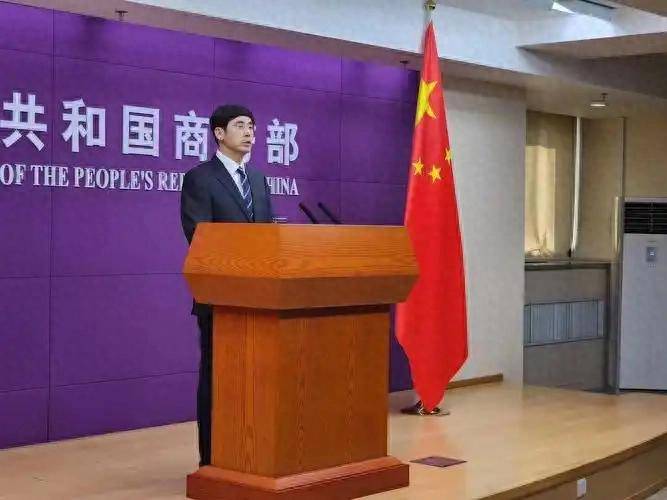
商务部:中美昨天进行了工作层会谈,中国稀土管制下的中美博弈,24小时内特朗普从威胁到求谈
Sou Hu Cai Jing· 2025-10-14 04:43
Core Viewpoint - China's recent export control measures on rare earths are unprecedented and will enhance its leverage in trade negotiations with the U.S. [1][3] Group 1: China's Export Control Measures - On October 9, China announced seven new regulations to impose export controls on critical resources including rare earths, lithium batteries, and graphite, causing significant global market reactions [3]. - The new regulations require foreign companies to obtain Chinese approval for exporting products containing 0.1% or more of Chinese rare earth elements or utilizing Chinese rare earth technology [3][5]. - The measures are seen as a strategic move to target the U.S. supply chain, particularly affecting the AI industry and potentially leading to an economic downturn in the U.S. if enforced rigorously [3][5]. Group 2: Strategic Importance of Rare Earths - Rare earths are essential for modern industries, used in military applications, semiconductor manufacturing, and electric vehicle batteries [5]. - China controls approximately 70% of global rare earth mining, 90% of separation and processing, and 93% of magnet manufacturing, giving it a dominant position in the market [5]. - The Chinese government emphasizes that the export controls are in line with international practices and are not outright bans, as compliant applications for civilian use will still be approved [5][11]. Group 3: U.S. Response and Policy Shifts - Following China's announcement, U.S. President Trump initially expressed a strong response, indicating discussions on countermeasures [7][8]. - Within 24 hours, Trump's stance shifted to a desire for dialogue with China, highlighting the strategic significance of rare earths in the U.S. economy and defense [9][10]. - Experts suggest that China's timing in implementing these controls is strategically significant, as it introduces new leverage in negotiations [10]. Group 4: Ongoing Negotiations and Future Implications - Despite rising tensions, there have been indications of continued communication between the U.S. and China, with a working-level meeting held on October 13 [11][12]. - Both countries are encouraged to resolve their differences through dialogue and maintain the progress made in previous negotiations [12]. - The escalation of the trade conflict into a resource and technology battle signifies a shift in global supply chains, with potential long-term impacts on high-end manufacturing and geopolitical dynamics [13][14]. Group 5: Global Supply Chain Challenges - China's rare earth export controls reflect a broader trend of shifting from technological barriers to resource barriers in global competition [13]. - Companies reliant on Chinese rare earths, particularly in the semiconductor and electric vehicle sectors, may face increased costs and need to restructure their supply chains [13][14]. - In the long term, this situation may accelerate the development of alternative technologies and increase investments in global rare earth exploration, while the U.S. and EU may seek to establish independent supply chains [13][14].
中国稀土涨5.87%,股价创历史新高
Zheng Quan Shi Bao Wang· 2025-10-14 02:53
Core Viewpoint - China's rare earth stocks have reached a historical high, with significant increases in stock price and trading volume, indicating strong market interest and performance in the sector [2] Company Summary - The stock price of the company rose by 5.87% to 63.67 yuan, with a trading volume of 32.61 million shares and a transaction value of 2.06 billion yuan [2] - The company's total market capitalization in A-shares reached 67.57 billion yuan, with the same amount for its circulating market capitalization [2] - The company's semi-annual report showed a revenue of 1.88 billion yuan, a year-on-year increase of 62.38%, and a net profit of 162 million yuan, a year-on-year increase of 166.16% [2] - The basic earnings per share were 0.1524 yuan, and the weighted average return on equity was 3.42% [2] Industry Summary - The overall increase in the non-ferrous metals industry was 2.48%, with 110 stocks rising, including five stocks hitting the daily limit [2] - Among the stocks that declined, Zhongke Magnetic Materials, Longmag Technology, and Zhongzhou Special Materials had the largest drops, with declines of 4.06%, 4.01%, and 3.98% respectively [2] - As of October 13, the margin balance for the company was 2.76 billion yuan, with a financing balance of 2.72 billion yuan, reflecting a recent increase of 252 million yuan, or 10.18% [2]
