
Yanghe(002304)

Search documents
洋河全明星阵容亮相秋糖,“六境”沉浸式体验重构白酒消费场景
Xin Jing Bao· 2025-10-17 10:36
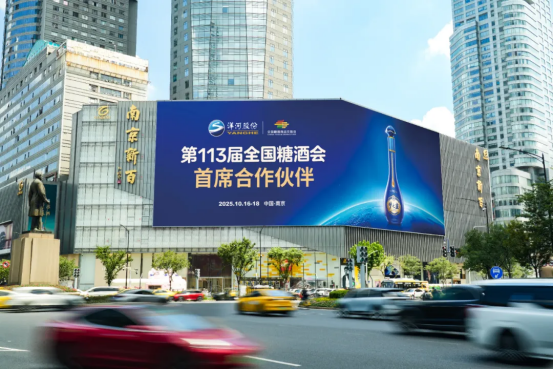
Core Insights - The 113th National Sugar and Wine Fair, held from October 16 to 18 in Nanjing, showcased Yanghe Co., which highlighted its brand strength through an all-star product lineup and an immersive experience centered around new products [1][3] Group 1: Product Showcase - Yanghe Co. presented its all-star product lineup, including the Dream Blue series (Handcrafted Class, M9, M6+, Crystal Edition), which solidifies its high-end market position [3] - The company’s products, such as the seventh generation of Sea Blue and the high-line bottled liquor, have received widespread acclaim, with the former promising "3 years + 5 years, better wine is softer" and achieving record sales [3][4] Group 2: Strategic New Product Launch - Yanghe Co. launched several strategic new products during the fair, including Yanghe Guobin, Micro-molecule, Super Football, and Jinmeng Nine, aligning with current industry trends of diversification and younger consumer engagement [4][6] - The new product launch is seen as a deep rebranding effort and aims to establish emotional connections with consumers [6] Group 3: Immersive Experience - The "Six Realms" immersive experience created by Yanghe Co. allowed guests to explore different aspects of the brand, enhancing their understanding of its soft flavor profile [7] - The event featured a performance showcasing the evolution of Chinese wine etiquette across different dynasties, along with interactive tasting sessions where guests could compare different aged wines [7] Group 4: Industry Positioning - Yanghe Co. is recognized for its innovative capabilities and responsiveness to market changes, maintaining its position at the forefront of Chinese liquor innovation for over 30 years [7]


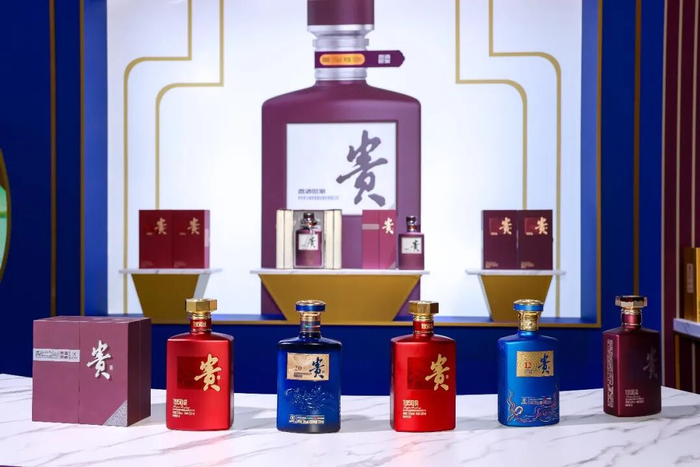
招商证券:白酒延续调整 食品景气分化
智通财经网· 2025-10-17 06:12
Core Viewpoint - The report from China Merchants Securities indicates a decline in participation and investor interest in the 2025 Autumn Sugar Exhibition, reflecting a decrease in industry enthusiasm, while the liquor sector's performance during the holiday season aligns with expectations [1][2]. Liquor Industry - The number of participating liquor companies at the Autumn Sugar Exhibition has decreased, with a shift in investment focus towards the consumer end, leading to a cautious attitude among liquor distributors [2]. - The performance of high-end liquor brands remains resilient, with Moutai's price stabilizing around 1800 yuan, which has positively impacted sales during the holiday season [3]. - The overall sales during the holiday season for liquor have declined, but leading brands have shown better performance compared to the industry average, indicating a trend towards increased industry concentration [3]. Food Industry - The beverage sector has shown significant inventory reduction during the holiday period, with leading brands like Nongfu Spring expected to achieve double-digit growth [4]. - The snack sector continues to expand, particularly in discount store formats, although same-store sales have seen a slight decline [4]. - The dairy sector remains under pressure, particularly for ambient liquid milk, with a need for structural improvements [4]. Investment Recommendations - The report suggests focusing on leading liquor brands such as Kweichow Moutai, Shanxi Fenjiu, Luzhou Laojiao, and Wuliangye, as well as emerging brands like Zhenjiu Lidu and Yingjia Gongjiu, which are expected to contribute positively [5][6]. - In the food sector, recommendations include leading snack brands like Ximai Foods and beverage leaders like Nongfu Spring and Dongpeng Beverage, while also highlighting opportunities in the dairy sector with companies like Yili [6].



10月15日深证国企股东回报R(470064)指数涨1.05%,成份股神火股份(000933)领涨
Sou Hu Cai Jing· 2025-10-15 09:53
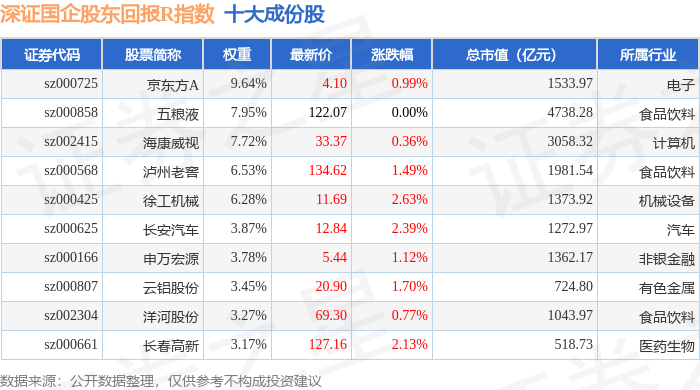
Group 1 - The Shenzhen State-Owned Enterprises Shareholder Return Index (470064) closed at 2334.29 points, up 1.05%, with a trading volume of 39.892 billion yuan and a turnover rate of 1.5% on October 15 [1] - Among the index constituents, 31 stocks rose, with Shenhuo Co., Ltd. leading with a 5.9% increase, while 11 stocks fell, with Fuan Energy leading the decline at 3.99% [1] - The top ten constituents of the index include BOE Technology Group (9.64% weight), Wuliangye Yibin (7.95% weight), and Hikvision (7.72% weight), with total market capitalizations of 153.397 billion yuan, 473.828 billion yuan, and 305.832 billion yuan respectively [1] Group 2 - The net inflow of main funds into the index constituents totaled 0.987 billion yuan, while retail investors experienced a net outflow of 0.882 billion yuan [1] - Detailed fund flow data shows that Chang'an Automobile had a net inflow of 0.651 billion yuan from main funds, while retail investors had a net outflow of 0.386 billion yuan [2] - Other notable stocks include BOE Technology Group with a net inflow of 0.221 billion yuan from main funds and a net outflow of 0.735 billion yuan from retail investors [2]






6亿酱酒项目发布,吃喝板块继续上攻!机构高呼:三重底部或现
Xin Lang Ji Jin· 2025-10-15 06:29
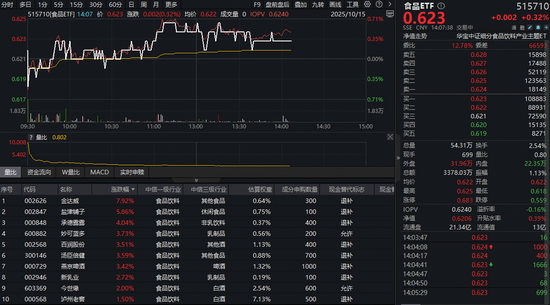
Core Viewpoint - The food and beverage sector is experiencing a positive trend, with the Food ETF (515710) showing an increase of 0.32% as of October 15, 2023, indicating a favorable market sentiment towards this sector [1][2]. Group 1: Market Performance - The Food ETF (515710) has been trading positively, with a price increase of 0.32% during the day [1][2]. - Key stocks in the consumer goods sector have shown significant gains, with Jin Dawei rising nearly 8%, and other companies like Yan Jin Pu Zi and Cheng De Lu Lu increasing over 5% [1][3]. - Major liquor brands also performed well, with Luzhou Laojiao up over 1% and other leading brands like Guizhou Moutai and Shanxi Fenjiu showing slight increases [1][3]. Group 2: Investment Opportunities - The recent announcement of a 600 million yuan investment project in sauce-flavored liquor in Guizhou is seen as a strategic move to enhance the production capacity and cultural display in the region, which could benefit the local industry [3]. - Analysts suggest that the food and beverage sector is currently undervalued, with the Food ETF's price-to-earnings ratio at 20.44, indicating a good opportunity for long-term investment [3][4]. - The sector is characterized by low expectations and low holdings, suggesting that any changes in supply and demand could lead to significant price increases [4]. Group 3: Future Outlook - Securities firms are optimistic about the food and beverage sector, highlighting that the current low base and potential for recovery could lead to a positive market environment [4]. - The focus is on companies with strong fundamentals, particularly in the snack, beverage, and frozen food segments, which are expected to report high growth in their upcoming quarterly results [4][5]. - The Food ETF is recommended as a core asset for investors looking to gain exposure to the food and beverage sector, with a significant portion of its holdings in leading liquor brands and other food-related stocks [5].





2025年南京糖酒会 | 三“洋”开泰!洋河邀您共赴绵柔之约赴绵柔之约
Zhong Guo Jing Ji Wang· 2025-10-14 13:55
Core Viewpoint - The 113th National Sugar and Wine Fair will take place in Nanjing from October 16 to 18, showcasing the vibrant culture and products of the Jiangsu region, with Yanghe as the chief partner, highlighting its status in the industry and commitment to quality and cultural heritage [1][4][5]. Group 1: Event Overview - The National Sugar and Wine Fair is set to be a grand event in Nanjing, with the city adorned in festive decorations to welcome guests [1]. - Yanghe will create an immersive experience at the fair, featuring classic and innovative products, along with special events like the "Autumn Tasting of Soft Aroma" and the "2025 Super Fan Festival" [4][5]. Group 2: Yanghe's Industry Position - Yanghe is recognized as the "ancestor of soft aroma" liquor, establishing a new quality style in the industry and representing the typical characteristics of strong aroma liquor [4]. - The brand is not only a symbol of Jiangsu but also a national icon, reflecting its deep cultural roots and consumer connection [5][8]. Group 3: Consumer Engagement - Yanghe has become a cultural symbol in the hearts of consumers, associated with celebrations and family gatherings, making it a national brand deeply embedded in consumer sentiment [8]. - The "Billion Dollar Product, Annual Sales of 10 Million Bottles" Yanghe Sea Blue has maintained high quality and warmth, becoming an essential classic for consumers [10].
全面复盘酒企八大发展阶段,和君万字详解精准破局策略
Sou Hu Cai Jing· 2025-10-14 08:59
Core Insights - The common response strategy for liquor companies at different stages is the synergistic development of "stabilizing the fundamentals" and "seeking innovation" [2][61] - The white liquor industry has experienced eight distinct stages, each facing unique market challenges and core pain points, necessitating the identification of key drivers and factors for successful transitions to the next stage [3][4] Industry Overview - As of June 2025, the number of large-scale white liquor enterprises (annual revenue over 20 million RMB) has decreased from 1,593 in 2017 to 887, indicating a trend of market share and profits concentrating among leading companies [4] - The production of white liquor has seen a decline, with a reported 6.5% year-on-year decrease in June 2025 and a cumulative 5.8% decrease in the first half of 2025 [2] Company Development Stages - The eight stages of liquor company development are characterized by specific sales scales and corresponding market strategies, emphasizing systematic upgrades in products, channels, brands, and organization [3][4] - Each stage has distinct characteristics, market performance, core pain points, and breakthrough strategies, which are essential for companies to navigate their growth effectively [7][13][24][34][40] Market Dynamics - The industry is witnessing a continuous increase in concentration, with a clear "pyramid" structure where a small number of top companies capture most of the industry's profits, while numerous small enterprises struggle for survival and growth [6][12] - The competitive landscape is shifting towards a focus on brand recognition and consumer engagement, moving away from reliance on government-related consumption [53] Strategic Recommendations - Companies are encouraged to integrate artificial intelligence into their strategic planning, organizational structure, and business processes to drive intelligent development and upgrade traditional industries [2][19] - Emphasis on product focus, pricing stability, and channel management is crucial for companies at various stages to enhance their market presence and profitability [9][22][27][37] Conclusion - The liquor industry must adapt to current challenges by restructuring brand, product, regional, and channel strategies while leveraging organizational upgrades and AI technology to overcome growth bottlenecks [61]


白酒板块10月14日涨2.4%,酒鬼酒领涨,主力资金净流入11.29亿元
Zheng Xing Xing Ye Ri Bao· 2025-10-14 08:39
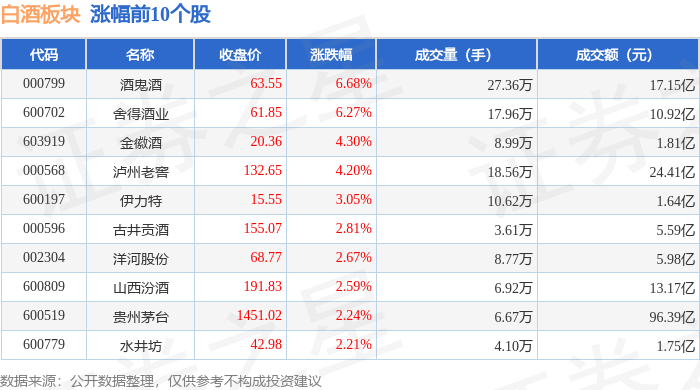
Core Insights - The liquor sector experienced a 2.4% increase on October 14, with Jiu Gui Jiu leading the gains [1] - The Shanghai Composite Index closed at 3865.23, down 0.62%, while the Shenzhen Component Index closed at 12895.11, down 2.54% [1] Liquor Sector Performance - Jiu Gui Jiu (code: 000799) closed at 63.55, up 6.68% with a trading volume of 273,600 shares and a transaction value of 1.715 billion [1] - She De Jiu Ye (code: 600702) closed at 61.85, up 6.27% with a trading volume of 179,600 shares and a transaction value of 1.092 billion [1] - Jin Hui Jiu (code: 616809) closed at 20.36, up 4.30% with a trading volume of 89,900 shares and a transaction value of 181 million [1] - Lu Zhou Lao Jiao (code: 000568) closed at 132.65, up 4.20% with a trading volume of 185,600 shares and a transaction value of 2.441 billion [1] - Yi Li Te (code: 600197) closed at 15.55, up 3.05% with a trading volume of 106,200 shares and a transaction value of 164 million [1] - Guo Jing Gong Jiu (code: 000596) closed at 155.07, up 2.81% with a trading volume of 36,100 shares and a transaction value of 559 million [1] - Yang He Guo Fen (code: 002304) closed at 68.77, up 2.67% with a trading volume of 87,700 shares and a transaction value of 598 million [1] - Shan Xi Fen Jiu (code: 600809) closed at 191.83, up 2.59% with a trading volume of 69,200 shares and a transaction value of 1.317 billion [1] - Gui Zhou Mao Tai (code: 600519) closed at 1451.02, up 2.24% with a trading volume of 66,700 shares and a transaction value of 9.639 billion [1] - Shui Jing Fang (code: 600779) closed at 42.98, up 2.21% with a trading volume of 41,000 shares and a transaction value of 175 million [1] Capital Flow Analysis - The liquor sector saw a net inflow of 1.129 billion from main funds, while retail funds experienced a net outflow of 664 million [1] - Main fund inflows for Gui Zhou Mao Tai amounted to 529 million, while retail funds saw a net outflow of 382,400 [2] - Main fund inflows for Wu Liang Ye were 326 million, with retail funds experiencing a net outflow of 162 million [2] - She De Jiu Ye had main fund inflows of 85.6 million, while retail funds saw a net outflow of 82.1 million [2] - Lu Zhou Lao Jiao had main fund inflows of 83.7 million, with retail funds experiencing a net outflow of 1.53 billion [2] - Jiu Gui Jiu had main fund inflows of 76.1 million, while retail funds saw a net outflow of 995.3 million [2] - Guo Jing Gong Jiu had main fund inflows of 54.2 million, with retail funds experiencing a net outflow of 612.4 million [2]


双节白酒动销平淡,关注内需政策:——食品饮料行业周报-20251013
Guohai Securities· 2025-10-13 13:01
Investment Rating - The report maintains a "Recommended" rating for the food and beverage industry [1] Core Views - The overall sales of liquor during the recent double festival are weak, with a year-on-year decline of 20%-30%, aligning with previous expectations. High-end brands like Moutai and Wuliangye performed relatively well, while lower-tier brands faced significant pressure [5] - The price stability of liquor during the double festival is noted, with slight increases observed post-festival. The report suggests monitoring price trends as e-commerce promotions begin [5] - The upcoming Sugar and Wine Conference is expected to provide marginal feedback, with the industry showing signs of bottoming out. The report emphasizes the importance of this event for potential recovery opportunities [6][7] Summary by Sections Recent Trends - The food and beverage sector has underperformed the Shanghai Composite Index, with a 0.61% increase compared to the index's 1.80% rise over the past two weeks [14] - The soft drink segment saw the highest increase of 9.98%, while several companies like Zhuangyuan Pasture and Yangyuan Beverage led the gains [14] Key Companies and Earnings Forecast - The report highlights several key companies with their respective earnings per share (EPS) and price-to-earnings (PE) ratios, recommending stocks such as Kweichow Moutai, Wuliangye, and Luzhou Laojiao for investment [25] - The report provides a detailed table of key companies, their stock prices, and projected earnings for 2024, 2025, and 2026, indicating a bullish outlook for several firms [25] Investment Strategy - The report suggests that recent policy changes may improve macroeconomic expectations, potentially enhancing both valuation and performance in the food and beverage sector. The overall valuation remains low, justifying the "Recommended" rating [8][23] - Specific recommendations include high-end liquor brands and popular consumer goods, indicating a diversified investment strategy across different segments of the food and beverage industry [8][23]


白酒板块10月13日跌0.87%,*ST岩石领跌,主力资金净流出11.33亿元
Zheng Xing Xing Ye Ri Bao· 2025-10-13 12:38
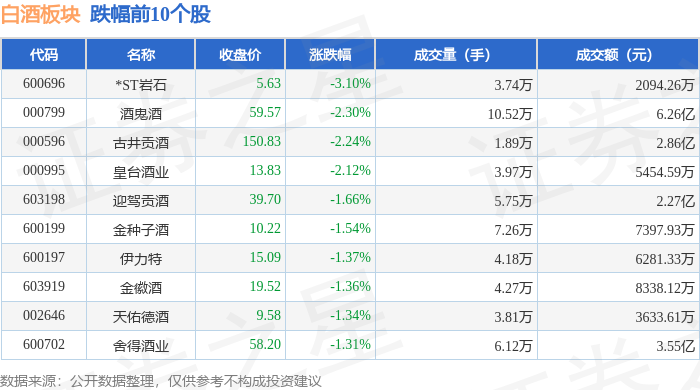
Market Overview - The liquor sector experienced a decline of 0.87% on October 13, with *ST Rock leading the drop [1] - The Shanghai Composite Index closed at 3889.5, down 0.19%, while the Shenzhen Component Index closed at 13231.47, down 0.93% [1] Individual Stock Performance - *ST Rock (600696) closed at 5.63, down 3.10% with a trading volume of 37,400 shares and a turnover of 20.94 million yuan [1] - Other notable declines include: - Si Gu Dian (000799) down 2.30% to 59.57 with a volume of 105,200 shares [1] - Gujing Gongjiu (000596) down 2.24% to 150.83 with a volume of 18,900 shares [1] - Huangtai Liquor (000995) down 2.12% to 13.83 with a volume of 39,700 shares [1] Capital Flow Analysis - The liquor sector saw a net outflow of 1.133 billion yuan from main funds, while retail funds had a net inflow of 579 million yuan [1] - The table of capital flow indicates that major stocks like Kweichow Moutai (6150009) had a net outflow of 4.91 million yuan, while retail investors contributed a net inflow of 29,500 yuan [2] - Luzhou Laojiao (000568) experienced a net outflow of 1.74 million yuan from main funds but saw a retail net inflow of 8.366 million yuan [2]


20只白酒股下跌 贵州茅台1419.20元/股收盘
Bei Jing Shang Bao· 2025-10-13 10:01
Core Viewpoint - The three major indices in the Chinese stock market experienced a collective decline on October 13, with the Shanghai Composite Index closing at 3889.50 points, down 0.19% [1] Group 1: Market Performance - The liquor sector index closed at 2236.49 points, down 0.75%, with 20 liquor stocks declining [1] - Notable individual stock performances include: - Kweichow Moutai (600519) closed at 1419.20 CNY, down 0.76% [1] - Wuliangye (000858) closed at 119.85 CNY, down 0.73% [1] - Shanxi Fenjiu (600809) closed at 186.99 CNY, down 0.91% [1] - Luzhou Laojiao (000568) closed at 127.30 CNY, down 1.22% [1] - Yanghe Brewery (002304) closed at 66.98 CNY, down 0.99% [1] Group 2: Industry Insights - Huatai Securities reported that the demand from government and business sectors still needs recovery, while the demand for public banquets remains stable [1] - The report indicates that the decline in liquor sales has gradually narrowed since August, with recovery observed in consumption scenarios such as graduation banquets, weddings, and the Mid-Autumn Festival gatherings [1] - Products priced below 300 CNY are showing relatively better recovery performance [1]