HIKVISION(002415)

Search documents
11月25日深证国企股东回报(970064)指数涨0.73%,成份股中材科技(002080)领涨
Sou Hu Cai Jing· 2025-11-25 11:01
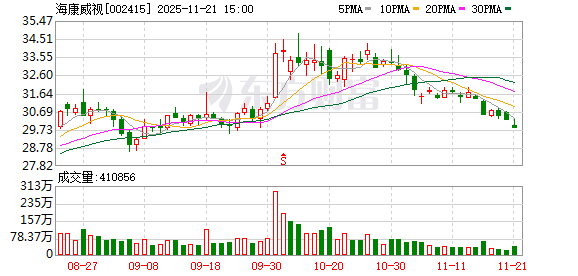
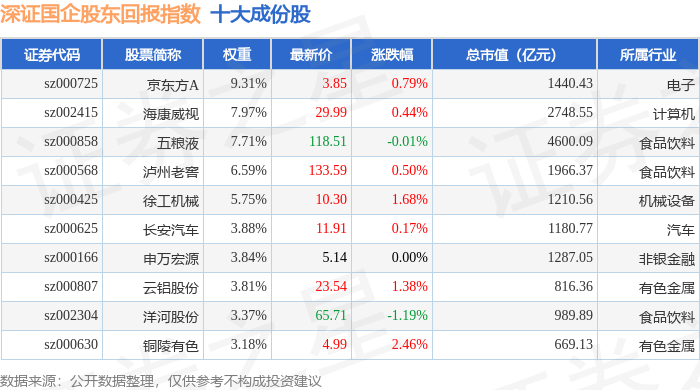
Core Points - The Shenzhen State-Owned Enterprises Shareholder Return Index (970064) closed at 1612.77 points, up 0.73%, with a trading volume of 20.124 billion yuan and a turnover rate of 0.78% [1] - Among the index constituents, 33 stocks rose, with China National Materials Technology leading at a 10.01% increase, while 12 stocks fell, with CITIC Special Steel leading the decline at 2.97% [1] Index Constituents Summary - The top ten constituents of the Shenzhen State-Owned Enterprises Shareholder Return Index include: - BOE Technology Group (sz000725) with a weight of 9.31%, latest price at 3.85, and a market cap of 144.043 billion yuan [1] - Hikvision (sz002415) with a weight of 7.97%, latest price at 29.99, and a market cap of 274.855 billion yuan [1] - Wuliangye Yibin (sz000858) with a weight of 7.71%, latest price at 118.51, and a market cap of 460.009 billion yuan [1] - Luzhou Laojiao (sz000568) with a weight of 6.59%, latest price at 133.59, and a market cap of 196.637 billion yuan [1] - XCMG Machinery (sz000425) with a weight of 5.75%, latest price at 10.30, and a market cap of 121.056 billion yuan [1] - Changan Automobile (sz000625) with a weight of 3.88%, latest price at 11.91, and a market cap of 118.077 billion yuan [1] - Shenwan Hongyuan (sz000166) with a weight of 3.84%, latest price at 5.14, and a market cap of 128.705 billion yuan [1] - Yunnan Aluminum (sz000807) with a weight of 3.81%, latest price at 23.54, and a market cap of 81.636 billion yuan [1] - Yanghe Brewery (sz002304) with a weight of 3.37%, latest price at 65.71, and a market cap of 68.686 billion yuan [1] - Tongling Nonferrous Metals (sz000630) with a weight of 3.18%, latest price at 6.67, and a market cap of 66.913 billion yuan [1] Capital Flow Summary - The net inflow of main funds into the index constituents totaled 425 million yuan, while retail funds saw a net outflow of 319 million yuan [3] - Key stocks with significant capital flow include: - China National Materials Technology with a net inflow of 210 million yuan from main funds [3] - Luzhou Laojiao with a net inflow of 91.542 million yuan from main funds [3] - Tongling Nonferrous Metals with a net inflow of 60.685 million yuan from main funds [3]





海康威视助力峨眉山打造智慧景区
Zheng Quan Ri Bao· 2025-11-24 12:16
Core Insights - Hikvision Technology Co., Ltd. collaborates with Emei Mountain Scenic Area to enhance smart tourism through IoT perception and AI large model technologies [2][3] - The integration of advanced technologies aims to improve safety monitoring, emergency response, and visitor experience in the scenic area [2] Group 1: Technology Implementation - The introduction of Hikvision's large model technology allows for more accurate detection of visitors entering dangerous areas, enabling quicker emergency responses [2] - The deployment of large model perimeter cameras along unique hiking routes enhances the ability to distinguish between false alarms and actual threats, providing timely audio warnings to visitors [2] Group 2: Safety and Monitoring - A smart water level monitoring system has been established to provide real-time flood warnings, ensuring rapid communication of safety alerts across different locations [2] - The system includes a water gauge observation camera that monitors water level changes and triggers alerts when thresholds are exceeded, facilitating proactive emergency measures [2] Group 3: Visitor Experience Enhancement - The scenic area has introduced video live streaming services to allow more visitors to appreciate natural wonders [3] - Hikvision aims to further explore the integration of technology with cultural tourism, creating a smarter, safer, and more enjoyable environment for tourists [3]


AI点亮灯塔工厂,引领智能制造新范式
Haitong Securities International· 2025-11-24 11:42
Investment Rating - The report recommends a positive investment outlook on the AI-enabled manufacturing sector, particularly focusing on industrial software and automation companies that facilitate the digital transformation of lighthouse factories [3]. Core Insights - The report emphasizes that lighthouse factories are evolving into key carriers of new productivity and industrialization, driven by AI and the "14th Five-Year Plan" [1]. - It highlights the significant role of domestic industrial software and automation vendors in this ecosystem, which are becoming the core driving force behind the development of lighthouse factories [1]. Summary by Sections 1. From Technical Benchmark to Ecological Leadership - Lighthouse factories are recognized as the most advanced factories globally, representing the highest level of smart manufacturing [7]. - The focus of lighthouse factories has shifted from single-point applications of Industry 4.0 to comprehensive operational upgrades, emphasizing customer-centricity, production efficiency, supply chain resilience, sustainability, and talent development [10][12]. - The application of AI technologies is increasingly significant, with generative AI and predictive maintenance technologies notably reducing defect rates, energy consumption, and production cycles [16]. 2. Policy and AI Dual Empowerment - National policies are driving the rapid development of lighthouse factories, with a focus on digitalization, networking, intelligence, and green development [35]. - As of September 2025, China has 85 lighthouse factories, accounting for 42.29% of the global total, showcasing its leadership in this sector [20][22]. - The distribution of lighthouse factories in China shows a trend of coastal concentration with inland regions catching up, supported by local government initiatives [39][42]. 3. Domestic Industrial Software and Automation Vendors as Key Drivers - Hikvision is highlighted for its "Hikvision Guanlan" model, which empowers smart IoT scenarios and supports the transformation of leading factories into lighthouse factories [54]. - The report discusses the significant advancements made by various companies, including Dahua Technology, Zhongkong Technology, and others, in enhancing supply chain collaboration and digital transformation [54][56].


2025年中国全屋智能行业财务指标分析 行业在发展过程中具备市场扩张的动力【组图】
Qian Zhan Wang· 2025-11-24 06:10
Core Insights - The Chinese whole-home smart industry is experiencing a growth trend in revenue, with a projected revenue of 211.85 billion in 2024, reflecting a growth rate of 10.6% [1] - The industry's sales gross margin shows a fluctuating trend, peaking at 34.8% in 2023 before declining to 33.5% in 2024 [2] - Inventory turnover rates are on a downward trend, decreasing from 5.14 times in 2020 to 4.64 times in 2024, attributed to changing consumer demands and rapid product updates [6] - Accounts receivable turnover rates have also shown a declining trend, from 17.53 times in 2020 to 15.23 times in 2024, indicating increasing management pressure [9] - The asset-liability ratio has fluctuated, decreasing to a low of 42.1% in 2022, then rising to 44.4% in the first half of 2025, reflecting dynamic adjustments in capital structure [11] Revenue Trends - The average revenue of representative companies in the Chinese whole-home smart industry is expected to grow significantly, reaching 211.85 billion in 2024, with a notable increase in the first half of 2025 at 116.69 billion [1] Profitability Analysis - The sales gross margin for the industry has shown volatility, starting at 33.9% in 2020, dropping to 32.2% in 2021, and then rising to 34.8% in 2023 before falling to 33.5% in 2024 [2] Inventory Management - The inventory turnover rate has decreased from 5.14 times in 2020 to 4.64 times in 2024, influenced by diverse consumer preferences and concerns over product depreciation [6] Accounts Receivable Management - The accounts receivable turnover rate has declined from 17.53 times in 2020 to 15.23 times in 2024, reflecting increased challenges in managing receivables [9] Capital Structure - The asset-liability ratio has shown a downward trend to 42.1% in 2022, followed by a rise to 44.4% in the first half of 2025, indicating changes in the industry's capital structure [11]







计算机周观点第25期:算力、模型、应用协同深化,AI叙事迈向奇点关键期-20251124
Haitong Securities International· 2025-11-24 05:34
Investment Rating - The report maintains an "Overweight" rating for the computer sector, recommending specific stocks such as Wuxi Unicomp Technology, Kingsoft Office, Hand Enterprise, Hikvision, Newland Digital Technology, Autel Robotics, Hygon, and related target Dawning Information Industry [3][12]. Core Insights - Google has launched Gemini 3 and Nano Banana Pro, establishing a leading position in multimodal technology, while Tencent and Alibaba are promoting AI application accessibility through their respective platforms [3][12]. - The Chinese hard tech sector is witnessing significant capitalization with Moore Threads and Unitree Robotics advancing their IPO processes, marking an acceleration in AI computing power and robotics industrialization [3][12][15]. Summary by Sections Google’s Product Launches - Google released the Gemini 3 model on November 18, achieving top scores in math, reasoning, and multimodal understanding, surpassing competitors like GPT-5.1 and Claude Sonnet 4.5 [13]. - The Nano Banana Pro model enhances text rendering accuracy in images and supports generating professional-grade images up to 4K resolution, integrating with major creative software [13]. Chinese AI Application Ecosystem - The AI application ecosystem in China is advancing with significant developments in multimodal generation and general assistants, particularly from companies in Hangzhou [14]. - Alibaba launched the "Qianwen" App, expanding its AI strategy from B2B to B2C, while Ant Group introduced the "Lingguang" AI assistant for mobile applications [14]. Hard Tech Capitalization - Moore Threads is set to launch an IPO at RMB 114.28 per share, aiming to raise RMB 8 billion for AI training and inference chip development [15]. - Unitree Robotics is also progressing towards a domestic stock issue, with a product line that includes quadruped and humanoid robots [15].



浙江企业“研发之王”:一年投入267亿元,领先蚂蚁集团、网易
Sou Hu Cai Jing· 2025-11-23 18:52
Core Insights - The annual list of top 100 enterprises in Zhejiang serves as an important indicator of the development of local companies, with total revenue exceeding 10 trillion yuan for three consecutive years, and 33 companies reporting revenues over 100 billion yuan, an increase of 2 from the previous year [1] - The growth of Zhejiang enterprises is driven by continuous investment in technological innovation, with 89 companies holding a total of 178,180 patents, marking an increase of 17,811 patents (11.11%) from the previous year [1] Group 1: Revenue and Rankings - Alibaba Group leads the list with a revenue of 996.35 billion yuan, followed by Rongsheng Holding Group at 658.60 billion yuan and Geely Holding Group at 574.83 billion yuan [12] - The top 10 companies by revenue include notable names such as Hikvision, NetEase, and Ant Group, with revenues ranging from approximately 924.96 million yuan to 996.35 billion yuan [12][13] Group 2: R&D Investment - Geely Holding Group ranks first in R&D investment with 266.65 billion yuan, a 16.3% increase from the previous year, and has committed over 100 billion yuan for R&D from 2021 to 2025 [9][10] - Ant Group follows with an R&D investment of 234.59 billion yuan, a 10.7% increase, and leads in patent holdings with 23,550 patents [7][10] - NetEase ranks third with an R&D investment of 175.25 billion yuan, reflecting a 6.3% year-on-year growth, and has focused on AI technology to enhance user experience in various sectors [5][10] - Hikvision, the largest security company globally, invested 118.64 billion yuan in R&D, maintaining a research expense ratio exceeding 10% for five consecutive years [3][10] Group 3: Technological Innovation - The manufacturing sector dominates patent holdings, with 65 companies owning 137,551 patents, while the service sector holds 37,859 patents [1] - Companies like Ant Group and NetEase are heavily investing in AI technologies, with Ant Group launching three AI assistants that have served over 130 million users [7] - Geely has been recognized for its innovation in hybrid power control technology, leading the industry in several patent metrics [9]


新央企,开始组建;《哪吒2》未入选奥斯卡?片方回应:未报名;被摄影师起诉侵权,视觉中国公开致歉;美乌将在瑞士举行会谈丨每经早参
Mei Ri Jing Ji Xin Wen· 2025-11-22 22:54
Group 1: Economic and Trade Developments - Chinese Premier Li Qiang emphasized the need for inclusive and sustainable economic growth at the G20 summit, advocating for free trade and multilateralism to address global economic recovery challenges [5][6] - The Chinese government is pushing for reforms in international financial institutions to enhance the voice of developing countries and create a fairer global economic order [5] Group 2: Military and Security - The recent US-China military talks in Hawaii highlighted the importance of communication to prevent misunderstandings and manage risks in maritime security [6][7] - China firmly opposes any actions that threaten its sovereignty under the guise of freedom of navigation [6] Group 3: Technology and Innovation - CATL and SAIC Commercial Vehicle announced a strategic partnership to enhance collaboration in the fields of new energy and intelligent commercial vehicles [13] - The domestic AI assistant "Lingguang" achieved over 1 million downloads within four days, surpassing the download speed of global competitors like ChatGPT [15] Group 4: Energy Sector - The world's largest "Hualong One" nuclear power base in Fujian successfully connected its second unit to the grid, marking significant progress in its construction [6] - China has established the most complete clean energy industrial chain globally, with a total investment of $818 billion in energy transition last year, leading the world [6] Group 5: Corporate Developments - Hikvision and Sanwei Shikong signed a strategic cooperation agreement to deepen collaboration in meteorology and earthquake monitoring [18] - Zhaowei Electromechanical received approval from the China Securities Regulatory Commission for its IPO in Hong Kong, indicating a strengthening of the electronic equipment sector [19]


计算机行业周报 20251117-20251121:谷歌大模型超预期了吗?国内 AI 2026 年策略!华为容器热点!-20251122
Shenwan Hongyuan Securities· 2025-11-22 12:48
Core Insights - The report highlights significant advancements in AI technology, particularly with Google's release of Gemini 3 Pro and Nano Banana Pro, which enhance multi-modal understanding and production capabilities [4][5][6] - The Chinese AI industry is expected to see accelerated innovation across computing power, models, and applications in 2026, transitioning from a competitive landscape to a more integrated ecosystem [4][5][6] - Huawei's Flex:ai container technology represents a key breakthrough in AI infrastructure, enabling efficient management of heterogeneous computing resources [4][5][6] Computing Power - The report identifies 2026 as the year of industrialization for domestic computing power, with significant advancements in domestic AI chips and supernodes, showcasing strong engineering capabilities [4][18][22] - Domestic supernodes are categorized into "multi-cabinet" and "single high-density" paths, with Huawei's CM384 and other solutions demonstrating competitive advantages [22][23][31] - Innovations in server architecture and cooling technologies are highlighted, with the potential to enhance overall computing performance and efficiency [27][30][31] Models - The gap between Chinese and American large models is narrowing, with domestic models like DeepSeek and Qwen3 showing competitive performance and cost-effectiveness [33][36] - The report predicts that the monetization of large models will accelerate in 2025, focusing on AI programming and multi-modal applications [33][34] - The introduction of mid-training as a distinct phase in model development is expected to enhance the performance and efficiency of large models [52][55] Applications - The report emphasizes the importance of industry know-how as a competitive advantage in the software sector, suggesting that large models cannot fully replace customized software solutions [58][60] - AI applications are in the early stages of penetration within the software industry, with significant growth potential anticipated as companies begin to disclose AI-related revenues [61][64] - The report draws parallels between the current AI application landscape and the early days of cloud computing, indicating a favorable investment window for software companies [64] AI Infrastructure - Huawei's Flex:ai technology is positioned as a critical component of AI infrastructure, enabling the unified management of various computing resources [65][67] - The report notes that traditional container technologies are insufficient for AI workloads, highlighting the need for specialized AI containers to meet evolving demands [67][68]

计算机行业周报:谷歌大模型超预期了吗?国内AI2026年策略!华为容器热点-20251122
Shenwan Hongyuan Securities· 2025-11-22 12:43
Group 1 - Google's release of Gemini 3 Pro and Nano Banana Pro significantly enhances multi-modal understanding and production capabilities, moving beyond simple image generation to more complex outputs [5][7][20] - The Chinese AI industry is expected to evolve from a competitive landscape to a more structured development path by 2026, with opportunities in computing power, models, and applications [5][6][20] - Huawei's Flex:ai technology represents a breakthrough in AI infrastructure, improving computing resource utilization by 30% through advanced scheduling and management of heterogeneous computing resources [5][6][76] Group 2 - The performance gap between Chinese and American large models is narrowing, with domestic models like DeepSeek and Qwen3 showing competitive capabilities in language and reasoning tasks [35][38][42] - The trend of "super nodes" in computing power is becoming clearer, with significant advancements in domestic AI chip performance and architecture, enhancing the overall competitiveness of Chinese solutions [20][25][33] - The software industry in China is entering a prime period for AI application, leveraging industry-specific know-how that large models cannot fully replace, thus creating a unique competitive advantage [63][66][70] Group 3 - The introduction of mid-training in model development signifies a shift towards a more refined and systematic approach, enhancing the capabilities of large models through targeted training [56][60] - The emergence of physical AI, which combines physical laws with data-driven decision-making, is expected to revolutionize various industries, particularly in areas like autonomous driving and digital twins [51][52] - Huawei's Flex:ai is positioned to compete with NVIDIA's Run:ai, offering a more versatile solution for managing diverse AI workloads across different hardware platforms [79][81]
海康威视:AI助力千行百业全“链”升级
Zheng Quan Ri Bao· 2025-11-21 16:40
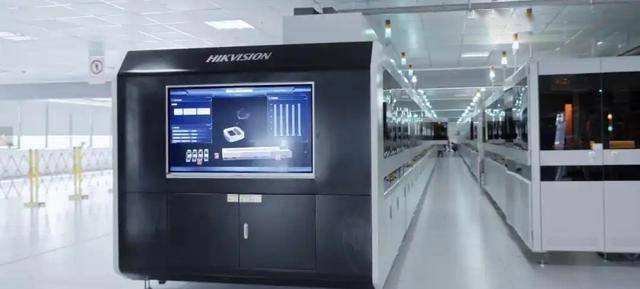
Core Insights - Hikvision has established itself as a leader in smart manufacturing, showcasing its advanced technologies such as IoT perception and AI models at its Tonglu manufacturing base, which has received multiple honors including being a national intelligent manufacturing demonstration factory [1][4] Group 1: AI Model Implementation - Since the second half of 2024, Hikvision has been adjusting its strategy to leverage AI model opportunities while maintaining its leading position in the security industry, focusing on digital transformation and operational efficiency [2] - The Hikvision Guanlan model has been successfully implemented in production lines, enhancing industrial production efficiency and accuracy by acting as a "quality inspector" [3][5] - The model has achieved over 99% accuracy in detecting assembly errors across various production lines, significantly improving quality control processes [3] Group 2: Production Efficiency and Automation - The Tonglu manufacturing base has seen a transformation in production capabilities, handling nearly 10,000 daily orders with approximately 75% being customized configurations [6] - The implementation of digital systems like APS and MES, along with self-developed intelligent algorithms, has led to a 31% reduction in average line changeover time [6] - The facility features the first fully automated production line in the industry, capable of producing one unit every 15 seconds without human intervention, ensuring traceability and quality [6] Group 3: Robotics and Quality Control - Hikvision's self-developed mobile robot clusters interact in real-time with the warehouse management system to optimize delivery paths, enhancing operational efficiency [7] - The introduction of X-Ray defect detection equipment has improved inspection efficiency by 80% for electronic components, showcasing the integration of AI in quality assurance [7] Group 4: Industry Impact and R&D Investment - Hikvision's technology is being applied across various sectors, including electronics and coal, demonstrating its potential for digital and intelligent upgrades in multiple industries [8] - The company has consistently invested over 10% of its revenue in R&D over the past five years, with a total investment of 47.702 billion yuan, indicating a strong commitment to innovation [8]