
HIKVISION(002415)

Search documents
“胖改”下的永辉超市去年关店381家,扣非利润预亏近30亿元;中海油服拟将子公司7.46亿美元债权转为股权投资|公告精选


Mei Ri Jing Ji Xin Wen· 2026-01-20 16:10
Mergers and Acquisitions - CNOOC Services plans to convert its $746 million debt (approximately RMB 5.242 billion) owed by its wholly-owned subsidiary COSL Norwegian AS into equity investment, resulting in ownership stakes of 83.02% and 16.98% respectively [1] - Placo New Materials intends to acquire a 20% stake in Huizhou Placo New Sensation Technology Co., Ltd. for RMB 20 million, increasing its ownership from 80% to 100% [2] - Kailong High-Tech is planning a major asset restructuring to acquire control of Shenzhen Jinwangda Electromechanical Co., Ltd. through a combination of share issuance and cash payment, while also raising supporting funds [3] - Kangxin New Materials aims to acquire a 51% stake in Yubang Semiconductor for RMB 392 million through a combination of share transfer and capital increase, making it a subsidiary [4] Earnings Disclosure - Yonghui Supermarket expects a net loss of RMB 2.14 billion for 2025, compared to a loss of RMB 1.47 billion in the previous year, with a projected adjusted net loss of RMB 2.94 billion [5] - Longzi Co., Ltd. anticipates a net profit of RMB 900 million to RMB 1.05 billion for 2025, representing a year-on-year increase of 245.25% to 302.80% [6] - Hikvision reports a net profit of RMB 14.188 billion for 2025, reflecting an 18.46% year-on-year growth, with total revenue of RMB 92.518 billion, a slight increase of 0.02% [7] - Tonghuashun expects a net profit of RMB 2.735 billion to RMB 3.282 billion for 2025, indicating a growth of 50% to 80% year-on-year [8] Shareholding Changes - Aolian Electronics' shareholder Liu Junsheng plans to reduce his stake by up to 3%, with the reduction price not lower than the initial public offering price, for personal financial planning [9] - Bluefeng Biochemical's shareholder Hainan Wenqin intends to reduce his stake by up to 3%, equating to a maximum of 11.2678 million shares [10] - Zhixin Precision's shareholder Zhou Xin plans to reduce his stake by up to 3%, not exceeding 1.6 million shares, with a minimum price set at the issuance price [11] - Hoshine Silicon Industry's controlling shareholder Hoshine Group plans to reduce its stake by up to 3%, equating to a maximum of 35.4662 million shares, with the reduction price determined by market conditions [12] Risk Matters - ST Saiwei anticipates a negative net asset value by the end of 2025, which may lead to a risk warning for delisting after the annual report is disclosed [13]


上市公司动态 | 同花顺2025年净利预增50%-80%;海康威视2025年净利增18.46%;埃泰克、理奇智能IPO过会
Sou Hu Cai Jing· 2026-01-20 15:22
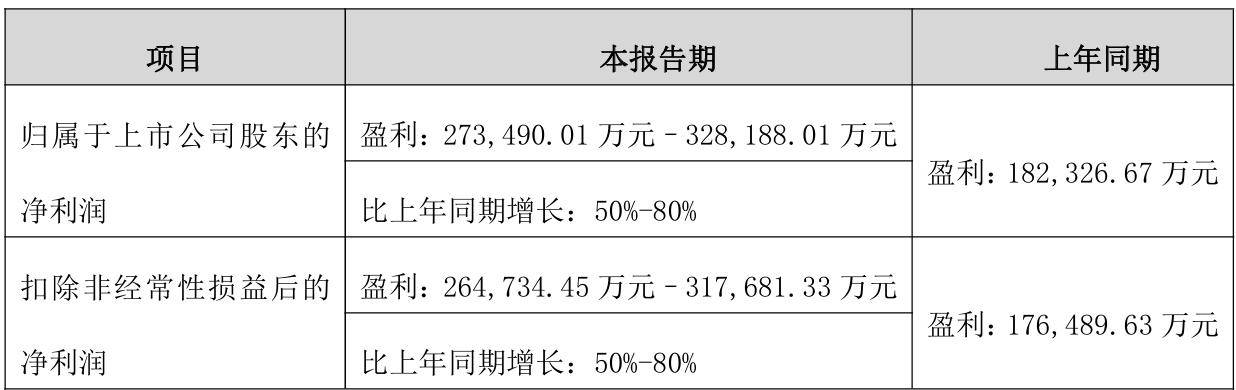
重点要闻 同花顺2025年净利同比预增50%-80%,各项业务较快增长 | 项目 | 本报告期 | 上年 | | --- | --- | --- | | 归属于上市公司股东的 | 盈利: 273,490.01 万元 - 328, 188.01 万元 | 盈利:182,32 | | 净利润 | 比上年同期增长:50%-80% | | | 扣除非经常性损益后的 | 盈利: 264,734.45 万元 -317,681.33 万元 | 盈利:176,48 | | 净利润 | 比上年同期增长:50%-80% | | 同花顺(300033.SZ)发布2025年度业绩预告,预计归属于上市公司股东的净利润为27.35亿元–32.82亿元,比上年同期增长50%-80%。 业绩变动主要由于公司加大人工智能等领域的投入力度,推进产品与大模型技术融合创新,优化核心产品竞争力与用户体验,公司各项业务取得了较快增 长;同时,国内资本市场活跃度持续回升,投资者信心修复,市场交投活跃度明显提升,投资者对金融信息服务需求增强;另外,由于同花顺网站与APP用 户活跃度提升,公司大力拓展生活、消费、科技类客户,同时证券、基金等金融客户需求有所增 ...

1月20日重要资讯一览
Sou Hu Cai Jing· 2026-01-20 15:00
Group 1: New Stock Offerings - Medela's new stock offering has a subscription code of 920119, with an issue price of 41.88 yuan per share and a price-to-earnings ratio of 14.99 times, allowing a maximum subscription limit of 720,000 shares per account [2] Group 2: Fiscal Policy and Economic Measures - The Ministry of Finance will continue to implement a more proactive fiscal policy, aiming for increased total spending, improved structure, better efficiency, and stronger momentum, with necessary levels of fiscal deficit, total debt, and spending maintained through 2026 [3] - The Ministry of Finance has optimized the personal consumption loan interest subsidy policy, including credit card installment payments, removing restrictions on certain consumption areas, allowing all consumer loans to enjoy interest subsidies [3] - Starting April 1, 2026, export tax rebates for photovoltaic products will be canceled, and electronic product export tax rebates will be phased out over two years, promoting efficient resource use and guiding rational industrial structure adjustments [3] - Tax and fee preferential policies for community services such as elderly care, childcare, and housekeeping will continue, benefiting institutions providing these services [3] Group 3: Commodity Market Adjustments - The Shanghai Futures Exchange will adjust margin ratios and price fluctuation limits for futures contracts of copper, gold, and other commodities starting January 22, 2026 [4] - Domestic gasoline and diesel prices will increase by 85 yuan per ton due to rising international oil prices, marking the first price hike in 2026, with an average increase of 0.07 yuan per liter for 92 and 95 gasoline and 0 diesel [4] - Shanghai has released an action plan to enhance the linkage between spot and futures markets for non-ferrous metals, aiming to expand the international influence of "Shanghai prices" [4] Group 4: Company Earnings Forecasts - Huicheng Environmental Protection plans to increase its shareholding by 25 million to 50 million yuan [7] - JianTou Energy expects a net profit increase of approximately 253.38% year-on-year for 2025 [7] - Hikvision's performance report indicates a year-on-year growth of 18.46% in net profit attributable to shareholders for 2025 [7] - Longzi Co. anticipates a net profit increase of 245.25% to 302.8% year-on-year for 2025 [7] - Zhaoyan New Drug expects a net profit increase of 214% to 371% year-on-year for 2025 [8] - Huachen Equipment forecasts a net profit increase of 193.64% to 242.04% year-on-year for 2025 [8] - Qianyuan Power anticipates a net profit increase of 160% to 190% year-on-year for 2025 [8] - Jin Fang Energy expects a net profit increase of 123.97% to 193.7% year-on-year for 2025 [8] - Other companies such as Zhongfu Industrial, Batian Co., and Dongwei Technology also project significant year-on-year profit increases for 2025, ranging from 50% to over 300% [8][9]




海康威视:接受北京富智投资等投资者调研
Mei Ri Jing Ji Xin Wen· 2026-01-20 14:25
每经AI快讯,海康威视发布公告称,2026年1月20日,海康威视接受北京富智投资等投资者调研,公司 高级副总经理、董事会秘书奉玮先生参与接待,并回答了投资者提出的问题。 每经头条(nbdtoutiao)——重磅数据公布:回升!专访徐洪才:"内卷式竞争"得到一定缓解,下一 步"补收入"可形成良性循环 (记者 王瀚黎) ...
海康威视(002415) - 2026年1月20日投资者关系活动记录表
2026-01-20 14:04
Group 1: Financial Performance - In 2025, the company achieved total revenue of 92.518 billion CNY, a year-on-year growth of 0.02% [3] - The net profit attributable to shareholders was 14.188 billion CNY, reflecting an 18.46% increase compared to the previous year [3] - The cash flow from operating activities significantly outperformed net profit, with net profit growth outpacing revenue growth [3] - The quarterly year-on-year growth rates for net profit were 6.41%, 14.94%, 20.31%, and 25.83%, indicating a trend of accelerating growth [3] Group 2: Business Strategy and Development - The company remains focused on its core business of intelligent IoT, believing that advancements in AI technology will create vast opportunities [3] - Continuous investment in R&D and a strategic focus on high-quality development are emphasized [3] - The company has implemented organizational changes to enhance efficiency and product planning capabilities [3] - Recognition includes the "Smart Quality" management model winning the China Quality Award and being listed among the first batch of "Leading Smart Factories" [3] Group 3: AI and Product Development - The company has made significant progress in AI applications across urban governance, industrial, and energy sectors, with rapid growth in products like Hikvision robots and automotive electronics [5] - AI-related products are expected to transition from the introduction phase to the growth phase in 2026 [5] - The company is actively promoting the integration of large model products in both software and hardware [6] Group 4: Market and Revenue Insights - Overseas revenue reached over 4 billion USD, with developing countries accounting for 70% of this income and growing faster than developed countries [9] - The company plans to enhance exports of non-video products and expand into industrial and energy applications [9] - The impact of rising hardware storage prices is expected to be slightly positive due to historical inventory and procurement advantages [8] Group 5: Future Outlook and Challenges - The company is confident in its new growth cycle but has not provided specific guidance for 2026 [7] - Challenges include balancing revenue and profit growth while navigating domestic market fluctuations [7] - Continuous improvement in operational capabilities is crucial for maintaining high gross margins [9]
今日晚间重要公告抢先看——利欧股份称自查工作已完成,股票1月21日起复牌;通富微电称2025年净利同比预增62.34%—99.24%
Jin Rong Jie· 2026-01-20 14:03
Group 1 - Liou Co., Ltd. announced that its stock price fluctuations have been investigated, confirming normal operations and no undisclosed significant information [1] - Tongfu Microelectronics expects a net profit of 1.1 billion to 1.35 billion yuan for 2025, representing a year-on-year growth of 62.34% to 99.24% [17][18] Group 2 - Zhongtung High-tech reported an increase of 91,700 tons in tungsten metal resources, which will not directly impact its current operations or financial situation [2] - Aibo Medical plans to acquire at least 51% of Demai Medical to gain control, aiming to cultivate new profit growth points in the sports medicine sector [2] Group 3 - Zhaojin Gold confirmed normal operations and no undisclosed significant matters after its stock price experienced abnormal fluctuations [3] - Riying Electronics stated that it has no revenue from humanoid robot-related businesses and emphasized the need for rational investment decisions [4] Group 4 - Yifan Transmission intends to purchase 87.07% of Beijing Helishi Electric Technology Co., Ltd., which is expected to constitute a major asset restructuring [5] - China Merchants Industry plans to build four 3000TEU traditional fuel container ships with a total investment of no more than 1.324 billion yuan [6] Group 5 - Jiangtian Chemical plans to invest 49.8 million yuan in a project to produce 60,000 tons of acrylic acid annually [7] - *ST Xinyan has received approval to lift its delisting risk warning after completing its restructuring plan [7] Group 6 - Kangxin New Materials intends to acquire 51% of Wuxi Yubang Semiconductor for 392 million yuan, marking its expansion into the semiconductor field [8] - Guoshun Quantum signed a technology implementation license contract with the University of Science and Technology of China [8] Group 7 - Zhenyu Technology reported a significant increase in orders from the robotics sector for Q4 2025, although these orders represent a small portion of its overall revenue [9] - Yongxing Materials announced that its lithium extraction project has reached full production capacity [9] Group 8 - Nanjing Julong plans to invest 110 million yuan in a production line for modified plastics with an annual capacity of 60,000 tons [9] - Guodian Nanzi signed a strategic cooperation agreement with Huawei to establish an AI technology innovation center [10][11] Group 9 - He Sheng New Materials plans to sell idle factory assets for no less than 80 million yuan [13] - He Sheng New Materials expects a net profit increase of 55% to 75% for 2025, driven by improved supply chain management [14] Group 10 - Kangda New Materials forecasts a net profit of 125 million to 135 million yuan for 2025, marking a turnaround from a loss in the previous year [15] - Yanjing Beer anticipates a net profit increase of 50% to 65% for 2025, supported by its large product strategy [16] Group 11 - Jinfang Energy expects a net profit of 109 million to 143 million yuan for 2025, reflecting a year-on-year growth of 123.97% to 193.7% [19] - Yandong Microelectronics predicts a net loss of 340 million to 425 million yuan for 2025 due to market changes and increased R&D costs [20] Group 12 - Taishan Petroleum forecasts a net profit increase of 30.88% to 66.11% for 2025, benefiting from reduced expenses [21] - Huayuan Holdings expects a net profit increase of 50.98% to 66.82% for 2025, driven by lower raw material prices [22] Group 13 - Huajin Co. anticipates a net loss of 1.6 billion to 1.9 billion yuan for 2025, although the loss is expected to be less than the previous year [23] - Zhongyuan Neipei expects a net profit increase of 80.47% to 109.9% for 2025, supported by steady growth in core business [24] Group 14 - Dongfang Tower expects a net profit of 1.08 billion to 1.27 billion yuan for 2025, reflecting a year-on-year growth of 91.4% to 125.07% [34] - Dali Long anticipates a net profit increase of 51.88% to 86.27% for 2025, driven by market expansion and operational efficiency [35] Group 15 - Hikvision reported a net profit increase of 18.46% for 2025, with total revenue reaching 925.18 billion yuan [44] - Zhongfu Industrial expects a net profit increase of 120.27% to 141.59% for 2025, primarily due to lower costs in the electrolytic aluminum business [45]




海康威视:利润同比增长18.46%至141.88亿元
Hua Er Jie Jian Wen· 2026-01-20 13:51
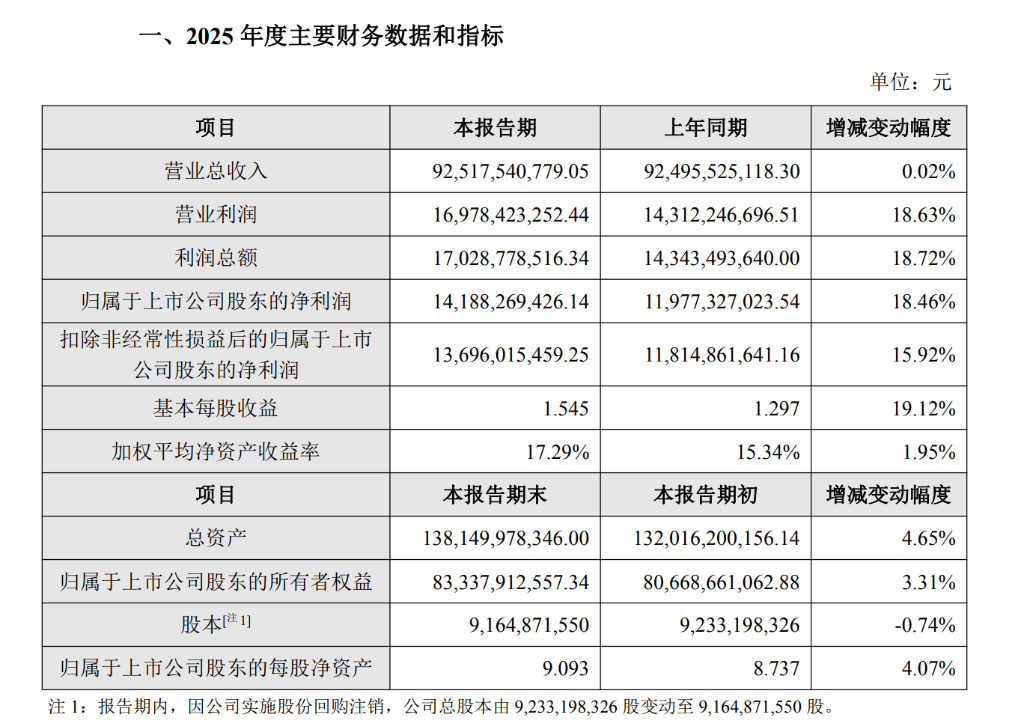
Core Viewpoint - Hikvision, a global leader in security surveillance, has achieved significant profit recovery despite flat revenue, indicating the effectiveness of its "profit-centered" operational strategy adjustment [1] Group 1: Financial Performance - In 2025, Hikvision reported total revenue of 925.18 billion yuan, a slight increase of 0.02% from 924.96 billion yuan in the previous year, indicating a plateau in revenue scale [2][4] - The company achieved an operating profit of 169.78 billion yuan, up 18.63% year-on-year, and total profit reached 170.29 billion yuan, increasing by 18.72% [2][4] - The net profit attributable to shareholders rose by 18.46% to 141.88 billion yuan, while the net profit after deducting non-recurring gains and losses increased by 15.92% to 136.96 billion yuan [2][4] - Basic earnings per share improved from 1.297 yuan to 1.545 yuan, marking a growth of 19.12% [2][4] - The weighted average return on equity (ROE) increased from 15.34% to 17.29%, a rise of 1.95 percentage points [2][4] Group 2: Asset Status and Share Capital Changes - As of the end of 2025, Hikvision's total assets reached 1,381.50 billion yuan, a growth of 4.65% from the beginning of the year [3][4] - The equity attributable to shareholders increased by 3.31% to 833.38 billion yuan, and the net asset per share rose by 4.07% to 9.093 yuan [3][4] - The company's total share capital decreased from approximately 9.233 billion shares to about 9.165 billion shares due to share buybacks, resulting in a reduction of 0.74% [3][4]
海康威视2025年营收925.18亿元
Bei Jing Shang Bao· 2026-01-20 12:45
北京商报讯(记者 魏蔚)1月20日,海康威视发布的2025年业绩快报显示,营收925.18亿元,同比增长 0.02%,净利润141.88亿元,同比增长18.46%。 ...
【财闻联播】上交所终止审核沁恒微科创板IPO!永辉超市:预计2025年净亏损21.4亿元
券商中国· 2026-01-20 12:12
Macro Dynamics - The Ministry of Natural Resources and the Ministry of Housing and Urban-Rural Development have issued a notice to further support urban renewal actions, allowing for a transitional policy period of up to 5 years for the development of state-supported industries on existing land and property resources [2] - Guangzhou is actively promoting legislation for the renewal of buildings on state-owned land, aiming to address core obstacles and implementation challenges in urban renewal, including improving top-level design and enhancing public welfare [5] Oil Price Adjustment - Domestic gasoline and diesel prices will increase by 85 yuan per ton starting January 20, marking the first price hike since 2026, with an average increase of 0.07 yuan per liter for 92 and 95 gasoline and 0 diesel [3] Financial Institutions - Guiyang Bank announced that its shareholder, Guiyang State-owned Assets, has pledged approximately 280 million shares, accounting for 7.65% of the bank's total share capital [9] - The Shaanxi Financial Regulatory Bureau has approved the dissolution of Anse Agricultural Bank, with all its business and assets to be inherited by the Agricultural Bank of China [10] - Northeast Securities expects a 69.06% year-on-year increase in net profit for 2025, driven by improved investment business returns and wealth management income [11] Market Data - The ChiNext Index fell by 1.79%, while the real estate and chemical sectors showed strength, with several stocks reaching their daily limit [12] - The total margin balance in the two markets decreased by 8.632 billion yuan as of January 19 [13] - The Hang Seng Index closed down 0.29%, with notable declines in technology stocks [14] Company Dynamics - Hikvision reported a 18.46% year-on-year increase in net profit for 2025, with total revenue reaching 92.518 billion yuan [16] - Yonghui Supermarket expects a net loss of 2.14 billion yuan for 2025 due to significant operational adjustments and asset impairments [18] - Longzi Co. anticipates a net profit increase of 245.25% to 302.8% for 2025, largely due to the disposal of certain stocks [19] - Gree Electric plans to mass-produce silicon carbide chips for automotive applications, aiming to supply half of the chips for GAC Group vehicles [20] - Tongfu Microelectronics expects a net profit increase of 62.34% to 99.24% for 2025, benefiting from structural growth in the semiconductor industry [24] - iFinD anticipates a net profit increase of 50% to 80% for 2025, driven by advancements in AI and increased market activity [25]





海康威视:2025年度业绩快报
Zheng Quan Ri Bao· 2026-01-20 12:10
证券日报网讯 1月20日,海康威视发布公告称,公司2025年度实现营业总收入92,517,540,779.05 元,同比增长0.02%;归属于上市公司股东的净利润14,188,269,426.14元,同比增长18.46%;实现 利润总额17,028,778,516.34元,比上年同期增长18.72%。 (文章来源:证券日报) ...
