
SUNWODA(300207)

Search documents
锂电企业出海东南亚再掀热潮 谁在狂揽中资电池厂?
2 1 Shi Ji Jing Ji Bao Dao· 2025-08-21 00:33
Group 1: Overview of China's Electric Vehicle Industry Expansion - The Chinese electric vehicle industry is experiencing a significant shift towards international markets, with overseas investments surpassing domestic investments for the first time in 2024, reaching $16 billion compared to $15 billion domestically [1] - A substantial 74% of China's overseas investment in the electric vehicle supply chain is concentrated in the battery sector, indicating a strong focus on battery manufacturing as companies expand internationally [1] Group 2: Investment Trends in Southeast Asia - Major Chinese battery manufacturers, including companies like Yiwei Lithium Energy and CATL, are increasingly investing in Southeast Asia, with nearly ten battery giants announcing plans to establish production facilities in the region in the first half of the year [1][2] - The strategic importance of Southeast Asia is highlighted by its growing market demand for electric vehicles, driven by government policies aimed at increasing EV penetration [4] Group 3: Specific Projects and Investments - Notable investments include CATL's $5.9 billion project in Indonesia, which encompasses the entire battery production chain from nickel mining to battery manufacturing [2][6] - Other significant investments include Yiwei Lithium Energy's new energy storage battery project in Malaysia, with a budget of up to $8.65 billion [2] Group 4: Market Dynamics and Challenges - The domestic lithium battery market in China is reaching saturation, prompting companies to seek new opportunities abroad, particularly in Southeast Asia where government policies are supportive of EV growth [4] - The changing international trade landscape, including tariffs imposed by the U.S., is pushing Chinese lithium battery companies to explore alternative markets, with Southeast Asia emerging as a potential "safe haven" for exports [5][10] Group 5: Regional Advantages and Future Outlook - Indonesia's rich mineral resources, particularly nickel and cobalt, position it as a key player in the electric vehicle battery supply chain, with plans for vertical integration in battery production [7] - Malaysia's comprehensive battery industry ecosystem and favorable government policies are attracting significant investments, making it a primary destination for Chinese battery manufacturers [8]





国产锂电掀起下南洋热潮 印尼马来泰国狂揽背后的风险|东盟观察
2 1 Shi Ji Jing Ji Bao Dao· 2025-08-20 14:12
Core Insights - The report from the consulting firm Rongding indicates that in 2024, China's overseas investment in the electric vehicle (EV) industry chain will surpass domestic investment for the first time, with overseas investment reaching $16 billion compared to $15 billion domestically [1] - A significant portion of this overseas investment, approximately 74%, is concentrated in the battery sector, highlighting the internationalization of Chinese battery manufacturers [1] - Southeast Asia has emerged as a key destination for Chinese battery manufacturers, with several companies announcing plans to establish production facilities in the region [1][2] Investment Trends - Major Chinese battery manufacturers, including Yiwei Lithium Energy, XINWANDA, and CATL, are actively investing in Southeast Asia, with numerous projects announced in 2023 [1][2] - Notable investments include a $5.9 billion nickel resource and battery industry project in Indonesia and a new battery factory in Vietnam costing up to $2 billion [2] - The trend of Chinese battery manufacturers expanding into Southeast Asia is driven by the saturation of domestic production capacity and favorable government policies in the region promoting EV adoption [4] Market Dynamics - The demand for lithium batteries in Southeast Asia is expected to grow significantly due to government initiatives aimed at increasing EV penetration [4][8] - Indonesia is positioning itself as a key player in the global battery supply chain, leveraging its abundant nickel and cobalt resources to establish a vertically integrated production model [7] - Malaysia is also becoming a hub for battery production, supported by its strategic location and government policies aimed at promoting renewable energy and EV adoption [8] Challenges and Opportunities - The changing international trade landscape, including tariffs imposed by the U.S., has prompted Chinese lithium battery companies to seek alternative markets [5][6] - Despite the potential for growth in Southeast Asia, challenges such as trade protectionism and political instability in the region could pose risks for Chinese companies [10] - The electric vehicle market in Southeast Asia is projected to grow, with sales expected to reach 204,000 units in 2023 and a compound annual growth rate of 22% from 2024 to 2029 [10]
国产锂电掀起下南洋热潮,印尼马来泰国狂揽背后的风险|东盟观察
2 1 Shi Ji Jing Ji Bao Dao· 2025-08-20 14:05
Core Insights - The Chinese electric vehicle (EV) industry is experiencing a significant shift towards international markets, with overseas investments surpassing domestic investments for the first time in 2024, reaching $16 billion compared to $15 billion domestically [1] - Battery manufacturing is the primary focus of these overseas investments, accounting for 74% of the total [1] - Southeast Asia has emerged as a key destination for Chinese battery manufacturers, with several companies announcing new investments in the region [1][2] Investment Trends - Major Chinese battery manufacturers, including A123 Systems, CATL, and others, are actively investing in Southeast Asia, with companies like XINWANDA planning to build a battery factory in Vietnam with an investment of up to 2 billion yuan [2] - The total investment for a nickel resource and battery supply chain project in Indonesia, involving CATL and local state-owned enterprises, is estimated at $5.9 billion [2] - In Malaysia, EVE Energy is also planning to invest in a new energy storage battery project with a budget of up to 8.65 billion yuan [2] Market Dynamics - The demand for lithium batteries in Southeast Asia is expected to grow significantly due to government policies promoting electric vehicle adoption [4] - Indonesia is positioning itself as a major player in the EV battery market, with plans to integrate the entire supply chain from nickel mining to battery production [7] - Malaysia's strategic location and supportive government policies are making it an attractive destination for battery manufacturing [8] Challenges and Opportunities - The trade environment has shifted, with the U.S. imposing tariffs on Chinese lithium batteries, prompting companies to seek alternative markets [5][10] - Despite the challenges, the Southeast Asian EV market is projected to grow, with sales expected to reach 204,000 units in 2023 and a compound annual growth rate of 22% from 2024 to 2029 [10]
欣旺达赴港IPO,净利率仅0.24%,动力电池产能利用率仅53.6%,被理想i8弃用
Jin Rong Jie· 2025-08-19 13:44
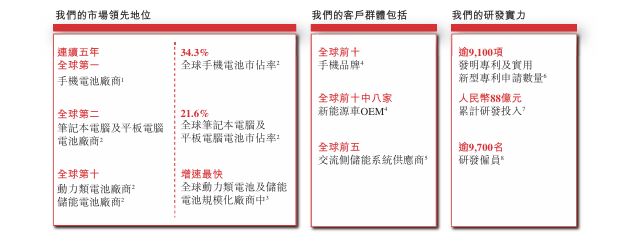
Core Viewpoint - Recently, XINWANDA Electronics Co., Ltd. submitted its listing application to the Hong Kong Stock Exchange, aiming to become the third domestic lithium battery company to achieve "A+H" dual listing after CATL and EVE Energy [1] Group 1: Company Overview - XINWANDA, established in 1997, is a leading global lithium battery technology innovator, primarily engaged in the research, design, manufacturing, and sales of lithium batteries, with a diverse product matrix including consumer batteries, power batteries, and energy storage systems [4] - According to a report by Zhaosheng Consulting, XINWANDA holds a 34.3% market share in the global mobile phone battery market as of 2024, making it the largest player in this segment [4] - The company is also the second-largest manufacturer of batteries for laptops and tablets, with a market share of 21.6% [4] Group 2: Financial Performance - XINWANDA's revenue for the years 2022, 2023, 2024, and Q1 2025 was reported as 52.162 billion RMB, 47.862 billion RMB, 56.021 billion RMB, and 12.289 billion RMB respectively, with net profits of 1.068 billion RMB, 1.076 billion RMB, 1.474 billion RMB, and 387 million RMB during the same periods [6][7] - The average selling price of consumer batteries decreased from 66.2 RMB per unit in 2022 to 46 RMB per unit in Q1 2025, while the average selling price of power batteries dropped from 1.1 RMB per Wh to 0.5 RMB per Wh during the same timeframe [9] Group 3: Customer Concentration and Risks - XINWANDA's revenue from its top five customers was 30.286 billion RMB, 22.818 billion RMB, and 24.836 billion RMB for the years 2022, 2023, and 2024, representing 58.1%, 47.7%, and 44.3% of total revenue respectively, indicating a high customer concentration risk [11] - The company faces challenges with declining utilization rates, with consumer battery utilization dropping from 94.2% in 2022 to 84.3% in Q1 2025, and power battery utilization decreasing from 83.5% to 53.6% during the same period [14] Group 4: Recent Developments - Following the launch of the Li Auto i8, XINWANDA lost a significant contract as Li Auto decided to switch from using XINWANDA batteries to CATL batteries for all versions of the i8, which could impact XINWANDA's revenue and market position [2][3] - XINWANDA's subsidiary, XINWANDA Power, has been operating at a loss, with cumulative losses exceeding 5 billion RMB over the past three years, which has become a financial burden for the parent company [12][13]
欣旺达:目前公司固态生产线项目还在筹划过程中
Mei Ri Jing Ji Xin Wen· 2025-08-15 13:02
Group 1 - The company is currently in the planning stage for its solid-state battery production line project [2] - An investor inquired about the design capacity of the company's solid-state battery pilot line [2] - The company has not yet disclosed specific capacity details for the solid-state battery production line [2]
欣旺达(300207.SZ):有电池正极制备技术的储备
Ge Long Hui· 2025-08-15 09:59
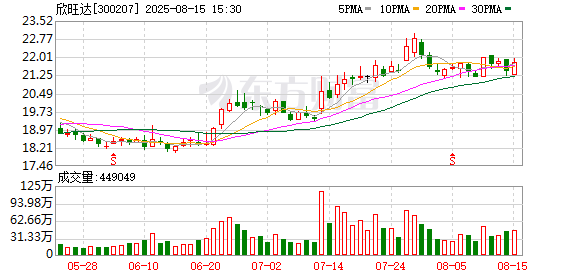
格隆汇8月15日丨欣旺达(300207.SZ)于投资者互动平台表示,公司有电池正极制备技术的储备。 ...
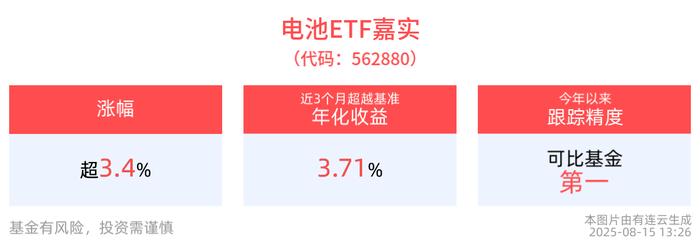
7月新能源汽车市场成绩亮眼,电池ETF嘉实(562880)盘中上涨3.47%,成分股科士达10cm涨停
Xin Lang Cai Jing· 2025-08-15 05:57
Core Insights - The battery theme index in China has seen a strong increase of 3.41%, with key stocks such as Keda (科士达) hitting the daily limit up, and other companies like Yalong (阳光电源) and Silver Wheel (银轮股份) also experiencing significant gains [1] - The battery ETF managed by Harvest (嘉实) has shown a 37.75% increase in net value over the past year, with a maximum monthly return of 31.11% since its inception [2] - The solid-state battery sector is gaining attention due to its high energy density and safety, with the industry entering a critical phase of industrialization supported by policy, technological advancements, and growing demand [2] Market Performance - As of August 15, 2025, the battery ETF has a turnover rate of 3.16% and a transaction volume of 9.8276 million yuan [2] - The top ten weighted stocks in the battery theme index account for 51.66% of the index, with Yalong (阳光电源) and CATL (宁德时代) being the top two [3][5] Stock Performance - Key stock performances include: - Yalong (阳光电源) up by 6.88% with a weight of 10.28% - CATL (宁德时代) up by 0.55% with a weight of 9.64% - Sanhua Intelligent Control (三花智控) up by 4.53% with a weight of 6.31% [5] Investment Opportunities - Investors without stock accounts can access the battery industry investment opportunities through the battery ETF Harvest linked fund [7]



中国企业包揽全球储能电芯市场前十 海辰储能紧追“宁王”跃居第二
Zhong Guo Jing Ying Bao· 2025-08-15 03:54
Core Insights - The global energy storage cell shipment is projected to reach 240.21 GWh in the first half of 2025, marking a year-on-year growth of 106.1% [1] - The North American market is experiencing demand acceleration due to tariff issues, while the Chinese market is seeing preemptive demand due to the cancellation of "strong配" [1] - The top ten global companies in terms of shipment volume are all Chinese firms, with CATL leading the pack, followed by Hicharge Energy and others, collectively holding a market share of 91.2% [1] Market Dynamics - Intense competition has emerged between CATL and Hicharge Energy, leading to legal disputes over issues such as non-compete clauses and trade secrets [2] - The storage cell market is witnessing a trend of increasing differentiation, with the top six companies significantly outperforming those ranked lower [2] - Binding partnerships with leading energy system integrators is a crucial market expansion strategy for storage cell companies [2] Global Expansion - Hicharge Energy is actively pursuing an IPO in Hong Kong, following similar moves by CATL and EVE Energy [3] - Nearly 45% of energy cell shipments in the first half of 2025 were to overseas markets, with CATL, BYD, and Zhongxin Innovation leading in this area [3] - The supply chain is evolving towards a model where Chinese bases primarily supply global markets, supplemented by overseas bases for regional markets [3] Product Trends - The large storage cell segment is primarily driven by CATL and Hicharge Energy, while the small storage segment sees significant market share from Ruipu Lanjun and EVE Energy [4] - The market is experiencing a "capacity race" with the introduction of various large-capacity storage products, and the 500 Ah+ cells are expected to enter mass production in the second half of 2025 [5] - The competitive landscape is influenced by the ongoing development of next-generation large-capacity cells, with a focus on cost reduction and efficiency [5]

152家储能企业发声响应反内卷,创业板新能源ETF鹏华(159261)上涨近1%
Xin Lang Cai Jing· 2025-08-15 02:07
Group 1 - The core viewpoint of the news highlights the strong performance of the ChiNext New Energy Index, with a notable increase of 1.22% as of August 15, 2025, and significant gains in constituent stocks such as Defu Technology (up 5.95%) and Xinyuan (up 3.46%) [1] - The China Chemical and Physical Power Industry Association has initiated a "anti-involution" action in the energy storage industry, with 152 companies responding within two days, covering various technologies including lithium-ion batteries and flow batteries [1] - CITIC Securities anticipates that the battery sector's performance may exceed expectations in the short term due to improved supply and demand dynamics, with battery prices stabilizing and upstream raw material costs decreasing [1] Group 2 - As of July 31, 2025, the top ten weighted stocks in the ChiNext New Energy Index account for 62.13% of the index, with major companies including CATL and Sungrow [2] - The ChiNext New Energy ETF closely tracks the performance of the ChiNext New Energy Index, reflecting the operational characteristics of listed companies in the new energy sector on the Shenzhen Stock Exchange [2]




枣庄|15分钟,走完一条产业链
Da Zhong Ri Bao· 2025-08-15 02:04
Core Insights - The Zaozhuang High-tech Zone lithium battery industrial park has established a complete industrial chain, allowing companies to access all necessary suppliers within a 15-minute drive, enhancing operational efficiency [2][4] - The park is a key engine for the city's lithium battery industry, encompassing upstream materials, midstream battery cells, and downstream applications [2][3] - The industrial energy storage cabinet developed by Shenzhou Xingheng can store 235 kWh and offers both grid-connected and off-grid functionalities, indicating a shift in energy storage from a cost center to a profit-generating asset [2][3] Company Developments - Shandong Yaoqian Electronic Technology focuses on small and medium-sized power lithium batteries and energy storage systems, benefiting from a tailored support system that helps companies expand into international markets [3] - Ding Teng New Energy, a joint venture, is addressing safety and low-temperature performance issues in sodium-ion batteries, achieving over 70% discharge at -40°C and over 50% at -50°C, with a cycle life exceeding 6000 times [3][4] - The Zaozhuang High-tech Zone lithium battery industrial park hosts both leading enterprises with over 1 billion yuan in output and emerging companies, fostering a diverse ecosystem [3][4] Strategic Initiatives - The park's strategy focuses on precise investment to strengthen the industrial chain, including attracting both major players and supporting enterprises to create a complete lithium battery ecosystem [4] - Future initiatives will include mapping the lithium battery industry, chain-based investment targeting upstream and downstream partners, and providing dedicated support for each company to enhance their growth [4]