
Dark Horse Technology (300688)

Search documents
创业黑马(300688) - 中兴华会计师事务所关于上市公司最近一年及一期的备考财务报告及其审阅报告
2025-09-29 11:27
创业足马科技集团股份有限公司 2024年度及 2025年1-6月 备考财务报表审阅报告 中共华会计师事务所(特殊普通合伙) ZHONGXINGHUA CERTIFIED PUBLIC ACCOUNTANTS LLP 地址:北京市丰台区丽泽路 20号丽泽 SOH0 B座 20 层 - 邮编:100073 电话:(010) 51423818 传真:(010) 51423816 您可使用手机"扫一扫"或进入"挂册用于证明该审计报告是否由具有执业许可的会计师事务 "还 京25B8. 日 录 4-5-2 一、备考财务报表审阅报告 二、备考财务报表 1. 备考合并资产负债表 2. 备考合并利润表 3. 备考财务报表附注 中兴华会计师事务所(特殊普通合伙) ZHONGXINGHUA CERTIFIED PUBLIC ACCOUNTANTS LLP 地址(location):北京市丰台区丽泽路20号丽泽 SOH0 B座20层 20/F, Tower B, Lize SOHO, 20 Lize Road, Fengtai District, Beijing PR China 电话(tel):010-51423818 传真(fa ...

创业黑马(300688) - 中兴华会计师事务所关于标的公司最近两年及一期的审计报告
2025-09-29 11:27
北京版信通技术有限公司 2023年1月1日至2025年6月30日 合并及母公司财务报表 审计报告书 中兴华会计师事务所(特殊普通合伙) ZHONGXINGHUA CERTIFIED PUBLIC ACCOUNTANTS LLP 地址:北京市丰台区丽泽路 20号丽泽 SOHO B座 20 层 - 邮编:100073 电话:(010) 51423818 传真:(010) 51423816 您可使用手机"扫一扫"或进一l 此码用于证明该审计报告是否由具有执业许可的会计师事务 。 这 日 求 三、审计报告附件 4-1-2 一、审计报告 二、审计报告附送 1. 合并资产负债表 2. 合并利润表 3. 合并现金流量表 4. 合并所有者权益变动表 5. 母公司资产负债表 6. 母公司利润表 7. 母公司现金流量表 8. 母公司所有者权益变动表 9. 财务报表附注 1. 中兴华会计师事务所(特殊普通合伙)营业执照复印件 2. 中兴华会计师事务所(特殊普通合伙)执业证书复印件 3. 注册会计师执业证书复印件 中兴华会计师事务所(特殊普通合伙) ZHONGXINGHUA CERTIFIED PUBLIC ACCOUNTANTS ...
俞敏洪:做决策的四个“不要”
创业家· 2025-09-28 10:17
Core Viewpoint - Entrepreneurship requires continuous adaptation, keen observation, and effective resource utilization, emphasizing the importance of decision-making free from personal biases [1] Group 1: Course Overview - The "Black Horse: Rise of Consumption" course features renowned instructors from various industries, focusing on product innovation and brand expansion in the context of the Chinese and Japanese markets [3][10] - The course aims to provide insights into how companies can leverage technology and consumer needs to create market-leading products [10][12] Group 2: Insights from Japanese Companies - Japanese companies have successfully transformed technology into user-perceived value, exemplified by Sony's Walkman and Uniqlo's innovative fabrics [10] - The integration of AI in consumer products is reshaping the industry, with companies that effectively merge demand with algorithms poised to become future champions [10][12] Group 3: Market Strategies - The course discusses strategies for Chinese brands to adapt to global markets by aligning supply chain capabilities with local demands, moving from simple exportation to deeper cultural integration [13][21] - Emphasis is placed on the importance of understanding local consumer needs and building trust through effective communication and problem-solving [22] Group 4: Product Innovation and Development - The curriculum includes lessons on how to innovate products by combining cross-disciplinary technologies and AI, addressing the challenges of product aging in a saturated market [17][23] - Successful product development processes from companies like Muji and Uniqlo are analyzed to provide actionable insights for Chinese enterprises facing homogenization and inventory management issues [25][24]


过去这一年,中国消费者的钱都花到哪里了?
创业家· 2025-09-28 10:17
Core Insights - The article emphasizes that Chinese consumers are adapting to a new normal, moving away from the mindset of waiting for economic growth to return to previous levels and instead focusing on practical consumption planning [4][6][26] Group 1: Consumer Behavior Trends - The first trend indicates that consumers are embracing a new normal, becoming more rational and proactive in planning their consumption [4][6] - The second trend highlights a clear segmentation in consumer confidence and behavior, with different demographic groups exhibiting varying levels of optimism [7][14] - Rural consumers, particularly the elderly, show increased confidence due to rural revitalization policies and income growth, while urban Z-generation consumers remain relatively optimistic despite facing challenges [9][11][12][13] Group 2: Spending Priorities - The third trend reveals that consumers are increasingly prioritizing personal achievements in their spending, focusing on categories that provide clear value and satisfaction [16][26] - Education emerges as the category with the highest expected spending growth at 5.7%, as consumers seek to invest in skills and knowledge for future security [17][18] - Health-related expenditures, including health products and services, are also on the rise, with expected growth rates of 2.7% and 2.4% respectively, reflecting a growing emphasis on well-being [19][20] - Travel spending is expected to grow by 1.9%, indicating a continued desire for cultural experiences and personal enrichment through travel [22] - Wealthy urban consumers are willing to invest in tangible goods like home renovations and automobiles, which signify an enhancement of their quality of life [23] Group 3: Market Opportunities - The article suggests that businesses should reassess their product strategies and communication methods based on the nuanced understanding of different consumer segments [14][24] - Companies operating in sectors aligned with the identified trends are positioned favorably, while those outside these areas may need to adapt their offerings to meet evolving consumer expectations [24][26]

投资人,还在投什么样的消费企业?
创业家· 2025-09-24 10:07
Core Viewpoint - Investors are focusing on consumer enterprises that can establish a strong main brand, achieve high standardization for rapid replication, and create a defensible ecosystem against imitation [1][8]. Group 1: Brand and Market Strategy - Successful consumer brands must have a standout product that breaks through the market, allowing for the incubation of smaller brands [1]. - High standardization enables rapid scaling and the establishment of a chain of stores [1]. - Companies need to think about defensibility and innovation before launching products to prevent imitation [1]. Group 2: Lessons from Japanese Brands - The success of Japanese brands in the 1980s was due to their ability to convert technology into user-perceived value, exemplified by Sony's Walkman and Uniqlo's comfortable basics [8]. - AI is reshaping consumer value by redefining product existence through algorithms, with future champions being those who integrate demand with AI effectively [8]. - Companies like Plaud and Haivivi are leveraging AI to create products that meet emotional and practical needs in the market [8]. Group 3: Consumer Market Insights - The rise of AI algorithms is creating new opportunities in consumer sectors such as food, electronics, and beauty, emphasizing the need for clear market positioning and innovative products [10]. - Companies must identify their market niche and innovate to capture new opportunities effectively [10]. Group 4: Globalization and Brand Localization - Successful globalization involves deeply integrating Chinese supply chain capabilities with local market demands, moving from simple export to localized coexistence [11]. - Building trust in overseas markets requires understanding local consumer needs and effectively communicating brand stories [11][20]. Group 5: Course Offerings and Expert Insights - The course features industry experts who will share insights on product innovation, market strategies, and the importance of data-driven decision-making in consumer goods [14][23]. - Participants will learn how to navigate cultural challenges in international markets and leverage technology for product development [19][25].

牛文文:中国企业这一套打法,在海外所向披靡
创业家· 2025-09-20 10:03
Core Viewpoint - The article emphasizes that small and medium-sized enterprises (SMEs) must adapt to survive, either by expanding into international markets or by focusing on niche segments domestically. The competitive advantage for Chinese companies lies in their experience and strategies developed in the domestic market, which can be effectively applied abroad [3][4]. Group 1: International Expansion Strategies - SMEs are encouraged to explore international markets, particularly in Southeast Asia, where they can leverage their established business models and operational efficiencies [3][4]. - The article highlights successful case studies, such as the company WOOK, which has thrived in Indonesia's e-commerce sector, showcasing the potential for Chinese brands to dominate foreign markets [4][7]. - The narrative suggests that the current wave of Chinese SMEs going abroad represents a shift from competing in a saturated domestic market to capitalizing on opportunities in less competitive international landscapes [4][9]. Group 2: Insights from Industry Experts - The article promotes an upcoming event featuring industry leaders who will share insights on product innovation and brand expansion strategies, particularly in the context of the Chinese and Japanese markets [10][12]. - Notable speakers include former executives from renowned companies like Uniqlo and Sony, who will discuss how to transform technology into consumer-friendly products and the importance of understanding local market needs [18][19]. - The event aims to provide practical frameworks for SMEs to innovate and adapt their products for global markets, emphasizing the need for a deep understanding of consumer behavior and market dynamics [21][22]. Group 3: Product Innovation and Market Adaptation - The article discusses the importance of product innovation in the context of a saturated market, urging companies to focus on unique value propositions and consumer insights to differentiate themselves [19][21]. - It highlights the role of AI in reshaping consumer experiences and creating new product categories, suggesting that companies must integrate technology with consumer needs to succeed [19][20]. - The narrative stresses that successful international expansion requires not just exporting products but also adapting to local cultures and consumer preferences, which is crucial for building trust and brand loyalty [26][27].

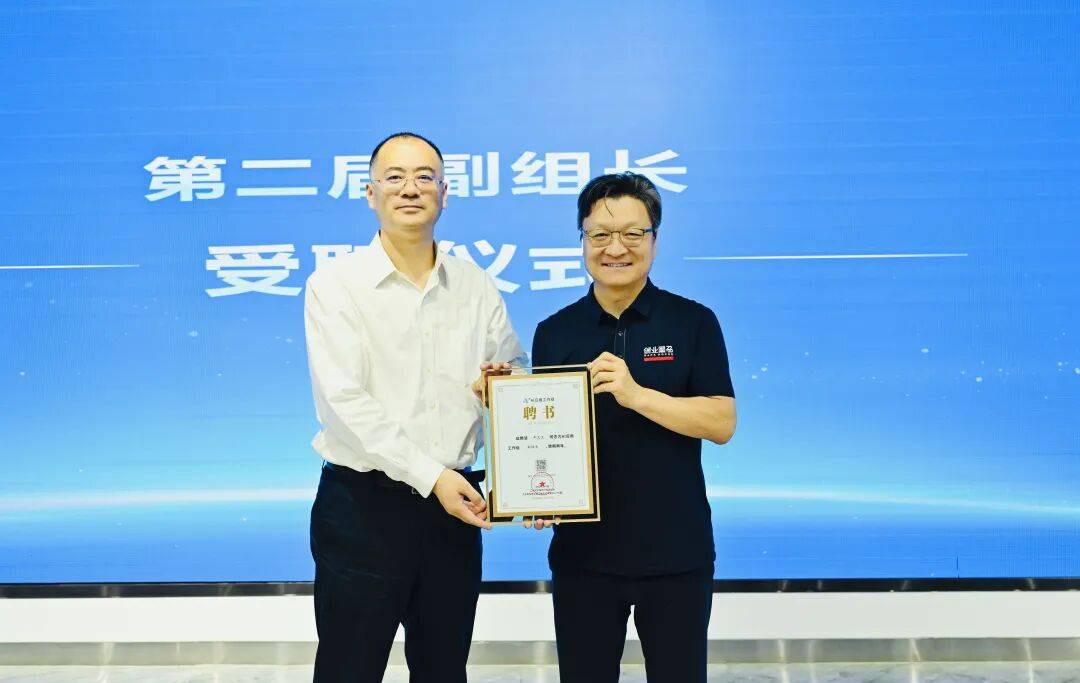
创业黑马集团董事长牛文文当选AI应用工作组副组长
Sou Hu Cai Jing· 2025-09-19 11:36
Core Points - The AI Application Working Group held its second inaugural meeting in Beijing on September 18, focusing on structural optimization and innovative applications of AI [3][4] - The meeting was attended by over 50 member units, highlighting the importance of collaboration among government, research institutions, and enterprises in advancing AI [7][3] - The group aims to enhance its influence and support the development of AI applications across various sectors, including industry, finance, and healthcare [14][16] Group 1: Meeting Highlights - The meeting featured a report by the group leader, Ke Bin, outlining achievements in organizational development, industry research, and collaborative innovation [4][13] - The new executive team was elected, with Liu Xuedong as the group leader and Niu Wenwen as the deputy leader [9][10] - The revised charter of the AI Application Working Group was approved to better regulate operations and protect member rights [8] Group 2: AI Innovation and Development - The group has been actively involved in drafting standards for AI applications and has organized over 20 themed salons to promote innovation [2][13] - A total of 46 AI application innovation cases have been evaluated, covering multiple sectors, with one-third of the cases involving listed companies and state-owned enterprises [14][13] - The group emphasizes a "four-dimensional development" system to empower industries through technology and drive digital transformation [14][16] Group 3: Entrepreneurial Initiatives - Chuangye Heima has been promoting AI transformation strategies internally and building an AI application ecosystem externally [16][17] - The company launched the Tianqi Model, a significant AI model for the sci-tech industry, and hosted the first AI Innovation Competition to discover new AI startups [17][16] - Future plans include enhancing AI services for small and medium-sized enterprises and expanding globally with initiatives like the AI Talent Incubator in Singapore [17][16]
选行业就是选命,一招识别好赛道
创业家· 2025-09-19 09:59
Group 1 - The article emphasizes that a good industry is characterized by the presence of many wealthy individuals, indicating that it is profitable for entrepreneurs [1] - The tea beverage sector is cited as an example where even average entrepreneurs can earn significant profits, suggesting it is a favorable industry [1] - The choice of industry is crucial for entrepreneurs, as the same level of intelligence and effort can lead to vastly different outcomes depending on the industry selected [1] Group 2 - The article discusses the importance of transforming technology into user-perceived value, using examples from successful Japanese companies like Sony and Uniqlo [9] - It highlights that AI is reshaping consumer products by redefining their inherent value, and future market leaders will be those who effectively integrate demand with algorithms [9] - The article suggests that understanding consumer scenarios is essential for product innovation, rather than merely focusing on technical specifications [9] Group 3 - The course mentioned in the article aims to provide insights into how Japanese and Chinese consumer companies can thrive in a saturated market [10] - It covers various sectors including consumer electronics, beauty, fashion, and food, focusing on product innovation and supply chain management [10] - The course features industry experts who will share their experiences and strategies for navigating the current market landscape [10][11][12] Group 4 - The article outlines the need for Chinese companies to adapt their supply chains to meet local demands when expanding globally, rather than simply replicating domestic models [20] - It emphasizes the importance of building trust with local consumers by addressing their specific needs and not just selling products [21] - The article suggests that successful global brands must balance localization with standardization to effectively penetrate foreign markets [21]

什么样的商业模式最有价值?
创业家· 2025-09-18 10:13
Core Viewpoint - The most valuable business model for product creation is the "long tail on both ends," where buyers are small and medium-sized enterprises (SMEs) and sellers are long-tail suppliers. This model maximizes value, as exemplified by Alibaba. Conversely, the least valuable model is "big on both ends," serving only large clients [1]. Group 1: Product Innovation and Market Insights - The success of Japanese manufacturing since the 1980s serves as a model for emerging economies, emphasizing the transformation of technology into user-perceived value. For instance, Sony's Walkman addressed the need for portable music, while Uniqlo's success stemmed from comfortable basics and innovative materials [6]. - AI is reshaping the essence of consumption by redefining product value through algorithms. Future champions in consumption will be those who perfectly integrate demand with algorithms, as seen in products like Plaud's recording card and Haivivi's toys [6]. - The course will explore how to innovate products and manage supply chains by learning from companies like Sony, Uniqlo, and Muji, focusing on turning technology into user-friendly products [7]. Group 2: Strategies for Market Competition - In a saturated market, the course will analyze how to become a new leader in niche segments amidst brand competition. The rise of AI algorithms will be discussed in the context of creating new product categories [8]. - Globalization requires Chinese brands to deeply integrate local market needs with Chinese supply chain capabilities, moving from simple exportation to localized coexistence [9][10]. - The course will highlight the importance of balancing localization and standardization in global markets, emphasizing that successful overseas expansion involves understanding and addressing local consumer needs [10][11]. Group 3: Course Structure and Expert Insights - The course spans three days, focusing on product innovation, market strategies, and global expansion. It features insights from industry leaders like 牛文文, 朱啸虎, and 前田悟, who will share their expertise on leveraging AI and consumer insights for growth [12][13][17]. - Participants will learn about the importance of rapid market testing and the need to avoid the illusion of technical perfection, emphasizing the necessity of validating demand quickly [14]. - The course will also cover how to maintain product quality while ensuring affordability, as demonstrated by Muji's product development philosophy [22].

短线防风险 152只个股短期均线现死叉
Zheng Quan Shi Bao Wang· 2025-09-16 03:17
Market Overview - The Shanghai Composite Index is at 3852.31 points with a decline of -0.21% as of 10:32 AM, and the total trading volume of A-shares is 1,075.764 billion yuan [1] Stocks with Death Cross - A total of 152 A-shares have seen their 5-day moving average cross below the 10-day moving average, indicating potential bearish trends [1] - Notable stocks with significant distance between their 5-day and 10-day moving averages include: - Songjing Co., Ltd. (688157) with a distance of -1.61% - Chunguang Technology (603657) with a distance of -1.02% - Pilin Bio (000403) with a distance of -0.93% [1] Detailed Stock Performance - Key stock performances include: - Songjing Co., Ltd. (688157): Today's change is -0.67% with a latest price of 40.09 yuan, which is -3.28% from the 10-day moving average [1] - Chunguang Technology (603657): Today's change is -3.47% with a latest price of 38.70 yuan, which is -6.79% from the 10-day moving average [1] - Pilin Bio (000403): Today's change is -0.52% with a latest price of 17.32 yuan, which is -2.64% from the 10-day moving average [1] Additional Stocks with Notable Changes - Other stocks showing significant changes include: - Jiangsu New Energy (603693): Today's change is -1.38% with a latest price of 12.87 yuan, which is -2.29% from the 10-day moving average [2] - Yongan Pharmaceutical (002365): Today's change is -1.04% with a latest price of 18.11 yuan, which is -1.45% from the 10-day moving average [2] - Mosi Co., Ltd. (001323): Today's change is -1.95% with a latest price of 28.16 yuan, which is -2.96% from the 10-day moving average [2]


