Dark Horse Technology (300688)

Search documents
创业黑马(300688) - 创业黑马科技集团股份有限公司发行股份及支付现金购买资产并募集配套资金报告书(草案)(修订稿)摘要
2025-12-26 08:52
证券代码:300688 证券简称:创业黑马 上市地:深圳证券交易所 创业黑马科技集团股份有限公司 发行股份及支付现金购买资产并募集配套资金 报告书(草案)(修订稿)摘要 | 项目 | 名称 | | --- | --- | | 购买资产交易对方 | 北京数字认证股份有限公司、北京云门信安科技有限公司、 李海明、宁波梅山保税港区怡海宏远企业管理合伙企业(有 | | | 限合伙)、潘勤异、熊笃、董宏、李飞伯 | | 募集配套资金认购方 | 不超过 名符合中国证监会规定的特定投资者 35 | 独立财务顾问 签署日期:二〇二五年十二月 创业黑马科技集团股份有限公司发行股份及支付现金购买资产并募集配套资金报告书(草案)摘要 声 明 本部分所述词语或简称与本报告书摘要"释义"所述词语或简称具有相同含 义。 一、上市公司声明 本公司及全体董事、高级管理人员保证重组报告书及其摘要内容的真实、准 确、完整,对报告书及其摘要的虚假记载、误导性陈述或重大遗漏负相应的法律 责任。 本公司控股股东以及全体董事、高级管理人员承诺:如本次交易所披露或提 供的信息涉嫌虚假记载、误导性陈述或者重大遗漏,被司法机关立案侦查或者被 中国证监会立案调 ...
创业黑马(300688) - 国联民生证券承销保荐有限公司关于创业黑马科技集团股份有限公司发行股份及支付现金购买资产并募集配套资金报告书之独立财务顾问报告
2025-12-26 08:52
国联民生证券承销保荐有限公司 关于创业黑马科技集团股份有限公司 发行股份及支付现金购买资产并募集配套资金 报告书 之 独立财务顾问报告 独立财务顾问 二〇二五年十二月 关于创业黑马发行股份及支付现金购买资产并募集配套资金报告书之独立财务顾问报告 独立财务顾问声明与承诺 国联民生证券承销保荐有限公司(以下简称"国联民生""本独立财务顾问") 接受创业黑马科技集团股份有限公司(以下简称"创业黑马""上市公司"或"公 司")委托,担任本次发行股份及支付现金购买资产并募集配套资金(以下简称"本 次交易")的独立财务顾问,就该事项向上市公司全体股东提供独立意见,并制作本 独立财务顾问报告。 本独立财务顾问报告是依据《中华人民共和国公司法》《中华人民共和国证券法》 《上市公司重大资产重组管理办法》《上市公司并购重组财务顾问业务管理办法》《公 开发行证券的公司信息披露内容与格式准则第 26 号——上市公司重大资产重组》《上 市公司监管指引第 9 号——上市公司筹划和实施重大资产重组的监管要求》和《深圳 证券交易所上市公司重大资产重组审核规则》等法律法规及文件的规定和要求,以及 证券行业公认的业务标准、道德规范,经过审慎调查 ...
创业黑马(300688) - 中瑞世联关于创业黑马科技集团股份有限公司拟进行股权收购涉及的北京版信通技术有限公司股东全部权益价值项目资产评估报告
2025-12-26 08:52
本报告依据中国资产评估准则编制 创业黑马科技集团股份有限公司拟进行股权收购涉及的 北京版信通技术有限公司股东全部权益价值项目 资产评估报告 中瑞评报字[2025]第 502892 号 (共一册,第一册) 中国资产评估协会 资产评估业务报告备案回执 | 报告编码: | 4743020020202502842 | | --- | --- | | 合同编号: | 2025-303049-1 | | 报告类型: | 法定评估业务资产评估报告 | | 报告文号: | 中瑞评报字[2025]第502892号 | | 报告名称: | 创业黑马科技集团股份有限公司拟进行股权收购涉及的北京版信 通技术有限公司股东全部权益价值项目资产评估报告 | | 评估结论: | 364,219,900.00元 | | 评估报告日: | 2025年12月25日 | | 评估机构名称: | 中瑞世联资产评估集团有限公司 | | 签名人员: | 王程刚 (资产评估师) 正式会员 编号: 11190144 | | | 程少梅 (资产评估师) 正式会员 编号: 11190274 | | | 王程刚、程少梅已实名认可 | (可扫描二维码查询备案 说明: ...
创业黑马(300688) - 关于发行股份及支付现金购买资产并募集配套资金报告书(草案)(修订稿)修订说明的公告
2025-12-26 08:52
创业黑马科技集团股份有限公司 关于发行股份及支付现金购买资产并募集配套资金 报告书(草案)(修订稿)修订说明的公告 本公司及董事会全体成员保证信息披露内容的真实、准确和完整,没有虚假 记载、误导性陈述或重大遗漏。 创业黑马科技集团股份有限公司(以下简称"公司")拟通过发行股份及支 付现金方式购买北京版信通技术有限公司(以下简称"版信通")100%股权, 同时拟向不超过 35 名特定投资者发行股票募集配套资金(以下简称"本次交易")。 公司于 2025 年 7 月 14 日收到深圳证券交易所出具的《关于创业黑马科技集团股 份有限公司发行股份及支付现金购买资产并募集配套资金申请的审核问询函》 (审核函〔2025〕030010 号),并于 2025 年 8 月 12 日披露了问询函回复及相 关申请文件。根据深交所的进一步审核意见,公司于 2025 年 9 月 29 日对相关文 件进行了修订、补充及完善、更新报告期财务数据。公司于 2025 年 11 月 11 日 收到深圳证券交易所出具的《关于创业黑马科技集团股份有限公司发行股份及支 付现金购买资产并募集配套资金申请的第二轮审核问询函》(审核函〔2025〕 0300 ...
创业黑马(300688) - 创业黑马科技集团股份有限公司发行股份及支付现金购买资产并募集配套资金报告书(草案)(修订稿)
2025-12-26 08:52
证券代码:300688 证券简称:创业黑马 上市地:深圳证券交易所 创业黑马科技集团股份有限公司 发行股份及支付现金购买资产并募集配套资金 报告书(草案) (修订稿) | 项目 | 名称 | | --- | --- | | 购买资产交易对方 | 北京数字认证股份有限公司、北京云门信安科技有限公司、 李海明、宁波梅山保税港区怡海宏远企业管理合伙企业(有 | | | 限合伙)、潘勤异、熊笃、董宏、李飞伯 | | 募集配套资金认购方 | 不超过 35 名符合中国证监会规定的特定投资者 | 独立财务顾问 签署日期:二〇二五年十二月 创业黑马科技集团股份有限公司发行股份及支付现金购买资产并募集配套资金报告书(草案) 声 明 本部分所述词语或简称与本报告书"释义"所述词语或简称具有相同含义。 一、上市公司声明 本公司及全体董事、高级管理人员保证本报告书及其摘要内容的真实、准确、完 整,对报告书及其摘要的虚假记载、误导性陈述或重大遗漏负相应的法律责任。 本公司控股股东以及全体董事、高级管理人员承诺:如本次交易所披露或提供的 信息涉嫌虚假记载、误导性陈述或者重大遗漏,被司法机关立案侦查或者被中国证监 会立案调查的,在形成调查 ...
2026年,钱从哪挣?
创业家· 2025-12-25 10:15
Core Insights - The article discusses the importance of finding new revenue sources for businesses in 2026, emphasizing the need for companies to adapt to changing market conditions and explore international opportunities [2] Group 1: Value Chain and International Expansion - Companies are facing insufficient domestic demand, leading to increased competition and reduced profits, prompting the need for international expansion [2] - The concept of "going overseas" has evolved from merely exporting products to relocating entire value chains, as exemplified by Miniso, which engages with its overseas customers and establishes a brand presence [2] - Leading companies are not just building factories abroad but are also integrating their supply chains to ensure operational efficiency, as seen with Tesla's Shanghai factory, which relies on a robust local supply chain [3] Group 2: Leveraging Unique Advantages - Businesses are finding success in international markets by leveraging unique advantages such as cost and product innovation [3] - For instance, some manufacturers in Yiwu are capitalizing on higher overseas prices by selling on cross-border platforms, while companies like Mech-Mind Robotics are innovating with advanced industrial robots [3] Group 3: Building Long-Term Trust - Establishing long-term trust in unfamiliar markets is crucial, as demonstrated by the success of companies like Pang Donglai, which focuses on customer service and employee satisfaction to foster loyalty [4][5][6] - By ensuring employees are well-compensated and respected, companies can enhance customer interactions and feedback, leading to improved business outcomes [6] Group 4: Meeting Evolving Consumer Needs - The article highlights a shift in consumer behavior towards seeking better experiences, with examples of services like travel photography gaining popularity among retirees [6] - As traditional mass-market opportunities decline, businesses are encouraged to focus on niche markets and personalized services that resonate with consumers' aspirations for a better life [6][7] Group 5: Strategic Planning for 2026 - Companies are urged to engage in strategic planning to navigate the complexities of the evolving market landscape, emphasizing the importance of aligning business strategies with macroeconomic trends and consumer demands [7][8]



很多老板逐渐明白:内卷能赢下某次战役,却摧毁了整个战场
创业家· 2025-12-19 10:52
Core Viewpoint - The article discusses the concept of "involution" in business, emphasizing that competing through destructive price wars ultimately harms the market and brand reputation, particularly in the context of Chinese manufacturing and its international expansion [2][10]. Group 1: Historical Context - In the 1990s, Chinese motorcycle brands entered Southeast Asia, using aggressive price competition to reduce the average price of motorcycles from $700 to $200, significantly impacting Japanese brands [3]. - Despite winning the price war against Japanese brands, Chinese manufacturers ultimately failed to establish a sustainable market presence due to lack of profits, after-sales service, and quality, leading to a tarnished reputation for "Made in China" [4][6][7]. Group 2: Long-term Strategy - Wuling, a Chinese motorcycle brand, decided to adopt a long-term approach in Indonesia, marking its commitment to the market by celebrating anniversaries and emphasizing its presence over the years [8][9]. - The article argues that businesses should focus on product quality and long-term strategies rather than short-term price competition to earn respect for "Made in China" [10]. Group 3: Recommendations for Future Success - The article suggests that companies should avoid burning down the entire market in pursuit of winning battles and instead focus on building a strong brand through quality and customer service [10].

教育板块12月18日跌0.27%,创业黑马领跌,主力资金净流出5518.9万元
Zheng Xing Xing Ye Ri Bao· 2025-12-18 09:09
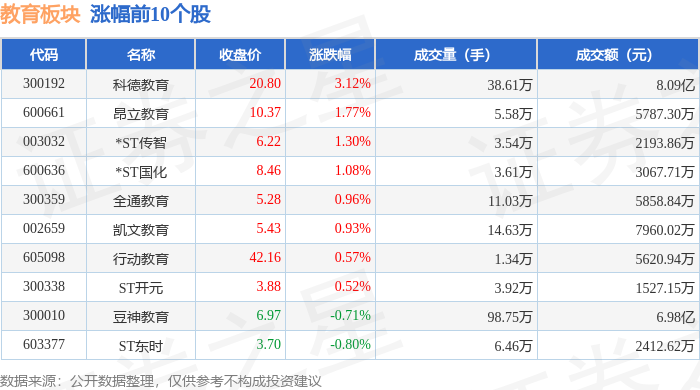
Group 1 - The education sector experienced a decline of 0.27% on December 18, with Chuangye Heima leading the drop [1] - The Shanghai Composite Index closed at 3876.37, up 0.16%, while the Shenzhen Component Index closed at 13053.98, down 1.29% [1] - Key stocks in the education sector showed varied performance, with Kede Education rising by 3.12% to a closing price of 20.80, while Dou Shen Education fell by 0.71% to 6.97 [1] Group 2 - The education sector saw a net outflow of 55.19 million yuan from institutional investors and 71.29 million yuan from retail investors, while individual investors had a net inflow of 126 million yuan [2] - The trading volume for Kede Education was 386,100 shares, with a transaction value of 809 million yuan, indicating strong market interest [2] - The overall market sentiment in the education sector was mixed, with some stocks like Kede Education attracting positive attention while others faced selling pressure [3]



低欲望时代,这五个赛道仍在疯狂卷钱
创业家· 2025-12-17 10:15
Core Insights - The article discusses the decline in sales of Durex, with a 50% drop in 2020 and a 40% industry-wide decline, alongside a 20% decrease in marriage rates, indicating a broader trend of reduced sexual desire in society [2][3]. Group 1: Changing Consumer Behavior - The decline in traditional sexual products is attributed to a "low-desire society," where consumer spending is shifting towards other areas [3]. - The overall e-commerce sales during the 618 shopping festival saw a negative growth of 7%, and the Double Eleven event has not reported results for four consecutive years [3]. Group 2: Emerging Growth Sectors - Five high-growth sectors are identified as alternatives to traditional sexual products: 1. **Pet Consumption Upgrade**: The pet market is projected to reach 302 billion in 2024, with one pet for every three young people [4]. 2. **Endorphin Economy**: An increase of 200 million new sports participants in the last decade, with a surge in outdoor activities and sports brands [8]. 3. **Aromatherapy**: The fragrance market is valued at 850 million USD in 2023, growing at a rate of 10% annually [8]. 4. **Emotional Fast-Moving Consumer Goods (FMCG)**: Products that provide immediate emotional satisfaction, such as colorful small items and emotional flower shops [11][12]. 5. **Self-Rescue Economy**: Health-focused products like probiotic cola and health teas are gaining popularity, reflecting a trend of anxiety rather than health consciousness [16][19]. Group 3: Underlying Consumer Needs - The five growth trends reflect the demands of a low-desire society, focusing on feelings of companionship, control, healing, ritual, and safety, which add extra value to products [20]. Group 4: Strategic Recommendations - For businesses to thrive by 2026, it is crucial to align their development with national strategies, technological trends, globalization perspectives, and user demands [21].

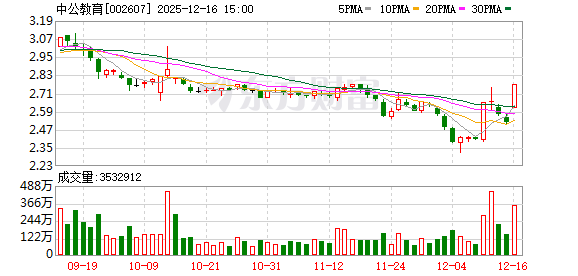
社会服务行业资金流入榜:中公教育等5股净流入资金超3000万元
Zheng Quan Shi Bao Wang· 2025-12-16 09:16
Market Overview - The Shanghai Composite Index fell by 1.11% on December 16, with only three sectors rising, led by retail trade, beauty care, and social services, which increased by 1.32%, 0.66%, and 0.13% respectively [2] - The sectors that experienced the largest declines were telecommunications and non-ferrous metals, with decreases of 2.95% and 2.81% respectively [2] Capital Flow Analysis - The main capital outflow from the two markets totaled 701.17 billion yuan, with five sectors seeing net inflows [2] - The retail trade sector had the highest net inflow of 38.18 billion yuan, while the food and beverage sector saw a slight decline of 0.02% with a net inflow of 3.02 billion yuan [2] - A total of 26 sectors experienced net capital outflows, with the power equipment sector leading at 131.01 billion yuan, followed by the electronics sector with 116.07 billion yuan [2] Social Services Sector Performance - The social services sector rose by 0.13% with a net capital inflow of 1.34 billion yuan, comprising 79 stocks, of which 32 rose and 44 fell [3] - The top stock in terms of net capital inflow was Zhonggong Education, with an inflow of 4.27 billion yuan, followed by Dou Shen Education and Chuangye Heima with inflows of 49.07 million yuan and 37.42 million yuan respectively [3] - The stocks with the highest net outflows included Su Shi Experiment, Guomai Technology, and Caesar Travel, with outflows of 89.42 million yuan, 88.55 million yuan, and 72.31 million yuan respectively [3][6] Social Services Sector Capital Flow Ranking - The top stocks in the social services sector based on capital flow included: - Zhonggong Education: +9.92% with a capital flow of 427.38 million yuan [4] - Dou Shen Education: +2.58% with a capital flow of 49.07 million yuan [4] - Chuangye Heima: +4.32% with a capital flow of 37.42 million yuan [4] - Other notable stocks included Kede Education (+1.62%), Tianmuhu (+0.57%), and Xiyu Tourism (+1.20%) [4]