XI'AN XICE TESTING TECHNOLOGY CO.(301306)

Search documents
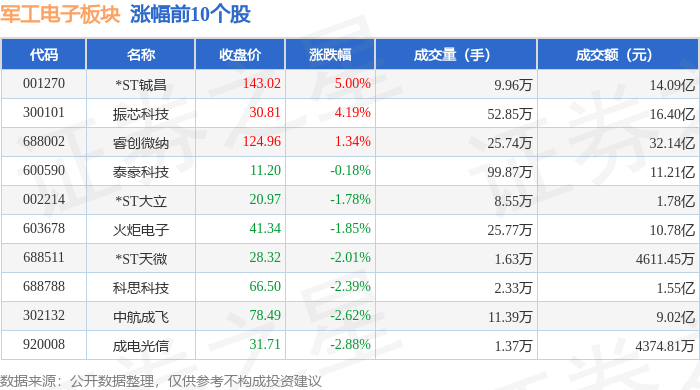
军工电子板块1月26日跌5.26%,亚光科技领跌,主力资金净流出77.26亿元
Zheng Xing Xing Ye Ri Bao· 2026-01-26 09:41
Core Viewpoint - The military electronics sector experienced a significant decline, with a drop of 5.26% on January 26, led by Aiguang Technology, while the overall market indices also saw minor decreases [1]. Group 1: Market Performance - The Shanghai Composite Index closed at 4132.61, down 0.09%, and the Shenzhen Component Index closed at 14316.64, down 0.85% [1]. - The military electronics sector saw a net outflow of 77.26 billion yuan from institutional investors, while retail investors had a net inflow of 58.39 billion yuan [2]. Group 2: Individual Stock Performance - Aiguang Technology (300123) saw a significant drop of 13.41%, closing at 7.36 yuan with a trading volume of 1.598 million shares and a transaction value of 1.209 billion yuan [2]. - Other notable declines included Xice Testing (301306) down 12.96% to 111.63 yuan, and Shaanxi Huada (301517) down 12.23% to 70.50 yuan [2]. - Conversely, Zhenxin Technology (300101) increased by 4.19% to 30.81 yuan, with a trading volume of 528,500 shares and a transaction value of 1.640 billion yuan [1]. Group 3: Capital Flow Analysis - The capital flow analysis indicates that institutional investors had a net outflow in several stocks, including ST Wanfa (000638) with a net outflow of 142.97 million yuan, while retail investors showed a net inflow in stocks like ST Yuanwei (002231) with a net inflow of 46.14 million yuan [3]. - The data reflects a mixed sentiment among different investor types, with retail investors showing resilience in certain stocks despite the overall sector decline [2][3].


最新披露,社保新晋7只大飞机龙头股,全是全球唯一性龙头
Sou Hu Cai Jing· 2026-01-24 03:40
Core Viewpoint - The A-share market experienced a significant sector rotation, particularly in the large aircraft sector, with major stocks like Changhe Aircraft Industries and others hitting the daily limit up, indicating a collective surge in the industry chain [1] Group 1: Market Movement - The large aircraft sector saw a collective rally with 13 leading stocks reaching their daily limit up, indicating strong investor interest and confidence in the sector [1] - The surge in the large aircraft sector is attributed to recent disclosures from the National Social Security Fund, which revealed new investments in seven leading companies within the large aircraft industry chain [3][4] Group 2: Key Companies and Investments - Chaojie Co., a core supplier of fasteners for the C919 aircraft, was highlighted as a new investment by the social security fund, becoming its sixth-largest shareholder with 670,000 shares [3] - Xice Testing, the only private entity with full-chain aerospace testing qualifications, saw the social security fund increase its holdings to 3.5 million shares, making it the fourth-largest shareholder [3] - Aero Engine Corporation of China (AECC) Technology, a key player in the C919 engine supply chain, attracted new investments from major international banks like Goldman Sachs and UBS [3] - Hangya Technology, a leader in the domestic aviation precision forging blade sector, received new investments from the social security fund, becoming the eighth and ninth largest shareholders [4] - Hongdu Aviation, a core enterprise under AVIC, is the sole supplier of the C919's front and rear fuselage, with the social security fund acquiring 5 million shares [4] Group 3: Industry Developments - The European Union Aviation Safety Agency (EASA) completed the compliance flight test for the C919, providing a positive evaluation that exceeded market expectations and facilitating its entry into the EU market [6] - The CJ-1000A domestic engine has completed extensive testing, resolving previous capacity constraints and is expected to receive certification by the second quarter of 2026 [6] - Predictions indicate that C919's annual production capacity could rapidly increase to 50-70 aircraft by 2027, with plans to raise production from 30 to 60 aircraft in 2026 [7] Group 4: Market Potential - The existing orders for C919 exceed 1,000 aircraft, representing a market scale of 650 billion yuan, with the potential to drive over 2 trillion yuan in value across the supply chain [7] - The Yangtze River Delta region has become a hub for the large aircraft industry, housing over one-third of the national aircraft supply chain suppliers [7] - By 2043, China's civil aviation fleet is projected to reach 10,061 aircraft, making it the largest single aviation market globally, with an expected reception of 9,323 new passenger aircraft over the next 20 years [8]



订单饱满、链式协同 陕西商业航天集群加速成形
Shang Hai Zheng Quan Bao· 2026-01-23 18:10
Core Insights - Shaanxi Province is rapidly developing its commercial aerospace industry, aiming to create a leading innovation cluster with a target industry scale of over 500 billion yuan by 2027 and 1 trillion yuan by 2030 [1] - The province's aerospace sector is characterized by strong order fulfillment and collaboration among leading enterprises, enhancing competitiveness in the commercial aerospace era [1] Group 1: Industry Development - Shaanxi has proactively released an action plan to cultivate a 100 billion yuan commercial aerospace industry cluster by the end of 2024, with a focus on satellite and rocket manufacturing, constellation operations, and satellite applications [1] - The province aims to have over 100 large-scale enterprises by 2027 and 200 by 2030, with a significant increase in industry scale and leadership in various aerospace fields [1] Group 2: Company Performance - Shaanxi Huada, a key player in aerospace connectors, reported a continuous increase in the proportion of commercial aerospace business in its overall revenue, with a focus on expanding product categories to meet customer demands [2] - Xicet Testing has established a comprehensive testing capability system, providing one-stop services that significantly shorten development cycles and reduce management costs for commercial satellite manufacturers [3] Group 3: Material and Component Innovation - Sui Rui New Materials has successfully applied high-strength, high-conductivity copper alloys in liquid rocket engine thrust chambers, with revenue from these products expected to grow from 20.97 million yuan in 2022 to 30.16 million yuan in 2024 [3] - Tianli Composite has become a major supplier of transition joints for satellites, contributing to the domestic production of key aerospace materials [4] Group 4: Strategic Collaboration - Xicet Testing has formed strategic partnerships with Shaanxi Huada and Jizhi Co., focusing on expanding the aerospace testing market and enhancing quality collaboration across the entire design-manufacturing-testing-application chain [6] - The collaboration aims to leverage each company's strengths to support high-end manufacturing and ensure product quality stability in the commercial aerospace sector [6][7] Group 5: Ecosystem and Infrastructure - Shaanxi's aerospace industry is supported by national research institutions and a unique national economic and technological development zone focused on aerospace, fostering a complete innovation chain from basic research to technology transfer [7] - The Xi'an National Civil Aerospace Industry Base hosts over 60 commercial aerospace companies, establishing a comprehensive ecosystem that integrates rocket development, satellite payloads, and data applications [7]
西测测试股价涨5.09%,长城基金旗下1只基金位居十大流通股东,持有120万股浮盈赚取729.6万元
Xin Lang Cai Jing· 2026-01-23 02:47
1月23日,西测测试涨5.09%,截至发稿,报125.57元/股,成交5.36亿元,换手率7.51%,总市值105.98 亿元。 资料显示,西安西测测试技术股份有限公司位于陕西省西安市高新区丈八二路16号,成立日期2010年6 月1日,上市日期2022年7月26日,公司主营业务涉及从事军用装备和民用飞机产品检验检测,为客户提 供环境与可靠性试验、电子元器件检测筛选、电磁兼容性试验等检验检测服务,同时开展检测设备的研 发、生产和销售以及电装业务。主营业务收入构成为:环境与可靠性试验49.49%,电子装联业务 29.38%,电磁兼容性试验10.81%,电子元器件检测筛选8.18%,检测设备销售1.88%,其他0.26%。 长城久嘉创新成长混合A(004666)成立日期2017年7月5日,最新规模19.94亿。今年以来收益8.64%, 同类排名2304/8847;近一年收益98.89%,同类排名142/8099;成立以来收益226.54%。 长城久嘉创新成长混合A(004666)基金经理为尤国梁。 截至发稿,尤国梁累计任职时间6年94天,现任基金资产总规模50.58亿元,任职期间最佳基金回报 253.56%, 任职 ...
博科测试:公司与西测测试不存在直接竞争关系
Zheng Quan Ri Bao Zhi Sheng· 2026-01-22 11:13
Core Viewpoint - The company, Boke Testing, clarified that despite being in the same testing industry as Xice Testing, there are significant differences in business positioning and niche areas, indicating no direct competition between the two [1]. Group 1: Company Focus - Boke Testing specializes in the research, design, manufacturing, sales, and system integration of automotive testing and servo hydraulic testing equipment [1]. - The primary service sectors for Boke Testing include automotive, rail transportation, and aerospace [1].
商业航天:以第一性原理推演中国商业航天降本革命(附报告)
材料汇· 2026-01-21 15:30
Core Conclusion - By 2026, China's commercial aerospace industry is expected to reach a turning point in cost reduction for launch capacity, driven by the concentrated deployment of low Earth orbit (LEO) constellations and the normalization of high-frequency launches, with reusable rockets nearing breakthroughs in reducing unit launch costs. The industry's business model will shift from state-driven tasks to market-driven profitability, with a valuation logic transitioning towards "space infrastructure" as application scenarios and business models are restructured [3]. Market Outlook - 2026 is anticipated to be a prosperous year for China's commercial aerospace sector, with an accelerated pace of multi-constellation launches transitioning to large-scale deployment, leading to a rapid increase in rocket launch frequency. The commercial rocket launch service market in China is projected to grow from 10.26 billion yuan in 2025 to 47.39 billion yuan by 2030, corresponding to a CAGR of approximately 35.8%, primarily driven by high-frequency launch demand from dense deployment of LEO constellations [4][11]. - The industry is expected to maintain medium to long-term growth, with over 237,000 satellites needing to be deployed in accordance with ITU regulations by 2039. Starlink currently has over 9,000 satellites in orbit, and the demand for subsequent launches remains robust due to tightening frequency resources [4][11]. Cost Reduction Pathways - The essence of commercial rockets is a "space logistics" business, where core variables include efficiency improvements and cost reductions in launch capacity. Key pathways for cost reduction include breakthroughs in full-flow engine technology, high-frequency reuse capabilities, and industrialization in manufacturing [5]. - The unit cost of launching rockets is expected to decrease significantly through various stages: 1. Initial launch cost is approximately 55,000 yuan/kg 2. By around 2026, after achieving first-stage reuse, costs may drop to about 25,000 yuan/kg 3. Upgrading from aluminum to stainless steel structures could further reduce costs to approximately 19,000 yuan/kg 4. With the maturation of recovery methods, costs may decline to around 13,000 yuan/kg 5. Long-term, achieving second-stage reuse could bring costs close to 5,000 yuan/kg [5]. Industry Structure and Investment Opportunities - The commercial rocket industry is still in its early growth and valuation evolution phase. Key catalysts for valuation uplift in China's commercial aerospace sector include the realization of reusable rockets for large-scale LEO satellite networking and the transition from customized to standardized launches through long-term batch tasks [7][8]. - The valuation logic for commercial aerospace companies is shifting from manufacturing-oriented to platform and infrastructure-oriented technology enterprises, covering diverse long-term space mission needs such as manned flights and deep space exploration [8]. Key Players and Market Segments - The core technical barriers in rocket engines are concentrated in critical components such as thrust chambers and turbine pumps. The value in satellite manufacturing is primarily found in communication payloads [9]. - Key companies involved in the aerospace supply chain include: - Power Systems: Yingliu Co., Srey New Materials, Guoji Precision Engineering - Satellite Communication Systems: Shanghai Hantong, Aerospace Electronics, Guobo Electronics - Materials and Structural Components: Western Materials, Parker New Materials, Guoji Heavy Industry, Huazhuo High-Tech - Testing and Verification: Xicai Testing, Su Testing [9][10].




西测测试:公司主要为客户提供覆盖卫星产品全生命周期的可靠性验证服务
Zheng Quan Ri Bao· 2026-01-21 12:41
Core Viewpoint - The satellite testing costs are not fixed and depend on various factors such as the scope of testing, technical complexity, cycle requirements, and the satellite's technological novelty and reliability indicators [2] Company Summary - The company operates as an independent third-party inspection and testing service provider, offering reliability verification services throughout the entire lifecycle of satellite products [2] - The company is focusing on a "testing + manufacturing" dual-driven strategy, leveraging its established one-stop service capabilities and strong qualifications [2] - The company aims to become a high-reliability manufacturing and verification service supplier within the aerospace industry, emphasizing low-cost, high-reliability, and rapid iteration trends [2]
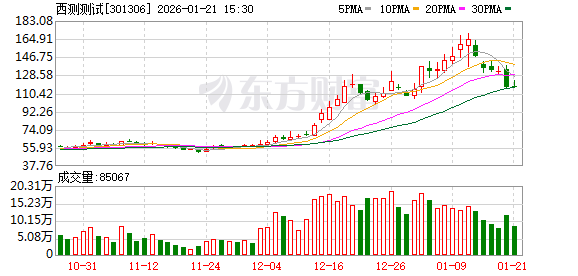
西测测试:公司的收入及业务占比按产品细分为环境与可靠性试验等
Zheng Quan Ri Bao Wang· 2026-01-21 10:47
Group 1 - The core viewpoint of the article is that Xicet Testing (301306) has provided insights into its revenue and business segments through responses to investor inquiries on its interactive platform [1] Group 2 - The company's revenue and business composition is segmented into environmental and reliability testing, electronic component testing and selection, electromagnetic compatibility testing, and electronic assembly services [1] - Investors are encouraged to continuously monitor the company's disclosed periodic reports for more detailed information [1]
商业航天行业深度系列(一):以第一性原理推演中国商业航天降本革命
Shanghai Aijian Securities· 2026-01-21 10:19
Investment Rating - The report rates the industry as "stronger than the market" [1] Core Insights - The report concludes that 2026 will mark a turning point for China's commercial aerospace industry, with a shift from state-driven missions to market-driven profitability, driven by the deployment of low-orbit satellite constellations and advancements in reusable rocket technology [1][6] - The commercial rocket launch service market in China is projected to grow from 10.26 billion yuan in 2025 to 47.39 billion yuan by 2030, with a CAGR of approximately 35.8% [1][12] - The report emphasizes that the core components of rocket launch services are engines (54%) and structural components (24%), which together account for 78% of the value in the launch service segment [1][12] Summary by Sections Industry Overview - The commercial aerospace industry is defined as activities that provide aerospace products and services through social capital investment under national policy guidance, including the R&D, manufacturing, launch, and operation of spacecraft and rockets [6][7] - The global aerospace economy is expected to reach $612 billion by 2024, with commercial aerospace revenues accounting for approximately $480 billion, representing about 78% of the total [6][7] Market Dynamics - The demand for satellite launches is expected to surge as China enters a concentrated deployment phase for low-orbit satellite constellations, with over 200,000 satellites planned for deployment [18][19] - The report highlights that the competition for low-orbit frequency resources is intensifying, necessitating faster deployment of satellite constellations [19][21] Cost Structure and Efficiency - The report breaks down the cost structure of rockets, indicating that engines and structural components dominate the value chain [1][12] - It outlines a pathway for reducing launch costs, projecting that the unit cost of launching payloads could decrease significantly as technology advances [1][12] Investment Recommendations - The report suggests focusing on companies involved in key segments such as propulsion systems, satellite communication systems, materials and structural components, and testing and validation services [2][4] - Specific companies to watch include 应流股份 (603308), 斯瑞新材 (688102), and 上海瀚讯 (300762), among others [2][4]

机构:商业航天有望迎来“政策+技术+资本”三重共振
Zheng Quan Shi Bao Wang· 2026-01-21 08:59
Group 1 - The core viewpoint is that China's commercial space industry is experiencing rapid development, with projections for 2025 indicating 50 launches, accounting for 54% of the total national space launches [1] - In 2025, commercial rockets are expected to complete 25 launches, and the Hainan commercial space launch site will have conducted 9 launches, totaling 10 since its establishment [1] - A total of 311 commercial satellites are projected to be placed into orbit, representing 84% of the total satellites launched in China [1] Group 2 - The commercial space industry is entering a golden era driven by both demand and supply, with recommendations to focus on structural component suppliers such as Aerospace Power, Srey New Materials, and others [1] - In satellite manufacturing, the focus is on low Earth orbit satellites and related infrastructure, with suggested companies including China Satellite and Aerospace Electronics [1] - The upstream and midstream sectors, particularly subsystems and materials supporting satellite mass production, are expected to benefit first, with companies like Zhenlei Technology and Guangwei Composites highlighted [1] Group 3 - In 2026, the domestic commercial space sector is anticipated to experience a "triple resonance" of policy, technology, and capital, making it highly promising [2] - Beneficiary companies in the rocket industry chain include Aerospace Power, Western Materials, and others [2] - In the satellite industry and space computing, recommended companies include Zhongke Xingtou, Aerospace Hongtu, and several others [2]