AMD(AMD)

Search documents
英特尔财报前瞻:CPU缺货或提振业绩,但这可能是把“双刃剑”
硬AI· 2026-01-21 09:19
Core Viewpoint - Intel is facing a unique situation in the semiconductor cycle, where short-term supply shortages in the server CPU market may boost stock prices and quarterly performance, but underlying issues of capacity constraints and market share loss pose long-term risks to valuation [1][2][5]. Short-term Benefits vs Long-term Concerns - The current supply shortage is expected to help Intel exceed market expectations in earnings per share (EPS), with a forecasted non-GAAP revenue of $13.31 billion for the December quarter, despite a year-over-year decline of 6.7% [5][6]. - However, the supply constraints may hinder Intel's long-term growth potential, as competitors like AMD are poised to capture significant market share during this period [2][6]. Product Roadmap Challenges - Intel is in a transitional phase regarding product competitiveness, with key products like Nova Lake and Coral Rapids not expected to restore competitive performance until 2026 and 2027, respectively [9][10]. - This prolonged gap in product competitiveness may limit Intel's ability to capitalize on market demand, thereby suppressing stock price growth [9]. Trust Issues in Foundry Business - Intel's foundry business is facing trust issues due to current supply shortages, which may deter potential external customers from placing orders [10][11]. - The inability to meet even its own growth demands raises concerns about Intel's capacity to serve external clients, further complicating its efforts to establish a robust foundry business [10]. Financial Forecast and Valuation Outlook - For Q1 2024, Intel's revenue is projected at $12.55 billion, slightly above Wall Street's expectation, but with a gross margin forecast of only 34.9%, below market expectations [13][14]. - Intel's current stock valuation is approximately 35 times the expected EPS for 2027, reflecting high market expectations for recovery and the potential of its foundry business, but analysts caution that current profitability does not support further stock price appreciation without clear evidence of regaining market share [14].



StackWarp 漏洞惊魂,国产 CPU 原生免疫
是说芯语· 2026-01-21 09:15
1月20日消息,德国CISPA亥姆霍兹中心研究人员公布了一项名为"StackWarp"的安全漏洞,消息初期被 传为波及AMD Zen架构全系列处理器,引发行业关注。不过,AMD迅速响应,不仅公布了漏洞完整详 情、受影响产品型号及修复措施,还发布声明澄清事实,平息市场恐慌。 图源: cyberkendra AMD在声明中明确表示,该漏洞通过内部测试、外部研究社区合作及漏洞赏金计划被发现,编号为 AMD-SB-3027与CVE-2025-29943,属于"客户栈指针损坏漏洞",官方将其划定为低危(Low Severity)。"SB-3027公告所涉及的低危漏洞正是这些努力的成果,相关补丁自去年7月起便已可用于 AMD EPYC产品。"AMD强调,其持续通过多重举措保障终端用户及客户安全。 据AMD官网安全报告解释,StackWarp漏洞源于访问控制措施存在缺陷,未能阻止虚拟机管理程序对一 项内部配置位进行设置,本质是由翻转未公开的MSR寄存器位引发的CPU栈损坏问题。公开资料显 示,该漏洞主要利用CPU栈引擎对栈指针实施确定性篡改,从而打破AMD SEV-SNP完整性。根据AMD 给出的补丁方案,为了彻底阻断攻击 ...


CPU涨价叠加国产模型潜在更新,数字芯片含量高的科创芯片设计ETF易方达(589030)受资金关注
Xin Lang Cai Jing· 2026-01-21 06:12
市场催化:海外CPU开始涨价,国内受海外映射影响。继2025年第三季度消费级CPU涨价,近期AMD 与Intel再出上调服务器CPU价格的消息,幅度为10-15%。同时,两家企业2026年的产能已基本预订一 空。 跟踪上证科创板芯片设计主题指数,数字芯片设计权重占比达到76.3%,或充分受益于国产AI芯片产业 上行趋势。 相关产品:与国产AI芯片相关度最高的ETF为科创芯片设计ETF易方达(589030) 中期逻辑:国产模型潜在更新,叠加互联网提高国产芯片使用比例,共同推动国产芯片需求。可适配国 产芯片的国产模型近期迭代频出(如近期DeepSeek在GitHub更新代码,提出可能是新架构的 MODEL1),性能提升有望驱动更多应用场景,进而带动国产卡对应的推理需求。此外,互联网厂商 2026年有望进一步提高国产卡的配置比例,或成为国产卡的主要边际增量之一。 ...
AI驱动存储芯片结构性短缺,CPU涨价潮将至,新一轮风口来袭!全市场费率最低档的芯片50ETF(516920)放量飙涨超4%!
Xin Lang Cai Jing· 2026-01-21 05:38
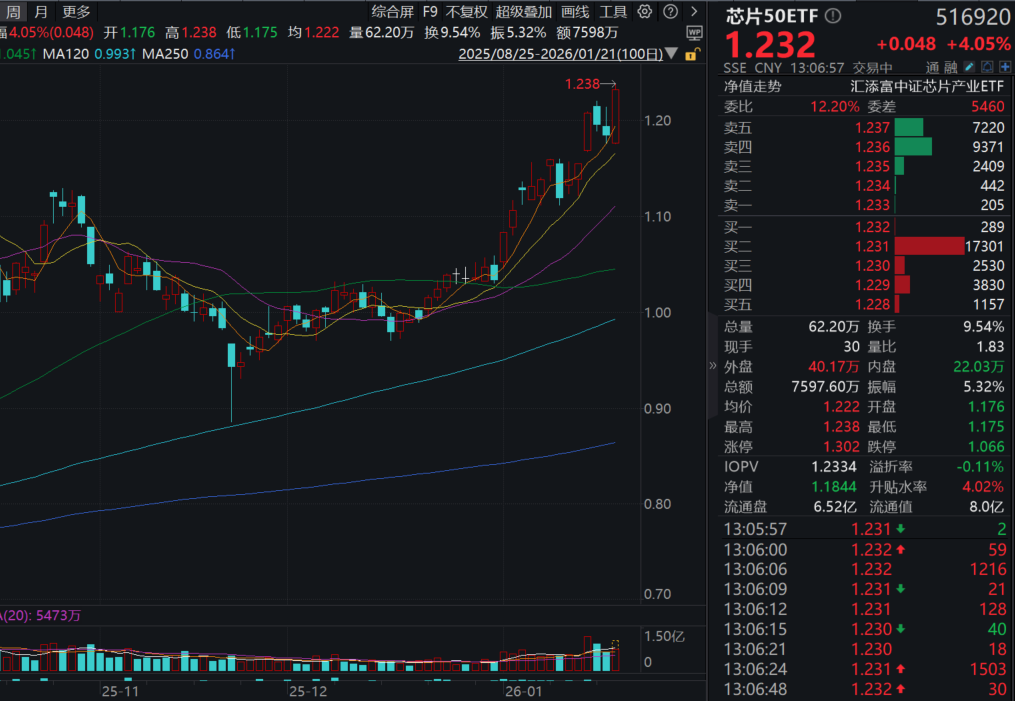
Core Viewpoint - The semiconductor sector is experiencing significant growth, with the Chip 50 ETF (516920) seeing a surge of over 4% and attracting substantial capital inflow, indicating strong market interest in semiconductor investments [1][3]. Group 1: Market Performance - The Chip 50 ETF (516920) recorded a trading volume of 80 million yuan, with a total capital inflow of over 38 million yuan in the last two days [1]. - Key stocks within the Chip 50 ETF showed positive performance, with notable increases such as Haiguang Information rising over 16% and Lanke Technology increasing over 11% [3]. Group 2: Supply and Demand Dynamics - Intel and AMD plan to raise server CPU prices by 10%-15% to address supply-demand imbalances and ensure stable future supply, with their server CPU capacity for 2026 already largely pre-sold [3]. - The global demand for storage is structurally increasing, driven by the growth of artificial intelligence, which is significantly underappreciated by the market [3]. Group 3: CPU Importance in AI Era - The importance of CPUs is expected to rise in the AI era, as new computing scenarios demand higher processing speed and accuracy, making CPU innovation a key focus for the computing industry [4][5]. - High-end AI servers typically follow a configuration of "2 high-end CPUs for every 8 GPUs," highlighting the CPU's critical role in system stability and performance [5]. Group 4: Market Trends and Projections - The general server market is recovering, with a projected over 9% year-on-year growth in global server shipments, driven by data center upgrades and the replacement of existing server CPUs [6]. - Cloud vendors are expected to increase capital expenditures to meet AI demand, with global AI server shipments projected to grow over 20% year-on-year by 2026, accounting for 17% of total server shipments [7].



全球第二,存储芯片巨头,突出重围!
Xin Lang Cai Jing· 2026-01-21 05:36
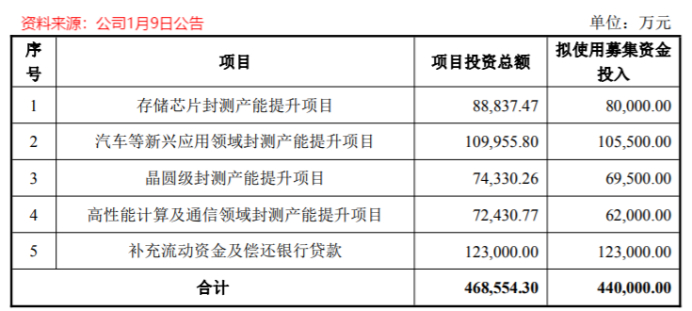
(来源:老张投研) 通富微电,又定增了! 1月9日晚,通富微电发布公告,拟定增募集资金总额不超过44亿元,用于存储芯片、汽车等新兴应用、 晶圆级、高性能计算及通信四大项目的封测产能提升,以及补充流动资金。 事实上,自上市以来,通富微电曾进行多次融资。 2007年以来,公司共进行了6次直接融资,募资总额约为107.57亿元,主要用于产能建设,以及AMD苏 州和槟城的收购等投资项目。 | 片 목 | 项目 | 项目投资总额 | 拟使用募集资金 投入 | | --- | --- | --- | --- | | 1 | 存储芯片封测产能提升项目 | 88,837.47 | 80,000.00 | | 2 | 汽车等新兴应用领域封测产能提升项目 | 109.955.80 | 105,500.00 | | 3 | 晶圆级封测产能提升项目 | 74,330.26 | 69,500.00 | | ব | 高性能计算及通信领域封测产能提升项目 | 72.430.77 | 62,000.00 | | ર | 补充流动资金及偿还银行贷款 | 123,000.00 | 123,000.00 | | | 合计 | 468,554.30 ...

AI产业链系列报告一:26年算力景气度持续上行,关注互联、液冷、供电板块
Guoxin Securities· 2026-01-21 05:24
Investment Rating - The report maintains an "Outperform" rating for the AI industry [1] Core Insights - The capital expenditure (Capex) guidance from major overseas companies is optimistic, with a continuous upward trend in computing power expected through 2026. The total Capex for Microsoft, Google, Amazon, and Meta is projected to reach $406.5 billion in 2025 and $596.4 billion in 2026, representing year-on-year growth of 46% and 47% respectively [3][5][22] - The demand for AI-related infrastructure is driving significant upgrades in interconnects, cooling, and power supply sectors, indicating a long-term growth cycle distinct from previous technology cycles [3][4] Summary by Sections 1. Overseas Major Companies' Capex Guidance - Major companies like Microsoft, Google, Amazon, and Meta are expected to increase their Capex significantly, with projections of $186.4 billion, $139.5 billion, $162.5 billion, and $108 billion respectively for 2026 [6][7][14][18][21] - The overall Capex for these four companies is expected to account for 62% of the global AI-related Capex, which is projected to reach $960 billion by 2026 [22][23] 2. Interconnect Sector: Optical Modules and PCBs - The interconnect sector is experiencing a fundamental shift in demand due to AI server cluster construction, leading to simultaneous upgrades in computing boards, switches, and optical modules, which will increase both demand and pricing [3][4] - The deployment of 800G technology is expected to accelerate, with 1.6T technology entering the introduction phase [3] 3. Cooling Sector: Liquid Cooling Demand - The power density of AI GPU racks is projected to rise from 130 kW in 2024 to over 1 MW by 2029, making liquid cooling technology essential [3][4] 4. Power Supply Sector: AIDC Power Distribution Evolution - The evolution of AIDC power distribution methods is crucial, with a focus on HVDC and SST technologies to enhance system efficiency and reduce energy losses [3][4] 5. Investment Recommendations - The report suggests focusing on specific companies within various sectors: - Computing power: Haiguang Information - Interconnects - Optical modules: LightSpeed Technology, Huagong Technology - Interconnects - PCBs: Shenghong Technology, Shennan Circuits, and others - Cooling: Invec - Power supply: Magpow [3][4]






The Ithaka Group Q4 2025 Commentary
Seeking Alpha· 2026-01-21 03:20
Market Overview - U.S. equity markets ended the fourth quarter positively, with the S&P 500 and Nasdaq 100 rising 2.4% and 2.6% respectively, while the Dow Jones Industrial Average led with a 3.6% return [2] - The Russell 1000 Growth Index lagged, increasing only 1.1% as investors shifted from high-growth technology stocks to more defensive sectors [2] - The quarter was marked by significant volatility, influenced by a 43-day government shutdown that affected market transparency and risk appetite [2] Economic and Monetary Policy - Approximately 83% of S&P 500 companies reported positive earnings surprises, indicating a broadening economic recovery beyond the "Magnificent Seven" [4] - The Federal Reserve implemented two 25-basis point cuts, bringing the federal funds rate to a range of 3.50% to 3.75% by year-end, and concluded its quantitative tightening program [4] - The Fed's balance sheet expanded by approximately $100 billion to $6.6 trillion, reflecting a shift from "abundant" to "ample" bank reserves [4] Sector Performance - Ithaka's portfolio underperformed the Russell 1000 Growth Index by 700 basis points, with stock selection detracting 740 basis points from relative performance [6] - Positive relative returns were generated in the Materials and Processing sector, while Technology and Consumer Discretionary sectors were significant sources of underperformance [7] - Weakness in Technology was attributed to fears of AI disintermediating software stocks, while Consumer Discretionary faced pressures from consumer spending concerns [7] Top Contributors and Detractors - Top contributors included Intuitive Surgical (26.6% return), Advanced Micro Devices (32.4%), and Alphabet (28.9%), driven by strong earnings and positive investor sentiment [9][10][12] - Major detractors were ServiceNow (-16.8%), Netflix (-21.8%), and Veeva Systems (-25.1%), with concerns over AI impacts and unexpected financial disclosures affecting stock performance [9][15][16] Investment Strategy and Outlook - Ithaka initiated three new positions and eliminated four during the quarter, with a trailing 12-month turnover of 22.1% [17] - The investment approach focuses on long-term wealth creation through concentrated positions in high-quality companies with strong management and favorable market conditions [4][19] - The narrative around AI is shifting towards tangible productivity gains, suggesting that the economic opportunities from AI will continue to expand [18]





CPU涨价专题解读
2026-01-21 02:57
摘要 受检测设备和光刻胶等半导体通用部件短缺以及 DRAM 和 NAND 价格 飙升驱动,CPU 厂商面临产能压力,同时下游企业囤货需求增加,共同 导致 CPU 价格上涨。 受益于 AI 驱动的需求,先进制程半导体器件需求旺盛,各大厂商纷纷提 价。供应链受限和需求增加预计将导致复杂逻辑器件和存储器件在未来 两三年内维持涨价趋势。 全球 CPU 市场尚未达到英特尔和 AMD 的最大产能。尽管 PC 市场需求 下降,但 AI 服务器需求旺盛。厂商谨慎扩产,预计未来两三年供应仍将 紧张,涨价趋势或将持续。 CPU 涨价分为消费级产品和服务器产品两轮。服务器产品调价主要是对 去年下半年供需关系变化和制造成本上涨的补偿,并未带来显著利润增 量,仅部分抵消成本上升。 国际 PC 产业链整体涨价对国内 CPU 行业是利好,国产 CPU 厂商或因此 获得更多机会。海光、龙芯等品牌是否跟随涨价,取决于具体市场情况, 但整体趋势可能推动国内品牌进行相应调整。 Q&A 近期全球 CPU 价格上涨的原因是什么?如何看待后续涨价的延续性? 全球 CPU 价格上涨主要有两个因素。首先,AI 需求导致 DRAM 和 NAND 产能 被大量 ...
AMD Stock Soared Past Nvidia Last Year. Will That Trend Continue in 2026?
The Motley Fool· 2026-01-21 02:15
Group 1: Stock Performance - AMD's stock outperformed Nvidia's for the first time since 2019, with AMD shares rising by 77% compared to Nvidia's 39% increase last year [1][2] - Over the past five years, Nvidia's stock has soared more than 1,300%, while AMD's stock has increased by only 160% [1] Group 2: Growth Prospects - AMD's growth prospects are viewed positively, with CEO Lisa Su projecting over 35% annual revenue growth in the next three to five years [2] - Major tech companies, including OpenAI and IBM, are utilizing AMD's chips, indicating strong demand and potential for future growth [2][4] Group 3: Financial Metrics - AMD's market capitalization is approximately $380 billion, significantly smaller than Nvidia's $4.5 trillion valuation [6] - AMD's forward price-to-earnings (P/E) ratio is 37, which is higher than Nvidia's forward P/E of 24, despite AMD's lower earnings [8][9] Group 4: Profitability Comparison - Nvidia generated nearly $100 billion in earnings over the past 12 months, while AMD's net income totaled $3.3 billion during the same period [9] - Nvidia's gross margin stands at 70.05%, compared to AMD's gross margin of 44.33%, highlighting Nvidia's superior profitability [4][7] Group 5: Market Position and Future Outlook - Nvidia is recognized as the leader in AI chips and is expected to maintain this status as long as AI spending remains strong [12] - There is a belief that AMD could outperform Nvidia in the near term as it scales up its AI chip business, attracting growth investors [13]

Cathie Wood Buys BYD Stock As Chinese EV Maker Crushes Tesla In Global Sales — Ark Loads Up On AMD, Broadcom Shares - Broadcom (NASDAQ:AVGO)
Benzinga· 2026-01-21 02:11
Trade Summary - Ark Invest executed significant trades involving Broadcom Inc., WeRide Inc., BYD Co. Ltd., and Advanced Micro Devices Inc. across various Ark ETFs [1] Broadcom Trade - ARK Innovation ETF acquired 32,408 shares of Broadcom, valued at approximately $10.8 million based on a closing price of $332.60 [2] - This acquisition follows a downturn in Broadcom's shares due to China's directive against using foreign cybersecurity software, affecting several U.S. firms including VMware [2] WeRide Trade - ARK Autonomous Technology & Robotics ETF added 577,099 shares of WeRide, amounting to about $4.9 million at a closing price of $8.48 [3] - WeRide, a Chinese robotaxi company, has expanded its autonomous fleet to over 1,000 vehicles and operates in cities like Beijing and Guangzhou, aligning with Ark's interest in innovative transportation solutions [3] BYD Trade - ARKQ purchased 205,748 shares of BYD, valued at around $2.53 million at a closing price of $12.31 [4] - BYD recently surpassed Tesla in electric vehicle sales, selling 2.26 million EVs globally in 2025, but faces challenges related to profitability and international expansion [4] AMD Trade - ARK Space & Defense Innovation ETF acquired 3,165 shares of AMD, worth approximately $734,026 at a closing price of $231.92 [5] - AMD is focusing on integrating AI into mainstream PCs and leveraging data center strengths for future growth, with analysts highlighting its efforts to make AI capabilities more accessible [5] Other Key Trades - Kratos Defense and Security Solutions Inc. saw shares sold by ARKK, ARKX, and ARKQ [7] - Trimble Inc. and Deere & Co. were also involved in trades, with shares bought by ARKX [7]