AMD(AMD)

Search documents
CES开幕前夕,芯片股领涨标普500 暂缓高估值担忧
智通财经网· 2026-01-03 02:59
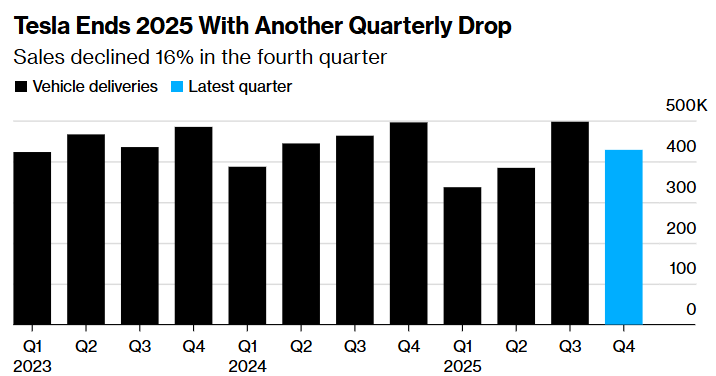
Market Overview - The S&P 500 index rose slightly by 0.2%, with 8 out of 11 sectors gaining, led by energy and industrial sectors, while consumer discretionary, communication, and consumer staples sectors declined [1] - The Philadelphia Semiconductor Index surged by 4%, marking its largest single-day gain since November 24, driven by Asian chip manufacturers and AI-related stocks [1] - Nasdaq 100 index fell by 0.2% [1] Semiconductor Sector - Micron Technology (MU.US) and Sandisk (SNDK.US) led the S&P 500 index, with Micron closing up 11% at a record high and Sandisk soaring by 16% at one point [1] - AMD (AMD.US) stock rose by 4.3% ahead of the upcoming CES, where CEO Lisa Su is scheduled to speak [2] - Nvidia (NVDA.US) shares increased by 1.3%, with CEO Jensen Huang expected to focus on data centers, AI, and robotics at CES [2] Tesla Performance - Tesla (TSLA.US) shares dropped by 2.6%, marking the seventh consecutive day of decline, matching a historical record [3] - The company reported a disappointing 16% year-over-year decline in fourth-quarter delivery volume, which was worse than analysts' expectations of an 11% decline [3] - Tesla's own forecast indicated a more pessimistic outlook, predicting a 15% drop in delivery volume [3] Valuation Concerns - Bank of America strategist Savita Subramanian stated that the S&P 500 index is statistically overvalued, with 18 out of 20 indicators showing this trend [2] - Despite the higher quality and lower leverage of the current S&P 500 index, risks remain for 2026 [2] Market Sentiment and Risks - The S&P 500 index closed about 1% lower than its historical high set on December 24, ending the year with four consecutive days of decline [6] - JPMorgan strategist Michael Cembalest highlighted risks related to U.S. power generation, China's technological advancements, and the profitability of massive data center investments since 2022 [6]


美国半导体技术霸权的底层支撑与中国突围
是说芯语· 2026-01-03 00:52
Core Viewpoint - The article discusses the absolute monopoly of the United States in the semiconductor industry, highlighting the dominance in core technologies such as design tools, high-end IP cores, advanced architectures, key manufacturing equipment, and testing instruments. This monopoly creates significant barriers to entry and establishes a comprehensive technological hegemony that is difficult to challenge globally, while also leaving room for diversification and breakthroughs in specific fields, particularly in China's domestic semiconductor industry [1]. Group 1: Chip Design Tools (EDA) - The monopoly is held by Synopsys, Cadence, and Siemens EDA, which together account for over 95% of the global market share, providing a comprehensive toolchain for chip design [3]. - These tools are essential for advanced process nodes of 7nm and below, featuring capabilities such as lithography simulation and yield optimization, making them critical infrastructure for chip development [3]. - The high density of patent barriers and deep collaboration with leading foundries like TSMC and Samsung create strong user ecosystem stickiness, making it difficult for latecomers to replace these tools [3]. Group 2: High-Performance IP Cores and Architectures - The monopoly is dominated by X86 architecture (Intel, AMD), GPU architecture (NVIDIA, AMD), and AI acceleration IP (NVIDIA, Xilinx), with ARM's technology also heavily influenced by U.S. regulations [6]. - The X86 architecture leads in high-performance computing, while NVIDIA's CUDA architecture defines global AI computing standards, creating dual barriers of performance and ecosystem [6]. - Global chip design companies are highly dependent on U.S. IP, and the U.S. can restrict access to these IPs through licensing, directly impacting the design capabilities of other nations [6]. Group 3: Key Manufacturing Equipment - The monopoly is held by U.S. companies like Applied Materials, Lam Research, and KLA, which lead in critical equipment for etching, film deposition, and process inspection [9]. - These companies provide essential technologies for advanced processes, with high barriers to entry due to long R&D cycles and significant capital investment [9]. - The dependency of global foundries like TSMC and Samsung on U.S. equipment means that U.S. export controls can directly affect the expansion and technological upgrades of advanced manufacturing capacities [9]. Group 4: High-End Chip Design and Architecture Innovation - U.S. companies like NVIDIA, Qualcomm, AMD, and Apple dominate the global technology direction in AI chips, mobile terminal chips, and high-performance computing chips [12]. - Continuous high R&D investment (approximately 17.7% of semiconductor industry revenue) and strong ecosystem integration capabilities allow these companies to maintain significant advantages [12]. - The U.S. leads in defining the demand and technological evolution of high-end chips, influencing the global semiconductor supply chain [12]. Group 5: Semiconductor Testing and Packaging Technologies - The monopoly is held by U.S. companies like Teradyne and Cohu, which dominate the high-end chip testing equipment market [15]. - These companies provide comprehensive testing solutions that meet the high precision requirements of advanced process nodes [15]. - The global chip production's yield control and quality assurance are highly reliant on U.S. testing equipment, and export restrictions can impact production efficiency and quality stability [15]. Group 6: Core Materials Technology - U.S. companies like Dow Chemical, DuPont, and GlobalFoundries dominate the market for critical semiconductor materials such as photoresists and electronic specialty gases [18]. - The high purity and stability requirements for semiconductor materials create significant barriers for new entrants [18]. - Advanced process chip manufacturing relies over 80% on U.S. core materials, and U.S. export controls can directly affect global production capacities [18]. Group 7: Semiconductor Software and Ecosystem - U.S. companies like Microsoft, Google, and NVIDIA dominate the software ecosystem that supports chip applications [21]. - The NVIDIA CUDA ecosystem monopolizes AI training and inference software, with over 90% of AI developers using the CUDA platform [21]. - The strong network effects of these ecosystems create significant barriers for new entrants, making it difficult for other countries to commercialize breakthroughs in high-performance chip development [21]. Group 8: Industry Standard Setting Authority - The U.S. leads international standard organizations like IEEE and JEDEC, controlling the core industry standards for chip interfaces and performance specifications [24]. - The binding of industry standards with technology patents creates dual barriers that are difficult for non-U.S. companies to overcome [24]. - The U.S. can guide global semiconductor technology development through standard-setting, impacting the innovation paths of non-U.S. enterprises [24]. Group 9: High-End Semiconductor Products and Solutions - U.S. companies like NVIDIA, Intel, Qualcomm, and Micron hold a dominant share in the global high-end semiconductor product market [27]. - These companies have established significant performance advantages through long-term technological accumulation and deep integration with downstream manufacturers [27]. - The global technology industry is highly dependent on U.S. semiconductor products, and U.S. export controls can directly influence the development of global technology sectors [27].


256G 比 5090 显卡还贵!内存一年暴涨 3 倍,全球为奥特曼豪赌买单
程序员的那些事· 2026-01-03 00:49
Core Viewpoint - The article discusses a significant surge in memory prices, driven primarily by the increasing demand from AI applications, leading to a global memory shortage that affects various sectors, including PCs and gaming [2][3][30]. Group 1: Memory Price Surge - Memory prices have skyrocketed, with a 64GB memory stick that cost $350 two months ago now priced at $2,500 [4][12]. - The price of DDR5 contract memory has increased by 123% from the beginning of the year [21]. - The price of 12GB LPDDR5X memory chips for Apple's iPhone 17 series has risen to approximately $70, compared to $25-$29 a year ago, indicating a 2-3 times increase [14][15]. Group 2: AI's Impact on Memory Demand - AI servers require significantly more memory, with DRAM needs being about eight times that of standard servers [34]. - Major companies like OpenAI are securing large quantities of DRAM, locking in 40% of monthly production capacity from suppliers like Samsung and SK Hynix [36][38]. - The shift in demand towards AI products has led memory manufacturers to prioritize high-margin products, resulting in reduced availability of traditional memory for consumer electronics [46][48]. Group 3: Supply Chain and Market Dynamics - Major PC manufacturers, including Lenovo and HP, are preemptively signing procurement agreements with memory suppliers to secure future supplies [20]. - The transition of production lines from traditional DDR4 to high-bandwidth memory (HBM) and DDR5 is causing a significant reduction in the availability of mid-range memory [49][53]. - The memory shortage is expected to persist until at least 2026, with AI consuming 20% of global DRAM wafer capacity [53]. Group 4: Broader Market Implications - The memory crisis is reshaping the smartphone and PC markets, with manufacturers facing tough choices between raising prices or reducing specifications [82][84]. - The cost of memory components is becoming a critical factor in the pricing structure of smartphones, where memory can account for 10%-20% of the bill of materials [82]. - The article suggests that 2026 may see a significant increase in technology product prices due to the ongoing memory shortage driven by AI data centers [86].
特斯拉七连跌,中概股深夜狂飙,百度大涨15%,加密货币超11万人爆仓
21世纪经济报道· 2026-01-02 23:25
Market Overview - On January 2, 2026, the U.S. stock market showed mixed results with the Dow Jones up by 0.66%, the S&P 500 up by 0.19%, and the Nasdaq down by 0.03% [1] - The Dow closed at 48,382.39, the Nasdaq at 23,235.63, and the S&P 500 at 6,858.47 [2] Sector Performance - Large tech stocks experienced more declines than gains, with Tesla seeing a continuous drop for seven trading days. Tesla reported a global delivery of 1.636 million vehicles in 2025, marking an 8.6% year-over-year decline, and was surpassed by BYD in annual electric vehicle sales for the first time [2] - Semiconductor stocks performed strongly, with the Philadelphia Semiconductor Index rising by 4.01%. Notable gains included Micron Technology up over 10%, ASML up over 8%, Intel up over 6%, TSMC up over 5%, and AMD up over 4% [4] Chinese Stocks - The Nasdaq Golden Dragon China Index rose by 4.38%, indicating a positive start to the year for Chinese stocks. Key performers included Baidu Group up over 15%, Pony.ai up over 10%, and several others showing significant gains [4] Commodity Prices - Gold prices increased slightly, with spot gold rising by 0.33% to $4,332.50 per ounce, while silver rose by 1.74% to $72.80 per ounce [4] - In the oil market, WTI crude oil futures for February fell by 0.17% to $57.32 per barrel, and Brent crude for March fell by 0.16% to $60.75 per barrel [5] Cryptocurrency Market - Major cryptocurrencies saw collective gains, with Bitcoin surpassing the $90,000 mark, reflecting a 1.87% increase [6] Foreign Investment Outlook - Foreign institutions maintain a positive outlook on Chinese assets, with predictions of a 38% increase in the Chinese stock market by the end of 2027 [7] - Investment opportunities are expected to be highly structured, focusing on technology innovation, green energy transition, and high-quality brands benefiting from consumer recovery [8]



中国资产深夜爆发,百度狂飙12%,美股芯片巨头创历史新高
2 1 Shi Ji Jing Ji Bao Dao· 2026-01-02 23:17
Group 1: Semiconductor Stocks Performance - U.S. semiconductor stocks experienced a significant rally, with the Philadelphia Semiconductor Index rising over 4.5% [2] - ASML surged more than 8%, reaching a historical high, while Micron Technology and Intel both increased by approximately 8% [2] - Other notable gainers included ARM and AMD, which rose nearly 6% [2] Group 2: Chinese Stocks Surge - Chinese stocks listed in the U.S. saw a collective surge, with the Nasdaq Golden Dragon China Index increasing by nearly 3.9% [5] - Baidu's stock skyrocketed over 12% after submitting a mainboard listing application for its subsidiary Kunlun Chip [5] - Other Chinese companies like Yatsen and NetEase also saw significant gains, with increases around 7% [5] Group 3: Precious Metals and Commodities - Precious metals, particularly gold, experienced a sudden pullback after reaching $4,400, currently hovering around $4,336, with a slight increase of 0.4% [7] - Silver also saw a rise of 4% at one point but later adjusted to a 2% increase [7] Group 4: Oil Market Decline - Crude oil futures collectively declined, with WTI and ICE Brent both dropping over 1.2% [11] - Current prices for WTI and ICE Brent are $56.70 and $60.11, reflecting decreases of 1.25% and 1.22% respectively [11] Group 5: Cryptocurrency Market Recovery - The cryptocurrency market is witnessing a rebound, with Bitcoin surpassing $89,000 and Ethereum, SOL, and XRP all increasing by over 2% [12] - Dogecoin saw a notable rise of over 10% [12] - A total of over 90,000 individuals faced liquidation, amounting to $235 million, with more than 78% being short liquidations [12]


AI: Still Early Innings In 2026
Seeking Alpha· 2026-01-02 21:39
Core Viewpoint - The article emphasizes the importance of identifying undervalued stocks that are mispriced by the market as a strategy for investment in 2026 [1]. Group 1: Company Overview - Stone Fox Capital is an RIA based in Oklahoma, led by Mark Holder, a CPA with 30 years of investing experience, including 15 years as a portfolio manager [2]. - The investing group "Out Fox The Street" provides stock picks and in-depth research aimed at uncovering potential multibaggers while managing portfolio risk through diversification [2]. Group 2: Features and Services - The group offers various model portfolios, stock picks with identifiable catalysts, daily updates, real-time alerts, and access to community chat and direct communication with Mark for inquiries [2].
AMD周五尾盘上涨5.1%,人工智能内存需求提振分析师乐观情绪。
Xin Lang Cai Jing· 2026-01-02 21:06
Group 1 - AMD's stock rose by 5.1% on Friday, driven by increased optimism among analysts due to rising demand for artificial intelligence memory [1]
Stock market today: Dow, S&P 500 edge higher to kick off 2026, semiconductor stocks rally
Yahoo Finance· 2026-01-02 21:00
Market Performance - US stocks mostly edged higher on the first trading day of 2026, with the Dow Jones Industrial Average gaining about 0.6% and the S&P 500 increasing by 0.2% [1] - The Nasdaq Composite fell below the flat line despite gains in semiconductor companies like Nvidia, AMD, and Micron [1] - The S&P 500 rose over 16% in 2025, while the Nasdaq Composite led with a more than 20% increase [2] Economic Outlook - The outlook for 2026 is optimistic, with Wall Street forecasters predicting a fourth consecutive year of stock market rallies [3] - However, risks remain, including potential faltering of the AI boom, surprises in the US economy, and uncertainties surrounding President Trump's tariffs [3] Commodity Performance - Gold and silver advanced at the start of 2026, building on their best annual performances since 1979, while aluminum crossed $3,000 per ton for the first time since 2022 [4] - The S&P 500 is down nearly 1% during the "Santa Claus rally" period, indicating a potential third consecutive down period for this seasonal trend [4] Federal Reserve Focus - The Federal Reserve remains a key focus for Wall Street in 2026, with ongoing divisions expected to continue from 2025 [5] - President Trump is expected to appoint a new chair to replace Jerome Powell, while traders anticipate the central bank will hold steady on interest rates later this month [5]
AMD Attracts Fresh Optimism as AI Products Set Up a New Growth Phase
Investing· 2026-01-02 18:58
Group 1 - The article provides a market analysis focusing on the S&P 500 and Advanced Micro Devices Inc. (AMD) [1] - It highlights the performance trends of the S&P 500 index, indicating fluctuations and investor sentiment [1] - AMD's recent developments and market positioning are discussed, emphasizing its competitive edge in the semiconductor industry [1] Group 2 - The analysis includes specific numerical data regarding the S&P 500's performance, such as percentage changes over recent periods [1] - AMD's financial metrics are presented, showcasing revenue growth and market share advancements [1] - The article also touches on broader market trends that may impact both the S&P 500 and AMD, including economic indicators and technological advancements [1]

Chip stocks rally to start 2026 after third-straight winning year
CNBC· 2026-01-02 16:49
Group 1 - Chipmaking stocks experienced a rally at the beginning of 2026, driven by investor interest in the artificial intelligence sector following a strong performance in the previous year [1] - ASML surged by 9%, Micron Technology increased by 8%, while Lam Research and Intel both rose by approximately 7%, and Marvell Technology saw a 5% increase [1] - Advanced Micro Devices (AMD) and Nvidia gained about 3% and 2%, respectively, in the early trading of 2026 [2] Group 2 - In 2025, AMD experienced a significant gain of 77%, while Nvidia saw a 39% increase, reflecting the ongoing growth in the chipmaking sector [2] - The demand for chipmaking stocks was bolstered by substantial investments from hyperscalers like Amazon and Google, aimed at meeting the persistent demand for datacenter capabilities [2]