Apollo Management(APO)

Search documents
AI story is no longer an equity story, says Apollo Global's Torsten Slok
Youtube· 2025-12-26 15:34
Economic Outlook - The economy is showing signs of improvement, with several positive factors contributing to growth expectations [1][2] - Key tailwinds include the implementation of a significant bill that allows for immediate expensing of capital expenditures, lower oil prices, a declining dollar, and the diminishing impact of the trade war [2][4] Consumer and Corporate Impact - The new bill enables companies to write down 100% of their capital expenditures immediately, which is a departure from the usual multi-year write-off process [3] - Consumers are expected to benefit from larger tax refunds in 2026, projected to be 50% greater than those in 2025, further supporting economic growth [4] Market Dynamics - The current market valuation may not fully reflect the positive economic outlook for 2026, as growth is heavily concentrated in a few large AI-related stocks, which constitute 40% of the index [6] - The AI narrative is influencing not only equity markets but also the public investment-grade credit market, which is increasingly dominated by hyperscaler issuances [7] Risks and Concentration - While growth prospects are favorable, there is a risk that if the AI sector underperforms in 2026, it could negatively impact both equity and credit markets despite overall economic growth [8]



资管巨头阿波罗开启“避险模式”:囤现金、去杠杆,坐等“坏事发生”?
华尔街见闻· 2025-12-23 14:03
Core Viewpoint - Apollo Global Management is adopting aggressive defensive measures, including cash accumulation, reducing leverage, and selling high-risk debt assets, in preparation for potential market turmoil [1][2][3] Group 1: Strategic Shift - Apollo's CEO Marc Rowan emphasized the importance of building the "best possible balance sheet" to ensure profitability during challenging credit and equity market conditions [2] - The company is transitioning from aggressive investments to a conservative defensive posture, focusing on cleaning up its balance sheet and maintaining a "cash is king" strategy [3][4] - This strategic shift is occurring amidst signs of cracks in the private credit market, which is facing dual pressures of deteriorating fundamentals and shaken confidence [4][19] Group 2: Asset Management Adjustments - Apollo is specifically reducing exposure to high-risk areas, particularly in technology loans susceptible to disruption from artificial intelligence [11] - The firm is also retreating from the credit derivatives market, citing unattractive returns in many debt markets, especially in low-rated loan portfolios [12] - Apollo's insurance subsidiary, Athene, is building liquidity by purchasing hundreds of billions in government bonds and plans to cut its risk exposure in collateralized loan obligations (CLOs) by about half to $20 billion [13] Group 3: Leverage and Hedging Strategies - Apollo's flagship fund, Apollo Debt Solutions, has a net debt-to-equity ratio of 0.58, indicating a conservative leverage approach compared to competitors [15][16] - The company has increased hedging positions against floating-rate debt to protect profitability amid potential interest rate declines [17] Group 4: Regulatory Concerns - Rowan expressed concerns about systemic risks from regulatory arbitrage, particularly regarding insurance companies moving assets to offshore jurisdictions with less stringent regulations [18] - He warned that such practices could lead to significant industry repercussions if defaults occur in these offshore markets [18] Group 5: Market Context - Apollo's defensive measures are taking place during a "liquidation moment" in the private credit market, which has seen a collapse in investor confidence [19][20] - The market is experiencing rising default rates, with notable declines in stock prices for business development companies (BDCs) despite an overall increase in the S&P 500 index [22][23]

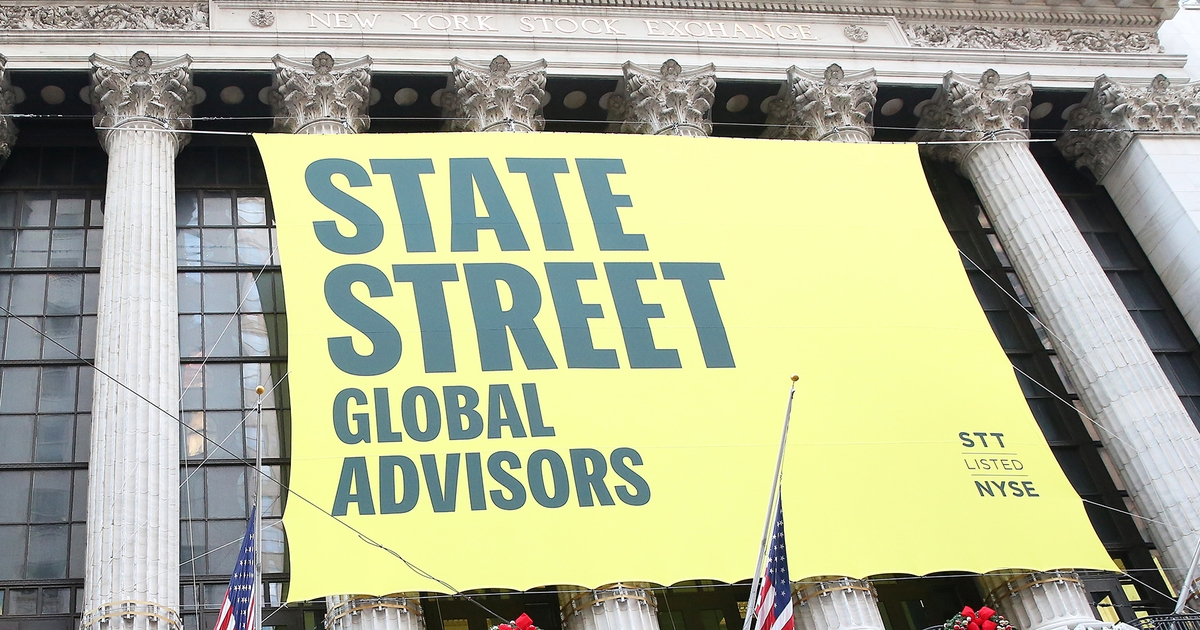
State Street Private Credit ETF Struggles Despite Hype
Wealth Management· 2025-12-22 18:22
Core Insights - State Street Corp. launched a private credit exchange-traded fund (ETF) named PRIV in February, strategically timed ahead of an executive order promoting alternative investments [1] - The fund has faced scrutiny from the US Securities and Exchange Commission (SEC) and has struggled to attract significant investment, with only $45 million raised compared to the broader ETF industry's $1.5 trillion intake [2][4] - The fund's actual investment in private credit is limited, with documents indicating that such debt constitutes only 10% to 35% of the fund, while the majority is invested in publicly traded debt [2][7] Fund Performance and Market Challenges - Despite outperforming its bond-market benchmark with a return of over 5.6% since launch, the fund's appeal is hindered by high fees and a complex investment structure [4][9][10] - The private credit industry is facing intensified challenges, including fierce competition and public scrutiny, which have raised concerns about the suitability of illiquid assets for everyday investors [6] - The fund's liquidity mismatch poses a significant risk, as private loans are typically harder to sell quickly, leading to potential difficulties in returning funds during downturns [11][12] Regulatory Scrutiny and Industry Response - The SEC has raised concerns regarding the fund's liquidity risk management, prompting State Street to clarify that other broker-dealers can provide quotes for private debt [11] - In response to market challenges, State Street has launched a second ETF to invest in both public and private credit, indicating a commitment to expanding its offerings despite regulatory scrutiny [12] - The fund's structure and the nature of its holdings have sparked debate among analysts, with estimates of private credit assets varying significantly [6][13]

报道:阿波罗增持现金 为应对市场动荡做准备
Xin Lang Cai Jing· 2025-12-22 07:31
Core Insights - Apollo Global Management's CEO Marc Rowan has communicated to investors that the company is increasing cash reserves, reducing leverage, and selling off higher-risk debt assets [1] - Rowan emphasized that his "top priority" is to maintain a strong balance sheet to ensure Apollo can perform well and generate profits even in adverse conditions [1] - The company has enhanced liquidity for its insurance subsidiary, Athene, by accumulating hundreds of billions of dollars in U.S. Treasury securities and reducing leveraged loans [1] - Apollo's leadership has also highlighted a defensive posture in an internal meeting held in December [1] Summary by Categories Financial Strategy - Apollo is focusing on increasing cash reserves and reducing leverage [1] - The company is selling off higher-risk debt assets to strengthen its financial position [1] Leadership Insights - CEO Marc Rowan stated that maintaining a strong balance sheet is the company's primary goal [1] - The leadership team has reiterated a defensive approach during internal discussions [1] Liquidity Management - Apollo has increased liquidity for its insurance company, Athene, by acquiring hundreds of billions in U.S. Treasury securities [1] - The company has also reduced its leveraged loans to improve financial stability [1]
资管巨头阿波罗开启“避险模式”:囤现金、去杠杆,坐等“坏事发生”?
Hua Er Jie Jian Wen· 2025-12-22 06:50
Core Viewpoint - Apollo Global Management is adopting aggressive defensive measures, including cash accumulation, reducing leverage, and selling high-risk debt assets, in preparation for potential market turmoil [1][2][3] Group 1: Strategic Shift - Apollo's CEO Marc Rowan emphasized the importance of building the "best possible balance sheet" to ensure profitability during challenging credit and equity market conditions [1] - The company is transitioning from aggressive investments to a conservative defensive posture, focusing on cleaning up its balance sheet and maintaining a "cash is king" strategy [1][3] - This strategic shift is seen as a significant change within the industry, given Apollo's substantial presence in the financial market [3] Group 2: Asset Management - Apollo is specifically reducing exposure to high-risk areas, particularly in technology loans susceptible to disruption from artificial intelligence [4] - The company is also retreating from the credit derivatives market, citing unattractive returns in low-rated loan portfolios, particularly collateralized loan obligations (CLOs) [5] - Apollo's insurance subsidiary, Athene, is building liquidity by purchasing hundreds of billions in government bonds and plans to cut its CLO risk exposure by about half to $20 billion [5][6] Group 3: Leverage and Hedging - Apollo's flagship fund, Apollo Debt Solutions, has a net debt-to-equity ratio of 0.58, indicating a lower leverage compared to competitors [6] - The company has increased hedging positions against floating-rate debt to protect profitability amid potential interest rate declines [6] Group 4: Regulatory Concerns - Rowan expressed concerns about systemic risks arising from regulatory arbitrage, particularly in the insurance market, where private capital groups are expanding without adequate oversight [7] - He criticized the practice of transferring assets to offshore jurisdictions like the Cayman Islands, warning of potential contagion risks in the event of defaults [7] Group 5: Market Conditions - Apollo's defensive measures come at a time when the private credit market, valued over $2 trillion, is experiencing significant challenges, including rising default rates and declining investor confidence [8][9] - The market is facing a "clearing moment," with notable declines in stock prices for major players like FS KKR Capital and BlackRock's BDC, despite the S&P 500's overall increase [8][9]
阿波罗投资长:滞胀是美联储明年最大风险之一
Sou Hu Cai Jing· 2025-12-22 04:13
Core Viewpoint - Apollo Global Management's Chief Investment Officer, Torsten Sl?k, identifies stagflation as one of the biggest risks for the Federal Reserve in the coming year, which could threaten the upward momentum of the stock market due to the potential for further interest rate cuts [1] Group 1 - The recent mild inflation data for November has provided temporary relief to investors, but concerns about stagflation remain [1] - Sl?k emphasizes that stagnant inflation poses risks, particularly if certain headwinds emerge, especially in the context of artificial intelligence not delivering expected results [1] - There are downward risks to growth and upward risks to consumer prices in the new year, according to Sl?k [1]
阿波罗全球管理:滞胀是美联储明年面临的最大风险之一
Sou Hu Cai Jing· 2025-12-22 02:29
Core Viewpoint - Apollo Global Management's Chief Economist Torsten Sløk indicates that despite the mild inflation data in November, stagflation remains a significant risk for the Federal Reserve in the coming year, potentially threatening the key momentum for stock market growth: the possibility of further interest rate cuts [1] Group 1 - Sløk emphasizes that stagnation inflation is a risk due to emerging headwinds, particularly if artificial intelligence fails to deliver results [1] - He notes that as the new year approaches, economic growth faces downside risks while consumer prices exhibit upside risks [1]
Apollo CEO, economist, and executives discuss the economy, wealth building, the Fed, AI, and more
Yahoo Finance· 2025-12-20 02:15
Investment and Market Focus - Apollo Global Management executives discussed the Federal Reserve's rate cut decision [1] - The rise of private credit markets is a key topic of discussion [1] - Data centers and AI are areas of interest for Apollo Global [1] - The discussion includes insights on the economy and private equity [1] Apollo Global Management Personnel - Marc Rowan, Apollo Global Management CEO, is featured [1] - Torsten Sløk, Apollo Global Management partner and chief economist, is featured [1] - John Cortese, Apollo Global Management's co-head of corporate credit, is featured [1] - Stephanie Drescher, Apollo Global Management Chief Client & Product Development Officer, is featured [1] - Scott Kleinman, Apollo Asset Management Co-President, is featured [1] - Michael Downing, Athene (ATH-PA) COO, is featured [1]
It's going to be an uphill battle to convince the fed to cut rates: Apollo Global's Torsten Slok
Youtube· 2025-12-19 16:31
Economic Outlook - The market is focused on the implications of the new Fed chair on interest rates, particularly the challenge of convincing other FOMC members to support rate cuts [2][3] - There are expectations of economic growth accelerating due to various tailwinds, including the "one big beautiful bill" and favorable oil prices [4][5] - Inflation is currently around 3%, and there are concerns about maintaining interest rates in a growing economy [6] Employment Trends - Job growth has slowed significantly, with net immigration into the US dropping from around 3 million annually to a projected 500,000 over the next two years [8] - The new equilibrium rate for non-farm payrolls has decreased from 200,000 to 30,000 jobs created monthly due to reduced immigration [9] Risks to Growth - Stagflation is identified as a significant risk, particularly if AI does not meet growth expectations [10] - The construction of data centers has contributed positively to GDP growth, but a slowdown in capital expenditures could pose risks [11] - Inflation remains a complex issue, with various forces at play, and there are expectations of elevated inflation risks in the coming months [12][14] FOMC Considerations - The FOMC is divided on the approach to interest rates, balancing a weaker labor market against persistent inflation risks [15]

Apollo Expands Asset-Level Risk Reviews to Reflect Impact of Extreme Weather
Insurance Journal· 2025-12-18 16:51
Core Insights - Apollo Global Management Inc. is enhancing its risk review process to account for the impact of extreme weather on asset valuations, reflecting a growing concern over the damage caused by floods, storms, and wildfires [1][3] - The firm is expanding its top-down analyses to include more granular, company-level risk assessments before closing deals, as climate-driven disruptions are increasingly affecting operating costs, supply chains, and insurance markets [2][5] Group 1: Risk Assessment and Management - Apollo is implementing deeper analyses of "acute and chronic climate hazards," focusing on loan-level mapping in mortgage portfolios and evaluating exposure to drought, flood, heat, and wildfire in hard-asset sectors [5] - The integration of technology and data availability is allowing Apollo to refine its approach to measuring physical and transition risks, making these assessments a standard part of every deal across all asset classes [5] Group 2: Industry Trends and Responses - The awareness of extreme weather's potential to alter asset values is increasing, with firms like KKR & Co. introducing new credit climate risk models to assess physical risks for new and existing issuers [6][7] - Investors are beginning to recognize the need to assess climate risks similarly to other financial risks, as these can significantly impact cash flows and costs [9][10] Group 3: Market Impact and Future Considerations - A report by MSCI highlighted that 55% of companies in a $2 trillion analysis already face severe physical hazards, affecting sectors such as real estate, insurance, and utilities, leading to higher premiums and lower asset values [10] - The realization that physical risks are already impacting portfolios is prompting investors to adjust their strategies, with a focus on long-term asset holding and the potential for both risks and opportunities in the evolving market landscape [9][11]