ASML Holding(ASML)

Search documents
My Top AI Growth Stock to Buy Now and Hold Through at Least 2030
The Motley Fool· 2025-07-24 10:15
Core Viewpoint - ASML Holding is positioned as a foundational growth stock benefiting from the increasing demand for AI applications, particularly through its advanced lithography machines essential for semiconductor manufacturing [2][22]. Company Overview - ASML specializes in lithography systems that print circuit designs onto silicon wafers, a critical step in semiconductor manufacturing [5][10]. - The company holds a monopoly in producing extreme ultraviolet (EUV) lithography machines, which are vital for creating chips used in AI applications [6][10]. Market Dynamics - ASML's product mix is shifting towards logic applications, with 84% of net system bookings in the latest quarter allocated for logic end-use cases, highlighting the growing demand for GPUs and CPUs essential for AI workflows [7][8]. - The company anticipates steady growth through 2030, projecting revenue to double from 2024 levels, with a forecast of 15% revenue growth and a 52% gross margin for 2025 [8][19]. Financial Performance - In the latest quarter, ASML reported sales of 7.7 billion euros ($8.92 billion) and a net income of 2.3 billion euros ($2.66 billion), resulting in a profit margin of 29.8% [19]. - The average selling price of ASML's lithography machines was approximately $85.5 million per unit, with 76 new units sold generating 5.596 billion euros ($6.5 billion) in revenue [12][19]. Long-term Growth Potential - ASML's long-term growth is tied to the increasing demand for computing power driven by AI, with projections indicating a need for a compound annual growth rate (CAGR) of 7.8% to reach the low end of its 2030 revenue goal of 44 billion euros ($51.16 billion) [18][22]. - The company is trading at a price-to-earnings ratio of approximately 12.4 to 18.9 times its 2030 earnings estimates, suggesting it is undervalued based on its growth potential [20][21]. Investment Considerations - ASML's business model is characterized by high margins and a unique sales cycle influenced by the demand from fabrication companies, making it a compelling long-term investment for exposure to AI growth [10][22]. - The company acknowledges potential short-term volatility due to macroeconomic factors and trade tensions, but emphasizes the importance of focusing on long-term growth prospects [9][16].


7月24日电,花旗集团将ASML目标股价从600欧元下调至550欧元。
news flash· 2025-07-24 05:14
Group 1 - Citigroup has lowered the target price for ASML from €600 to €550 [1]

美国半导体动态_对 ASML 的解读;提高出口管制上限-US Semiconductors and Semi Equipment_ SemiBytes_ ASML Read-throughs; Raising Export Control Ceiling_
2025-07-24 05:04
Summary of Key Points from the Conference Call Industry Overview - The conference call primarily discusses the **semiconductor industry**, focusing on **ASML** and its recent performance, as well as implications for **US semiconductor equipment (SPE)** suppliers. Core Insights and Arguments 1. **ASML's Backlog Reduction**: ASML has removed approximately **€1.4 billion** from its backlog, attributed to order cancellations from new Chinese customers added to the US Entity List in late 2024. This suggests that the impact of US export controls is now being felt by ASML's customers [2][2][2]. 2. **2026 Revenue Outlook**: Despite uncertainties due to tariffs and potential demand destruction in PCs and smartphones, ASML's revenue from domestic China wafer fabrication equipment (WFE) is expected to grow nearly **10% year-over-year** to around **$35 billion** in 2026 [2][2][2]. 3. **Comparison with Global Peers**: ASML is projected to underperform compared to global SPE peers in 2026, primarily due to a lack of EUV layer increases for the N2 node, which may lead to other technologies capturing market share [2][2][2]. 4. **Intel's Capex Cuts**: There are indications that Intel (INTC) may signal significant cuts in capital expenditures, which could pose a headwind for ASML and other US SPE suppliers [2][2][2]. 5. **US Export Controls**: The Trump Administration is reportedly considering reversing some export bans on semiconductor shipments to China, which could lead to increased shipments of SPE to China as part of a broader trade agreement [3][3][3]. Additional Important Information 1. **Investor Sentiment**: Following ASML's results, there has been a notable decline in its stock price, reflecting investor concerns over the implications of the backlog reduction and future revenue growth [2][2][2]. 2. **Cautious Stance from US SPE Suppliers**: Companies like AMAT, KLAC, and LRCX have adopted a cautious outlook regarding Intel's capital expenditures for 2026, indicating a broader concern within the industry about future demand [2][2][2]. 3. **Potential for Increased Shipments**: The discussions suggest a potential shift in US policy that may allow for increased shipments of semiconductor equipment to China, which could alleviate some investor fears regarding the semiconductor supply chain [3][3][3]. This summary encapsulates the key points discussed in the conference call, highlighting the current state and future outlook of the semiconductor industry, particularly focusing on ASML and its interactions with US export policies and market dynamics.
光刻机输家的反击
半导体行业观察· 2025-07-24 00:46
Core Viewpoint - The semiconductor lithography machine market is dominated by ASML, particularly in the EUV lithography segment, while Canon and Nikon, once industry leaders, are exploring new technologies to regain their competitive edge [1][3][5]. Group 1: Historical Context - Canon and Nikon were once the giants of the lithography machine industry, holding a significant market share in the 1980s and 1990s due to their advancements in step-and-repeat and scanning lithography technologies [2]. - The shift in industry dynamics was closely tied to technological choices, with Canon and Nikon falling behind due to misjudgments regarding the transition from DUV to EUV technology, allowing ASML to emerge as the leader [3]. Group 2: Canon's New Strategies - Canon is focusing on nanoimprint lithography (NIL) as a core development direction, which differs fundamentally from traditional optical lithography by directly imprinting patterns onto wafers [7]. - The introduction of Canon's FPA-1200NZ2C device, capable of achieving a minimum line width of 14 nanometers, marks a significant advancement, with aspirations to reach 10 nanometers, thus entering the advanced chip manufacturing domain [9][13]. - Canon's collaborations with companies like Kioxia and DNP aim to enhance NIL technology, addressing challenges in mask quality and pattern transfer precision [10][11]. Group 3: Advantages and Challenges of Nanoimprint Technology - Nanoimprint technology offers significant advantages over EUV lithography, including lower costs and reduced energy consumption, making it competitive in cost-sensitive markets like 3D NAND flash memory [12][15]. - Despite its potential, challenges remain in ensuring stability and yield in large-scale production, as well as compatibility with existing production lines [17]. Group 4: Nikon's Strategic Moves - Nikon is also actively pursuing new technologies, including the development of a new generation of ArFi lithography machines, aiming to regain market share in the immersion lithography segment [25][26]. - The upcoming ArF lithography equipment is designed to be compatible with ASML's ecosystem, facilitating easier transitions for existing users [20]. Group 5: Industry Trends and Future Outlook - The exploration of alternative technologies to EUV by various companies, including Inversion Semiconductor and Lace Lithography, indicates a shift towards a more diversified lithography landscape [36][37]. - The competitive landscape is evolving, with Canon and Nikon seeking to establish themselves in niche markets while addressing the challenges posed by ASML's dominance [41].

昨夜,大涨!特朗普最新宣布


Zheng Quan Shi Bao· 2025-07-24 00:22
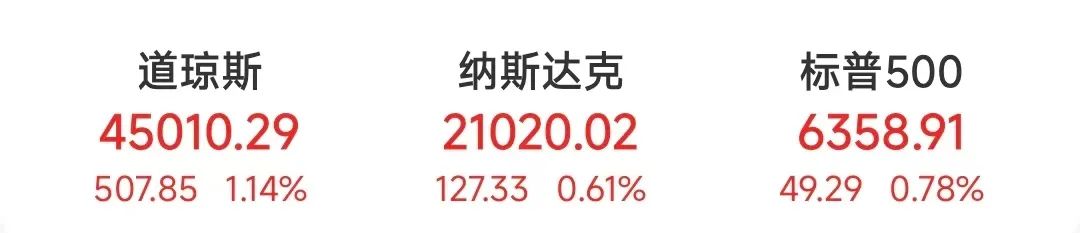
Market Performance - The US stock market saw significant gains on July 23, with the Dow Jones Industrial Average rising by 507.85 points, or 1.14%, closing at 45010.29 points. The Nasdaq Composite increased by 127.33 points, or 0.61%, closing at 21020.02 points, marking its first close above the 21000-point threshold. The S&P 500 index rose by 49.29 points, or 0.78%, closing at 6358.91 points [1][3][4]. Trade Agreements - President Trump announced a trade agreement between the US and Japan, which has heightened market expectations for further trade agreements before the August 1 tariff deadline. The agreement includes a reduction of the reciprocal tariff rate from 25% to 15% and Japan's commitment to invest $550 billion in the US [2][6][7]. Sector Performance - In the S&P 500, nine out of eleven sectors experienced gains, with the healthcare and industrial sectors leading with increases of 2.03% and 1.75%, respectively. The utilities and consumer staples sectors saw declines of 0.79% and 0.07% [8]. - Major technology stocks mostly rose, with AMD increasing over 3%, and other companies like NVIDIA, Boeing, and TSMC rising over 2%. Financial stocks also saw gains, with Mizuho Financial up over 6% and UBS Group up over 3% [8]. Chinese Stocks - The Nasdaq Golden Dragon China Index rose by 0.75%, with notable increases in stocks such as iQIYI, which rose over 4%, and Tiger Brokers, which increased over 3%. However, some stocks like NIO and Li Auto saw declines of over 1% [9].
ASML: The Case For 2026 Growth (Upgrade)
Seeking Alpha· 2025-07-23 09:57
Analyst's Disclosure:I/we have a beneficial long position in the shares of TSM either through stock ownership, options, or other derivatives. I wrote this article myself, and it expresses my own opinions. I am not receiving compensation for it (other than from Seeking Alpha). I have no business relationship with any company whose stock is mentioned in this article. Uttam is a growth-oriented investment analyst whose equity research primarily focuses on the technology sector. Semiconductors, Artificial Intel ...

Why Is Everyone Talking About ASML Stock?
The Motley Fool· 2025-07-23 09:04
Parkev Tatevosian, CFA has no position in any of the stocks mentioned. The Motley Fool has positions in and recommends ASML. The Motley Fool has a disclosure policy. Parkev Tatevosian is an affiliate of The Motley Fool and may be compensated for promoting its services. If you choose to subscribe through his link, he will earn some extra money that supports his channel. His opinions remain his own and are unaffected by The Motley Fool. ...

Should You Double Up on ASML Stock Despite Growth Concerns?
The Motley Fool· 2025-07-23 08:04
Core Viewpoint - ASML's stock fell 8.3% following its Q2 2025 results despite beating analyst estimates, presenting a potential buying opportunity for long-term investors interested in AI growth stocks [1][12]. Group 1: Company Overview - ASML manufactures semiconductor lithography machines utilized by major chip foundries such as Taiwan Semiconductor Manufacturing, Samsung Electronics, and Intel [3]. - The company offers deep ultraviolet (DUV) systems and extreme ultraviolet (EUV) systems, with EUV machines being significantly more expensive and advanced [4]. Group 2: Financial Performance - ASML's Q2 2025 net sales reached 7.69 billion euros ($8.9 billion), with 2.1 billion euros ($2.43 billion) from servicing its installed base and 5.5 billion euros ($6.37 billion) in net bookings, of which 42% were EUVs [10]. - The average sales price for EUVs in the quarter was approximately 209 million euros ($242 million) [11]. Group 3: Future Growth and Guidance - The company anticipates a 15% sales growth compared to 2024, projecting total sales of 32.55 billion euros ($37.79 billion) and a gross margin of around 52% for the full year [7][8]. - ASML maintains a long-term revenue forecast of 44 billion to 60 billion euros ($51.08 billion to $69.65 billion) by 2030, with gross margins expected to rise to 56% to 60% [9]. Group 4: Market Dynamics and Strategy - The demand for EUV technology is strong, driven by the increasing need for advanced microchips to support AI applications [5][12]. - ASML plans to continue stock repurchases and increase dividends, enhancing shareholder value despite a modest yield of 1.1% [14].
韩国大买中国股票,宇树科技启动IPO,A股会迎来指数牛吗?
Sou Hu Cai Jing· 2025-07-23 07:03
Group 1 - The year 2025 marks a critical moment for global investors to reassess Chinese assets, with high-quality Chinese companies gaining international attention [1] - The success of these companies highlights the resilience and innovative potential of the Chinese economy, sparking renewed interest from international capital [1][6] - Chinese assets are becoming an indispensable part of international investment portfolios due to their unique appeal amid changing global economic dynamics [1] Group 2 - Recent market movements indicate a shift from small-cap stocks to core assets, as analysts predict a significant change in market style [2][4] - Core assets have played a crucial role in stabilizing the A-share market, with major banks' stocks acting as a stabilizing force for the overall index [2][4] - The potential for a significant index bull market is low, with a more likely scenario being a slow and steady market growth driven by core assets [4] Group 3 - Chinese assets have shown strong anti-drawdown capabilities, particularly in the first half of the year, attracting risk-averse funds during a downturn in Western markets [6] - The emergence of companies like the "Hangzhou Six Little Dragons" and "New Consumption Four Sisters" reflects the optimism of global investors towards Chinese technology and consumption sectors [6][7] - Compared to U.S. core assets, Chinese core assets are significantly undervalued, with the average valuation of the CSI 300 at 13 times and the Hang Seng Index at around 11 times, compared to over 30 times for U.S. indices [7] Group 4 - The current phase for Chinese assets is characterized by low valuations and the release of policy dividends, enhancing investment safety and potential profitability [7] - Korean investors are increasingly buying Chinese stocks, particularly in technology and emerging industries, indicating a shift in global investment attitudes towards China [7] - The ongoing IPO process of Yushu Technology is drawing attention, with its capital structure becoming clearer as it progresses through multiple funding rounds [10][12][14] Group 5 - Yushu Technology's revenue primarily comes from B2B orders from research institutions and AI companies, with its consumer market yet to fully open [16] - Notable investment strategies include focusing on high-quality companies with clear competitive advantages, as demonstrated by significant increases in holdings of leading consumer and technology stocks [19] - The investment landscape is advised to follow major trends and policies, with recommendations to focus on stable sectors while exploring emerging opportunities [20]