ASML Holding(ASML)

Search documents
ASML: Our Best AI Investment Idea For H2 2025
Seeking Alpha· 2025-07-28 11:15
Group 1 - ASML reported Q2 2025 earnings, and the stock's reaction was negative, consistent with trends observed in previous quarters [1] - The company is a significant holding in the portfolio of the analyst, indicating its importance in investment strategies [1] Group 2 - The focus of the analyst is on high-quality businesses in the U.S. and Europe, emphasizing strong growth potential and solid fundamentals [2] - Key investment criteria include industry-leading profitability, low leverage, and growth opportunities, which are essential for long-term holding [2]

光刻机输家,强势反击!
半导体芯闻· 2025-07-28 10:35
Core Viewpoint - The semiconductor lithography machine market is dominated by ASML, particularly in the EUV lithography segment, while Canon and Nikon, once industry leaders, are exploring new technologies to regain their competitive edge [1][2][3]. Group 1: Historical Context - Canon and Nikon were once the giants of the lithography machine industry, holding a significant market share in the 1980s and 1990s due to their advancements in step-and-repeat and scanning lithography technologies [2]. - The shift in industry dynamics was closely tied to technological choices, with Canon and Nikon falling behind due to misjudgments in the transition from DUV to EUV technology, allowing ASML to dominate the market [3]. Group 2: Canon's New Strategy - Canon is focusing on nanoimprint lithography (NIL) as a core development direction, which differs fundamentally from traditional optical lithography by directly imprinting semiconductor circuit patterns onto wafers [5][8]. - The launch of Canon's NIL equipment, FPA-1200NZ2C, achieved a minimum line width of 14 nanometers, with aspirations to reach 10 nanometers, indicating its potential in advanced chip manufacturing [5][12]. - Canon has integrated its optical and materials science expertise to enhance the precision and durability of NIL technology, aiming to improve yield rates in chip production [8][9]. Group 3: Market Positioning - Canon's NIL technology is positioned to compete in cost-sensitive markets, such as 3D NAND flash memory, where it can provide a cost-effective alternative to ASML's EUV machines [12][14]. - Collaborations with companies like Kioxia and DNP have been pivotal for Canon, focusing on practical applications of NIL technology and improving mask quality, which is crucial for pattern transfer accuracy [9][10]. Group 4: Nikon's Response - Nikon is also actively pursuing new technologies to regain its market position, including the development of a new generation of ArFi lithography machines compatible with ASML's ecosystem, expected to launch in the 2028 fiscal year [23][24]. - The new ArFi machines will feature innovative lens and stage designs to enhance optical performance and production efficiency, targeting the growing demand for advanced semiconductor manufacturing [23][24]. Group 5: Industry Innovations - Various companies are exploring disruptive technologies as alternatives to EUV, such as Inversion Semiconductor's laser wakefield acceleration technology and Lace Lithography's atomic lithography, which promise lower costs and energy consumption [34][35]. - The emergence of these technologies indicates a potential shift from a single-giant monopoly to a multi-technology landscape in the lithography sector, fostering competition and innovation [36][39].
ASML Stock: What Are The Latest Developents?
Forbes· 2025-07-28 09:20
Core Viewpoint - ASML has faced a stock decline of nearly 5% over the past week and 11% over the last month due to trade tensions, leading to a softer financial forecast for 2026 [2][3] Financial Performance - ASML's Q2 2025 earnings report indicates anticipated revenue for Q3 between 7.4 to 7.9 billion euros, slightly below expectations [2] - The gross margin is estimated at around 52%, a decrease from the previous estimate of 51% to 53% [2] - The company reported net bookings of 5.5 billion euros ($6.4 billion), approximately 25% higher than expected, with a record backlog of 33 billion euros ($38 billion) [8] Market Dynamics - The semiconductor market remains resilient, with TSMC raising its sales growth forecast for 2025 to 30% in dollar terms [2] - Trade tensions, particularly between the U.S. and China, could complicate demand forecasting for ASML's products [4] - ASML's clients may reduce capital expenditures due to ongoing trade conflicts and export control regulations [4] Technological Position - ASML manufactures advanced extreme ultraviolet (EUV) lithography machines, essential for producing cutting-edge chips at process nodes of 5 nanometers and smaller [5][6] - The demand for ASML's products has surged, particularly driven by the rise of AI, with expectations of a 30% increase in EUV tool deployments in 2025 [7] Valuation and Investment Potential - ASML stock is trading at 27 times the estimated earnings for FY2025, with projected revenue growth of approximately 14% this year [8] - The company's dominant position and exposure to the generative AI trend could make the stock appealing for long-term investment [8]
7月28日电,美股盘前,科技股多数上涨。阿斯麦涨超3%,特斯拉涨1.4%,英伟达涨0.6%。


news flash· 2025-07-28 08:08
Group 1 - The core viewpoint of the article highlights that technology stocks in the US are mostly rising before the market opens, indicating positive market sentiment [1] - ASML shares increased by over 3%, reflecting strong investor interest and confidence in the company's growth prospects [1] - Tesla's stock rose by 1.4%, suggesting continued investor optimism regarding its performance and future developments [1] - NVIDIA's stock saw a 0.6% increase, indicating a stable outlook for the company amidst the broader tech sector gains [1]
在欧盟与美国达成贸易协议后,荷兰半导体公司阿斯麦、恩智浦、艾司摩尔和索泰克的股价上涨了2.6%至3.8%不等。
news flash· 2025-07-28 07:08
Group 1 - The core viewpoint of the article highlights the positive impact of the trade agreement between the EU and the US on the stock prices of Dutch semiconductor companies, specifically ASML, NXP, ASM International, and Solvay, which saw increases ranging from 2.6% to 3.8% [1]

光刻机产业链深度讲解
2025-07-28 01:42
Summary of Key Points from the Conference Call Industry Overview - The global photolithography equipment market is dominated by ASML, holding over 80% market share, while Canon and Nikon have significantly lagged behind [1][10] - The photolithography technology has evolved from contact lithography to projection lithography, with immersion technology introduced to enhance imaging precision [1][5] - The high-end photolithography equipment supply chain is highly globalized, primarily concentrated in the Netherlands, the USA, Japan, and Germany [1][6] Core Insights and Arguments - The domestic semiconductor industry is in a critical phase of development, particularly in advanced manufacturing and photolithography, necessitated by the embargo on high-end photolithography machines [2][11] - Photolithography accounts for approximately one-third of the total chip manufacturing cost, making it a crucial component in the semiconductor production process [2] - The market outlook for photolithography is positive, as it is closely linked to advanced processes and is not significantly affected by short-term performance fluctuations [3][22] - Key companies in the domestic market include SMIC, Huahong Semiconductor, Fuzhong Technology, and ASMC, which are positioned to benefit from the ongoing shift towards domestic production [2][3][22] Market Dynamics - The global photolithography equipment market is the second largest in semiconductor manufacturing equipment, with a market size of approximately $17.1 billion in 2021 [3] - The domestic market for photolithography is also substantial, providing ample growth opportunities for related companies [3] - The competitive landscape is highly concentrated, with ASML leading in high-end products, particularly in the EUV segment, where it is the sole producer [10][11] Challenges and Opportunities - Domestic companies face significant challenges in achieving self-sufficiency in high-end photolithography due to technological barriers and the need for a complete supply chain [6][11] - Future domestic substitution efforts will focus on advanced manufacturing and high-end equipment, with significant market potential and long-term growth prospects [7][8] - The core components of photolithography machines include the light source system, illumination system, and projection lens system, with the projection lens system being the most valuable and complex [1][15][17] Technical Aspects - The development of photolithography technology has progressed through various stages, with the current mainstream being projection lithography, which utilizes immersion technology for improved precision [5][9] - The light source system is critical for processing accuracy and yield, influencing the overall resolution of the photolithography process [12][15] - The design and manufacturing of projection lenses present significant challenges due to their complexity and the need for high precision [18][19] Conclusion - The market is optimistic about the photolithography sector, with key players like SMIC, Fuzhong Technology, and ASMC being highlighted for their potential to drive industry growth [22] - The ongoing shift towards domestic production in the semiconductor industry is expected to create new opportunities, despite the challenges posed by technological dependencies and supply chain issues [6][11][22]
十万零件筑就的工业明珠!中国光刻机突围战打响
材料汇· 2025-07-26 15:45
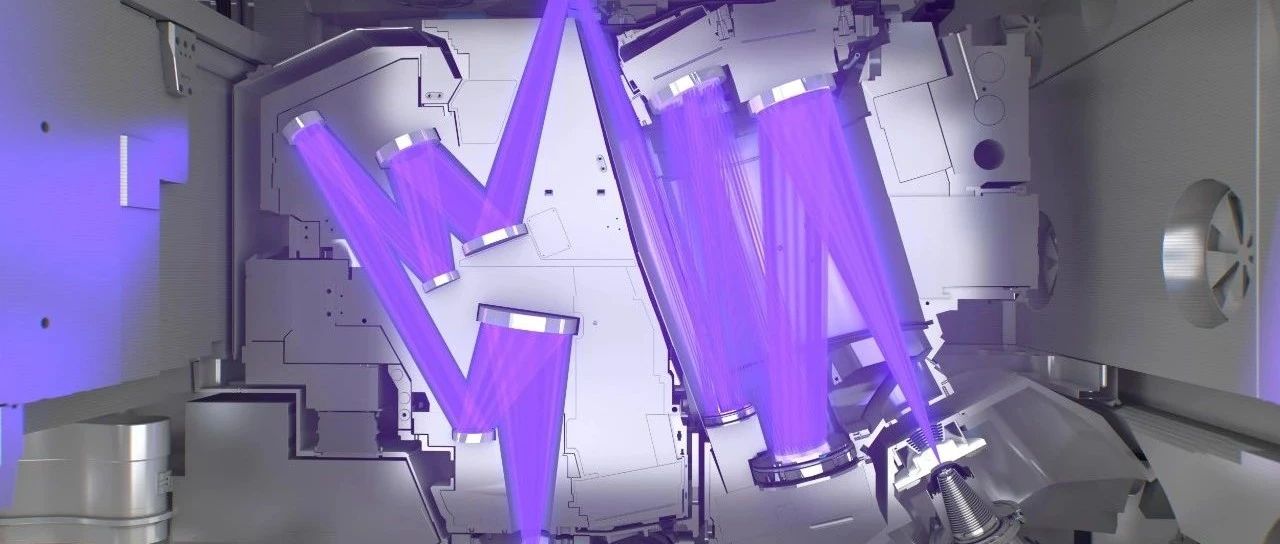
Core Viewpoint - The article emphasizes the critical role of lithography machines in semiconductor manufacturing, highlighting their technological evolution and the importance of resolution, which is the ultimate goal in the development of lithography technology [2][8]. Group 1: Lithography Technology - Lithography is a key technology in wafer manufacturing, with lithography machines being the most valuable and technically challenging equipment in the process [8]. - The core of lithography technology involves transferring chip design patterns onto silicon wafers through a process that includes exposure, development, and cleaning [9]. Group 2: Resolution as a Key Indicator - Resolution is defined as the minimum feature size that can be clearly projected onto a wafer, influenced by factors such as light wavelength, numerical aperture (NA), and process factor (k1) [15][25]. - The evolution of lithography has seen a significant reduction in light source wavelengths, with the current extreme ultraviolet (EUV) light source at 13.5nm being the most advanced [35][36]. Group 3: Key Components of Lithography Machines - Lithography machines consist of three core systems: the light source system, optical system, and workpiece stage system [63]. - The light source system provides the energy for exposure, with the most advanced sources being EUV, which require high precision in control [67][68]. - The optical system is responsible for light propagation and aberration correction, utilizing complex lens assemblies to achieve high precision [63][64]. Group 4: Historical Development of Lithography Leaders - The lithography machine industry has seen a shift in leadership through three main eras, with ASML currently dominating the advanced lithography market due to its technological advancements [4][5]. - The transition from early American companies to Japanese firms, and now to ASML, illustrates the impact of technological breakthroughs and government support on industry leadership [4][5]. Group 5: Domestic Lithography Development - China's lithography machine industry has made significant progress since the implementation of the "02 Special Project" in 2006, although it still lags behind international standards [6]. - Domestic manufacturers like Shanghai Micro Electronics have made strides in the mid-to-low-end market, but face challenges in high-end lithography machine production [6].
半导体基石系列之四:工业明珠灿若星河,光刻机国产化行则将至
Changjiang Securities· 2025-07-26 11:24
Investment Rating - The report maintains a "Positive" investment rating for the semiconductor and semiconductor production equipment industry [11]. Core Insights - The lithography machine is considered the crown jewel of the semiconductor industry, characterized by its complex components designed to achieve ultra-fine precision. The development of lithography machines has evolved through three major eras, with significant breakthroughs in key technologies leading to the dominance of companies like Nikon and ASML over their competitors. The report suggests that China's lithography machine industry can leverage its latecomer advantage to focus on overcoming core challenges and ultimately achieve self-sufficiency [4][10]. Summary by Sections Lithography Technology - Lithography is a critical process in semiconductor manufacturing, utilizing light-sensitive photoresist to transfer patterns from masks to wafers. The resolution of lithography machines is influenced by the wavelength of the light source, numerical aperture (NA), and process factor (k1). The evolution of lithography technology has seen a transition from mercury lamps to KrF, ArF, and currently to EUV light sources [7][22][28]. Key Components of Lithography Machines - The lithography machine consists of three core components: 1. **Light Source System**: Provides the energy for exposure, with the most advanced sources using CO2 lasers to generate EUV light [8]. 2. **Optical System**: Optimizes the light path and minimizes aberrations, with EUV systems relying entirely on mirrors due to the poor penetration of EUV light [8]. 3. **Wafer Stage System**: Controls the movement of the wafer and mask, crucial for the exposure process [8]. Historical Overview of Lithography Leaders - The lithography machine industry has experienced shifts in leadership across three eras, beginning with early American companies like GCA and Perkin Elmer, followed by Japanese firms Nikon and Canon, and currently dominated by ASML through technological advancements such as dual-stage and immersion lithography, as well as EUV technology [9][10]. Prospects for Domestic Lithography in China - China's lithography machine industry has made significant progress since the implementation of the "02 Special Project" in 2006, with domestic manufacturers like Shanghai Micro Electronics achieving advancements in the mid-to-low-end market. However, challenges remain in the high-end lithography machine sector [10].
ASML: 2030 Guidance At Risk - High NA Machines Lacking Customer Traction
Seeking Alpha· 2025-07-25 13:22
Group 1 - The investor has a deep value investment approach, focusing on stocks that have recently experienced sell-offs due to non-recurrent events [1] - The investment portfolio is split approximately 50%-50% between shares and call options, indicating a balanced yet risky strategy [1] - The investor employs fundamental analysis to assess company health, leverage, and financial ratios compared to sector and industry averages [1] Group 2 - Insider buying at lower prices is a key criterion for stock selection, suggesting confidence in the company's future [1] - Technical analysis is utilized to optimize entry and exit points, with a focus on support and resistance levels on weekly charts [1] - The investor's timeframe for holding positions typically ranges from 3 to 24 months, indicating a medium-term investment horizon [1]
见证历史!美联储,突发!
Zhong Guo Ji Jin Bao· 2025-07-25 00:24
Group 1: Market Overview - The U.S. stock market showed mixed results with the Dow Jones Industrial Average dropping over 300 points, while the Nasdaq and S&P 500 indices reached new highs [2][3] - As of the market close, the Dow fell by 316.38 points (0.70%) to 44,693.91, the Nasdaq rose by 37.94 points (0.18%) to 21,057.96, and the S&P 500 increased by 4.44 points (0.07%) to 6,363.35 [3] Group 2: Federal Reserve and Economic Policy - President Trump visited the Federal Reserve, marking an escalation in his pressure on the institution regarding interest rates [5] - Trump discussed interest rates with Fed Chair Jerome Powell, expressing that a reduction of three percentage points could save the U.S. over $1 trillion [5] - The Federal Reserve held its first-ever public meeting on bank capital regulation, with discussions including the potential impact of artificial intelligence on financial regulation [5] Group 3: Banking Sector Performance - Most bank stocks experienced slight fluctuations, with JPMorgan down 0.05%, Goldman Sachs up 0.25%, Citigroup down 0.61%, Morgan Stanley up 0.18%, Bank of America up 0.57%, and Wells Fargo up 0.20% [6][7] Group 4: Technology Sector Developments - Major tech stocks mostly rose, with Nvidia, Amazon, Google, and Microsoft each gaining over 1%, while Tesla saw a significant drop of over 8% [6][8] - Elon Musk denied claims that he intended to destroy his companies, emphasizing his support for their growth [8] Group 5: Intel's Financial Performance - Intel reported a second-quarter loss of $0.67 per share, with revenues of $12.9 billion, which was above expectations [11] - The company plans to cut approximately 15% of its workforce, despite a positive outlook for its data center and AI revenue [11]