
BHP(BHP)

Search documents
Mining Earnings Could Drop 25 Percent From Nature-Related Risks, Report - BHP Group (NYSE:BHP), Fortescue (OTC:FSUGY)
Benzinga· 2025-09-28 14:16
Core Insights - Commodities like gold and silver are performing well, but nature-related risks could reduce sector earnings by up to 25% [1] - The mining sector is particularly vulnerable to biodiversity and ecosystem challenges, which may alter operational practices [1][4] Industry Challenges - The report highlights a conflict between rising commodity demand and increasing environmental scrutiny, particularly for copper, nickel, and lithium, which are essential for electrification and renewable energy [3] - Mining is highly exposed to nature-related risks due to its reliance on ecosystems for resources like land and water, with potential operational and financial strains if these risks are not managed [4] Future Projections - The number of people facing potential water scarcity is expected to rise from 1.9 billion (27% of the global population) in the early 2010s to between 2.7 billion and 3.2 billion by 2050, representing a 42%-95% increase [5] - The current commodity cycle is uneven, with industrial metal prices remaining volatile and demand expectations fluctuating due to global growth and tariff policies [6] Operational Implications - A downturn in earnings linked to nature-related risks could disrupt the fragile balance in the mining sector, especially as mine development typically requires long timelines [7] - The growing long-term demand for green metals may be constrained by the sector's vulnerability to environmental pressures, creating a dilemma for the green energy transition [8] Risk Management Framework - Barclays suggests the LEAP framework (Locate, Evaluate, Assess, Prepare) as a structured approach for investors to quantify and manage nature-related risks, which include not only immediate costs but also reputational damage and regulatory sanctions [8] Conclusion - Addressing nature-related risks is crucial for protecting shareholder value and ensuring the success of the green transition [9]


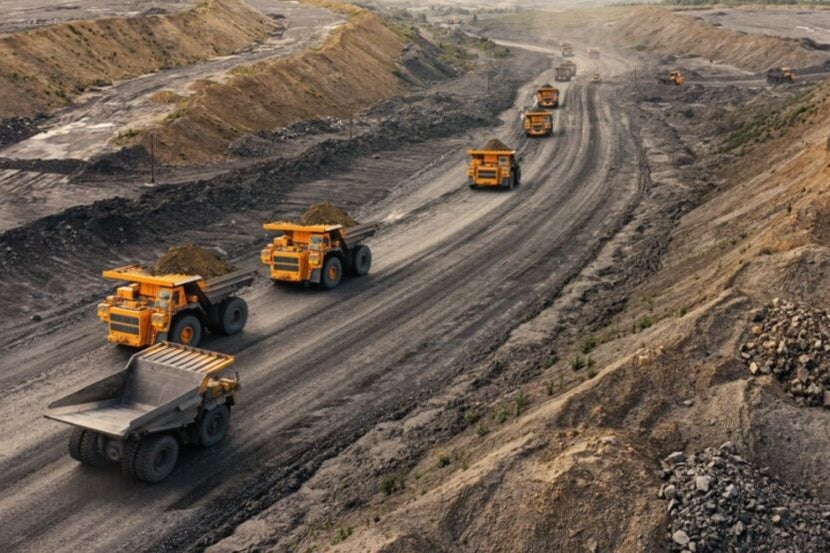
BHP Stock: Record Production, Strong Margins, And A Disciplined Path To Future Minerals
Seeking Alpha· 2025-09-27 05:56
Since my previous article , BHP (NYSE: BHP ) ( OTCPK:BHPLF ) had a total return of 14.8% versus the 11% of the S&P 500. This evolution, more than a speculative rally, was the confirmation thatI am an individual investor with over five years of experience in personal investing, holding a PhD in Economics from UCEMA. My investment approach focuses on value companies with solid long-term potential. I share my knowledge with the community by offering analysis to support individual investors. My articles reflect ...
特朗普又将加关税:专利及品牌药品100%、家具30%、重型卡车25%
Mei Ri Jing Ji Xin Wen· 2025-09-26 00:27
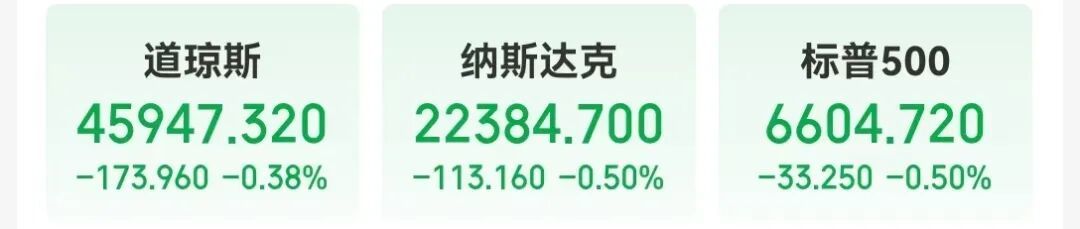
Market Movements - Oracle shares fell over 5% while Tesla dropped more than 4%, resulting in a market value loss of $64.5 billion (approximately 460.2 billion RMB) in one night [1] - Intel surged nearly 9% as it engaged in discussions with Apple regarding potential investments to strengthen its business foundation [3] - Cryptocurrency and weight-loss stocks saw significant declines, with Hut 8 down over 7% and Circle down over 5% [5] Economic Indicators - The U.S. GDP for Q2 was revised to an annualized quarter-on-quarter growth of 3.8%, exceeding expectations of 3.3% [8] - The core Personal Consumption Expenditures (PCE) price index for Q2 was reported at 2.6%, higher than the anticipated 2.5% [8] - Analysts noted that the strong GDP report indicates persistent inflation pressures, which may limit the Federal Reserve's future rate cuts [9] Federal Reserve Outlook - The Federal Reserve's recent rate cut of 25 basis points may not significantly alter its expected path for future cuts due to ongoing inflation concerns [9] - The probability of maintaining rates in October is 14.5%, while the likelihood of a 25 basis point cut is 85.5% [10]




BHP and QBE Insurance Group Ltd: 2 ASX shares to dig into
Rask Media· 2025-09-23 01:58
BHP Group - BHP Group is a diversified natural resources company founded in 1885, focusing on mineral exploration and production, with key areas including copper, iron ore, and coal [1][2] - The company is also diversifying into other sectors such as fertilizers, which indicates a strategic expansion beyond its traditional commodities [2] - BHP shares are considered a reliable dividend-paying investment, commonly included in Australian share portfolios, and are one of the largest companies in Australia [3] BHP Share Price and Dividend Yield - BHP's share price has increased by 1.0% since the beginning of 2025, but the current dividend yield is around 5.42%, lower than its 5-year average of 6.86%, suggesting a potential decline in dividends or an increase in share price [1][6] - The dividend yield reflects the cash flow to shareholders, which can fluctuate, and last year's dividend was less than the 3-year average, indicating a downward trend [6] QBE Insurance Group - QBE Insurance Group started as a marine insurance company in the late 1800s and has grown to become one of Australia's largest insurers, operating in 27 countries and offering a wide range of insurance products [4] - QBE's historical dividend yield is around 4.30%, which is significantly higher than its 5-year average of 2.84%, indicating improved valuation metrics [7] QBE Share Price Valuation - Valuation methods such as Discounted Cash Flow (DCF) and Dividend Discount Models (DDM) are available for investors to assess the value of QBE shares, with resources provided by platforms like Rask [7]

BHP eyes Geraldine Slattery for CEO role, FT reports
MINING.COM· 2025-09-19 15:54
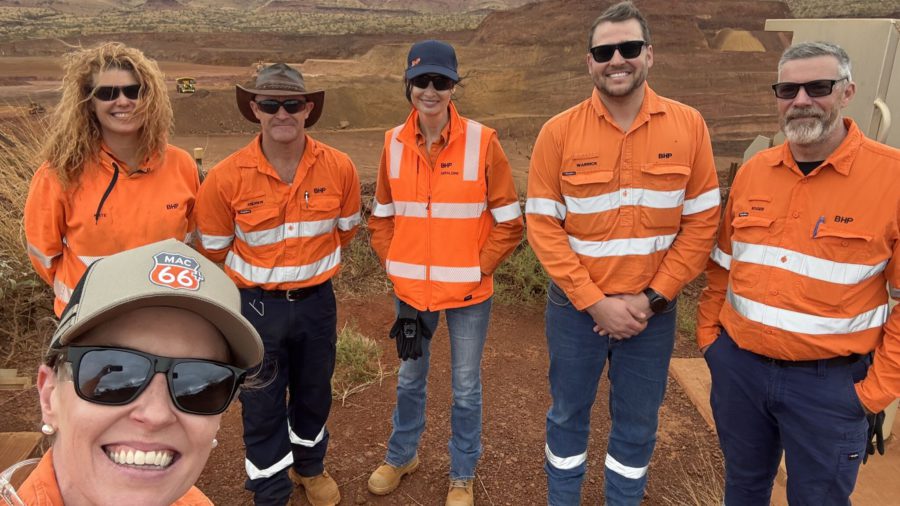
Core Viewpoint - BHP Group is considering appointing Geraldine Slattery as its first female CEO in 140 years, marking a significant milestone for the company and the mining industry [1][6]. Group 1: Succession Planning - Current CEO Mike Henry is expected to step down by mid-2026 after five years in the role, with the board not rushing to name his successor [3]. - The appointment of a new CEO will be one of the first major decisions under Ross McEwan, who became BHP's chair in March [3]. - Other potential candidates for the CEO position include Vandita Pant (CFO), Ragnar Udd (Chief Commercial Officer), and Brandon Craig (head of the Americas) [4]. Group 2: Geraldine Slattery's Background - Slattery has three decades of experience at BHP, holding senior leadership roles across global operations, including running the U.S. petroleum business [5]. - She emigrated from Ireland to Australia in the 1990s and initially worked at CSL before joining BHP [5]. - If appointed, Slattery would join a select group of female CEOs in the mining sector, alongside figures like Mpumi Zikalala and Mfikeyi Makayi [6].
铁矿四季报:供给爬坡与需求韧性的博弈
Zi Jin Tian Feng Qi Huo· 2025-09-19 12:46
1. Report Industry Investment Rating No relevant content provided. 2. Core Viewpoints of the Report - Static calculations suggest that China's iron ore imports in 2025 may first decrease and then increase, with a year - on - year reduction of 8.08 million tons (-0.5%) to 1.228 billion tons. The new production capacity of mines in Australia and Brazil is expanding more slowly than expected, and events such as abnormal weather significantly affect shipments. Shipments are expected to improve in the fourth quarter. The total supply will decrease by 7.95 million tons (-0.51%) to 1.525 billion tons. [5][102] - In terms of demand, in 2025, the decline in the real estate sector in China will slow down, infrastructure investment will show positive year - on - year growth, and the manufacturing industry will continue to improve. The annual iron ore demand is estimated to be 1.496 billion tons, a year - on - year increase of 55.52 million tons (+3.85%). Overseas, the pig iron production in major iron ore - importing countries is expected to decline slightly, while India's steel demand will continue to be strong. [5][102] - As of early September 2025, the inventory at 45 ports was 138 million tons. Although the mine production capacity is slowly expanding in 2025, unexpected events such as abnormal weather have a large impact on shipments. The demand growth is resilient, and hot metal production shows the characteristic of "no off - season". Static calculations indicate that the iron ore supply - demand situation is moving towards a looser state, and there is a high possibility of inventory accumulation in the fourth quarter, but short - term supply - demand tightness may still occur. [5][102] 3. Summaries According to Relevant Catalogs Supply - Global Shipment: From January to August 2025, the global daily average shipment was 4.28 million tons/day, a 0.5% decrease compared to 4.3 million tons/day in the same period of the previous year. The shipments from Australia and Brazil decreased significantly in the first quarter due to weather effects and then recovered to the previous year's level. The shipments from non - mainstream regions have been consistently low in recent years. [10] - Australia: From January to August 2025, Australia's global average daily shipment was 2.476 million tons/day, a 0.69% increase compared to the same period in 2024. The average daily shipment to China was 2.082 million tons/day, a 1.86% increase. The main production capacity increments in Australia in 2025 come from the Western Range (officially put into production on June 6, 2025) and the Onslow project (the capacity launch may be delayed until September due to road upgrades). If the weather remains normal, the iron ore shipments in the fourth quarter may maintain a certain increment. [13] - Major Australian Companies: - Rio Tinto: From January to August 2025, the average daily shipment was 804,000 tons/day, a 2.9% decrease compared to the same period in 2024. The Western Range project, which was fully put into production on June 6, 2025, is the main source of production capacity increment, but due to weather effects, the annual shipment target is affected. [17] - BHP: From January to August 2025, the average daily shipment was 791,000 tons/day, a 1.28% increase compared to the same period in 2024. In the 2025 fiscal year (July 2024 - June 2025), BHP's 100% equity production reached 29 million tons, a record high. The South Flank mine may be the main source of increment, with a stable annual production capacity of 80 million tons in the 2025 fiscal year. It is expected that BHP will achieve a high - level production in 2025, and there will be no new projects put into production in the fourth quarter. [22] - FMG: From January to August 2025, the average daily shipment was 517,000 tons/day, a 4.87% increase compared to the same period in 2024. In the 2025 fiscal year, the target range was broadened to 190 - 202 million tons. The Iron Bridge project was originally scheduled to reach full production in September 2025 but has been postponed to the 2028 fiscal year. [27] - Brazil: From January to August 2025, Brazil's average daily shipment was 1.0391 million tons/day, a 2.2% increase compared to the same period in the previous year. Vale's average daily shipment was 951,600 tons/day, a 1.02% decrease compared to the same period in the previous year. In the first half of 2025, Vale's total production was 151 million tons, a 0.3% year - on - year decrease. The production in 2025 is expected to be close to the lower limit of the target (about 325 million tons) mainly due to the licensing issues in the Serra Norte mining area restricting the increment. The Capanema project is expected to be put into production in the first half of 2025, adding 15 million tons of production capacity. The S11D +20 mining area is expected to release production capacity in 2026. [31] - Non - mainstream Regions: In 2025, the iron ore shipments from India decreased significantly, while Canada increased its exports due to cost reduction through new technologies, and South Africa's export increment was mainly due to the optimization of railway transportation capacity. From January to August 2025, Canada's average daily shipment was 164,500 tons/day, a 5.85% year - on - year increase, and South Africa's average daily shipment was 152,300 tons, a 3.8% year - on - year increase. [36][41] - China's Domestic Production: In the first seven months of 2025, China's cumulative iron ore production decreased by 3.28% year - on - year. In the fourth quarter, production is expected to recover, and the domestic iron concentrate powder production in 2025 is expected to increase by 0.05% year - on - year to 297 million tons. Some new production capacities (such as the first - phase project of Liaoning Sishanling Iron Mine and Hebei Macheng Iron Mine) have been postponed, and safety and environmental inspections in Northeast and North China have led to the phased shutdown of small and medium - sized mines. [5][51] Demand - Domestic: In 2025, the decline in the real estate sector will slow down, infrastructure investment will show positive year - on - year growth, and the manufacturing industry will continue to improve. The annual iron ore demand is estimated to be 1.496 billion tons, a year - on - year increase of 55.52 million tons (+3.85%). From January to July 2025, the estimated pig iron production was 617 million tons, a cumulative year - on - year increase of 4.32%. The estimated pig iron production in 2025 is 920 million tons, a year - on - year increase of 3.65%. [5][73] - Overseas: From January to July 2025, overseas pig iron production was 234 million tons, a year - on - year decrease of 2.31%. Among the main overseas regions, India's pig iron production continued to grow at a high rate of 7.05%, while the pig iron production in other major steel - producing countries mainly declined. [56] Inventory - Port Inventory: In the first half of 2025, due to the decline in overseas shipments and unexpected demand, the iron ore inventory at ports decreased significantly. As of September 2025, the total inventory in the iron ore industry chain decreased by about 13.6 million tons compared to the end of 2024 to 192 million tons. Looking ahead to the fourth quarter of 2025, with the release of new production capacities and the slow decline in downstream demand, the downward trend of iron ore inventory may be reversed. [86] - Variety - specific Inventory: Based on data from 15 major ports, while the total inventory is slowly decreasing, there is significant differentiation among varieties. The inventory of Brazilian ore first decreased and then increased, and the inventory of Australian ore has recently decreased significantly. The inventory of low - grade ore has decreased significantly, the overall level of medium - grade ore has increased, and the inventory of PB fines has started to reach a high level. [90] Price - In the absence of obvious incremental expectations for pig iron demand in major overseas countries and in China, the iron ore supply - demand balance will be achieved through price cuts and shipment reductions, and the cost support around $80 - 85 per ton is relatively strong. [94]


BHP likely to name first female CEO in its 140-year history, FT reports
Yahoo Finance· 2025-09-19 12:19
(Reuters) -BHP Group is likely to appoint Geraldine Slattery, the head of its Australia operations, as its first female chief executive in its 140-year history, the Financial Times reported on Friday. If appointed, Slattery will be one of only a handful of female CEOs at major global mining firms, with a previous notable name being Cynthia Carroll, the first woman to run Anglo American for five years until 2012. BHP CEO Mike Henry is expected to step down by the middle of 2026 after five years at the hel ...
X @Bloomberg
Bloomberg· 2025-09-19 06:30
Market Dynamics - China's state-run iron ore trader instructed domestic steel mills to temporarily halt the use of a popular BHP product [1] - The halt followed stalled contract negotiations [1]
必和必拓(BHP.US)裁员750人并暂停矿场运营 大摩仍维持增持:成本优化无损长期前景
智通财经网· 2025-09-18 06:59
Core Viewpoint - Morgan Stanley's analysis indicates that BHP is strategically adjusting to industry challenges while demonstrating strong financial performance and long-term value potential [1][2] Financial Performance - Morgan Stanley assigns an "Overweight" rating to BHP with a target price of AUD 46.50, and the current market capitalization ranges from USD 137.8 billion to USD 172.6 billion [2] - Projected net income for FY2025 is USD 51.262 billion, with EBITDA at USD 25.978 billion and net profit at USD 10.157 billion, resulting in an EPS of USD 2.00 [2] - Financial performance is expected to show volatility but resilience, with net profit forecasted to slightly increase to USD 10.449 billion in FY2026, then decrease to USD 9.851 billion in FY2027, before recovering to USD 10.293 billion in FY2028 [2] - Key financial ratios include a P/E ratio range of 12.1-14.0 times, EV/EBITDA of 6.1-7.2 times, and a return on equity maintained at a high level of 18.4%-22.7% [2] Business Strategy - BHP demonstrates production flexibility, with BMA's FY2026 production guidance set between 36 million to 40 million tons, partially offsetting the impact of the Saraji South mine closure [3] - Despite a recent ruling requiring BHP to pay AUD 30 million to approximately 1,100 workers, analysts believe that the layoffs will effectively mitigate mid-term production cost pressures [3] - The Saraji South mine's closure is manageable within the overall production guidance due to its limited contribution to the total output [3] Industry Environment - The coal royalty policy in Queensland and market volatility present dual challenges, prompting BHP to accelerate cost structure optimization [3] - Upside risks include stronger-than-expected commodity prices, depreciation of the Australian dollar, and higher-than-forecasted steel consumption in China [3] - Downside risks focus on project execution issues at Escondida copper mine, Olympic Dam copper-uranium mine, and Jansen potash project, as well as operational challenges in iron ore business [3] Valuation Methodology - The valuation approach employs a weighted average of 60% base scenario and 20% optimistic/pessimistic scenarios using a DCF method, with a WACC of 8.1% [3]