BHP(BHP)

Search documents
Rio Tinto, Glencore Merger Could Trigger A Significant Asset Spin-Off - Glencore (OTC:GLCNF), Rio Tinto (NYSE:RIO)
Benzinga· 2026-01-16 11:51
Core Viewpoint - Rio Tinto and Glencore are considering a spin-off of coal assets as part of discussions surrounding a potential $200 billion merger, highlighting the complexities of integrating their diverse portfolios and investor bases [1]. Group 1: Spin-off Considerations - Glencore's coal operations contribute approximately 8% to the combined group's EBITDA of $45.6 billion, indicating a significant standalone value in the tens of billions [2]. - A potential solution involves creating an ASX-listed vehicle for coal, similar to BHP's South32 demerger, which would allow the merged entity to maintain economic value while providing clearer exposure to critical metals [3]. - Glencore has already initiated a spin-off process by restructuring its coal assets into a separate subsidiary, with reports suggesting that other commodities like chrome, vanadium, and manganese may also be included in the spin-off [4]. Group 2: Copper Market Dynamics - Copper has emerged as a key catalyst for the merger discussions, with prices exceeding $13,000 per ton, making the addition of copper to investment portfolios increasingly urgent [5]. - The International Energy Agency (IEA) projects a potential 50% increase in copper demand by 2040, driven by electrification and energy transition infrastructure, amidst concerns over supply growth and structural deficits [5]. - A merged Rio-Glencore entity would control about 7% of global copper output, positioning it as a dominant player in the market [6]. Group 3: Advisory and Market Response - Macquarie Capital is advising Rio, with JPMorgan and Allens supporting transactions, while Citi is advising Glencore [7]. - Under UK takeover rules, Rio has until February 5 to make a formal offer or withdraw from negotiations [7]. - In premarket trading, Rio Tinto shares fell by 1.54% to $65.01, while Glencore shares increased by 0.77% [7].


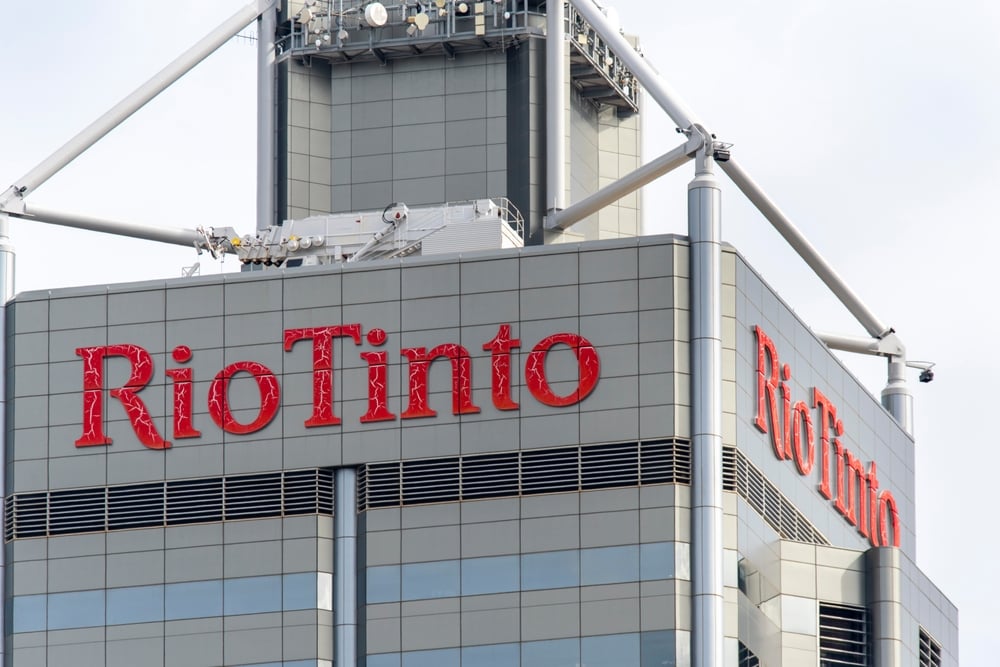
Rio Tinto and BHP to collaborate on Pilbara iron ore mining
Yahoo Finance· 2026-01-16 10:05
Core Insights - Rio Tinto and BHP plan to jointly mine up to 200 million tonnes of iron ore from their Yandicoogina and Yandi sites in Western Australia through non-binding memorandums of understanding [1][2] - The collaboration aims to leverage existing infrastructure to enhance production with minimal capital investment, thereby extending the life of operations and supporting local communities [2][3] Mining Operations - The initiative includes joint efforts at Rio Tinto's Wunbye deposit and the use of BHP's Yandi Lower Channel Deposit ore at Rio Tinto's wet plants [1] - A final investment decision regarding the commencement of ore extraction is expected early next decade, contingent upon regulatory approvals and consultations with traditional owners [3] Strategic Development - The mining companies have outlined a strategy that begins with a conceptual study, followed by an order of magnitude study to assess the potential of the collaboration [2] - BHP's WA iron ore asset president emphasized the importance of productivity and resource optimization in unlocking new opportunities [3] Location and Production - Yandi is located 178 km north-west of Newman and is part of a joint venture involving BHP (85%) and Mitsui and ITOCHU (15%), with significant production achievements since its inception [4] - Yandicoogina, situated around 95 km north-west of Newman, is known for producing Hamersley Iron Yandi fines for steelmaking in East Asia and southern China, and is recognized for its use of autonomous haul trucks [5] Technological Innovation - BHP and Rio Tinto have also introduced Australia's first battery-electric haul trucks at the Jimblebar mine, marking a trial for sustainable mining technology aimed at reducing greenhouse gas emissions [6]

战略性矿产系列报告:铀,天然铀价值重估,长牛征程进行时
Minmetals Securities· 2026-01-16 08:43
Investment Rating - The investment rating for the uranium industry is "Positive" [3] Core Insights - The report emphasizes the long-term bullish trend for uranium, driven by geopolitical factors and the global push for clean energy solutions, particularly nuclear power [28] - Uranium is recognized as a strategic mineral, with its importance highlighted in various national critical mineral lists, including those of the US, China, and Canada [28] - The report outlines the nuclear fuel cycle, indicating that uranium constitutes 51% of nuclear fuel costs, which translates to approximately 9% of the overall cost of nuclear power generation [29] Summary by Sections 1. Nuclear Fuel Cycle Overview - The nuclear fuel cycle includes the preparation of nuclear fuel before it enters the reactor, its combustion within the reactor, and the subsequent processing of spent fuel [34] - The cycle can be categorized into front-end and back-end processes, with the front-end involving uranium mining, conversion, and enrichment, while the back-end includes spent fuel management and waste disposal [34] 2. Natural Uranium Price Review and Forecast - The report does not provide specific details in this section, indicating a focus on supply-demand dynamics instead [7] 3. Natural Uranium Supply and Demand Patterns - Natural uranium is widely distributed in the Earth's crust, with an average abundance of approximately 2.5 parts per million (ppm) [37] - The report identifies that the highest economic value uranium deposits are sandstone/sedimentary types, which account for about 18% of global resources [37] - Kazakhstan, Canada, and Australia together account for over 50% of the world's uranium resources, with Kazakhstan being the largest producer [44][49] 4. Nuclear Fuel Cycle Technology Chain Overview - The report details the entire nuclear fuel cycle, emphasizing the importance of uranium as a critical resource for nuclear energy [28] - It highlights that uranium's cost constitutes a significant portion of nuclear fuel expenses, with the front-end costs being crucial for the overall economics of nuclear power [29] 5. Upstream - Uranium Resource Distribution - The report notes that the global uranium resource distribution is concentrated, with Australia, Kazakhstan, and Canada holding the majority of the resources [44] - It mentions that the global uranium production is expected to meet 90% of the demand, with Kazakhstan, Canada, and Namibia being the top producers [49] 6. Midstream - Conversion and Enrichment - The report states that only a few countries, including Russia, the US, France, and China, possess large-scale uranium conversion and enrichment capabilities [59][65] - It highlights the strategic sensitivity of the enrichment process, which is tightly regulated and dominated by a few key players [65] 7. Downstream - Nuclear Fuel Component Manufacturing - The manufacturing of nuclear fuel components is the final step in the nuclear fuel cycle, primarily involving the production of uranium oxide ceramic fuel pellets [74] - The report indicates that the global capacity for fuel component manufacturing is currently in surplus, with countries like China, India, and South Korea striving for self-sufficiency [74]


Asian Markets Track Wall Street Mostly Higher
RTTNews· 2026-01-16 03:02
Market Overview - Asian stock markets are mostly higher, driven by positive cues from Wall Street and easing geopolitical concerns regarding the U.S. and Iran [1] - The Australian stock market is modestly higher, continuing gains from the previous sessions, with the S&P/ASX 200 nearing the 8,900 level [2] - The Japanese market is notably lower, with the Nikkei 225 falling to 53,874.59, down 235.91 points or 0.44 percent [7] Australian Market Details - The S&P/ASX 200 Index gained 30.50 points or 0.34 percent to 8,892.20, after a low of 8,855.60 [3] - Major miners like Fortescue and Rio Tinto are gaining almost 1 percent, while BHP Group and Mineral Resources are losing almost 1 percent [4] - Oil stocks are weak, with Santos down almost 1 percent and Woodside Energy declining more than 1 percent [4] Technology Sector - In the tech sector, Afterpay-owner Block is losing almost 1 percent, while WiseTech Global is gaining almost 1 percent [5] - Appen is surging more than 10 percent after reporting that 4 million performance rights lapsed on December 31, 2025 [5] Japanese Market Details - SoftBank Group is gaining more than 1 percent, while Fast Retailing is down more than 1 percent [8] - Among automakers, Toyota is edging down 0.4 percent and Honda is declining more than 1 percent [8] - In the banking sector, Mizuho Financial is gaining more than 1 percent [9] Other Asian Markets - South Korea and Taiwan are up 1.0 and 1.5 percent, respectively, while New Zealand, China, Hong Kong, and Singapore are higher by 0.1 to 0.5 percent [12] Wall Street Performance - On Wall Street, major averages ended the day in positive territory, with the Dow advancing 292.81 points or 0.6 percent to 49,442.44 [14] - The Nasdaq climbed 58.27 points or 0.3 percent to 23,530.02, and the S&P 500 rose 17.87 points or 0.3 percent to 6,944.47 [14] Commodity Prices - Crude oil prices fell significantly, with West Texas Intermediate crude down $2.83 or 4.56 percent at $59.19 per barrel [15]

全球大公司要闻 | Visa联合苹果支持中国持卡人跨境支付
Wind万得· 2026-01-15 22:46
Group 1 - TSMC reported a 35% year-on-year increase in net profit for Q4 2025, reaching approximately $16 billion, with a gross margin exceeding 60% for the first time. The company expects a 40% revenue growth in Q1 2026, projecting $35.8 billion in revenue and a 37% increase in annual capital expenditure to $56 billion [2] - Goldman Sachs plans to raise $16 billion through the issuance of investment-grade bonds, marking the largest such issuance in Wall Street history. This transaction is part of three bond issuances launched after the quarterly earnings reports from the six major banks [2] - Boston Scientific announced the acquisition of Penumbra for $14.5 billion, with a per-share price of $374, representing a 19% premium over the pre-acquisition price. The deal aims to enhance the company's cardiovascular product portfolio and strengthen its competitive position in the global medical device market [2] Group 2 - SAIC Motor expects a net profit growth of 438%-558% in 2025, driven by significant increases in electric vehicle sales, supply chain cost optimization, and successful overseas market expansion [5] - Zijin Mining anticipates a net profit of 20 billion to 20.8 billion yuan for 2025, reflecting a year-on-year increase of 47.8% to 53.71%, supported by rising prices and volumes of key products like copper and cobalt [6] - Longpan Technology expects procurement transactions with CATL to reach up to 7 billion yuan in 2026, enhancing strategic cooperation in the new energy supply chain [5] Group 3 - Microsoft has raised $12.5 billion for its AI project in collaboration with BlackRock, aiming for a total of $30 billion, and has signed an AI content training agreement with Wikipedia [8] - Tesla is testing a custom 5G modem with Samsung, expecting to supply it in the first half of the year, while projecting a 59% market share in the U.S. electric vehicle market by 2025 [8] - Morgan Stanley reported Q4 2025 net revenue of $17.89 billion, a 10.3% year-on-year increase, with net profit of $4.4 billion, driven by strong performance in investment banking and wealth management [8]




巨头联手拓产能!必和必拓(BHP.US)与力拓(RIO.US)深化合作 瞄准年产近2亿吨铁矿石
Zhi Tong Cai Jing· 2026-01-15 06:41
Core Viewpoint - BHP and Rio Tinto are planning a collaboration in Australia's Pilbara iron ore region to increase steelmaking material production capacity to nearly 200 million tons starting in the next decade [1][2] Group 1: Collaboration Details - The two mining giants signed two non-binding agreements to explore cooperation on Rio Tinto's Wunbye deposit and BHP's Yandi project to enhance long-term capacity [1] - The first memorandum focuses on the joint development of the Wunbye deposit, while the second involves transporting some ore from the expanded Yandi project to Rio Tinto's processing facilities [2] Group 2: Market Context - Despite a shift towards metals needed for energy transition, mining companies are still looking for ways to maintain iron ore revenue due to ongoing demand for steelmaking raw materials from other Asian economies [1] - Pilbara has been a core area for global iron ore supply for the past 25 years, having delivered billions of tons to China, which has supported its rapid economic growth [2] Group 3: Challenges and Financial Strategies - Mining companies face challenges with declining ore grades, which have contributed to lower iron ore prices [2] - BHP and Rio Tinto are balancing capacity expansion with capital management while seeking to maximize the efficiency of existing infrastructure [2] - BHP recently sold a significant portion of its iron ore business's supporting power grid for $2 billion to BlackRock's Global Infrastructure Partners LP, with proceeds directed towards copper and other key business areas [2]
Global Markets Navigate Geopolitical Shifts and Major Corporate Developments
Stock Market News· 2026-01-15 02:38
Geopolitical Landscape - Iran has closed its airspace to most flights amid rising tensions with the U.S., particularly with the repositioning of a U.S. carrier strike group, including the USS Abraham Lincoln, towards the region [2][7] - Iranian officials have threatened to strike American military bases in the Middle East if the U.S. takes military action, highlighting the fragility of regional stability and potential implications for global energy markets [2][7] U.S. Foreign Policy Developments - U.S. President Donald Trump is set to meet with Venezuelan opposition leader María Corina Machado, indicating potential shifts in U.S. foreign policy towards Venezuela following a military operation to remove Nicolás Maduro [3] - Colombian President Gustavo Petro will also meet with President Trump to discuss bilateral relations and regional issues, following a phone call that eased previous tensions [3] Technology Sector Developments - Alibaba Group has upgraded its Qwen app, allowing users to order food and book travel directly within the app, positioning it as an AI-powered lifestyle decision center [4] - This upgrade integrates services from Alibaba's ecosystem, intensifying competition in the AI e-commerce and super-app markets [4][7] Mining Sector Collaboration - Rio Tinto and BHP Group announced a collaboration to extract up to 200 million tonnes of iron ore in Australia's Pilbara region, focusing on developing Rio Tinto's Wunbye deposit and utilizing BHP's Yandi mine [5] - This joint venture aims to leverage existing infrastructure for additional production with minimal capital requirements, potentially impacting global iron ore supply [5][7] Market Performance - The Indonesia Stock Market reached a new record high of 9,081.069, rising 0.5% early on January 15, 2026, reflecting strong investor sentiment in the emerging market [6][7] Currency Market Dynamics - The AUD/USD currency pair fell below 0.6700, trading around 0.6680, influenced by easing inflation expectations in Australia, with Consumer Inflation Expectations for January decreasing to 4.6% from 4.7% [8][7]


力拓与必和必拓联手开发澳大利亚铁矿石
Xin Lang Cai Jing· 2026-01-14 23:27
Core Viewpoint - Rio Tinto and BHP have agreed to collaborate in the Pilbara region of Australia to extract up to 200 million tons of iron ore from their adjacent operations [1][1]. Group 1: Collaboration Details - The companies announced that they will consider developing Rio Tinto's Wunbye deposit under two non-binding agreements [1][1]. - They will also explore the possibility of BHP supplying its Yandi Lower Channel Deposit ore to Rio Tinto, which would process it using its existing wet processing plant [1][1]. Group 2: Market Position - Rio Tinto and BHP are the two largest mining companies globally by market capitalization and are also among the largest iron ore producers, which is essential for steel production [1][1]. - Matthew Holcz, head of Rio Tinto's iron ore business, stated that through smarter collaboration, they can better utilize existing infrastructure to release additional output with minimal capital requirements [1][1].
Rio Tinto and BHP explore collaboration to mine up to 200 million tonnes of Pilbara iron ore
Businesswire· 2026-01-14 23:00
Core Viewpoint - Rio Tinto and BHP have entered into non-binding MOUs to collaborate on extracting up to 200 million tonnes of iron ore from their adjacent Yandicoogina and Yandi operations in the Pilbara region, building on previous agreements to enhance productivity and resource utilization [1][2][3]. Group 1: Collaboration Details - The collaboration aims to leverage existing infrastructure to unlock additional production with minimal capital requirements, thereby extending the life of operations and creating value for local communities [2][3]. - The companies will conduct a conceptual study followed by an order of magnitude study, with the first ore expected to be produced early next decade, pending regulatory and joint venture approvals [3]. Group 2: Operational Synergies - BHP will supply ore from its Yandi Lower Channel Deposit to Rio Tinto for processing at its existing wet plants under agreed commercial terms, enhancing operational efficiency [4]. - The partnership is expected to create new value and benefits for stakeholders, including employees, partners, customers, and local communities [3].

Global miners set for M&A bonanza: DBRS
Investment Executive· 2026-01-13 22:17
Core Viewpoint - The proposed merger between Rio Tinto and Glencore aims to create a mining powerhouse with an enterprise value of US$260 billion, positioning them ahead of BHP Group Ltd. [1] Group 1: Merger Implications - If the merger between Rio Tinto and Glencore is completed, it is expected to stimulate further deal-making within the mining industry [1] - The merger will likely pressure BHP to pursue its own mega merger, with expectations of aggressive acquisitions from BHP throughout 2026 [2] - Other major players in the industry, such as Southern Copper Corp., Freeport-McMoRan Inc., and Vale S.A., may also feel compelled to make acquisitions to avoid being left behind [2] Group 2: M&A Environment - The current environment for mergers and acquisitions is bolstered by strong credit metrics among mining companies, which have deleveraged due to record-high commodity prices since 2020 [3] - Mergers can enhance companies' operating asset scale and diversification, while also allowing for risk reduction through portfolio re-evaluation and divestment of non-core assets [3]