
BHP(BHP)

Search documents
必和必拓上调铜产量指引 钾肥项目成本再次上升
Xin Lang Cai Jing· 2026-01-20 01:09
Core Viewpoint - BHP Group has raised its annual copper production forecast amid record-high copper prices, while also announcing cost overruns in its Canadian potash project [1][3]. Group 1: Copper Production - BHP now expects to produce between 1.9 million to 2 million tons of copper for the fiscal year ending in June, up from a previous estimate of 1.8 million to 2 million tons [1][3]. - The increase in copper production is attributed to strong performance at the Escondida copper mine in Chile, which will help the company capitalize on record prices [1][3]. - U.S. copper futures have surged to historic highs due to investor speculation about potential shortages of the metal, which is widely used in construction, electronics, and automotive manufacturing [1][3]. Group 2: Potash Project Cost Overruns - BHP has announced that the first phase of the Jansen potash project in Saskatchewan, Canada, is now expected to cost $8.4 billion, including contingency costs [2][4]. - The company attributes the latest cost overruns to previously unaccounted construction hours and material quantities in earlier cost estimates [2][4].

必和必拓(BHP.US)季度铁矿石产量小幅上升 上调全年铜产量指引
智通财经网· 2026-01-20 00:50
Core Viewpoint - BHP maintains its annual production forecast for iron ore while reporting a 5% year-on-year increase in iron ore production for the second fiscal quarter, despite a decline in copper production [1] Group 1: Iron Ore Production - BHP produced 69.7 million tons of iron ore in the second fiscal quarter, a 5% increase compared to the same period last year [1] - The company reaffirmed its annual iron ore production forecast, maintaining it between 284 million to 296 million tons [1] - The actual price of iron ore slightly increased to $84.71 per ton [1] Group 2: Copper Production - Copper production decreased by 4% to 490,500 tons [1] - BHP raised the lower end of its copper production forecast for the fiscal year ending June 30, now expecting production between 1.9 million to 2 million tons, up from the previous forecast of 1.8 million to 2 million tons [1] - The adjustment in copper production expectations is attributed to strong operational performance from its copper mining assets [1] Group 3: Potash and Future Growth - BHP's Jansen project is a significant source of potash, expected to commence production by mid-2027 [1] - The company indicated that costs will rise again to $8.4 billion, which is $1 billion higher than the previously announced upper limit of cost range in July [1]
必和必拓上半财年铁矿石产量创新高,维持全年产量预期不变
Xin Lang Cai Jing· 2026-01-20 00:03
Core Viewpoint - BHP Group reported record iron ore production for the first half of the fiscal year ending December 31, with a total output of 146.6 million tons, a 1% increase year-over-year [1][2]. Production Performance - In the December quarter, iron ore production reached 76.3 million tons, up from 70.2 million tons in the September quarter [3][7]. - The company maintained its full-year iron ore production forecast at 284 million to 296 million tons, indicating a strong start to the typically rainy third quarter [3][7]. - BHP raised the lower end of its copper production forecast to between 1.9 million and 2 million tons, slightly above the previous estimate of 1.8 million to 2 million tons, due to strong operational performance from its copper assets [3][7]. Project Cost Updates - BHP announced a 20% increase in the estimated total investment for its Jansen potash project in Canada, raising the range from $7 billion to $7.4 billion to $8.4 billion [2][4]. - The cost increase reflects previously unaccounted construction hours and material usage, with the initial investment cost approved in August 2021 being $5.7 billion [4][8]. Upcoming Financial Reporting - BHP is scheduled to release its half-year financial report on February 17 [4][8].
BHP (ASX:BHP) share price in focus on December 2025 update and copper upgrade
Rask Media· 2026-01-19 23:37
Core Viewpoint - BHP Group Ltd has reported its December update, highlighting mixed production results across its key commodities, with a notable increase in iron ore production and a decrease in copper and coal production [1][2][3]. Production Performance - Copper production for the December quarter was 490.5kt, down 1% quarter on quarter and down 4% year on year [2]. - Iron ore production reached 69.7mt, showing a 9% increase quarter on quarter and a 5% increase year on year [2]. - Steelmaking coal production fell to 4.3mt, reflecting a 12% decline quarter on quarter and a 3% drop year on year [3]. - Energy coal production was 4.6mt, marking a 31% increase quarter on quarter and a 25% increase year on year [3]. Cost and Guidance Updates - The estimated cost for the Jansen stage 1 project has risen to US$8.4 billion, up from previous estimates of US$7 billion to US$7.4 billion [3]. - BHP has increased its FY26 copper production guidance to capitalize on record copper prices driven by strong demand and supply disruptions among competitors [4]. Growth Initiatives - BHP is advancing its copper growth options, including the Vicuna project in Argentina, which is on track to complete its integrated technical report in Q1 2026 [5]. - The environmental impact declaration for the Escondida new concentrator in Chile is expected to be submitted in the second half of FY26 [5]. Market Context - Demand for commodities remains strong, particularly from China and India, with global growth forecasted at around 3% for 2026, supporting commodity demand [10][11]. - BHP is positioned to benefit from this demand, with a significant copper growth pipeline aimed at achieving approximately 2 Mt of attributable copper production in the 2030s [11]. Management Insights - CEO Mike Henry emphasized BHP's strong operational performance in copper and iron ore, with copper prices up 32% and iron ore prices up 4% year on year [7]. - A transaction with Global Infrastructure Partners is expected to generate proceeds of approximately US$2 billion while maintaining ownership and operational control [8]. Future Outlook - The Jansen potash project in Canada is on track for mid-2027 production, expected to add a new commodity to BHP's portfolio [9]. - The company is investing for long-term growth, focusing on production increases that benefit current shareholders [12].


必和必拓高管这样看2026年的铜市场
日经中文网· 2026-01-18 00:33
Group 1 - The core viewpoint is that despite the downturn in China's real estate sector, strong performance in electric vehicles (EVs), renewable energy, and machinery is beneficial for copper demand [2][5] - The international price of copper is at a record high, driven by the need for infrastructure in renewable energy and data centers for artificial intelligence (AI), leading to expectations of supply shortages [2][6] - Major economies like the US and China are expected to maintain strong GDP growth, with India projected to experience robust growth, supporting strong copper demand through 2026 [4] Group 2 - Although China's real estate industry is struggling, growth in manufacturing is offsetting this decline, positively impacting copper demand [5] - Speculative funds are flowing into the copper market due to anticipated demand from data centers, which are still in the early stages but will significantly increase copper demand in the next 10-15 years [6] - Current global copper demand is around 25-26 million tons, with an expected increase of 10 million tons by 2035, but achieving a 70% increase in supply by 2050 is challenging due to insufficient investment [7] Group 3 - Existing mines are facing declining ore grades, but some are improving production efficiency, having increased copper output by 30% over the past three years [8]

【环球财经】力拓、必和必拓将合作开发西澳相邻矿区铁矿资源
Xin Lang Cai Jing· 2026-01-16 13:54
Core Viewpoint - Rio Tinto and BHP have agreed to jointly develop iron ore resources at the boundary of their mining rights in the Pilbara region of Western Australia, aiming to extract up to 200 million tons of iron ore [1][2]. Group 1: Joint Development Agreement - The companies will collaborate on the Yandicoogina and Yandi iron ore operations, including the development of Rio Tinto's Wunbye deposit [1]. - BHP will supply "wet ore" from its Yandi Lower Channel segment to be processed at Rio Tinto's facilities, enhancing operational efficiency [1][2]. Group 2: Strategic Rationale - The collaboration is seen as a way to maximize the use of existing infrastructure, extend the lifespan of their mines, and recover previously stranded ore [2]. - Analysts note that declining iron ore grades in Western Australia and the recent production start of the Simandou iron ore project in Guinea are influencing this partnership [3]. Group 3: Future Outlook - Mining operations are expected to commence in the early 2030s, pending final investment decisions and necessary approvals from regulators and Indigenous groups [2].


Elemental Royalty Options Three Exploration Licenses in Serbia to BHP
TMX Newsfile· 2026-01-16 12:30
Core Viewpoint - Elemental Royalty Corporation has entered into a definitive option and earn-in agreement with BHP Group Limited for three exploration licenses in the Bor Mining District of Serbia, allowing BHP to acquire Magma Resources doo in exchange for cash payments and work commitments while Elemental retains a 2% NSR royalty on the projects [1][3][4] Group 1: Agreement Details - The agreement allows BHP to acquire a 100% interest in Magma and the projects by making an initial payment of $200,000 after six months, followed by annual payments of $200,000 until the earn-in is complete, and completing $5,000,000 in exploration expenditures within five years [3] - Upon exercising the option, Elemental will retain a 2% NSR royalty interest on each project, with BHP having the option to buy back up to 0.5% of the royalty in increments of 0.25% for $5,000,000 each before the eighth and eleventh anniversaries of the agreement [4] Group 2: Project Overview - The Bor Mining District is a significant copper producer in Europe, with Elemental's projects strategically located along the trend of Zijin Mining's operations, including the Čukaru Peki copper-gold mine [2][5] - Elemental has acquired over 150 square kilometers of mineral rights in the Bor Mining District, targeting both traditionally prospective Upper Cretaceous andesite units and deeper host rock packages where recent discoveries have been made [6] - The Lenovac North and South licenses cover the southern extension of the mineralization trend associated with Zijin's Brestovac license, while the Durlan Istok license is located near Zijin's Majdanpek mine [7][8]

Rio Tinto, Glencore Merger Could Trigger A Significant Asset Spin-Off - Glencore (OTC:GLCNF), Rio Tinto (NYSE:RIO)
Benzinga· 2026-01-16 11:51
Core Viewpoint - Rio Tinto and Glencore are considering a spin-off of coal assets as part of discussions surrounding a potential $200 billion merger, highlighting the complexities of integrating their diverse portfolios and investor bases [1]. Group 1: Spin-off Considerations - Glencore's coal operations contribute approximately 8% to the combined group's EBITDA of $45.6 billion, indicating a significant standalone value in the tens of billions [2]. - A potential solution involves creating an ASX-listed vehicle for coal, similar to BHP's South32 demerger, which would allow the merged entity to maintain economic value while providing clearer exposure to critical metals [3]. - Glencore has already initiated a spin-off process by restructuring its coal assets into a separate subsidiary, with reports suggesting that other commodities like chrome, vanadium, and manganese may also be included in the spin-off [4]. Group 2: Copper Market Dynamics - Copper has emerged as a key catalyst for the merger discussions, with prices exceeding $13,000 per ton, making the addition of copper to investment portfolios increasingly urgent [5]. - The International Energy Agency (IEA) projects a potential 50% increase in copper demand by 2040, driven by electrification and energy transition infrastructure, amidst concerns over supply growth and structural deficits [5]. - A merged Rio-Glencore entity would control about 7% of global copper output, positioning it as a dominant player in the market [6]. Group 3: Advisory and Market Response - Macquarie Capital is advising Rio, with JPMorgan and Allens supporting transactions, while Citi is advising Glencore [7]. - Under UK takeover rules, Rio has until February 5 to make a formal offer or withdraw from negotiations [7]. - In premarket trading, Rio Tinto shares fell by 1.54% to $65.01, while Glencore shares increased by 0.77% [7].
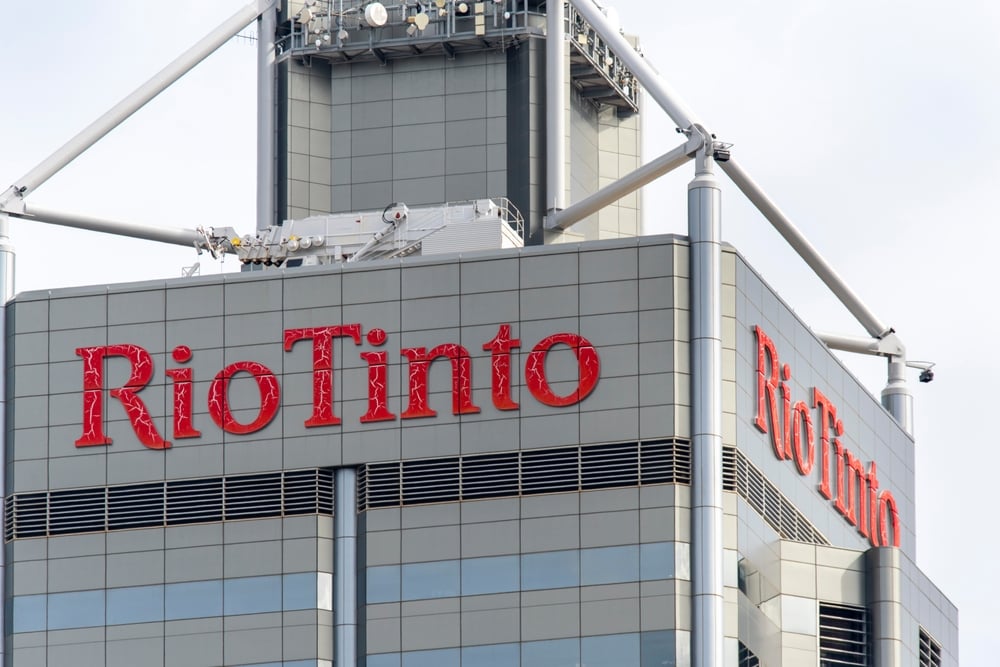
Rio Tinto and BHP to collaborate on Pilbara iron ore mining
Yahoo Finance· 2026-01-16 10:05
Core Insights - Rio Tinto and BHP plan to jointly mine up to 200 million tonnes of iron ore from their Yandicoogina and Yandi sites in Western Australia through non-binding memorandums of understanding [1][2] - The collaboration aims to leverage existing infrastructure to enhance production with minimal capital investment, thereby extending the life of operations and supporting local communities [2][3] Mining Operations - The initiative includes joint efforts at Rio Tinto's Wunbye deposit and the use of BHP's Yandi Lower Channel Deposit ore at Rio Tinto's wet plants [1] - A final investment decision regarding the commencement of ore extraction is expected early next decade, contingent upon regulatory approvals and consultations with traditional owners [3] Strategic Development - The mining companies have outlined a strategy that begins with a conceptual study, followed by an order of magnitude study to assess the potential of the collaboration [2] - BHP's WA iron ore asset president emphasized the importance of productivity and resource optimization in unlocking new opportunities [3] Location and Production - Yandi is located 178 km north-west of Newman and is part of a joint venture involving BHP (85%) and Mitsui and ITOCHU (15%), with significant production achievements since its inception [4] - Yandicoogina, situated around 95 km north-west of Newman, is known for producing Hamersley Iron Yandi fines for steelmaking in East Asia and southern China, and is recognized for its use of autonomous haul trucks [5] Technological Innovation - BHP and Rio Tinto have also introduced Australia's first battery-electric haul trucks at the Jimblebar mine, marking a trial for sustainable mining technology aimed at reducing greenhouse gas emissions [6]
战略性矿产系列报告:铀,天然铀价值重估,长牛征程进行时
Minmetals Securities· 2026-01-16 08:43
Investment Rating - The investment rating for the uranium industry is "Positive" [3] Core Insights - The report emphasizes the long-term bullish trend for uranium, driven by geopolitical factors and the global push for clean energy solutions, particularly nuclear power [28] - Uranium is recognized as a strategic mineral, with its importance highlighted in various national critical mineral lists, including those of the US, China, and Canada [28] - The report outlines the nuclear fuel cycle, indicating that uranium constitutes 51% of nuclear fuel costs, which translates to approximately 9% of the overall cost of nuclear power generation [29] Summary by Sections 1. Nuclear Fuel Cycle Overview - The nuclear fuel cycle includes the preparation of nuclear fuel before it enters the reactor, its combustion within the reactor, and the subsequent processing of spent fuel [34] - The cycle can be categorized into front-end and back-end processes, with the front-end involving uranium mining, conversion, and enrichment, while the back-end includes spent fuel management and waste disposal [34] 2. Natural Uranium Price Review and Forecast - The report does not provide specific details in this section, indicating a focus on supply-demand dynamics instead [7] 3. Natural Uranium Supply and Demand Patterns - Natural uranium is widely distributed in the Earth's crust, with an average abundance of approximately 2.5 parts per million (ppm) [37] - The report identifies that the highest economic value uranium deposits are sandstone/sedimentary types, which account for about 18% of global resources [37] - Kazakhstan, Canada, and Australia together account for over 50% of the world's uranium resources, with Kazakhstan being the largest producer [44][49] 4. Nuclear Fuel Cycle Technology Chain Overview - The report details the entire nuclear fuel cycle, emphasizing the importance of uranium as a critical resource for nuclear energy [28] - It highlights that uranium's cost constitutes a significant portion of nuclear fuel expenses, with the front-end costs being crucial for the overall economics of nuclear power [29] 5. Upstream - Uranium Resource Distribution - The report notes that the global uranium resource distribution is concentrated, with Australia, Kazakhstan, and Canada holding the majority of the resources [44] - It mentions that the global uranium production is expected to meet 90% of the demand, with Kazakhstan, Canada, and Namibia being the top producers [49] 6. Midstream - Conversion and Enrichment - The report states that only a few countries, including Russia, the US, France, and China, possess large-scale uranium conversion and enrichment capabilities [59][65] - It highlights the strategic sensitivity of the enrichment process, which is tightly regulated and dominated by a few key players [65] 7. Downstream - Nuclear Fuel Component Manufacturing - The manufacturing of nuclear fuel components is the final step in the nuclear fuel cycle, primarily involving the production of uranium oxide ceramic fuel pellets [74] - The report indicates that the global capacity for fuel component manufacturing is currently in surplus, with countries like China, India, and South Korea striving for self-sufficiency [74]

