
Citi(C)

Search documents
X @Bloomberg
Bloomberg· 2025-10-06 14:54
Mexican billionaire German Larrea is bidding for full control of Citigroup’s Banamex at a higher valuation than a rival’s minority offer, though chances remain slim https://t.co/CwzDuXkeO4 ...

Citi has a competing bid for Banamex
Yahoo Finance· 2025-10-06 12:24
This story was originally published on Banking Dive. To receive daily news and insights, subscribe to our free daily Banking Dive newsletter. Grupo Mexico, the mining and transportation conglomerate that once was considered a front-runner to buy Banamex from Citi, has made the bank a fresh offer, according to a securities filing Friday seen by Reuters and Bloomberg. The conglomerate, controlled by Mexican billionaire Germán Larrea, would buy 25% of Banamex at 85% of its book value, and the remaining 75% at ...
Citigroup taps Barclays, Nordea executives to head Nordic investment banking
Reuters· 2025-10-06 10:33
Citigroup has hired Tobias Akermark from Barclays and Kasper Dichow from Nordea to jointly lead its Nordic investment banking franchise, the U.S. bank said on Monday, as it expands its European operat... ...



Multicoin Exec Says GENIUS Act Will End Banks’ ‘Rip-Off’ of Retail Depositors with Low Rates
Yahoo Finance· 2025-10-06 09:48
Core Insights - The GENIUS Act is expected to instigate significant competition in retail banking, with technology companies likely to challenge traditional banks by offering stablecoin products that provide better yields and user experiences [1] - Major tech firms such as Meta, Google, and Apple are anticipated to utilize their extensive distribution networks to deliver stablecoins with enhanced returns, instant settlement, and free transfers integrated into popular applications [2] Banking Industry Response - The banking sector is actively lobbying against stablecoin platforms that could offer competitive yields, despite the GENIUS Act's restrictions being applicable only to issuers and not intermediaries [3] - Five prominent U.S. banking trade organizations have called on Congress to address perceived loopholes that enable crypto exchanges to provide stablecoin yields through affiliate programs, citing potential deposit outflows of $6.6 trillion as estimated by the Treasury [4] Historical Context and Concerns - Citigroup analyst Ronit Ghose has warned that stablecoin interest payments could lead to a deposit flight reminiscent of the 1980s, when money market funds grew from $4 billion to $235 billion in seven years, resulting in a $32 billion net withdrawal from traditional banks between 1981 and 1982 [5] - The American Bankers Association and the Bank Policy Institute have expressed concerns that joint marketing arrangements between issuers and exchanges could exacerbate deposit flight during financial stress, although major banks are simultaneously exploring stablecoin opportunities [6] Industry Developments - JPMorgan has introduced JPMD deposit tokens for institutional blockchain payments and has acted as the lead underwriter for Circle's IPO, indicating a growing interest in stablecoin initiatives [7] - Tushar Jain has dismissed banking concerns regarding interest payments to stablecoin holders, suggesting that existing prohibitions can be easily circumvented, as demonstrated by Coinbase's yield-sharing practices [7] - Stripe CEO Patrick Collison has echoed this sentiment, asserting that depositors should earn returns closer to market rates on their capital [7]

港交所消息:9月29日,花旗集团持有的赣锋锂业()H股多头头寸从6.27%降至5.74%
Xin Lang Cai Jing· 2025-10-06 09:42
港交所消息:9月29日, 花旗集团 持有的 赣锋锂业 ()H股多头头寸从6.27%降至5.74%。 ...

金价大涨!年内涨幅49%
Sou Hu Cai Jing· 2025-10-06 06:42
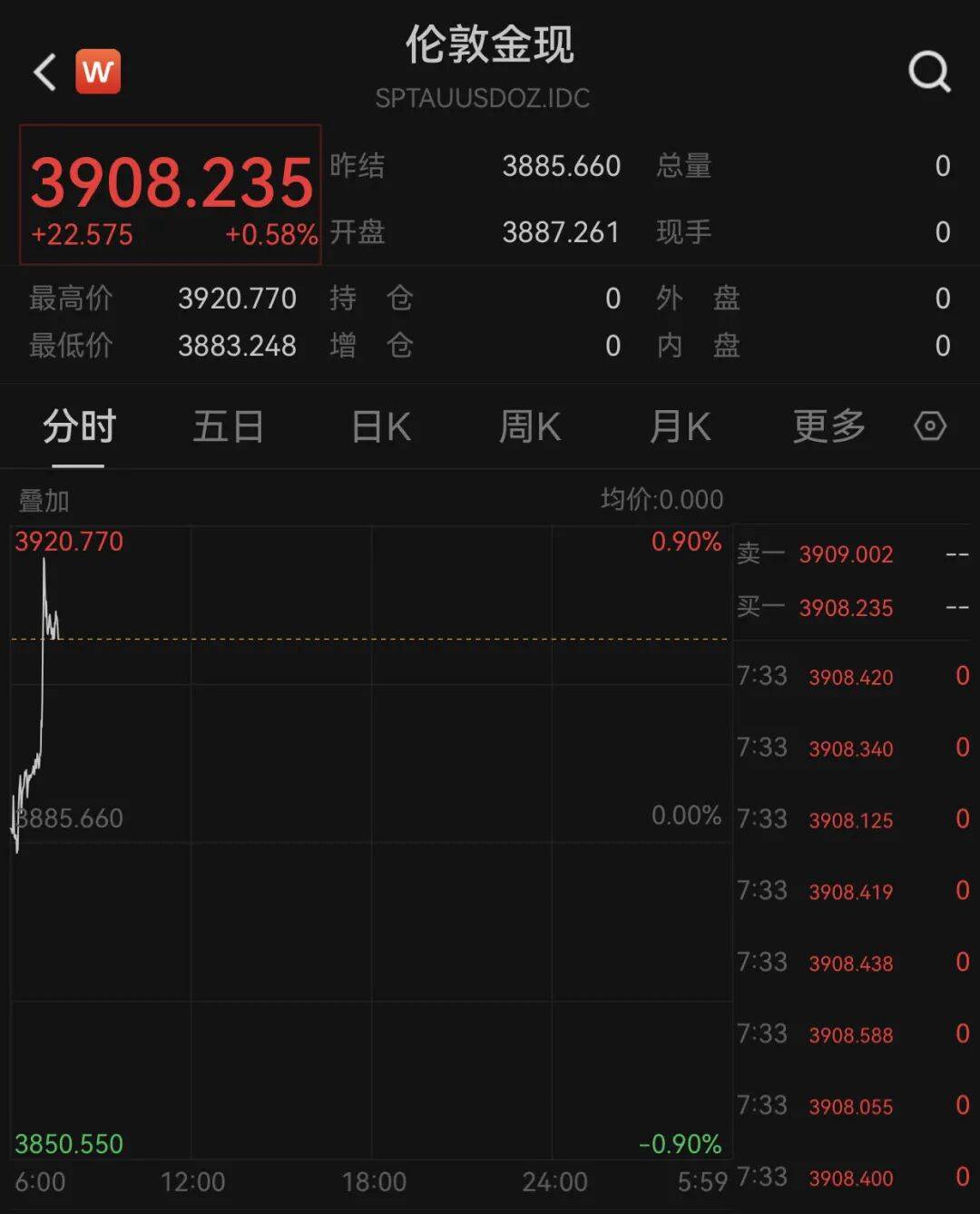
10月6日(周一),由于美国政府持续关门带来的不确定性加剧以及降息预期升温,现货黄金开盘走强,一度涨近1%,最高升至3920.77美元/盎司,再创 历史新高;此时距离首次突破3800美元关口仅不到10天,年内累计涨幅已达49%。 | < W | 伦敦金现 | | | | O | | --- | --- | --- | --- | --- | --- | | | SPTAUUSDOZ.IDC | | | | | | 3908 235 F | 3885.660 | | 总量 | | 0 | | +22.575 | 3887.261 +0.58% 十字 | | 即手 | | 0 | | 最高价 | 3920.770 0 | 持 仓 | 外 营 | | 0 | | 最低价 | 3883.248 0 | 博 色 | 内 雷 | | 0 | | 分时 | 五日 周K | EK | 目K | 更名 | | | 暨加 | | | 均价:0.000 | | | | 3920.770 | | | | 0.90% 卖一 3909.002 | | | | | | | 3908.235 | | | | | | | 7:33 3908. ...

花旗下调路威酩轩目标价至630欧元
Ge Long Hui A P P· 2025-10-06 05:59
格隆汇10月6日|花旗集团:将路威酩轩(LVMH)目标价从635欧元下调至630欧元。 ...

风向有变?华尔街开始讨论:投资者如何应对美国经济“过热”
Hua Er Jie Jian Wen· 2025-10-05 10:10
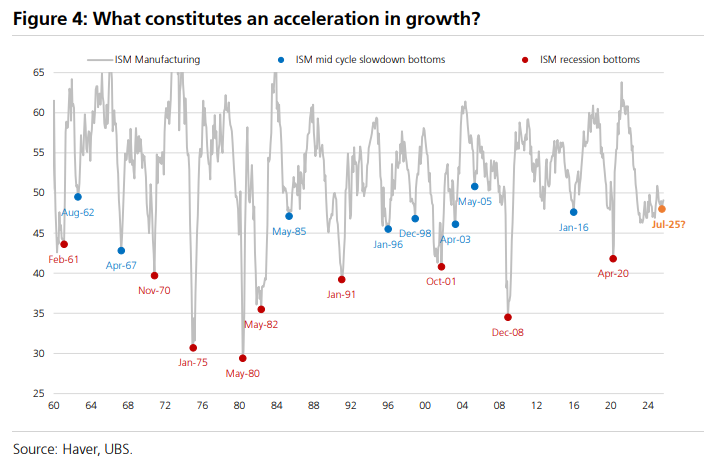
Core Viewpoint - Major Wall Street investment banks, including Goldman Sachs, UBS, and Citigroup, have raised concerns about the increasing risk of a "re-acceleration" of the U.S. economy, driven by resilient labor markets, expectations of fiscal stimulus, and a loose financial environment [1][2] Group 1: Economic Indicators - Goldman Sachs noted that the U.S. economy shows strong performance across multiple key indicators, with a significant rise in the U.S. macroeconomic surprise index and encouraging initial jobless claims data [2] - The global investment research department of Goldman Sachs projects a healthy GDP growth rate of 2.6% for the third quarter [2] - UBS defines economic acceleration as an increase of over 10 points in the ISM manufacturing index within 12 months [3] Group 2: Factors Driving Economic Acceleration - Key factors contributing to the risk of economic re-acceleration include: - Loose financial conditions characterized by strong performance of risk assets, expectations of future rate cuts by the Federal Reserve, and a weaker dollar [2] - Anticipated positive fiscal policy impulses in the first half of next year, alongside continued capital expenditure in the AI sector [2] - A solid consumer base in the U.S. and the impact of deregulation [2] Group 3: Investment Strategies - Investment banks recommend various strategies to hedge against the potential re-acceleration of the U.S. economy: - Consideration of U.S. small-cap stocks, Latin American currency carry trades, steepening yield curves, and commodities [1][2] - UBS highlights that small-cap stocks typically outperform large-cap stocks during economic expansion phases, with median outperformance of 5.4% after mid-cycle slowdowns and 20% after recessions [10][26] - UBS and Citigroup recommend Latin American currency carry trades, particularly emphasizing the Mexican peso for its dual benefits of carry opportunities and potential gains from stronger U.S. growth [15][17] Group 4: Commodity Outlook - Citigroup suggests buying copper options, citing macroeconomic factors and fundamentals that support rising copper prices [28] - UBS recommends oil as a hedging tool, predicting that a 10% increase in energy consumption due to U.S. re-acceleration could raise global oil demand by 2-3%, leading to a quicker market balance [29] Group 5: Yield Curve Strategies - Both Goldman Sachs and Citigroup advocate for strategies to steepen the yield curve as a hedge against the risk of U.S. economic re-acceleration [20][21] - Goldman Sachs suggests going long on the steepening of the 2-year and 10-year Treasury yield curve, while Citigroup believes that even with economic re-acceleration, front-end rates are unlikely to rise significantly due to overly dovish market pricing [20][21]

X @Bloomberg
Bloomberg· 2025-10-03 23:15
Mergers and Acquisitions - Grupo Mexico SAB, led by German Larrea, offered to acquire full control of Citigroup Inc's Banamex unit [1]
道明考恩将花旗集团目标价上调至105美元
Ge Long Hui· 2025-10-03 10:32
道明考恩(TD Cowen)分析师史蒂文・阿莱克索普洛斯(Steven Alexopoulos)将花旗集团的目标价从 95美元上调至105美元,同时维持 "持有" 评级。新设定的目标价(PT)较该股最新股价隐含7.9%的上 涨空间。 ...