CBRE(CBRE)

Search documents
CBRE世邦魏理仕发布《2026年中国投资者意向调查》专题报告
Sou Hu Cai Jing· 2026-01-28 08:11
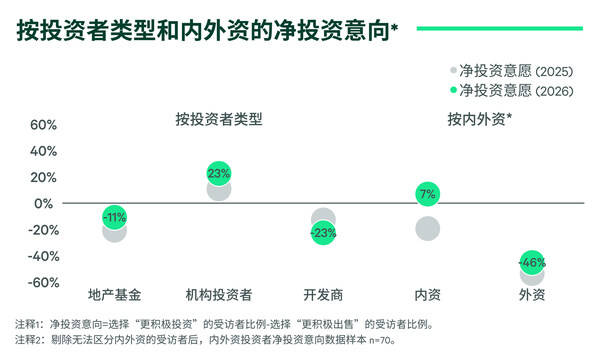
Core Insights - The Chinese commercial real estate investment market is expected to recover in 2026 despite cautious investor sentiment, with a slight increase in the proportion of respondents planning to invest and sell more actively [1] - Domestic net investment intentions have turned positive due to institutional investors and real estate funds, while foreign investors continue to show a net selling intention [2] Investment Sentiment - 43% of respondents plan to adopt a more aggressive investment strategy in 2026, and 52% are inclined to sell more actively, indicating a potential increase in transaction willingness [1] - 39% of respondents intend to increase their real estate asset allocation, up 3 percentage points from the previous year, with 12% planning significant increases, a rise of 6 percentage points [5] Property Preferences - Industrial logistics, rental residential, and retail properties remain the top three preferred property types among investors [6] - In alternative assets, student apartments have gained significant attention due to a supply-demand gap in higher education dormitory space, followed by infrastructure and life sciences real estate [9] Financing Environment - Nearly 80% of investors expect further interest rate cuts by the People's Bank of China in 2026, and new regulations on merger loans have improved the financing environment for large-scale commercial real estate investments [10] - The rental residential sector is expected to continue its growth trend, supported by policies for urban renewal and the integration of private-public REITs [10] ESG Considerations - Investors are shifting from general concern to a more focused approach regarding Environmental, Social, and Governance (ESG) standards, with 83% already adopting or planning to adopt ESG criteria in real estate investments [11] - Green buildings are recognized for their competitive advantage in attracting and retaining tenants, contributing to improved cash flow performance [11]


Here’s Why Vulcan Value Partners Reallocated Capital from CBRE Group (CBRE)
Yahoo Finance· 2026-01-27 12:16
Group 1 - Vulcan Value Partners reported positive results across all its investment strategies for Q4 2025, with the Large Cap Composite returning -1.5% in Q4 and 7.9% YTD, and the All-Cap Composite returning 1.3% in Q4 and 10.7% YTD [1] - The firm emphasized a focus on safety and long-term gains, improving price-to-value ratios despite overvalued markets, drawing parallels to the late 1990s dot-com bubble and current AI disruptions [1] - The firm plans to maintain its investment discipline in light of market conditions, indicating a cautious approach to potential overvaluation risks [1] Group 2 - Vulcan Value Partners exited its holdings in CBRE Group, Inc. (NYSE:CBRE) during Q4 2025, which is a leading commercial real estate services and investment company with a market capitalization of $50.68 billion [2] - CBRE Group, Inc. shares traded between $108.45 and $173.05 over the past 52 weeks, closing at $170.31 on January 26, 2026, with a one-month return of 4.29% and a three-month gain of 6.82% [2] - The investment in CBRE was deemed excellent due to its market-leading position and stable earnings from recurring business segments, despite challenges in property sales [3]
载阳启盛 | 世邦魏理仕北京年度论坛圆满落幕, 共绘“十五五”商业地产宏伟蓝图
Bei Jing Shang Bao· 2026-01-27 07:03
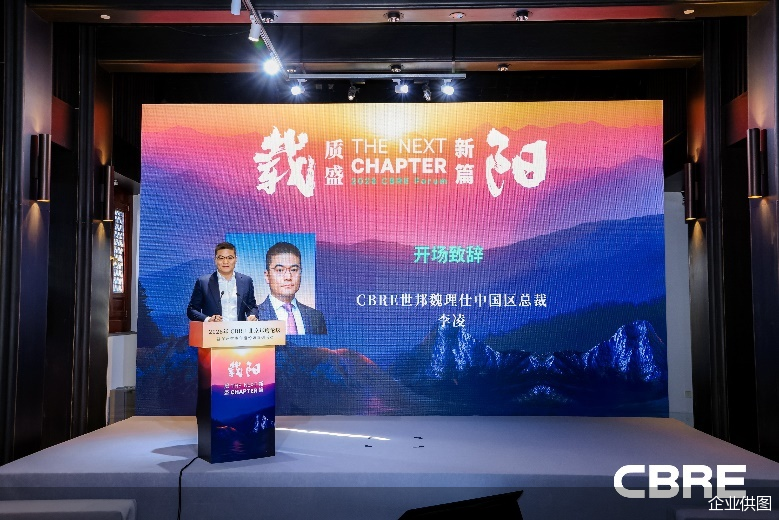
Core Insights - The commercial real estate industry is at a turning point, transitioning from quantity to quality as it enters the "15th Five-Year Plan" period [1] - The forum emphasized the importance of professional and refined operations in commercial real estate, moving away from aggressive growth strategies [2] - The event highlighted the need for collaboration among various stakeholders to navigate the challenges and opportunities in the commercial real estate sector [4] Policy Insights - The Beijing Municipal Bureau of Commerce outlined favorable policies for the consumer market in the "15th Five-Year Plan" period, indicating a critical phase for market restructuring and development [6] - The bureau aims to enhance the synergy between the consumer market and commercial real estate through innovative and collaborative efforts [7] Market Trends - CBRE's research department provided insights into the future of commercial real estate, focusing on strategies to adapt to complex environments over the next five years [9] - The forum facilitated a strategic partnership between CBRE and Beijing Business Daily's Deep Blue Think Tank, enhancing collaborative research efforts in the industry [11] Expert Discussions - A roundtable discussion featured experts addressing new market opportunities under the "15th Five-Year Plan," covering topics such as national strategic layouts and urban renewal planning [16] - Another roundtable focused on the outlook for the real estate capital market, discussing investment strategies for 2026 and reviewing market dynamics from the previous "14th Five-Year Plan" period [18]
战略性脱碳规划:将商业地产的愿景转化为价值
落基山研究所· 2026-01-27 00:25
Investment Rating - The report emphasizes the importance of strategic decarbonization planning for real estate investors to align building investments with sustainability goals and drive long-term asset value creation [12][20]. Core Insights - Real estate investors are increasingly pressured to adopt integrated decarbonization strategies that not only comply with regulations but also enhance asset value and create competitive advantages [12][23]. - The report highlights that nearly 70% of office occupiers would reject or reduce their payment for buildings lacking sustainable features, while LEED-certified buildings can achieve rent premiums of 3%-4% and higher occupancy rates [14][22]. - Strategic decarbonization planning is presented as a holistic approach that embeds sustainability into core asset and capital investment decision-making, allowing for operational savings and minimized financial risks [24][44]. Summary by Sections Executive Summary - The report outlines replicable solutions for real estate investors to transition from compliance to integrated decarbonization strategies that deliver value [12][13]. Introduction - Buildings account for nearly 40% of global energy-related greenhouse gas emissions, prompting regulatory pressures for sustainability in real estate investments [20][21]. Core Strategic Decarbonization Planning Principles - Six principles guide strategic decarbonization planning: manage energy demand, apply life-cycle-based incremental expense planning, align upgrades with trigger events, phase in cost-effective quick wins, deploy an integrated design approach, and consider risk overlays [15][27]. Case Studies - The report includes case studies of 345 Hudson and Galvanize Real Estate, showcasing practical applications of strategic decarbonization principles and their impact on asset performance [47][53]. Innovations on the Horizon - The report discusses the potential of artificial intelligence to enhance data-driven approaches in decarbonization planning and the evolution of industry standards like LEED v5 to incentivize continuous performance improvements [63][64]. Conclusion - The report concludes that adopting strategic decarbonization planning is imperative for real estate investors to protect asset value, reduce utility costs, and prepare for future regulatory and climate risks [44][65].
潮尚重构消费|世邦魏理仕中国区总裁李凌:时尚消费驱动生活方式全面扩容
Bei Jing Shang Bao· 2026-01-26 03:25
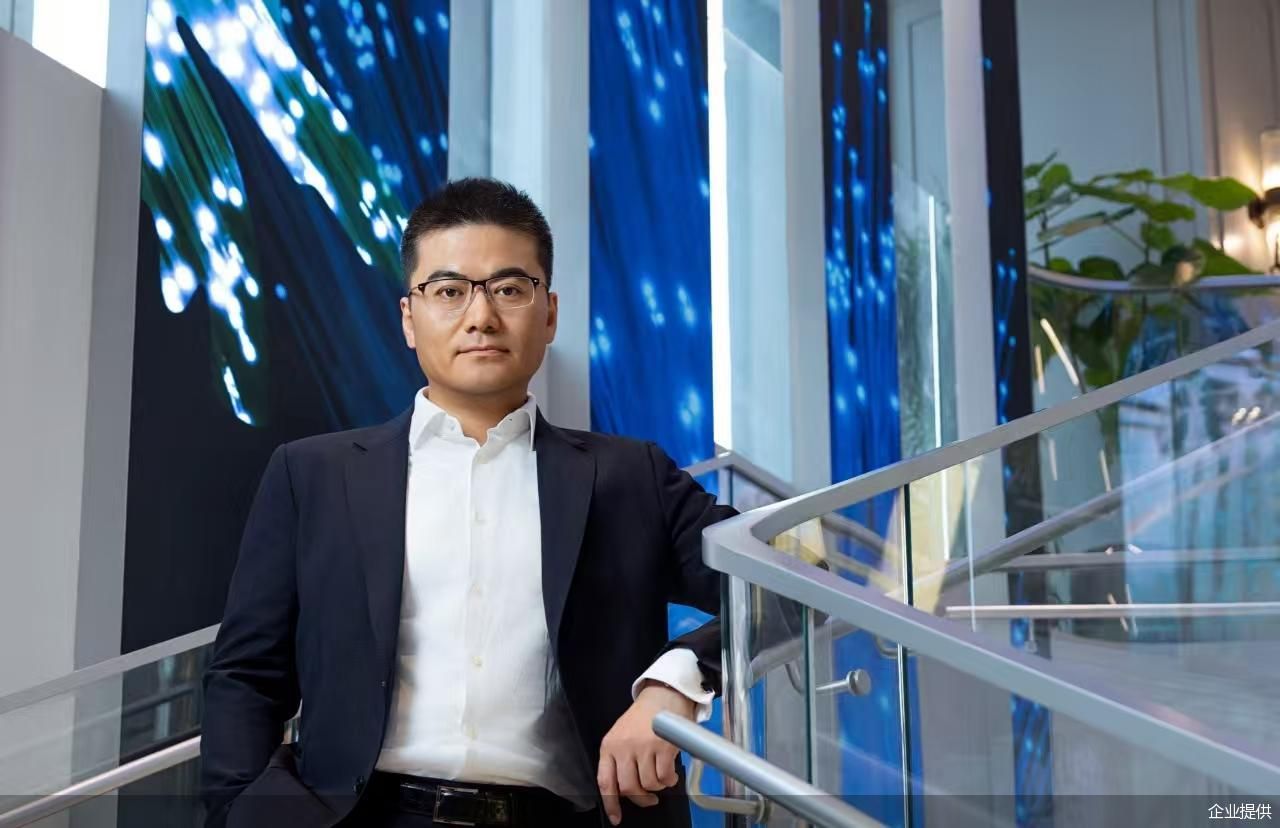
Core Insights - Fashion consumption is becoming a significant driver of economic growth and urban vitality, characterized by a dialectical unity of "change and permanence" [1][4] - The current fashion consumption landscape has expanded beyond traditional categories like apparel and jewelry to include lifestyle products and services such as smart wearables, automobiles, home goods, entertainment, sports, and beauty [1][4] Industry Trends - The upgrade in fashion consumption is leading to two major transformations: 1. Cross-industry integration through composite business models like "retail + dining" and "retail + exhibitions," fostering deeper connections between brands and consumers [3][5] 2. Rapid expansion of health and self-care service consumption, with new store openings in major cities like Beijing, Shanghai, Guangzhou, and Shenzhen projected to grow by 25% to 55% by the third quarter of 2025, significantly outpacing traditional retail and dining [3][5] Market Opportunities - The Chinese consumption market presents two structural growth opportunities: 1. Significant room for service consumption upgrade, with current service expenditure as a percentage of total consumption lagging behind developed economies by 10-20 percentage points [7] 2. Potential for increased spending by international tourists, with a 50% year-on-year increase in foreign visitors since the expansion of visa-free policies, indicating a growing market for inbound consumption [7] Consumer Behavior - Traditional fashion consumption was limited to categories like fashion and jewelry, but rising income levels and changing consumer demographics are driving a shift towards a more lifestyle-oriented approach [4][5] - The establishment of flagship stores serves as a barometer for fashion consumption trends, with first-tier cities like Beijing and Shanghai accounting for 55% of new flagship stores in the first half of 2025 [6]
Flex office firm Industrious is seeing major growth. Here's what's driving it
CNBC· 2026-01-22 18:34
Group 1: Company Overview - CBRE acquired Industrious, a flexible office company, which has expanded significantly since its inception in 2013, particularly post-pandemic [2] - Industrious has increased its global footprint by 58% from 2024, now operating over 250 units in more than 100 cities, with projections for 100% growth in new signings in 2026 [2] Group 2: Market Position - Industrious ranks third in the flexible office sector by the number of spaces and total square footage, following International Workplace Group and WeWork [3] Group 3: Industry Growth - The global flexible office market is expected to grow from $54.59 billion in 2025 to $147.2 billion by 2033 [3] Group 4: Market Trends - The mainstream office sector is recovering slowly from the pandemic, while flexible office spaces are benefiting from this recovery as companies focus on enhancing workplace experiences [4] - Companies are striving to elevate the quality of their midsize and smaller offices to match their headquarters, which is a challenge even for large firms like JPMorgan and Google [5]
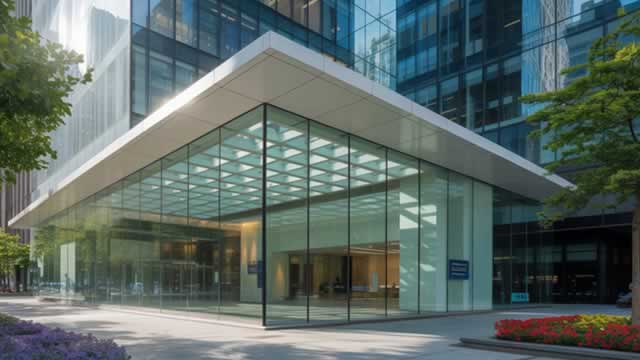
时尚消费驱动生活方式全面扩容
Bei Jing Shang Bao· 2026-01-15 12:14
Core Insights - Fashion consumption is becoming a significant driver of economic growth and urban vitality, characterized by a dialectical unity of "change and constancy" [1][2][3] - The current fashion consumption landscape has expanded beyond traditional categories like apparel and jewelry to include lifestyle products and services such as smart wearables, automobiles, home goods, entertainment, sports, and beauty [1][3][4] Industry Trends - Two major transformations in fashion consumption are emerging: 1. The integration of mixed-use formats, such as "retail + dining" and "retail + exhibitions," which deepens the connection between brands and consumers [1][4] 2. Rapid growth in health and self-care service consumption, with new store openings in major cities like Beijing, Shanghai, Guangzhou, and Shenzhen projected to increase by 25% to 55% by Q3 2025, significantly outpacing traditional retail and dining [1][4] Market Opportunities - The Chinese consumption market presents two structural opportunities: 1. Significant room for service consumption upgrade, with a 10-20 percentage point gap compared to developed economies in service expenditure [2][6] 2. Potential for increased spending by international tourists, with a 50% year-on-year growth in inbound visitors following the expansion of visa-free policies [6] Consumer Behavior - The definition of fashion consumption includes both changing trends and the enduring essence of leadership in consumer preferences, with a shift towards lifestyle-oriented consumption as income levels rise and consumer demographics evolve [3][5] - The establishment of flagship stores serves as a barometer for fashion consumption trends, with first-tier cities like Beijing and Shanghai accounting for 55% of new flagship stores in the first half of 2025 [5] City-Level Insights - Fashion consumption in China can be categorized into three tiers: 1. First tier: Beijing and Shanghai, which attract high-net-worth families and international tourists [5] 2. Second tier: Cities like Shenzhen, Chengdu, and Guangzhou, which are economic hubs with high consumer spending potential [5] 3. Third tier: Smaller cities where e-commerce and social media are driving fashion consumption among middle-income groups [5]

CBRE Group (CBRE) is a Top-Ranked Momentum Stock: Should You Buy?
ZACKS· 2026-01-14 15:50
Company Overview - CBRE Group, Inc. is a commercial real estate services and investment firm headquartered in Dallas, TX, providing a wide range of services including facilities management, transaction and project management, property management, investment management, appraisal and valuation, property leasing, strategic consulting, property sales, mortgage services, and development services [11] - The company employs over 140,000 individuals and serves clients in more than 100 countries as of September 30, 2025 [11] Investment Ratings - CBRE is currently rated 3 (Hold) on the Zacks Rank, with a VGM Score of B, indicating a solid position in the market [12] - The company has a Momentum Style Score of A, with shares increasing by 2.5% over the past four weeks [12] Earnings Estimates - Two analysts have revised their earnings estimates upwards for fiscal 2025, with the Zacks Consensus Estimate increasing by $0.05 to $6.33 per share [12] - CBRE has demonstrated an average earnings surprise of +8.5%, indicating a positive trend in earnings performance [12] Investment Consideration - With a strong Zacks Rank and high Momentum and VGM Style Scores, CBRE is recommended to be on investors' short lists for potential investment opportunities [13]

2025北京市场:办公楼空置率连降,大吉巷等项目撑起商业增量
3 6 Ke· 2026-01-14 02:28
Core Insights - The 2025 Beijing real estate market shows signs of resilience despite challenges, with office vacancy rates declining for four consecutive quarters and retail properties benefiting from urban renewal initiatives [1] Office Market - The office market in Beijing experienced a historical low in new supply, with only 180,000 square meters added in 2025, alleviating market de-stocking pressure [2] - New leasing demand showed a "high-middle-weak" trend throughout the year, with relocation needs dominating at 76% of transactions, while the area of relocation transactions decreased compared to the previous year [2][3] - The net absorption for the year reached 438,000 square meters, leading to a year-on-year vacancy rate decrease of 1.9 percentage points to 19.1% [3] - Average rental prices in the city fell by 2.7% year-on-year to 228.5 yuan per square meter, with a total annual decline of 10.7% [4] Retail Market - The retail property market saw a total new supply of 534,000 square meters, all from urban renewal projects, indicating a shift towards "old for new" strategies [6] - The overall retail sales in Beijing decreased by 3.1% year-on-year, but the decline rate has narrowed, suggesting signs of market stabilization [7] - The average rent for shopping centers decreased by 1.0% to 30.0 yuan per square meter, with an annual decline of 2.4% [8] Warehouse and Logistics Market - The warehouse and logistics market faced a supply peak with 1.4 million square meters added, resulting in a record high vacancy rate of 40.7% [10] - The demand shifted from third-party logistics to manufacturing, with new leasing demand driven by sectors like automotive parts and pharmaceuticals, accounting for 40% of new leases [10][11] - Average rents in Beijing fell to 37.1 yuan per square meter, marking a 14.8% annual decline [11] Business Park Market - The business park market welcomed seven new projects, primarily in the life sciences sector, totaling 598,000 square meters [12] - The net absorption for the year was 465,000 square meters, with the strongest demand observed in the Yizhuang Economic Development Zone [13] - Average rents in the business park sector decreased by 2.4% year-on-year, with an annual decline of 10.9% [14] Investment Market - The Beijing investment market recorded 40 transactions totaling 23.27 billion yuan, with a notable increase in transaction volume in the fourth quarter [16] - Corporate buyers accounted for 71% of transactions, indicating a strong interest in core assets despite a decline in transaction value [17] - Office assets dominated the market, comprising 64% of total transaction value, reflecting a continued preference for core area properties [18]
3 Reasons Why Growth Investors Shouldn't Overlook CBRE (CBRE)
ZACKS· 2026-01-13 18:46
Core Viewpoint - Investors are increasingly seeking growth stocks that demonstrate above-average growth potential, with CBRE Group identified as a strong candidate due to its favorable growth metrics and Zacks Rank [2][10]. Earnings Growth - Historical EPS growth for CBRE stands at 1.7%, but projected EPS growth for the current year is expected to be 14.7%, surpassing the industry average of 14.4% [5]. Cash Flow Growth - CBRE's year-over-year cash flow growth is currently at 23.3%, significantly higher than the industry average of 0.5%. The company's annualized cash flow growth rate over the past 3-5 years is 4.5%, compared to the industry average of 1.3% [6][7]. Earnings Estimate Revisions - There has been a positive trend in earnings estimate revisions for CBRE, with the Zacks Consensus Estimate for the current year increasing by 0.5% over the past month [9]. Overall Assessment - CBRE has achieved a Growth Score of B and holds a Zacks Rank 2, indicating it is a solid choice for growth investors and a potential outperformer in the market [10][11].